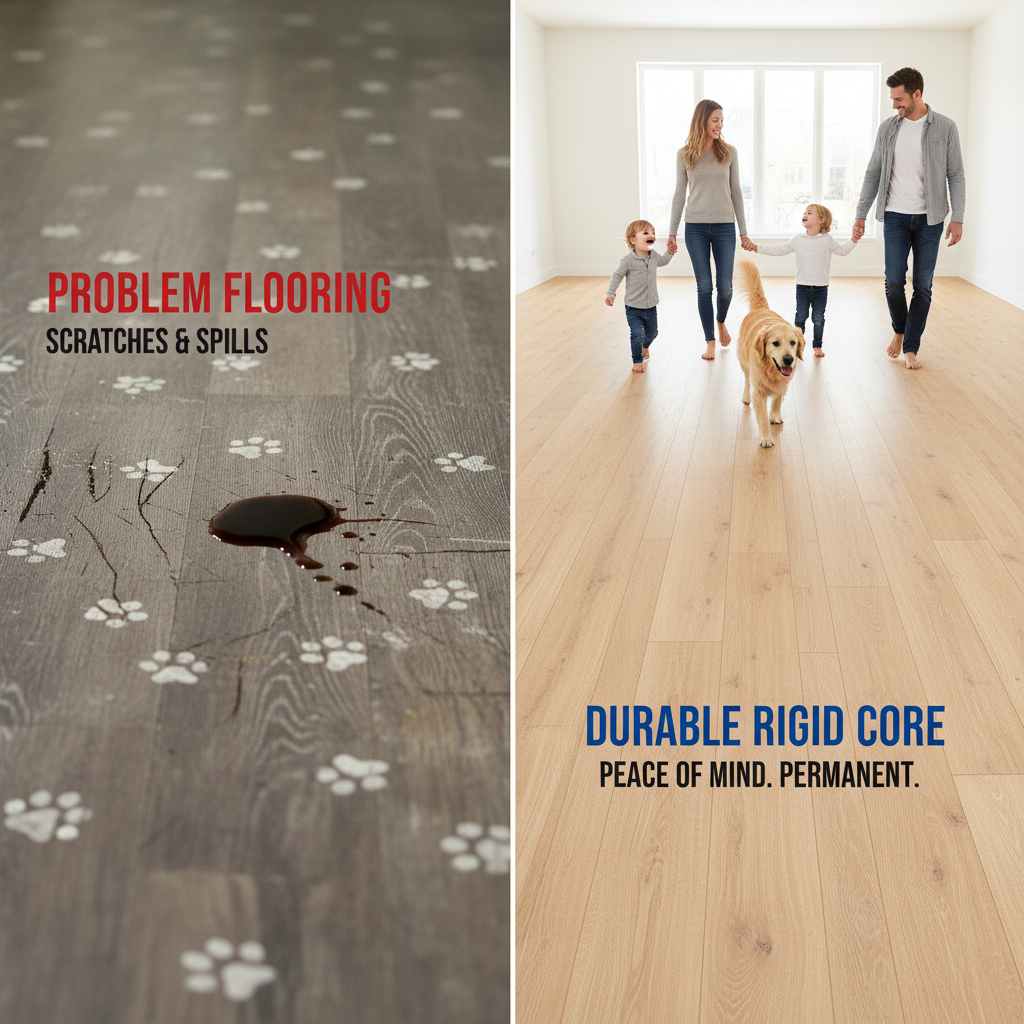
If you live in an active household, you likely know the unique frustration of watching a beautiful new floor succumb to daily life. Between the clatter of large dog nails, the inevitable spills, and the high-traffic friction of a busy family, easily damaged home floors are a leading source of homeowner anxiety. You want a permanent solution, but stepping into a flooring showroom often means navigating a minefield of misleading marketing jargon. Terms like “100% scratch-proof” and “adamantine-grade” are thrown around loosely, leaving consumers confused and paralyzed by choice.
This guide is designed to cut through the showroom buzzwords. We are bypassing the marketing hype to deliver a data-driven, objective look at truly indestructible flooring. By revealing the actual material science behind “adamantine” claims, exploring the supremacy of rigid core flooring, and uncovering the master-level installation secrets that contractors use, this article will equip you to make a permanent, enduring investment in your home’s performance.
- The Hidden Costs of Easily Damaged and Low-Durability Floors
- Demystifying ‘Adamantine Flooring’: Marketing Myth vs. Material Science
- The Rigid Core Advantage: SPC vs. WPC Explained
- Ranking the Best Durable Flooring for Active Homes and Pets
- Master-Level Installation: The True Secret to Long-Lasting Floors
- Conclusion: Investing in Permanent Home Performance
- References & Authoritative Sources
The Hidden Costs of Easily Damaged and Low-Durability Floors
When dealing with worn out flooring issues, it is easy to view scratches and scuffs as purely aesthetic annoyances. However, failing floors represent a significant structural hazard and a hidden financial drain. Homeowners frequently ask, “Why is my hardwood floor scratching so easily?” or “Why is my budget laminate peeling?” The answer usually comes down to a mismatch between the material’s durability rating and the household’s actual activity level.
According to the Institute of Inspection, Cleaning and Restoration Certification (IICRC), premature floor failure is almost always categorized into two root causes: moisture intrusion or mechanical damage [1]. While mechanical damage (like pet claws and dragged furniture) causes surface-level degradation, moisture intrusion can lead to catastrophic structural failure.
Furthermore, aging, low durability flooring problems extend beyond the floor itself. Can worn out flooring cause allergies or respiratory issues? Absolutely. The Environmental Protection Agency (EPA) notes that degraded, porous surfaces and aging carpets are notorious for trapping indoor pollutants, including dust mites, pet dander, and mold spores, significantly diminishing indoor air quality [2].
The most shocking hidden cost, however, is financial. A comprehensive 10-Year Lifecycle Cost Analysis, utilizing valuation principles from the Appraisal Institute, demonstrates that “cheap” flooring is a financial trap [3]. Budget-grade materials often require complete replacement within 5 to 7 years. When you factor in the costs of demolition, disposal, subfloor remediation, and re-installation, purchasing low-durability flooring effectively doubles your long-term lifecycle costs compared to investing in premium materials upfront.
Diagnosing Wear and Tear: Aesthetic vs. Structural Failure
To stop damage from spreading, you must differentiate between surface wear and structural failure. A superficial scratch in a wear layer is an aesthetic issue; a plank that squishes, buckles, or separates at the seams is a structural emergency.
When diagnosing easily damaged home floors, it is vital to understand the difference between user-inflicted damage and inherent material defects. The National Association of Home Builders (NAHB) provides safety and construction standards that help delineate these issues [4]. For instance, localized swelling near a sliding glass door indicates user-inflicted moisture damage or poor exterior sealing, whereas widespread delamination across a perfectly dry room points to a manufacturer defect. If you notice structural failures like bubbling or soft spots, immediate triage—such as identifying the moisture source and running dehumidifiers—is required to protect the subfloor beneath.
Demystifying ‘Adamantine Flooring’: Marketing Myth vs. Material Science
If you have been searching for the absolute toughest floor on the market, you have likely encountered the term “adamantine flooring.” But what is adamantine flooring made of?
In material science, “adamantine” refers to a non-metallic, brilliant luster, often associated with the hardness of a diamond. In the flooring industry, however, it is strictly a marketing descriptor used to emphasize extreme durability. It is not a distinct category of flooring like oak or porcelain. Instead, adamantine flooring for enduring performance typically refers to high-end Stone-Plastic Composite (SPC) or premium laminate that has been engineered with specialized, commercial-grade surface coatings.
Is adamantine flooring completely scratch-proof? No. No flooring on earth is entirely impervious to scratching if enough localized pressure is applied. However, the chemistry behind these floors makes them incredibly resilient. As noted by polymer chemists and material scientists, the true strength of these high-performance floors relies on microscopic integration [5]. Manufacturers embed aluminum oxide crystals and ceramic bead finishes directly into a liquid urethane topcoat, which is then cured using ultraviolet light.
To validate these marketing claims, the industry relies on standardized testing from ASTM International, specifically the Taber abrasion test, which measures how many cycles of an abrasive wheel a surface can withstand before wearing through [5]. Furthermore, peer-reviewed data from the Journal of Materials Science confirms that the integration of ceramic nanoparticles exponentially increases coating endurance against micro-scratches and chemical degradation [6].
Engineering Enduring Performance: The 20+ Mil Wear Layer
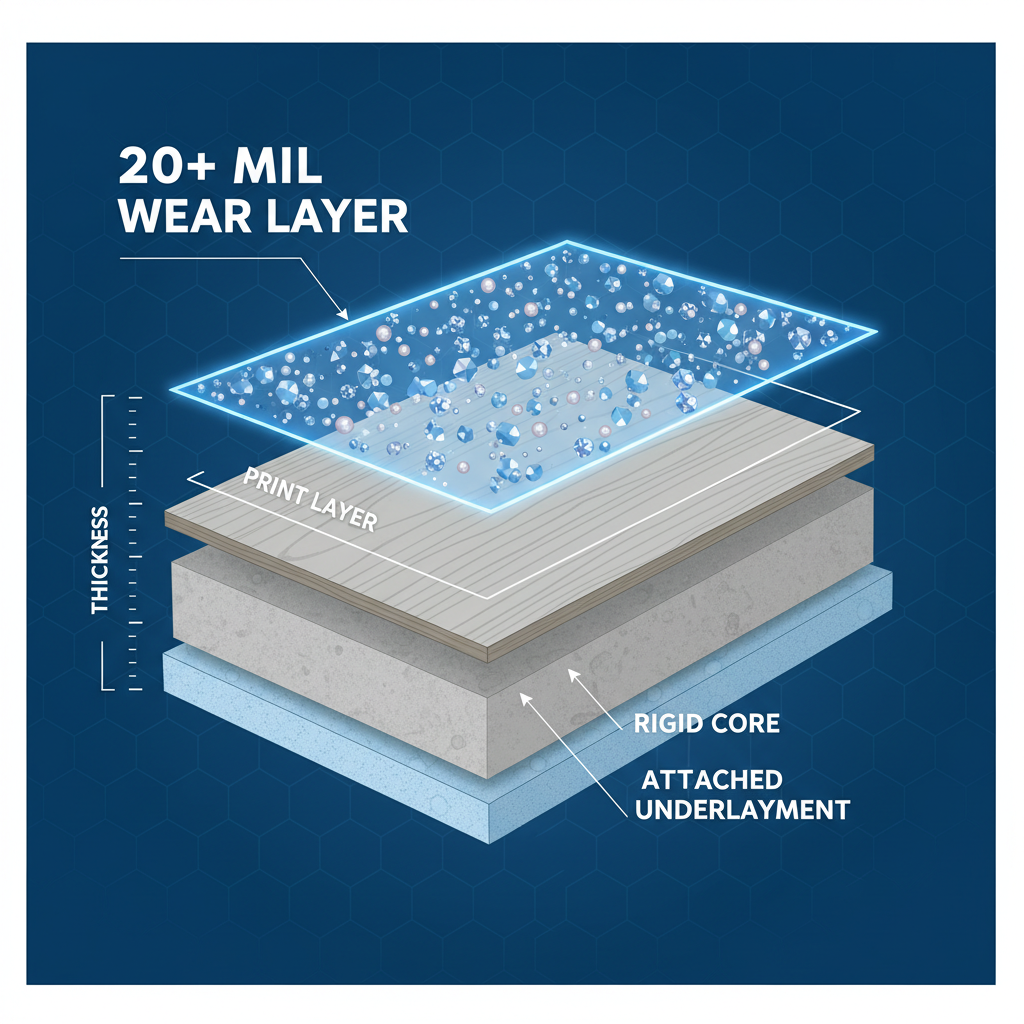
When sourcing high performance flooring solutions for residential use, the secret lies in the wear layer—the clear protective coating applied over the photographic design layer. Wear layers are measured in “mils” (one-thousandth of an inch). Standard residential vinyl might feature a 6-mil to 12-mil wear layer, which is highly susceptible to dog scratches and dropped objects.
To achieve true “adamantine” performance, you must look for commercial-grade specifications featuring a 20+ mil wear layer. While these floors cannot be sanded and refinished like solid hardwood, a 20-mil aluminum oxide coating is designed to withstand decades of heavy foot traffic before the design layer is ever compromised. According to Floor Covering News, the cost-benefit analysis of paying a premium for a 20+ mil commercial-grade wear layer in a standard residential home is overwhelmingly positive, as it virtually eliminates the need for replacement due to surface wear [7].
The Rigid Core Advantage: SPC vs. WPC Explained
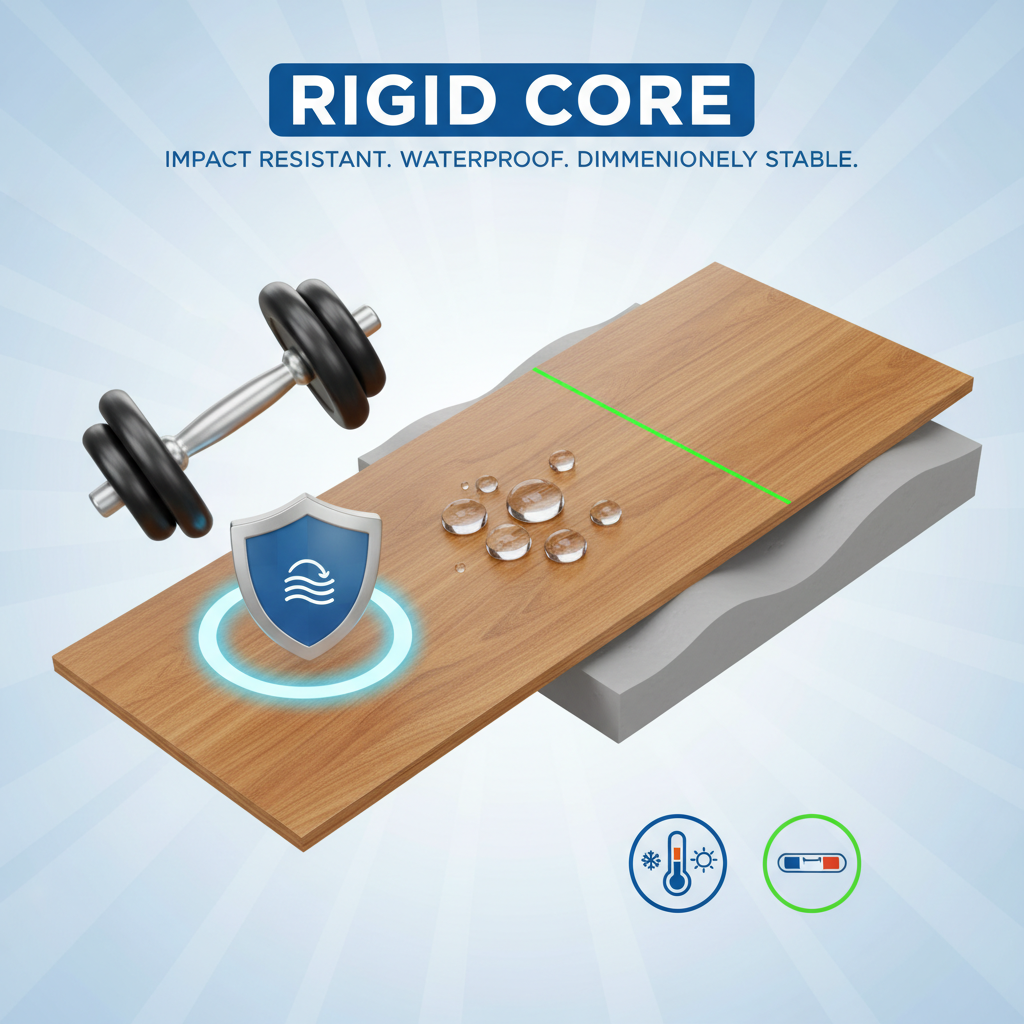
Rigid core flooring has rapidly become the fastest-growing segment in the resilient flooring market, and for good reason. But what is the difference between rigid core and standard luxury vinyl plank (LVP)? Traditional LVP is flexible; it bends easily and conforms to the subfloor. Rigid core, as the name implies, features a solid, inflexible core that provides superior structural integrity.
Within the rigid core category, there are two main competitors: SPC (Stone-Plastic Composite) and WPC (Wood-Plastic Composite). The World Floor Covering Association (WFCA) provides an unbiased comparison of the two [8]. SPC is composed of a mixture of natural limestone powder, polyvinyl chloride, and stabilizers, making it incredibly dense, ultra-thin, and highly resistant to impacts. WPC uses recycled wood pulp and plastic composites, infused with a foaming agent that makes it thicker and slightly softer.
Does rigid core flooring need underlayment? Most premium rigid core planks come with an attached acoustic pad (usually cork or IXPE foam), eliminating the need for separate underlayment. When comparing the two, Consumer Reports data highlights that WPC generally offers better acoustic performance and a warmer, softer underfoot feel, while SPC is the undisputed champion of dent resistance and heavy load-bearing capacity [9].
7 Hidden Benefits of Rigid Core Beyond Waterproofing
While the 100% waterproof nature of rigid core is its most famous selling point, the benefits of rigid core flooring extend far beyond moisture protection:
- Subfloor Telegraphing Prevention: Because the core is rigid, it bridges minor subfloor imperfections without “telegraphing” (showing) dips and bumps on the surface, unlike flexible LVP.
- Dimensional Stability: How does rigid core handle temperature changes? Exceptionally well. SPC, in particular, will not expand or contract significantly, making it ideal for unheated sunrooms or cabins.
- Superior Dent Resistance: The limestone density of SPC prevents heavy furniture from leaving permanent indentations.
- Installation Versatility: Can rigid core flooring be installed over existing tile? Yes, provided the grout lines are not excessively deep, saving thousands in demolition costs.
- Acoustic Dampening: High-quality attached pads significantly reduce sound transmission to lower levels of the home.
- Ease of Maintenance: The non-porous surface requires only basic sweeping and damp mopping.
- Indoor Air Quality: Premium rigid core floors are manufactured without harmful phthalates. Look for products with FloorScore certification, a standard verified by SCS Global Services, ensuring the flooring meets strict criteria for low Volatile Organic Compound (VOC) emissions [10].
Ranking the Best Durable Flooring for Active Homes and Pets
When searching for the best durable flooring for homes, it is crucial to abandon subjective internet lists and rely on an objective ranking matrix based on standardized industry metrics.
If you are asking, “What is the most durable flooring for dogs?” or “Which flooring lasts the longest in high-traffic areas?”, you must look at the data. For wood products, durability is measured by the Janka hardness scale, maintained by the National Wood Flooring Association (NWFA) [11]. For tile, the Tile Council of North America (TCNA) utilizes PEI (Porcelain Enamel Institute) wear ratings [12].
To determine the true champions of durable home flooring, we look to transparent testing methodologies—such as the rigorous scratch, drop, and stain tests utilized by consumer advocates like the Good Housekeeping Institute [13]. Based on these objective metrics, here is how the best options rank for specific active-home scenarios:
- Best Overall for Large Dogs & High Traffic: Premium SPC Rigid Core (20+ mil wear layer). It offers the aesthetic of wood, is 100% waterproof for accidents, and the limestone core prevents indentations from large breeds, while the aluminum oxide finish resists claw scratches.
- Best for Multi-Generational Longevity (50+ Years): Porcelain Tile (PEI Rating 4 or 5). Fired at extreme temperatures, porcelain is the closest thing to true “adamantine” material. It is virtually impervious to water, scratches, and dents, though it lacks the softer underfoot feel of resilient flooring.
- Best Durable Eco-Friendly Option: Strand-Woven Bamboo. Rated exceptionally high on the Janka scale (often harder than traditional oak or hickory), strand-woven bamboo is a sustainable, highly durable alternative to traditional hardwoods, provided it is kept away from standing water.
Master-Level Installation: The True Secret to Long-Lasting Floors
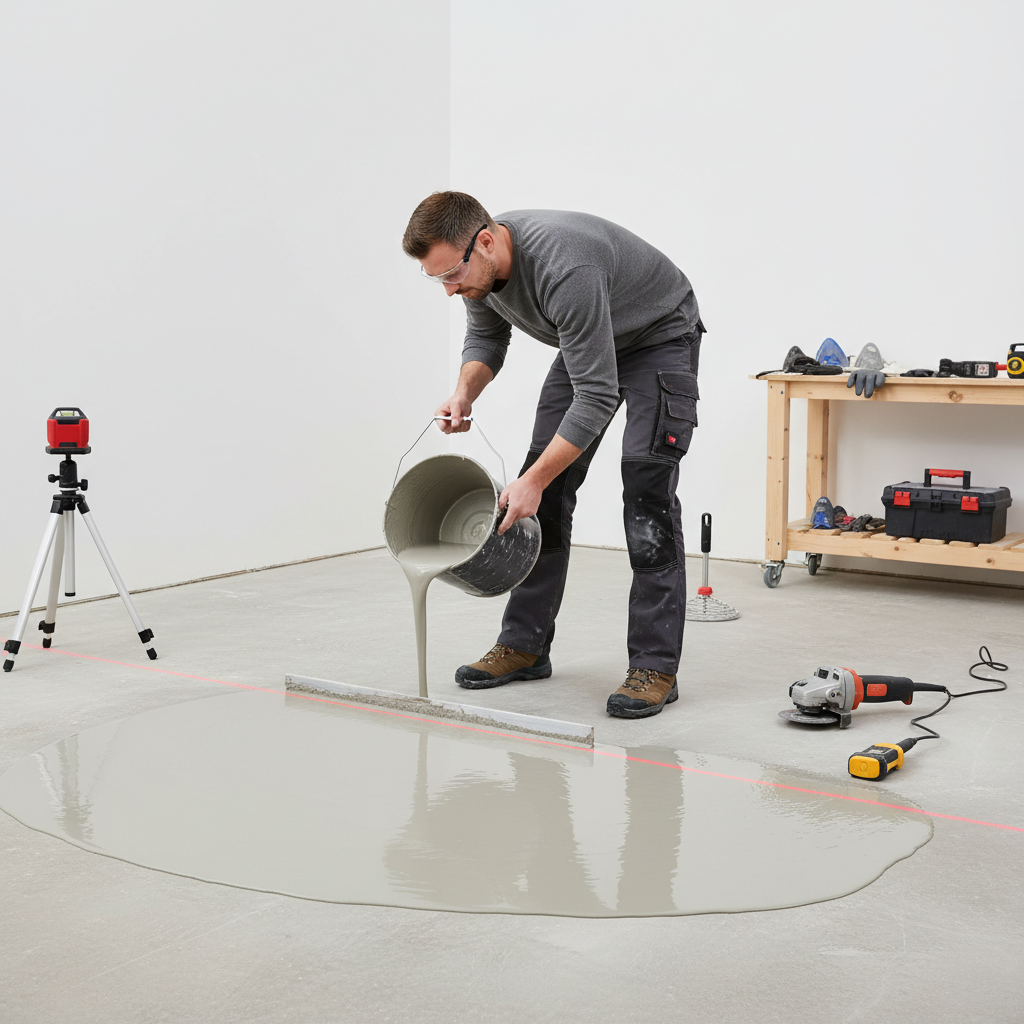
You can purchase the most expensive, adamantine-grade rigid core on the market, but if it is installed poorly, it will fail. How important is subfloor prep for flooring longevity? It is the single most critical factor. Master-level installation is the true secret to a long lasting floor installation.
What are the signs of a bad flooring installation? Planks that separate at the seams, floors that bounce or squeak when you walk, and buckling at the edges of the room are all hallmarks of amateur work. Certified Floorcovering Installers (CFI) stress the absolute necessity of rigorous subfloor preparation [14]. This includes mandatory calcium chloride moisture testing for concrete subfloors to ensure moisture vapor emissions won’t warp the planks from below.
Furthermore, leveling is non-negotiable. According to Floor Covering Installer Magazine, professional tolerances dictate that a subfloor must be flat to within 3/16 of an inch over a 10-foot span [15]. Failing to grind down high spots or fill low spots with self-leveling compound will inevitably cause the locking mechanisms of rigid core flooring to snap under foot traffic.
Step-by-Step: Planning Your Rigid Core Upgrade
Executing a whole-house rigid core flooring upgrade requires meticulous logistical planning. The most significant pain points usually involve transitions and height discrepancies.
- Assess the Existing Floor: Determine if you are tearing out the old floor or installing over it. Rigid core can go over well-adhered tile or sheet vinyl, but never over carpet or floating laminate.
- Handle Height Discrepancies: If installing over existing floors, your new floor will be higher. The National Association of the Remodeling Industry (NARI) advises planning for custom transition strips at doorways and potentially undercutting door jambs to accommodate the new height [17].
- Update Molding: You will likely need to remove existing baseboards or add quarter-round molding to cover the mandatory 1/4-inch expansion gap around the perimeter of the room.
- Calculate ROI: While professional installation adds to the upfront cost, Remodeling Magazine’s Cost vs. Value report indicates that upgrading to high-quality rigid core flooring can yield a return on investment of up to 70% at home resale, provided the installation is flawless [16].
High-Performance Solutions for Extreme Environments
While rigid core is ideal for living spaces, what defines a “high performance” flooring solution for extreme environments like residential garages, basement workshops, or commercial kitchens?
For spaces exposed to heavy machinery, hot tires, or harsh chemicals, residential-grade flooring is insufficient. Instead, homeowners are increasingly turning to commercial-grade resinous coatings like 100% solid epoxy or polyaspartic systems. According to the American Society of Interior Designers (ASID) and the Construction Specifier, these high performance flooring solutions are evaluated based on their load-bearing data (often exceeding 10,000 PSI ratings) and strict chemical resistance properties [18], [19]. Polyaspartic coatings, in particular, offer the aesthetic appeal of a showroom floor with industrial-grade endurance that will not yellow under UV light or peel under the stress of hot car tires.
Conclusion: Investing in Permanent Home Performance
Achieving true flooring durability means looking past the showroom shine and ignoring the marketing buzzwords. As we have explored, the secret to an indestructible home floor lies in understanding material science—specifically the integration of aluminum oxide in 20+ mil wear layers and the dimensional stability of SPC rigid core. Just as importantly, recognizing that a floor is only as good as its subfloor preparation ensures that your investment won’t be ruined by amateur installation errors.
By demanding objective metrics like ASTM test results, FloorScore certifications, and strict leveling tolerances, you can confidently navigate your next home improvement project. We encourage you to consult with a Certified Flooring Installer (CFI) in your area, request physical samples of 20+ mil rigid core planks, and test their durability in your own home before making a final decision.
Disclaimer: The content provided in this article is for informational purposes only. Always consult a Certified Flooring Installer (CFI) and refer to specific manufacturer warranties and installation guidelines before beginning a flooring upgrade.
References & Authoritative Sources
- Institute of Inspection, Cleaning and Restoration Certification (IICRC). (2026). Standards for Water Damage Restoration and Hard Surface Maintenance.
- Environmental Protection Agency (EPA). (2026). Indoor Air Quality (IAQ) and Flooring Materials: Managing Pollutants and Allergens.
- Appraisal Institute. (2026). Residential Property Valuation and Lifecycle Cost Analysis of Building Materials.
- National Association of Home Builders (NAHB). (2026). Residential Construction Performance Guidelines and Safety Standards.
- ASTM International. (2026). Standard Test Method for Abrasion Resistance of Organic Coatings by the Taber Abraser.
- Journal of Materials Science. (2025). Endurance and Abrasion Resistance of Ceramic Nanoparticle Integration in Polymer Coatings.
- Floor Covering News. (2026). Cost-Benefit Analysis of Commercial-Grade Wear Layers in the Residential Sector.
- World Floor Covering Association (WFCA). (2026). Consumer Guide to Resilient Flooring: SPC vs. WPC.
- Consumer Reports. (2026). Acoustic Performance and Durability Testing of Rigid Core Flooring.
- SCS Global Services. (2026). FloorScore Certification Standard for Indoor Air Quality.
- National Wood Flooring Association (NWFA). (2026). The Janka Hardness Scale for Wood Flooring.
- Tile Council of North America (TCNA). (2026). Understanding PEI Wear Ratings for Porcelain and Ceramic Tile.
- Good Housekeeping Institute. (2026). Methodology for Durability Testing in Residential Flooring.
- Certified Floorcovering Installers (CFI). (2026). Best Practices for Subfloor Preparation and Moisture Testing.
- Floor Covering Installer Magazine. (2026). Mastering Subfloor Tolerances for Rigid Core Installations.
- Remodeling Magazine. (2026). Cost vs. Value Report: Return on Investment for Flooring Upgrades.
- National Association of the Remodeling Industry (NARI). (2026). Best Practices for Room-to-Room Flooring Transitions and Trim.
- American Society of Interior Designers (ASID). (2026). Specifying High-Performance Materials for Extreme Environments.
- Construction Specifier. (2026). Load-Bearing and Chemical Resistance Standards for Resinous Flooring Systems.
