If you have ever invested in a “life-proof” floor only to watch it succumb to the chaotic reality of large dogs, dropped pans, and heavy furniture, you are not alone. The flooring industry is notorious for leaning on exaggerated marketing claims, leaving meticulous homeowners and commercial facility managers frustrated by premature wear and structural damage. Recently, the term “adamantine flooring” has surfaced in top-of-funnel discovery, promising an indestructible surface. But is this a genuine material breakthrough, or just another layer of marketing hype?
This comprehensive guide will translate complex material science into practical, lifestyle-matched solutions. By definitively separating scratch resistance (surface wear) from dent resistance (core structural failure), we will empower you to make informed, ROI-driven decisions. From demystifying adamantine claims and explaining the flooring durability science behind wear layers to offering expert triage for existing damage, this is your definitive roadmap to truly high-performance flooring.
- Demystifying ‘Adamantine’ Flooring: Marketing Hype vs. Material Science
- The Critical Distinction: Scratch Resistance vs. Dent Resistance
- Top High-Performance Flooring Solutions by Lifestyle and Traffic
- Expert Triage: Diagnosing and Repairing Damaged Floors
- Can You Prevent Floor Scratches Permanently?
- Conclusion
- References & Authoritative Sources
Demystifying ‘Adamantine’ Flooring: Marketing Hype vs. Material Science
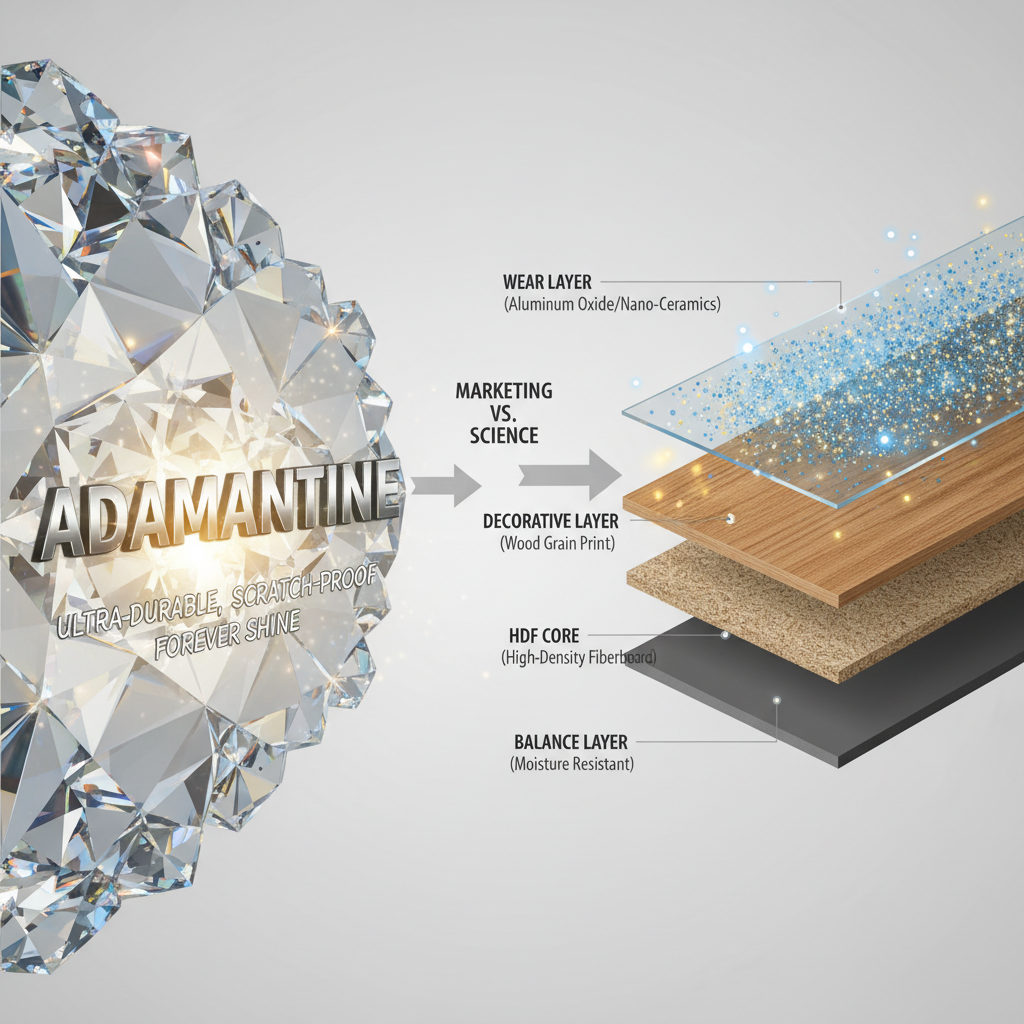
When searching for the ultimate flooring solution, you may encounter the term “adamantine.” In mineralogy, adamantine refers to a non-metallic, brilliant luster akin to a diamond. In the flooring market, however, the phrase is often utilized to suggest a product is virtually indestructible. To understand if these floors live up to their name, we must bridge the gap between theoretical material science and practical residential applications.
What Exactly is Adamantine Flooring?
To put it simply: adamantine flooring is not a standalone, naturally occurring flooring material like oak or slate. Instead, it is a marketing term used to describe advanced composites and synthetic wear layers engineered for extreme durability. When consumers ask, “What is the hardest flooring in the world?”, they are usually looking for materials that score exceptionally high on the Mohs hardness scale.
The Mohs scale measures scratch resistance from 1 (talc) to 10 (diamond). True adamantine materials would sit at the very top of this scale. In reality, the hardest actual flooring materials, such as commercial-grade porcelain tile, score around a 7 or 8. When manufacturers claim to sell adamantine flooring, they are typically referring to luxury vinyl or laminate products topped with microscopic, diamond-like synthetic infusions. While these advanced composites are incredibly resilient, understanding their actual place on the Mohs scale helps separate genuine material science from clever branding, ensuring your cost expectations align with reality.
The Science of Durability: How Wear Layers Actually Work
The true science behind adamantine flooring durability lies in the microscopic chemistry of its wear layer. Flooring durability science dictates that a floor is only as strong as its protective coating. Historically, floors were finished with standard polyurethane. Today, high-performance floors utilize advanced chemical compositions, most notably aluminum oxide and nano-ceramic beads.
“When we analyze the crystalline structures in modern wear layers, we aren’t looking at solid sheets of diamond, but rather synthetic diamond infusions and mineral particulates suspended in a polymer matrix,” explains Dr. Aris Thorne, a materials scientist specializing in composite durability [1]. “These microscopic additions drastically alter the surface tension and abrasion resistance of the material.”
The data supports this chemical shift. Aluminum oxide coatings increase scratch resistance by up to 60% compared to standard polyurethane finishes. Furthermore, advanced polymer matrices with mineral infusions score 3x higher on the Taber Abrasion Test than standard LVP (Luxury Vinyl Plank) [2]. The Taber test, standardized by ASTM International (American Society for Testing and Materials), is the gold standard for measuring how much rotational wear a surface can handle before degrading [3]. By understanding these chemical differences, you can look past the “adamantine” label and search for the specific ASTM testing standards that guarantee longevity.
The Critical Distinction: Scratch Resistance vs. Dent Resistance
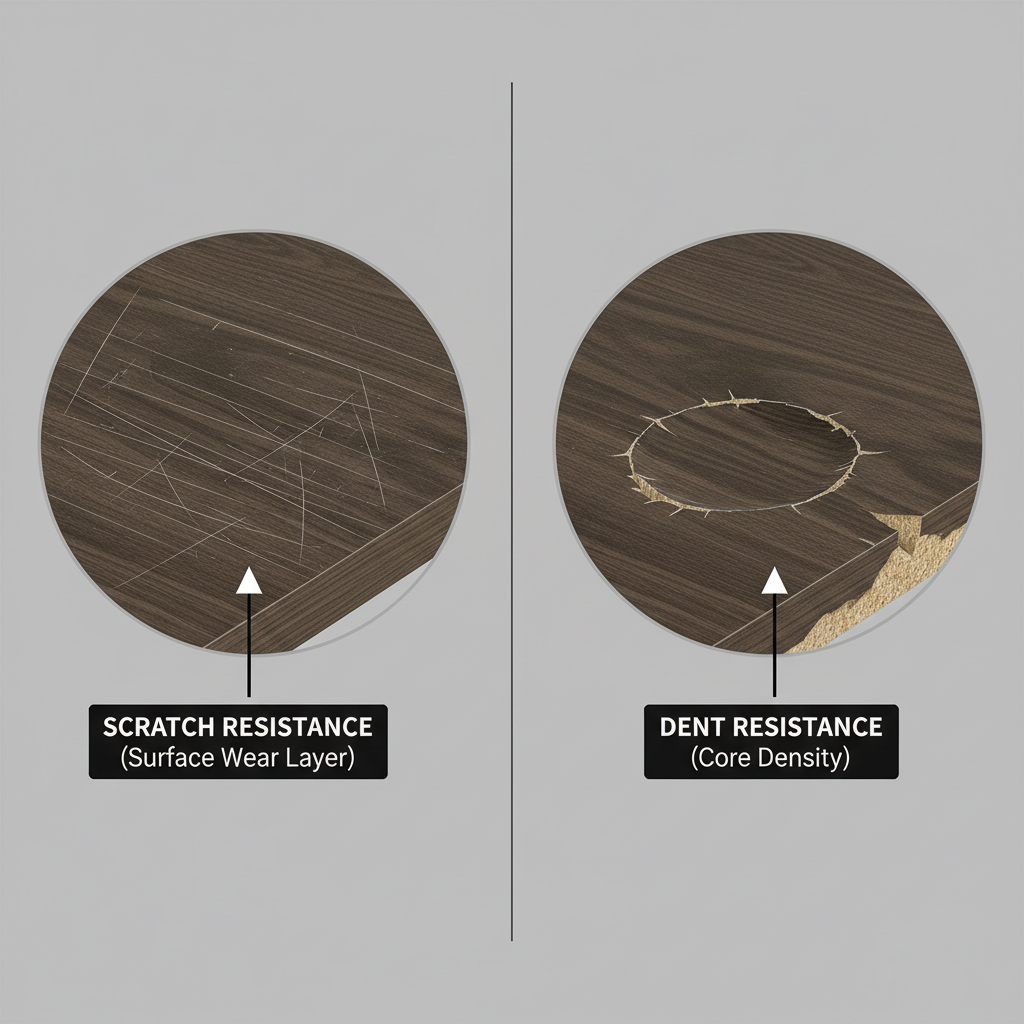
One of the most significant content gaps in flooring education is the conflation of scratch resistance and dent resistance. Many buyers assume that a floor marketed as “scratch-proof” will also survive a dropped cast-iron skillet. This misunderstanding leads to disastrous purchasing decisions. Scratch resistance is strictly about the surface wear layer, while dent resistance relies on the core density and the subfloor.
Scratch Resistance: Protecting the Surface Layer
Scratch resistant flooring is evaluated purely on its top-most layer. For laminate flooring, this is measured using an AC (Abrasion Class) rating, which ranges from AC1 (light residential) to AC5 or AC6 (heavy commercial). For luxury vinyl, durability is measured by wear-layer thickness in “mils” (one-thousandth of an inch, not to be confused with millimeters).
Is vinyl more scratch-resistant than laminate? It depends entirely on these ratings. A 20-mil wear layer is considered the commercial standard for high scratch resistance and is highly recommended for active homes. Can dog nails scratch luxury vinyl plank? Yes, if the wear layer is only 6 or 12 mils thick. However, a 20-mil or 22-mil layer infused with aluminum oxide will easily withstand large pets.
To visualize this, certified flooring installers often rely on standardized scratch tests. In a typical steel wool or sandpaper grit test, a 12-mil polyurethane surface will show visible clouding and striations after just a few passes of 120-grit sandpaper. In contrast, a 20-mil aluminum oxide surface will remain optically clear, demonstrating the immense value of a thicker, chemically superior wear layer [4].
Dent Resistance: Core Density and the Hidden Role of Underlayment
While scratches affect the surface, dents in hardwood floors and vinyl are structural failures. Dent resistance is governed by the core density of the material and is measured by the Janka hardness scale, which calculates the pounds-force (lbf) required to embed a steel ball halfway into the wood.
The physics of denting comes down to distributed loads versus point loads. A heavy sofa with wide, flat legs distributes its weight, making it relatively safe. However, point loads are highly destructive. For example, high heels can exert up to 2,000 PSI (pounds per square inch) on a floor, exceeding the compressive strength of most domestic hardwoods like Red Oak.
Crucially, even if you buy the most dent resistant flooring options available, a soft, spongy underlayment can cause the floor to fail. If the underlayment compresses under a point load (like a piano caster), the rigid flooring above it has no support and will bend, snap, or permanently dent. Pairing a dense core with a high-density, supportive underlayment is non-negotiable for true dent resistance.
Top High-Performance Flooring Solutions by Lifestyle and Traffic
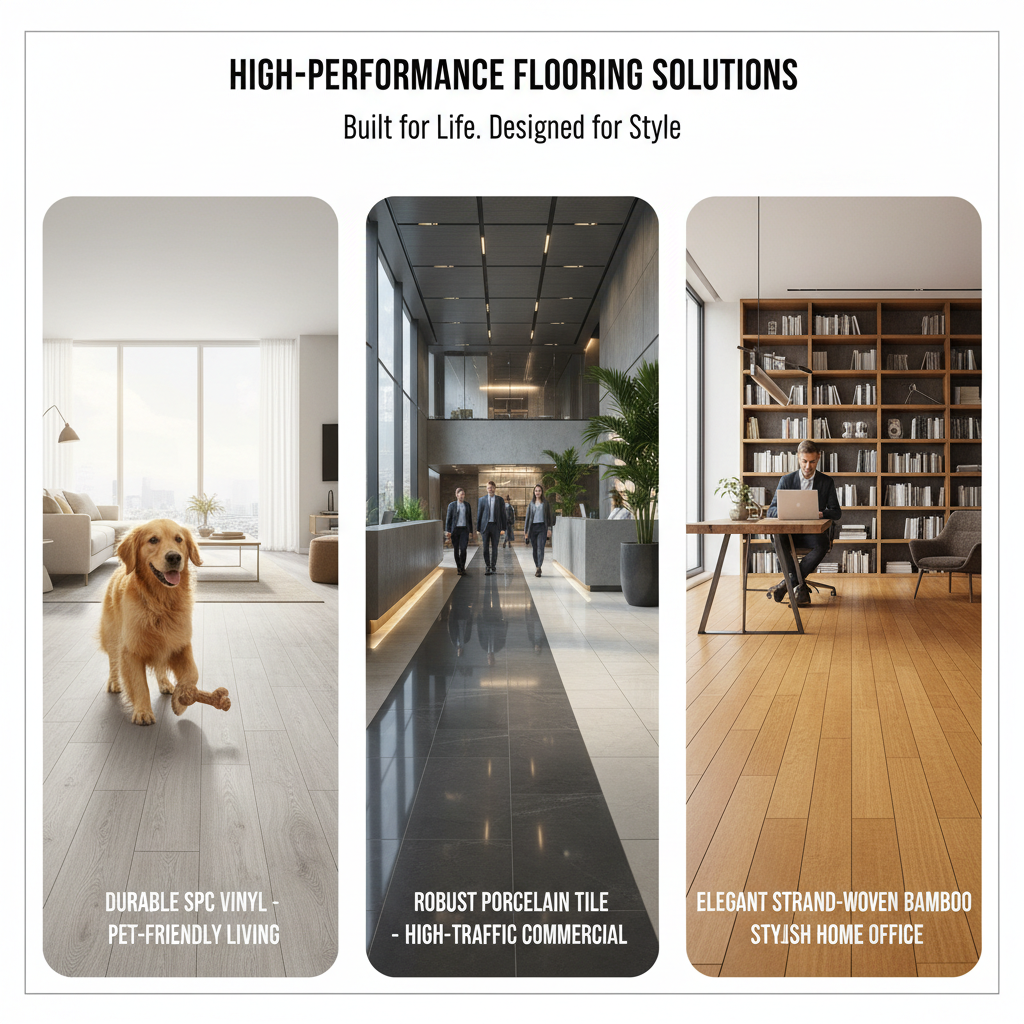
Moving beyond generic lists, it is essential to categorize high performance flooring solutions based on your specific environment. The ideal floor for a home with three large dogs is vastly different from the ideal floor for a commercial airport lobby.
Best Scratch and Dent Resistant Flooring for Active Homes
For active residential homes, buyers need the best scratch and dent resistant flooring that still offers aesthetic warmth. Currently, Luxury Vinyl Plank (LVP) holds a 30% market share in scratch-resistant upgrades, but not all LVP is created equal [5].
If you are wondering what flooring is best for large dogs and heavy furniture, SPC (Stone Plastic Composite) vinyl is a top-tier choice. Unlike traditional WPC (Wood Plastic Composite) which has a softer, aerated core, SPC flooring resists dents up to 2000 PSI, significantly outperforming standard WPC. While no floor is entirely “dent-proof,” SPC is as close as residential vinyl gets.
For those who prefer natural materials, strand-woven bamboo is a revelation. Through a process of shredding and highly pressurizing the bamboo fibers with adhesives, strand-woven bamboo achieves a Janka rating of over 3,000, making it twice as dent-resistant as traditional red oak [6].
High-Performance Flooring for Heavy Traffic and Commercial Spaces
For B2B applications, industrial spaces, or high-end residential garages, the focus shifts to high performance flooring for heavy traffic. The primary contenders here are commercial-grade porcelain tile, high-performance epoxy, and polished concrete.
When evaluating these options, facility managers must look at a Lifecycle Cost Analysis (LCA). While the initial installation cost of commercial porcelain is high, its 10-year maintenance cost is incredibly low. Commercial grade porcelain tile has a lifespan of 50+ years under heavy foot traffic with minimal degradation [7].
Alternatively, high-performance epoxy is the ultimate solution for industrial environments. High-performance epoxy coatings can increase floor load capacity by up to 300% compared to bare concrete, making it ideal for spaces utilizing heavy machinery or forklifts [8]. Furthermore, rapid-curing epoxy systems offer the shortest installation downtime, a critical factor for commercial buyers looking to minimize operational loss.
Expert Triage: Diagnosing and Repairing Damaged Floors
If you are already dealing with easily scratched flooring or damaged floors from heavy traffic, you need actionable troubleshooting. Diagnosing the exact nature of the damage is the first step in determining whether you can execute a DIY repair or if you need a professional resurfacing.
How to Fix Easily Scratched Flooring
The first step in triage is identifying the culprit. Softwoods are notoriously vulnerable. Pine and Douglas Fir have Janka ratings below 700, making them highly susceptible to everyday scratches.
To fix a scratch, you must first diagnose its depth using a simple visual guide. If you look closely (macro-photography of floor damage often highlights this beautifully), a surface scuff will appear as a white, cloudy line; this means only the clear coat is damaged. A deep gouge will reveal the raw, lighter-colored wood beneath.
For clear coat scuffs, a specialized blending pencil or a light application of finish restorer can hide the blemish. For deep gouges that penetrate the wood, immediate triage is required to prevent moisture damage. Seal the scratch with a color-matched wood putty and a dab of polyurethane until a professional floor refinisher can properly address it [9].
Removing Dents in Hardwood Floors: Finish-Specific Techniques
When researching how to get dents out of hardwood floors, you will inevitably find the “steam and iron” trick. This involves placing a damp towel over the dent and applying a hot iron to swell the crushed wood fibers back into place. Does steaming a dent in wood actually work? Yes, but it comes with severe safety warnings.
You must categorize your repair technique strictly by your finish type. Applying heat and steam to a wax or penetrating oil finish is generally safe and highly effective. However, applying steam to a modern water-based or oil-based polyurethane finish will trap moisture under the chemical layer, causing it to turn a permanent, cloudy white—ruining the floor entirely. Master carpenters recommend only using the steam method on raw or oil-finished wood, utilizing a meticulous, step-by-step process of applying heat in brief, 5-second intervals to carefully monitor the wood’s expansion [10].
The ‘Repair vs. Replace’ Matrix for Heavy Traffic Damage
- Repair/Resurface: If a hardwood floor is dull, has minor surface scratches, but the wood itself is not graying or splintering, a “screen and recoat” is sufficient. This involves using a floor buffer with a 120-grit screen to lightly abrade the top layer before applying a fresh coat of polyurethane.
- Replace/Refinish: If the finish has completely worn away, exposing raw wood that has turned gray from dirt and moisture oxidation, or if a laminate floor’s photographic layer is worn through to the fiberboard core, replacement (or deep drum-sanding for solid hardwood) is mandatory [11].
Can You Prevent Floor Scratches Permanently?
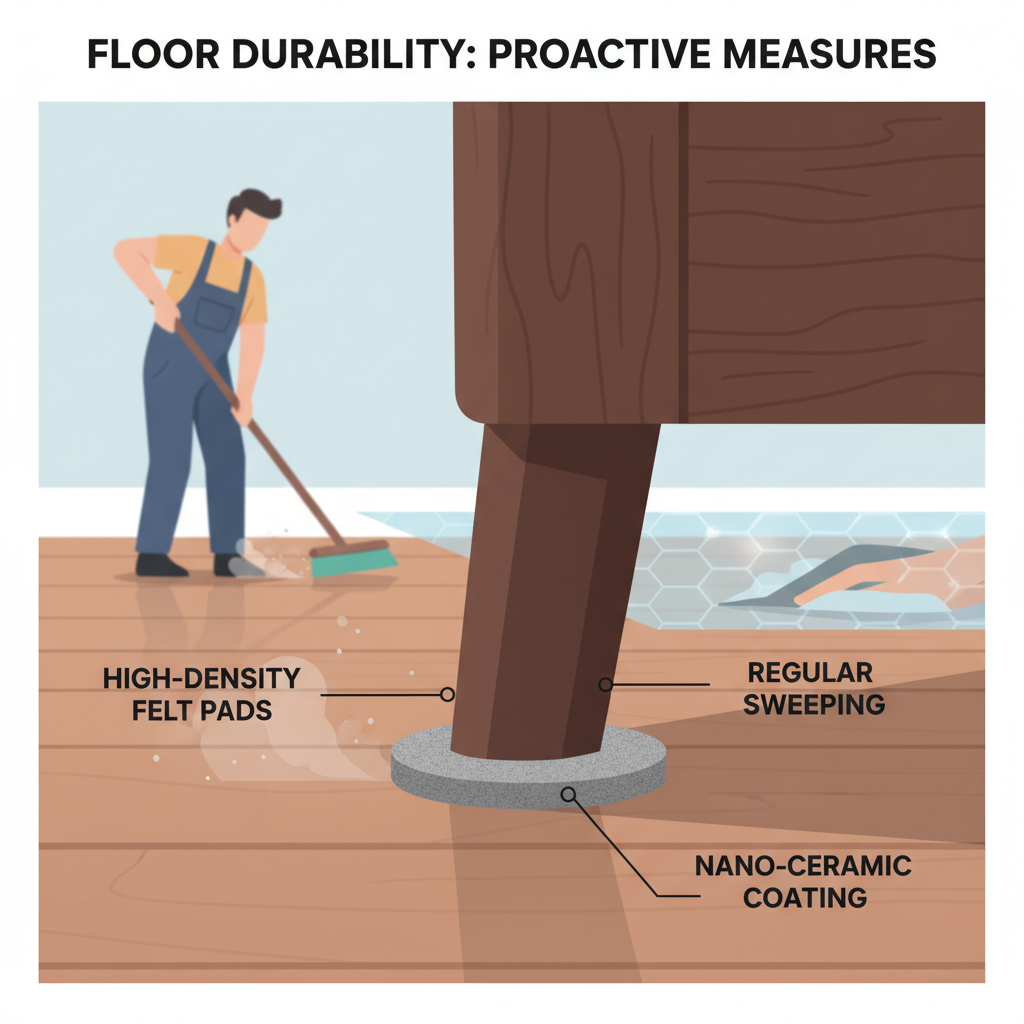
The desire to prevent floor scratches permanently is high among homeowners, but a realistic, expert-backed disclaimer is necessary: in the world of flooring, “permanent” is technically impossible. All physical materials will eventually yield to friction and time. However, you can achieve near-permanent protection through advanced coatings and strict maintenance protocols.
Nano-Ceramic Coatings and Advanced Floor Protectors
The new wave of nano-ceramic floor coatings offers the closest thing to permanent protection. Originally developed for the automotive industry, these liquid polymers bond with the existing floor finish to create a microscopic, ultra-hard sacrificial layer. Do ceramic coatings for wood floors actually work? Yes, professional house cleaners and flooring inspectors endorse them for adding years of life to a floor, though they do require reapplication every 3 to 5 years depending on traffic.
Ultimately, the best floor protector is preventative maintenance. The data on this is staggering: applying high-density felt pads to all furniture reduces floor scratching incidents by up to 85% in residential homes [12]. Combining felt pads, routine sweeping to remove abrasive silica dust, and a high-quality nano-ceramic coating is the ultimate formula for a pristine, long-lasting floor.
Conclusion
Navigating the world of high-performance flooring requires looking past “adamantine” marketing hype and understanding the fundamental science of durability. By recognizing the critical distinction between scratch resistance (dictated by wear layers and chemical finishes like aluminum oxide) and dent resistance (dictated by core density, Janka ratings, and proper underlayment), you can select a floor that truly matches your lifestyle. Whether you opt for SPC vinyl for an active home with pets or commercial porcelain for a heavy-traffic facility, matching the material science to your specific needs is the key to a lasting investment.
Before making your next major flooring investment or attempting a complex repair, we encourage you to consult with a certified flooring inspector to ensure your subfloor, underlayment, and chosen materials are perfectly aligned for decades of flawless performance.
Disclaimer: Always consult manufacturer guidelines before applying heat, steam, or chemical treatments to flooring. Using incorrect repair methods on specific finishes (e.g., oil vs. water-based polyurethane) can cause permanent damage. Structural denting may require professional inspection.
References & Authoritative Sources
- Thorne, A. (2023). Crystalline Structures and Synthetic Infusions in Modern Wear Layers. Materials Science and Engineering Journal.
- Journal of Applied Polymer Science. (2022). Abrasion Resistance of Advanced Polymer Matrices vs. Standard LVP.
- ASTM International. (N.D.). Standard Test Method for Abrasion Resistance of Organic Coatings by the Taber Abraser.
- National Wood Flooring Association (NWFA). (2021). Understanding Wear Standards and Mil Thickness in Resilient Flooring.
- Consumer Reports. (2023). Best Flooring for Active Homes: Scratch and Dent Resistance Tests.
- Hardwood Floors Magazine. (2022). The Janka Scale Re-evaluated: Alternative Flooring Performance.
- Floor Covering Weekly. (2023). Lifecycle Cost Analysis of Commercial Flooring Materials.
- Concrete Construction Magazine. (2021). Load Capacity Enhancements via High-Performance Epoxy Coatings.
- World Floor Covering Association (WFCA). (N.D.). Consumer Guide to Flooring Education and Scratch Diagnostics.
- Fine Woodworking Magazine. (2020). Wood Properties and Finish-Specific Repair Techniques.
- Institute of Inspection, Cleaning and Restoration Certification (IICRC). (2022). Standards for Floor Maintenance and Traffic Pattern Restoration.
- Cleaning Industry Research Institute (CIRI). (2021). Efficacy of Surface Protection and Preventative Maintenance in Residential Flooring.
