There’s nothing quite like a room bathed in natural light. But as you watch the sunbeams dance across your floor, a nagging worry creeps in. You notice the area under the rug is a different color than the rest of the room, a telltale sign of sun-bleached floors. This frustrating floor fading from sun exposure can ruin the aesthetic of your beautiful home and diminish its value. You’re left wondering: how do you choose a floor that can stand up to the sun’s relentless rays without making a costly mistake?
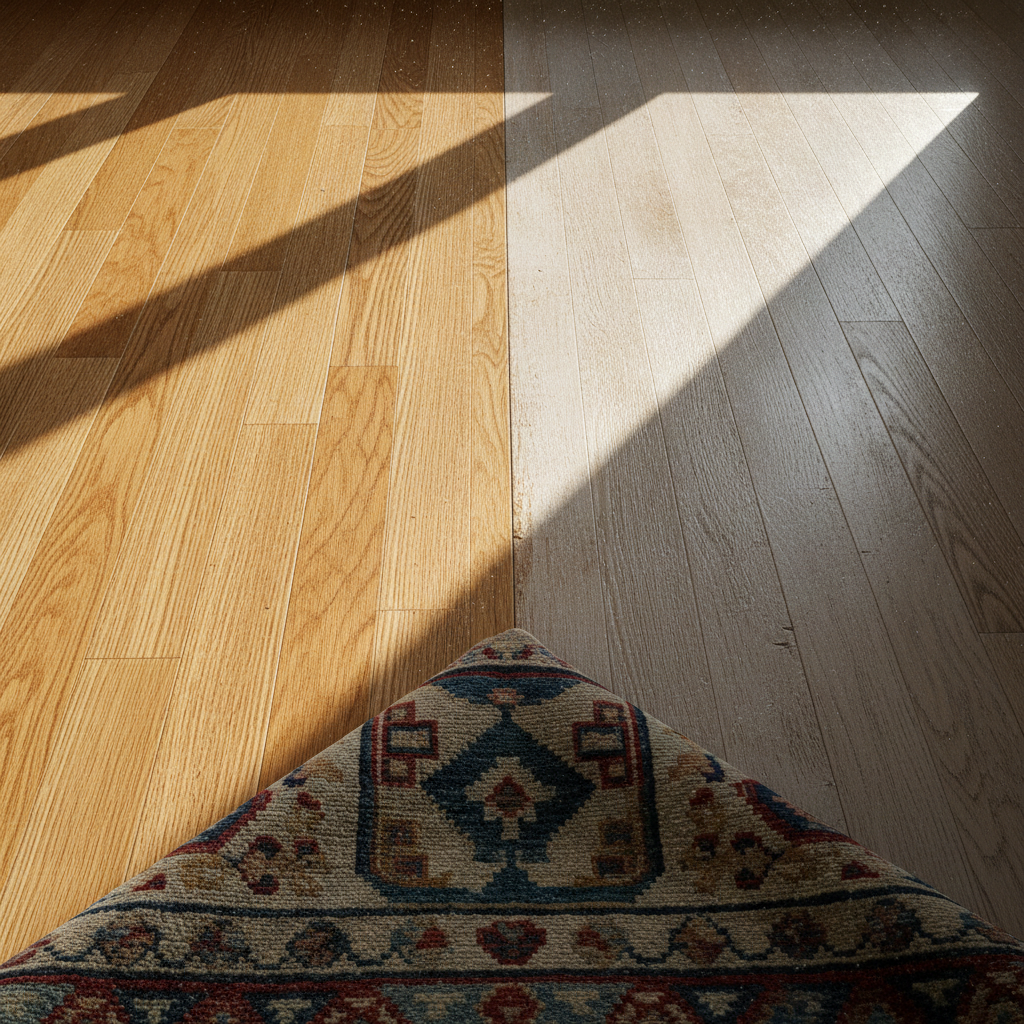
This is your definitive, science-backed guide to solving that exact problem. We move beyond simple lists of “good” flooring to give you the tools to become an expert. We’ll explore the science of UV damage, introduce our proprietary Fade Resistance Rating system to rank every major flooring type, and provide a complete, actionable plan for choosing new floors and protecting your current ones. By the end of this article, you will have the confidence to select, protect, and even repair flooring in your sunniest rooms.
- The Science of Sun Damage: Why Your Floors Are Fading
- Decoding the Mystery: What is Adamantine Flooring?
- Buyer’s Guide: The Best Fade-Resistant Flooring Materials Ranked
- Your Action Plan: How to Prevent Floor Sun Damage on Existing Floors
- Repairing Sun-Bleached Floors: When to DIY vs. When to Call a Pro
- Frequently Asked Questions (FAQ)
- Conclusion: Protect Your Investment with the Right Choice
- References
The Science of Sun Damage: Why Your Floors Are Fading
To truly understand how to find UV-resistant flooring, we first need to understand the enemy. The sunlight streaming through your windows is more than just visible light; it’s a form of energy that includes ultraviolet (UV) radiation. This invisible force is the primary culprit behind UV damage to flooring, breaking down materials at a molecular level.

When UV rays strike your floor, they trigger a process called photodegradation. This chemical reaction targets the molecules responsible for color, known as chromophores. The UV energy breaks the chemical bonds within these molecules, causing them to lose their ability to absorb light, which we perceive as fading or “bleaching.” Different materials react in unique ways. In wood, UV radiation breaks down lignin, a natural polymer that gives wood its rigidity and color. In synthetic materials like vinyl or carpet, it shatters the bonds in artificial dyes and polymers.
Expert Explainer: UVA vs. UVB Rays
Not all UV radiation is the same. The two types that reach your floors are:
- UVA Rays: These have longer wavelengths and penetrate deeper into materials. They are primarily responsible for the gradual aging and color change (fading) of your floors. Most window glass does little to block UVA rays.
- UVB Rays: These have shorter wavelengths and are more energetic. While mostly blocked by standard glass, they can cause more significant surface damage, like the breakdown of finishes and embrittlement of plastics, especially with prolonged exposure through open doors or older windows.
Beyond Fading: The Hidden Effects of UV Exposure
Color loss is the most obvious sign of sun damage, but it’s often just the tip of the iceberg. Prolonged UV exposure can cause deeper, structural harm that compromises the integrity and lifespan of your flooring. This is a critical content gap many guides miss—focusing only on color can lead you to overlook more severe issues.
Here’s what to watch for in different materials:
- Wood Flooring:
- Drying and Cracking: UV rays and the heat from sunlight can dry out the natural oils in wood, leading to brittleness, shrinking, and even cracking or splitting over time.
- Finish Degradation: The protective polyurethane or urethane finish on your hardwood can become cloudy, yellow, or brittle, eventually peeling or cracking and leaving the raw wood exposed.
- Vinyl Plank Flooring (LVP/LVT):
- Embrittlement: The plasticizers that keep vinyl flexible can be broken down by UV radiation, causing the planks to become hard, brittle, and more susceptible to cracking under pressure.
- Chalking: The surface of the vinyl can degrade into a fine, chalky powder as the polymer binder breaks down, dulling the finish and texture.
- Carpet:
- Fiber Weakness: UV rays can weaken the synthetic fibers (like nylon or polyester) in your carpet, making them brittle and prone to breaking. This leads to premature wear and thinning in sunny spots.
Decoding the Mystery: What is Adamantine Flooring?
When searching for durable, fade-resistant flooring, you may come across the term “Adamantine flooring.” This term implies extreme hardness and durability, but it’s not a standard industry category like “luxury vinyl” or “laminate.” Instead, “Adamantine flooring” is typically a brand name or a marketing term used by a specific manufacturer to highlight the advanced durability and scratch resistance of their product’s wear layer.
Because it isn’t a generic material type, the composition can vary. It is most often a type of high-end laminate or a rigid core vinyl product featuring a proprietary top coat infused with hardening agents like aluminum oxide or even diamond dust particles. The key to evaluating Adamantine flooring for sun-drenched rooms lies not in the name, but in its technical specifications, particularly the details of its UV-protective coatings and the manufacturer’s warranty against fading and discoloration.
Adamantine Flooring vs. The Competition: A Head-to-Head Comparison
To understand if a product marketed as “Adamantine” is the right choice, you must compare its specifications directly against other top-tier fade-resistant flooring options. This provides the context needed to make an informed decision beyond the marketing claims.
| Feature | Adamantine Flooring (Typical Claims) | High-End Luxury Vinyl Tile (LVT) | High-End Laminate |
|---|---|---|---|
| Composition | Often a high-density fiberboard (HDF) core or stone-polymer composite (SPC) core. | 100% synthetic layers of PVC and limestone composite. | Multi-layer wood fiberboard core with a high-resolution image layer. |
| Wear Layer Tech | Proprietary top coat with enhanced scratch inhibitors (e.g., aluminum oxide, diamond particles). | High-performance urethane wear layer with UV inhibitors and often a ceramic bead or aluminum oxide coating. | Melamine resin top layer fortified with aluminum oxide for UV and scratch protection. |
| Fade Resistance Warranty | Varies by manufacturer; look for a “Lifetime” or 25+ year residential warranty that explicitly covers fading. | Typically a 20-year to Lifetime residential warranty that includes specific coverage against fading from sunlight. | Often includes a 15-25 year warranty against fading, staining, and wear. |
| Avg. Cost/sq. ft. | $4.00 – $8.00+ | $3.50 – $7.00 | $3.00 – $6.00 |
First Look Analysis: Products labeled “Adamantine” are positioned as premium, ultra-durable options. For a sun-drenched room, its primary value comes from the quality of its UV-cured wear layer. If the manufacturer provides a robust, long-term warranty that explicitly covers fading from sun exposure, it can be an excellent contender alongside top-quality LVT and laminate. Always request the technical data sheet to verify its claims.
Buyer’s Guide: The Best Fade-Resistant Flooring Materials Ranked
Navigating marketing claims can be overwhelming. To cut through the noise, we’ve developed a proprietary Fade Resistance Rating System. This 1-10 scale provides a clear, expert-driven ranking to help you choose the best flooring for rooms with lots of sunlight.
Our Rating Criteria:
- Material Composition (1-4 points): Is the material inherently inorganic and stable (like tile), or is it organic and prone to photodegradation (like untreated wood)?
- UV Protective Coatings (1-4 points): How advanced is the factory-applied top coat? We look for multi-layer, UV-cured finishes with hardening agents like aluminum oxide.
- Manufacturer Warranty (1-2 points): Does the warranty explicitly cover fading from sun exposure, and for how long? A strong warranty signals a manufacturer’s confidence in their product’s lightfastness.
Top Tier (Rating 9-10): Virtually Sun-Proof Flooring
For rooms with floor-to-ceiling windows or intense, all-day sun, these materials offer the ultimate peace of mind. Their fade resistance is baked into their very structure.
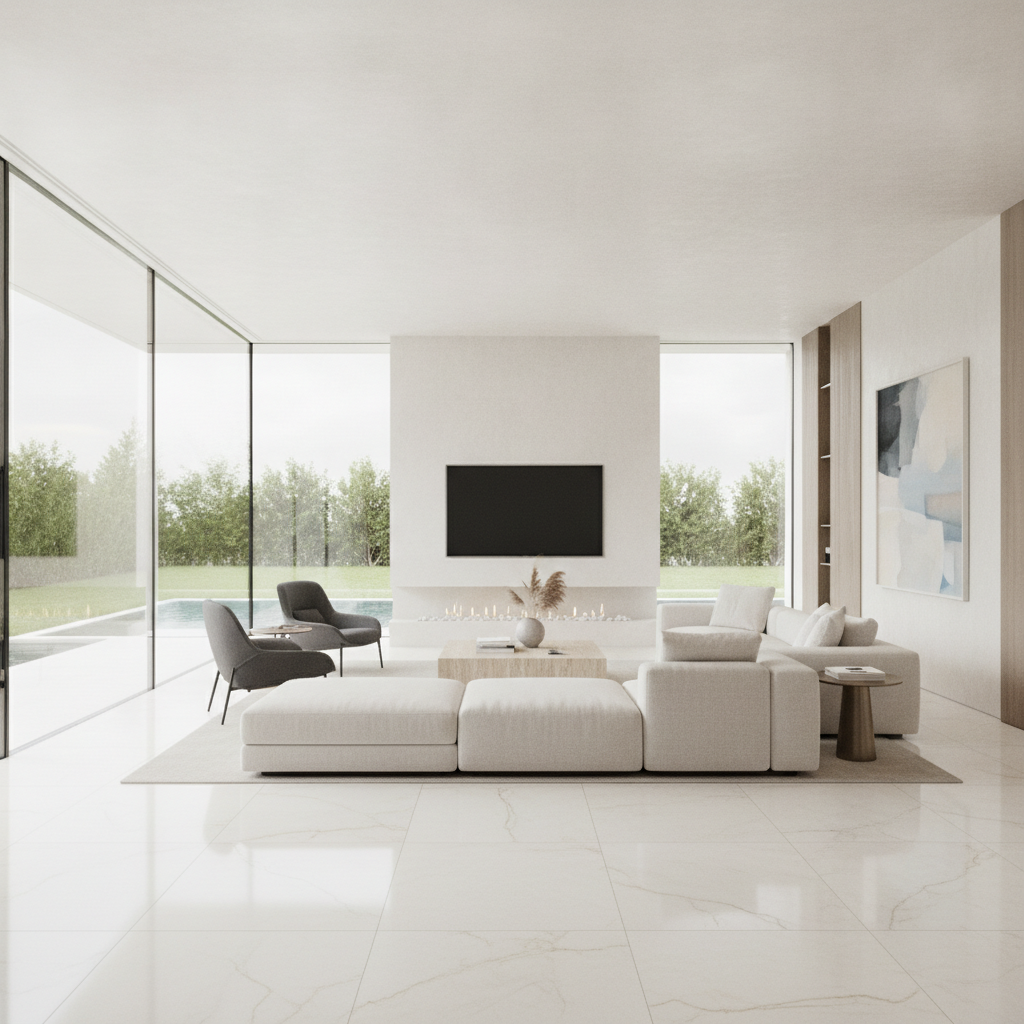
Porcelain & Ceramic Tile: These are the undisputed champions of fade resistance. The reason is simple science: their color comes from inorganic pigments mixed into the clay and fused into the tile’s body during firing at extreme temperatures. This “baked-in color” process creates a material that is chemically inert to UV radiation. The color you install is the color you will have decades later, no matter how much sun it gets.
Excellent Performers (Rating 7-8): Engineered for the Sun
These modern flooring solutions are specifically designed with advanced technology to combat UV damage, making them a fantastic choice for most sunny residential spaces.
High-Quality Luxury Vinyl Tile/Plank (LVT/LVP) & Laminate Flooring: The key to the high performance of these products is their multi-layer construction. A high-definition printed image layer is protected by a transparent, incredibly durable wear layer. In top-quality products, this wear layer is a UV-cured urethane or melamine resin finish embedded with aluminum oxide particles, one of the hardest materials available. This layer acts like a powerful sunscreen, blocking UV rays from reaching the color layer below. When shopping, always look for products tested against industry lightfastness standards, such as those set by ASTM International.
Buyer’s Checklist: What to Look For in UV-Resistant LVT & Laminate
- Wear Layer Thickness: For LVT, look for a wear layer of 12 mil or higher (20 mil+ is ideal for heavy traffic and intense sun).
- Aluminum Oxide Coating: Ensure the product specifications explicitly mention an aluminum oxide-fortified top coat.
- Warranty Details: Read the fine print. The warranty should specifically state it covers fading from artificial light and sunlight for at least 15-20 years.
- Core Type (for LVT): Stone-Polymer Composite (SPC) cores are more dimensionally stable and less prone to expanding or contracting with temperature changes common in sunny spots.
Use With Caution (Rating 4-6): Natural Materials and Their Nuances
Hardwood floors are beautiful and timeless, but their relationship with sunlight is complex. While modern finishes have greatly improved their performance, they are not immune to change.
Solid & Engineered Hardwood: All wood naturally changes color over time with exposure to light—a process called patina. Modern factory-applied, UV-cured urethane finishes significantly slow this process but cannot stop it completely. The effect varies by species.
Myth vs. Fact: Hardwood & Sunlight
- Myth: All hardwood fades in the sun.
- Fact: “Fading” isn’t always the right word. Some woods lighten, while others darken or change tone. Lighter woods like Maple and Red Oak tend to take on a soft, amber hue. Darker, exotic woods like Brazilian Cherry and Jatoba are highly photosensitive and will dramatically lighten and mellow out over time.
Materials to Avoid in Sun-Drenched Rooms (Rating 1-3)
Some materials are simply not built to withstand constant UV bombardment and should be avoided for rooms with intense, direct sunlight.
- Untreated Natural Fiber Rugs (Jute, Sisal): These materials contain high amounts of lignin, the same compound that breaks down in wood. They will bleach and become extremely brittle very quickly.
- Low-Quality Sheet Vinyl & VCT: Inexpensive vinyl products often lack a robust UV-protective wear layer, causing them to yellow, fade, and become brittle within just a few years.
- Certain Carpets: Carpets with low-quality, solution-dyed fibers or natural fibers like wool can be susceptible to fading. Look for high-quality synthetic carpets (Nylon, Polyester) specifically marketed with superior fade resistance.
Your Action Plan: How to Prevent Floor Sun Damage on Existing Floors
What if you love your current floors and aren’t ready to replace them? The good news is that a proactive, multi-layered defense strategy can dramatically slow down or even stop sun fading.
Tier 1: Low-Cost, High-Impact Strategies
These are simple habits and additions that can make a huge difference without a major investment.
- Window Treatments: Your first line of defense. Blinds, shades, and curtains are highly effective. While blackout curtains block the most UV, even sheer curtains can filter a significant portion, softening the light and reducing damage.
- Strategic Rug Placement: Use area rugs in the sunniest spots to protect the floor underneath.
- Furniture Arrangement: As one interior designer notes, “Think of your furniture as a tool. By simply shifting a sofa or a chair a few inches every few months, you can prevent those sharp, unsightly fade lines from ever forming.”
Pro-Tip: Rotate your area rugs and furniture every 6-12 months. This ensures that any subtle, light-induced color change happens evenly across the entire floor, making it virtually unnoticeable.
Tier 2: Smart Investments for Long-Term Protection
For maximum protection, consider these one-time investments that work around the clock.
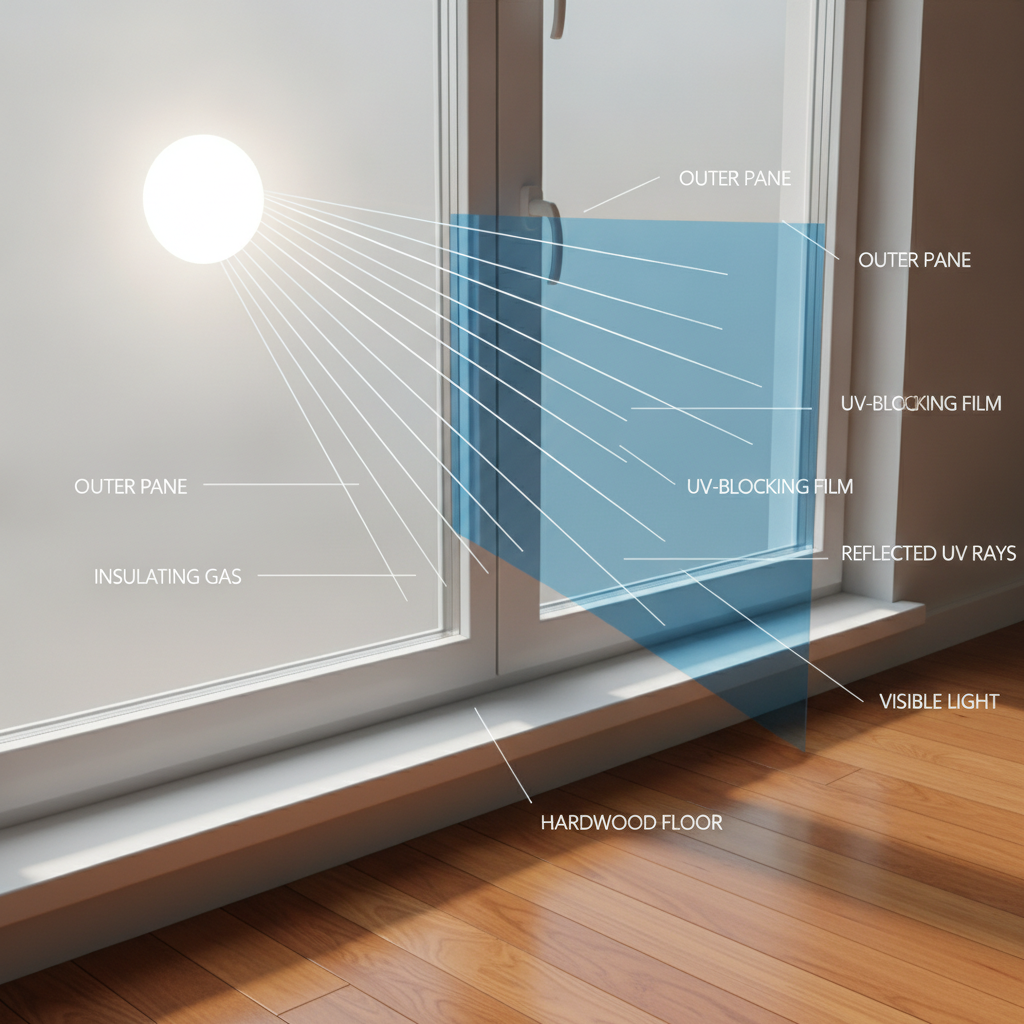
- UV-Blocking Window Film: This is one of the most effective solutions. Professionally installed window films are virtually invisible but can block up to 99.9% of harmful UV radiation without significantly reducing visible light. This protects not only your floors but also your furniture, artwork, and fabrics.
- Low-E (Low-Emissivity) Windows: If you’re planning a window replacement, upgrading to Low-E glass is a wise choice. These windows have a microscopic metallic coating that reflects UV and infrared heat while allowing visible light to pass through, offering the dual benefits of floor protection and improved energy efficiency.
| Window Film Type | UV Blockage % | Visible Light Transmitted | Average Cost/sq. ft. (Installed) |
|---|---|---|---|
| Clear UV Film | 99%+ | High (70-90%) | $5 – $8 |
| Lightly Tinted/Ceramic | 99%+ | Medium (40-70%) | $7 – $12 |
| Reflective/Dual-Reflective | 99%+ | Low-Medium (15-50%) | $8 – $15 |
Repairing Sun-Bleached Floors: When to DIY vs. When to Call a Pro
If the damage is already done, you still have options. The right solution depends on the flooring material and the severity of the fading.
The Sun Bleaching Damage Scale
- Level 1: Minor Discoloration. You can see a slight difference in color under a rug, but the floor’s finish is intact.
- Solution: For hardwood, sometimes the best solution is to remove all rugs and furniture and allow the rest of the floor to “catch up” and even out over several months. For LVP or laminate, this level of fading is often permanent but may not be noticeable enough to warrant action.
- Verdict: DIY (or no action needed).
- Level 2: Obvious Fading & Finish Dullness. There are clear, defined lines of discoloration, and the finish in the sun-exposed area has lost its sheen.
- Solution: For hardwood, this almost always requires a full sand and refinish of the entire room to achieve a uniform color and finish. For LVP and laminate, replacement of the affected planks is the only option, which can be difficult to color-match.
- Verdict: Call a Pro.
- Level 3: Severe Damage. The floor shows deep color loss, and the material itself is damaged—wood is cracking or splintering, vinyl is brittle, or the finish is peeling.
- Solution: The floor has reached the end of its life. A full replacement is necessary.
- Verdict: Call a Pro for replacement.
As one professional floor refinisher cautions, “Spot-treating sun damage on wood is nearly impossible. The only way to guarantee a perfect, even result is to sand the entire surface back to its raw state and start fresh.”
Frequently Asked Questions (FAQ)
What is the single most fade-resistant flooring material?
Porcelain or ceramic tile is the most fade-resistant flooring material you can buy. Its color is fused into the tile during a high-heat firing process, making it impervious to UV degradation.
Will luxury vinyl plank (LVP) fade in a sunny room?
High-quality LVP with a thick (12 mil or more), UV-protected wear layer is highly resistant to fading and is an excellent choice for sunny rooms. However, very low-quality or builder-grade products with thin wear layers can still discolor over time. Always check the manufacturer’s warranty for specific coverage against sun damage.
Can I apply a UV-protective coating to my existing floors?
For hardwood floors, a new UV-protective coating can be applied, but only as part of a complete sand and refinish process. A professional will sand the old finish off and apply several coats of a modern, UV-cured polyurethane. It is generally not possible to add a new protective coating to existing laminate, vinyl, or tile floors.
Conclusion: Protect Your Investment with the Right Choice
Your sun-drenched room doesn’t have to be a source of anxiety for your floors. By understanding the science of sun damage, you can move past the marketing hype and make an informed decision. The key is to choose a material whose composition and protective technology are engineered to withstand the sun’s challenge.
Use our Fade Resistance Rating system as your guide to select a floor that matches your room’s needs, from the unyielding durability of porcelain tile to the advanced engineering of high-quality LVT. For your existing floors, implement a multi-tiered prevention strategy, combining simple habits with smart investments like window film to preserve their beauty for years to come. By arming yourself with this knowledge, you can confidently protect your flooring investment and continue to enjoy those beautiful, sunlit spaces without worry.
We encourage you to use this guide to make your next decision. Have you battled sun-damaged floors in your home? Share your experiences and questions in the comments below to help our community learn together.
