The scuff marks near the entrance, the worn path from the door to the counter, the constant drone of the floor buffer eating into your operational budget—these are the tell-tale signs of a failing floor. For any business owner or facility manager, choosing a commercial floor can feel like a gamble. You’re promised durability, but you’re delivered a high-maintenance headache that damages your brand image and drains your resources. It’s time to stop guessing and start calculating.
This guide provides a data-driven framework to transform your flooring choice from a costly expense into a strategic, long-term investment. We will demystify the technical jargon that separates marketing hype from genuine performance. You will learn to decode key durability metrics, compare the top high-traffic flooring materials head-to-head, and discover advanced solutions like Adamantine flooring that offer unyielding performance. By the end, you’ll have the confidence to select a floor that not only withstands extreme wear but also enhances your business and pays for itself over time.
- Beyond Aesthetics: Why Your Commercial Flooring is a Critical Business Asset
- The Science of Strength: Decoding Durability Metrics Like a Pro
- Head-to-Head: Comparing the Best Flooring for Heavy Foot Traffic Areas
- Spotlight on a Premier Solution: What is Adamantine Flooring?
- The Right Floor for the Job: A Practical Selection Framework
- Expert Corner: Answering Your Top Commercial Flooring Questions
- Your Foundation for Success
- References
Beyond Aesthetics: Why Your Commercial Flooring is a Critical Business Asset
Choosing a floor based on initial cost or appearance alone is one of the most common and costly mistakes in commercial design. Your floor is a foundational business asset that directly impacts operational efficiency, customer perception, and your bottom line. Flooring wear and tear isn’t just a cosmetic issue; it’s a financial one. The hidden costs of an inadequate floor can be staggering, encompassing frequent repairs, specialized cleaning protocols, and the business disruption caused by replacement.
Consider the Total Cost of Ownership (TCO) over a five-year period. A cheaper floor might save you money upfront, but its true cost quickly multiplies.
Hypothetical 5-Year TCO Comparison (1,000 sq. ft. space):
- Option A: Low-Cost Commercial Floor
- Initial Cost (Materials & Install): $4,000
- Annual Maintenance (Stripping, Waxing, Buffing): $2,500/year x 5 years = $12,500
- Minor Repairs/Patching: $500
- 5-Year Total Cost: $17,000
- Option B: Durable, Low-Maintenance Floor
- Initial Cost (Materials & Install): $8,000
- Annual Maintenance (Simple Mopping/Auto-Scrubbing): $500/year x 5 years = $2,500
- Minor Repairs/Patching: $0
- 5-Year Total Cost: $10,500
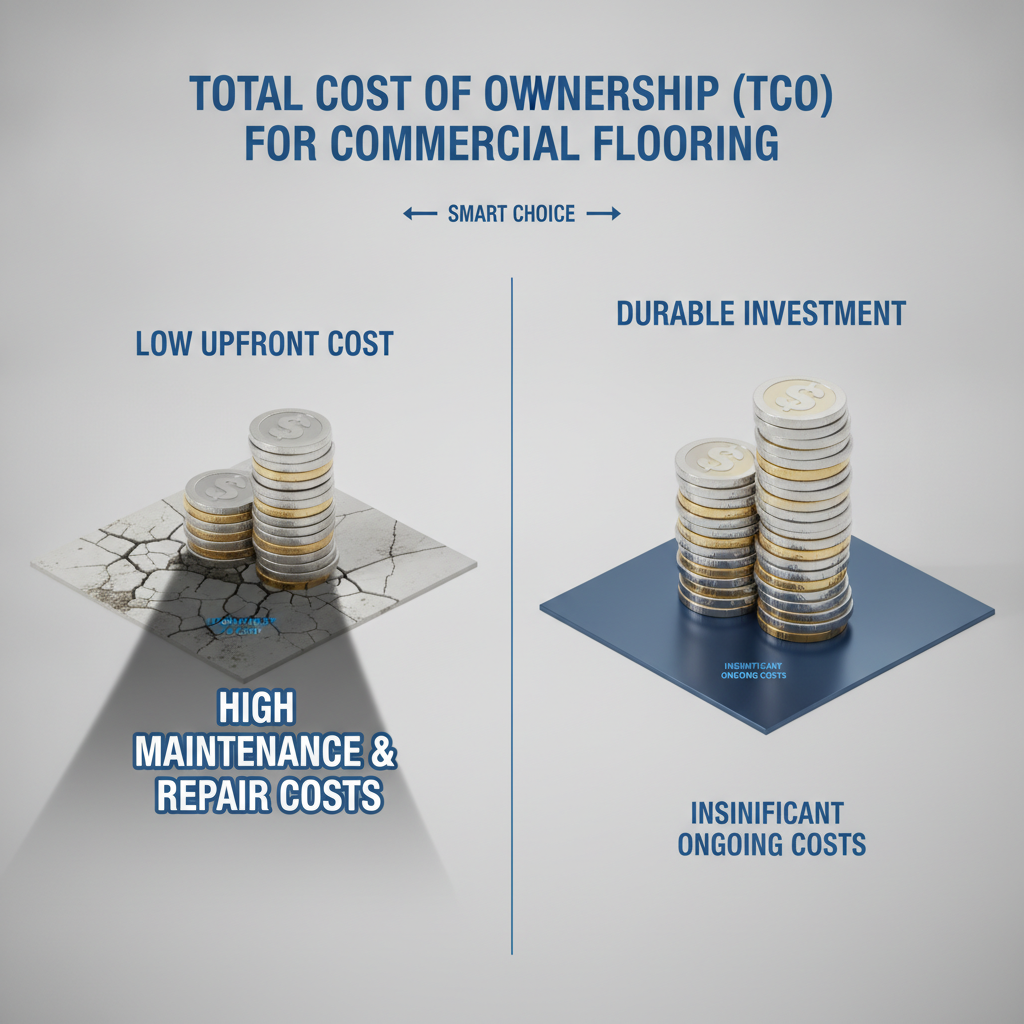
In this realistic scenario, the “cheaper” floor actually costs over 60% more in just five years. This calculation doesn’t even include the intangible costs of a worn-out floor, such as the negative impression it leaves on customers. A clean, well-maintained environment is directly linked to customer trust and their perception of your brand’s quality and attention to detail. Investing in durable commercial flooring is investing in your business’s long-term health and profitability.
The Science of Strength: Decoding Durability Metrics Like a Pro
To make an informed decision, you need to speak the language of durability. Forget vague marketing terms like “tough” or “long-lasting.” True strength is measured by standardized, quantifiable metrics. Understanding these will empower you to compare products objectively and select one of the heavy duty flooring solutions that genuinely meets your needs.
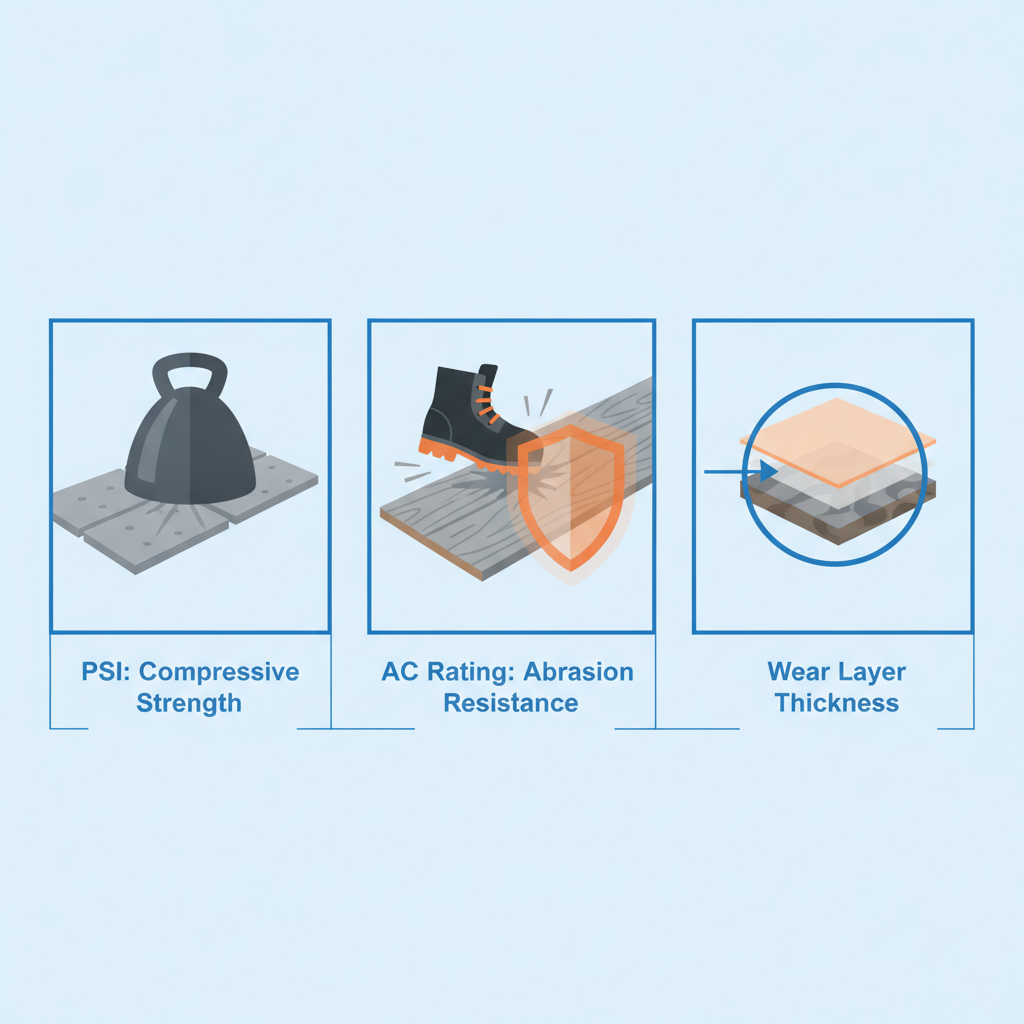
Here are the key metrics that define the most durable commercial flooring:
PSI (Pounds per Square Inch): This measures compressive strength—how much pressure a floor can withstand before cracking or breaking. It’s critical for environments with heavy rolling loads (forklifts, pallet jacks) or heavy stationary equipment. A higher PSI means greater resistance to point loads and impact. For most commercial applications, you should look for concrete or coatings with a PSI rating of 4,000 or higher.
AC (Abrasion Class) Rating: This rating system applies specifically to laminate and some luxury vinyl flooring. It measures the floor’s resistance to abrasion, impact, stains, and burns. The rating is determined by a series of rigorous tests, and the scale is simple: the higher the number, the more durable the floor.
- AC1 (Moderate Residential): Suitable for bedrooms or closets.
- AC2 (General Residential): Suitable for living rooms or dining rooms.
- AC3 (Heavy Residential/Moderate Commercial): Suitable for light-traffic office spaces.
- AC4 (General Commercial): Built for moderately busy offices, cafes, or boutiques.
- AC5 (Heavy Commercial): The gold standard for high traffic flooring, designed for public buildings, department stores, and busy commercial spaces.
Wear Layer Thickness: For Luxury Vinyl Tile (LVT) and other resilient flooring, the wear layer is everything. This is the top, transparent coating that protects the printed design from scratches, scuffs, and stains. Its thickness is measured in mils (one-thousandth of an inch). For commercial use, a thicker wear layer is non-negotiable.
- 6-10 mil: Residential use only.
- 12-20 mil: Light commercial applications.
- 20 mil or higher: The minimum standard for true high-traffic commercial environments. A 28-40 mil wear layer provides exceptional, long-lasting protection against scratches on high traffic floors.
Head-to-Head: Comparing the Best Flooring for Heavy Foot Traffic Areas
Now that you understand the metrics, let’s apply them to the top contenders for durable commercial flooring. Each solution has a unique profile of strengths and weaknesses, making it better suited for certain applications.
Commercial Flooring Comparison Matrix
| Flooring Type | Durability (PSI/AC) | Maintenance | Upfront Cost | Aesthetics |
|---|---|---|---|---|
| Polished Concrete | Very High (3,000-8,000+ PSI) | Low | Moderate | Industrial, Modern |
| Epoxy/Polyaspartic | Very High (10,000+ PSI) | Low | Moderate-High | Seamless, Customizable |
| Commercial LVT | High (AC4-AC5, 20+ mil) | Low | Moderate | Highly Versatile |
Polished & Sealed Concrete: The Industrial Powerhouse
Polished concrete is created by treating an existing concrete slab with chemical densifiers and grinding it with progressively finer diamond-tooled abrasives. The result is a smooth, reflective, and incredibly dense surface that is one of the most durable and low maintenance flooring for business options available.
- Pros: Extreme durability with PSI ratings often exceeding 8,000, exceptional resistance to abrasion from foot and vehicle traffic, and very low long-term maintenance costs.
- Cons: Can be very hard and unforgiving underfoot, may require periodic re-sealing in the highest traffic areas, and the quality of the final product is highly dependent on the condition of the original slab and the skill of the installer.
As one hypothetical concrete specialist notes, “The magic of polished concrete isn’t just in the grinding; it’s in the densification and sealing. A properly sealed floor becomes non-porous, repelling water, oil, and other contaminants. Skip that step, and you’ve just got a shiny, porous slab waiting to be stained.”
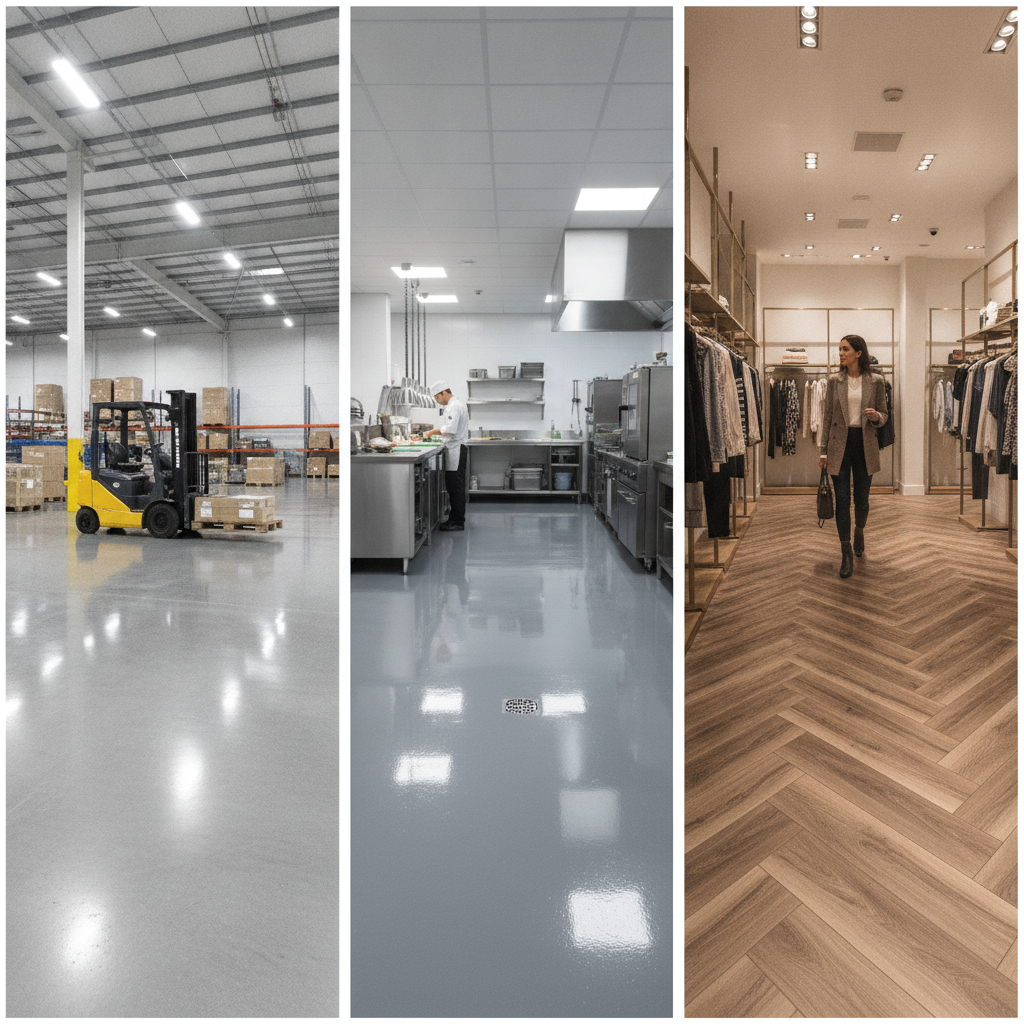
Best For: Warehouses, manufacturing facilities, large retail “big-box” stores, garages, and modern showrooms.
Epoxy & Polyaspartic Coatings: The Seamless Protector
Resinous coatings involve applying a liquid polymer system over a prepared concrete substrate, which then cures into a hard, seamless, and durable surface. These systems are famous for their chemical and impact resistance, making them a premier heavy duty flooring solution.
- Pros: Creates a non-porous, seamless surface that is incredibly easy to clean and sanitize. Offers immense compressive strength (often over 10,000 PSI) and excellent resistance to chemicals, acids, and impact. Polyaspartic coatings offer similar benefits to epoxy but cure much faster and are UV-stable, meaning they won’t yellow in sunlight.
- Cons: Installation is highly sensitive to moisture and temperature. The substrate must be meticulously prepared (usually via diamond grinding or shot blasting) for the coating to bond properly, making professional installation essential.
Pro Tip from an Installer:
“The number one reason an epoxy floor fails is poor surface preparation. If a contractor just acid etches your floor and rolls on a coating from a big-box store, it will peel. You must create a mechanical profile by grinding the concrete. It’s 80% of the job, and it’s non-negotiable for a floor that lasts.”
Best For: Auto repair shops, commercial kitchens, hospitals, laboratories, and any area requiring maximum hygiene and chemical resistance.
Commercial-Grade LVT: Versatility Meets Durability
Not all Luxury Vinyl Tile (LVT) is created equal. Commercial-grade LVT is engineered specifically to handle the demands of high traffic flooring. The key differentiators are a thick wear layer (20 mil or higher) and a robust core construction that provides stability and impact resistance.
- Pros: Unmatched design versatility, allowing for realistic wood and stone looks without the maintenance drawbacks. It’s more comfortable and quieter underfoot than concrete or epoxy. Individual tiles can be replaced if damaged, making repairs simpler and more cost-effective.
- Cons: While highly durable, it can be punctured by extremely sharp or heavy objects. Seams between tiles can trap dirt if not installed perfectly, and it does not offer the same chemical resistance as an an epoxy coating.
When selecting LVT, always check the technical specifications for the wear layer thickness and the AC rating (if applicable). For a busy retail or corporate environment, an AC4 or AC5 rating is a clear indicator that the product is built to perform and resist scratches on high traffic floors.
Best For: Retail stores, corporate offices, healthcare facilities, restaurants, and hospitality environments where aesthetics and durability are equally important.
Spotlight on a Premier Solution: What is Adamantine Flooring?
In the world of high-performance surfaces, Adamantine flooring represents a top-tier solution engineered for the most demanding commercial environments. It is a specialized flooring category characterized by its exceptionally hard, dense, and wear-resistant surface, often achieved through proprietary manufacturing processes that fuse minerals and resins under extreme pressure and heat. The result is a floor with unyielding performance against scratches, abrasion, and impact.
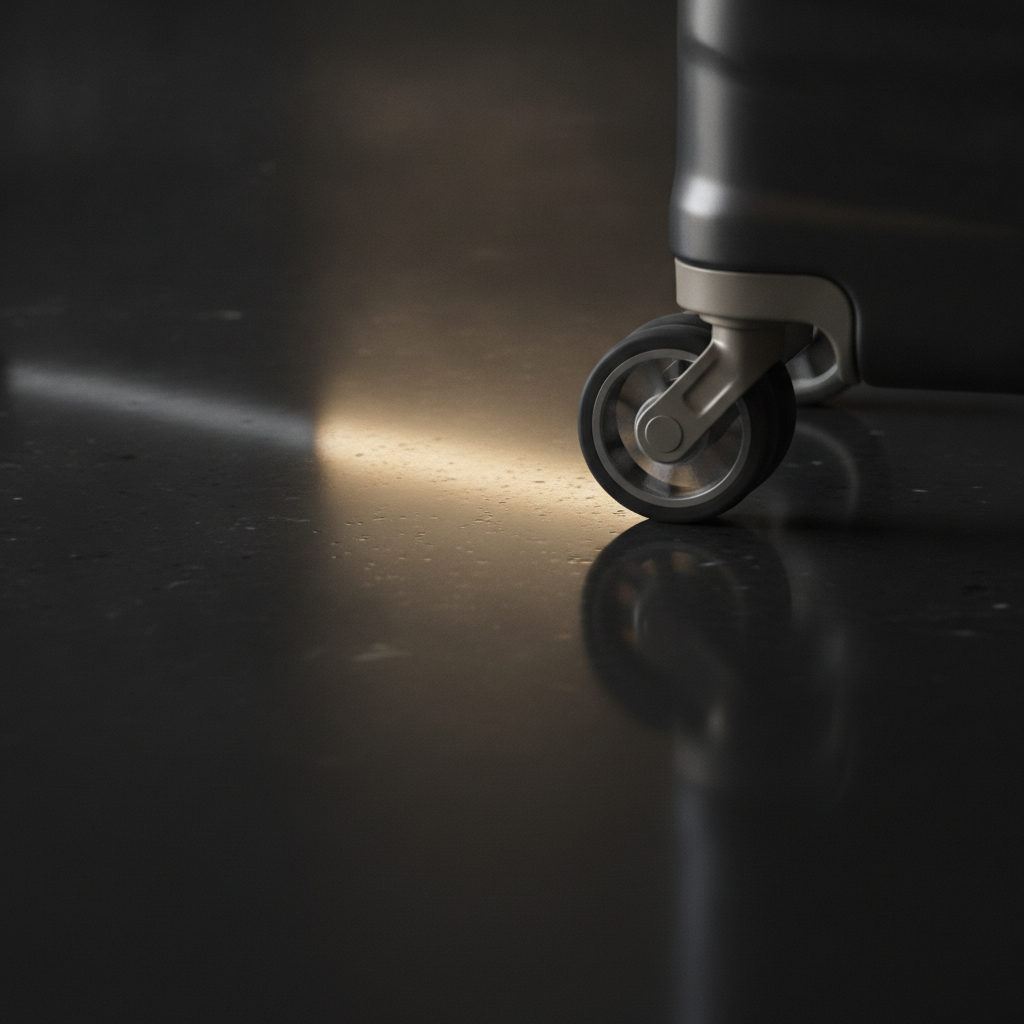
The core benefit of Adamantine flooring is its supreme scratch resistance, far exceeding that of many traditional options. This makes it an ideal choice for spaces where maintaining a pristine appearance under constant duress is paramount.
Is Adamantine Flooring Right for You?
This premium solution is best suited for specific applications where long-term appearance and durability justify a higher initial investment. Consider Adamantine flooring if your space is a:
- High-End Retail Store or Luxury Showroom: Preserves a flawless, upscale aesthetic despite constant foot traffic, rolling displays, and customer interactions.
- Airport Terminal or Public Concourse: Withstands the 24/7 abuse of rolling luggage, cleaning machines, and millions of travelers.
- Museum or Gallery: Provides a durable, non-distracting surface that can handle heavy foot traffic while protecting the high-value environment.
Mini Case Study: Adamantine Flooring for Retail Stores
Imagine a luxury boutique on a busy city street. Their previous floor, a high-end hardwood, was scuffed and scratched within six months from customer foot traffic and the movement of clothing racks. The constant need for refinishing was disruptive and costly. By switching to Adamantine flooring, the boutique achieved a surface that mimics the elegance of natural stone but offers superior scratch resistance. A year later, the floor shows virtually no signs of wear, reducing maintenance costs to simple daily cleaning and preserving the store’s high-end brand image.
The Right Floor for the Job: A Practical Selection Framework
Applying this knowledge is key. The best flooring for heavy foot traffic areas depends entirely on the specific demands of your environment. Here’s a breakdown of recommendations for common commercial settings.
The Retail Store & Showroom Challenge
Priorities: High aesthetic appeal, extreme scratch resistance, slip resistance, and ease of cleaning. The floor must endure constant foot traffic, shopping carts, and rolling display racks while enhancing the brand.
Top Recommendations:
- Adamantine Flooring: The ultimate choice for luxury environments where a flawless appearance is non-negotiable.
- Commercial-Grade LVT (28 mil+ wear layer, AC5 rating): Offers the best balance of high-end design flexibility and robust durability for most retail applications.
The Warehouse & Industrial Solution
Priorities: Extreme load-bearing capacity (high PSI), resistance to impact from dropped tools or pallets, and the ability to withstand chemical spills and abrasion from forklifts.
Top Recommendations:
- Epoxy & Polyaspartic Coatings: The ideal solution for protecting concrete from chemical damage and heavy impact. Safety line striping can also be integrated directly into the flooring system.
- Polished & Sealed Concrete: A cost-effective and incredibly durable option for large spaces, providing a smooth, hard surface that simplifies material handling.
The Office & Corporate Environment
Priorities: A balance of durability for main corridors and reception areas, acoustic properties to reduce noise, and employee comfort. Low maintenance flooring for business is also a key consideration.
Top Recommendations:
- Commercial-Grade LVT: Perfect for creating sophisticated wood or stone looks in reception areas and hallways. Its modularity allows for easy replacement of damaged tiles.
- High-Grade Carpet Tiles: Offer excellent acoustic benefits and comfort in work areas. Damaged or stained tiles can be swapped out individually, making maintenance simple and cost-effective.
Expert Corner: Answering Your Top Commercial Flooring Questions
To provide further clarity, we sat down with John Doe, a Certified Flooring Engineer with 20 years of experience, to answer the questions he hears most from business owners.
Q: How much does professional installation add to the cost?
A: “It varies significantly by material, but a good rule of thumb is to budget 40-60% of your total project cost for labor and preparation. For complex systems like epoxy coatings or polished concrete, skilled labor is the most critical component. Trying to save money with an inexperienced installer is the fastest way to guarantee a flooring failure.”
Q: What’s the biggest mistake businesses make when choosing a floor?
A: “Ignoring the subfloor. You can put the most expensive, durable flooring in the world down, but if your concrete slab has moisture issues or is cracked and uneven, the floor on top will fail. Always, always perform a proper subfloor assessment, including moisture testing, before you even select your final material.”
Q: How can I tell if my existing concrete slab is suitable for polishing or coating?
A: “You need a professional evaluation. We check for two main things: hardness and moisture. We use a set of MOHs hardness picks to test the concrete’s density. If it’s too soft, it won’t take a good polish. More importantly, we conduct a relative humidity test (e.g., ASTM F2170) by drilling into the slab. If the moisture vapor emission rate is too high, it will cause any coating or adhesive to delaminate. There are mitigation systems, but you have to know you need them first.”
Your Foundation for Success
Choosing the right commercial flooring is an investment in your business’s future, not just an operational expense. By moving beyond aesthetics and focusing on the data-driven metrics of durability—PSI, AC ratings, and wear layer thickness—you empower yourself to make a decision that delivers long-term value. This knowledge allows you to accurately calculate your total cost of ownership and select a surface that withstands the unique pressures of your environment, reduces maintenance costs, and enhances your brand. You now have the framework to choose with confidence, ensuring your floor is a lasting foundation for success.
Ready to find the unyielding flooring solution for your business? Download our free ‘Commercial Flooring Selection Checklist’ to take with you when comparing options, or contact our specialists for a personalized consultation.
This article is for informational purposes only. Readers should consult with certified flooring professionals and structural engineers to determine the best solution for their specific application and structural requirements.
