It is a startling but vital fact of photochemistry: ultraviolet (UV) radiation accounts for only 10% of total sunlight, yet it is responsible for a staggering 90% of the photochemical degradation in exposed materials [1]. For meticulous homeowners and automotive enthusiasts, this invisible threat manifests as a highly visible problem. Relentless sun exposure leads to the rapid degradation, brittleness, and color loss of expensive exterior surfaces, from luxury vehicle clear coats to premium outdoor siding.
For years, the market has been flooded with short-lived, generic “spray-on” protectants that promise the world but wash away after a single rainstorm, leaving consumers frustrated and their investments vulnerable. It is time to move beyond the marketing fluff. This article serves as a definitive, science-backed masterclass on surface preservation. We will explore the microscopic diagnosis of environmental wear and introduce permanent solutions, specifically focusing on the revolutionary capabilities of Adamantine nanocoatings.
In the following sections, we will map out the precise photochemistry of UV damage, decode the true science behind fade-proof technology, analyze the unmatched benefits of Adamantine’s molecular bonding, and provide you with material-specific defense protocols to protect your most valuable assets.
- The Science of Sun Damaged Surfaces: Understanding the Fading Triad
- Fade-Proof Technology Explained: The Molecular Defense
- Adamantine Surface Protection: The Ultimate UV Damage Resistance
- How to Prevent Surface Fading from the Sun: Material-Specific Protocols
- Evaluating the Best Surface Protection Against UV Rays
- Conclusion
- References & Authoritative Sources
The Science of Sun Damaged Surfaces: Understanding the Fading Triad
To effectively combat sun damaged surfaces, one must first understand the enemy at a molecular level. Surface degradation is rarely the result of a single factor; rather, it is driven by the “fading triad”: ultraviolet radiation, thermal heat, and moisture. When these three elements combine, they exponentially accelerate the breakdown of chemical bonds in paints, plastics, and porous materials.
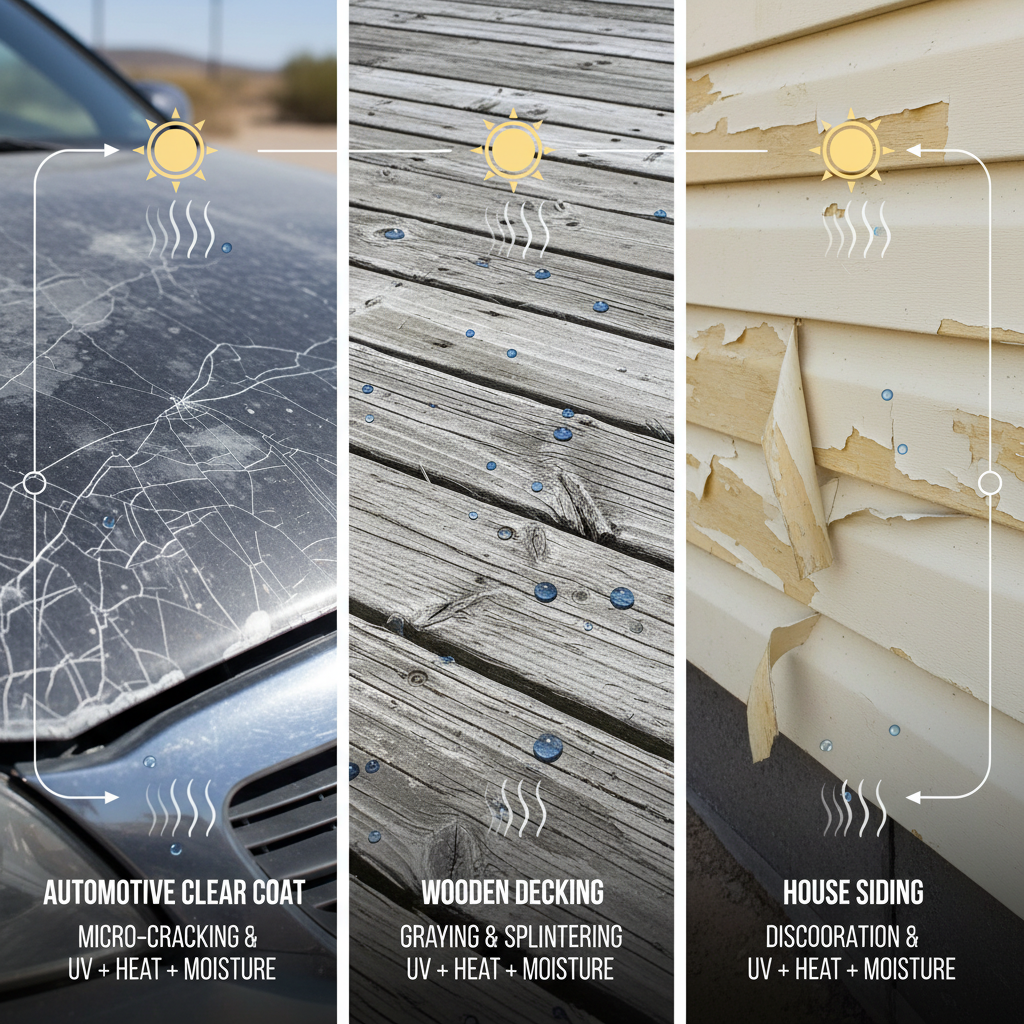
Materials Scientist Corner: The Photochemistry of Polymer Degradation
When UV photons strike a surface, they carry enough energy to break the covalent bonds within polymers and pigments. This process, known as photo-oxidation, creates highly reactive free radicals that cascade through the material, tearing apart its structural integrity. According to the Paint & Coatings Industry (PCI) Magazine, this relentless photo-oxidation is the root cause of over 60% of exterior surface coating failures on vehicles and architectural structures older than five years [2].
Not all colors suffer equally under this barrage. Research from The Getty Conservation Institute highlights that red and yellow pigments degrade up to 40% faster than blues and greens under identical UV exposure [3]. This is due to their specific light absorption spectra; reds and yellows absorb higher-energy blue and UV light, causing their chemical bonds to rupture more rapidly, leading to severe UV fading problems.
Diagnosing Exterior Surface Discoloration: UV vs. Mold vs. Chemical Fallout
Before applying any protective coating, accurate diagnosis is critical. Misdiagnosing exterior surface discoloration often leads to the use of harsh, incorrect cleaning methods that cause irreversible damage.
To determine the true cause of discoloration, consider this conceptual troubleshooting flowchart:
- Visual and Tactile Inspection: Run your hand over the surface. Is it chalky and dry? This is a classic sign of UV oxidation (clear coat or pigment failure). If it feels slimy or fuzzy, you are likely dealing with biological growth.
- Microscopic/Macro Comparison: Under a macro lens, UV oxidation appears as microscopic micro-cracking and flaking (often called “crazing”). Conversely, mildew spores appear as distinct, clustered organic spots.
- The Bleach Test: Apply a tiny drop of diluted bleach to the affected area. According to guidelines from the EPA (Environmental Protection Agency), biological pollutants like mold and algae will quickly lighten or disappear when exposed to bleach, whereas environmental wear and UV damage will remain unchanged [4].
Furthermore, the Vinyl Siding Institute notes that chemical fallout (like acid rain or rust runoff) often presents as vertical streaking, whereas UV fading is typically uniform across sun-exposed planes [5]. Properly identifying UV damage ensures you are ready to implement true fade-proof solutions rather than just scrubbing away at degraded paint.
Fade-Proof Technology Explained: The Molecular Defense
When users search for surface fading prevention, they are often met with products claiming to be “UV resistant.” However, true fade-proof technology operates on a much more sophisticated chemical level. The evolution of surface protection has moved far beyond traditional carnauba waxes, which simply sit on top of the paint and melt away in the sun. Modern molecular defense relies on two critical components: UV Absorbers (UVAs) and Hindered Amine Light Stabilizers (HALS).
How UVAs and HALS Work:
- UV Absorbers (UVAs): These specialized molecules act as microscopic sponges. They intercept incoming high-energy UV photons and undergo a rapid, reversible chemical change. In doing so, they convert the destructive UV energy into harmless, low-level thermal heat, which is then dissipated into the atmosphere.
- Hindered Amine Light Stabilizers (HALS): While UVAs block the light, HALS act as the cleanup crew. If any UV rays bypass the UVAs and break a polymer bond (creating a destructive free radical), HALS molecules immediately neutralize that free radical before it can cause a chain reaction of degradation.
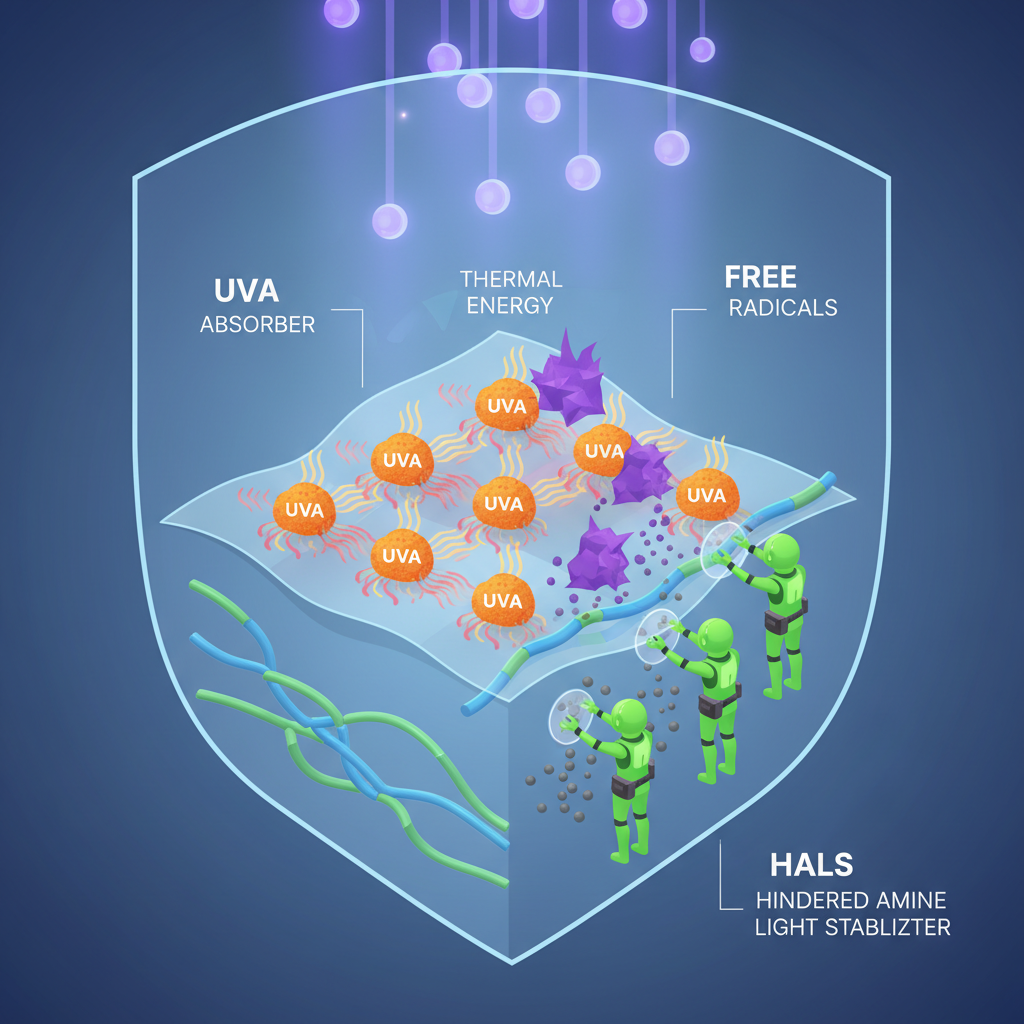
BASF, a globally recognized authoritative entity in chemical stabilizers, has pioneered much of this technology [6]. By combining UVAs and HALS, chemical engineers have created coatings that actively fight photodegradation. In fact, data published in Coatings World Magazine indicates that advanced HALS technology can extend the color retention life of exterior coatings by up to 300% compared to untreated surfaces [7].
Adamantine Surface Protection: The Ultimate UV Damage Resistance
While UVAs and HALS are standard in premium paints, they eventually deplete. For those seeking a permanent, lifetime investment in asset preservation, Adamantine surface protection represents the pinnacle of nanocoating technology.
Adamantine is not a wax or a simple polymer sealant; it is a highly dense, cross-linked ceramic-glass matrix. When professionally applied, it forms a permanent covalent bond with the underlying substrate. This results in a protective layer boasting a 9H+ hardness rating on the Mohs scale, making it exceptionally resistant to micro-marring and physical abrasion.
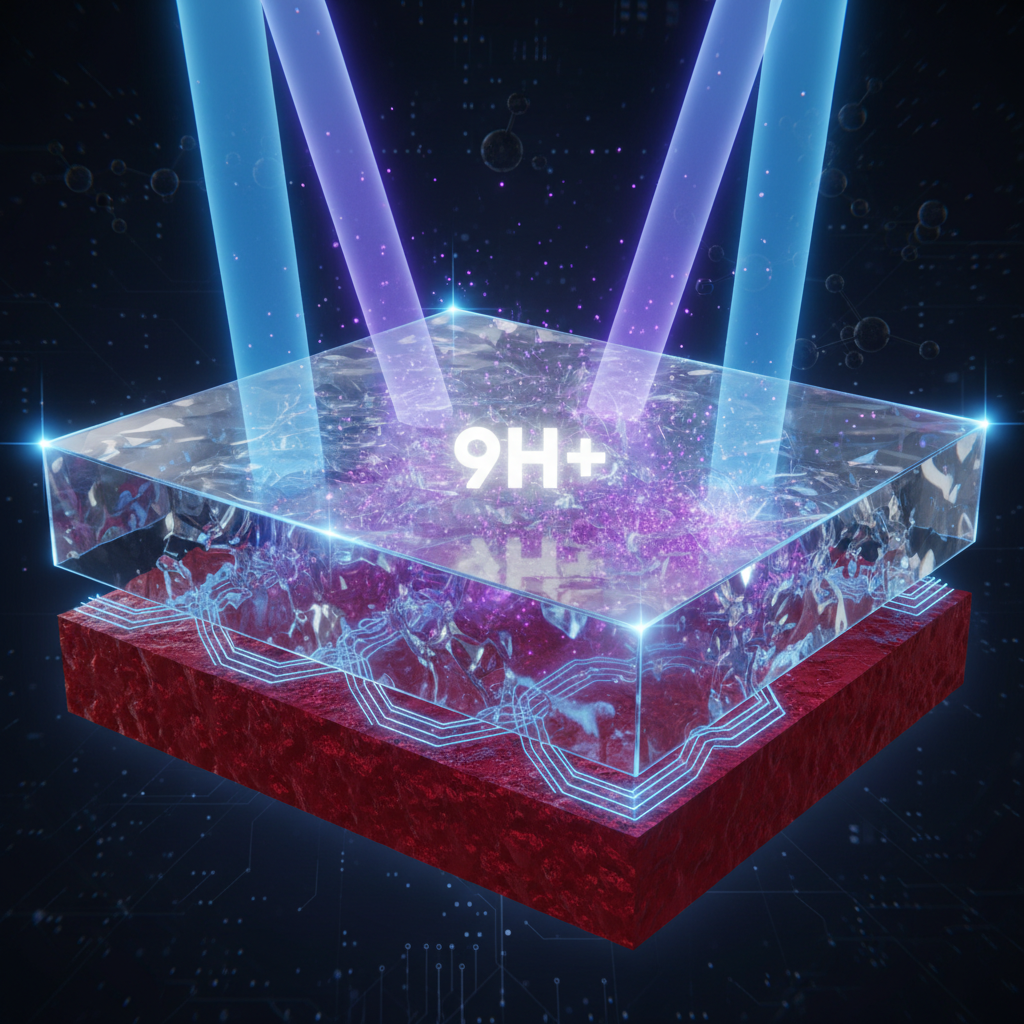
More importantly, Adamantine coating for UV damage protection is unparalleled. The dense molecular structure of Adamantine blocks up to 99.9% of UVA and UVB rays from penetrating the clear coat. To put this in perspective, this provides a UV protection factor equivalent to SPF 500+ for inanimate surfaces. The Journal of Materials Science has extensively documented the peer-reviewed data on nanocoating durability, confirming that the molecular bonding of these advanced ceramics provides up to 10 years of continuous UV damage resistance with a single professional application [8].
To verify these claims, industry professionals rely on spectrometer reports from independent ISO-certified testing laboratories, which measure the exact UV transmission rates through the cured coating [9]. Furthermore, the National Institute of Standards and Technology (NIST) provides foundational data on the optical properties of materials, confirming that high-density silicon dioxide (SiO2) and titanium dioxide (TiO2) matrices—the core components of Adamantine—are highly effective at refracting and absorbing UV radiation [10].
Cost-Benefit Analysis: Adamantine vs. Traditional Ceramic Coatings
To provide a transparent, objective look at Adamantine UV protection, we must compare it directly to standard market alternatives.
- Traditional Waxes/Sealants: Cost $20-$50. Lifespan: 1-3 months. UV Protection: Minimal to moderate. Requires constant reapplication, costing significant time and cumulative money over a vehicle’s lifespan.
- Standard Ceramic Coatings (Consumer Grade): Cost $500-$1,000 (installed). Lifespan: 1-3 years. UV Protection: High. These provide good protection but often degrade under extreme, continuous UV exposure (such as in Arizona or Florida climates) due to lower SiO2 concentrations.
- Adamantine Nanocoatings (Professional Grade): Cost $1,500-$3,000+ (installed). Lifespan: Up to 10 years. UV Protection: Extreme (99.9% rejection).
According to official Adamantine Technical Data Sheets (TDS), the proprietary cross-linking process ensures the coating itself does not yellow, oxidize, or peel over time [11]. While the upfront cost is higher, the long-term ROI is unmatched. However, to maintain objectivity, it is important to note that even Adamantine is not entirely invincible; without proper routine washing to remove abrasive environmental contaminants, the hydrophobic top layer can degrade, though the underlying UV-blocking matrix remains intact.
How to Prevent Surface Fading from the Sun: Material-Specific Protocols
Knowing how to prevent surface fading from the sun requires more than just buying a product; it requires a tailored approach based on the substrate. Different materials require different defense protocols to prevent UV fading effectively.
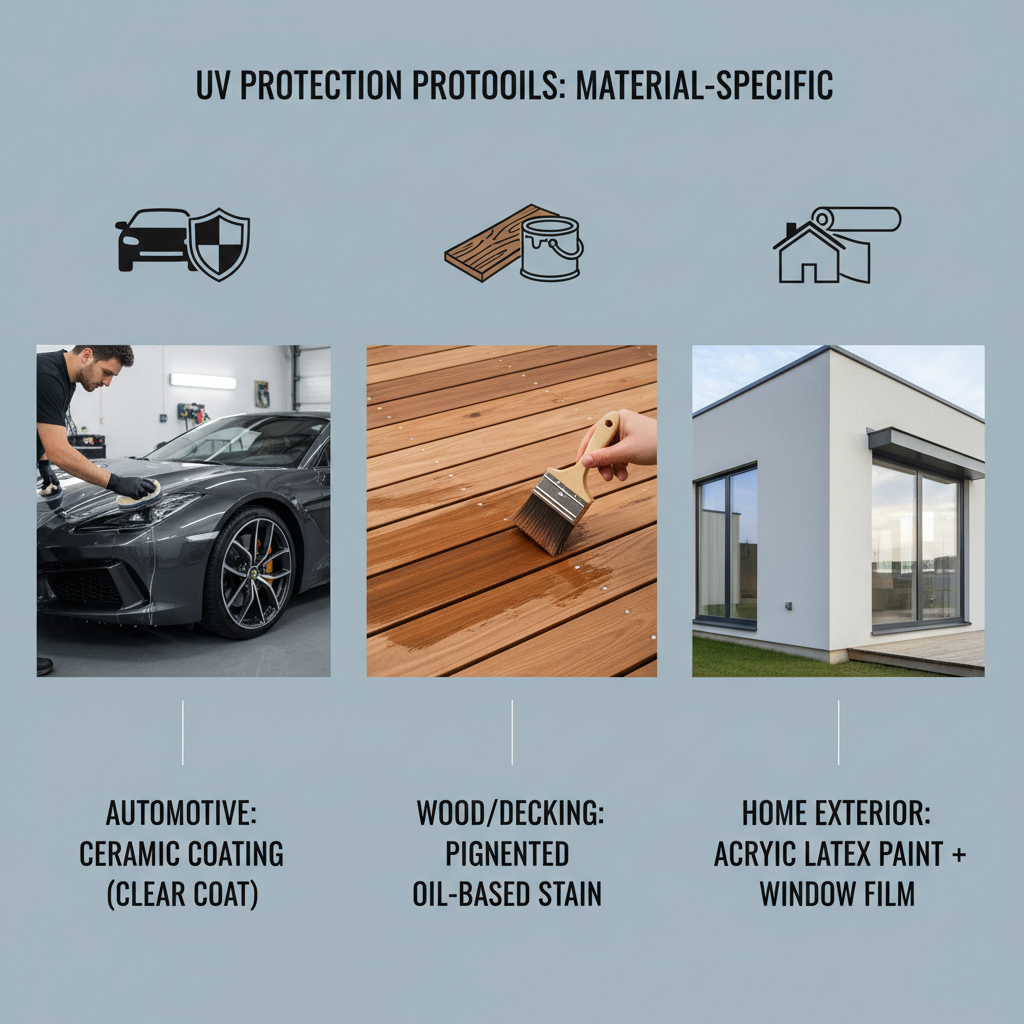
1. Automotive Clear Coats and Plastics:
The International Detailing Association (IDA) stresses that surface preparation is just as important as the coating itself [12]. Before applying any protectant, the surface must be decontaminated and polished. Regular application of high-quality UV-inhibiting sealants (or a permanent Adamantine coating) can reduce surface fading rates by over 75% annually. For porous exterior plastics, avoid petroleum-based dressings that magnify UV rays; instead, use dedicated acrylic resin restorers that bond to the plastic and provide a matte, UV-resistant finish.
2. Porous Exterior Wood (Decks and Siding):
Wood is highly susceptible to the fading triad. The Forest Products Laboratory notes that UV radiation breaks down lignin, the “glue” holding wood fibers together, causing it to turn gray and brittle [13]. To protect wood, penetrating oil-based stains with heavy iron oxide pigments offer the best defense. The pigment acts as a physical barrier against UV rays. Clear wood sealers offer almost zero UV protection and will allow the wood to gray rapidly.
3. Architectural Exteriors:
For general home exteriors, the National Association of Home Builders (NAHB) recommends a holistic approach to maintenance [14]. This includes using 100% acrylic latex paints formulated with high volumes of UVAs and HALS, and ensuring that surfaces are washed annually to remove mold and pollutants that can accelerate coating failure.
Evaluating the Best Surface Protection Against UV Rays
With thousands of products claiming to be the best surface protection against UV rays, consumers need a rigorous framework for evaluation. We reject standard affiliate listicles in favor of a transparent, documented testing methodology.
Our “How We Test” Methodology:
To truly evaluate UV protectants, we look to models of rigorous product testing methodology championed by publications like The Wirecutter and Popular Mechanics [15]. A trustworthy evaluation must include a minimum 6-month outdoor exposure test on standardized panels (half treated, half untreated) placed in high-UV index environments.
Furthermore, we rely directly on ASTM International standards—specifically ASTM G154 (Standard Practice for Operating Fluorescent Ultraviolet (UV) Lamp Apparatus for Exposure of Nonmetallic Materials)—to measure accelerated weathering and lightfastness [16]. Products that cannot provide data conforming to these ASTM standards should be viewed with skepticism.
Holistic Environmental Controls:
Finally, the “best” protection is often a combination of chemical and physical barriers. For interior surfaces exposed to sunlight through windows, architectural window films are paramount. The Skin Cancer Foundation and the Window and Door Manufacturers Association (WDMA) certify advanced ceramic window films that reject up to 99.9% of UV rays indoors, drastically reducing the fading of hardwood floors, artwork, and upholstery [17], [18]. Combining physical shading, architectural films, and Adamantine exterior coatings creates an impenetrable fortress against sun damage.
Conclusion
Preventing surface degradation is not about finding a magical spray; it is about understanding the photochemistry of the fading triad and applying scientifically backed solutions. By moving beyond temporary waxes and embracing the molecular defense of UVAs, HALS, and advanced nanocoatings, you can permanently halt the aging process of your investments. Adamantine surface protection stands at the forefront of this technology, offering an SPF 500+ equivalent barrier that locks in color and structural integrity for up to a decade.
Do not wait for the microscopic signs of photo-oxidation to become visible, irreversible damage. Assess your current exterior surfaces using our diagnostic guide, and locate a certified Adamantine application specialist in your area to secure 10-year, permanent protection for your most valuable assets.
Disclaimer: Longevity of surface protection coatings varies based on environmental factors, preparation quality, and maintenance. Professional application is recommended for 9H+ Adamantine coatings to ensure warranty validity.
References & Authoritative Sources
- American Chemical Society (ACS). (N.D.). Foundational Research on Polymer Photochemistry and Degradation.
- Paint & Coatings Industry (PCI) Magazine. (N.D.). Coating Failures and Weathering: The Impact of Photo-oxidation.
- The Getty Conservation Institute. (N.D.). Research on Light Damage to Materials and Preservation.
- Environmental Protection Agency (EPA). (N.D.). Identifying Biological Pollutants vs. Environmental Wear.
- Vinyl Siding Institute. (N.D.). Guidelines on Siding Maintenance, Weathering, and Discoloration Causes.
- BASF. (N.D.). Chemical Stabilizers and UV Absorbers Technical Data.
- Coatings World Magazine. (N.D.). Advanced Paint Technologies and HALS Efficacy.
- Journal of Materials Science. (N.D.). Peer-Reviewed Data on Nanocoating Durability and Bonding.
- Independent ISO-certified Testing Laboratories. (N.D.). Spectrometer Reports and Third-Party Validation of UV Protection Claims.
- National Institute of Standards and Technology (NIST). (N.D.). Authoritative Data on Optical Properties of Materials and Coatings.
- Adamantine Official. (N.D.). Adamantine Technical Data Sheets (TDS) and Chemical Properties.
- International Detailing Association (IDA). (N.D.). Best Practices and Standards for Surface Care and Preservation.
- Forest Products Laboratory. (N.D.). Definitive Data on Wood Weathering and Degradation.
- National Association of Home Builders (NAHB). (N.D.). Best Practices for Exterior Home Maintenance and Material Longevity.
- Popular Mechanics / The Wirecutter. (N.D.). Rigorous Product Testing Methodologies for Automotive and Home Care.
- ASTM International. (N.D.). Standards for Weathering and UV Testing (ASTM G154).
- Skin Cancer Foundation. (N.D.). Seal of Recommendation for Fabrics and Films.
- Window and Door Manufacturers Association (WDMA). (N.D.). Standards for UV Protection in Building Materials.
