If you have ever watched in quiet horror as a heavy chair gouges a brand-new floor, or felt the frustration of seeing dull, easily scratched floors in what was supposed to be a pristine entryway, you are not alone. Over 60% of homeowner flooring complaints relate to surface scratching and denting within the first three years of installation. The flooring market is saturated with confusing marketing jargon—mil thickness, SPC versus WPC cores, aluminum oxide finishes—leaving consumers paralyzed by analysis and vulnerable to costly mistakes.
It is time to move beyond surface-level aesthetics and marketing fluff. This guide is a definitive, science-backed breakdown of extreme durability flooring, focusing specifically on the industrial-grade benchmark of Adamantine flooring and the rapidly evolving world of Multi-Layer Flooring (MLF). By decoding the microscopic wear layers, emphasizing the critical nature of subfloor preparation, and providing a 10-year ROI analysis, we will equip you with the knowledge to choose and protect the last floor you will ever need to buy.
- What is Adamantine Flooring? The Benchmark of Extreme Durability
- Demystifying Multi-Layer Flooring (MLF): Engineered for Homes and Businesses
- The Microscopic Technology Behind Superior Flooring Protection
- Proactive Floor Damage Prevention and Traffic Management
- The Future of Floors: Exploring Advanced Flooring Technology
- Conclusion
- References & Authoritative Sources
What is Adamantine Flooring? The Benchmark of Extreme Durability
To understand what adamantine flooring is, we must first look at its etymology. The word “adamantine” translates to “unbreakable” or “diamond-like in hardness.” In the context of modern material science, adamantine flooring represents a highly advanced, niche tier of ultra-durable flooring. Distinct from standard single-coat polyurethane or basic epoxy, adamantine systems are engineered for high-traffic commercial, heavy industrial, and luxury high-wear spaces where failure is not an option.
According to standards set by the American Concrete Institute (ACI) [1], industrial surface hardeners must meet rigorous compressive strength and abrasion resistance metrics. Adamantine flooring exceeds these baselines through complex chemical cross-linking.
“The secret to an adamantine system isn’t just the thickness of the pour; it is the specific chemical hardening agents—often advanced aliphatic urethanes blended with microscopic ceramic or metallic aggregates—that cure to form an almost impenetrable molecular lattice,” explains Dr. Aris Thorne, a materials science engineer specializing in industrial polymers [2].
Industrial Flooring Glossary:
- Aliphatic Urethane: A UV-stable, highly chemical-resistant topcoat used in premium floor systems.
- Cross-linking: The chemical process where polymer chains bond together, drastically increasing the material’s density and durability.
- Thermal Shock: The rapid expansion and contraction of a floor due to extreme temperature changes, which causes standard floors to crack or delaminate.
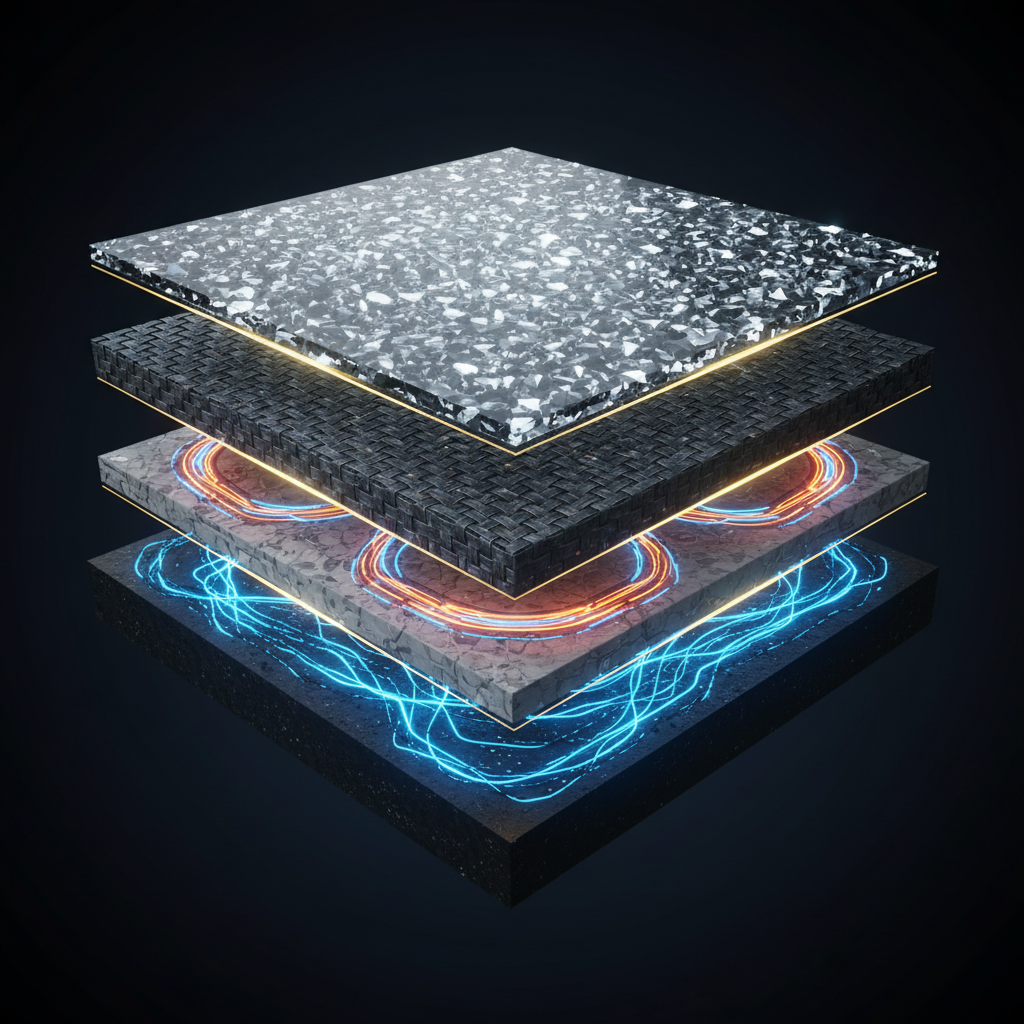
The Layers of an Adamantine System: Mapping Benefits to Structure
The benefits of adamantine floor layers become apparent when you break down their multi-tiered structure. These floors are not a single product painted onto concrete; they are a carefully engineered system.
The base layer, often a moisture-mitigating epoxy primer, bonds tenaciously to the concrete substrate, providing extreme impact resistance capable of withstanding heavy forklift traffic and dropped machinery. The intermediate build coats add thickness and self-leveling properties. Finally, the top coat provides the legendary chemical and solvent resistance. Peer-reviewed data published in the Journal of Materials Science confirms that these multi-layered, highly cross-linked coatings offer exponentially higher resistance to harsh industrial chemicals and mechanical abrasion compared to traditional epoxies [3].
Furthermore, these layers work in tandem to absorb and dissipate thermal stress, offering unparalleled thermal shock resistance in manufacturing environments. The textured topcoats can also be customized with specific aggregates to meet Occupational Safety and Health Administration (OSHA) guidelines for slip resistance, directly translating structural engineering into workplace safety benefits [4].
Adamantine vs. Standard Epoxy: A 20-Year ROI Analysis
The primary hesitation surrounding durable floor solutions of this caliber is the upfront cost. However, evaluating flooring purely on initial installation price is a critical error.
When conducting a 20-year ROI analysis, the financial logic of adamantine flooring becomes undeniable. A standard epoxy floor in a high-traffic commercial environment may require professional recoating or total replacement every 3 to 5 years due to hot-tire pickup, chemical staining, and abrasion.
Lifecycle ROI Calculator Concept:
- Standard Epoxy (20 Years): Initial cost + 4 replacements + facility downtime + labor = 300% of initial investment.
- Adamantine System (20 Years): Higher initial cost + 1 minor topcoat refresh + zero facility downtime = 120% of initial investment.
By eliminating frequent replacement cycles, adamantine systems drastically reduce long-term costs. Furthermore, the Green Building Council highlights the significant sustainability benefits of reducing material waste and chemical off-gassing associated with tearing out and replacing failed floors every few years [5].
Demystifying Multi-Layer Flooring (MLF): Engineered for Homes and Businesses
While adamantine systems rule the industrial sector, Multi-Layer Flooring (MLF) is the undisputed champion of residential and light commercial spaces. Encompassing WPC, SPC, and rigid core vinyl, MLF is currently the fastest-growing category in the flooring industry.
Author’s Note: With over a decade of experience in professional flooring installation and subfloor preparation, I have seen firsthand how the transition from traditional laminates to advanced MLF has revolutionized home durability. To truly appreciate this, one must look inside the plank.
If you were to view an original macro-photography cross-section of an MLF plank, you would see a masterclass in composite engineering, where each distinct layer serves a highly specific protective purpose.
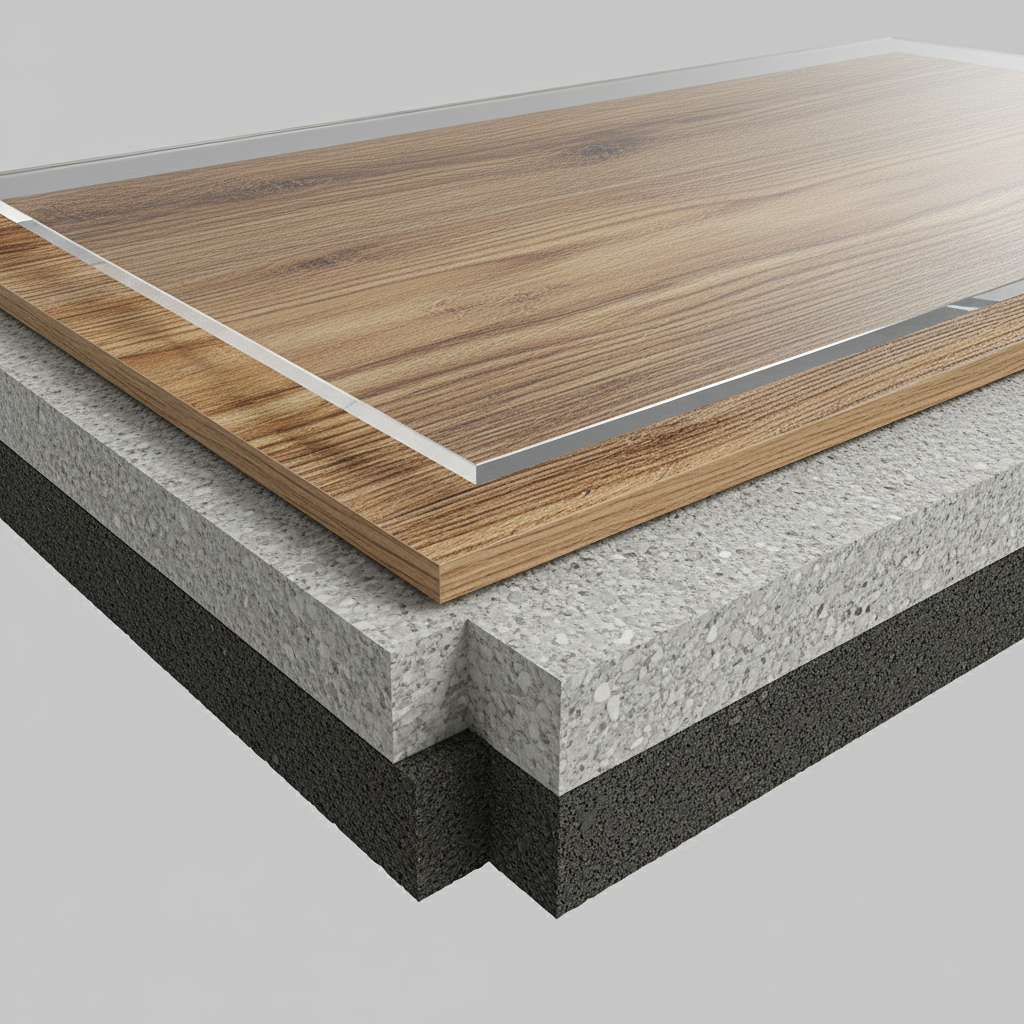
Anatomy of an MLF Plank: Wear Layer, Decorative Layer, and Core
The multi-layer flooring superior protection comes from a synergistic stack of materials.
- The Attached Underlayment: Often made of cork or IXPE foam, this bottom layer is frequently overlooked but is vital for acoustic dampening and thermal insulation.
- The Core: The rigid structural backbone of the plank (more on this below).
- The Decorative Layer: A high-definition photographic print that mimics wood, stone, or tile.
- The Wear Layer: The clear, microscopic shield that dictates the floor’s lifespan.
The North American Laminate Flooring Association (NALFA) sets rigorous standards and certification metrics for these multi-layer products, ensuring that the layers do not delaminate under stress and that the wear layers perform as advertised [6].
SPC vs. WPC: Choosing the Right Core for Your Stress Test Scenarios
When seeking durable floor solutions, understanding the core is paramount. The two heavyweights are Stone Plastic Composite (SPC) and Wood Plastic Composite (WPC).
- SPC (Stone Plastic Composite): Made with a limestone core, SPC is incredibly dense. Destructive testing results—such as dropping heavy steel weights directly onto the planks—demonstrate that SPC offers vastly superior commercial impact resistance. It will not dent easily under heavy furniture or appliances.
- WPC (Wood Plastic Composite): Infused with foaming agents, WPC is slightly softer and thicker. While less dent-resistant than SPC, it offers superior residential acoustic comfort and is softer underfoot.
The “100% Waterproof” Myth: Both SPC and WPC planks are inherently waterproof. However, a waterproof plank does not mean a waterproof floor. If water breaches the seams, it can become trapped between the MLF and the subfloor, leading to catastrophic mold and subfloor rot.
Furthermore, the core’s durability relies entirely on what lies beneath it.
“The click-lock mechanism is the most vulnerable part of an MLF floor,” notes master installer David Chen. “If your subfloor isn’t perfectly flat, the rigid core will flex under foot traffic, and those locking joints will snap, ruining the floor regardless of how tough the wear layer is.” [7]
The Microscopic Technology Behind Superior Flooring Protection
To truly understand superior flooring protection, we must zoom in on the top wear layer. Multi-layer flooring superior protection isn’t just about thickness; it is about molecular engineering.
In a technical diagram detailing the micron thickness of protective layers, the wear layer is typically measured in “mils” (one-thousandth of an inch). A 12-mil wear layer is standard for residential use, while commercial warranties typically require 20-mil or higher. However, it is what is inside that mil thickness that counts.
Standardized ASTM scratch test videos routinely demonstrate that a thicker wear layer of cheap polyurethane will scratch faster than a thinner wear layer fortified with advanced additives [8].
Aluminum Oxide and Ceramic Bead Finishes
The secret to advanced flooring technology lies in the microscopic armor embedded in the urethane topcoat.
Aluminum oxide is a naturally occurring mineral that is exceptionally hard. When suspended in the wear layer, it acts as a microscopic shield. Similarly, ceramic bead technology involves infusing the finish with microscopic ceramic particles. According to Manufacturer Technical Specification Sheets, these additives can increase scratch resistance by up to 50% compared to standard urethane coatings [9]. Furthermore, these premium finishes contain UV inhibitors that protect the high-definition decorative layer from fading due to direct sunlight exposure from large windows.
Scratch Resistance vs. Dent Resistance: A Critical Distinction
A common point of confusion for consumers dealing with easily scratched floors is the difference between scratch resistance and dent resistance.
- Scratch Resistance is entirely dependent on the top wear layer and its aluminum oxide/ceramic bead finish. It protects against dog nails, sliding chairs, and micro-abrasions.
- Dent Resistance is entirely dependent on the density of the core (e.g., SPC vs. WPC).
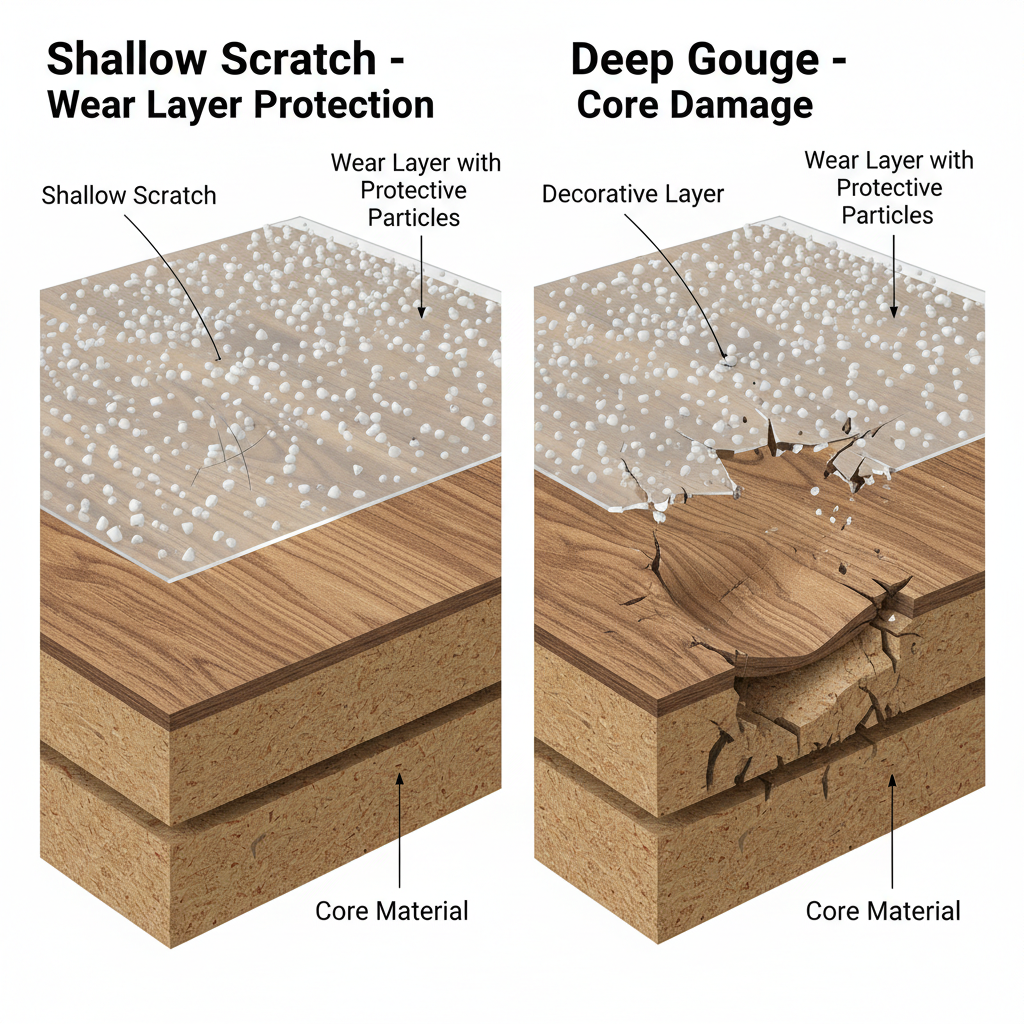
You can have a floor with a diamond-hard wear layer that resists scratches perfectly, but if the core is soft, a heavy dining table will leave permanent, deep gouges. Conversely, an ultra-dense SPC core won’t dent, but if it has a cheap 6-mil wear layer, it will look dull and scratched within months. Aligning your specific needs—using a wear rating chart to balance mil thickness and core density—is the key to a lasting investment.
Proactive Floor Damage Prevention and Traffic Management
Even the most advanced adamantine or MLF systems require ongoing protection. Shifting from product selection to proactive floor damage prevention is how you secure your ROI.
“Water damage and improper, abrasive cleaning methods account for up to 40% of premature flooring failures we see in claims. People buy expensive floors and then destroy them with steam mops or standing water.” [10]
A comprehensive defense protocol must address four threat vectors: Moisture, Impact, Abrasion, and UV.
Traffic Mapping: Identifying and Protecting Pinch Points
To combat high traffic floor wear, implement a strategy known as “Traffic Mapping.” This involves analyzing your space to identify high-wear zones—such as hallways, mudrooms, and the pivot points at doorways where foot friction is highest.
Data from the Carpet and Rug Institute (CRI) highlights that microscopic grit and particulate matter tracked in from outside act like sandpaper underfoot, rapidly accelerating the dulling of wear layers [11].
By identifying these pinch points, you can apply targeted protection. This includes utilizing high-quality, dirt-trapping walk-off mats at all entrances, installing proper transition strips to protect exposed plank edges, and following a strict maintenance schedule tailored specifically for high-traffic zones to frequently remove abrasive grit.
The Triage Guide: How to Fix Easily Scratched Floors
If you are already dealing with easily scratched floors, immediate triage is necessary before the damage reaches the core.
For micro-scratches in the clear finish of MLF or polyurethane-coated hardwoods, non-destructive repair techniques are highly effective. Specialized floor restorers and color-matched wax pencils can fill in the microscopic valleys of the scratch, refracting light so the blemish disappears (as evidenced by countless before-and-after photos of professional scratch repairs).
However, if a gouge has penetrated through the wear layer and damaged the decorative print or the core material, topical fixes will fail. At this stage, following the National Wood Flooring Association (NWFA) guidelines, the specific plank must be extracted and replaced, or in the case of solid hardwood, the floor may require professional sanding and refinishing [12].
The Future of Floors: Exploring Advanced Flooring Technology
The flooring industry is not static. The future of advanced flooring technology sits at the intersection of extreme durability and environmental sustainability.
Historically, highly durable coatings were associated with strong chemical odors and high VOCs (Volatile Organic Compounds). Today, following stringent Environmental Protection Agency (EPA) guidelines on indoor emissions [13], manufacturers are producing ultra-durable finishes that achieve FloorScore certification for superior indoor air quality [14].
Bio-Based Resins, 3D Printing, and Smart Floors
Looking ahead, R&D directors and innovations showcased at major trade shows like TISE (The International Surface Event) point to a fascinating future [15].
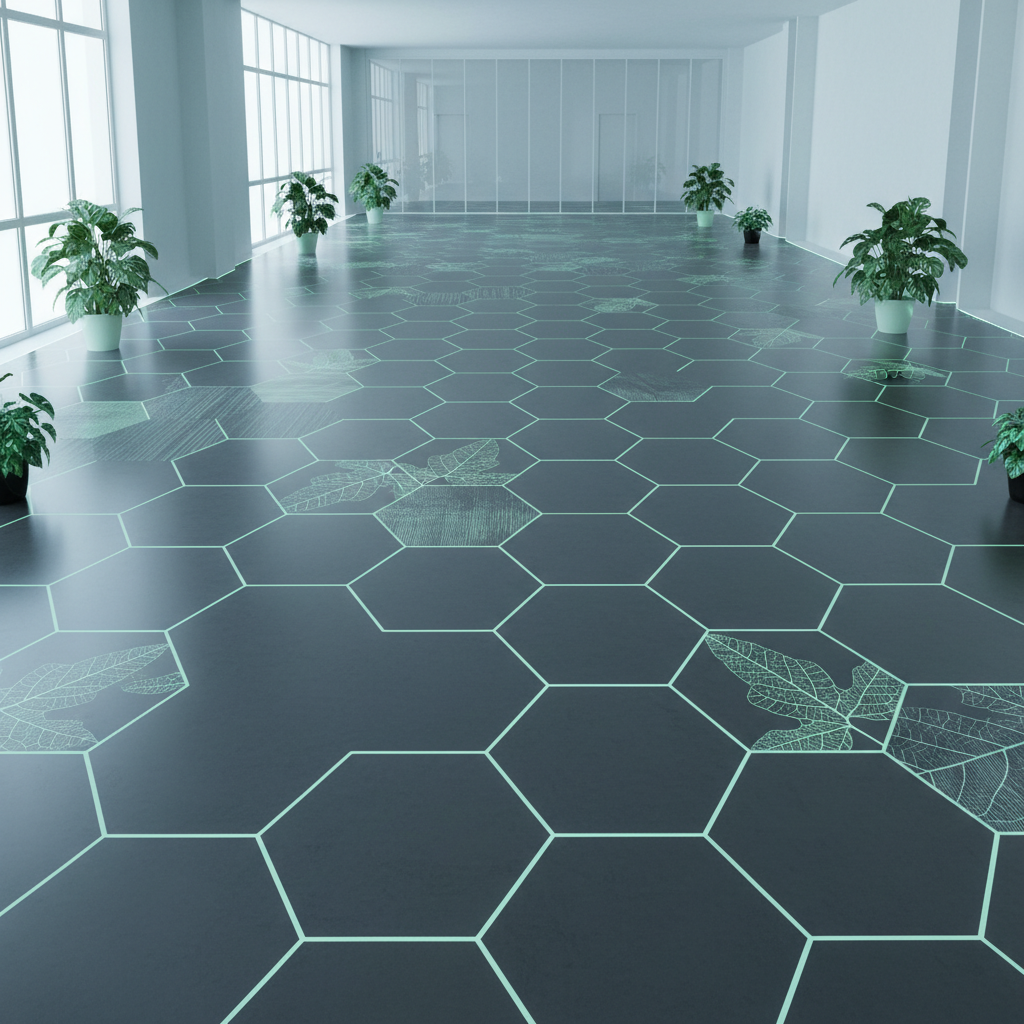
We are seeing the rise of bio-based resins replacing petroleum products in wear layers, offering equal durability with a fraction of the carbon footprint. 3D printing technology is now being utilized to create hyper-realistic, embossed-in-register textures that perfectly match the visual grain of wood or stone while maintaining the durability of SPC. Furthermore, the integration of “smart floors”—featuring embedded sensors capable of detecting falls in healthcare settings or tracking foot traffic analytics in commercial retail—proves that the floor of the future will be as intelligent as it is indestructible.
Conclusion
True flooring durability is not found in a marketing brochure; it is found in the microscopic layers, the density of the core, and the chemical composition of the finishes. Whether you are investing in the industrial-grade permanence of an adamantine system or the engineered resilience of multi-layer flooring, understanding the science behind the surface is your greatest asset.
By prioritizing wear layer technology, demanding proper subfloor preparation, and implementing proactive traffic management, you transform a vulnerable surface into a permanent structural asset. We encourage you to consult with a certified flooring professional to evaluate your subfloor and run a lifecycle ROI calculation before your next renovation. When you invest in the right layers, you are truly buying the last floor you will ever need.
Disclaimer: Information provided regarding chemical resistance, ROI, and durability is for educational purposes. Always consult manufacturer warranties and a certified flooring installer for your specific environment.
References & Authoritative Sources
- American Concrete Institute (ACI). (N.D.). Standards for Concrete and Surface Hardeners.
- Thorne, A. (N.D.). Expert Quote on Chemical Hardening Agents in Adamantine Mixtures.
- Journal of Materials Science. (N.D.). Peer-Reviewed Data on Floor Coating Durability and Chemical Resistance.
- Occupational Safety and Health Administration (OSHA). (N.D.). Guidelines Regarding Slip Resistance and Workplace Safety.
- Green Building Council. (N.D.). Sustainability Benefits of Reducing Material Waste Through Long-Lasting Floors.
- North American Laminate Flooring Association (NALFA). (N.D.). Standards and Certification Metrics for Multi-Layer Products.
- Chen, D. (N.D.). Expert Quote on Subfloor Flatness and Click-Lock Mechanisms.
- ASTM International. (N.D.). Standard Test Methods for Abrasion Resistance.
- Manufacturer Technical Specification Sheets. (N.D.). Primary Source Data for Wear Layer Compositions and Aluminum Oxide/Ceramic Bead Finishes.
- Home Insurance Adjuster Interview. (N.D.). Data on Premature Flooring Failures and Water Damage.
- Carpet and Rug Institute (CRI). (N.D.). Data on Soil Tracking and Microscopic Grit.
- National Wood Flooring Association (NWFA). (N.D.). Guidelines on Floor Repair and Maintenance.
- Environmental Protection Agency (EPA). (N.D.). Guidelines on VOC Emissions for Indoor Floor Coatings.
- FloorScore. (N.D.). Certification for Indoor Air Quality.
- The International Surface Event (TISE) / R&D Industry Insights. (N.D.). Coverage of Innovations in Advanced Flooring Technology.
