Facility managers, commercial property owners, and discerning homeowners are all too familiar with the frustrating cycle of frequent floor replacement. The hidden operational costs—ranging from exorbitant labor fees to crippling business downtime—often transform what seemed like a budget-friendly aesthetic choice into a recurring financial nightmare. The core problem? Premature floor wear is rarely a simple product defect. More often, it is a systemic failure rooted in inadequate subfloor preparation, incorrect material specification, or poor maintenance protocols.
It is time to shift the paradigm from aesthetic shopping to lifecycle engineering. This comprehensive guide serves as your definitive blueprint for long-term floor performance solutions. By deconstructing the anatomy of multi-layer flooring, enforcing strict installation protocols, and implementing proactive maintenance, you can eliminate the hidden costs of frequent replacements and guarantee decades of high-performance durability.
- The Anatomy of Durability: Deconstructing Multi-Layer Flooring
- Diagnosing Premature Floor Wear: The Forensic Inspector’s Corner
- The Hidden Foundation: Durable Flooring Installation Protocols
- Lifecycle Economics: Solving the Frequent Floor Replacement Trap
- Designing for High-Performance: Timeless Aesthetics That Last
- Future-Proofing Your Investment: Multi-Layer Floor Protection and Maintenance
- Conclusion
- References & Authoritative Sources
The Anatomy of Durability: Deconstructing Multi-Layer Flooring
Multi-layer flooring—encompassing luxury vinyl plank (LVP), luxury vinyl tile (LVT), and engineered wood—currently dominates the modern market, accounting for over 60% of new hard-surface flooring installations. But what exactly is multi-layer flooring, and why has it become the industry standard for durable floor systems?
Unlike traditional solid wood or single-layer linoleum, multi-layer flooring is a composite material engineered to balance aesthetics, cost, and extreme resilience.
To understand how to improve floor longevity, one must understand the specific function of each layer. The topmost shield is the wear layer. According to standards recognized by the National Wood Flooring Association (NWFA) and the Floor Covering Institute, a wear layer of 20 mil or higher is strictly recommended for commercial use to withstand heavy foot traffic [1].
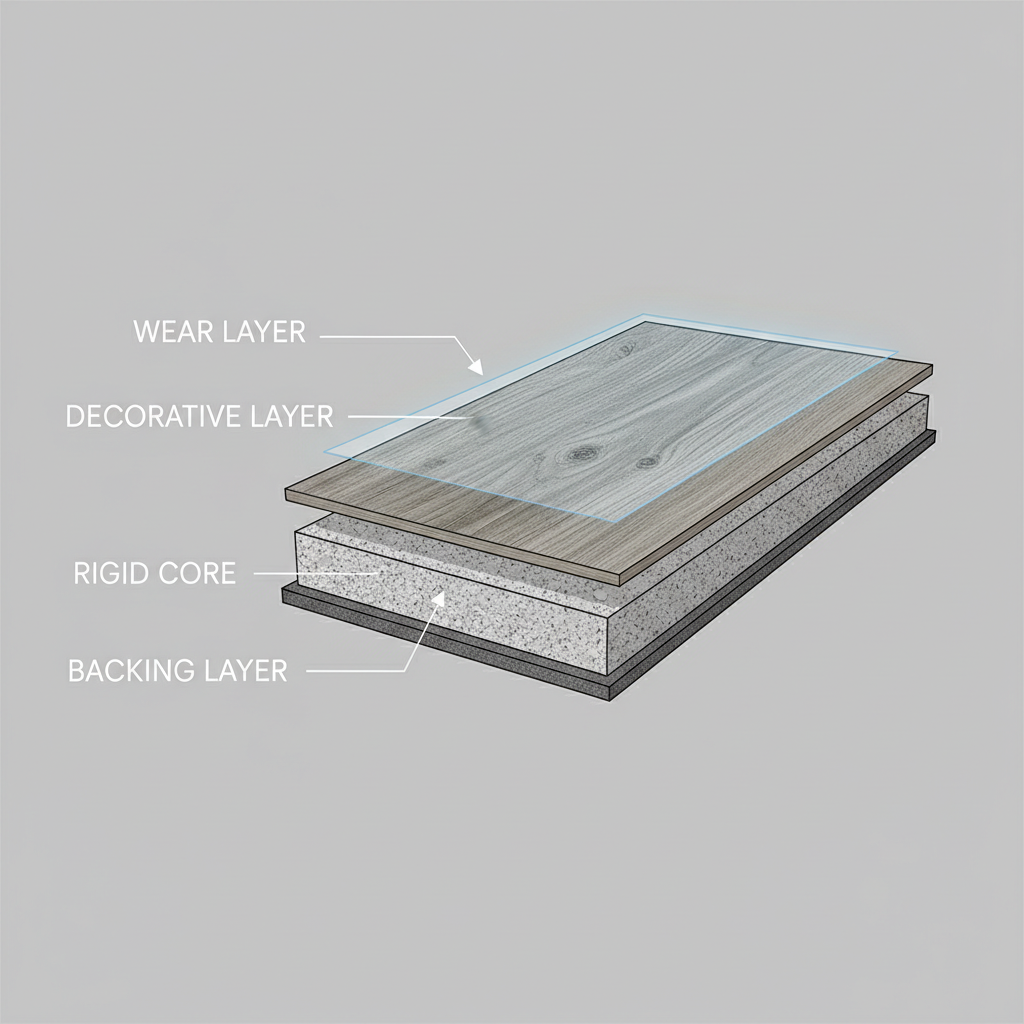
To navigate this space effectively, it helps to understand a few key technical terms:
- Mil: A unit of measurement equal to one-thousandth of an inch, used to quantify the thickness of the clear wear layer.
- SPC (Stone Plastic Composite): A highly dense, rigid core made of limestone powder and stabilizers, offering maximum impact resistance.
- WPC (Wood Plastic Composite): A core made of wood pulp and plasticizers, offering a softer underfoot feel and enhanced sound absorption.
Beyond the Surface: Wear Layers, Rigid Cores (SPC/WPC), and Backing
The true benefits of multi-layer flooring design lie beneath the visual surface. Under a microscope, a high-quality wear layer reveals a dense, cross-linked polyurethane matrix—often fortified with aluminum oxide or ceramic beads—that acts as an impenetrable barrier against scuffs and stains.
Beneath the decorative layer lies the structural heart of the floor: the rigid core. The choice between an SPC and WPC core dictates the floor’s performance in specific environments. Because of their engineered density, rigid core multi-layer floors expand and contract 50% less than traditional laminate, making them highly dimensionally stable. Both SPC and WPC cores offer exceptional waterproofing capabilities, preventing the swelling and warping that plague solid wood.
Finally, the foundational backing layer serves a critical dual purpose. As noted by leading material science engineers, an extruded EVA or IXPE backing layer not only provides structural balance but also acts as a moisture vapor barrier, actively preventing mold and mildew proliferation in damp environments like basements or ground-level concrete slabs [2].
Acoustic and Ergonomic Benefits of Multi-Layer Design
Why is multi-layer flooring often considered superior to solid wood or ceramic tile in commercial and multi-family settings? The answer lies in acoustics and ergonomics.
Hard surfaces naturally reflect sound, but multi-layer flooring mitigates this through its composite design. The Acoustical Society of America sets rigorous standards for sound transmission, measuring impact noise via the Impact Insulation Class (IIC) [3]. Multi-layer flooring equipped with high-density attached acoustic pads can achieve an impressive IIC rating of 60 or higher, drastically reducing the hollow “clicking” sound of foot traffic and preventing noise transfer between floors.
Furthermore, the slight compression of WPC cores and premium backing layers provides vital ergonomic comfort, reducing joint fatigue for employees standing for long hours. When selecting these systems, it is also crucial to verify FloorScore certifications, ensuring the composite materials meet strict indoor air quality and low-VOC emission standards [4].
Diagnosing Premature Floor Wear: The Forensic Inspector’s Corner
When a floor fails, the immediate reaction is often to blame the manufacturer. However, forensic analysis tells a different story. According to data from the National Institute of Certified Floorcovering Inspectors (NICFI), over 70% of premature flooring failures are due to improper subfloor preparation or moisture issues, not product defects [5].
To help facility managers and homeowners troubleshoot poor floor durability, we have developed this rapid Symptom Checker, complete with expert annotations:
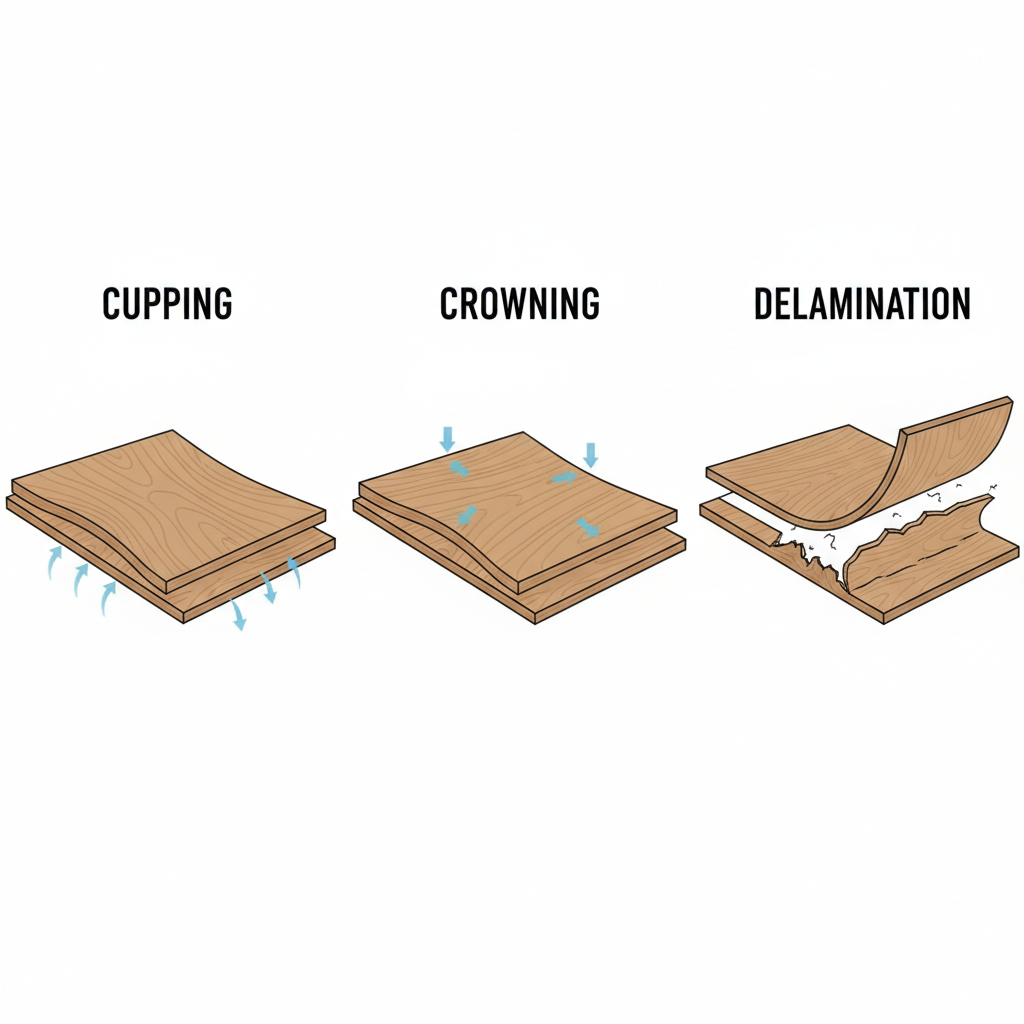
- Cupping (Edges higher than the center): Typically indicates excessive moisture migrating from the subfloor beneath the planks.
- Crowning (Center higher than the edges): Often occurs when the surface of the floor is exposed to excessive moisture (e.g., standing water, improper wet mopping), or when a previously cupped floor is sanded prematurely.
- Delamination (Layers peeling apart): Can be a manufacturing defect, but is frequently caused by extreme temperature fluctuations or the use of harsh, non-approved chemical solvents that break down the adhesive bonds between layers.
Scratch vs. Dent Resistance: The Physics of Floor Damage
A common misconception regarding poor floor durability is conflating scratch resistance with dent resistance. A floor can be highly scratch-resistant (like ceramic tile) but prone to shattering under impact, or highly dent-resistant but easily scratched.
Dent resistance is governed by the core material’s density. For wood and engineered wood products, the Janka Hardness Scale is the critical metric. Woods scoring below 1000 lbf (pounds-force) are highly susceptible to denting from dropped items or high heels.
Scratch resistance, conversely, is dictated by the wear layer and finish. This is rigorously tested using the American Society for Testing and Materials (ASTM) Taber Abrasion Test, which measures how many cycles of an abrasive wheel a finish can withstand before wearing through [6]. Understanding this physics is vital, especially considering that pets account for over 40% of surface scratching complaints in residential flooring, according to industry analyses by Consumer Reports and Wood Floor Business [7].
The Hidden Foundation: Durable Flooring Installation Protocols
A durable product is utterly useless without a durable installation. Subfloor preparation is the unglamorous, hidden foundation that dictates the lifespan of high-performance flooring.
To ensure your investment survives, always utilize a Certified Floorcovering Installer (CFI). A rigorous hiring checklist should include verifying their CFI credentials, checking their familiarity with ASTM F710 (Standard Practice for Preparing Concrete Floors to Receive Resilient Flooring), and ensuring they own and operate calibrated moisture testing equipment [8][9].
Subfloor Leveling and Moisture Mitigation (MVER)
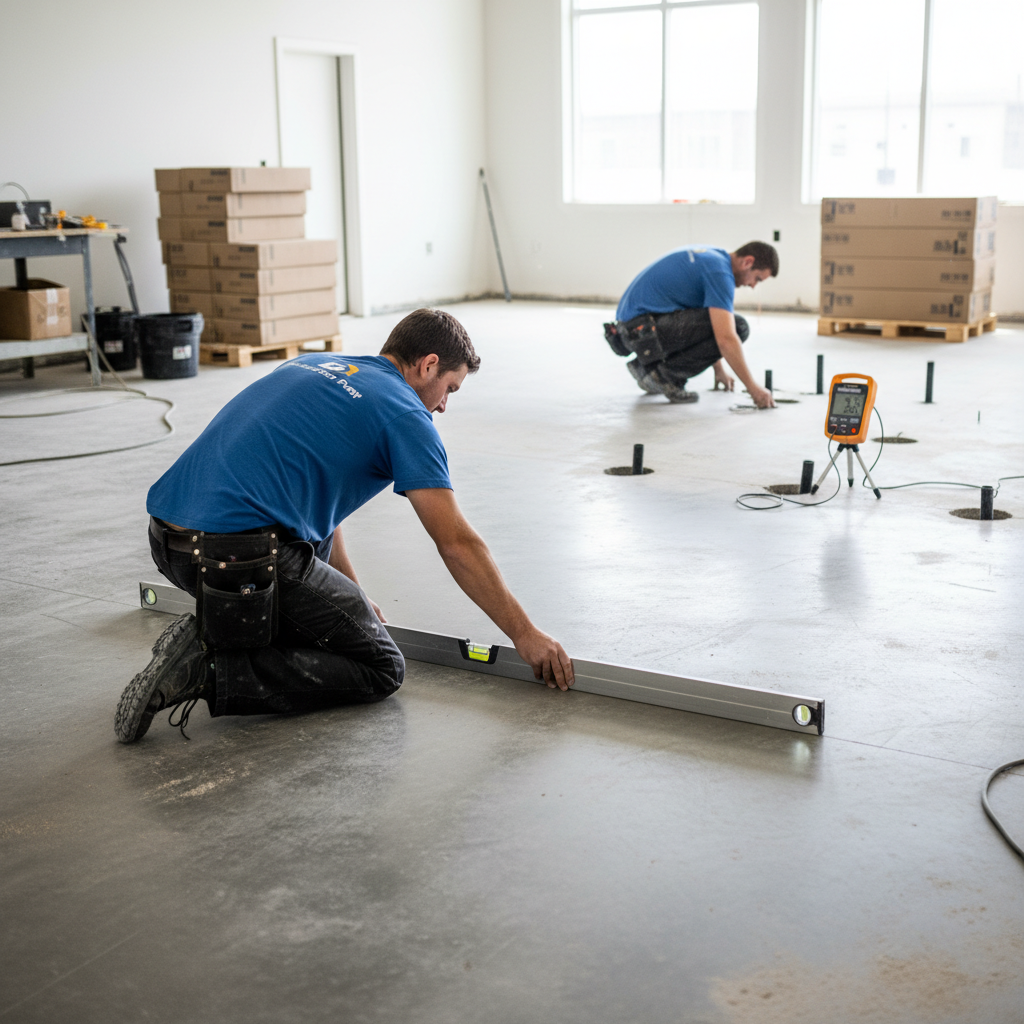
The tolerances for modern durable flooring installation are unforgiving. A critical data point that cannot be ignored: a subfloor must be flat to within 3/16 of an inch over a 10-foot radius for a successful rigid core installation. Failure to achieve this flatness results in hollow spots, deflected planks, and ultimately, broken locking mechanisms.
Moisture is the silent killer of floor systems. Installers must conduct proper testing—favoring In-Situ Relative Humidity (RH) testing via probes over outdated Calcium Chloride surface tests. If Moisture Vapor Emission Rates (MVER) exceed 3 lbs per 1,000 square feet per 24 hours, specific epoxy or polyurethane moisture barriers must be applied to the concrete. Skipping this step guarantees adhesive failure and voided warranties.
Lifecycle Economics: Solving the Frequent Floor Replacement Trap
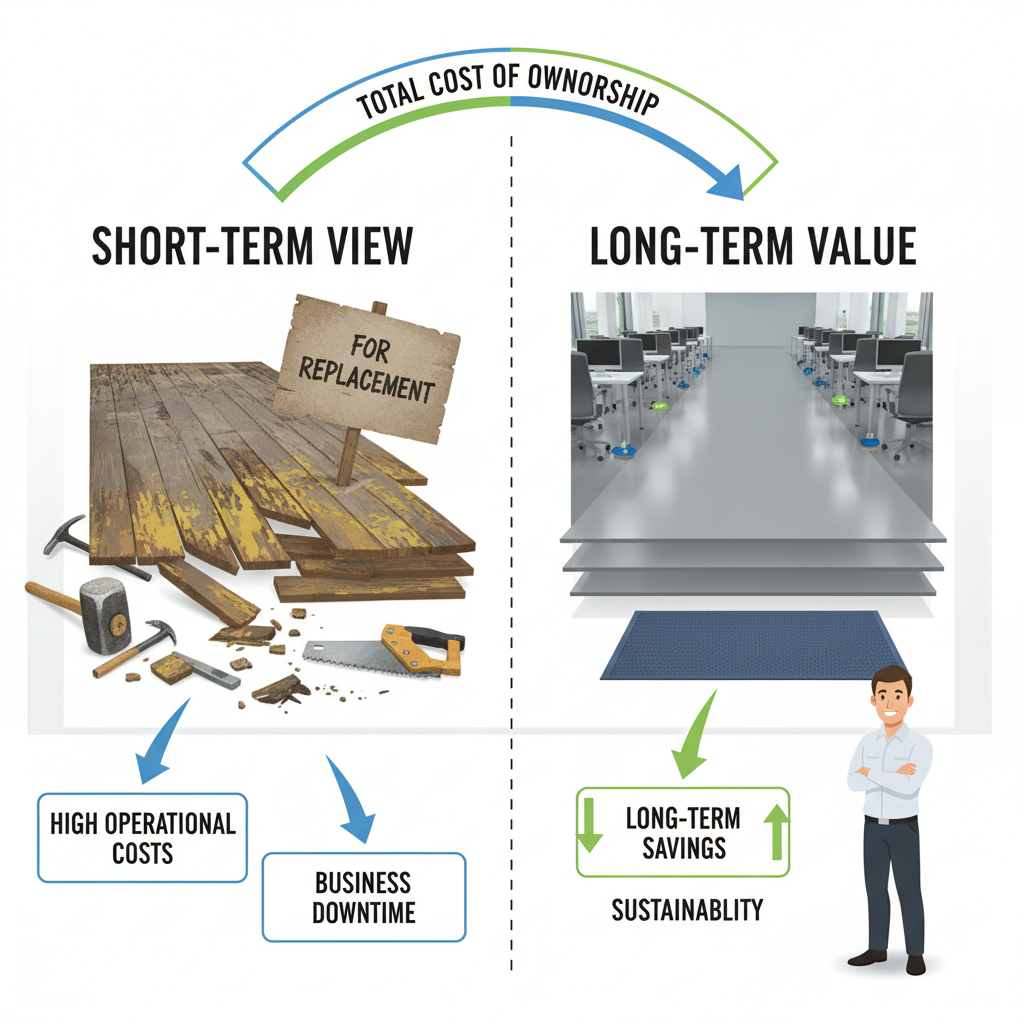
For commercial property owners, frequent floor replacement is a massive capital drain. When evaluating durable floor systems, one must look beyond the initial price per square foot and calculate the Total Cost of Ownership (TCO).
The International Facility Management Association (IFMA) highlights that facility lifecycle costs are heavily skewed by operational disruptions [10]. The hidden cost of frequent floor replacement is staggering: the cost of labor and business downtime during a replacement cycle often exceeds the actual material cost by 300%. Upgrading to a premium, commercial-grade floor is not an expense; it is a calculated financial strategy to avoid future operational paralysis.
Future-Proofing with Modular and Sustainable Systems
What are the most sustainable long-term floor performance solutions? The answer lies in modularity. Modular flooring systems—such as carpet tiles or LVT planks—allow for the targeted replacement of damaged areas rather than full-room overhauls.
This approach drastically improves long-term performance and sustainability. Modular flooring systems can reduce replacement waste sent to landfills by up to 85%. Furthermore, facilities that implement proactive floor performance solutions see a 30% reduction in 10-year maintenance costs. By integrating these systems, buildings can also earn valuable LEED certification points under the U.S. Green Building Council (USGBC) guidelines for sustainable interior materials [11].
Designing for High-Performance: Timeless Aesthetics That Last
Long-lasting floor design is a delicate blend of interior design aesthetics and practical material science. How do you design a floor for high traffic that won’t look aged within a year?
According to insights validated by American Society of Interior Designers (ASID) certified professionals, the secret is choosing finishes and patterns that naturally camouflage wear [12]. The data is clear: matte and wire-brushed finishes hide up to 60% more micro-scratches than high-gloss finishes, which act like mirrors for every scuff and dust particle. Additionally, medium-toned floors with high color variation (often referred to as character grade) require 50% less visible maintenance than solid dark or pristine light floors.
Industry-Specific High-Performance Needs
High-performance flooring is not a monolith; it requires industry-specific tailoring.
- Manufacturing and Warehousing: Floors must meet strict Occupational Safety and Health Administration (OSHA) slip resistance standards and Resinous Flooring Association (RFA) best practices [13][14]. High-performance resinous floors (like polyaspartic coatings) can cure in as little as 2 hours, minimizing facility downtime while providing extreme chemical resistance.
- Healthcare and Electronics: Electrostatic Discharge (ESD) flooring is non-negotiable. Proper ESD flooring safely dissipates static electricity, preventing millions of dollars in static damage to sensitive electronic components and medical imaging equipment.
Future-Proofing Your Investment: Multi-Layer Floor Protection and Maintenance
The final pillar of lifelong durability is post-purchase care. Multi-layer floor protection requires a strict adherence to vetted maintenance protocols.
Following guidelines from the International Sanitary Supply Association (ISSA) and the World Floor Covering Association (WFCA) is paramount [15][16]. A critical warning: using the wrong cleaning chemicals—such as heavy waxes, bleach, or abrasive detergents—accelerates wear layer degradation by up to 40%, stripping the polyurethane shield and leaving the floor defenseless.
The 80% Rule: Walk-Off Mats and Climate Control
The most effective maintenance happens before dirt even touches the floor. The “80% Rule” dictates that proper entrance matting (spanning at least 10 to 15 feet at all entrances) can stop up to 80% of abrasive dirt and moisture from entering a building, effectively doubling the life of the floor.
Equally important is HVAC management. How does humidity affect floor longevity? Drastically. Maintaining indoor relative humidity between 35% and 55% prevents 90% of wood floor warping, cupping, and gapping, ensuring the dimensional stability of the multi-layer core.
Physical Protection: Furniture Pads and Polyurethane Casters
Daily physical abuse is the enemy of the wear layer. To implement effective multi-layer floor protection, physical barriers are required. Data from material science companies, including 3M, demonstrates that simply using high-quality felt pads on all furniture legs can reduce floor scratching incidents by an astounding 95% [17].
For office environments, standard hard plastic or metal rolling chair casters will destroy a wear layer in months. Polyurethane casters are strictly recommended to prevent this degradation. Finally, be wary of area rugs; ensure they do not have rubber backings, as the chemicals in cheap rubber can cause plasticizer migration, permanently yellowing and staining vinyl flooring.
Conclusion
True floor durability is not merely a product specification found on a cardboard box. It is a holistic, systemic approach encompassing advanced multi-layer material science, flawless subfloor preparation, and rigorous, preventative maintenance. By shifting your focus toward lifecycle economics and engineering your flooring system from the concrete up, you effectively eliminate the hidden costs and operational nightmares of frequent replacements. We strongly encourage you to utilize a Total Cost of Ownership (TCO) calculator for your next project and contact a Certified Floorcovering Installer (CFI) to thoroughly assess your facility’s subfloor before a single plank is purchased.
Disclaimer: The information provided is for educational and planning purposes. Always consult a Certified Floorcovering Installer (CFI) and refer to specific manufacturer guidelines for installation, moisture mitigation, and warranty compliance.
References & Authoritative Sources
- National Wood Flooring Association (NWFA) & Floor Covering Institute. (N.D.). Standards for Commercial Wear Layers and Multi-Layer Flooring.
- Material Science Engineering Insights. (N.D.). The Role of EVA/IXPE Backing in Moisture and Mold Prevention.
- Acoustical Society of America. (N.D.). Standards for Sound Transmission and Impact Insulation Class (IIC).
- FloorScore. (N.D.). Indoor Air Quality Certification Standards for Flooring Materials.
- National Institute of Certified Floorcovering Inspectors (NICFI). (N.D.). Forensic Analysis of Premature Flooring Failures and Subfloor Moisture.
- American Society for Testing and Materials (ASTM). (N.D.). ASTM Taber Abrasion Test and Janka Hardness Scale Applications.
- Consumer Reports & Wood Floor Business. (N.D.). Data on Pet-Related Surface Scratching in Residential Flooring.
- Certified Floorcovering Installers (CFI). (N.D.). Installation Training Standards and Hiring Guidelines.
- American Society for Testing and Materials (ASTM). (N.D.). ASTM F710: Standard Practice for Preparing Concrete Floors to Receive Resilient Flooring.
- International Facility Management Association (IFMA). (N.D.). Facility Lifecycle Costs and the Financial Impact of Operational Downtime.
- U.S. Green Building Council (USGBC). (N.D.). LEED Certification Points for Sustainable and Modular Flooring Systems.
- American Society of Interior Designers (ASID). (N.D.). Best Practices in Functional Design and Timeless Aesthetics.
- Occupational Safety and Health Administration (OSHA). (N.D.). Slip Resistance and Safety Standards for Walking-Working Surfaces.
- Resinous Flooring Association (RFA). (N.D.). Industry Best Practices for High-Performance Resinous Flooring.
- International Sanitary Supply Association (ISSA). (N.D.). Cleaning Industry Standards and Chemical Compatibility.
- World Floor Covering Association (WFCA). (N.D.). Consumer and Professional Care Guidelines for Floor Longevity.
- 3M / Material Science Data. (N.D.). Efficacy of Felt Pads and Adhesives in Scratch Prevention.
