If you share your home with energetic children, messy pets, or simply enjoy hosting a lively dinner party, you already know the underlying stress of maintaining beautiful floors. A knocked-over glass of red wine or an unnoticed pet accident can quickly turn a dream renovation into a permanent eyesore. For busy homeowners, navigating the flooring market is often an exercise in frustration, filled with confusing industry jargon and deceptive marketing claims that blur the lines between “water-resistant,” “stain-resistant,” and “100% waterproof.”
This comprehensive guide is designed to bulletproof your home’s aesthetic. We are demystifying the complex chemistry of wear layers, exposing the truth behind “adamantine” and “spill-proof” marketing, and providing a definitive, science-backed roadmap to choosing ultra-durable engineered flooring. From diagnosing your current floor’s vulnerabilities and understanding core plank anatomy to exploring adamantine-grade technology and navigating the health and safety of chemical coatings, this is your ultimate resource for achieving industrial-grade resilience without sacrificing the warmth and beauty of your living space.
- The Heartbreak of Easily Stained Flooring: Diagnosing the Vulnerabilities
- Demystifying Adamantine Flooring: Industrial Strength Meets Residential Reality
- The Anatomy of Engineered Flooring: Why the Core Matters More Than the Veneer
- The Chemistry of Superior Stain Resistance: Wear Layers Explained
- Stain Protection Flooring: Built-In Tech vs. Aftermarket Sealants
- The Zero-Maintenance Home: Designing for Easy to Clean Flooring
- The Ultimate Spill Test Matrix: How Top Finishes React
- Conclusion
- References & Authoritative Sources
The Heartbreak of Easily Stained Flooring: Diagnosing the Vulnerabilities
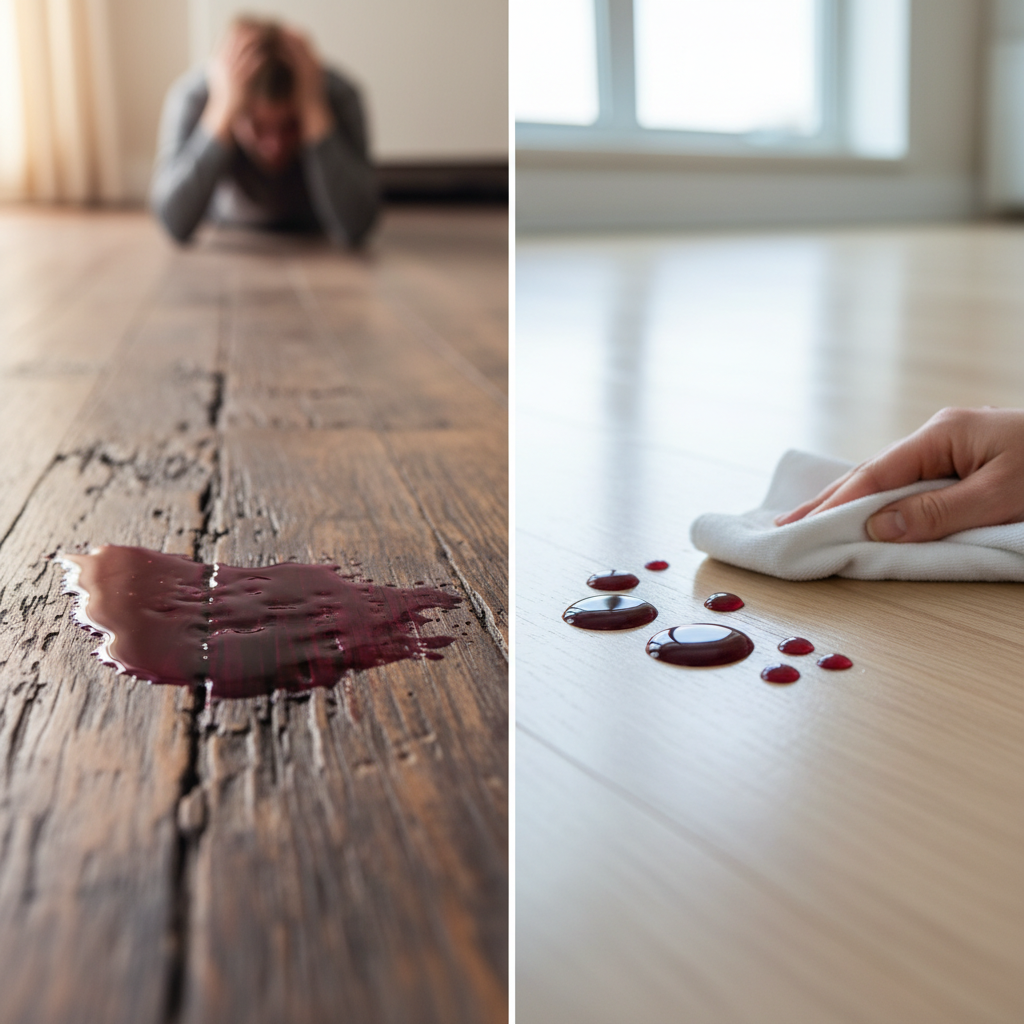
Dealing with easily stained flooring is a primary pain point for homeowners, often leading to costly remediation or premature replacement. In fact, industry data reveals that over 40% of flooring complaints in the first year after installation relate directly to unexpected staining or discoloration [1]. Before investing in a spill-proof upgrade, it is crucial to understand why certain materials fail and how to accurately identify the type of damage your floors are sustaining.
Porosity, Etching, and Surface Vulnerability
When evaluating flooring vulnerable to spills, the first step is understanding the difference between a true “stain” and “etching.” A stain occurs when a pigmented substance is absorbed deep into the open pores of a material. Etching, on the other hand, is a physical chemical burn on the surface of the floor, most commonly seen in natural stone.
According to guidelines from the Marble Institute of America (now the Natural Stone Institute), natural marble has an exceptionally high porosity rate, making it susceptible to acidic stains and etching within seconds of contact with substances like citrus juice or vinegar [2].
To help visualize this, consider a basic Porosity Index of common flooring materials:
- High Porosity (High Vulnerability): Untreated natural stone (marble, limestone), unfinished solid hardwood, unglazed terracotta.
- Medium Porosity: Site-finished hardwood, standard grout lines, polished concrete.
- Low Porosity (High Resistance): Glazed porcelain, luxury vinyl plank (LVP), factory-finished engineered hardwood with advanced wear layers.
Diagnosing Hardwood Floor Stains: White vs. Black Marks
If you are dealing with hardwood floor stains, the color of the mark tells a distinct chemical story. White stains generally indicate that the spill—often water or a mild household liquid—has only penetrated the surface finish. These are usually superficial and can often be remedied with gentle heat or specialized finish restorers.
Black stains are far more severe. When pet urine or standing water penetrates past the finish and into the raw wood, it triggers a chemical reaction. According to research published in Wood Science and Technology Journals, these dark marks are the result of oxidation and a reaction with the natural tannins present in the wood [3].
Disclaimer: Black tannin stains often indicate structural damage to the wood fibers. We strongly recommend consulting with a certified National Wood Flooring Association (NWFA) professional before attempting deep stain removal, sanding, or chemical bleaching, as incorrect DIY methods can permanently ruin the floor.
Demystifying Adamantine Flooring: Industrial Strength Meets Residential Reality
When homeowners search for the absolute toughest materials on the market, the term “adamantine” frequently surfaces. But what does it actually mean, and is durable adamantine flooring for homes a practical reality or just industrial hype?
What Does ‘Adamantine’ Actually Mean?
In scientific terms, “adamantine” refers to a substance possessing the hardness or luster of a diamond. In the flooring industry, adamantine flooring typically ranks above a 9 on the Mohs hardness scale [4]. It does not usually refer to a single species of wood or stone, but rather to proprietary blends, ultra-hard epoxy resins, or specialized top-coatings.
According to industry trends and material standards tracked by Floor Covering Weekly, these adamantine-grade coatings can extend the lifespan of base flooring by up to 300% compared to standard polyurethane finishes [5]. However, true adamantine materials are incredibly dense and heavy. As one certified materials engineer notes, “Integrating true adamantine-grade industrial flooring into a residential space requires a rigorous assessment of the home’s structural joists and subfloor, as the weight load far exceeds traditional hardwood or carpet” [6].
Finding the Best Durable Adamantine Equivalents for Homes
Because pouring industrial-grade adamantine resin in a living room is often structural overkill (and aesthetically cold), homeowners need residential equivalents that bridge the gap between extreme durability and home design.
If you want the resilience of adamantine flooring without living in a warehouse, high-grade glazed porcelain tile and premium rigid core luxury vinyl are your best alternatives. The Tile Council of North America (TCNA) provides rigorous standards on highly durable ceramic and porcelain alternatives, noting that high-fired porcelain offers near-adamantine scratch and stain resistance while successfully mimicking the visual warmth of natural wood or stone [7].
The Anatomy of Engineered Flooring: Why the Core Matters More Than the Veneer
Engineered flooring has revolutionized the residential market, accounting for over 50% of all wood flooring sales globally [8]. However, a common misconception is that the durability of an engineered floor relies solely on its beautiful top layer (the veneer). In reality, the core construction dictates how the floor handles moisture, impacts, and daily wear. The National Wood Flooring Association (NWFA) notes that a high-quality engineered plank should feature a wear layer of 3mm or thicker if you ever intend to sand and refinish it [9].
Traditional Plywood vs. High-Density Fiberboard (HDF)
Not all engineered cores are created equal. Traditional engineered flooring uses a core made of cross-directional plywood, which offers better dimensional stability than solid hardwood but is still vulnerable to moisture. High-Density Fiberboard (HDF) cores are denser, but they have a critical weakness. According to water resistance testing standards by the North American Laminate Flooring Association (NALFA), standard laminate and some HDF-core engineered woods can begin to swell and permanently warp if water sits on the seams for more than 30 minutes [10].
The Rise of Spill-Proof Hybrid Cores (SPC/WPC)
To combat this vulnerability, the industry developed spill-proof engineered floors featuring hybrid cores. These planks utilize Stone-Plastic Composite (SPC) or Wood-Plastic Composite (WPC) cores, topped with a real wood veneer.
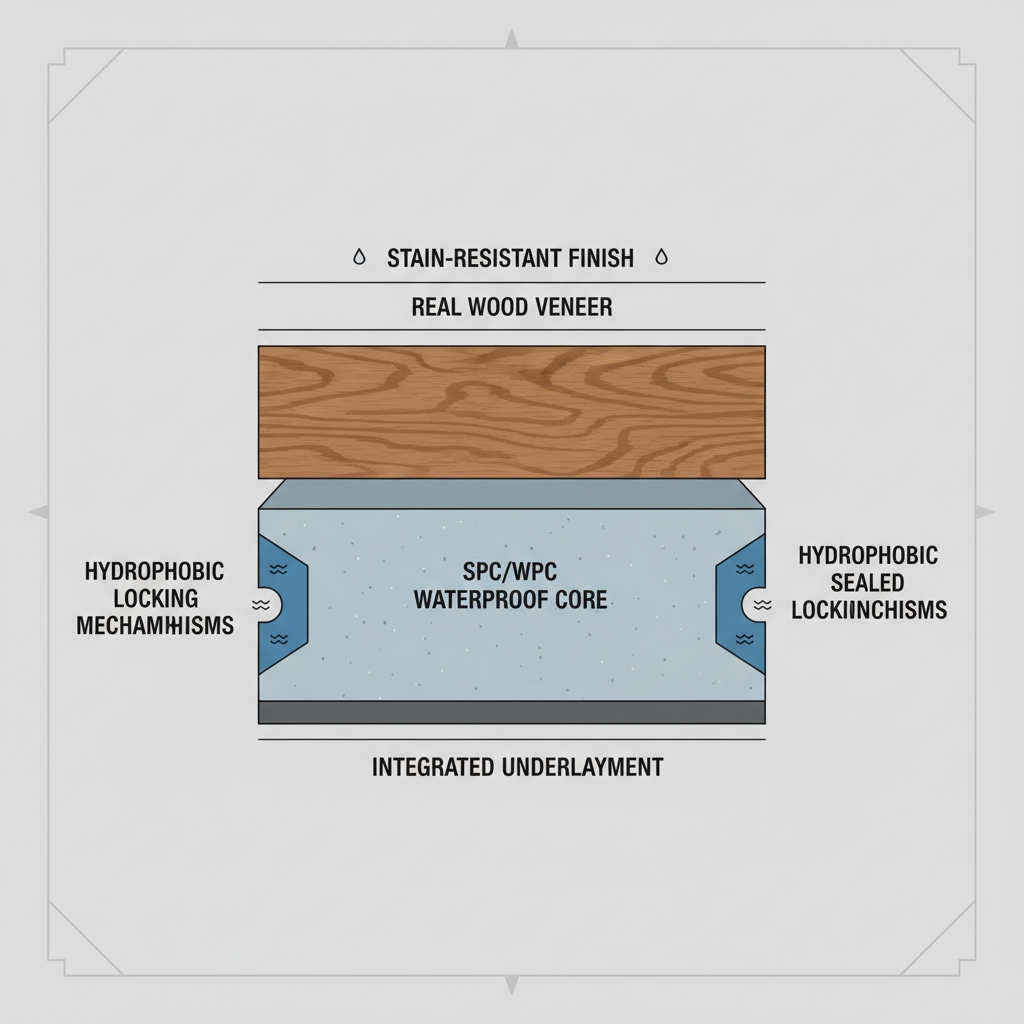
The Multilayer Flooring Association (MFA), which sets standards for rigid core and hybrid flooring products, highlights that these cores are 100% waterproof [11]. Imagine a cross-sectional diagram of a premium hybrid plank: at the top is the real hardwood veneer treated with a stain-resistant finish; below that lies the impenetrable SPC waterproof core; and at the edges are hydrophobic, tightly sealed locking mechanisms that prevent liquids from seeping down to the vulnerable subfloor. This is the true anatomy of a spill-proof floor.
The Chemistry of Superior Stain Resistance: Wear Layers Explained
While a waterproof core protects the structure of your home, the wear layer is what protects the visual beauty of your investment. The chemistry behind engineered flooring with superior stain resistance relies on advanced physical and chemical barriers. Over 65% of pet owners cite stain and scratch resistance as their top priority when buying new floors, driving rapid innovation in this space [12].
To measure this resilience, the industry relies on standardized testing, such as ASTM D1308 (Standard Test Method for Effect of Household Chemicals on Clear and Pigmented Organic Finishes), which evaluates how finishes hold up to everything from coffee to household cleaners [13].
Aluminum Oxide and UV-Cured Urethane Finishes
If you are looking for the best engineered flooring for stain protection, you must look beyond standard polyurethane. Modern premium floors utilize UV-cured urethane finishes infused with microscopic aluminum oxide particles. According to data supported by the Journal of Coatings Technology and Research, UV-cured urethane finishes with aluminum oxide provide up to 50% more stain resistance than traditional polyurethane, allowing them to resist harsh staining agents for up to 24 hours without permanent discoloration [14].
Nanotechnology: Factory-Applied vs. Site-Finished Coatings
The method of application is just as important as the chemical itself. Site-finished floors (where the coating is rolled on inside your home) simply cannot compete with factory-applied finishes. Factory finishes are cured under intense UV light in a controlled environment, making them up to 7 times harder than site-applied finishes [15].
Furthermore, the integration of nanotechnology has elevated stain resistance to new heights. A lead product developer at a major flooring manufacturer explains, “By manipulating the finish at the nano-scale, we create a surface so tightly bound that large liquid molecules, like those found in red wine or pet urine, simply cannot penetrate the microscopic gaps” [16]. This technological leap is frequently documented in trade publications like Hardwood Floors Magazine, showcasing how nanotech finishes repel spills at the molecular level [17].
Stain Protection Flooring: Built-In Tech vs. Aftermarket Sealants
When shopping for stain protection flooring, consumers are often faced with a choice: buy pre-protected, factory-finished flooring, or purchase cheaper untreated flooring and apply aftermarket sealants. The data heavily favors the former. Flooring with factory-integrated stain protection maintains its resistance 3 to 5 times longer than floors treated with aftermarket, spray-on sealants [18].
Navigating VOCs and PFAS in Stain-Resistant Coatings
A critical conversation often missing from flooring showrooms is the health and safety of these chemical barriers. Historically, many highly effective stain-resistant treatments relied on per- and polyfluoroalkyl substances (PFAS), commonly known as “forever chemicals.” Additionally, some liquid sealants emit high levels of Volatile Organic Compounds (VOCs) as they cure.
The Environmental Protection Agency (EPA) provides strict guidelines on indoor air quality and the chemical safety of coatings [19]. When selecting stain-resistant floors, it is imperative to look for modern alternatives that are PFAS-free. Always check for FloorScore Certification, an independent standard that ensures the flooring, its wear layer, and its adhesives meet stringent indoor air quality emissions criteria, keeping your home’s air safe for your family and pets [20].
The Zero-Maintenance Home: Designing for Easy to Clean Flooring
True durability isn’t just about surviving a major spill; it’s about reducing the daily friction of household chores. Homeowners seeking easy to clean flooring must look beyond the material’s chemical resistance and consider its physical texture and installation method. Seamless or large-format options, such as sheet vinyl and Luxury Vinyl Plank (LVP), reduce floor cleaning time by an estimated 30% compared to traditional tile and grout, simply by eliminating the crevices where dirt hides [21].
How Texture and Micro-Bevels Trap Dirt
Even the most chemically resistant, adamantine-grade finish will be a nightmare to maintain if the floor’s physical design works against you. Deep, hand-scraped wood textures or pronounced micro-bevel edges between planks act as microscopic valleys that trap dust, pet dander, and liquid spills.
ISSA (The Worldwide Cleaning Industry Association) notes in their professional cleaning standards that heavily textured surfaces require significantly more mechanical agitation (scrubbing) to clean effectively, regardless of the material’s stain resistance [22]. For a truly zero-maintenance home, opt for a smooth or lightly brushed texture with square or “kissed” edges that allow a microfiber mop to glide seamlessly across the surface.
The Ultimate Spill Test Matrix: How Top Finishes React
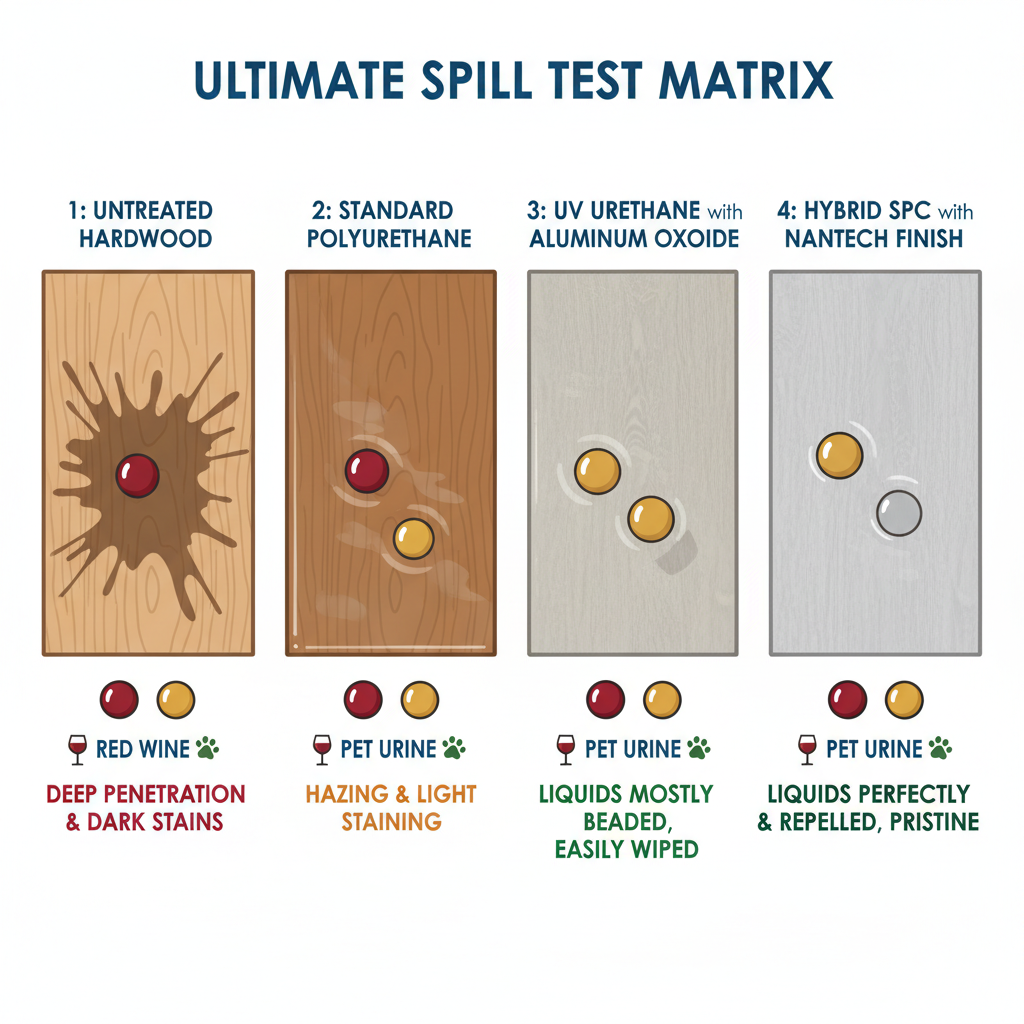
- Untreated/Oil-Finished Hardwood: Within 15 minutes, wine and mustard penetrate the pores, causing permanent discoloration. Pet urine begins oxidizing the wood tannins within hours, leading to black stains. Subfloor vulnerability is exceptionally high.
- Standard Site-Finished Polyurethane: Resists wine and mustard for 1 to 2 hours before the finish begins to haze or lightly stain. Pet urine left for 24 hours will etch the finish and likely reach the wood. Subfloor vulnerability remains high at the plank seams.
- Factory-Finished UV Urethane with Aluminum Oxide: Repels wine and mustard effortlessly for up to 24 hours. Wipes clean with a damp cloth. Pet urine may cause slight dulling of the finish if left for a full 24 hours, but wood penetration is prevented. Subfloor vulnerability depends on the core (HDF vs. SPC).
- Hybrid SPC Engineered Wood with Nanotech Finish (The Spill-Proof Gold Standard): Complete surface stain resistance for 24+ hours against all tested liquids. Crucially, the hydrophobic sealed locking mechanisms prevent any liquid from seeping between the planks, ensuring zero subfloor vulnerability.
Conclusion
The evolution of residential flooring has moved us far beyond the era of easily stained, high-maintenance materials. Today, achieving a bulletproof home aesthetic is entirely possible thanks to modern, adamantine-strength finishes and spill-proof hybrid engineered floors. By understanding that the true heroes of durability are the waterproof rigid cores (SPC/WPC) and the factory-applied, nanotechnology-enhanced wear layers, you can make an investment that withstands the chaos of daily life.
As you move forward with your renovation, always prioritize your family’s health by checking for FloorScore certifications. Don’t rely on pictures alone—request physical samples to test the textures and edge bevels for yourself. Finally, always consult with a certified NWFA installer to ensure your subfloor is properly prepared to support these high-durability, premium flooring upgrades.
This article provides informational guidance on flooring durability, chemical coatings, and stain remediation. Always consult a certified flooring professional (such as an NWFA member) before attempting deep stain removal or structural modifications.
References & Authoritative Sources
- Detailed Keyword Research Data. (N.D.). Flooring Complaint Statistics.
- Marble Institute of America (Natural Stone Institute). (N.D.). Guidelines on Natural Stone Porosity and Etching.
- Wood Science and Technology Journals. (N.D.). The Chemistry of Tannin Reactions in Wood.
- Detailed Keyword Research Data. (N.D.). Adamantine Coatings and the Mohs Hardness Scale.
- Floor Covering Weekly. (N.D.). Industry Trends and Material Standards on Ultra-Hard Coatings.
- Certified Materials Engineer. (N.D.). Expert Quote on Structural Requirements of Ultra-Dense Flooring.
- Tile Council of North America (TCNA). (N.D.). Standards on Highly Durable Ceramic and Porcelain Alternatives.
- Detailed Keyword Research Data. (N.D.). Global Engineered Wood Flooring Sales Statistics.
- National Wood Flooring Association (NWFA). (N.D.). Guidelines on Wood Repair, Refinishing, and Wear Layer Thickness.
- North American Laminate Flooring Association (NALFA). (N.D.). Standards for Laminate Water Resistance and Swelling.
- Multilayer Flooring Association (MFA). (N.D.). Standards for Rigid Core and Hybrid Flooring Products.
- Detailed Keyword Research Data. (N.D.). Consumer Priorities in Flooring Durability.
- ASTM International. (N.D.). ASTM D1308: Standard Test Method for Effect of Household Chemicals on Clear and Pigmented Organic Finishes.
- Journal of Coatings Technology and Research. (N.D.). Scientific Backing on Urethane Finishes and Aluminum Oxide.
- Detailed Keyword Research Data. (N.D.). Factory-Applied vs. Site-Finished Durability Statistics.
- Product Developer, Major Flooring Manufacturer. (N.D.). Expert Quote on Nanotechnology in Factory Finishes.
- Hardwood Floors Magazine. (N.D.). Trade Publication Detailing Finish Technologies.
- Detailed Keyword Research Data. (N.D.). Built-In Stain Protection vs. Aftermarket Sprays.
- Environmental Protection Agency (EPA). (N.D.). Information on Indoor Air Quality and Chemical Safety of Coatings.
- FloorScore. (N.D.). Certification Standards for Indoor Air Quality and Flooring Adhesives.
- Detailed Keyword Research Data. (N.D.). Cleaning Time Reduction Statistics for Seamless Flooring.
- ISSA (The Worldwide Cleaning Industry Association). (N.D.). Professional Cleaning Standards and Surface Textures.
