We have all felt the sting of the modern consumer cycle: the handle that snaps off a newly purchased appliance, the fast-fashion sweater that unravels after two washes, or the “luxury” furniture that chips within a month. If you are exhausted by the financial drain and environmental guilt of constantly replacing cheap goods, you are experiencing the very real fatigue of planned obsolescence.
Enter the concept of “Adamantine.” Historically, the term was reserved for mythology, describing materials that were fundamentally unbreakable and diamond-like in their hardness. Today, adamantine has evolved into a modern benchmark for extreme durability, premium craftsmanship, and unyielding structural integrity.
This article is your definitive, science-backed blueprint to bypassing marketing fluff. We will expose the hidden economics of the “Buy It For Life” (BIFL) ethos, decode the material science behind true longevity, and provide you with the objective metrics needed to identify products structurally designed to inspire and last a lifetime.
- The Economics of Contrived Durability: Why Your Products Break Easily
- Decoding ‘Adamantine’: The Material Science of Unbreakable Products
- The Anatomy of Premium Craftsmanship: Spotting the Hidden Details
- Principles of Durable Design: Products Designed to Inspire
- The ROI of ‘Buy It For Life’: How to Invest in Durable Design
- Conclusion
- References
The Economics of Contrived Durability: Why Your Products Break Easily
To understand how to escape the cycle of disposable goods, we must first understand why products that break easily dominate the market. The root cause is often planned obsolescence—a manufacturing strategy where goods are deliberately designed with a limited useful life. This contrived durability forces consumers into a relentless loop of repurchasing.

From an economic standpoint, this cycle is driven by the Substitution Effect, a principle highlighted by the Intelligent Economist, which explains how consumers naturally gravitate toward cheaper, lower-quality alternatives when prices for premium goods rise [1]. However, this upfront saving is an illusion. MIT Publications has extensively documented the environmental and economic impacts of the Rebound Effect, wherein the initial savings from buying cheap goods are ultimately eclipsed by the compounding costs of replacement, repair, and the massive environmental toll of manufacturing disposable items [2].
The macro-level impact is staggering. Data from the US EPA on waste reduction underscores that hyper-consumption and the disposal of short-lived products are primary drivers of greenhouse gas emissions and overflowing landfills [3]. Constantly replacing cheap goods is not just a drain on your wallet; it is a systemic environmental crisis.
The ‘Boots Theory’ and the Substitution Effect

The financial trap of cheap goods is perhaps best illustrated by the “Boots Theory of Socioeconomic Unfairness.” The theory posits that a wealthy person buys a high-quality pair of boots for $50 that lasts ten years, while a poorer person can only afford a $10 pair that leaks and requires replacing every season. After a decade, the poorer person has spent $100 on inferior boots and still has wet feet.
This micro-level frustration perfectly mirrors macro-economic realities. When you succumb to the Substitution Effect by choosing the cheaper, inferior option, you are almost guaranteeing greater long-term financial loss. Breaking this cycle requires a paradigm shift: viewing purchases not as immediate expenses, but as amortized investments over time.
Decoding ‘Adamantine’: The Material Science of Unbreakable Products
When a brand claims its gear is “indestructible,” how do you separate the truth from the hyperbole? In modern manufacturing, adamantine products are defined by objective material science, not marketing buzzwords.
True durability is measured using standardized metrics, such as the Mohs scale of hardness, which Material Science and Engineering journals use to classify a material’s scratch resistance and structural limits [4]. An item built to last relies on materials that score high on this scale and possess high tensile strength. Furthermore, industrial testing laboratories provide the objective stress-testing data—such as cycle testing for hinges or drop testing for electronics—that separates genuinely high quality long lasting products from those that merely look tough [5].
Military-Grade vs. Marketing Hype
Are adamantine products truly indestructible? While nothing is entirely immune to the laws of physics, certain materials come incredibly close. The term “military-grade” is frequently slapped onto consumer goods, but it often just means the product meets a minimum, sometimes outdated, procurement standard.
Real adamantine quality is found in specific metallurgical and material choices. For instance, sapphire glass (scoring a 9 on the Mohs scale) is virtually scratch-proof compared to standard mineral glass. Tungsten and aerospace-grade titanium offer exceptional strength-to-weight ratios and corrosion resistance that cheap steel or aluminum alloys cannot match. When evaluating a product claiming extreme durability, look for actual metallurgical breakdowns and third-party stress-test data rather than settling for vague “toughness” claims.
The Anatomy of Premium Craftsmanship: Spotting the Hidden Details
Premium craftsmanship denotes more than just a luxury label; it represents meticulous attention to detail, high-quality materials, and skilled manufacturing processes. However, deceptive luxury marketing often masks low quality craftsmanship issues behind glossy finishes.
To ensure you are getting premium craftsmanship built to last, you must look beneath the surface. The Crafts Council, an authority on artisanal standards, notes that true heritage techniques prioritize structural integrity over rapid assembly [6]. In the realm of home building and heirloom furniture, experts like custom builder Patrick A. Finn emphasize that the signs of quality craftsmanship are found in the framing, subflooring, and joinery—the hidden elements that actually dictate structural longevity [7].
A Red Flag Checklist for Low-Quality Workmanship
Whether you are inspecting a new home build or buying a leather bag, knowing how to spot poor finishes is your best defense against buyer’s remorse. Legal experts in construction defects, such as Bryan A Woods Law, frequently point out that cosmetic flaws are often the first indicator of deeper structural failures [8].
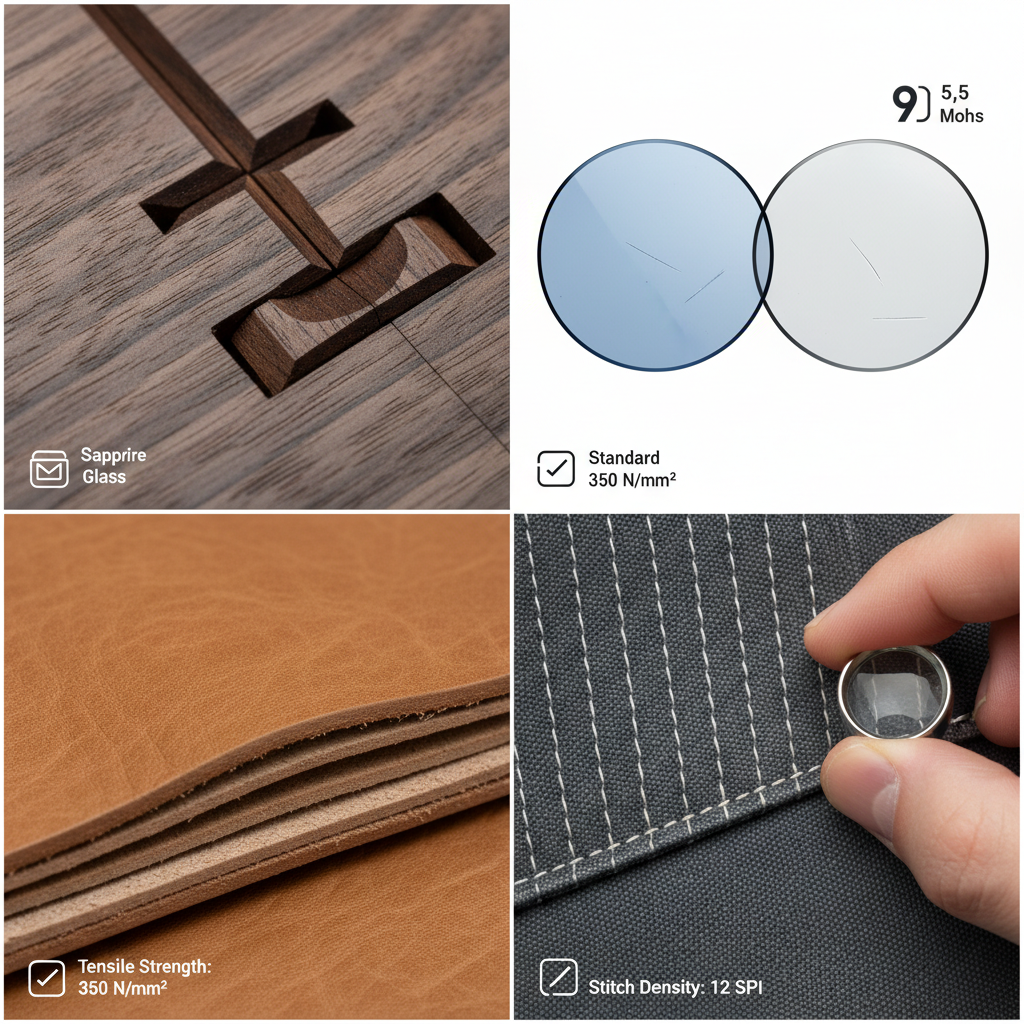
Here is a practical red-flag checklist to use before you buy:
- Joinery: In furniture, look for dovetail or mortise-and-tenon joints. Glued, stapled, or nailed joints are massive red flags for contrived durability.
- Materials: Solid wood ages beautifully and can be repaired; MDF (medium-density fiberboard) swells with moisture and chips easily.
- Leather: Seek out “full-grain” leather, which retains the hide’s natural strength. “Genuine leather” is often a marketing term for heavily processed, glued-together leather scraps that peel within a year.
- Finishes: Uneven stitching, cracking caulk, or misaligned hardware are clear indicators of rushed, low-quality labor.
The Time Cost of Luxury
Why does premium inspiring craftsmanship command such a high price? The answer lies in the “Time Cost of Luxury.” Authorities on luxury brand heritage, such as Mojeh, highlight that the pillars of luxury craftsmanship are rooted in the hidden hours of labor required to execute specific artisanal techniques [9].
Creating a Patek Philippe watch or a piece of artisanal furniture involves intricate inlays, hand-tailoring, and hand-finishing that machines simply cannot replicate with the same level of precision and care. You are not just paying for the raw materials; you are investing in the decades of generational knowledge and the hundreds of hours a master artisan dedicated to ensuring that specific item will outlive its creator.
Principles of Durable Design: Products Designed to Inspire
Physical toughness is only one half of the longevity equation. If a product is indestructible but ugly, uncomfortable, or impossible to repair, it will still end up in a landfill. This is where durable design comes into play.
The Ellen MacArthur Foundation, a leading authority on the circular economy, emphasizes that sustainable design must incorporate repairability, reuse, and modularity [10]. Furthermore, professional standards set by the Industrial Designers Society of America (IDSA) dictate that durable products designed to inspire must possess an aesthetic timelessness that transcends fleeting micro-trends [11].
What is Emotional and Social Durability?

What is emotional durability in product design? It is the psychological phenomenon that prevents us from discarding items we love, even when they show signs of wear. Thought leaders in sustainable design frameworks, such as Bas van Abel, argue that “social durability” and emotional connection are just as vital as physical strength [12].
A product achieves emotional durability when it ages gracefully—like a raw denim jacket that fades to match the wearer’s movements, or a brass pen that develops a unique patina. When a product is both physically durable and aesthetically or ethically inspiring, it fosters a bond with the user. This emotional tether is the ultimate antidote to the disposable culture.
The ROI of ‘Buy It For Life’: How to Invest in Durable Design
For both consumers and B2B purchasers, choosing to invest in durable design is a strategic financial decision. While the upfront cost is higher, the Return on Investment (ROI) becomes undeniable when you calculate the Total Cost of Ownership (TCO).
Data from the Boston Consulting Group (BCG) demonstrates that prioritizing product sustainability and durable design significantly reduces long-term costs and limits exposure to future resource taxes [13]. Furthermore, industry benchmarks, such as the BIFMA (Business and Institutional Furniture Manufacturers Association) standards outlined by Configura, provide quantifiable metrics for commercial-grade durability, ensuring that investments in office or home infrastructure yield multi-decade returns [14].
Objective Metrics: The LONGTIME Label and The 25-Year Rule
To confidently purchase long lasting quality goods, you must rely on objective metrics rather than brand prestige alone. One of the most rigorous standards today is the LONGTIME label, a European certification authority that rigorously evaluates products based on their robustness, repairability, and the length of their warranties [15].
Look for brands that adhere to the “25-Year Rule”—companies that explicitly engineer their products for multi-decade lifespans. You can identify these high quality long lasting products by looking at their spec sheets. Do they use VG10 steel for edge retention? Is the internal construction solid brass rather than plastic? Do they offer a lifetime warranty and, crucially, sell replacement parts? A true BIFL product is designed to be maintained, not just consumed.
Conclusion
The pursuit of adamantine products, premium craftsmanship, and durable design is much more than a lifestyle trend; it is an economic and environmental imperative. As we have explored, true longevity is not found in marketing hyperbole, but in measurable material science, hidden structural integrity, and objective certifications.
Escaping the relentless cycle of replacing cheap goods requires a fundamental shift in how we value our purchases. We must move away from the illusion of upfront savings and embrace the principles of emotional durability, repairability, and cost-per-use thinking.
Before you make your next major purchase, audit it. Use the ‘Cost-Per-Use’ framework to justify the investment, and apply the structural red-flag checklist provided in this article to spot contrived durability before you buy. By demanding better craftsmanship, you protect your wallet, reduce your environmental footprint, and surround yourself with products designed to inspire for a lifetime. Share this guide with someone stuck in the cycle of replacing cheap goods, and help them discover the true value of buying it for life.
References
- Intelligent Economist. (N.D.). Substitution Effect and Income Effect. Retrieved from authoritative economic theory resources.
- MIT Publications. (N.D.). The Environmental Impacts of Reuse and the Rebound Effect. Massachusetts Institute of Technology.
- US EPA. (N.D.). Reducing and Reusing Basics. United States Environmental Protection Agency.
- Material Science and Engineering journals. (N.D.). The Mohs Scale of Hardness and Material Limits.
- Industrial testing laboratories. (N.D.). Objective Stress and Durability Metrics.
- The Crafts Council. (N.D.). Artisanal Standards and Heritage Techniques.
- Patrick A. Finn / Regal Stephens. (N.D.). Expert Insights on Remodeling Craftsmanship and Structural Longevity.
- Bryan A Woods Law / Newmark Building. (N.D.). Construction Defect Cases and Homebuilding Quality Standards.
- Nolita Harbour / Mojeh. (N.D.). The Pillars of Luxury Brand Craftsmanship and Artisanal Detailing.
- Ellen MacArthur Foundation. (N.D.). Circular Economy and Sustainable Design Principles.
- Industrial Designers Society of America (IDSA). (N.D.). Professional Authority on Design Standards.
- Bas van Abel / Disruptive Design. (N.D.). Social Durability and Sustainable Design Frameworks.
- Boston Consulting Group (BCG). (N.D.). Corporate Sustainability Strategies and Economic Impacts.
- Configura. (N.D.). Interior/Architectural Design Durability and BIFMA Standards.
- LONGTIME Label. (N.D.). European Certification Authority for Durable and Repairable Products Directory.
