If you are a homeowner with an active lifestyle, you already know the sinking feeling of discovering a fresh, deep gouge in your hardwood or hearing the ominous creak of a strained subfloor beneath a squat rack. Whether you are building a heavy-duty home gym or designing a dedicated playroom for toddlers, standard residential flooring simply isn’t built to withstand the relentless assault of dropped kettlebells, rolling toys, and heavy stationary equipment.
In the search for solutions, you have likely encountered confusing marketing jargon, with terms like “adamantine flooring” promising indestructible surfaces. But what does that actually mean?
This is your definitive, science-backed, “torture-tested” guide to bulletproofing your active spaces. By cutting through the marketing buzzwords and relying on material science and structural engineering, we will help you choose the best wear-resistant flooring for your specific needs. From protecting your home’s foundational subfloor to ensuring the chemical safety and respiratory health of your family, here is everything you need to know to make a long-term, structurally sound investment.
- Demystifying ‘Adamantine Flooring’: Science vs. Marketing Jargon
- The Hidden Structural Threat: Preventing Home Gym Floor Damage
- Playroom Flooring: Balancing Extreme Durability with Chemical Safety
- Durable Wear-Resistant Flooring for Multi-Use Active Spaces
- The Contractor’s Corner: How to Install Adamantine Flooring
- Conclusion
- References & Authoritative Sources
Demystifying ‘Adamantine Flooring’: Science vs. Marketing Jargon
When shopping for ultra-durable surfaces, the word “adamantine” is frequently thrown around. Historically referring to a mythical, unbreakable stone (or the luster of a diamond), in the modern flooring industry, it is largely a marketing buzzword used to describe highly resilient, industrial-grade materials.
True adamantine flooring typically falls into the categories of industrial-grade epoxies, polyaspartic coatings, or specialized rigid core vinyls. According to material science insights highlighted in Floor Covering Weekly, the chemical makeup of these ultra-durable coatings relies on tightly cross-linked polymer chains that resist both blunt impact and chemical degradation [1].
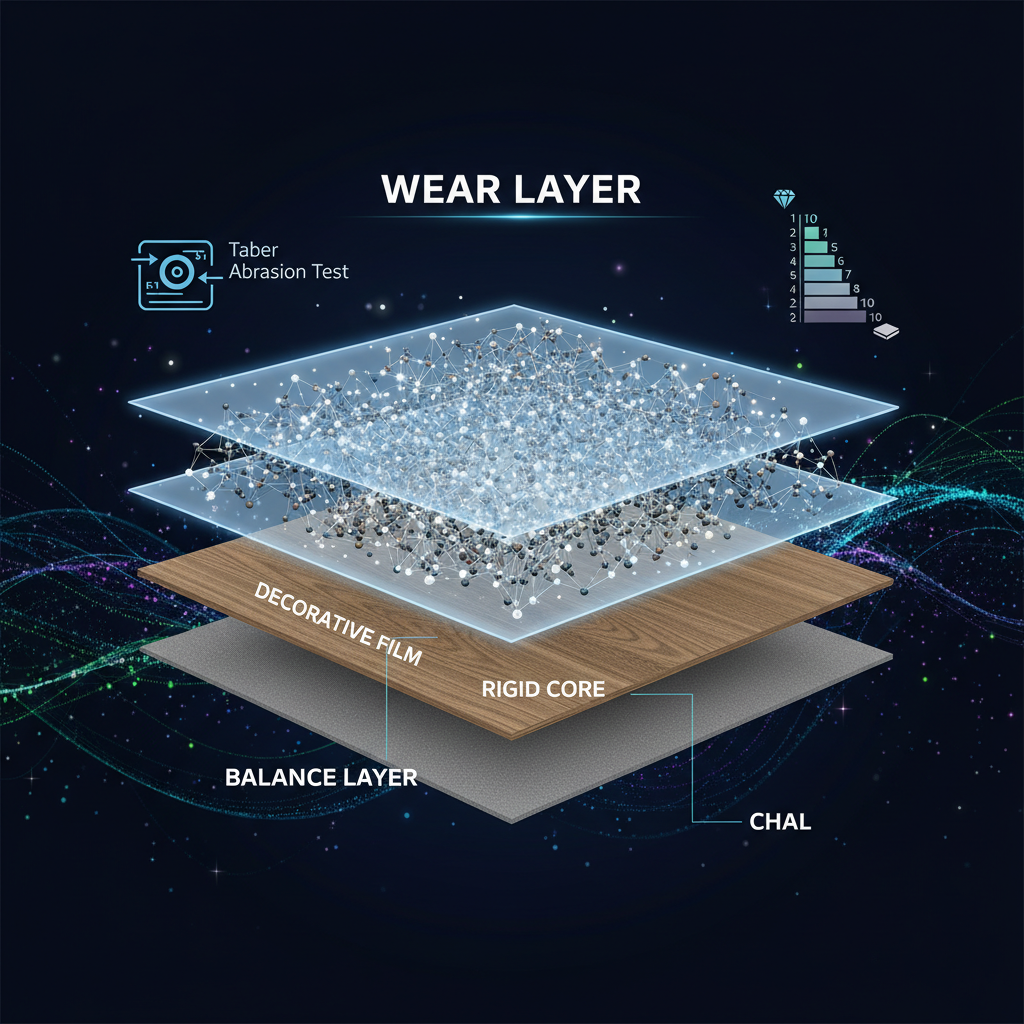
To separate genuine durability from clever marketing, we must look to objective material science rather than adjectives. The gold standard for measuring this is defined by ASTM International standards [2]. Instead of asking if a floor is “adamantine,” you should ask how it performs on the Taber Abrasion Test (which measures how many cycles of abrasive rubbing a surface can withstand before wearing through) and where its finish ranks on the Mohs hardness scale.
What Actually Makes a Floor Wear-Resistant?
Understanding what makes a floor wear-resistant requires looking at its anatomy. Most modern durable flooring, such as Luxury Vinyl Plank (LVP) or laminate, is constructed in layers: a rigid core for stability, a high-definition print layer for aesthetics, and a transparent wear layer on top.
The wear layer is the true hero of wear-resistant flooring. Typically made from urethane and often fortified with microscopic aluminum oxide particles, this top coat dictates the floor’s lifespan.
When evaluating laminates, durability is measured by an Abrasion Class (AC) rating. AC4 and AC5 rated laminates are designed for commercial traffic and offer superior wear resistance compared to standard residential AC3 flooring. While porcelain tile is incredibly hard and scratch-resistant, it lacks the impact resistance of high-AC laminates or thick LVP, meaning a dropped weight is more likely to shatter a tile than dent a premium vinyl plank.
The Hidden Structural Threat: Preventing Home Gym Floor Damage
When outfitting a workout space, most people focus entirely on preventing surface scratches. However, the most severe home gym floor damage happens beneath the surface. Heavy equipment floor wear is not just a cosmetic issue; it is a structural one.
When you drop a barbell or place a 400-pound treadmill on a standard residential floor, the localized pressure can easily crack the subfloor or permanently damage the structural joists underneath. According to load-bearing and impact absorption principles outlined by the American Society of Civil Engineers (ASCE), distributing this static and dynamic load is critical to maintaining structural integrity [3].
Subfloor Protection and Vibration Dampening
If you want to prevent a cracked subfloor or stop a heavy treadmill from ruining your carpet, you must build a proper foundation. Relying solely on a thin rubber mat is a recipe for disaster. Using a 3/4-inch plywood sub-layer beneath 3/4-inch rubber mats can distribute impact force by up to 60%, significantly reducing subfloor damage risk. This plywood acts as a rigid distribution layer, spreading the concentrated weight of a squat rack or a dropped deadlift over multiple floor joists.
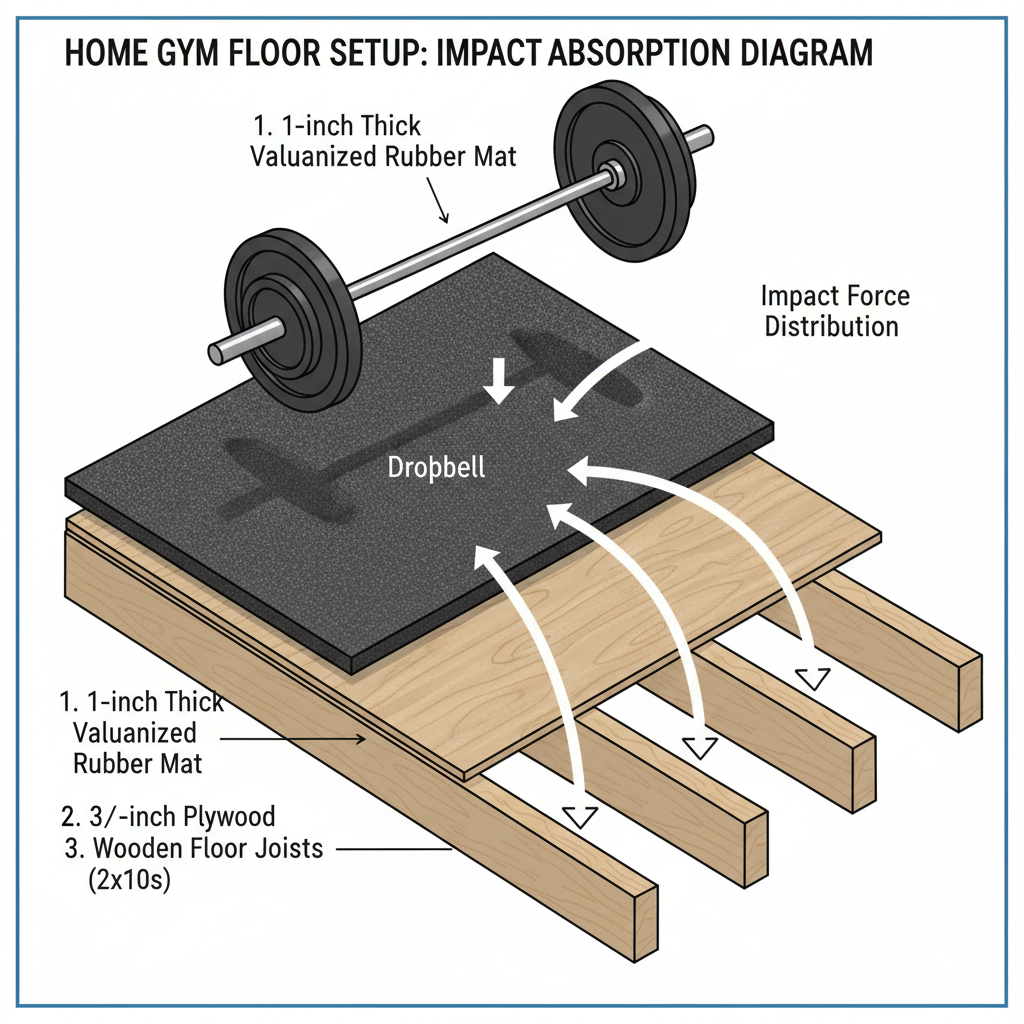
Furthermore, heavy equipment floor wear is heavily exacerbated by vibration. The Acoustical Society of America notes that the physics of vibration dampening are crucial in active spaces [4]. The constant rhythmic pounding of a treadmill creates micro-abrasions between the machine, the mat, and the floor below.
You must also be wary of a hidden chemical threat: plasticizer migration. This is a chemical reaction where the rubber feet of gym equipment (or cheap rubber mats) interact with the polyurethane finish of hardwood or the wear layer of vinyl, causing permanent yellowing or discoloration. Always use a barrier, such as a high-density felt or a specifically formulated non-reactive mat, between rubber equipment and finished floors.
Best Adamantine Flooring for Home Gyms: Torture-Tested Options
When searching for the best adamantine flooring for home gyms, you need materials that have survived rigorous torture testing—specifically, standardized drop-testing of heavy weights.
For heavy lifting, standard puzzle mats are generally insufficient; they compress too easily, pull apart under lateral stress, and offer minimal subfloor protection. Instead, functional gym build-out guides, such as those featured in the CrossFit Journal, consistently recommend vulcanized rubber horse stall mats [5].
Typically 3/4 inch thick, these mats offer the highest durability-to-cost ratio on the market, often costing less than $2.50 per square foot. They provide the exact thickness needed for deadlifting (1/2 to 3/4 inch is mandatory for heavy Olympic lifting) and boast incredible shock absorption. When comparing durable home gym surfaces, rolled rubber is excellent for seamless aesthetics in cardio zones, but interlocking high-density vulcanized tiles or stall mats reign supreme for free-weight areas.
Playroom Flooring: Balancing Extreme Durability with Chemical Safety

Designing a playroom introduces a completely different set of challenges. While you still need to know how to protect playroom floors from wear caused by rolling toys and heavy furniture, your primary concern must be chemical safety.
Because children spend significant time in direct contact with the floor, the materials you choose must be free of harmful Volatile Organic Compounds (VOCs) and phthalates. Pediatric safety guidelines regarding safe play environments, such as those from Healthy Children (the American Academy of Pediatrics’ parenting website), emphasize the importance of non-toxic indoor materials to prevent respiratory irritation and developmental hazards [6].
How to Protect Playroom Floors from Wear
To protect existing floors without compromising air quality, a multi-layered approach is best. For active play zones, EVA foam mats with zero VOC emissions are recommended by pediatric health advocates. They provide excellent cushioning for falls and protect the floor from dropped toys.
However, you must differentiate between active toys and heavy, stationary toys (like wooden play kitchens or indoor climbing domes). For stationary items, use heavy-duty, non-toxic furniture felts to prevent deep gouging.
If you are using rugs as wear-resistant floor protection, be incredibly careful with the rug pad. Just like gym equipment, cheap rubber-backed rugs can cause plasticizer migration, permanently discoloring vinyl and hardwood floors. Always opt for felt or natural rubber rug pads specifically rated as safe for your specific floor finish.
Triage and Repair: Fixing Scratched Playroom Floors
Despite your best efforts, scratched playroom floors are sometimes inevitable. When triage and repair are necessary, it is vital to avoid viral DIY hacks—like rubbing walnuts or olive oil into the wood—which can actually ruin the floor’s finish and make future professional refinishing impossible.
For superficial scratches in the clear coat, a specialized finish restorer or a color-matched wax pencil can safely blend the blemish. However, for deep scratches that penetrate the stain or expose bare wood, follow repair tutorials validated by the National Wood Flooring Association (NWFA) [7]. If a gouge is deep enough to splinter, or if a large area of the wear layer on an LVP floor has been compromised, it is time to hire a professional. Attempting to sand and refinish a localized deep scratch on your own often results in a highly visible, uneven patch.
Durable Wear-Resistant Flooring for Multi-Use Active Spaces
Not every active space is a dedicated gym or playroom. Mudrooms, finished basements, and multi-use family rooms require durable wear-resistant flooring for active spaces that bridges the gap between industrial-grade toughness and residential aesthetics.
According to residential building trends monitored by the National Association of Home Builders (NAHB), homeowners are increasingly turning to premium Luxury Vinyl Plank (LVP) for these areas [8]. The key to success here is the wear layer. A wear layer of 20 mil (0.5 mm) or higher is considered commercial grade and highly recommended for active residential spaces to prevent premature wear from pets, kids, and heavy foot traffic.
Choosing the Right Protective Overlays
If you are not ready to replace your entire floor, choosing the right temporary wear-resistant floor protection is essential. For areas with rolling office chairs or heavy crafting tables, avoid standard PVC mats. Polycarbonate floor mats offer up to double the impact resistance and lifespan of standard PVC mats without curling or discoloring over time.
Always check your flooring manufacturer’s warranty guidelines before laying down any semi-permanent protective layer. Some warranties are explicitly voided if you use the wrong type of tape, adhesive, or reactive rubber backing on your protective overlays.
The Contractor’s Corner: How to Install Adamantine Flooring
If you have decided to upgrade to a truly ultra-durable surface—like a polyaspartic coating or commercial-grade rigid core vinyl—the installation process dictates the floor’s lifespan. From the perspective of a licensed general contractor, the biggest mistake homeowners make when they install adamantine flooring is rushing to lay the product.
Improper subfloor preparation accounts for over 70% of early flooring failures in high-durability epoxy and rigid-core installations. You can buy the most expensive, wear-resistant material on earth, but if the subfloor is uneven or holds moisture, the floor will fail.
Subfloor Preparation and Moisture Mitigation
Authoritative standards from the Tile Council of North America (TCNA) dictate that subfloor prep and moisture testing are non-negotiable [9].
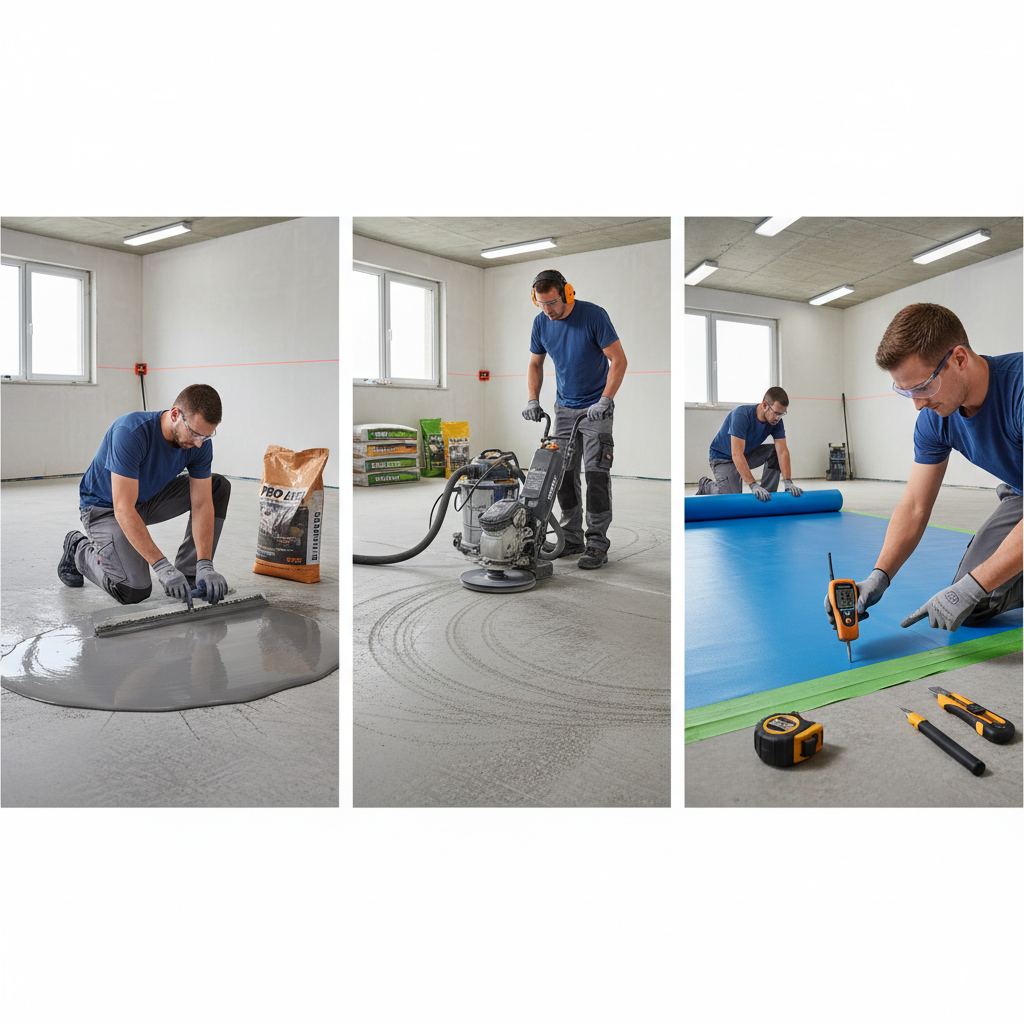
Before installing rigid core floors, the subfloor must be leveled; any dips or peaks will cause the locking mechanisms of the planks to snap under heavy traffic. For concrete basements receiving an epoxy or polyaspartic coating, a simple sweep isn’t enough. The concrete must be mechanically profiled, usually requiring specialized tooling like a diamond grinder, to open the pores of the concrete so the coating can bond properly.
Furthermore, you must test for moisture vapor transmission. If moisture levels are too high, a dedicated moisture barrier must be applied before the flooring goes down, otherwise, the trapped moisture will cause coatings to blister and peel, or breed mold beneath rubber gym tiles. Finally, respect the cure times; while some polyaspartic floors cure in 24 hours, traditional epoxies may require several days before they can handle the weight of heavy gym equipment or furniture.
Conclusion
Achieving true “adamantine” durability in your home gyms and playrooms requires looking past flashy marketing claims and focusing on the hard facts of material science, structural subfloor support, and chemical safety. Whether you are laying down 3/4-inch plywood to protect your joists from a deadlift platform, or verifying the zero-VOC status of your toddler’s play mat, the right flooring strategy protects both your home’s foundation and your family’s health.
Evaluate your current active space today using our 3/4-inch plywood rule for gyms or the zero-VOC check for playrooms. Share this guide with your contractor before starting your next renovation, or drop a comment below with your specific flooring challenge for expert advice.
Structural and health disclaimer: Consult a structural engineer before installing heavy gym equipment on elevated floors. Information regarding VOCs and child safety is for educational purposes and should be verified with pediatric health guidelines.
References & Authoritative Sources
- Floor Covering Weekly. (N.D.). Chemical makeup of ultra-durable coatings.
- ASTM International. (N.D.). Durability standards using the Taber Abrasion Test and Mohs hardness scale.
- American Society of Civil Engineers (ASCE). (N.D.). Principles of load bearing and impact absorption.
- Acoustical Society of America. (N.D.). Authoritative data on vibration dampening and transmission.
- CrossFit Journal. (N.D.). Functional gym build-out guides and material recommendations.
- Healthy Children (American Academy of Pediatrics). (N.D.). Guidelines on safe play environments and avoiding toxic materials.
- National Wood Flooring Association (NWFA). (N.D.). Wood floor repair guidelines and refinishing standards.
- National Association of Home Builders (NAHB). (N.D.). Residential building trends and standards for active spaces.
- Tile Council of North America (TCNA). (N.D.). Authoritative standards for subfloor preparation and moisture testing.
