When we think about a clean home, we often picture gleaming countertops and spotless windows. Yet, beneath our feet lies a hidden ecosystem—the “Microbiome of the Home.” Traditional porous floors and plush carpets act as massive, unseen reservoirs for biological and chemical hazards, trapping everything from tracked-in pesticides to thriving colonies of bacteria. For health-conscious homeowners, allergy sufferers, and parents, this creates a cycle of exhausting maintenance and lingering health risks from allergens and Volatile Organic Compounds (VOCs).
Enter the “hospital-to-home” evolution: the rise of adamantine and non-porous flooring. By bridging the gap between commercial-grade indestructibility and residential comfort, these advanced materials offer a definitive blueprint for a healthier, easier-to-clean environment. This guide will expose the hidden hazards of traditional flooring and provide a science-backed roadmap to engineering a truly hygienic, indestructible home.
- The Hidden Health Hazards of Traditional Flooring
- What is Adamantine Flooring? The Science of Non-Porous Surfaces
- Top Hygienic Flooring Materials for a Healthy Home
- The ‘Allergy Ecosystem’: Non-Porous Floors for Severe Allergies
- The Paradox of Over-Cleaning: Mastering Floor Maintenance
- How to Choose: The Hygiene vs. Comfort Matrix
- Conclusion
- References & Authoritative Sources
The Hidden Health Hazards of Traditional Flooring
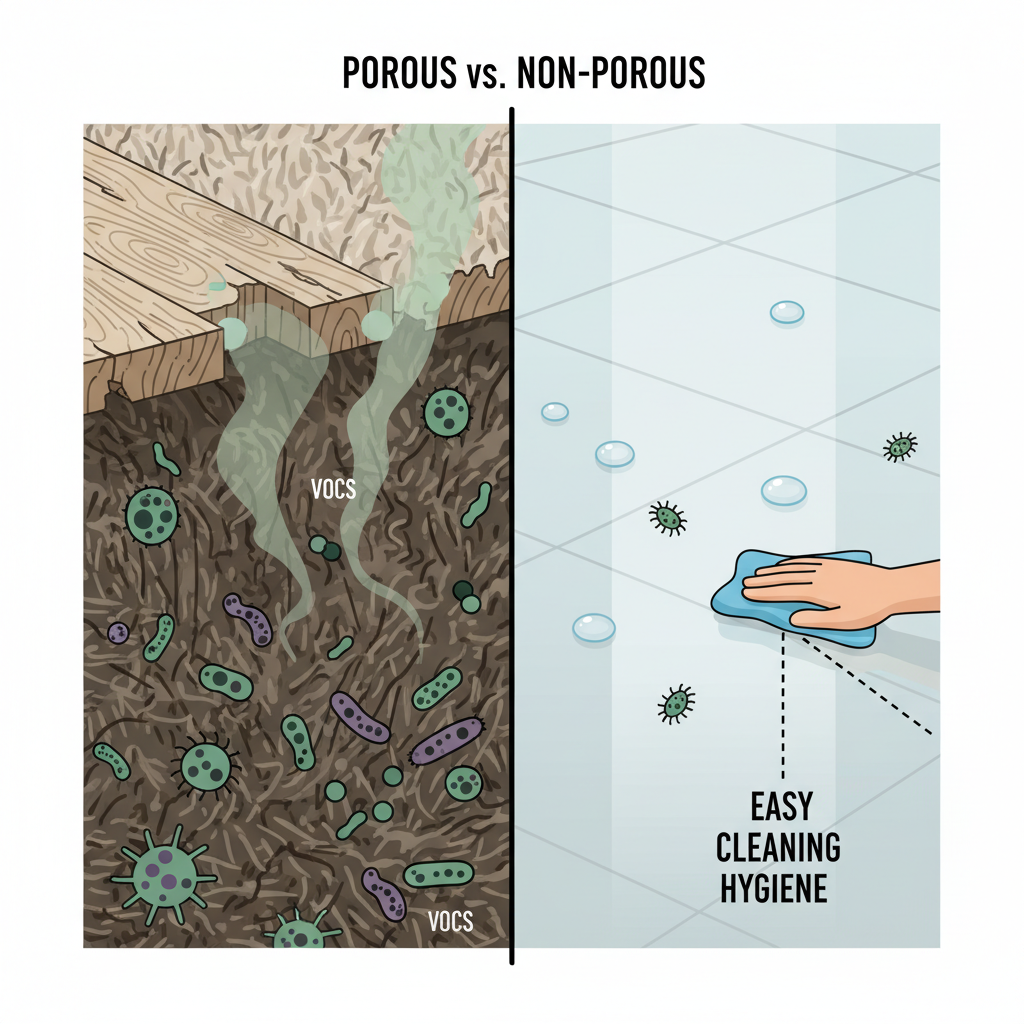
To understand the necessity of non-porous surfaces, we must first establish the severity of the problem. Standard porous floors and carpets do not just get dirty; they actively harbor microscopic threats. Shifting our perspective from aesthetic cleanliness to microscopic hygiene reveals why floors trapping dirt and bacteria are a primary source of indoor contamination.
According to the U.S. Centers for Disease Control and Prevention (CDC), contaminated surfaces play a significant role in disease transmission, with various pathogens capable of surviving on porous materials for extended periods [1]. Furthermore, epidemiological evidence from the Institute of Medicine of the National Academy of Sciences links damp indoor environments—often exacerbated by moisture-trapping floors—to the development and exacerbation of asthma [2]. The unhygienic flooring health risks are not just theoretical; they are a daily reality in homes with improper surface materials.
The ‘Microbiome of the Home’: What Your Floors Are Trapping
Every time you walk through your front door, your shoes bring the outside world in. Outdoor pollutants, including asphalt residue, lawn pesticides, and herbicides, bind to indoor dust and settle directly onto your floors. In carpets, this creates a toxic, biological sink.
The statistics are staggering: bacteria on floors may live for up to four weeks in carpet, with every square inch hosting roughly 200,000 bacteria. This includes dangerous pathogens like E. coli and Salmonella. The American Academy of Pediatrics highlights the severe impact of these floor contaminants on crawling infants, who are in direct contact with these surfaces and frequently exhibit hand-to-mouth behaviors [3]. Because of this dense accumulation of toxins and pathogens, implementing a strict “no-shoes” policy is the first, most critical defense in maintaining indoor hygiene.
Biological vs. Chemical Risks: Mold, VOCs, and Off-Gassing
The hazards beneath our feet fall into two distinct categories: biological and chemical. Biological risks stem from trapped moisture. Porous floors absorb spills and humidity, creating dark, damp environments where mold and mildew thrive. However, a critical content gap in many home improvement guides is the role of subfloor moisture. If the concrete slab or wooden subfloor lacks a proper vapor barrier, moisture wicks upward, fueling mold growth beneath the surface even if the top floor appears dry.
Conversely, chemical risks often originate from the flooring materials themselves. Cheap synthetic flooring, particularly low-quality vinyl and certain laminates, can suffer from off-gassing—the release of Volatile Organic Compounds (VOCs) into the air. The World Health Organization (WHO) notes that prolonged exposure to indoor VOCs can cause respiratory health issues, headaches, and long-term systemic damage [4]. Thus, true floor hygiene requires mitigating both the biological growth and the chemical emissions.
What is Adamantine Flooring? The Science of Non-Porous Surfaces
To combat these hazards, material science has introduced ultra-durable solutions to the residential market. Adamantine flooring refers to exceptionally hard, durable, and impenetrable surfaces. Understanding the microscopic mechanics of porosity is key to grasping the benefits of non-porous adamantine flooring and how it bridges the gap between commercial durability and home use.
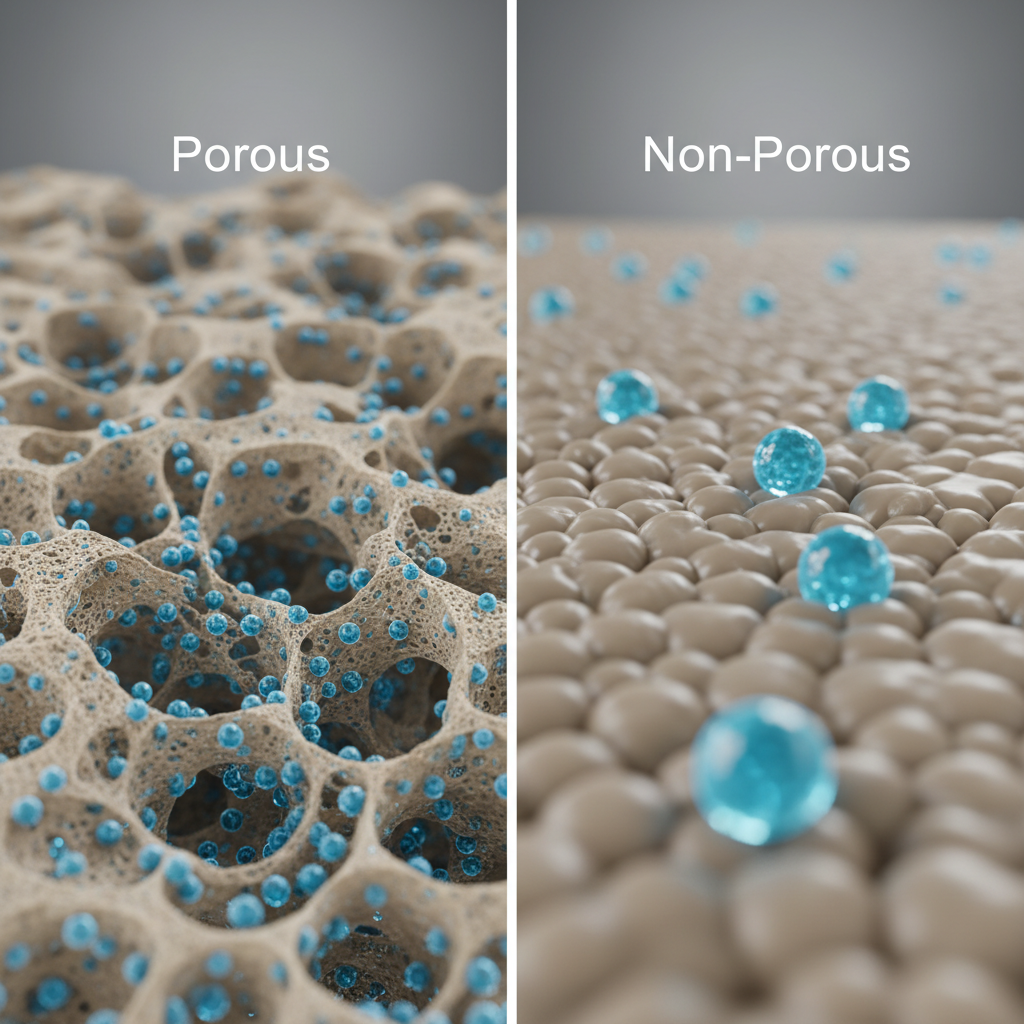
At a chemical level, non-porous surfaces prevent microbial harborages by denying bacteria the microscopic crevices they need to anchor and multiply. Without a porous structure to absorb water and organic matter, pathogens are left exposed on the surface, where they quickly die off or are easily wiped away.
Demystifying ‘Adamantine’: Industrial Durability in Residential Spaces
While “adamantine” is sometimes used as a marketing buzzword, Concrete Construction Magazine defines it as a specific class of ultra-durable, often corundum-infused toppings or advanced resinous materials designed to be virtually indestructible [5]. In a residential context, adamantine flooring typically takes the form of advanced polyaspartic coatings or high-grade epoxy.
These materials provide the ultimate defense against moisture, chemicals, and wear. The “hospital-to-home” trend has seen these seamless, easily sanitized floors adapted for high-end residential design, particularly in basements, garages, and modern living spaces. The Epoxy Interest Group confirms that the longevity and wear-resistance of these resinous coatings make them ideal for high-traffic residential areas, offering decades of performance without degrading [6].
Porous vs. Non-Porous: The Microscopic Difference
The difference between porous and non-porous flooring comes down to microscopic cellular structure. Porous materials (like unsealed wood, concrete, and natural stone) have tiny holes that act like sponges, absorbing liquids, stains, and odors. Non-porous floors have a tightly bound molecular structure that repels liquids, forcing them to bead on the surface.
To evaluate your current floors, try the “water drop test”: place a few drops of water on your floor. If it absorbs and darkens the material within a few minutes, your floor is porous. Technical data sheets from authorities like Sherwin-Williams Industrial emphasize the importance of this distinction, noting the critical difference between “stain-resistant” (which may eventually absorb liquids) and “stain-proof” or fully non-porous materials that offer absolute moisture resistance [7].
Top Hygienic Flooring Materials for a Healthy Home
When learning how to choose hygienic flooring for homes, buyers must prioritize materials that are non-toxic, inert, and easy to sanitize. To make safe purchasing decisions, always look for specific indoor air quality certifications like FloorScore [8] and GREENGUARD [9], which guarantee that the product meets strict limits for VOC emissions.
Luxury Vinyl Plank (LVP), Porcelain, and Natural Linoleum
The best hygienic home floors balance sanitization with livability.
- Porcelain Tile: Fired at extreme temperatures, porcelain is dense, inert, and completely non-porous. It emits zero VOCs and is highly resistant to bacteria, making it one of the most sanitary options available.
- Luxury Vinyl Plank (LVP): High-quality LVP offers excellent water resistance and a softer underfoot feel compared to tile. However, buyers must be cautious; while premium LVP is safe, cheap vinyl can be a major source of VOCs.
- Natural Linoleum: Made from linseed oil, cork dust, and pine rosin, true linoleum is naturally antimicrobial and highly durable. Eco-Building Products highlights natural linoleum as a gold standard for non-toxic, healthy building materials [10].
The Weak Link: Why Grout, Adhesives, and Subfloors Matter
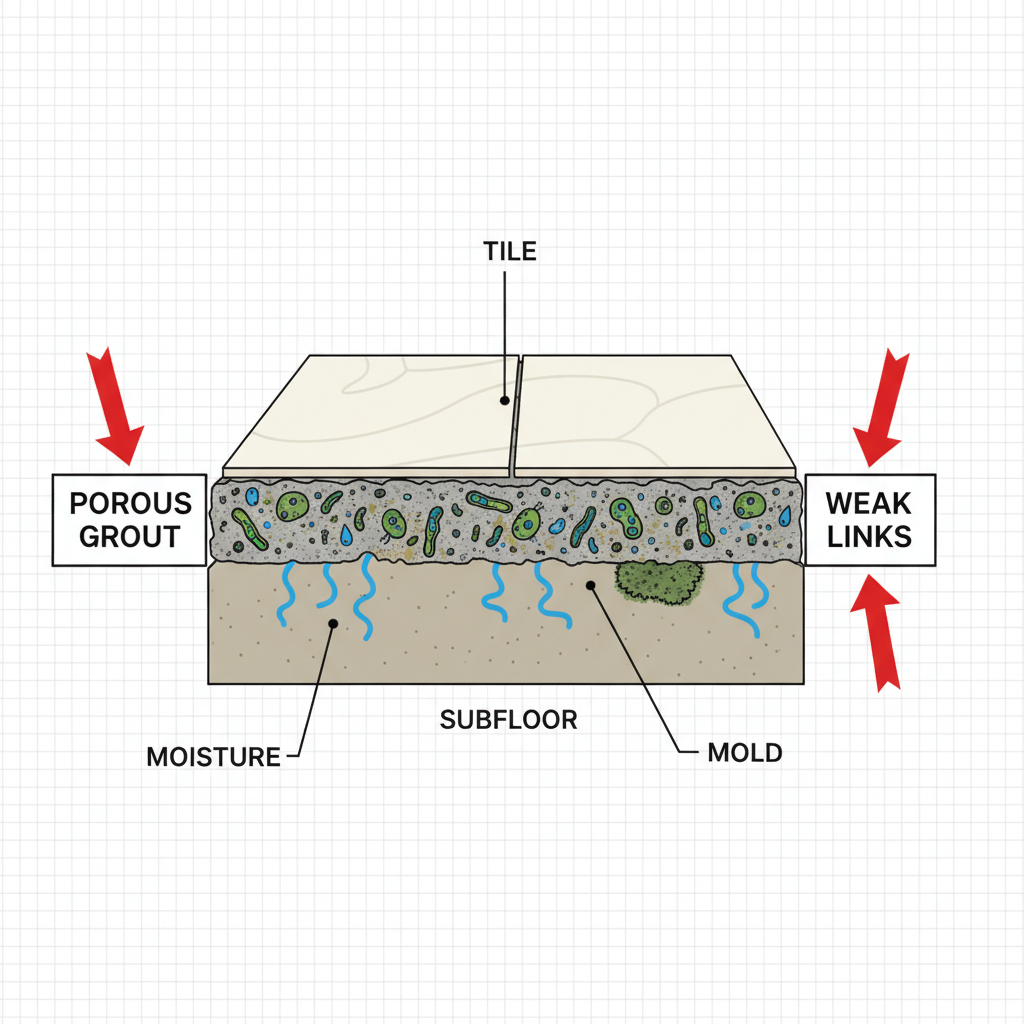
A perfectly non-porous porcelain tile is useless if it is surrounded by highly porous grout and glued down with off-gassing adhesives. This is the weak link in floor hygiene. Traditional cementitious grout acts as a sponge for dirty mop water and bacteria.
To achieve ultimate sanitization, consider using epoxy grout, which is completely non-porous and highly resistant to stains and bacterial growth. Additionally, seamless integration—such as installing cove bases where the floor curves smoothly up the wall—eliminates the 90-degree corners where dust and pathogens typically accumulate.
The ‘Allergy Ecosystem’: Non-Porous Floors for Severe Allergies
For allergy sufferers, ripping up carpet is only step one. True relief requires a holistic approach to the home’s “Allergy Ecosystem.” While non-porous flooring for allergy relief is essential because it does not trap dust mites or pet dander, it changes how airborne particles behave in your home.
According to the Asthma and Allergy Foundation of America, hard surfaces allow allergens to become airborne much more easily than carpet [11]. When you walk across a hard floor, you kick up settled dust into the breathing zone.
Why Hard Floors Need HEPA Filtration and Damp Mopping
Because dust floats more readily off hard floors, they must be paired with high-quality HEPA filtration and specific cleaning techniques. Dry sweeping or using a standard vacuum often just agitates dust mites and pet dander, blowing them back into the air.
Allergists recommend using sealed-system HEPA vacuums that trap 99.97% of particulates, followed by damp mopping. Damp mopping captures the fine, microscopic dust that vacuums miss, physically removing the allergens from the ecosystem without kicking them into the air.
The Paradox of Over-Cleaning: Mastering Floor Maintenance
One of the greatest misconceptions in home maintenance is that harsher chemicals equal cleaner floors. In reality, aggressive scrubbing and toxic cleaners actively destroy floor hygiene. Improving home hygiene with flooring requires safe, efficient protocols that preserve the material’s protective finish.
Why Harsh Chemicals Destroy Floor Hygiene
Bleach, ammonia, and abrasive scrubbing pads break down the polyurethane finishes and factory seals on your flooring. Consumer Reports notes that the degradation of floor finishes from commercial cleaners is a primary cause of premature floor failure [12].
The science is simple: harsh chemicals create micro-scratches in the finish. These invisible abrasions become perfect, protected breeding grounds for bacteria. By over-cleaning, you turn a non-porous, easy-to-clean floor into a porous, highly contaminated surface.
Manufacturer-Approved, pH-Neutral Cleaning Protocols
The best easy clean flooring solutions rely on gentle maintenance. A “Cost vs. Cleaning Time” analysis shows that investing in high-quality, non-porous floors saves hundreds of hours and dollars in cleaning supplies over a decade.
The American Cleaning Institute recommends using material-specific, pH-neutral care instructions [13]. For most non-porous floors, a simple DIY recipe of a few drops of pH-neutral dish soap in a gallon of warm water is sufficient. This safe cleaning ratio removes dirt and oils without degrading the protective wear layer or voiding manufacturer warranties.
The ‘Rescue Guide’ for Hard-to-Clean Porous Floors
If you are currently stuck with hard to clean porous floors like unsealed wood or natural stone, restoration is possible. Architectural restoration experts explain that acidic cleaners (like vinegar) etch and destroy natural stone because of the science of absorption.
To rescue neglected porous floors, use a baking soda poultice (a thick paste of baking soda and water) applied directly to stains, covered with plastic wrap, and left for 24 hours to draw the stain out. Once clean, establishing a strict, bi-annual sealing schedule is mandatory to artificially create a non-porous barrier over the vulnerable material.
How to Choose: The Hygiene vs. Comfort Matrix
Selecting the right floor requires balancing the cold, hard nature of highly hygienic surfaces with residential comfort.
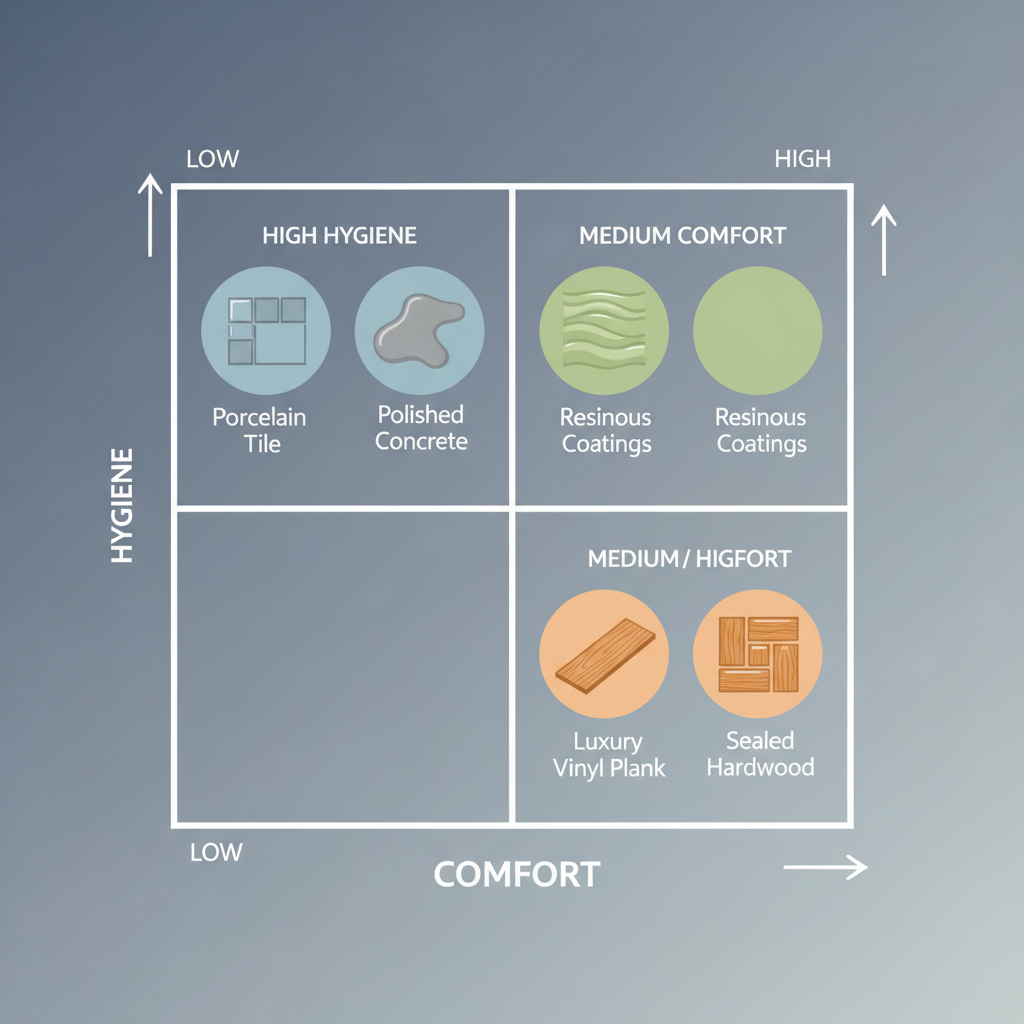
- High Hygiene / Low Comfort: Porcelain Tile and Polished Concrete. Virtually indestructible and zero-VOC, but cold and hard underfoot.
- High Hygiene / Medium Comfort: Resinous/Adamantine Coatings (Epoxy/Polyaspartic). Seamless and impervious, slightly softer than concrete, ideal for basements and utility spaces.
- Medium Hygiene / High Comfort: Luxury Vinyl Plank (LVP) and Sealed Hardwood. Warmer and softer, but requires more careful maintenance to prevent scratching and moisture damage.
Balancing Indestructibility with Everyday Livability
You do not have to sacrifice a cozy home to have easy to clean flooring for healthy homes. You can soften adamantine and porcelain floors by incorporating machine-washable, easily sanitizable area rugs that can be thrown in the laundry to kill dust mites. Installing radiant floor heating systems beneath tile or concrete completely offsets the coldness of the material.
Finally, preventative measures are key. Use high-quality doormats at all entrances to trap asphalt and chemicals before they reach your floors, and apply felt pads to all furniture to prevent the micro-scratches that harbor bacteria.
Conclusion
The transition from viewing floors as mere aesthetic choices to understanding them as the foundation of home health is a critical shift. Your floors dictate the air you breathe and the microscopic ecosystem you live in. By investing in adamantine, non-porous flooring and combining it with smart, non-toxic maintenance, you can create an indestructible, hypoallergenic environment. Take action today: evaluate your current flooring using the water drop test, implement a strict no-shoes policy to stop outdoor pollutants at the door, and consult with a certified flooring specialist to explore low-VOC, non-porous options for your next home upgrade.
Medical Disclaimer: Information regarding allergy relief, asthma, and pathogen reduction is for educational purposes and should not replace advice from a qualified allergist or pediatrician.
References & Authoritative Sources
- U.S. Centers for Disease Control and Prevention (CDC). (N.D.). Guidelines for Environmental Infection Control in Health-Care Facilities. Retrieved from CDC public health archives regarding disease transmission on contaminated surfaces.
- Institute of Medicine of the National Academy of Sciences. (2004). Damp Indoor Spaces and Health. Retrieved from epidemiological health risk reports.
- American Academy of Pediatrics. (N.D.). Environmental Health for Children. Retrieved from pediatric guidelines on indoor contaminants and floor exposure.
- World Health Organization (WHO). (2010). WHO Guidelines for Indoor Air Quality: Selected Pollutants. Retrieved from WHO indoor environment and respiratory health reports.
- Concrete Construction Magazine. (N.D.). Industrial Flooring Materials and Adamantine Toppings. Retrieved from authoritative industrial flooring definitions.
- Epoxy Interest Group. (N.D.). Resinous and Hard-Wearing Floor Coatings in High-Traffic Areas. Retrieved from material science longevity case studies.
- Sherwin-Williams Industrial. (N.D.). Technical Data Sheets: Moisture Resistance and Resinous Flooring. Retrieved from hygienic flooring material specifications.
- FloorScore. (N.D.). Indoor Air Quality (IAQ) Certification Standards. Retrieved from hard surface flooring emissions database.
- GREENGUARD. (N.D.). Certification for Low Chemical Emissions. Retrieved from indoor air quality standards.
- Eco-Building Products. (N.D.). Standards for Non-Toxic, Healthy Building Materials. Retrieved from healthy flooring alternatives data.
- Asthma and Allergy Foundation of America. (N.D.). Allergen-Reducing Home Environments. Retrieved from guidelines on airborne particles and hard surfaces.
- Consumer Reports. (N.D.). Home Maintenance and Product Testing: Floor Care. Retrieved from unbiased testing on floor finish degradation.
- The American Cleaning Institute. (N.D.). Safe and Effective Cleaning Practices. Retrieved from material-specific, pH-neutral care instructions.
