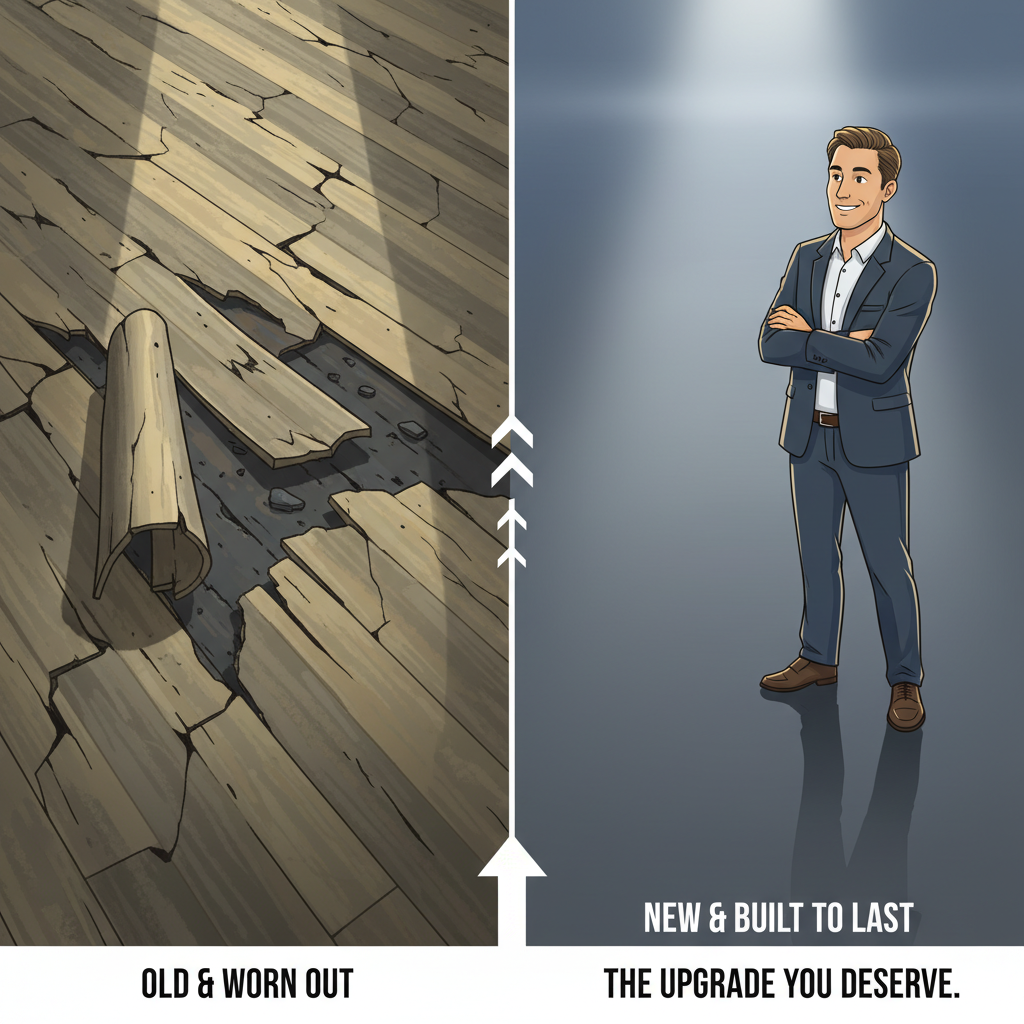
If you have ever stared in dismay at a peeling laminate plank, a deeply gouged hardwood board, or a cracked tile just a few years after installation, you are intimately familiar with the financial drain and frustration of the frequent replacement cycle. For decades, the home improvement industry has conditioned homeowners to view flooring as a purely cosmetic layer—a decorative afterthought meant to be swapped out whenever trends change or wear-and-tear takes its inevitable toll. But what if your floor was designed to outlast the mortgage?
Welcome to the ‘Forever Floor’ Blueprint. By shifting our perspective and treating the floor as a critical structural component rather than just a surface aesthetic, we can unlock unprecedented longevity. This comprehensive guide marries underlying structural reinforcement with industrial-grade “adamantine” materials to create a virtually indestructible flooring system. From diagnosing hidden subfloor weaknesses to selecting ultra-durable resins and executing a flawless installation, this is your definitive roadmap to achieving true structural integrity and ending the costly cycle of floor replacement once and for all.
- The Anatomy of a Failing Floor: Diagnosing the Root Cause
- The Foundation First: Upgrading Home Structural Integrity
- Demystifying Adamantine Flooring: Real-World Indestructible Materials
- Permanent Flooring Solutions and the ‘Pet Stress Test’
- The Economics of Permanence: A 50-Year Lifecycle Cost Analysis
- Bulletproof Execution: Wear-Resistant Floor Installation
- Conclusion
- References
The Anatomy of a Failing Floor: Diagnosing the Root Cause
When homeowners experience frequent floor replacement, they often blame the surface material. They assume the vinyl was too cheap, the wood too soft, or the tile too brittle. However, the true culprit usually lies beneath the surface. To build an indestructible floor, we must first shift the blame from the top layer to the underlying environmental and structural conditions.
According to certified flooring inspectors, improper subfloor preparation and environmental neglect account for up to 80% of premature flooring failures [1]. A floor is only as strong as the foundation it rests upon. When moisture vapor is ignored or subfloor unevenness is paved over, even the most expensive luxury materials will buckle, crack, or peel. The Institute of Inspection, Cleaning and Restoration Certification (IICRC) notes that moisture-related issues cause over $1 billion in flooring damages annually in the US [2]. Understanding these root causes is the first step in differentiating between superficial wear and structural danger.
Cosmetic Squeak or Structural Danger?
A weak flooring structure often announces itself through physical symptoms: a noticeable bounce when you walk, a sagging center in the living room, or a persistent squeak. But how do you know if you are dealing with a harmless cosmetic nuisance or a dangerous joist failure?
A simple triage guide can help. Cosmetic squeaks usually occur when the subfloor separates slightly from the joists due to seasonal expansion and contraction; the noise is the sound of nails rubbing against the wood. This is annoying but structurally benign. However, if a floor physically deflects (bounces) under normal foot traffic, or if you notice a distinct sag sloping toward the center of a room, you may be facing compromised load-bearing elements. Data from the Entomological Society of America highlights that wood rot and termite damage account for a significant percentage of structural floor weaknesses in homes older than 30 years, severely compromising joist integrity [3].
Note: While this guide provides diagnostic context, always consult a licensed structural engineer if you suspect compromised joists or load-bearing failures.
The Hidden Enemy: Moisture Vapor Transmission
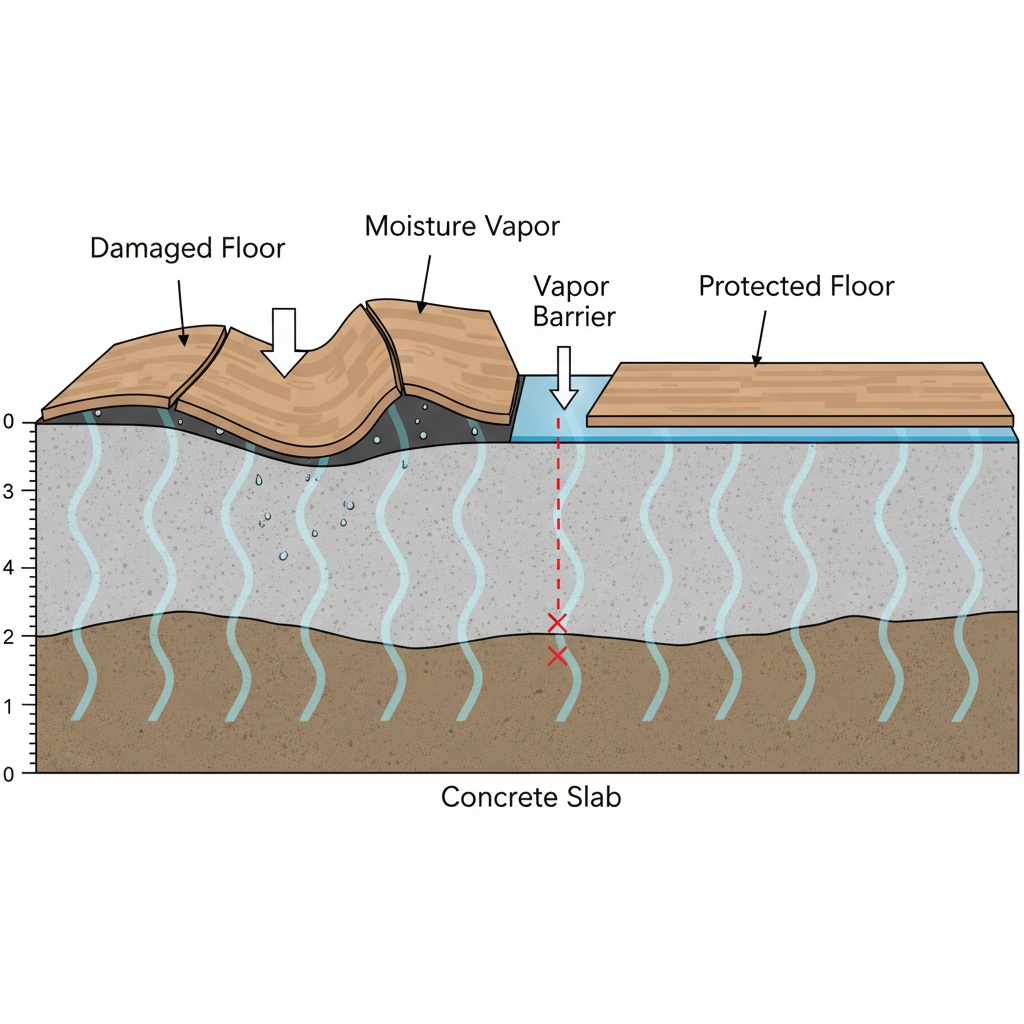
For homes built on concrete slabs, the most insidious enemy of flooring is Moisture Vapor Transmission (MVT). Concrete is porous, acting like a hard sponge that continually wicks moisture from the earth into your home. If you have ever wondered, “Why do my laminate floors keep peeling and buckling?”, MVT is almost certainly the answer.
When impermeable materials (like vinyl or rubber-backed carpet) are trapped over a damp slab, the hydrostatic pressure forces the moisture upward, destroying adhesives and warping planks. To prevent this, actionable testing is required. The Floor Covering Installation Contractors Association (FCICA) mandates rigorous moisture testing before any installation [4]. Homeowners and contractors should utilize in-situ relative humidity (RH) probes or calcium chloride tests to measure the exact moisture emission rate of a concrete slab. Only by applying the appropriate epoxy vapor barrier can you neutralize this hidden enemy and protect your investment.
The Foundation First: Upgrading Home Structural Integrity
Before we can discuss indestructible surface materials, we must address the bones of the house. Upgrading your flooring system is one of the most effective ways to learn how to improve home structural integrity. A properly engineered floor does not just sit on the joists; it ties the entire building together, distributing live and dead loads evenly across the foundation.
When engineering structural integrity flooring, professionals rely on strict deflection limits. Deflection refers to how much a floor bends under weight. The International Residential Code (IRC) sets the baseline deflection limit for residential floors at L/360 for live loads [5]. This means a floor should not bend more than 1 inch over a 30-foot span. Licensed Professional Engineers (PE) reviewing high-load residential projects (like home gyms or heavy kitchen islands) often recommend exceeding this minimum code, upgrading to an L/480 or L/720 standard to eliminate all perceptible bounce and protect rigid surface materials like large-format tile from cracking.
Engineered Subfloors and Shear Strength
The secret to a rock-solid floor lies in the subfloor panels and how they are fastened. Upgrading to a glued and screwed 3/4-inch engineered subfloor significantly increases the shear strength (the resistance to lateral forces) of a floor system.
According to APA – The Engineered Wood Association, high-performance Oriented Strand Board (OSB) structural panels can offer up to twice the shear strength of traditional plywood in specific engineered applications [6]. By utilizing construction adhesive along the joists before screwing down these tongue-and-groove panels, you create a unified structural diaphragm. For advanced structural integrity flooring, some builders are turning to Structural Insulated Panels (SIPs) for floors over unconditioned spaces, providing both immense load-bearing capacity and superior thermal resistance in a single layer.
Demystifying Adamantine Flooring: Real-World Indestructible Materials
In mythology and fantasy, “adamantine” refers to a material of impenetrable, diamond-like hardness. In the realm of residential construction, adamantine flooring represents the convergence of industrial-grade durability, extreme chemical resistance, and massive load-bearing capacity, tailored for the home.
Homeowners seeking high-strength flooring are no longer limited to basic tile or standard hardwood. Advancements in materials science have brought commercial-grade resins and concrete treatments into the residential sphere. To understand the leap in durability, consider compressive strength. The American Concrete Institute (ACI) notes that standard residential concrete has a compressive strength of roughly 2,500 to 3,000 PSI [7]. In contrast, high-strength epoxy and polyaspartic coatings can withstand impacts and loads up to 10,000 PSI, effectively quadrupling the surface strength of your garage, basement, or modern living space.
What is Adamantine Flooring in the Real World?
Is adamantine flooring a real material? While you won’t find “Adamantium” at your local hardware store, the concept maps directly to the Mohs hardness scale and the world of ultra-durable industrial coatings and aggregates.
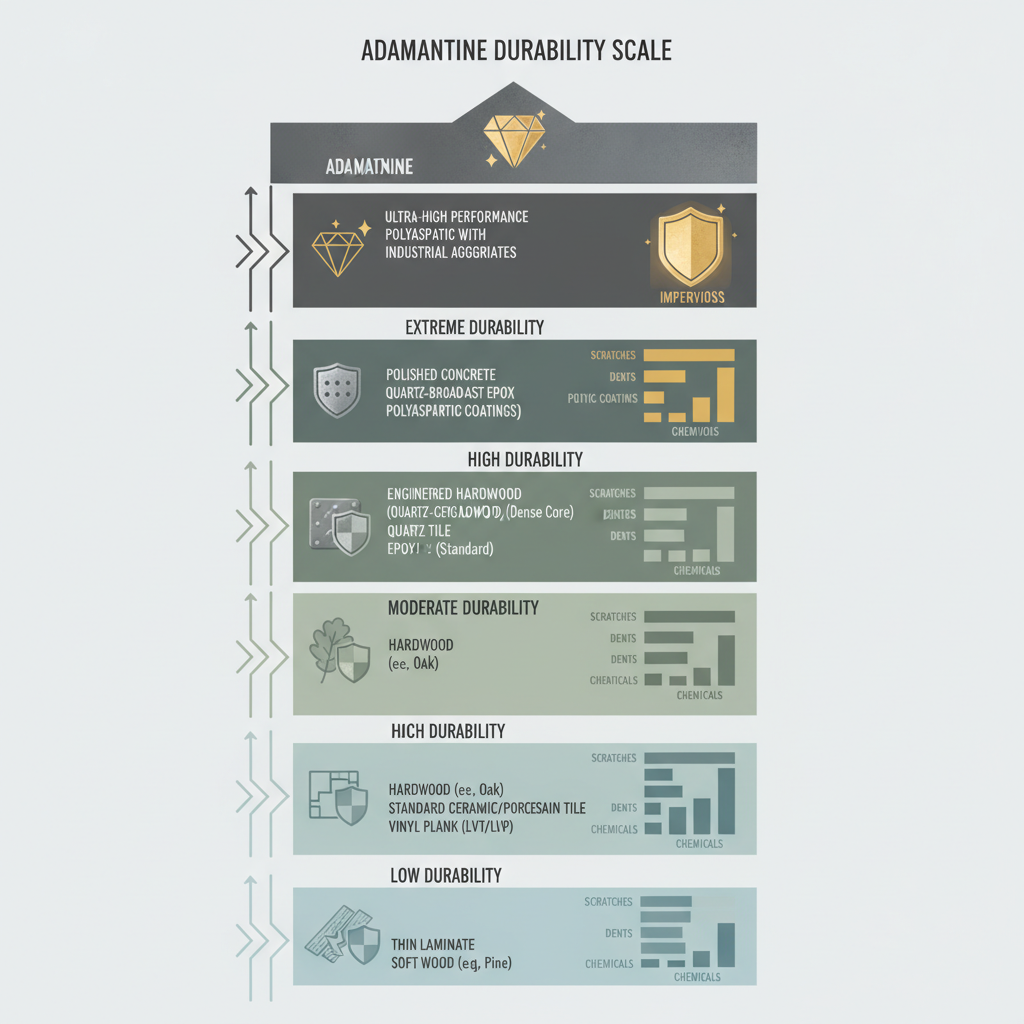
A comparative hardness chart, vetted by certified materials engineers, places standard vinyl and linoleum at the lower end of the spectrum (easily scratched by everyday grit). Hardwoods sit in the middle, while porcelain tile and quartz-infused resins approach the top, sitting just below diamonds on the Mohs scale. Real-world “adamantine” floors utilize these top-tier materials—such as diamond-infused epoxies, quartz broadcast systems, and densified polished concrete—to create a surface that is virtually impervious to scratching, denting, and chemical staining.
Polyaspartic vs. Diamond-Infused Epoxy
When exploring the benefits of adamantine flooring installation, the conversation inevitably turns to advanced resins, specifically polyaspartic coatings versus high-build epoxies. Both offer incredible high-strength flooring capabilities, but they serve different needs.
“For residential applications demanding rapid return-to-service and UV stability, polyaspartic is the gold standard,” notes a leading industrial flooring contractor. “It cures in hours, not days, and won’t yellow in sunlit rooms.” Conversely, diamond-infused or metallic epoxies offer unparalleled thickness and impact resistance. Translating industrial PSI ratings into practical terms: these floors can easily withstand the impact of dropped free weights in a home gym or the localized pressure of a 5,000-pound truck on a jack stand. Furthermore, these coatings meet rigorous NACE International standards for coating performance and corrosion resistance, ensuring that spilled motor oil, harsh cleaners, or pet accidents wipe away without leaving a trace [8].
Permanent Flooring Solutions and the ‘Pet Stress Test’
For the homeowner exhausted by easily damaged home floors, the ultimate goal is permanence. Permanent flooring solutions are “one-and-done” installations that resist the daily assault of foot traffic, dropped items, and pet claws.
Choosing durable home flooring requires moving beyond generic aesthetic preferences and utilizing a ‘Durability by Room & Lifestyle’ matrix. For example, if you desire the warmth of wood, understanding the Janka Hardness Scale is vital. According to the National Wood Flooring Association (NWFA), Hickory boasts a Janka rating of 1820, making it significantly less prone to denting than a softer wood like Pine (380) [9]. For wet areas, the Tile Council of North America (TCNA) sets the standard for high-quality porcelain tile, requiring a water absorption rate of less than 0.5%, rendering it completely waterproof and highly resistant to frost and staining [10].
The ‘Zero-Landfill’ Approach: Polished Concrete and Terrazzo
The most sustainable floor is the one you never have to throw away. Polished concrete and poured terrazzo represent the pinnacle of permanent flooring solutions, championing a ‘Zero-Landfill’ approach.
These floors boast a lifespan of 100+ years. “By utilizing the existing concrete slab as the finished floor, we eliminate the need for secondary materials, adhesives, and future tear-outs,” explains a LEED-certified architect. The U.S. Green Building Council (USGBC) recognizes polished concrete for its sustainability, noting that its high reflectivity can even reduce interior lighting needs by up to 30% [11]. While they require minor ongoing maintenance—such as periodic burnishing or resealing as per the Concrete Polishing Council (CPC) guidelines—they will never end up in a dumpster.
Surviving Clumsy Kids and Large Dogs
Perhaps the most rigorous trial for any floor is the ‘Pet and Kid Stress Test.’ Over 60% of pet owners cite easily damaged home floors as a major household frustration.
Veterinary professionals and home organizers agree that mitigating pet damage requires specific material choices. Large dogs don’t just scratch floors; their nails cause micro-gouges, while their water bowls create localized moisture threats. For those who want the look of wood without the vulnerability, Luxury Vinyl Plank (LVP) is a top contender for durable home flooring, provided you select the right specifications. The key to LVP durability is the wear layer thickness—measured in mils. A 12-mil wear layer is suitable for light traffic, but surviving large dogs and clumsy kids requires a commercial-grade 20-mil to 30-mil wear layer, fortified with aluminum oxide or ceramic bead technology to prevent micro-scratches.
The Economics of Permanence: A 50-Year Lifecycle Cost Analysis
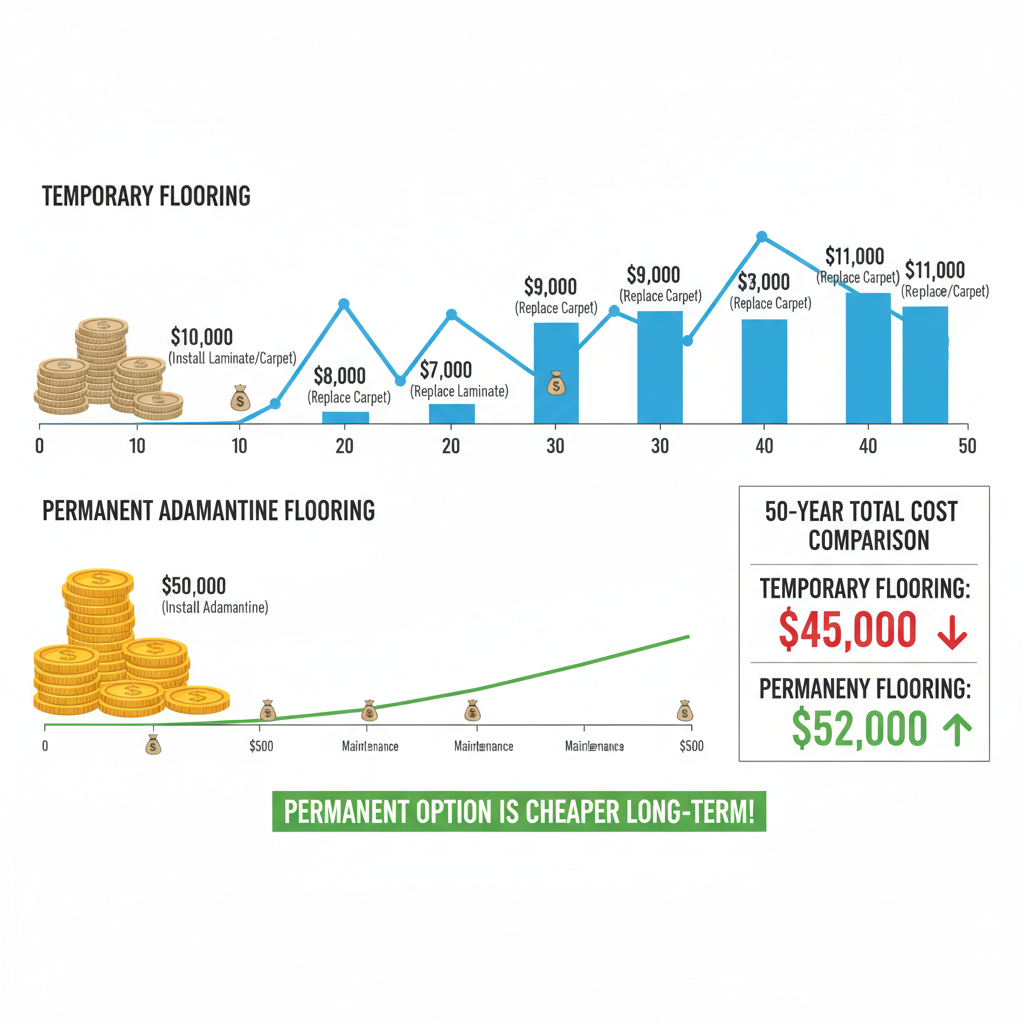
Upgrading to long-term flooring solutions for homes often comes with a higher upfront price tag. However, a rigorous 50-Year Lifecycle Cost Analysis (LCCA)—a financial breakdown verified by certified financial planners and real estate appraisers—proves that permanent floors are vastly cheaper over the lifespan of a 30-year mortgage.
Consider the frequent replacement cycle: replacing a budget laminate or low-grade carpet every 7 to 10 years due to wear, staining, or water damage. Over 30 years, you will pay for materials, labor, and disposal three to four times. In contrast, a single installation of high-quality porcelain tile, polished concrete, or premium hardwood requires one initial investment. Data from the National Association of Realtors (NAR) Remodeling Impact Report and the Appraisal Institute confirms that high-quality, permanent materials not only cost less over time but also yield a significantly higher cost recovery and home value retention at resale [12]. You aren’t just buying a floor; you are investing in home equity.
Bulletproof Execution: Wear-Resistant Floor Installation
You can purchase the most expensive, adamantine-grade material on the market, but if it is installed poorly, it will fail. Wear resistant floor installation dictates that the execution matters just as much, if not more, than the material’s inherent strength.
Certified Master Installers emphasize that bulletproof execution happens in the unseen layers. For example, when installing large-format tile, the National Tile Contractors Association (NTCA) states that using the correct trowel notch size and employing back-buttering techniques can increase tile adhesion by over 50% [13]. This critical step eliminates hollow spots beneath the tile, preventing the ceramic or porcelain from cracking under heavy point loads (like a dropped cast-iron pan or a heavy piano leg).
Specialized Adhesives and Curing Environments
Achieving a wear resistant floor installation also requires strict adherence to environmental controls and specialized chemistry. Many DIYers and rushed contractors skip the crucial acclimation period. Wood and laminate must acclimate to the home’s specific humidity and temperature for days prior to installation to prevent post-installation buckling.
Furthermore, a ‘Forever Floor Pre-Installation Checklist’ must include selecting the correct adhesives. Heavy-duty commercial/residential hybrid flooring requires specialized elastomeric adhesives that can flex slightly with the home’s natural movement while maintaining a vice-like grip. Managing the curing environment—ensuring the room is not too cold, too hot, or too humid—guarantees that epoxies cross-link properly and thinsets cure to their maximum PSI strength.
Conclusion
Achieving true flooring durability is not found in a marketing brochure for the latest cosmetic trend. The ‘Forever Floor’ Blueprint proves that an indestructible home floor is the result of a holistic approach: diagnosing and curing subfloor weaknesses, upgrading structural integrity to handle heavy loads, selecting adamantine-grade materials that resist daily life, and executing a flawless, technically sound installation. By shifting your mindset from temporary aesthetics to permanent structural solutions, you can eliminate the frequent replacement cycle, protect your home’s equity, and enjoy a floor that truly lasts a lifetime. Before your next renovation, take the time to consult with structural engineers and certified installers to ensure your foundation is as strong as your finish.
Structural Advice Disclaimer: Information regarding floor joists, load-bearing capacities, and subfloor reinforcement is for educational purposes. Always consult a licensed Professional Engineer (PE) before making structural modifications to your home.
References
- Floor Covering Installation Contractors Association (FCICA) & Certified Flooring Inspectors. (N.D.). Industry Data on Premature Flooring Failures and Subfloor Preparation.
- Institute of Inspection, Cleaning and Restoration Certification (IICRC). (N.D.). Standards for Water Damage and Floor Restoration.
- Entomological Society of America. (N.D.). Data on Structural Damage Caused by Pests.
- Floor Covering Installation Contractors Association (FCICA). (N.D.). Guidelines for Concrete Moisture Testing and Proper Installation Techniques.
- International Code Council. (N.D.). International Residential Code (IRC) – Deflection Limits for Residential Floors.
- APA – The Engineered Wood Association. (N.D.). Structural Wood Panels and Shear Strength Data.
- American Concrete Institute (ACI). (N.D.). Concrete Strength and Standards (PSI Ratings).
- NACE International (The Corrosion Society). (N.D.). Coating Performance and Degradation Standards.
- National Wood Flooring Association (NWFA). (N.D.). The Janka Hardness Scale.
- Tile Council of North America (TCNA). (N.D.). Industry Standards for Tile Wear and Water Absorption Ratings.
- U.S. Green Building Council (USGBC) & Concrete Polishing Council (CPC). (N.D.). LEED Certification Data and Standards for Polished Concrete Longevity.
- National Association of Realtors (NAR) & Appraisal Institute. (N.D.). Remodeling Impact Report and Data on Home Value Retention.
- National Tile Contractors Association (NTCA). (N.D.). Proper Durable Tile Installation Methods and Adhesion Standards.
