If you are managing a chaotic, high-traffic household filled with pets, kids, and constant activity, you already know the exhausting reality of floor maintenance. Easily stained floors, perpetual scuff marks, and the anxiety of every spilled cup of juice can make your home feel like a fragile museum rather than a lived-in sanctuary. In the quest for a permanent solution, you may have come across the term “adamantine flooring.”
Marketed as the pinnacle of indestructibility, the word “adamantine” draws from mythology to describe something utterly unbreakable. But what does it actually mean for your living room? It is time to move past the marketing hype and look at the real-world material science. This definitive, scientifically-backed roadmap will demystify durability metrics, solve the complex chemistry of stains, and provide zero-scrub maintenance solutions to help you achieve the ultimate durable flooring upgrade.
- Demystifying ‘Adamantine Flooring’: The Science of Indestructibility
- The Material Showdown: Best Flooring for Busy Homes
- The Chemistry of Stains and High Traffic Floor Wear
- Preventative Tactics: Upgrading Your Home’s Defenses
- The Zero-Scrub Maintenance Guide for Easy Clean Flooring
- ROI and Resale: Calculating the Lifetime Cost of Durable Flooring
- Conclusion
- References & Authoritative Sources
Demystifying ‘Adamantine Flooring’: The Science of Indestructibility
When shopping for durable home flooring, consumers are often bombarded with buzzwords. “Adamantine flooring” is a niche marketing term that promises a lifetime of flawless performance. To make an informed investment, we must ground this concept in objective material science and understand how industrial-grade durability is evaluated.
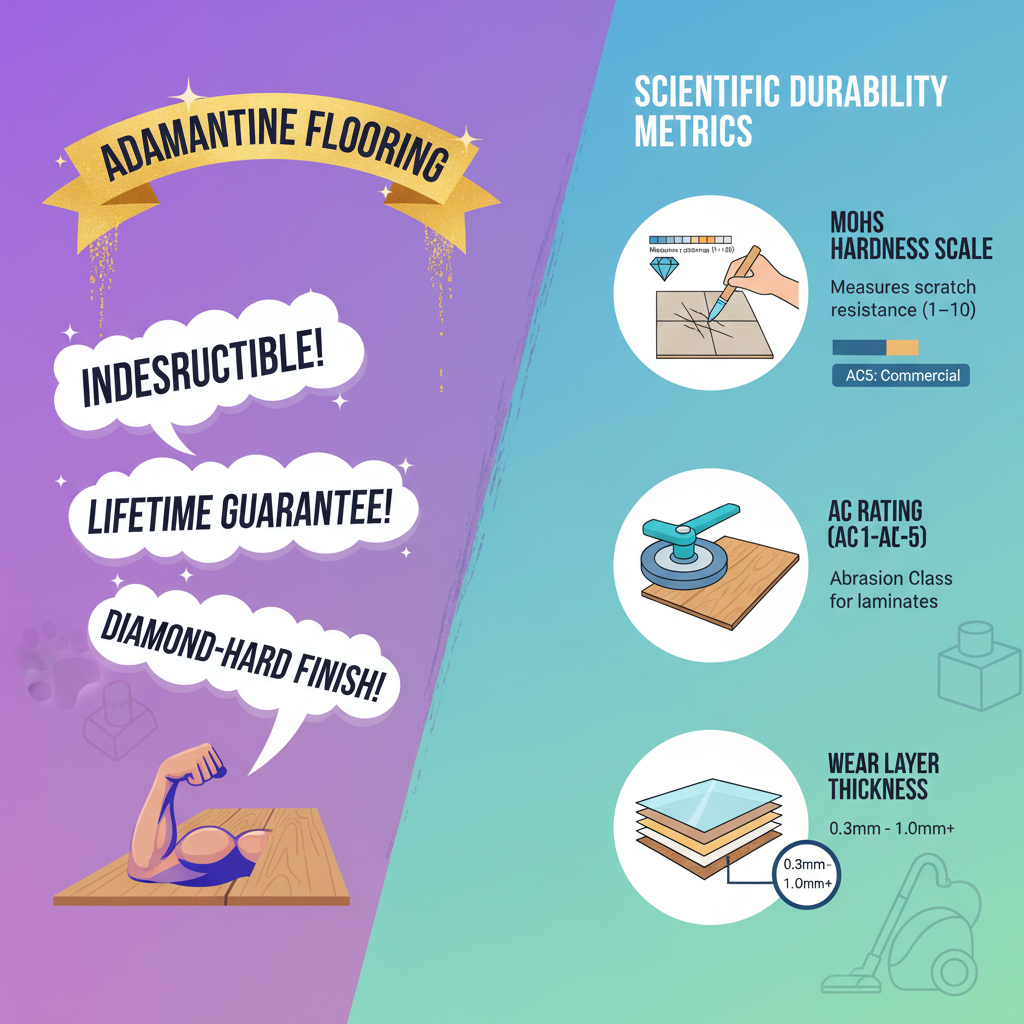
Myth vs. Reality: What is Adamantine Flooring Made Of?
In mythology, adamantine is an impenetrable, diamond-like substance. In the reality of commercial and residential construction, adamantine flooring does not refer to a single magical material. Instead, it typically describes ultra-durable industrial-grade epoxies, advanced porcelain tiles, or specialized resin coatings engineered for maximum wear resistance.
According to the Journal of Materials Science, the chemical makeup of these “adamantine-branded” resins usually involves complex thermosetting polymers that cure into highly cross-linked networks, offering exceptional resistance to chemical spills and heavy impacts [1]. While standard residential epoxy might chip under a dropped cast-iron pan, these industrial-grade variants are designed to withstand forklifts. As noted by Floor Covering Weekly, the current trend in home design is adapting these commercial-grade formulations—such as advanced polyaspartic coatings and ultra-dense porcelain—into aesthetically pleasing formats for the residential market [2].
The Metrics of Durability: Mohs, AC Ratings, and Wear Layers
To find truly durable home flooring, you must look past the adjectives and focus on standardized metrics. Independent testing laboratories measure durability using transparent, objective methodologies rather than relying on manufacturer claims.
For tile and stone, the standard is the Mohs hardness scale, which measures a material’s scratch resistance from 1 (talc) to 10 (diamond). For laminate flooring, durability is measured by Abrasion Class (AC) ratings. An AC rating is determined by running an abrasive machine over the flooring until the wear layer is breached. For residential high-traffic areas, an AC3 to AC5 rating is recommended. Hardwoods are measured by the Janka hardness scale, which calculates the pounds of force required to embed a steel ball halfway into the wood. Finally, for luxury vinyl, durability is dictated by the thickness of its clear protective wear layer, measured in “mils” (thousandths of an inch). Understanding these metrics is your first defense against buying a floor that looks great in the showroom but fails in your hallway.
The Material Showdown: Best Flooring for Busy Homes
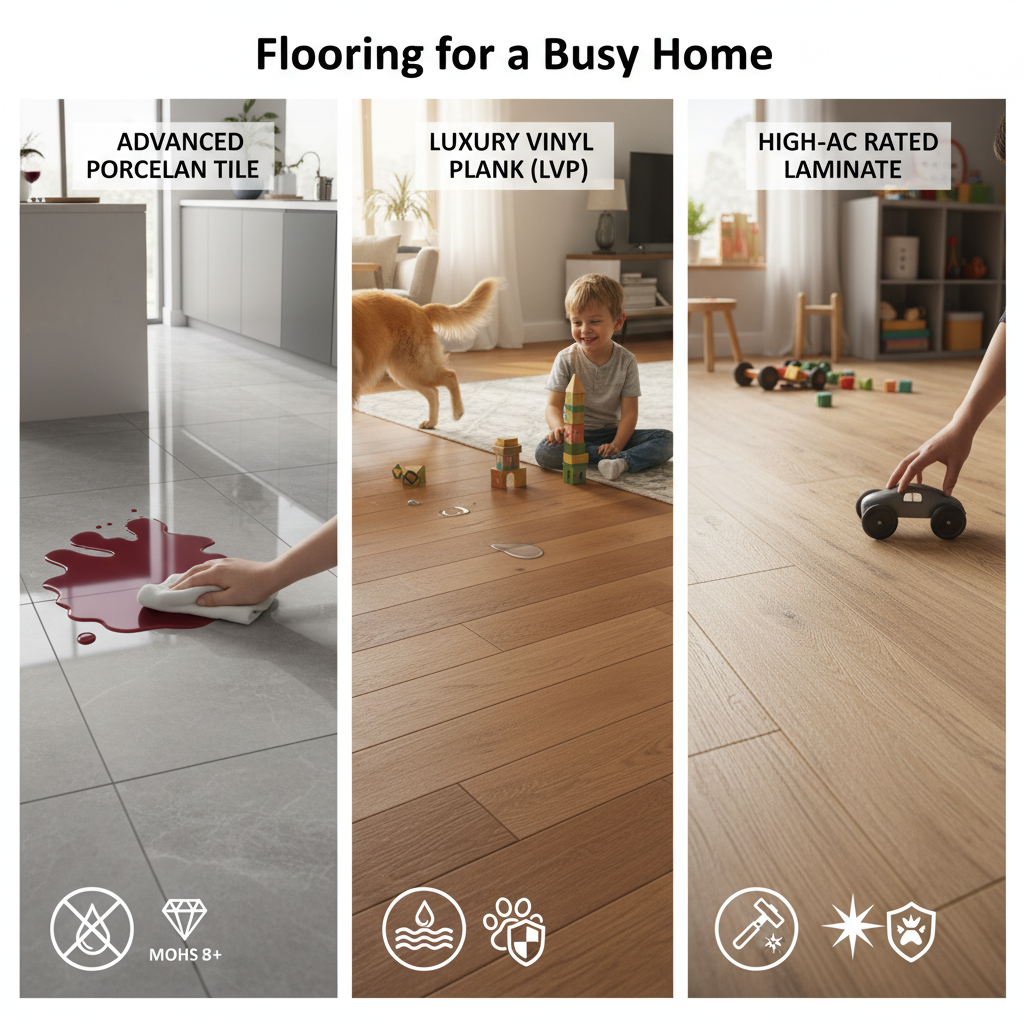
Finding the best flooring for busy homes means matching specific materials to your family’s unique “busy profile”—whether that means accommodating the claws of large dogs or the inevitable drops and spills of toddlers. Independent lab testing, such as the exhaustive abrasive machine runs and heavy object drop tests conducted by Consumer Reports, provides a clear picture of which materials actually survive the chaos [5].
Advanced Porcelain Tile: The Ultimate Stain Resistance Heavyweight
If there is a residential equivalent to adamantine flooring, it is advanced porcelain tile. Fired at extremely high temperatures, porcelain achieves a density that makes it the heavyweight champion of ultimate stain resistance and scratch protection.
Porcelain tile ranks an impressive 7 to 9 on the Mohs hardness scale, meaning it requires materials as hard as masonry drill bits or diamonds to scratch it. Furthermore, the Tile Council of North America (TCNA) notes that to be officially classified as porcelain, the tile must have a water absorption rate of less than 0.5% [3]. This near-zero porosity means that whether you spill acidic red wine or dark coffee, the liquid simply pools on the surface, making it the premier stain resistant flooring. The only vulnerability in a porcelain system is the grout, which requires specific maintenance to match the tile’s performance.
Luxury Vinyl Plank (LVP) & Rigid Core: The Family-Friendly All-Rounder
For many parents, porcelain is too hard and cold for toddlers learning to walk. Enter Luxury Vinyl Plank (LVP) and rigid core vinyl, the ideal stain resistant flooring for families. LVP offers 100% waterproofing combined with a softer underfoot feel.
The secret to premium LVP lies in its construction. Insights from the Garrison Collection highlight that modern rigid core vinyl utilizes either a Stone Plastic Composite (SPC) or Wood Plastic Composite (WPC) core, providing immense structural stability against dents [4]. To make it truly family-friendly, high-end LVP often features an integrated EVA foam underlayment. This provides crucial acoustic comfort, dampening the hollow, clicking sounds of pet nails and heavy footsteps that echo through busy homes. However, to ensure it acts as a durable flooring upgrade, you must select a product with a wear layer of 20 mil or higher. Anything less will eventually succumb to high traffic.
High-AC Rated Laminate: The Drop-Test Champion
Modern laminate has evolved significantly from the peeling, easily warped boards of the early 2000s. Today, high-AC rated laminate is the drop-test champion of the flooring world. Premium family laminates feature up to a 4mm wear layer, offering superior dent and scratch resistance compared to natural hardwood.
While laminate is highly resilient to blunt force and scratches, it is vital to address a common content gap: indoor air quality. Because laminate is a synthetic, manufactured product, parents should look for FloorScore certified options to ensure low Volatile Organic Compound (VOC) emissions. While modern laminates offer impressive topical water resistance, they are not entirely waterproof from the bottom up, making them less ideal for flood-prone bathrooms but perfect for high-traffic living rooms.
The Chemistry of Stains and High Traffic Floor Wear
To protect your investment, you must understand the science of why floors fail. Floor degradation generally falls into two categories: chemical absorption (stains) and mechanical abrasion (wear).
Why Floors Stain: Porosity, Hard Water, and Chemical Reactions
Easily stained floors, such as traditional unsealed hardwood and natural stone, suffer from high porosity. At a microscopic level, these materials are full of tiny holes. When a spill occurs, capillary action draws the liquid down into the material, creating a deep-penetrating stain that cannot be wiped away.
According to authorities on wood finishes like Sherwin-Williams, protecting porous floors requires maintaining an unbroken topical seal (like polyurethane) to act as a chemical barrier [6]. Similarly, Miramar Carpet Cleaning & Upholstery emphasizes that cementitious grout is highly porous and will permanently absorb dirty mop water if not chemically sealed [7]. Another frequently overlooked culprit is hard water. If you clean dark floors with hard tap water, the water evaporates but leaves behind microscopic calcium and magnesium deposits, creating a hazy, white mineral stain that is incredibly difficult to remove without acidic neutralizers.
The Sandpaper Effect: How Dirt and Footwear Destroy Finishes
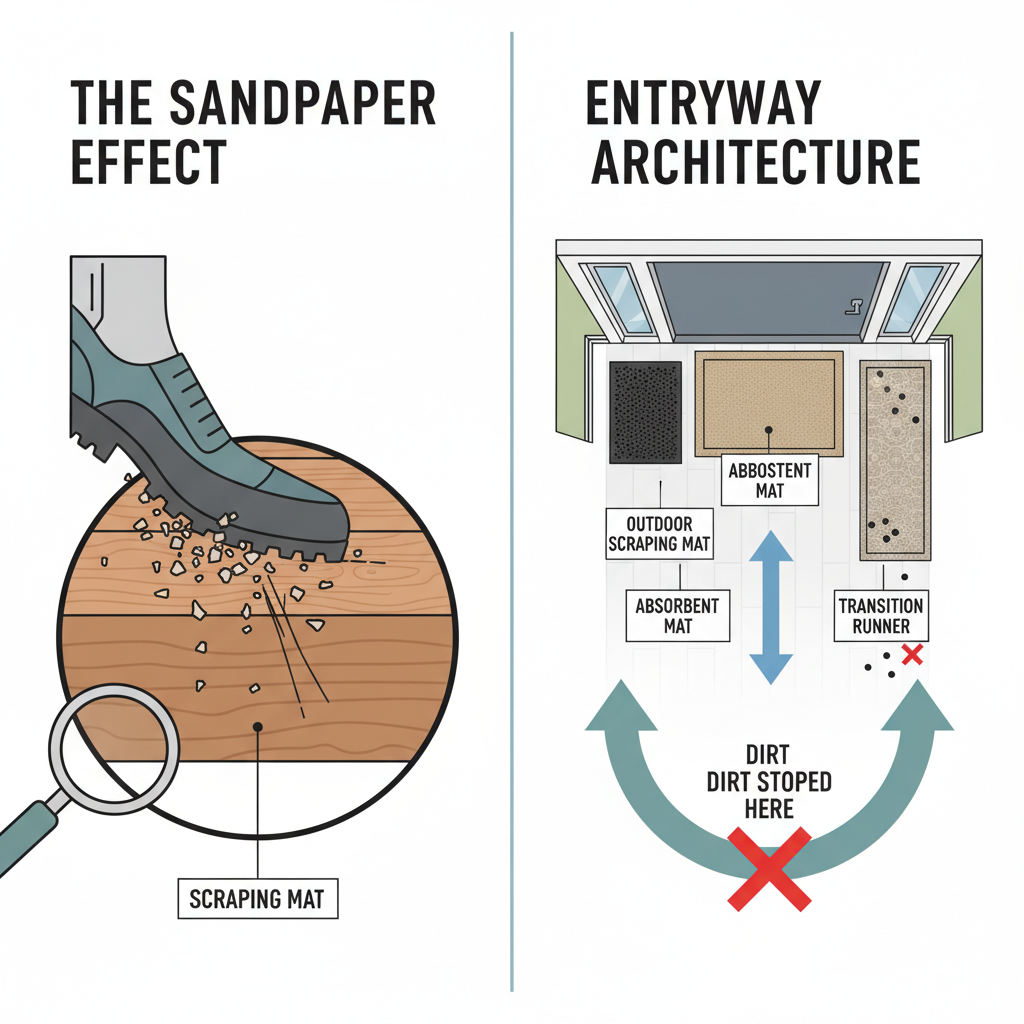
High traffic floor wear is rarely caused by footsteps alone; it is caused by the “sandpaper effect.” As Flooring Surgeons and Scharm Floor Covering explain, microscopic particles of silica (dirt and grit) are tracked indoors [8, 9]. When you walk over this grit, the pressure of your body weight grinds these sharp particles into the floor’s finish.
The type of footwear matters immensely. A 120-pound person in stiletto heels exerts more pounds per square inch (PSI) of pressure than a 6,000-pound elephant, easily driving grit deep into the wear layer and causing micro-scratches. This physical wear is often accelerated by UV fading. As sunlight breaks down the chemical bonds of the floor’s finish, the material becomes brittle, allowing the sandpaper effect to strip away the protective layer much faster in sunlit hallways and entryways.
Preventative Tactics: Upgrading Your Home’s Defenses
Achieving a durable flooring upgrade requires more than just buying tough materials; it requires holistic, architectural foresight to protect the floor before damage ever occurs.
Entryway Architecture: Stopping Abrasive Dirt at the Door
The most effective way to combat high traffic floor wear is to implement “Entryway Architecture.” This involves designing transition zones specifically engineered to capture abrasive particles before they reach your main living areas. A proper walk-off matting system should include an aggressive scraping mat outside the door, a heavy-duty absorbent mat immediately inside, and a softer transition runner. This three-step system can capture up to 80% of abrasive grit, drastically extending the life of your floor’s finish.
Subfloor Preparation: The Hidden Key to Longevity
A critical, often-ignored reality of a durable flooring upgrade is that your new floor is only as strong as the subfloor beneath it. If you install premium, 20-mil LVP over an uneven, undulating plywood subfloor, the locking mechanisms between the planks will constantly flex under foot traffic. Over time, this stress will snap the joints, ruining the floor regardless of the surface material’s quality. Proper subfloor leveling and the installation of appropriate moisture barriers are non-negotiable structural requirements for ensuring the longevity of rigid core and laminate systems.
The Zero-Scrub Maintenance Guide for Easy Clean Flooring
Even the most robust, easy clean flooring can be destroyed by improper maintenance. Maintaining hard to clean floors or ultra-durable surfaces requires a shift from aggressive scrubbing to chemical-aware preservation.
The ‘Do Not Use’ List: Chemicals and Tools That Ruin Expensive Floors
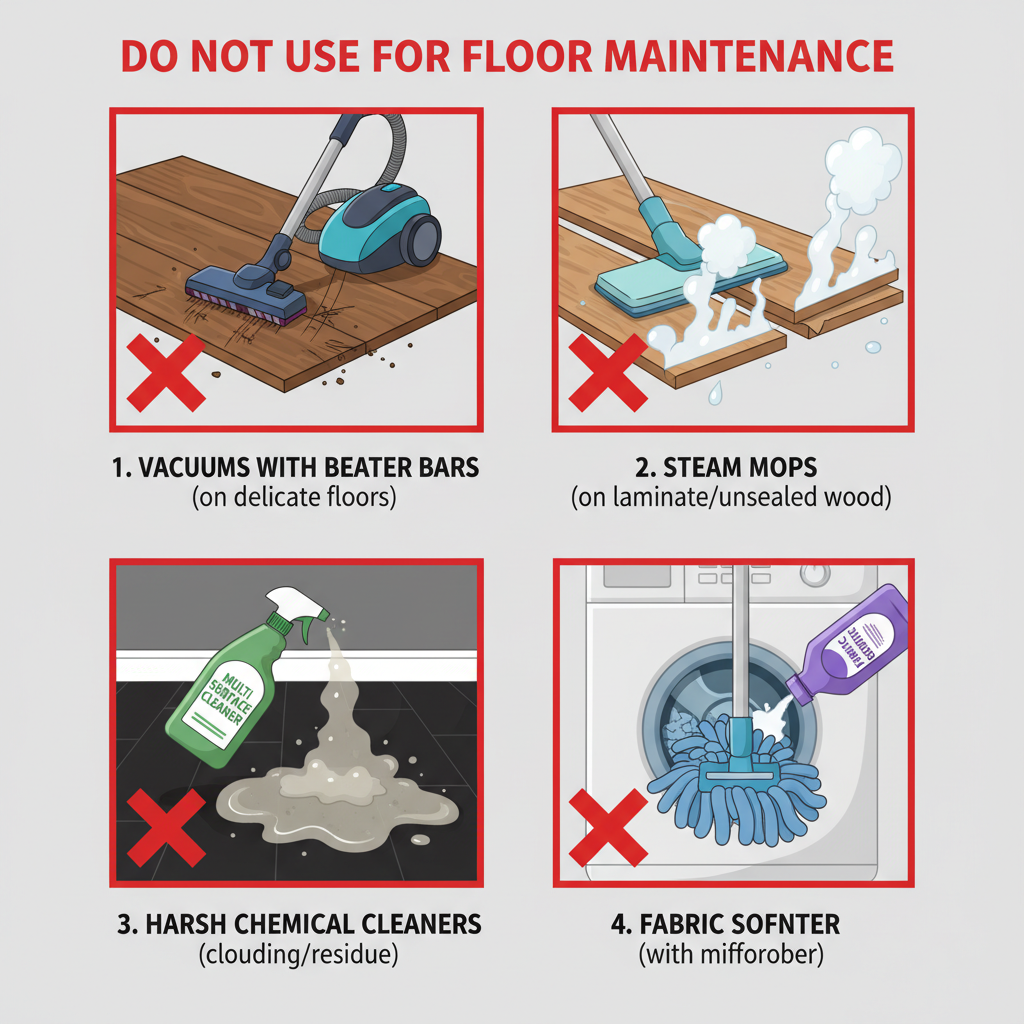
Professional cleaning routines prioritize the preservation of the wear layer. To maintain your floors, you must avoid practices that inadvertently cause damage. Based on manufacturer care protocols from Mohawk Flooring and insights from household cleaning authorities like Clean Mama, here is your definitive “Do Not Use” list [10, 11]:
- Vacuums with Beater Bars: The stiff rotating bristles act like a sander, leaving micro-scratches on LVP and hardwood. Always use the hard-floor setting.
- Fabric Softeners on Mop Heads: Washing your reusable microfiber mop pads with fabric softener coats them in lipids, which then transfer to your floor, leaving a cloudy, streaky residue that attracts more dirt.
- Steam Mops on Unsealed Wood or Laminate: The high-pressure steam forces moisture past the topical wear layer and into the core of laminates and woods, causing irreversible swelling and warping.
- Multi-Surface Cleaners: Many popular grocery-store cleaners contain heavy waxes or oils that build up over time, turning easy to clean adamantine flooring into a sticky, hard-to-clean mess.
Triage Guide for Floor Spills: Neutralizing Stains by pH Level
When severe spills happen, achieving ultimate stain resistance requires understanding the chemistry of the stain. Rigorous, controlled testing by Wirecutter and Consumer Reports on diverse stains (from pig blood to permanent marker) reveals that you must match the cleaner to the spill’s pH and organic makeup [12, 5].
- Organic Stains (Blood, Urine, Food): Require enzymatic cleaners. Enzymes are biological catalysts that literally digest the proteins and lipids in the stain.
- Alkaline Mineral Stains (Hard Water, Pet Urine Crystals): Require mild acids, like a diluted acetic acid (white vinegar) solution, to break down the mineral bonds.
- Synthetic Inks and Dyes: Require specific chemical solvents (like isopropyl alcohol) to re-liquefy the ink so it can be lifted.
Always neutralize chemical stain removers with a damp water wipe after application to prevent the cleaner itself from slowly eating into the floor’s finish.
Maintaining the Weak Points: Grout Lines and Micro-Bevels
The true weak points of any easy clean flooring system are the seams, micro-bevels, and grout lines. Dirt naturally settles into these microscopic valleys. For porcelain tile, the most vital preventative maintenance schedule is resealing the grout. In high-traffic areas, grout should be resealed every six months to a year. This invisible chemical barrier is the only thing stopping dirty mop water from permanently discoloring the grid of your beautiful floor.
ROI and Resale: Calculating the Lifetime Cost of Durable Flooring
When planning a durable flooring upgrade, it is easy to suffer from sticker shock. However, true value is found by shifting focus from the upfront price tag to the lifetime Return on Investment (ROI) and the impact on home equity.
The Time-Cost of Maintenance
Consider the “Time-Cost of Maintenance.” Traditional, hard-to-clean hardwood might require specialized oiling, careful dry-mopping, and immediate spill triage, easily consuming 2 to 3 hours of maintenance a month. Over a 10-year period, that is 360 hours of your life spent cleaning. Upgrading to an easy clean flooring option like 100% waterproof LVP reduces maintenance to a quick weekly sweep and a pH-neutral damp mop, saving you hundreds of hours of labor.
End-of-Life: Environmental Impact and Recyclability
As noted by retail experts like Yonan Carpet One, longevity directly impacts your home’s resale value [13]. A floor that looks brand new after a decade adds significant equity. However, consumers must also consider the end-of-life environmental impact of their durable home flooring. While natural stone and porcelain can last a century and are essentially inert earth minerals, highly durable synthetic floors like LVP present recyclability challenges due to their complex, multi-layered plastic construction. Balancing your need for indestructible, family-friendly flooring with long-term environmental considerations is the final step in choosing the perfect material.
Conclusion
True adamantine-level durability does not come from falling for vague marketing jargon; it comes from understanding objective material science. By evaluating AC ratings, Mohs hardness, and wear layer thickness, you can see past the hype. For busy homes, advanced porcelain offers unmatched scratch and stain resistance, thick-wear LVP provides the ultimate waterproof, family-friendly comfort, and high-AC laminate stands as the drop-test champion.
Before making your investment, evaluate your home’s specific “busy profile.” Consider your pets, your children’s ages, and your highest traffic zones. Then, request physical samples of 20+ mil LVP or AC4+ laminate and perform your own scratch and spill tests at home. Armed with the right materials and a chemical-aware maintenance routine, you can finally enjoy a beautiful, stress-free floor that truly stands up to the chaos of daily life.
Disclaimer: Cleaning and maintenance advice provided is for informational purposes. Always consult your specific flooring manufacturer’s warranty and care guidelines before applying chemical stain removers or altering maintenance routines.
References & Authoritative Sources
- Journal of Materials Science. (N.D.). Chemical makeup and durability metrics of advanced resins and industrial epoxies.
- Floor Covering Weekly. (N.D.). Commercial flooring trends in residential markets.
- Tile Council of North America (TCNA). (N.D.). Tile porosity and industry standards.
- Garrison Collection. (N.D.). Rigid core construction and wear layers.
- Consumer Reports. (N.D.). Independent lab testing for flooring resilience and stain removal efficacy.
- Sherwin-Williams. (N.D.). Wood stains, finishes, and the science of porosity.
- Miramar Carpet Cleaning & Upholstery. (N.D.). Grout porosity and sealing insights.
- Flooring Surgeons. (N.D.). Floor damage prevention and wear mechanics.
- Scharm Floor Covering. (N.D.). Material hardness and high-traffic suitability.
- Mohawk Flooring. (N.D.). Manufacturer cleaning and care protocols.
- Clean Mama. (N.D.). Household cleaning routines and chemical residues.
- Wirecutter / The New York Times. (N.D.). Controlled product testing for stain removers.
- Yonan Carpet One. (N.D.). Retail expertise on longevity and material comparisons.
