That familiar click-clack-click of your dog’s nails on the floor—is it a heartwarming sound or a source of constant anxiety? For millions of pet owners, every playful pounce and happy zoomie comes with a wince, wondering what new scratch, scuff, or gouge has just been etched into their beautiful floors. You invested in a home you love, only to see it slowly lose the battle against your four-legged family members.
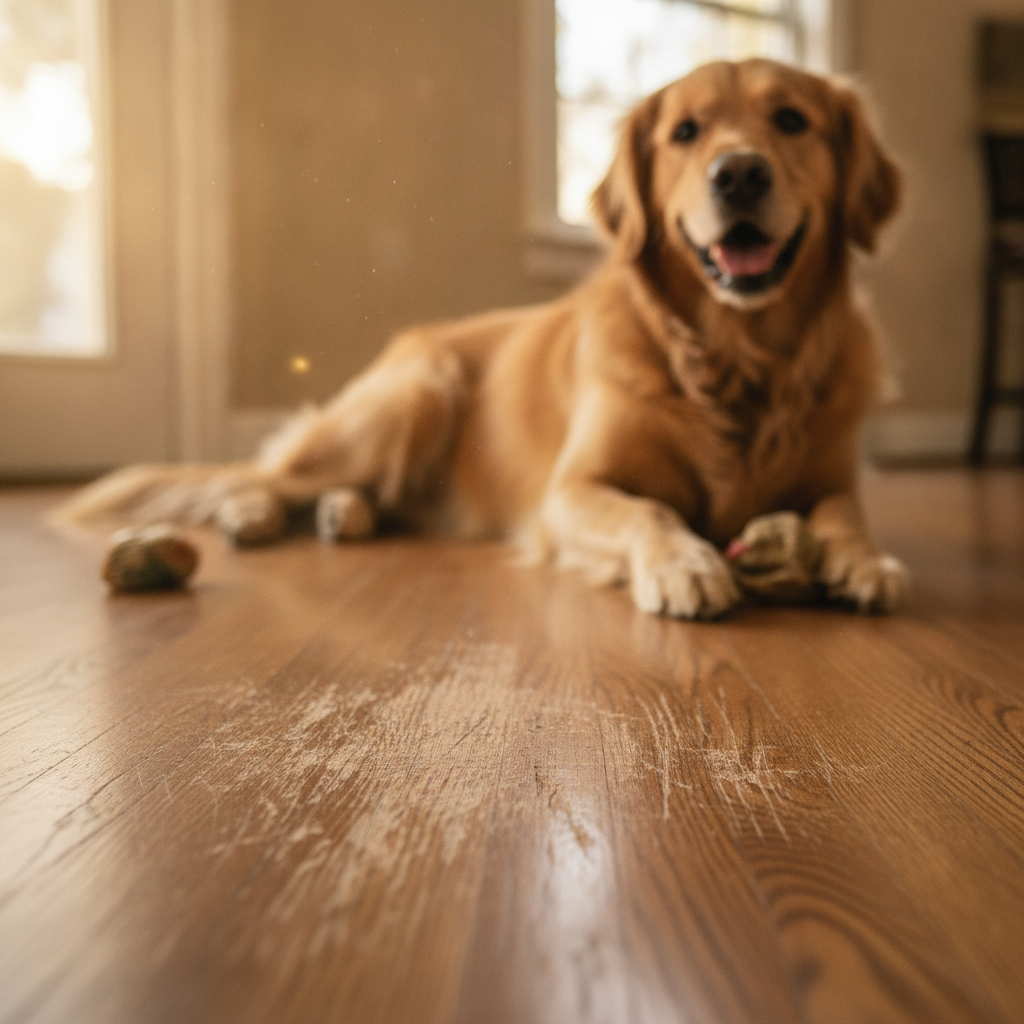
You’re not alone in this frustration. From stubborn urine stains that defy every cleaning product to water bowl splashes that cause wood to warp, the dream of a pristine home can feel impossible. But what if you didn’t have to choose between your pets and beautiful, durable floors?
This is The Pet Owner’s Flooring Playbook—your complete lifecycle guide to achieving a harmonious, damage-free home. We’re moving beyond simple recommendations to give you the tools of a true expert. Inside, you’ll find our proprietary ‘Family-Proof’ Durability Scorecard to help you choose the right material with confidence, a Proactive Protection Plan to keep any floor looking new, and a Damage Triage Guide to expertly repair any issue that arises. And at the heart of it all, we’ll introduce you to Adamantine Flooring, the premier solution engineered to win the war against pet-related wear and tear.
- Why Your Current Floors Are Losing the Battle Against Your Pets
- The Pet Owner’s Playbook Part 1: Choosing the Most Durable Flooring
- The Champion: Why Adamantine Flooring is the Ultimate Pet-Proof Solution
- The Pet Owner’s Playbook Part 2: Proactive Protection to Preserve Your Floors
- The Pet Owner’s Playbook Part 3: Your Damage Triage & Repair Guide
- Frequently Asked Questions About Pet-Friendly Flooring
- Your Floors Can Win the War
- References & Authoritative Sources
Why Your Current Floors Are Losing the Battle Against Your Pets
Before finding the right solution, it’s crucial to understand why so many common flooring types fail under the pressure of pets. This isn’t about blaming your furry friend; it’s about a mismatch between the material and the demands of a pet-filled life. Many homeowners find their flooring not holding up to pets, and the reasons are often technical. The World Floor Covering Association (WFCA) provides extensive information on material properties, highlighting that choices perfect for a quiet home may be unsuitable for high-traffic, pet-heavy environments.
The Scratch & Scuff Problem: High-Impact Activity vs. Soft Finishes
The most visible sign of pet damaged floors is the endless network of scratches. A dog’s nails, especially on larger breeds, act like tiny, persistent sanders. Their claws concentrate immense pressure into a small point during activities like playing fetch or jumping off the sofa. According to the National Wood Flooring Association (NWFA), even woods with a high Janka hardness rating—the industry standard for measuring a wood’s resistance to denting and wear—can be susceptible to surface scratches in their finish. The finish, or top protective layer, is almost always softer than the wood itself, making it the first line of defense to fall.
The Moisture Menace: Water Bowls, Accidents, and Material Breakdown
Moisture is the silent killer of many flooring types. From casual water bowl splashes to unfortunate potty-training accidents, liquids can wreak havoc. Pet urine is particularly destructive. The Institute of Inspection, Cleaning and Restoration Certification (IICRC) explains that its chemical composition, including uric acid, can eat away at floor finishes, seep into porous materials, and cause permanent staining and odor. In materials like traditional hardwood or standard laminate, this moisture leads to swelling, warping, and delamination, where the layers of the flooring begin to separate, causing irreparable damage.
The Pet Owner’s Playbook Part 1: Choosing the Most Durable Flooring
Feeling defeated by your current floors is the first step toward making a smarter, long-term investment. Choosing a new floor can be overwhelming, which is why we’ve developed a clear, data-driven framework to guide your decision. We’ve created the ‘Family-Proof’ Durability Scorecard to cut through the marketing jargon and compare the top contenders on the metrics that matter most to pet owners. Our approach is modeled after the rigorous, impartial testing methodologies used by trusted sources like Consumer Reports to ensure you get a clear, unbiased picture.
Our ‘Family-Proof’ Durability Scorecard Explained
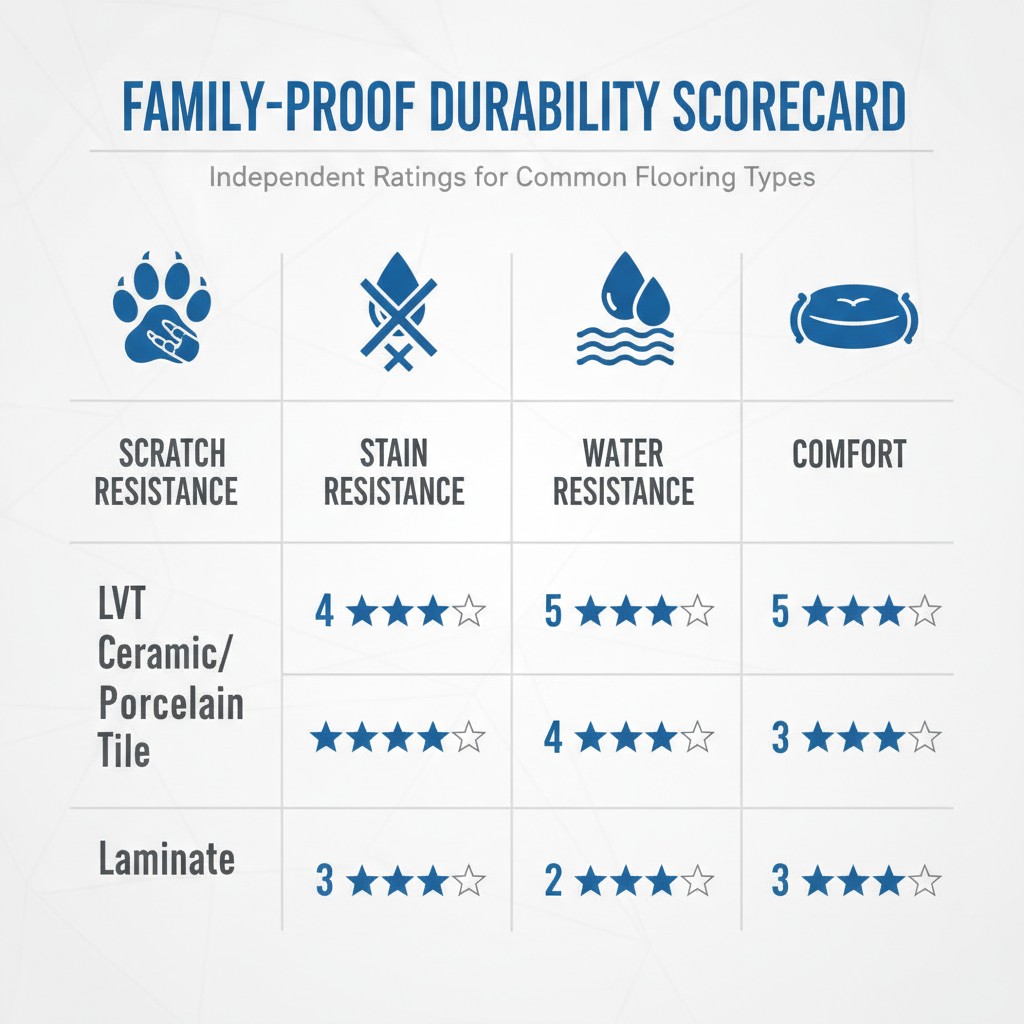
This scorecard isn’t just a simple list of pros and cons. It’s a comprehensive evaluation system that rates flooring on six critical criteria, creating a total score that reflects its true performance in a busy, pet-friendly home. We incorporate industry standards to ground our ratings in objective data, such as the AC (Abrasion Class) rating for laminate, which the Floor Covering Institute notes is a key indicator of its durability in residential or commercial settings.
The six criteria are:
- Scratch Resistance: How well the surface withstands claws, toys, and foot traffic.
- Stain Resistance: The floor’s ability to repel pet urine, mud, and other common messes.
- Water Resistance: Its performance against spills, splashes, and accidents (from topical to fully waterproof).
- Comfort & Safety: The level of traction for paws and impact on pet joints.
- Maintenance Ease: How simple it is to clean and maintain on a daily basis.
- Long-Term Cost: An evaluation of the initial investment plus expected lifespan and repair costs.
The Contenders: How Top Flooring Types Stack Up
Using our scorecard, let’s see how the most popular durable flooring for pet owners options compare.
- Luxury Vinyl Tile/Plank (LVT/LVP)
- Scratch Resistance: ★★★★☆ (High-quality LVP has a thick, tough wear layer.)
- Stain Resistance: ★★★★★ (Non-porous surface makes cleanup simple.)
- Water Resistance: ★★★★★ (Most products are 100% waterproof.)
- Comfort & Safety: ★★★★☆ (Softer and warmer underfoot than tile, offering better traction.)
- Maintenance Ease: ★★★★★ (Simple sweeping and mopping is all it takes.)
- Long-Term Cost: ★★★★☆ (Excellent value for its high performance and longevity.)
- Expert Insight: The Resilient Floor Covering Institute (RFCI) highlights that the layered construction of LVT makes it exceptionally durable and dimensionally stable, ideal for active homes.
- Porcelain & Ceramic Tile
- Scratch Resistance: ★★★★★ (Extremely hard surface is virtually impossible for pet nails to scratch.)
- Stain Resistance: ★★★★★ (Glazed tile is non-porous and impervious to stains. Grout lines require sealing.)
- Water Resistance: ★★★★★ (Completely waterproof.)
- Comfort & Safety: ★★☆☆☆ (Very hard on pet joints and can be slippery when wet. Cold underfoot.)
- Maintenance Ease: ★★★☆☆ (Grout lines can trap dirt and require periodic deep cleaning and sealing.)
- Long-Term Cost: ★★★☆☆ (Durable, but material and installation costs are higher.)
- Expert Insight: While tile is incredibly tough, the American Kennel Club (AKC) advises that its hard, slippery surface can be challenging for senior dogs or breeds prone to hip dysplasia.
- Modern Laminate Flooring
- Scratch Resistance: ★★★★☆ (High AC ratings indicate excellent scratch resistance.)
- Stain Resistance: ★★★★☆ (The top layer is generally stain-resistant.)
- Water Resistance: ★★★☆☆ (Water-resistant, but not waterproof. Core can swell with moisture.)
- Comfort & Safety: ★★★☆☆ (Can be slippery, and the clicking sound of nails is often pronounced.)
- Maintenance Ease: ★★★★☆ (Easy to clean, but spills must be wiped up immediately.)
- Long-Term Cost: ★★★★☆ (Often one of the most affordable options.)
- Expert Insight: The RFCI notes that while laminate technology has improved, its core is typically a wood-based fiberboard, making it vulnerable to moisture damage if spills aren’t managed quickly.
The Champion: Why Adamantine Flooring is the Ultimate Pet-Proof Solution
After comparing the contenders, a clear winner emerges for the homeowner seeking the perfect balance of toughness, safety, and style: high-performance luxury vinyl plank. Adamantine Flooring represents the pinnacle of this category, engineered specifically to address every pain point of pet ownership.
Adamantine Flooring excels on our Durability Scorecard by combining a commercial-grade, scratch-resistant wear layer with a 100% waterproof composite core. This means it not only stands up to the daily abuse of claws and toys but is also completely impervious to water bowl spills, muddy paws, and pet accidents.
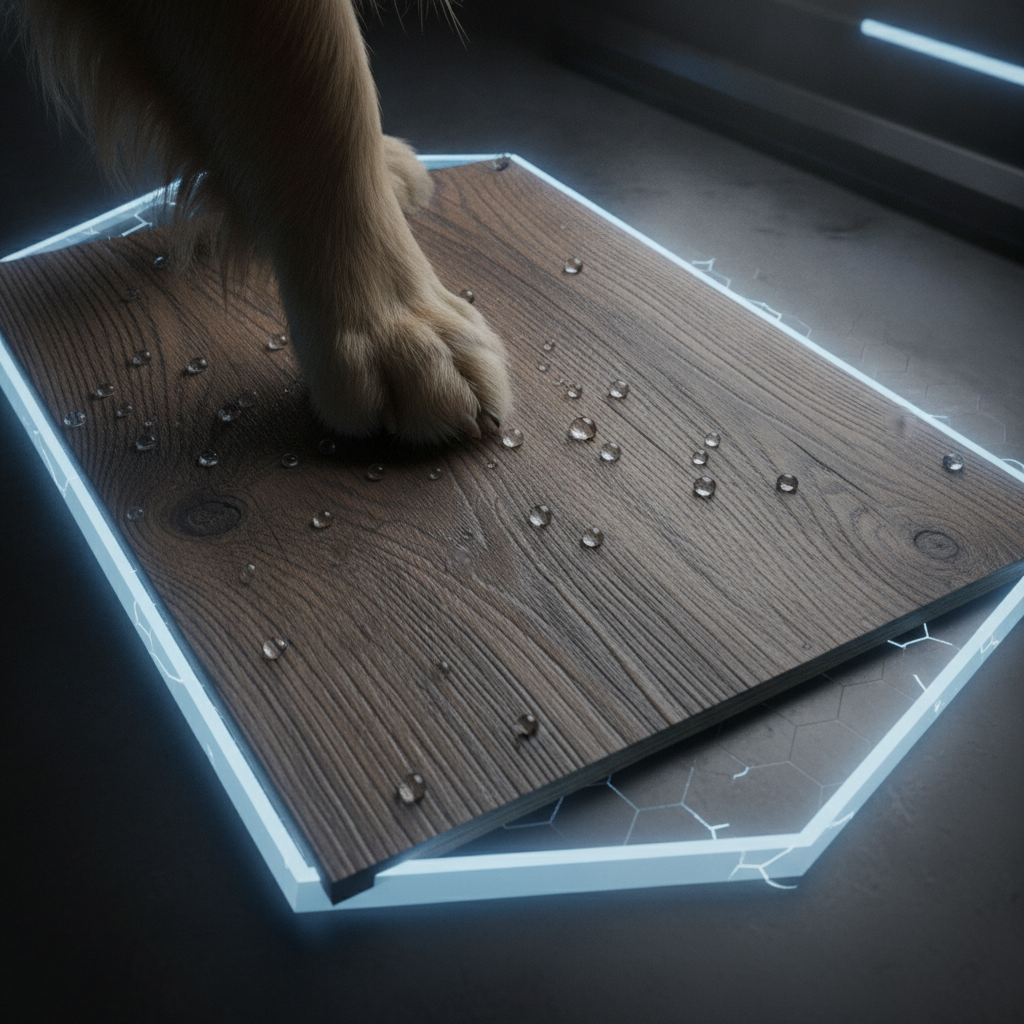
Our technical specifications prove its superiority:
- Wear Layer: A 22 mil thickness provides extreme protection against scratches and scuffs.
- Waterproof Core: A stone-polymer composite (SPC) core means it will never swell, warp, or peel due to moisture.
- Certifications: Adamantine Flooring is FloorScore® certified, ensuring it meets strict indoor air quality standards for a healthy environment for your family and pets.
But don’t just take our word for it. Here’s what a real customer had to say:
“With two Golden Retrievers, our last floor looked like a disaster zone after just one year. We installed Adamantine Flooring six months ago, and it still looks brand new. No scratches, easy to clean—it’s been a total game-changer for our peace of mind.”
– The Johnson Family
The Pet Owner’s Playbook Part 2: Proactive Protection to Preserve Your Floors
Even the toughest floors benefit from a smart, proactive defense system. This integrated approach ensures your investment stays pristine for years to come, no matter what material you choose.
Mastering the Manicure: The Ultimate Guide to Dog Nail Care
The single most effective way to prevent dog nail scratches on any floor is to keep their nails properly trimmed. Long nails force the dog’s paw to splay, creating discomfort and concentrating force onto the nail tip. According to The Humane Society of the United States, regular nail trims are a crucial part of a pet’s health and hygiene routine.
Dr. Sarah Collins, DVM, states, “Proper nail length is not just about protecting floors; it’s critical for a dog’s posture and joint health. When nails are too long, they can cause skeletal strain and even arthritis over time.”
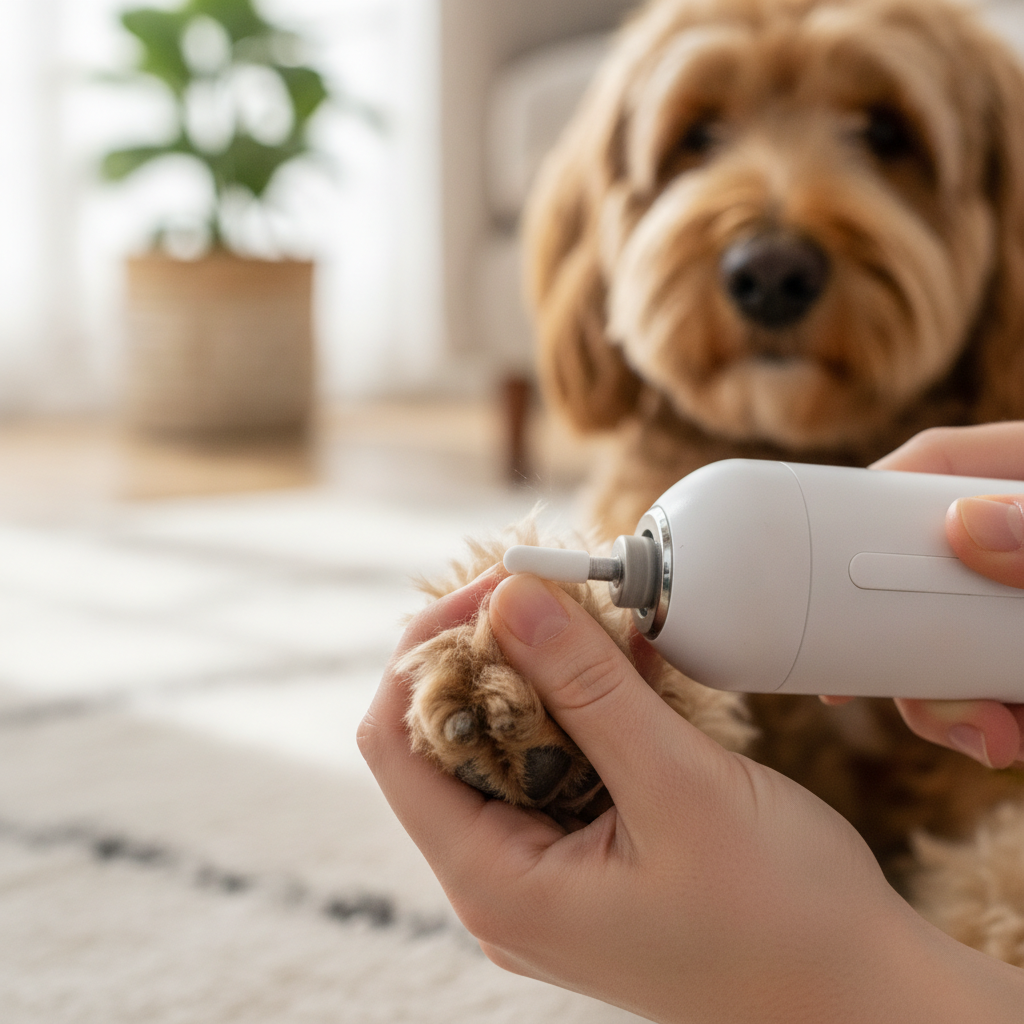
Your Nail Care Toolkit:
- Clippers vs. Grinders: Clippers are fast, while grinders allow for a smoother finish and are great for dogs with dark nails where the quick is hard to see.
- Frequency: Aim to trim every 2-4 weeks. If you can hear their nails clicking on the floor, they’re too long.
- Nail Caps: These small vinyl covers can be glued onto your dog’s nails to provide a soft, blunt barrier. They are an excellent temporary solution for protecting delicate floors.
Strategic Defenses: Rugs, Runners, and Furniture Pads
Think of these as your floor’s bodyguards in high-risk areas.
- Area Rugs & Runners: Place durable, easy-to-clean rugs at entryways to trap dirt and moisture. Use runners in high-traffic hallways where your dog frequently travels. Look for materials like polypropylene or nylon.
- Quality Rug Pads: A good rug pad prevents slipping (a safety hazard for pets and people) and protects the floor beneath. Testing from sources like the Good Housekeeping Institute confirms that felt and natural rubber pads are effective and less likely to damage floor finishes than cheap plastic ones.
- Furniture Pads: Apply felt pads to the bottom of all furniture legs—especially chairs and tables that are moved often—to prevent deep scratches and gouges.
The Pet Owner’s Playbook Part 3: Your Damage Triage & Repair Guide
Despite your best efforts, damage can still happen. The key is to address it correctly based on the severity and your flooring type. Using the wrong method can make the problem worse. This guide helps you triage the damage and choose the right repair. Authoritative home improvement sources like This Old House and floor care specialists like Bona provide industry-accepted methods for many of these repairs.
Level 1 Damage: Fixing Light Scratches and Scuffs
These are surface-level blemishes that haven’t penetrated the floor’s core material.
- For Hardwood: Clean the area, then use a stain-matching touch-up marker or a small amount of restorative oil (like tung or mineral oil) applied with a soft cloth to conceal the scratch.
- For LVP & Laminate: Most light scuffs can be buffed out with a tennis ball or a microfiber cloth and a small amount of cleaner. For minor scratches, a laminate floor repair kit with color-matched putty can fill the blemish.
What Not To Do: Never use abrasive cleaners or steel wool on LVP or laminate, as this will permanently dull the finish. Avoid using wax-based products meant for wood on vinyl or laminate, as they will create a slippery, hazy buildup.
Level 2 Damage: Repairing Deeper Gouges and Chewing Damage
This is damage that has gone through the finish and into the material itself.
- For Hardwood: Deep gouges require wood filler or putty that is stainable to match your floor. Apply, let it dry completely, sand it smooth, and then apply a matching stain and topcoat finish.
- For LVP & Laminate: The best solution for deep damage is to replace the entire plank. This is a major advantage of a “floating floor” installation. According to official guides from major manufacturers like Shaw Floors, a damaged plank can be carefully cut out and a new one can be clicked into place. While DIY-possible, a certified flooring installer can perform this repair quickly and seamlessly.
Special Case: Erasing Pet Stains and Odors
Pet urine requires a specific approach due to its chemistry. The uric acid crystals left behind are not water-soluble and are the source of lingering odors.
- Blot, Don’t Rub: Immediately absorb as much of the liquid as possible with a clean cloth.
- Neutralize: Use an enzymatic cleaner specifically designed for pet urine. These cleaners contain enzymes that break down the uric acid crystals, eliminating both the stain and the odor at its source.
- For Deep-Set Stains in Wood: If the urine has soaked into unfinished wood, it may require sanding the area and refinishing. In severe cases, the affected boards may need to be replaced. The IICRC standards for restoration often involve this level of intervention for significant contamination.
Frequently Asked Questions About Pet-Friendly Flooring
What is the absolute most scratch-resistant flooring for big dogs?
Porcelain tile with a high PEI rating (a measure of hardness and durability) is virtually scratch-proof. However, for a solution that balances scratch resistance with comfort and safety, a high-quality LVP with a thick (20 mil+) wear layer, like Adamantine Flooring, is the best all-around choice for homes with large dogs.
Is tile too hard or cold for my dog?
It can be. The hardness of tile offers no give, which can be tough on the joints of large or senior dogs. The American Kennel Club (AKC) recommends providing orthopedic beds or soft rugs in areas where your dog frequently rests. The coldness can be mitigated with area rugs or by installing radiant in-floor heating.
How much does it cost to install pet-proof flooring?
Costs vary by material and region. Based on data from home improvement retailers like The Home Depot, you can expect the following approximate costs per square foot (including installation):
- Luxury Vinyl Plank: $4 – $10
- Laminate: $3 – $9
- Porcelain Tile: $8 – $20+
Does homeowners insurance cover pet damage to floors?
Generally, no. Standard homeowners insurance policies almost always exclude damage caused by a pet living in the home. This includes scratches, chewing, and stains. According to insurance professionals, this type of damage is considered a preventable maintenance issue related to pet ownership, not a sudden and accidental event like a burst pipe.
Your Floors Can Win the War
Living with pets doesn’t have to mean living with damaged floors. By following the Pet Owner’s Flooring Playbook, you are now equipped to make smarter decisions for the entire lifecycle of your floor. You can choose wisely using the Durability Scorecard, protect your investment with a proactive defense plan, and repair intelligently with our triage guide.
While no floor is completely indestructible, a technologically advanced solution engineered for the realities of pet ownership is the closest you can get to a truly worry-free home. You can have the beautiful, resilient floors you’ve always wanted without sacrificing the joy your pets bring.
Ready to end the war with your floors? Explore the Adamantine Flooring collection today and get a free sample to see the scratch-resistant difference for yourself.
This article may contain affiliate links. If you make a purchase through these links, we may earn a commission at no extra cost to you.
References & Authoritative Sources
- World Floor Covering Association (WFCA). (n.d.). Flooring Resources. Retrieved from the WFCA website.
- National Wood Flooring Association (NWFA). (n.d.). Janka Hardness. Retrieved from the NWFA website.
- Institute of Inspection, Cleaning and Restoration Certification (IICRC). (n.d.). IICRC Standards. Retrieved from the IICRC website.
- Floor Covering Institute. (n.d.). Technical Flooring Information. Retrieved from the Floor Covering Institute website.
- Resilient Floor Covering Institute (RFCI). (n.d.). Resources on Resilient Flooring. Retrieved from the RFCI website.
- American Kennel Club (AKC). (n.d.). Home & Travel Safety Resources. Retrieved from the AKC website.
- FloorScore®. (n.d.). SCS Global Services. Retrieved from the SCS Global Services website.
- The Humane Society of the United States. (n.d.). Nail Trimming for Your Dog. Retrieved from The Humane Society website.
- Good Housekeeping Institute. (n.d.). Product Testing & Reviews. Retrieved from the Good Housekeeping website.
- This Old House. (n.d.). Flooring Repair Guides. Retrieved from the This Old House website.
- Bona. (n.d.). Hardwood Floor Repair Guides. Retrieved from the Bona US website.
- Shaw Floors. (n.d.). Installation Guides & Videos. Retrieved from the Shaw Floors website.
- The Home Depot. (n.d.). Flooring Installation Cost Guides. Retrieved from The Home Depot website.
