Choosing a new floor is one of the most significant investments you can make in your home or business. It’s also one of the most stressful. You’re bombarded with marketing hype, conflicting claims, and a dizzying array of options, all while facing the fear of making a costly mistake—a floor that scratches, stains, or wears out in just a few years. What if you could cut through the noise and make a decision not based on a sales pitch, but on science?
This is your definitive, lifecycle guide to durable flooring. We’re moving beyond vague promises to empower you with the knowledge of a seasoned professional. Here, you won’t just find a list of materials; you’ll learn to think like an expert. We will decode the industry metrics that measure true toughness, provide a data-driven comparison of today’s top contenders, explore the world of advanced surface protection, and equip you with a practical triage guide to repair and maintain your investment for years to come. By the end of this guide, you won’t just be a buyer; you’ll be a confident flooring authority.
- Beyond the Hype: What Does ‘Durable Flooring’ Actually Mean?
- The 2024 Durable Flooring Showdown: A Data-Driven Comparison
- Adamantine Flooring: The Future of Permanent Surface Protection?
- The Shield: Your Ultimate Guide to Floor Surface Protection
- Floor Damage Triage: A Practical Guide to Repairs
- Your Path to a Lasting Floor
- References & Authoritative Sources
Beyond the Hype: What Does ‘Durable Flooring’ Actually Mean?
In the world of flooring, “durable” is more than a buzzword—it’s a measurable science. To make an informed choice, you need to understand the language of durability and the objective standards that separate marketing claims from real-world performance. True durable flooring is engineered and tested to resist the specific stresses of its environment, from daily foot traffic to chemical spills.
Industry leaders and researchers rely on standardized tests to quantify a floor’s resilience. Organizations like ASTM International (formerly the American Society for Testing and Materials) develop and publish thousands of technical standards that are used globally to ensure quality and safety.[1] When a product cites an ASTM test, it’s signaling that its claims are backed by a rigorous, repeatable scientific process. For example, one common method for measuring wear is the Taber Abrasion Test, where a weighted abrasive wheel is spun against a flooring sample to see how many rotations it takes to wear through the protective finish. This provides a clear, numerical value for abrasion resistance.
To compare different types of flooring, professionals use a few key metrics. Understanding these will instantly elevate your decision-making process.
Durability Metrics Explained
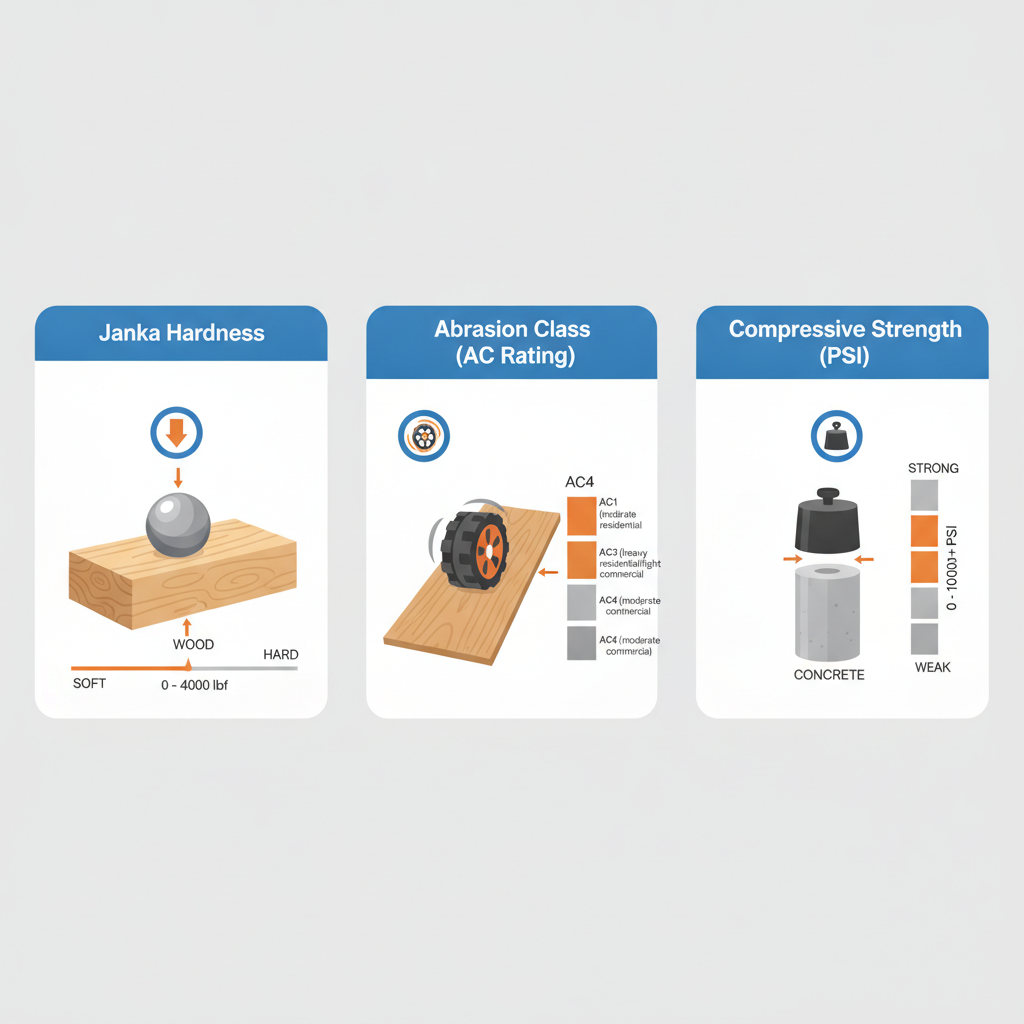
- Janka Hardness Scale (for Wood): This test measures the force required to embed a 0.444-inch steel ball halfway into a piece of wood. The higher the Janka rating, the more resistant the wood is to denting and wear. For example, Brazilian Walnut has a Janka rating of around 3680, making it exceptionally hard, while Red Oak sits around 1290.
- AC Rating (for Laminate): The Abrasion Class (AC) rating is a 1-to-5 scale that indicates a laminate floor’s durability. AC1 is suitable for very light residential traffic (like a bedroom), while AC5 is designed for heavy commercial use (like a department store). For most homes, an AC3 or AC4 rating offers excellent durability.
- PSI (Pounds per Square Inch) (for Concrete/Epoxy): PSI measures compressive strength—the ability of a material to withstand crushing forces. Standard residential concrete might be 2,500-3,000 PSI. High-performance polished concrete or industrial epoxy systems, however, can exceed 8,000 PSI, making them capable of supporting heavy machinery like forklifts without cracking or failing.
The 2024 Durable Flooring Showdown: A Data-Driven Comparison
With a foundational understanding of how durability is measured, we can now compare the leading contenders. But remember, as one certified flooring inspector notes:
The most durable material in the world will fail on a bad foundation. Proper subfloor preparation—ensuring it’s level, clean, and dry—is non-negotiable and accounts for at least 50% of your floor’s long-term performance.
Below is our Durability Scorecard, offering an at-a-glance comparison of the most popular durable flooring solutions. Lifespan cost is an estimate that considers initial installation, maintenance, and potential replacement over a decade.
Durability Scorecard
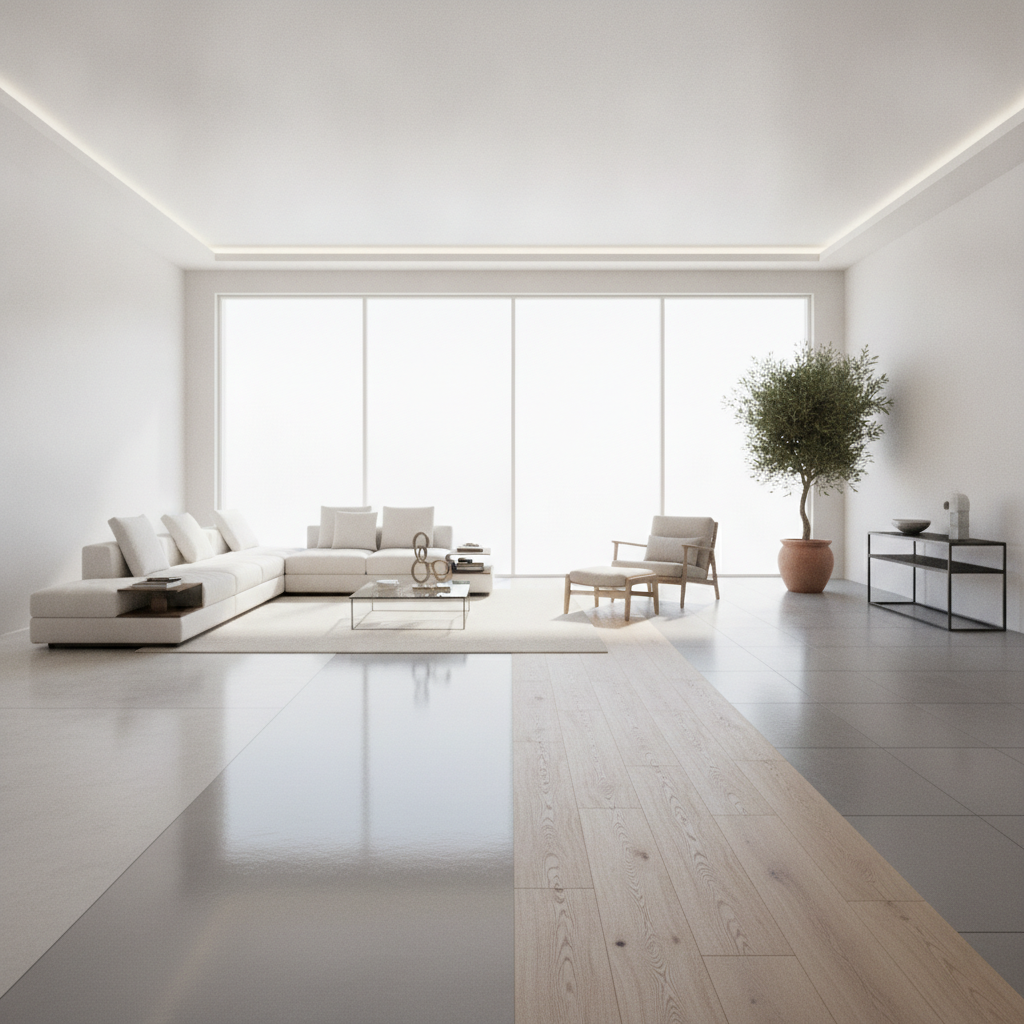
| Material | Scratch Resistance | Water Resistance | Impact Resistance | Maintenance Level | Est. 10-Year Lifespan Cost |
|---|---|---|---|---|---|
| Polished Concrete | High | Very High (when sealed) | Very High | Very Low | Low to Medium |
| Epoxy/Resinous | Very High | Impervious | Very High | Very Low | Medium to High |
| Luxury Vinyl Plank | Medium to High | Impervious | Medium | Very Low | Low to Medium |
| Porcelain Tile | Very High | Impervious | Medium (can crack) | Low (grout can stain) | Medium |
Polished Concrete: The Industrial Champion
Once confined to warehouses and big-box stores, polished concrete has become a chic, minimalist choice for modern homes and commercial spaces. Its durability is legendary, stemming from its incredible compressive strength. The process involves grinding the concrete surface to the desired level of smoothness and shine, then treating it with a chemical densifier. These densifiers penetrate the concrete and create a chemical reaction that hardens and dust-proofs the surface from within, providing genuine long-term protection.
When polished to a high grit, it offers a beautiful, reflective surface that is exceptionally resistant to abrasion from foot traffic. For commercial applications, it’s crucial that the final surface meets slip-resistance standards defined by the Concrete Polishing Association of America (CPAA)[2] and the Americans with Disabilities Act (ADA) Standards for Accessible Design.[3] While highly stain-resistant once sealed, it’s not impervious; acidic spills like wine or vinegar should be cleaned up promptly to prevent etching.
Epoxy & Resinous Flooring: Seamless Strength
Epoxy and other resinous flooring systems are the ultimate solution for environments that demand seamless, hygienic, and chemically resistant surfaces. These are not simply a coat of paint; they are multi-layer systems chemically bonded to the concrete substrate.
A typical system includes:
- The Primer: A low-viscosity layer that penetrates the concrete, creating a powerful bond and sealing the substrate.
- The Body Coat: The main layer that provides thickness, color, and impact resistance. This is often where aggregates like quartz are broadcast for added texture and durability.
- The Top Coat: A final, protective wear layer that provides UV stability, scratch resistance, and the desired finish (gloss or matte).
According to technical data sheets from leading manufacturers, high-performance epoxy systems can achieve compressive strengths over 10,000 PSI and exhibit excellent resistance to oils, acids, and cleaning chemicals.[4] Their seamless nature leaves no grout lines or cracks for bacteria to hide, making them ideal for hospitals, commercial kitchens, and laboratories. The performance of these systems is often verified against standards from organizations like AMPP (formerly NACE International), the global authority on high-performance coatings.[5]
Luxury Vinyl Plank (LVP): The Versatile Contender
Luxury Vinyl Plank has exploded in popularity for good reason. It combines photorealistic wood or stone visuals with 100% waterproof performance and a comfortable, quiet feel underfoot. The key to LVP’s durability lies in its transparent top wear layer. This layer is measured in mils (one-thousandth of an inch), and it’s what stands between foot traffic and the printed design layer.
For most residential settings, a 12-mil wear layer is sufficient. However, for homes with pets, kids, or for any commercial use, the Resilient Floor Covering Institute (RFCI) recommends a wear layer of at least 20 mils.[6] This thicker layer provides substantially more protection against scratches and scuffs. As one leading flooring retailer often advises clients:
“Look for LVP with varied patterns and a low-sheen or embossed finish. These textures are brilliant at hiding the minor scratches and dust of everyday life, keeping your floor looking new for longer.”
Furthermore, as a hard-surface flooring, LVP is often recommended by organizations like the Asthma and Allergy Foundation of America (AAFA) for its ease of cleaning and inability to harbor allergens like dust mites and pet dander.[7]
Porcelain & Ceramic Tile: The Timeless Classic
Tile is one of the oldest and most trusted durable flooring materials. A properly installed porcelain tile floor is waterproof, flame-resistant, and its surface is virtually scratch-proof. The key durability metric for tile is the PEI (Porcelain Enamel Institute) rating, which measures the glaze’s resistance to abrasion.
PEI Rating Classes Explained
- PEI 1: Wall use only.
- PEI 2: Light residential traffic (e.g., bathrooms).
- PEI 3: All residential areas.
- PEI 4: Residential and light-to-medium commercial use.
- PEI 5: All residential and heavy commercial use.
The primary vulnerability of a tile floor isn’t the tile itself, but the grout lines and the risk of impact cracking. As any professional tile setter will attest:
“A single void in the mortar beneath a tile creates a weak spot. When something heavy is dropped, that’s where the crack will start. Full mortar coverage is everything.”
To combat the age-old problem of stained grout, modern epoxy grouts offer a non-porous, highly durable solution that resists stains and mold, creating a surface that is nearly as low-maintenance as the tile itself.
Adamantine Flooring: The Future of Permanent Surface Protection?
The term “Adamantine Flooring” evokes images of mythical, unbreakable materials. But is it a real product? Currently, “Adamantine Flooring” is not a standardized industry term for a specific material but is often used by brands to describe their most advanced, high-durability coating systems or proprietary flooring products. The name leverages the concept of “adamant”—legendary for its hardness—to signify a new level of permanent surface protection.
To verify the legitimacy of any product marketed this way, a search of the U.S. Patent and Trademark Office (USPTO) database can reveal if a brand has secured intellectual property for a unique technology.[8] From a material science perspective, achieving “adamantine” levels of hardness involves advanced technologies.[9] This could include:
- Nanoceramic Particles: Infusing a urethane or epoxy finish with microscopic ceramic particles that create an incredibly dense, scratch-resistant surface.
- Diamond-Like Carbon (DLC) Coatings: Ultra-thin, super-hard coatings applied in a factory setting that mimic the properties of natural diamond.
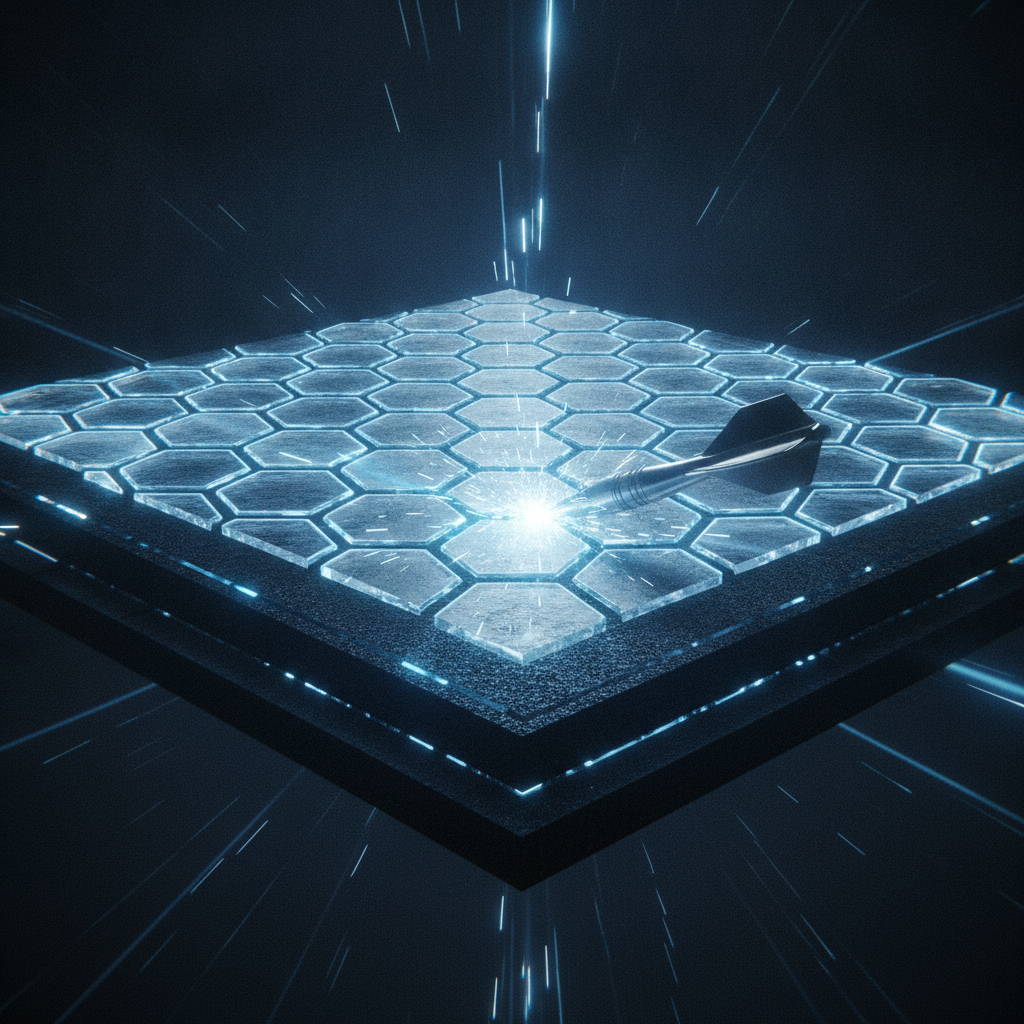
These advanced floor protection solutions aim to move beyond traditional finishes toward a truly long-lasting, low-maintenance floor solution.
Pros and Cons of Adamantine-Level Solutions
| Pros | Cons |
|---|---|
| Unmatched scratch and abrasion resistance | Significantly higher upfront cost |
| Superior chemical and stain resistance | Often requires specialized, certified installers |
| Extremely long lifespan with minimal maintenance | May be difficult or impossible to repair/recoat |
| Often creates a seamless, hygienic surface | Limited availability and product selection |
The Shield: Your Ultimate Guide to Floor Surface Protection
The material you choose is only half the battle. The finish—the shield that guards the surface—is what takes the daily abuse. Understanding the science behind these protective coatings is key to both choosing a new floor and maintaining an existing one. Instead of just listing products, let’s approach this by the threats you want to defeat.
Protection from Scratches and Abrasion
This is the primary job of a top coat. Modern finishes are packed with hard-wearing solids and additives. The best factory-applied finishes on prefinished hardwood or LVP often contain aluminum oxide or ceramic beads, which are incredibly hard particles suspended in the urethane that drastically increase abrasion resistance.
Protection from Water Damage
For porous materials like wood and concrete, a sealant’s job is to block the microscopic pores to prevent water from penetrating. Film-forming finishes like polyurethane create a plastic-like barrier on top of the surface. Penetrating finishes like hardwax oils soak into the wood fibers themselves, repelling water from within.
Protection from UV Fading
Ultraviolet light from the sun can break down the color and composition of flooring over time. High-quality finishes contain UV inhibitors that absorb or reflect this radiation, acting like sunscreen for your floor.
It’s also critical to distinguish between temporary protection (like adhesive films used during construction) and permanent finishes. Never leave temporary films on for extended periods, as the adhesive can cure and damage the permanent finish underneath. When choosing a finish, be mindful of Volatile Organic Compounds (VOCs), which are chemicals that can be released into the air. The Environmental Protection Agency (EPA) provides guidance on VOCs, and many modern water-based finishes offer low-VOC formulas for better indoor air quality.[10]
Floor Finish Comparison
| Finish | Durability | VOCs | Appearance | Reapplication |
|---|---|---|---|---|
| Oil-Based Polyurethane | Very High | High | Amber tint, warm glow | Requires sanding |
| Water-Based Polyurethane | High | Low | Clear, non-yellowing | Requires light sanding (recoat) |
| Hardwax Oil | Medium | Very Low | Natural, matte, in-the-wood feel | Easy spot repairs, no sanding |
| Paste Wax | Low | Medium | Soft, low-sheen lustre | Frequent reapplication needed |
| Factory Finish (UV Cured) | Very High | None (post-factory) | Varies, very consistent | Cannot be site-reapplied |
Floor Damage Triage: A Practical Guide to Repairs
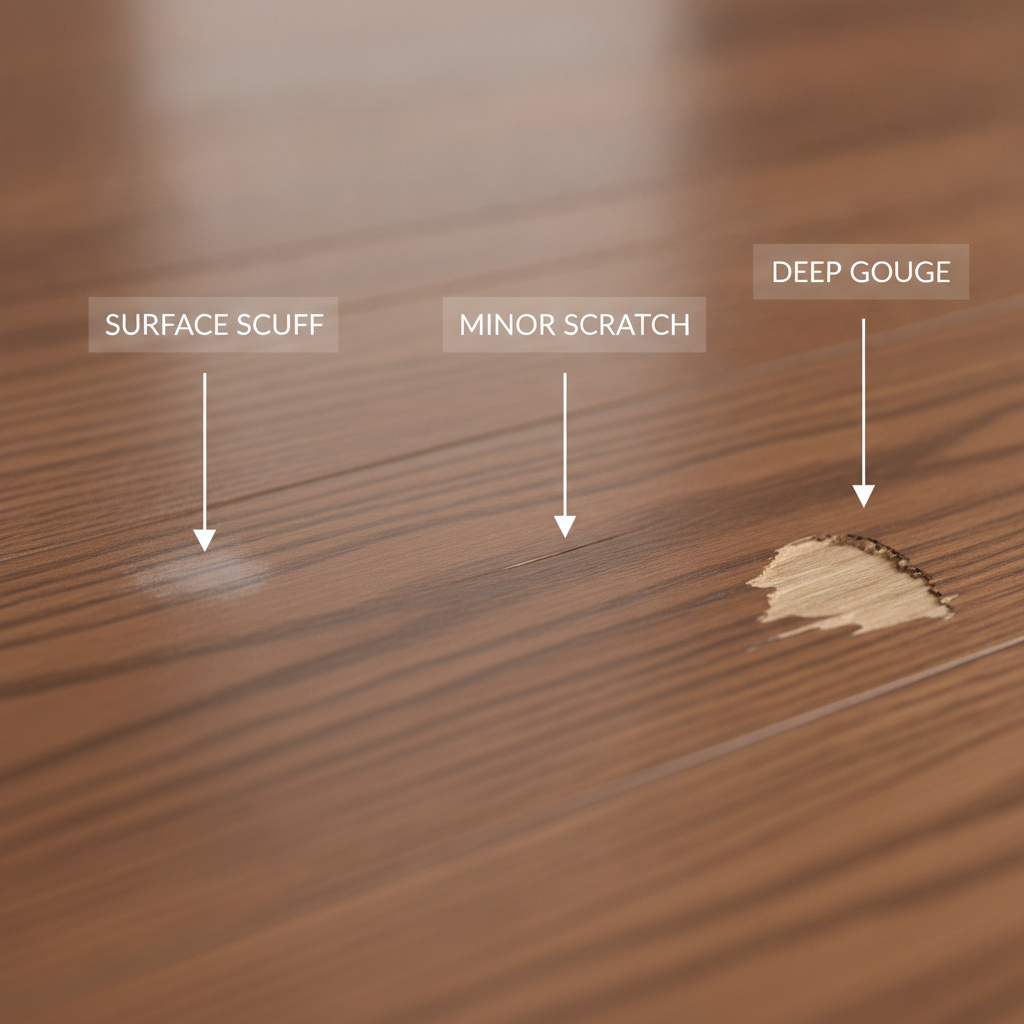
Even the most durable floor can suffer damage. The key is to correctly diagnose the problem and apply the right solution, preventing a minor issue from becoming a major one. This triage approach will help you determine whether you have a simple DIY fix or need to call a professional.
A floor’s structure typically consists of the core material (wood, concrete, etc.), potentially a layer of stain, and one or more layers of protective finish. Understanding this layering is crucial. A light scuff may only be in the top layer of finish, while a deep gouge might penetrate all the way to the raw material.
Diagnosing and Fixing Scratches, Scuffs, and Gouges
Level 1: Surface Scuffs or Transfer Marks.
- Diagnosis: The mark is on top of the finish, not in it. Often caused by shoe soles or furniture legs.
- DIY Fix: For polyurethane finishes, lightly rub the area with a clean cloth and a tiny amount of mineral spirits to remove the mark. Clean with an approved floor cleaner afterward.
Level 2: Minor Scratches in the Finish.
- Diagnosis: You can feel the scratch with your fingernail, but it hasn’t gone through the color/stain layer.
- DIY Fix: Use a manufacturer-approved touch-up kit or a scratch repair pen designed for polyurethane finishes. These products fill the scratch with a clear polymer. Always test in an inconspicuous area first.
Level 3: Deep Scratches or Gouges.
- Diagnosis: The scratch has removed the finish and the stain, exposing the raw wood or material underneath.
- Professional Help: This requires professional repair. The area will likely need to be carefully filled, sanded, stained, and refinished to match the surrounding floor, a skill that is very difficult for a DIYer to master.
To prevent future damage, especially from pets, keep nails trimmed, use durable floor mats at entrances, and apply felt pads to all furniture legs.
Restoring a Worn, Dull, or Hazy Finish
A dull finish is a cry for help. The cause is often one of two things: a buildup of improper cleaning products, or the finish itself is simply worn out from years of foot traffic.
Diagnosis:
- First, try cleaning a small area with the manufacturer-recommended cleaner. If the shine returns, the problem is likely residue buildup.
- If the area remains dull, especially in high-traffic pathways, the polyurethane finish is likely worn down.
The Solution: A Screen and Recoat
For a finish that is worn but not completely gone, a full refinishing (sanding down to bare wood) is often overkill. The National Wood Flooring Association (NWFA) outlines a less invasive process called a “screen and recoat”.[11] This involves lightly abrading, or “screening,” the top layer of the existing finish to create a mechanical bond for a new coat of polyurethane.
Before you can recoat, you must know if your existing finish is oil-based or water-based. To test this, apply a few drops of rubbing alcohol to an out-of-the-way spot. If the finish gets soft or gummy, it’s likely water-based. If nothing happens, it’s probably oil-based. Applying the wrong type of new finish can lead to peeling and adhesion failure.
As one certified floor refinisher advises:
“A screen and recoat can save you thousands, but it’s only an option if the wear hasn’t gone through to the stain or wood. Once you see discolored patches in your traffic areas, you’ve waited too long, and a full sand-and-refinish is your only option.”
Leading finish manufacturers like Bona provide detailed guides and products for both professionals and experienced DIYers attempting this process.[12]
Your Path to a Lasting Floor
Choosing, protecting, and maintaining a floor no longer needs to be a source of anxiety. You are now equipped with the knowledge to see past marketing claims and understand the science of durability. You know that true longevity comes from a smart match between a material’s proven performance—measured by standards like Janka, AC ratings, and PSI—and the unique demands of your space. You understand that the protective finish is your floor’s first line of defense and that proactive maintenance and proper repair are the keys to a lifetime of performance. You are ready to make a confident, expert choice that will provide value, beauty, and peace of mind for years to come.
Feeling confident? Download our free ‘Durable Flooring Scorecard & Maintenance Checklist’ to take with you when you shop and ensure you make the best long-term investment for your space.
This article provides general guidance. For specific applications, especially in commercial or regulated environments, always consult with a certified flooring professional and adhere to local building codes.
References & Authoritative Sources
- ASTM International. (n.d.). About Us. Retrieved from astm.org.
- Concrete Polishing Association of America (CPAA). (n.d.). Standards. Retrieved from cpaa-us.org.
- United States Access Board. (n.d.). ADA Standards for Accessible Design. Retrieved from access-board.gov.
- Sika AG / BASF Corporation. (n.d.). Technical Data Sheets for Resinous Flooring Systems.
- Association for Materials Protection and Performance (AMPP). (n.d.). AMPP Standards. Retrieved from ampp.org.
- Resilient Floor Covering Institute (RFCI). (n.d.). Resources and Standards. Retrieved from rfci.com.
- Asthma and Allergy Foundation of America (AAFA). (n.d.). Flooring – Certified Asthma & Allergy Friendly. Retrieved from aafa.org.
- United States Patent and Trademark Office (USPTO). (n.d.). Patent Search. Retrieved from uspto.gov.
- General reference to principles found in peer-reviewed materials science and chemical engineering journals discussing advanced coating technologies like nanoceramics and diamond-like carbon.
- United States Environmental Protection Agency (EPA). (n.d.). Volatile Organic Compounds’ Impact on Indoor Air Quality. Retrieved from epa.gov.
- National Wood Flooring Association (NWFA). (n.d.). Technical Guidelines. Retrieved from nwfa.org.
- Bona US. (n.d.). Professional Guides & Resources. Retrieved from bona.com.
