Have you ever installed a beautiful new floor, only to watch in dismay as it collects scratches, dents, and worn-out paths in a fraction of the time you expected? It’s a frustrating experience that makes a significant investment feel like a waste. You’re left wishing for a surface with unwavering stability—something truly “adamantine” that could stand up to the daily pressure of life.
While a mythical, unbreakable floor may not exist, the technology to create incredibly resilient surfaces certainly does. The problem is, the flooring industry is filled with confusing jargon and marketing claims that make it nearly impossible to tell which product is genuinely tough.
This is where this guide changes the game. Our mission is to demystify the complex world of durable flooring. We will translate opaque industry ratings like PSI, PEI, AC, and Janka into practical, easy-to-understand “Durability Scorecards.” From the high-traffic demands of a commercial entryway to the dual threat of pets and kids at home, we will provide data-driven insights to help you choose the right long-lasting floor for your specific needs. By the end of this article, you will be empowered to invest with absolute confidence, knowing your new floor is built to last a lifetime.
- What is Adamantine Flooring? The Myth vs. Modern Reality
- Decoding Durability: Your Guide to Flooring Strength Ratings
- The Ultimate Showdown: Top Long-Lasting Floor Materials
- Application Blueprints: Choosing the Best Flooring for Your High-Stress Environment
- Protecting Your Investment: A Guide to Prevention and Repair
- Conclusion
- References and Authoritative Sources
What is Adamantine Flooring? The Myth vs. Modern Reality
When you search for “Adamantine flooring,” you’re looking for the absolute pinnacle of strength—a floor that is essentially indestructible. The term “adamantine” has historical roots, often used to describe a mythical, diamond-hard substance. While you can’t buy a floor made of this legendary material, the concept perfectly captures the goal: unwavering resistance to pressure, scratches, and wear.
The true “adamantine” floors of the 21st century are found in the world of industrial and commercial coatings. These are not your average residential products; they are high-tech systems engineered for the most demanding environments imaginable, from aircraft hangars to manufacturing plants.
Modern equivalents like high-performance epoxy and polyaspartic coatings are the answer to this search for ultimate durability. These resinous systems chemically bond with concrete to create a seamless, incredibly hard surface that can withstand extreme abuse. In fact, modern material science has surpassed mythical strength with quantifiable performance; research shows that advanced polyaspartic coatings can be up to four times more abrasion-resistant than standard epoxy flooring. These systems are designed and evaluated based on rigorous standards, such as those developed by The Society for Protective Coatings (SSPC), ensuring they deliver measurable, real-world strength.[1]
Decoding Durability: Your Guide to Flooring Strength Ratings
To choose a truly durable floor, you must learn to speak its language. Manufacturers use a variety of standardized tests and ratings to quantify a material’s strength. Understanding these metrics is the single most important step in making a confident investment. Think of this section as your personal translator for flooring durability, with all tests and metrics validated by standards organizations like ASTM International, which ensures testing is consistent and reliable across the industry.[2]
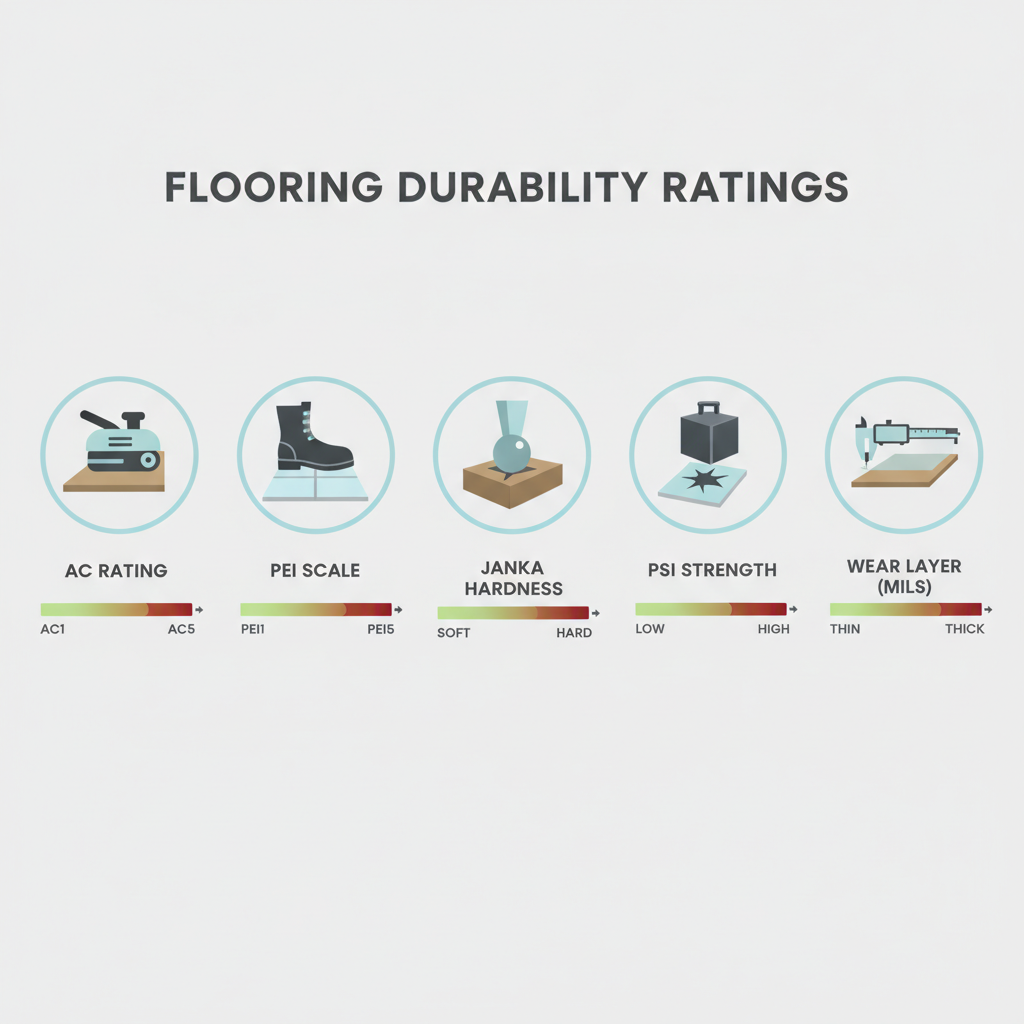
Abrasion & Scratch Resistance: AC Rating, PEI Scale, and Mohs Hardness
These ratings measure a floor’s ability to withstand scraping, friction, and scratching from things like dirt, pet claws, and dragged furniture.
- AC (Abrasion Class) Rating: Used for laminate flooring, this rating ranges from AC1 (light residential use) to AC5 (heavy commercial use). The rating is determined by a test that involves abrading the surface until the decorative layer is worn through. For most homes, an AC3 is sufficient, but for high-traffic areas or homes with pets, an AC4 or AC5 rating provides significantly more protection. The industry standard recommends that “laminate flooring uses an AC (Abrasion Class) rating from AC1 to AC5 to denote its durability.”
- PEI (Porcelain Enamel Institute) Scale: This is the go-to rating for ceramic and porcelain tile. It measures the wear resistance of the tile’s glaze.
- PEI 1: Walls only.
- PEI 2: Light traffic (e.g., residential bathrooms).
- PEI 3: Light to moderate traffic (most residential uses).
- PEI 4: Moderate to heavy traffic (can be used in some commercial settings).
- PEI 5: Heavy to extra-heavy traffic. According to the Tile Council of North America (TCNA), the authority on tile standards, a PEI 5 rating is “suitable for heavy commercial traffic” and is essentially the toughest glazed tile you can buy.[3]
- Mohs Scale of Hardness: This is a general scale from 1 (Talc) to 10 (Diamond) that measures a material’s scratch resistance. It’s particularly relevant for tile and natural stone. For example, porcelain tile often ranks at 7 or higher, making it harder than granite and extremely resistant to scratches.
Impact & Dent Resistance: Janka Hardness and PSI Strength
These metrics measure a floor’s ability to resist damage from dropped objects and the immense pressure from heavy furniture or equipment.
- Janka Hardness Test: This is the industry standard for determining the hardness of wood flooring. The test measures the force required to embed a 0.444-inch steel ball halfway into a piece of wood. The higher the number, the harder and more dent-resistant the wood. This is why “Brazilian Cherry (2350) is significantly harder and more scratch-resistant than Red Oak (1290).”
- PSI (Pounds per Square Inch): This measures compressive strength—the ability of a material to withstand crushing force. While relevant for many materials, it’s a critical metric for concrete and industrial coatings. A standard concrete slab might have a PSI of 3,000-5,000. In contrast, high-performance “industrial flooring systems can be rated to withstand pressures exceeding 20,000 PSI,” making them capable of supporting heavy machinery and vehicle jacks without failing.
Wear & Tear Over Time: Wear Layer Thickness (Mils)
This is arguably the most important metric for Luxury Vinyl Tile (LVT) and Luxury Vinyl Plank (LVP) flooring.
- Wear Layer: This is a clear, protective top coating that shields the printed design layer from scuffs, scratches, and traffic.
- Mil Thickness: Its thickness is measured in mils (one-thousandth of an inch). Think of it like the screen protector on your phone—a thicker one provides more protection. According to insights from the Floor Covering Institute, “the thickness of a vinyl floor’s wear layer, measured in mils (e.g., 6 mil for low traffic, 20+ mil for commercial), is a primary indicator of its durability”.[4] For a busy home, look for at least a 12 mil wear layer; for ultimate residential or commercial durability, 20 mil or higher is the gold standard.
The Ultimate Showdown: Top Long-Lasting Floor Materials
Now that you understand the metrics, let’s apply them to the top contenders for the most durable flooring. Each material has its own strengths, and the right choice depends on your specific needs.
Category King: Industrial Coatings (Epoxy & Polyaspartic)
These seamless, resinous floor coatings are the modern embodiment of “adamantine” strength, ideal for garage workshops, basements, and commercial spaces. They form a chemical bond with concrete, creating a non-porous, incredibly resilient surface. The surface texture is typically smooth but can be customized with additives for a non-slip finish.
Durability Scorecard:
- Scratch Resistance: Very High (Resists abrasion from tools and chemicals)
- Impact Resistance: Extreme (Can have a compressive strength over 15,000 PSI)
- Water Resistance: Waterproof
- Lifespan: 15+ years
As authoritative sources like The Concrete Protector demonstrate, proper surface preparation is key to their longevity, but when installed correctly, their performance is unmatched for high-pressure environments.[5]
The Scratch-Proof Champion: Porcelain & Ceramic Tile
For pure scratch resistance in a residential or commercial setting, nothing beats porcelain tile. With a surface harder than most metals, it easily shrugs off pet claws, dragged furniture, and abrasive dirt. The surface can range from a smooth, polished finish to a heavily textured, stone-like feel.
Durability Scorecard:
- Scratch Resistance: Extreme (“Porcelain tile, with a Mohs hardness rating of 7-9, is one of the most scratch-resistant flooring materials available.”)
- Impact Resistance: High (Though can crack from a severe, sharp impact)
- Water Resistance: Waterproof
- Lifespan: 50+ years
The Tile Council of North America (TCNA) sets the standards that confirm porcelain’s incredible durability, making it a “buy it for life” flooring choice.[3] The main drawback is the unforgiving hardness underfoot and the potential for grout lines to stain if not properly sealed.
The All-Rounder: Luxury Vinyl Tile (LVT/LVP)
Modern LVT is a technological marvel, offering a superb balance of durability, comfort, and aesthetics. Its multi-layer construction makes it resilient to a wide range of household abuses, making it a top choice for families with pets and kids. Its surface is often embossed to mimic the texture of real wood or stone.
Durability Scorecard:
- Scratch Resistance: High (With a 20+ mil wear layer)
- Impact Resistance: High (Resists dents from dropped objects)
- Water Resistance: Waterproof (Most modern LVT products are 100% waterproof)
- Lifespan: 20-25 years
The key is the wear layer. While entry-level products may have a thin 6 mil layer, “Commercial-grade Luxury Vinyl Tile (LVT) often features a wear layer of 20 mil or higher,” providing robust protection against scratches and scuffs.
The Contender: High-Performance Laminate
Laminate flooring has evolved dramatically. Once seen as a cheap alternative, today’s high-quality laminate offers incredible scratch resistance thanks to its scientifically engineered top layer. This layer is infused with aluminum oxide, one of the hardest compounds available, giving it a tough, clear finish over the photographic layer.
Durability Scorecard:
- Scratch Resistance: Very High (With a high AC rating)
- Impact Resistance: Good (Can be prone to chipping on edges)
- Water Resistance: Moderate (Water-resistant, but not waterproof)
- Lifespan: 15-20 years
To ensure you’re getting a durable product, “look for laminate with an AC4 or AC5 rating, designed to withstand heavy residential or even light commercial traffic.”
The Classic Choice: Hardwood & Engineered Wood
The timeless beauty of hardwood is undeniable, but its durability varies greatly. Its strength is measured by the Janka scale, and its longevity comes from its ability to be refinished. Solid hardwood can be sanded down and refinished 5-7 times, effectively lasting for generations. Engineered hardwood with a thick top veneer (3mm or more) can also be refinished at least once or twice. The surface is defined by its finish, typically a smooth polyurethane coating.
Durability Scorecard:
- Scratch Resistance: Moderate to High (Depends heavily on wood species and finish)
- Impact Resistance: Moderate to High (Softer woods will dent)
- Water Resistance: Low (Highly susceptible to water damage)
- Lifespan: 100+ years (Solid hardwood, with refinishing)
The National Wood Flooring Association (NWFA) provides the standards for wood grading and finishing, emphasizing that choosing a harder species like Hickory or Brazilian Maple is key to preventing dents and scratches.[6]
Application Blueprints: Choosing the Best Flooring for Your High-Stress Environment
Theory is one thing; the real world is another. The best durable flooring is the one that perfectly matches the specific challenges of your environment. Here’s how to choose the right material for the toughest applications.
The Residential Battleground: Best Flooring for Pets and Kids
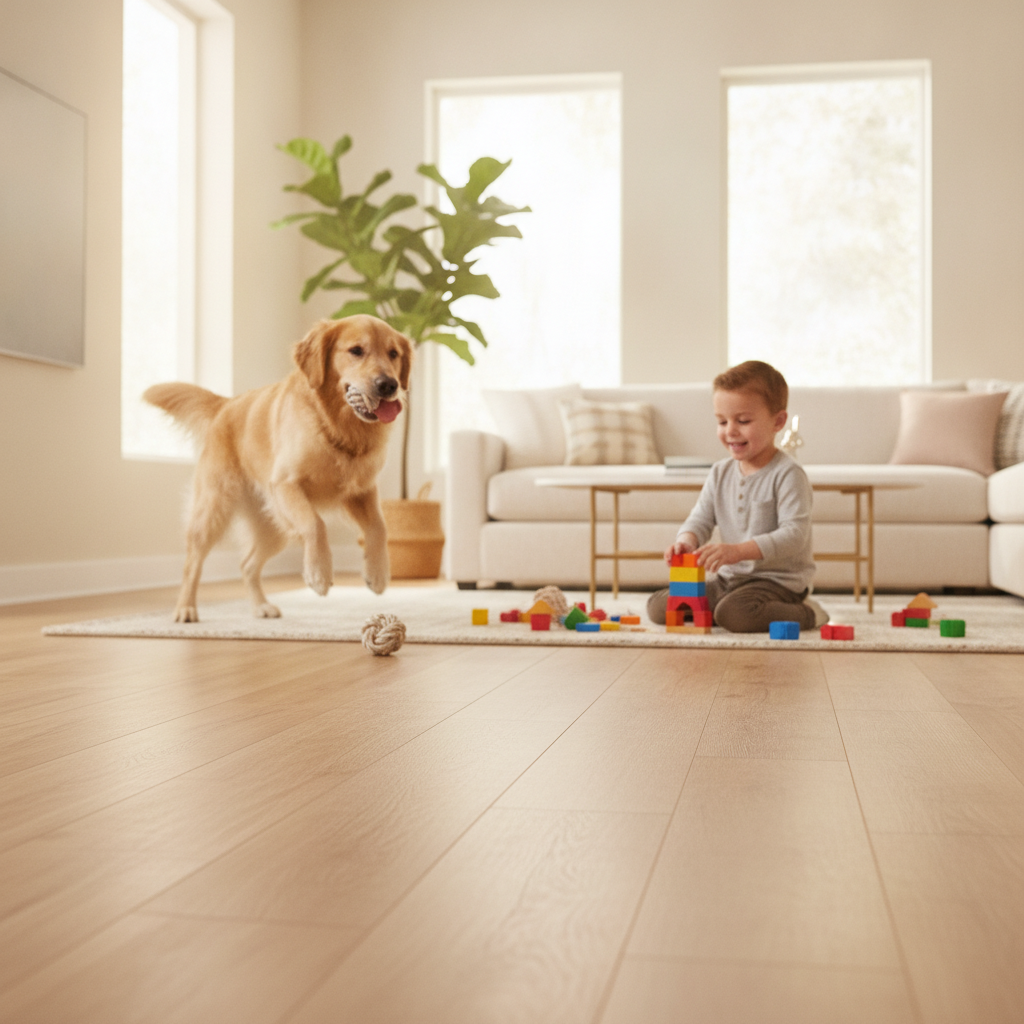
This environment faces a dual threat: the constant abrasion of high foot traffic and the specific damage from pet claws, spills, and accidents.
- Top Choice: LVT/LVP with a 20+ mil wear layer. It’s waterproof, highly scratch-resistant, quiet underfoot, and offers better traction for pets than laminate or tile.
- Runner-Up: High-Performance Laminate (AC4 or AC5). Its aluminum oxide coating is exceptionally resistant to scratches from dog nails. However, be sure to choose a water-resistant variety and clean up spills quickly.
- Expert Insight: Veterinary experts emphasize the importance of floor traction for pet health, especially for senior dogs or breeds prone to hip dysplasia. The micro-bevels and embossed textures of many LVT products can provide better grip than ultra-smooth surfaces, reducing the risk of slips and joint strain.
For cleaning, use a pH-neutral cleaner on LVT and laminate. For pet accidents, use an enzymatic cleaner designed to break down organic matter and eliminate odors without damaging the floor’s finish.
The Commercial Gauntlet: Flooring for Retail, Offices, and Entryways
Commercial spaces demand flooring that can handle heavy footfall, rolling carts, and stringent safety codes. Durability, low maintenance, and safety are paramount.
- Top Choice: Commercial-Grade LVT (28+ mil wear layer). It offers the best combination of durability, design flexibility, and ease of maintenance. It also provides some sound absorption, which is beneficial in busy offices.
- Runner-Up: Porcelain Tile (PEI 5 rating). For sheer longevity and resistance to wear in places like mall entryways or airports, tile is unbeatable.
- Critical Factors:
- Slip Resistance: Commercial floors must comply with standards from the Americans with Disabilities Act (ADA) and recommendations from the Occupational Safety and Health Administration (OSHA) regarding the Coefficient of Friction to prevent slips and falls.[7][8]
- Installation Downtime: In a business setting, time is money. LVT can often be installed much faster and with less disruption than tile, which requires time for mortar and grout to cure. This is a critical cost factor that is often overlooked.
- Appearance: Choose colors and patterns that help hide dirt and minor scuffs between cleanings. A multi-tonal or heathered look is far more forgiving than a solid, dark color.
The Ultimate Workshop: Pressure-Resistant Flooring for Garages
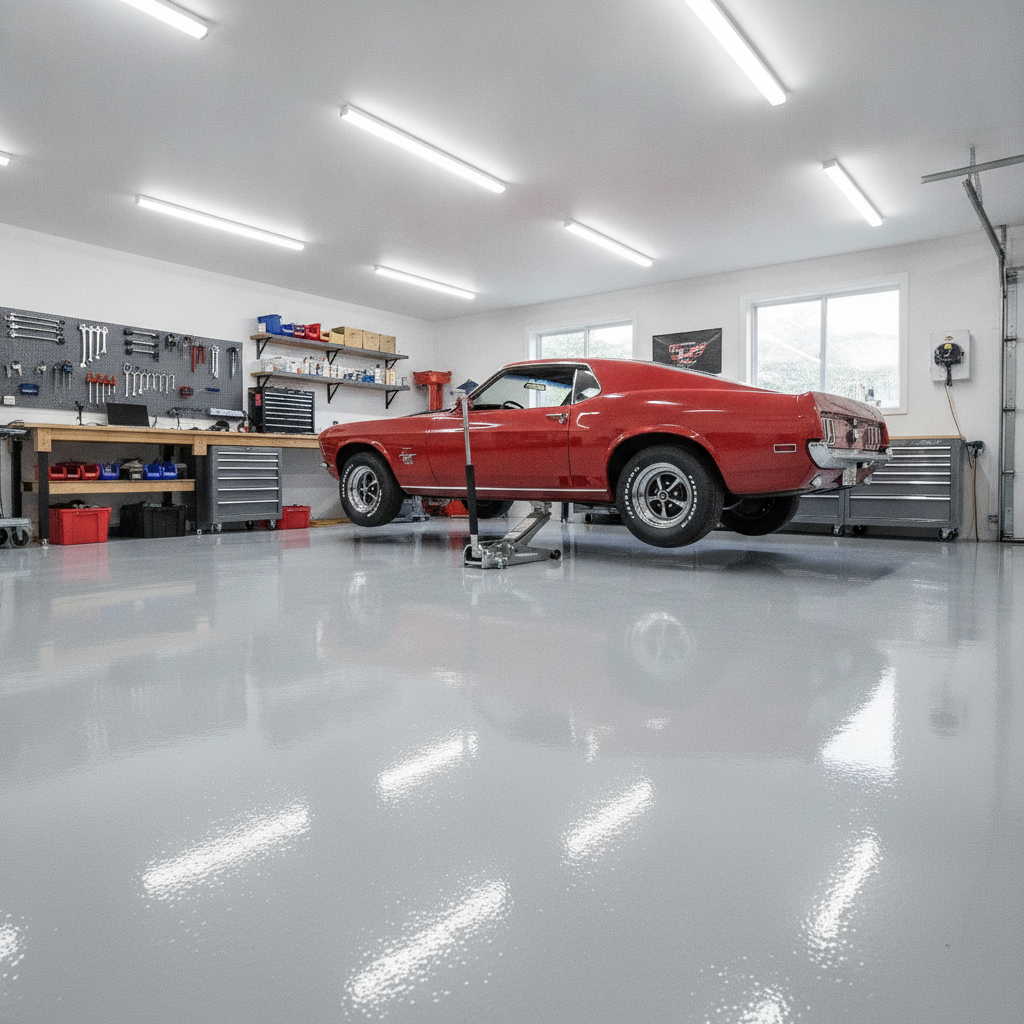
A true workshop floor must withstand more than just car tires. It needs to resist point loads from floor jacks, impacts from dropped tools, and degradation from chemical spills.
- Top Choice: Polyaspartic or 100% Solids Epoxy Coating. These coatings create a thick, seamless, and incredibly strong surface that is non-porous and easy to clean.
- Runner-Up: Interlocking PVC or Polypropylene Tiles. Brands like RaceDeck and Swisstrax are authorities in this space, offering modular tiles that are extremely tough, chemical-resistant, and can be installed without adhesives.[9] They also provide better anti-fatigue properties than bare concrete.
- Chemical Resistance Chart:
| Chemical | Epoxy/Polyaspartic | Interlocking Tiles | Bare Concrete |
|---|---|---|---|
| Motor Oil | Excellent | Excellent | Poor (Stains) |
| Brake Fluid | Good-Excellent | Excellent | Poor (Degrades) |
| Solvents | Good | Good-Excellent | Poor (Degrades) |
- DIY Installation Tip: For coatings, proper concrete preparation is 90% of the job. The floor must be thoroughly cleaned, degreased, and mechanically profiled (usually by diamond grinding) to ensure the coating can bond permanently. Skipping this step is the #1 cause of coating failure.
Protecting Your Investment: A Guide to Prevention and Repair
Even the most durable floor requires proper care to look its best. Prevention is your first and best line of defense, but when accidents happen, knowing how to perform a quick repair can save you a costly replacement.
First Line of Defense: Preventing Scratches and Dents
Proactive measures are simple, cheap, and incredibly effective. Professional movers and floor restoration experts certified by the IICRC agree that most floor damage is preventable.[10]
- Furniture Protection is Non-Negotiable: Use felt pads on the feet of all stationary furniture, especially chairs and tables. For heavy items like sofas, use wider furniture cups to distribute the weight and prevent dents. An infographic matching the right protector to the right furniture foot is a simple but powerful tool.
- Embrace Doormats: High-quality walk-off mats at every exterior door can trap up to 80% of the abrasive dirt, grit, and moisture that gets tracked into your home.
- Lift, Don’t Drag: When moving furniture, always lift it or use furniture sliders. Dragging even a light object can embed a sharp piece of grit into the floor’s surface, causing a deep scratch.
- Maintain Pet Nails: Regularly trimming your pet’s nails is one of the most effective ways to prevent surface scratches on nearly any floor type.
Damage Control: How to Fix Common Flooring Issues
When damage occurs, the repair method depends entirely on the flooring material.
- Minor Scratches on Hardwood: For a surface scratch in the polyurethane finish, consult the guidelines from the National Wood Flooring Association (NWFA).[6] Often, a simple “screen and recoat” of the affected area or the entire room can restore the finish without a full sanding. This is far more affordable than a full refinish.
- Dents in LVT/LVP: For minor dents, sometimes applying gentle heat with a hairdryer can make the vinyl pliable enough to return to its original shape. For deep gouges or planks that are severely damaged, one of the major benefits of LVP is the ability to replace a single plank.
- Carpet Dents from Furniture: A simple trick is to place an ice cube in the dent and let it melt. As the water is absorbed, it will help the crushed carpet fibers swell and stand back up. Once dry, gently fluff the area with a fork or vacuum brush.
- Cost to Restore vs. Replace: For a worn hardwood entryway, a professional screen and recoat might cost $1.50-$2.50 per square foot. A full sand and refinish could be $4-$7 per square foot. Replacing it with new hardwood could be $10-$20+ per square foot, installed. Restoration is almost always the more cost-effective first step.
Conclusion
The quest for an “adamantine” floor—one that offers unwavering stability under daily pressure—is about making an informed choice, not finding a mythical material. True durability is achieved when you match the right material, armed with the right performance metrics, to the unique demands of your environment.
You are no longer at the mercy of confusing marketing claims. By understanding the language of durability—the meaning behind PSI, PEI, AC ratings, and mil thickness—you are now empowered to look beyond the brochure and analyze a floor’s true potential. Whether you’re designing a pet-proof family room, a bustling commercial space, or a high-pressure workshop, you now have the data-driven framework to select a floor that will not just meet your expectations, but exceed them for years to come. You can now invest with total confidence, knowing you’ve chosen a foundation built to last a lifetime.
Have you found your ‘adamantine’ flooring solution? Share your project or ask a question in the comments below!
This article may contain affiliate links. Always consult with a certified flooring professional before making a final purchase and for installation.
References and Authoritative Sources
- The Society for Protective Coatings (SSPC). (N.D.). SSPC Standards. Retrieved from sspc.org.
- ASTM International. (N.D.). Standards and Publications. Retrieved from astm.org.
- Tile Council of North America (TCNA). (N.D.). Publications & Standards. Retrieved from tcnatile.com.
- Floor Covering Institute. (N.D.). Flooring Resources and Information. Retrieved from floorcoveringinstitute.com.
- The Concrete Protector. (N.D.). Technical Data Sheets. Retrieved from theconcreteprotector.com.
- National Wood Flooring Association (NWFA). (N.D.). Installation Guidelines and Technical Resources. Retrieved from nwfa.org.
- U.S. Access Board. (N.D.). ADA Standards for Accessible Design. Retrieved from access-board.gov/ada.
- Occupational Safety and Health Administration (OSHA). (N.D.). Walking-Working Surfaces – 1910.22. Retrieved from osha.gov.
- RaceDeck. (N.D.). The Original Modular Garage Flooring. Retrieved from racedeck.com.
- Institute of Inspection, Cleaning and Restoration Certification (IICRC). (N.D.). IICRC Standards. Retrieved from iicrc.org.
