Few things are more frustrating for a homeowner or property manager than investing in beautiful new floors, only to watch them slowly pull apart into unsightly gaps or warp into uneven ridges. These failures not only trap dirt and degrade your home’s aesthetic but also signal underlying environmental or structural issues that can compromise the integrity of your investment. If you are tired of battling seasonal shifting and moisture damage, you need a proactive, science-backed approach to flooring.
This comprehensive guide serves as your blueprint for understanding dimensional stability. We will dive deep into the mechanics of engineered flooring, explore the ultra-durable nanotechnology behind Adamantine flooring, and provide actionable diagnostic triage for existing floor failures. Whether you are looking to install the toughest, most climate-resilient floors on the market or trying to salvage a buckling living room, this is your definitive resource.
- The Science of Flooring Failures: Why Floors Gap, Warp, and Buckle
- Engineered for Stability: How Core Construction Prevents Warping
- Adamantine Engineered Flooring Solutions: The Pinnacle of Extreme Durability
- Choosing the Best Warp and Gapping Resistant Floors for Your Climate
- Expert Diagnostics and Triage: How to Fix Gapping and Warping
- Pre-Installation Essentials: Acclimation and Subfloor Prep
- Conclusion
- References and Authoritative Sources
The Science of Flooring Failures: Why Floors Gap, Warp, and Buckle
To understand how to stop floors from warping and prevent floorboard gapping issues, we must first look at the physics of flooring materials. Wood and many wood-composite materials are hygroscopic, meaning they act like a sponge, constantly absorbing and releasing moisture from the surrounding air to reach a state of balance. This balance is known in materials science as Equilibrium Moisture Content (EMC).
When evaluating stable flooring, it is critical to distinguish between thermal expansion and hygroscopic expansion. Thermal expansion is driven by temperature changes (heat causes materials to expand, cold causes them to contract), which primarily affects synthetic materials like rigid core vinyl or plastics. Hygroscopic expansion, however, is driven entirely by moisture and is the primary culprit behind natural and engineered wood failures. To ensure materials can withstand these fluctuations, the industry relies on rigorous ASTM International testing standards for dimensional stability in floor coverings [1], which measure exactly how much a plank will swell or shrink under environmental stress.
Floorboard Gapping Issues: Seasonal Shrinkage vs. Permanent Damage
Floorboard gapping issues are most prevalent during the winter months. As heating systems run continuously, indoor humidity plummets, causing the wood to lose moisture and shrink. This seasonal shrinkage results in micro-gaps between planks. While minor seasonal gapping is a natural characteristic of wood, severe gaps indicate a loss of dimensional stability.
To determine if you are dealing with normal seasonal shifting or permanent damage, use the diagnostic rule of thumb: if a gap exceeds the thickness of a standard credit card, it may indicate permanent structural failure, poor acclimatization, or improper installation. The most effective way to identify the best flooring to prevent gapping—and to protect the floors you already have—is strict climate control. According to the National Wood Flooring Association (NWFA), relative humidity should be maintained between 30% and 50% year-round to prevent gapping [2].
Warped Engineered Hardwood: Cupping, Crowning, and Buckling Explained
When floors take on too much moisture, they expand. If they run out of room to expand, they warp. Properly diagnosing warped engineered hardwood or solid wood requires understanding the specific visual cues of moisture damage:
- Cupping: The edges of the plank are higher than the center, creating a concave shape. This almost always indicates moisture is attacking the floor from below (e.g., a damp crawlspace or wet concrete subfloor).
- Crowning: The center of the plank is higher than the edges, creating a convex shape. This typically occurs when moisture is left on top of the floor, or when a previously cupped floor was sanded flat before the underlying moisture issue was resolved, causing the edges to shrink back down once dry.
- Buckling: The most extreme form of failure, where the planks physically lift and detach from the subfloor. Floor buckling problems are usually the result of catastrophic flooding or a complete lack of perimeter expansion gaps.
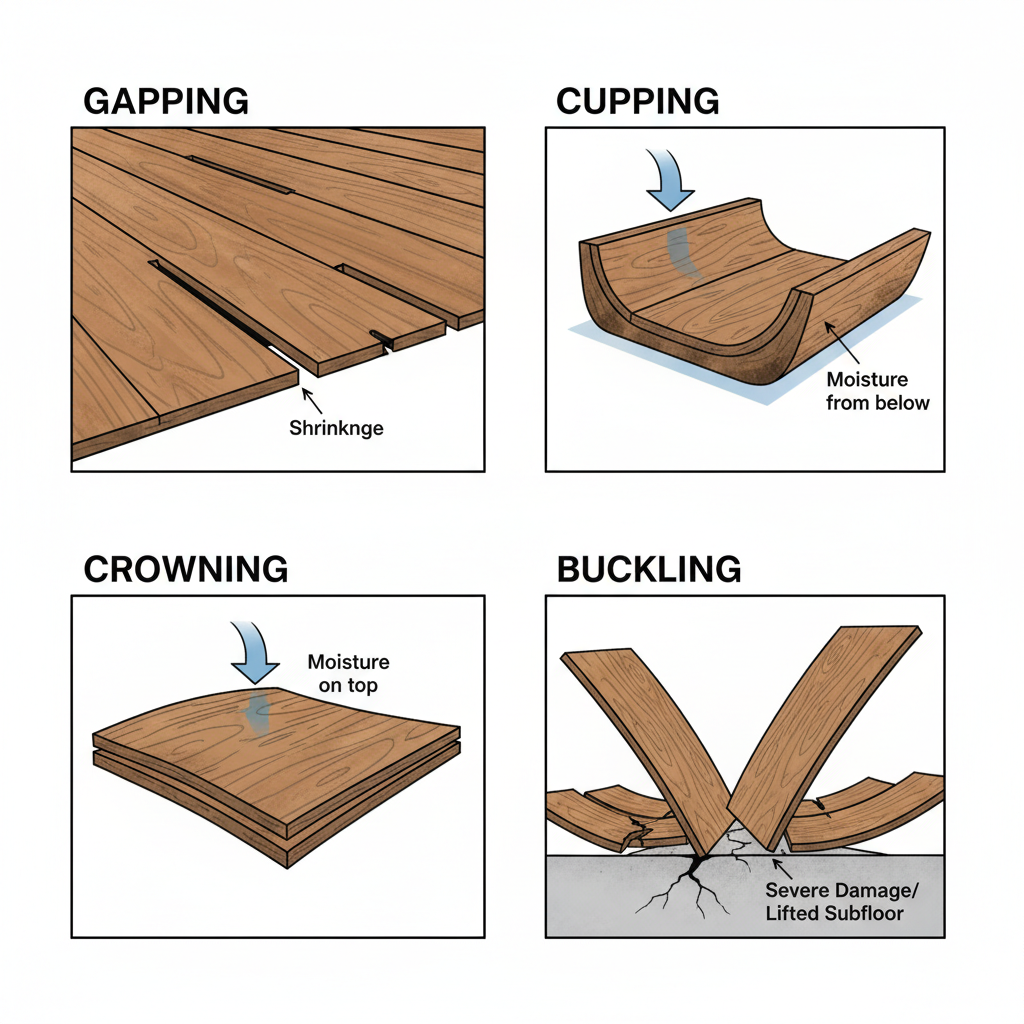
Manufacturing tolerances also play a role in baseline stability. As noted by Lord Parquet manufacturing standards, “Up-bowing of 1% of the length is the maximum acceptable manufacturing standard in Europe,” meaning any warping beyond this metric is a sign of environmental failure rather than a product defect [3].
Engineered for Stability: How Core Construction Prevents Warping
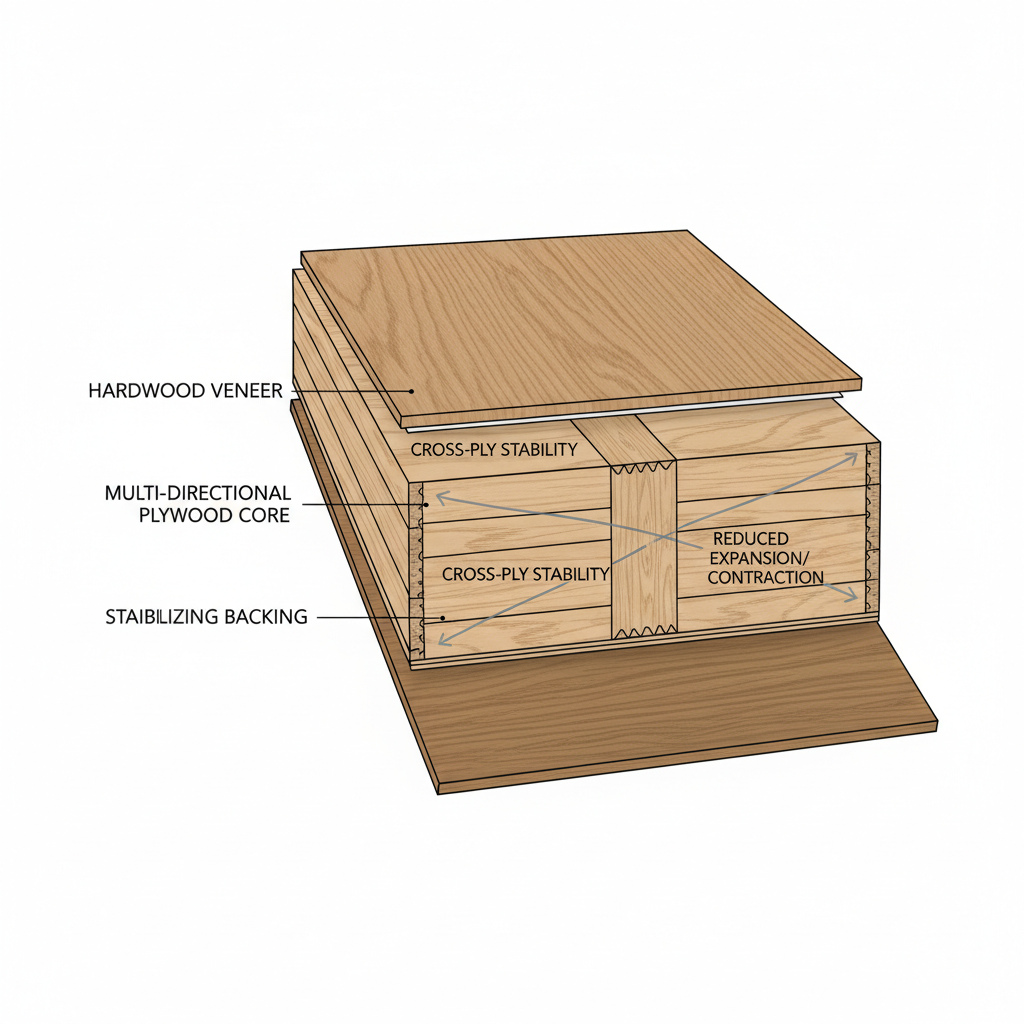
If solid wood is highly susceptible to hygroscopic expansion, how do we achieve truly stable flooring? The answer lies in engineered flooring construction. Unlike solid hardwood, which is milled from a single piece of timber and naturally expands across its grain, engineered wood is manufactured using a cross-ply construction.
A cross-section of an engineered plank reveals three distinct layers: a top veneer of real hardwood, a core (usually made of multi-directional plywood or High-Density Fiberboard/HDF), and a stabilizing backing layer. By stacking the core layers with their wood grains running perpendicular to one another, the natural tendency of the wood to expand and contract is mechanically restricted. The layers effectively pull against each other, neutralizing the movement and creating a dimensionally stable plank that vastly outperforms solid wood in fluctuating climates.
Demystifying Wear Layers and Core Materials
When shopping for engineered flooring, the thickness of the top veneer—known as the wear layer—dictates both the lifespan and the refinishing potential of the floor. Consumers must evaluate this wear layer thickness before purchasing. A common misconception is that engineered floors cannot be refinished. In reality, engineered wood can typically be sanded 1 to 3 times over its lifespan, strictly depending on a veneer thickness of 1mm to 4mm [4].
When evaluating cores for extreme humidity, plywood cores generally offer superior dimensional stability and moisture resistance compared to HDF or MDF cores, which can swell significantly if water penetrates the seams. Always check the manufacturer’s specifications for the exact millimeter thickness of the wear layer; a 3mm to 4mm veneer is ideal for high-traffic homes looking for generational longevity.
Advanced Locking Systems and the Importance of Expansion Gaps
Even the most stable gapping resistant floors can fail if the installation mechanics are flawed. For floating floors, the integrity of the locking mechanism is paramount. Advanced systems like the Valinge 5G Dry locking system utilize mechanical tension and a specialized fold-down installation that not only prevents planks from drifting apart but also provides 24-hour surface spill protection, effectively sealing the joints against edge swelling [5].
However, locking systems cannot defy physics. As one certified professional installer explains:
“Expansion gaps at the room’s perimeter are non-negotiable; without that 1/4 to 1/2 inch of breathing room, the expanding wood has nowhere to go but up, resulting in catastrophic buckling.”
These hidden gaps beneath your baseboards are the unsung heroes of floor stability.
Adamantine Engineered Flooring Solutions: The Pinnacle of Extreme Durability
For homeowners dealing with large pets, heavy foot traffic, or a history of easily damaged floors, standard polyurethane finishes often fall short. This is where Adamantine flooring enters the conversation. Adamantine engineered flooring solutions represent an ultra-durable, highly specialized niche that leverages advanced nanotechnology to achieve unprecedented scratch, dent, and UV resistance.
Adamantine.info manufacturer data highlights the extreme performance metrics of this technology, noting that it “provides 50% more dent resistance than traditional hardwood” and “maintains original color stability for 25+ years” [6]. This is achieved by moving beyond traditional topical coatings and integrating a rigid hybrid core with a scientifically advanced surface layer.
How Aluminum Oxide Nanoparticles Outperform Traditional Finishes
To understand why Adamantine is a leader in durable flooring solutions, we have to look at the chemistry of aluminum oxide nanoparticle technology. In layman’s terms, aluminum oxide is a naturally occurring mineral that ranks just below diamonds and sapphires on the Mohs hardness scale. By suspending microscopic nanoparticles of this mineral into a UV-cured resin, Adamantine creates an invisible armor over the wood veneer.
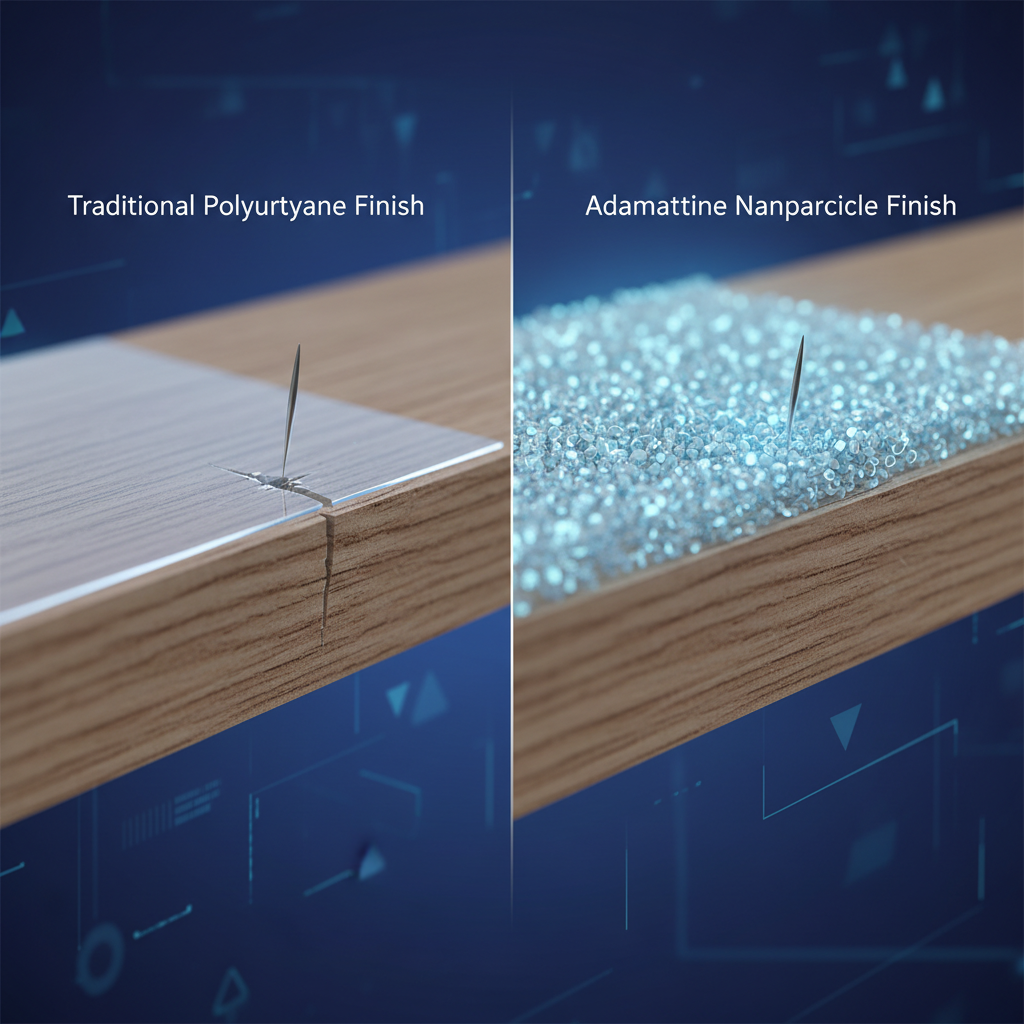
When comparing a standard polyurethane finish to an Adamantine aluminum oxide finish, the metrics are stark. Standard finishes sit on top of the wood and can be easily gouged by dog claws or dropped items. Adamantine’s nanoparticle finish actually bonds with the cellular structure of the wood veneer, supported by a rigid hybrid core that prevents the wood from compressing under impact. This combination creates a floor that is virtually impervious to the micro-scratches that dull traditional hardwood over time.
Choosing the Best Warp and Gapping Resistant Floors for Your Climate
Selecting warp resistant flooring requires matching the material to your specific environmental challenges. What works in a dry, high-altitude cabin will not necessarily survive in a humid, coastal home.
For maximum climate resilience, experts recommend using regionally grown hardwood species (like White Oak in North America) over exotic woods. Exotic species often struggle to adapt to the drastic seasonal swings of North American climates, whereas domestic species are naturally acclimated to these variations [7].
If you live in a highly volatile climate, water-resistant engineered hardwood is an excellent choice, but it has its optimal zones. Data shows that water-resistant engineered hardwood performs best in environments with low humidity, specifically less than 50% [8]. For environments with constant, high humidity (like bathrooms or tropical climates), inorganic cores like Stone Polymer Composite (SPC) or Luxury Vinyl Plank (LVP) are the best flooring to prevent gapping and warping, as they are entirely immune to hygroscopic expansion.
Expert Diagnostics and Triage: How to Fix Gapping and Warping
When flooring failures occur, knowing how to stop floors from warping further—and knowing when to call a professional—can save you thousands of dollars. The most critical rule of water damage triage is to never rush a repair. Experts advise strongly against premature sanding of cupped floors before the moisture source is 100% resolved and the wood has returned to its normal EMC. Sanding a wet, cupped floor flat will result in crowning once the wood eventually dries and shrinks.
Similarly, for new installations, patience is mandatory. A major cause of warping in newly built homes is residual moisture in the foundation. Always adhere to the 30-60 day concrete curing rule for subfloors to prevent moisture warping in new installations.
DIY Fixes for Floating Floor Gaps
If you are experiencing minor floorboard gapping issues with a floating floor (like laminate or LVP), you can often close the gaps safely yourself.
Step-by-Step DIY Floor Gap Fixer Tutorial:
- Ensure the floor is clean and free of debris inside the gap.
- Purchase a specialized floor gap fixer tool (a heavy-duty suction cup block) or use a block of wood with double-sided heavy-duty carpet tape.
- Adhere the suction cup or taped block to the plank that needs to move, positioning it near the gap.
- Using a rubber mallet, gently tap the block in the direction of the gap until the locking mechanism clicks back together.
- Work your way down the floor, moving the gap toward the perimeter baseboard where it will be hidden by the expansion space.
Crucial Distinction: This method is strictly for floating floors. Attempting to physically force glued or nailed-down hardwood to move will cause severe damage to the planks and the subfloor.
Water Damage Triage: Mitigation vs. Replacement
If your warped engineered hardwood has suffered localized water damage, immediate mitigation is key. Dry the area immediately with towels, set up high-capacity dehumidifiers, and use fans to circulate air across the surface.
For very minor, localized swelling on the edges of engineered planks, some homeowners attempt the iron and damp cloth method. This involves placing a slightly damp cotton cloth over the swollen seam and applying a household iron on a medium setting for a few seconds to reactivate the glues and compress the fibers. Warning:: This carries significant risks. It can easily delaminate thin veneers (under 2mm) or scorch the finish.
For anything beyond a minor surface spill, or if you are experiencing active buckling, you must emphasize the absolute necessity of professional moisture readings before attempting major repairs or filing insurance claims [9]. A certified professional can map the moisture beneath the floor to find hidden appliance leaks and determine if the floor can be salvaged or requires full replacement.
Pre-Installation Essentials: Acclimation and Subfloor Prep
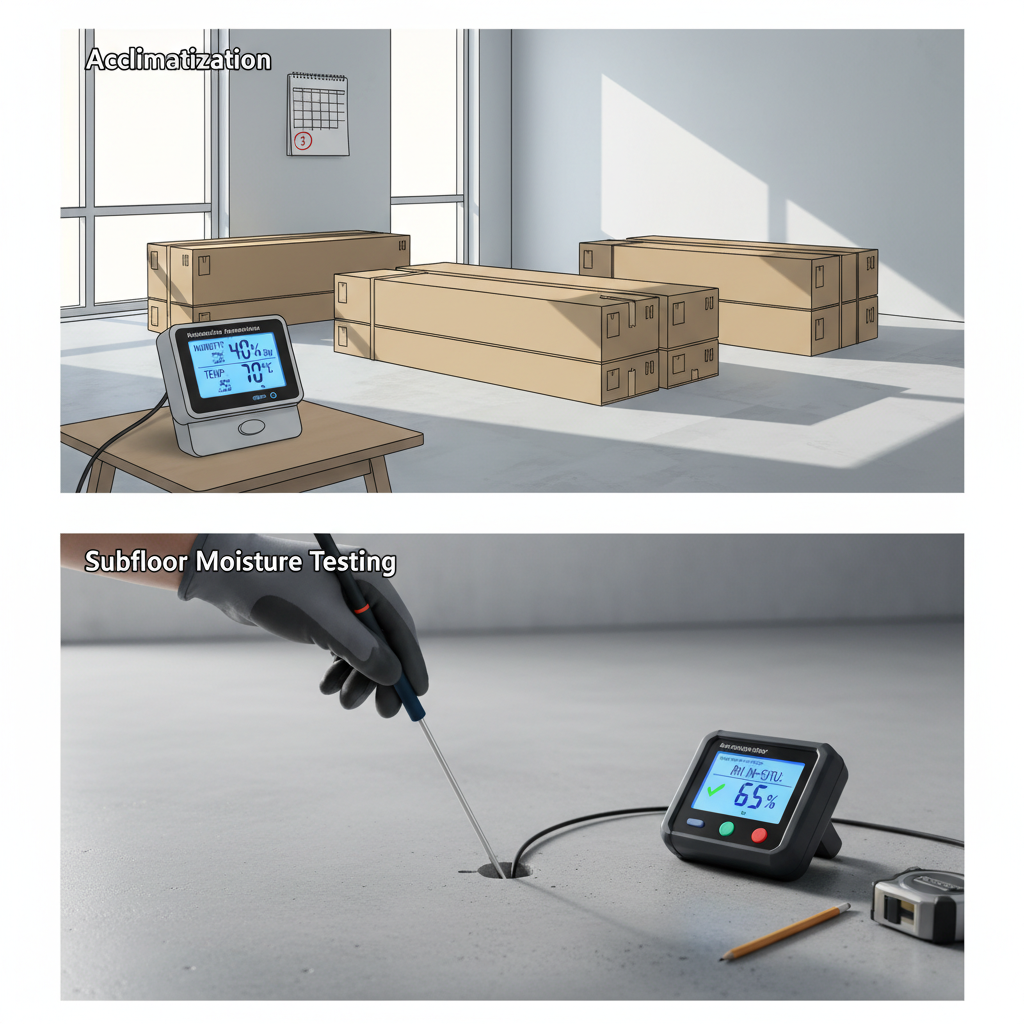
The secret to stable flooring is entirely dependent on what happens before a single plank is laid. Proper pre-installation protocols are the only way to guarantee long-term performance.
Acclimatization Guide:
Flooring must adapt to the specific EMC of your home. Based on general manufacturer specs, engineered wood should be left in its unopened boxes, laid flat in the room where it will be installed, for a minimum of 48 to 72 hours. The home’s HVAC system must be running at normal living conditions (60-80°F, 30-50% humidity) for at least five days prior to delivery.
Subfloor Moisture Testing:
You cannot guess if a subfloor is dry; you must measure it accurately. There is a significant difference between testing methods. Calcium chloride tests measure the moisture vapor emission rate emitting from the surface of a concrete slab, while relative humidity (RH) probes are inserted directly into the concrete to measure the moisture condition deep within the slab [10]. RH probes are widely considered the most accurate and reliable method for predicting how a concrete subfloor will interact with your new flooring over time.
Conclusion
Achieving a flawless, long-lasting floor requires looking beyond surface aesthetics and understanding the science of dimensional stability. By choosing the right core construction and wear layer for your specific climate—and by strictly adhering to acclimatization and expansion gap protocols—you can permanently conquer the headaches of seasonal gapping and moisture warping. If you demand the absolute pinnacle of scratch and dent resistance, investing in the ultra-durable nanotechnology of Adamantine flooring offers an unparalleled, generational solution.
Take control of your home’s environment today: invest in a high-quality digital hygrometer to monitor your indoor humidity, and always consult with a certified NWFA flooring professional before making your next major flooring purchase.
DIY Repair Disclaimer: The DIY repair methods discussed, particularly involving heat/moisture or structural adjustments, carry inherent risks. Always consult a certified flooring professional for severe buckling or water damage.
References and Authoritative Sources
- ASTM International. (N.D.). Standard Test Methods for Dimensional Stability of Floor Coverings. Retrieved from ASTM testing standards.
- National Wood Flooring Association (NWFA). (N.D.). Guidelines on Seasonal Gapping and Humidity Control.
- Lord Parquet. (N.D.). Manufacturing Standards and Bowing Tolerances.
- Consumer Reports. (N.D.). Unbiased Testing Data on Flooring Durability and Wear.
- Green Building Supply. (N.D.). Technical Details on Woodura Technology and Valinge 5G Dry Locking Systems.
- Adamantine.info. (N.D.). Direct Manufacturer Specifications and Proprietary Technology Details.
- Word of Mouth Floors. (N.D.). Expertise on Matching Wood Species to Regional Climates and Humidity Levels.
- Complete Flooring Solutions. (N.D.). Insights on Climate-Resilient Flooring Options.
- Parma Flooring / Infinity Floors. (N.D.). Expertise on Water Damage Restoration and Buckling Causes.
- Daltile. (N.D.). General Industry Installation Standards and Subfloor Moisture Limits.
