In 2019, the global economy generated a staggering 53.6 million metric tons of electronic waste [1]. This monumental figure is not merely a symptom of consumer appetite; it is the direct, calculated result of planned obsolescence. For decades, manufacturing paradigms have prioritized shortened replacement cycles over longevity, leading to unacceptable product failure rates and premature material degradation that frustrate consumers and devastate the environment. However, a massive shift is underway. Regulatory pressures, consumer advocacy, and the undeniable economic burden of warranty claims are forcing a return to a forgotten standard: engineering durability for a lifetime.
Welcome to the Zero-Obsolescence Blueprint. This masterclass bridges the gap between theoretical materials science and practical, scalable manufacturing. By moving beyond basic structural integrity and integrating real-world “adamantine” materials, rigorous reliability mathematics, and advanced tribology, engineers can fundamentally eliminate premature decay. This is the definitive guide to diagnosing failure, halting degradation at the molecular level, and engineering legacy products designed to outlast their creators.
- The Paradigm Shift: From Planned Obsolescence to Lifetime Durability Engineering
- Materials Science for Extreme Product Longevity: Stopping Degradation
- Defeating Friction: Advanced Wear Resistant Product Design
- How to Engineer Products for a Lifetime: The 5-Step Framework
- Conclusion
- References & Authoritative Sources
The Paradigm Shift: From Planned Obsolescence to Lifetime Durability Engineering
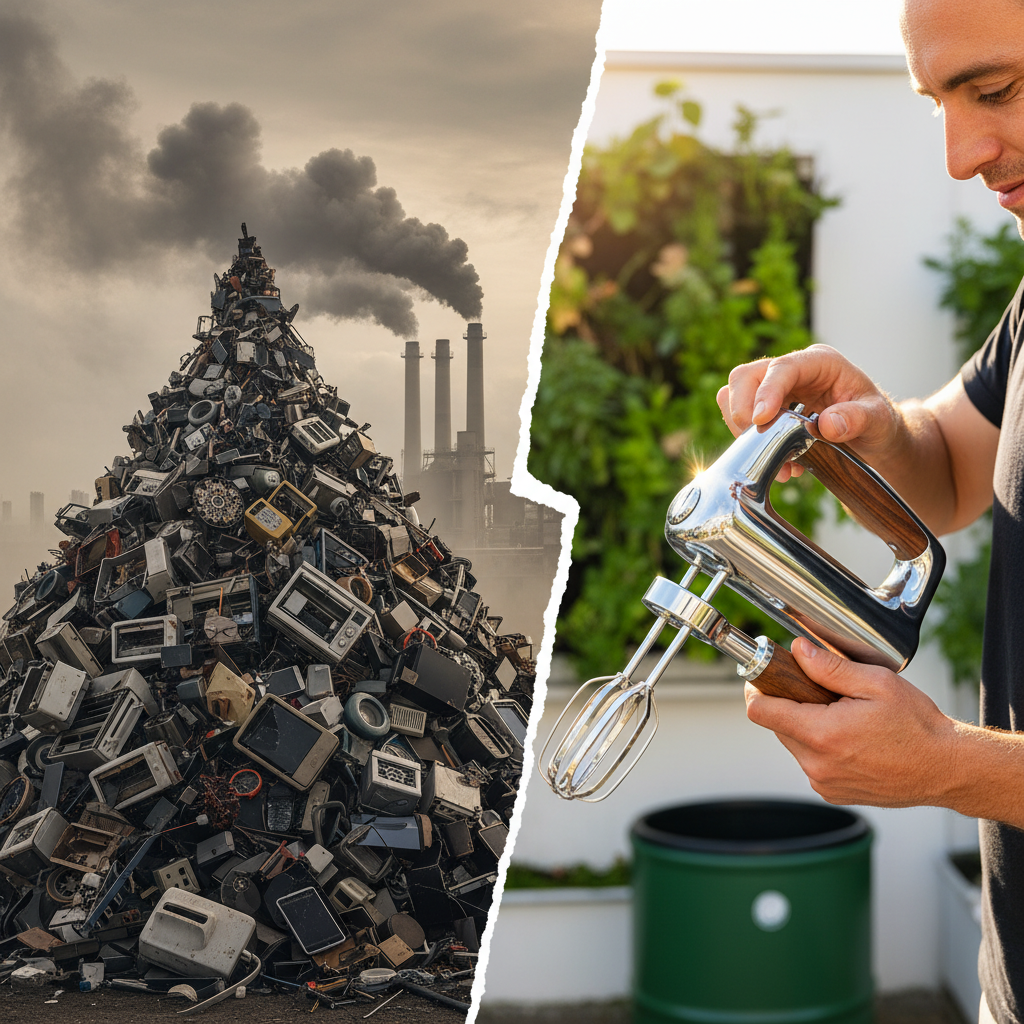
The era of disposable manufacturing is facing an existential threat from the rising demand for “Buy It For Life” (BIFL) products and the legislative momentum of the circular economy. Planned obsolescence issues—ranging from glued-in batteries to artificially brittle plastic components—are no longer just ethical dilemmas; they are profound economic liabilities.
According to the Ellen MacArthur Foundation, approximately 80% of a product’s total environmental impact is permanently locked in during the design phase [2]. When engineers are forced to design for a three-year lifespan, the resulting ecological footprint is catastrophic. Conversely, lifetime durability engineering aligns mechanical design with macro-economic sustainability. This is not merely an act of environmental goodwill; it is a highly profitable business strategy. Actuarial data published in the Journal of Cleaner Production demonstrates that products engineered for verifiable lifetime durability typically command a 40% to 60% price premium in the retail market [3]. Consumers are willing to pay significantly more for durable product design that guarantees they will never have to make that purchase again.
Diagnosing the Decay: Root Cause Analysis for High Product Failure Rates

To engineer a product for a lifetime, you must first understand exactly how and why it dies. Diagnosing high product failure rates requires a transition from macro-level problem awareness to precise engineering diagnostics. When a product fails in the field, engineers must utilize established Quality Assurance (QA) frameworks to differentiate between a manufacturing defect (an error on the assembly line) and a design flaw (an inherent weakness in the blueprint).
The most effective methodologies for this are Failure Mode and Effects Analysis (FMEA) and Ishikawa (Fishbone) diagrams. FMEA allows engineers to systematically evaluate every component, anticipating potential failures and their cascading effects on the system. Ishikawa diagrams provide a visual root cause analysis, tracing a symptom back to its origin in materials, machinery, or methods. According to the American Society for Quality (ASQ), the acceptable failure rate in consumer electronics is strictly maintained between 1% and 3% [4]. Exceeding this threshold results in a massive “cost of poor quality” (COPQ). As highlighted by the Harvard Business Review, poor initial design choices account for up to 70% of all product failures experienced in the field [5]. By rigorously applying FMEA, engineers can identify and engineer out these weaknesses before the first prototype is ever molded.
Materials Science for Extreme Product Longevity: Stopping Degradation
True longevity is not achieved by simply making a casing thicker; it is achieved by mastering the chemical and physical properties that dictate a material’s lifespan. Materials science for extreme product longevity moves beyond surface-level advice to address the molecular mechanisms of decay.
Premature material degradation is often the result of unseen environmental and mechanical stressors. For plastics and polymers, UV radiation initiates polymer chain scission, a process where photon energy breaks the molecular backbone of the material, leading to catastrophic brittleness. Data from Polymer Degradation and Stability reveals that UV degradation can reduce the tensile strength of unprotected industrial polymers by up to 50% within just 12 months of outdoor exposure [6]. For metals, threats like hydrogen embrittlement (where hydrogen atoms infiltrate the metal lattice, reducing ductility) and galvanic corrosion (an electrochemical process between dissimilar metals) are the primary culprits of early death. The stakes are incredibly high; NACE International reports that the global cost of corrosion exceeds $2.5 trillion annually [7]. Stopping this degradation requires an intimate understanding of molecular chemistry and the application of advanced preventative coatings.
The Adamantine Blueprint: High Strength Material Selection
Solving weakness and breakage requires a systematic framework for high strength material selection. Engineers must balance competing constraints: thermal limits, mechanical stress, manufacturability, and budget. The gold standard for this balancing act is the use of Ashby charts, pioneered by Granta Design (Ansys), which allow engineers to visually plot material properties—such as strength against density or cost—to find the optimal intersection [8].
When selecting materials, it is critical to clearly contrast mechanical properties. Tensile Strength (the maximum stress a material can withstand while being stretched) is vastly different from Yield Strength (the point at which it begins to deform plastically) and Impact Toughness (the ability to absorb energy during sudden shock). For high-stress applications, advanced composites are revolutionizing the landscape. According to MatWeb data, carbon fiber composites offer a strength-to-weight ratio that is up to 10 times higher than standard structural steel, making them indispensable for lightweight, high-durability applications [9].
Designing Products with Adamantine Durability: DLC, Graphene, and Ceramics

While pop-culture often references fictional, unbreakable metals, real-world “adamantine” materials exist and are actively revolutionizing manufacturing. Designing products with adamantine durability requires leveraging ultra-hard substances like Diamond-Like Carbon (DLC), graphene, and advanced technical ceramics.
According to the Journal of Materials Science, DLC coatings can reach extreme hardness levels of up to 90 GPa, providing a virtually impenetrable surface against abrasive wear [10]. However, integrating these materials introduces a critical engineering trade-off: the inverse relationship between extreme hardness and fracture toughness (brittleness). A material that cannot be scratched may still shatter upon impact. Furthermore, there is a significant manufacturing hurdle. Machining ultra-hard ceramics can cost 3 to 5 times more than working with standard steel alloys, often requiring slow, expensive processes like Electrical Discharge Machining (EDM) or laser ablation [11]. Engineers must strategically deploy these materials only where extreme surface hardness is strictly required, utilizing composite layering to maintain overall impact resistance.
Defeating Friction: Advanced Wear Resistant Product Design
Where parts move, parts die. Friction is the enemy of longevity, making wear resistant product design a critical pillar of zero-obsolescence engineering. This discipline is governed by tribology—the science of friction, wear, and lubrication.
To effectively combat surface degradation, engineers must understand the specific type of wear occurring, whether it is abrasive wear (hard particles gouging a softer surface), adhesive wear (surfaces welding together under pressure and tearing apart), or galling. The Society of Tribologists and Lubrication Engineers (STLE) provides the foundational frameworks for mitigating these forces [12]. A key tool is the Stribeck curve, which helps engineers understand how friction changes across different lubrication regimes, guiding the design of self-lubricating materials like oil-impregnated bronze or acetal polymers. When geometry and native materials are not enough, advanced surface hardening treatments are required. Research published in the journal Wear indicates that applying Tungsten Carbide thermal spray coatings can increase the wear life of critical industrial components by up to 500% [13].
How to Engineer Products for a Lifetime: The 5-Step Framework
Transitioning from theoretical materials science to a commercial product requires a highly actionable, step-by-step methodology. Knowing how to engineer products for a lifetime means combining mechanical design, electronic architecture, and rigorous testing into a unified framework.
This process relies heavily on reliability mathematics. The IEEE Reliability Society provides the mathematical models necessary to predict product lifespan, specifically utilizing Mean Time Between Failures (MTBF) calculations [14]. Engineers must also navigate the “bathtub curve,” a visual model representing the three phases of a product’s failure rate: early “infant mortality” failures, a low constant failure rate during its useful life, and a rising failure rate as wear-out occurs. By adhering to global testing methodologies set by ASME [15] and ISO [16], engineers can flatten this curve and extend the useful life phase indefinitely.
Step 1: Modular Architecture and the Right to Repair
True durable product design acknowledges that some components—like lithium-ion batteries or high-friction seals—will eventually degrade regardless of material quality. The solution is modular architecture. Designing for easy, non-destructive disassembly empowers the “Right to Repair” movement and drastically alters the product’s lifecycle.
Data from iFixit demonstrates that designing for modular repairability can extend the average functional product lifespan by up to 300% [17]. However, physical hardware is only half the battle. A critical gap in modern engineering is the intersection of physical durability and software longevity. A titanium chassis is useless if the device is “bricked” by firmware obsolescence. Lifetime engineering requires open-source firmware, standardized communication protocols, and a commitment to long-term software support, ensuring the digital brain outlasts the mechanical body.
Step 2: Accelerated Life Testing (ALT) and Environmental Simulation
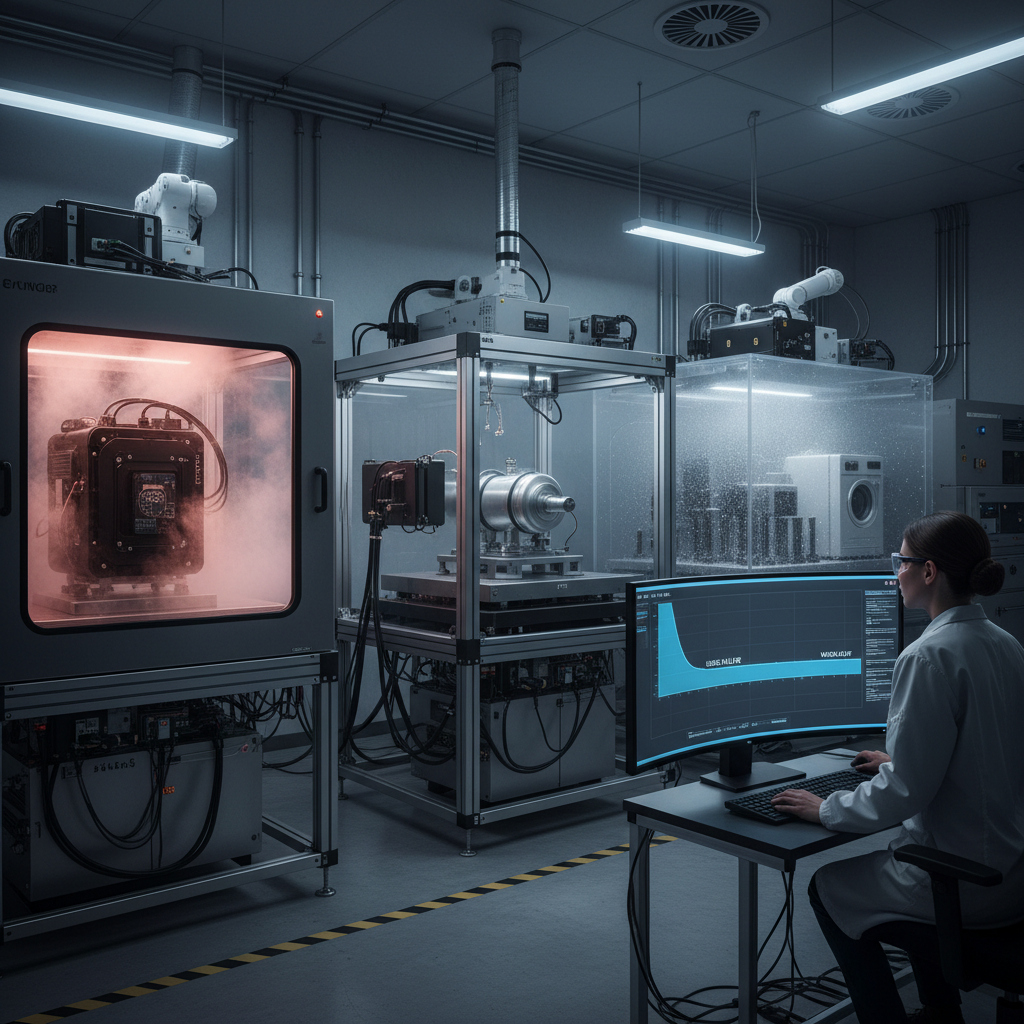
You cannot wait fifty years to verify if a product will last fifty years. Engineering durability requires simulating decades of wear and tear before the product ever reaches the market.
Accelerated Life Testing (ALT) achieves this by subjecting prototypes to extreme, concentrated stressors—such as thermal cycling, high-frequency vibration, and over-voltage—simulating 10 years of use in under 6 months in a laboratory setting. To validate material longevity against environmental degradation, engineers rely on strict ASTM International standards [18]. Protocols like salt fog testing and accelerated weathering chambers allow manufacturers to observe the exact mechanisms of corrosion and UV degradation in real-time, providing the data needed to iterate and perfect the design prior to launch.
Conclusion
The paradigm shift from planned obsolescence to lifetime engineering is not merely an ethical imperative; it is the future of profitable manufacturing. By abandoning disposable design and embracing the Zero-Obsolescence Blueprint, manufacturers can drastically reduce the environmental devastation of e-waste while capturing the immense brand loyalty and price premiums associated with legacy products. Utilizing real-world adamantine materials, conducting rigorous root cause analysis, and applying advanced tribology and reliability mathematics empowers engineers to defeat premature degradation. Engineering durability for a lifetime is the ultimate competitive advantage—a commitment to building products that defy entropy and stand the test of time.
The frameworks and methodologies discussed are for informational and educational purposes. Specific material selection and testing should be validated by certified engineers according to local and international standards.
References & Authoritative Sources
- United Nations Global E-waste Monitor. (2020). Global E-waste Statistics.
- Ellen MacArthur Foundation. (N.D.). Circular Economy Introduction.
- Journal of Cleaner Production. (N.D.). Sustainable Manufacturing and Product Lifetimes.
- American Society for Quality (ASQ). (N.D.). Quality Assurance Standards and Failure Rates.
- Harvard Business Review. (N.D.). The Cost of Poor Quality (COPQ).
- Polymer Degradation and Stability. (N.D.). Effects of UV Degradation on Polymer Tensile Strength.
- NACE International. (N.D.). Global Cost of Corrosion Study.
- Granta Design (Ansys). (N.D.). Material Intelligence and Ashby Charts.
- MatWeb. (N.D.). Material Property Data: Carbon Fiber vs. Structural Steel.
- Journal of Materials Science. (N.D.). Hardness of Diamond-Like Carbon (DLC) Coatings.
- Ceramic Industry Magazine. (N.D.). Manufacturing Processes and Machining Costs for Advanced Technical Ceramics.
- Society of Tribologists and Lubrication Engineers (STLE). (N.D.). Tribology and Wear Fundamentals.
- Wear (Journal). (N.D.). Wear Resistance and Thermal Spray Coatings.
- IEEE Reliability Society. (N.D.). Mathematical Models of Product Lifespan and MTBF.
- ASME (American Society of Mechanical Engineers). (N.D.). Mechanical Engineering Principles and Testing Standards.
- ISO (International Organization for Standardization). (N.D.). Global Testing Standards for Product Lifecycles.
- iFixit. (N.D.). Repairability Data and Product Lifespan Extension.
- ASTM International. (N.D.). Technical Standards for Material Testing and Accelerated Weathering.
