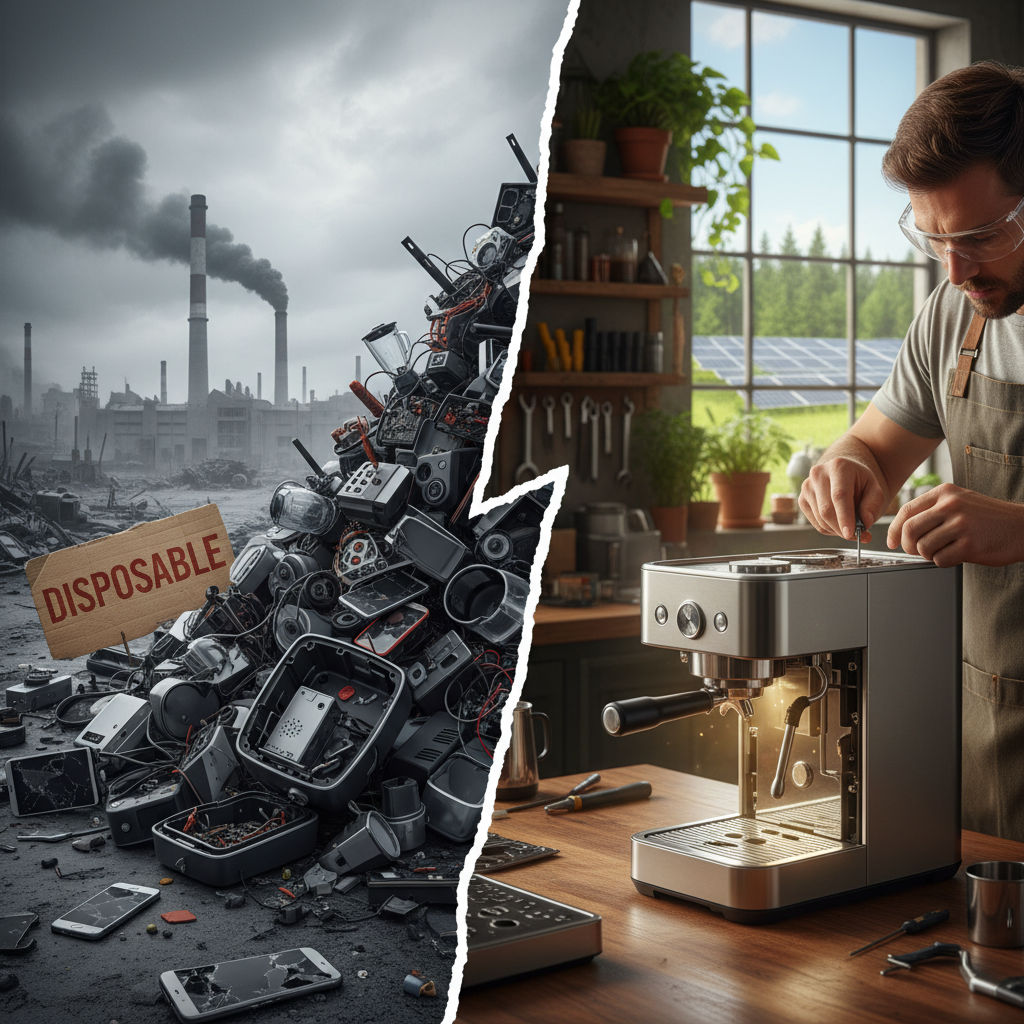
The modern manufacturing landscape is haunted by a staggering financial and environmental ghost: premature product failure. For decades, the industry standard leaned heavily on planned obsolescence—a model designed to ensure repeat purchases through deliberate, eventual breakdown. However, a paradigm shift is underway. Driven by consumer frustration, mounting environmental crises, and stringent new legislation, the world’s most innovative manufacturers are pivoting toward a new gold standard: The Adamantine Advantage.
This concept, rooted in the pursuit of “The Unbreakable Paradigm,” is a definitive blueprint for modern manufacturers. It bridges the gap between cutting-edge advanced material science, predictive AI (such as the Adamantine 1.0 simulator), and emotionally resilient design. By abandoning legacy models of obsolescence, forward-thinking companies are discovering that engineering lifetime durability is no longer just an environmental imperative; it is a highly profitable, brand-defining asset. This guide provides a comprehensive roadmap to mastering durable engineering, from the molecular selection of high-strength alloys to the psychological nuances of slow design.
- The Evolution of Durable Engineering: Overcoming Planned Obsolescence
- Advanced Material Science: The Building Blocks of ‘Adamantine’ Products
- Predictive Engineering: Preventing Premature Product Failure
- The Unbreakable Paradigm: Designing Highly Durable Consumer Products
- Implementing Lifetime Durability Standards and Proving ROI
- Conclusion
- References
The Evolution of Durable Engineering: Overcoming Planned Obsolescence
The transition from disposable consumer goods to lifetime assets requires a fundamental reimagining of durable engineering. Historically, overcoming planned obsolescence was viewed as a threat to recurring revenue. Today, it is a legal and ethical necessity. Recent specific legislative victories in the European Union and the United States regarding the “right to repair” have forced manufacturers to open their ecosystems, making repairability a legal requirement rather than a consumer luxury.
This legislative push aligns with the economic philosophies championed by organizations like the Center for the Advancement of the Steady State Economy (CASSE), which advocates for sustainable economic practices over infinite, wasteful consumption [1]. To meet these new societal and legal demands, engineers are returning to foundational principles, relying heavily on IEEE reliability standards [2] and comprehensive guidelines from the American Society of Mechanical Engineers (ASME) [3] to establish a baseline for true mechanical longevity.
Planned vs. Perceived Obsolescence in Modern Manufacturing
To effectively engineer for a lifetime, manufacturers must first understand the enemy. Obsolescence comes in two primary forms: planned and perceived. Planned obsolescence is the deliberate mechanical shortening of a product’s lifespan—using inferior gears, non-replaceable batteries, or thermal bottlenecks that guarantee failure. Perceived obsolescence, conversely, is psychological. It relies on micro-trends and cosmetic updates to make a perfectly functional product feel outdated.
Overcoming planned obsolescence requires battling organizational inertia. Legacy companies often struggle to pivot because their entire supply chain is optimized for high-volume, low-durability output. To combat this, industry experts like Rebound Electronics recommend implementing a formal “Obsolescence Management Strategy” [4]. This proactive supply chain framework ensures that long-lasting products can be supported with replacement parts for decades, rather than abandoning users the moment a component ceases mass production.
The Economics of Lifetime Durability
The primary business objection to lifetime durability is the fear of market saturation: if a product never breaks, how does a company survive? The answer lies in the economics of circularity. By shifting from a purely transactional model to “durability-as-a-service,” companies can remain highly profitable.
Circular economy think tanks, such as the Ellen MacArthur Foundation, have extensively validated the profitability of circular lifecycles [5]. Brands that embrace “Buy It For Life” (BIFL) models—such as Patagonia—prove that consumers are willing to pay a premium for guaranteed longevity. These companies generate ongoing revenue through certified repair programs, modular upgrades, and the immense brand loyalty that lifetime warranties cultivate.
Advanced Material Science: The Building Blocks of ‘Adamantine’ Products
Engineering unbreakable product designs begins at the molecular level. Advanced material science is the critical foundation of the Adamantine Advantage, translating dense academic breakthroughs into actionable, ROI-focused insights for commercial product developers.
Research from top-tier institutions, including the MIT Department of Materials Science and Engineering, is continuously pushing the boundaries of what is physically possible [6]. Furthermore, peer-reviewed studies published in Nature Materials highlight the commercial viability of smart polymers, self-healing materials, and programmable matter, which can autonomously repair micro-fissures before they lead to catastrophic failure [7].
High-Strength Material Solutions for Extreme Environments
For industrial applications requiring extreme durability and lightweight properties, standard materials are insufficient. Engineers must turn to high-strength material solutions. Aerospace-grade titanium alloys, Strenx® performance steel, and ultrahigh molar mass polyethylene fibers represent the pinnacle of structural resilience.
However, even these materials are subject to degradation over time. The National Institute of Standards and Technology (NIST) Security Technologies Group has conducted vital research on the environmental aging of high-strength fibers, proving that understanding structure-property relationships is essential for long-term deployment [8]. By utilizing advanced manufacturing processes like Titanium Alloy Injection Molding, manufacturers can scale these aerospace-grade materials into consumer and commercial products with unprecedented precision and cost-effectiveness.
Synthetic Diamonds and Adamantine Materials

The term “adamantine” historically refers to mythical, unbreakable substances, but modern manufacturing has made it a reality. Adamantine materials in modern manufacturing bridge the gap between theoretical concepts and cutting-edge industrial applications.
One of the most profound breakthroughs is the use of synthetic diamonds. Research from the Lawrence Berkeley National Laboratory regarding nanomaterials like boron-nitride nanotubes has paved the way for utilizing ultra-hard structures in everyday technology [9]. Industry specialists like Diamond Quanta are currently leveraging synthetic diamonds not just for their physical hardness, but for their unparalleled thermal management capabilities in high-speed electronics, effectively eliminating heat-induced degradation [10].
Predictive Engineering: Preventing Premature Product Failure
While selecting the right physical materials is crucial, true lifetime durability is achieved before a single prototype is manufactured. Predictive engineering shifts the focus from physical stress testing to digital methodologies, utilizing AI and digital twins to simulate decades of wear in a matter of hours. As licensed mechanical engineers (PE) frequently note in ASME reliability forums, the transition from destructive physical testing to digital simulation is revolutionary, allowing teams to identify microscopic failure points preemptively [3].
AI, IoT, and the Adamantine 1.0 Thermomechanical Simulator
The integration of AI into manufacturing has given rise to highly specialized software capable of perfecting the physical printing of high-strength materials. A prime example is the Adamantine 1.0 thermomechanical simulator.

Documented in the Journal of Open Source Software (JOSS) by Turcksin & DeWitt, Adamantine 1.0 uses advanced data assimilation techniques to predict how materials will behave during the additive manufacturing process [11]. By simulating thermal gradients and mechanical stress during printing, engineers can eliminate internal flaws that would otherwise cause premature failure in the field.
Understanding and Mitigating Material Wear and Tear
To effectively prevent product death, engineers must distinguish between sudden “damage” (caused by accidents) and gradual “wear and tear.” Material wear and tear is the slow deterioration caused by friction, heat, and environmental exposure. According to industrial maintenance data, wear and tear causes more than 50 percent of the loss of performance in production machines [12].
Leading computerized maintenance management system (CMMS) providers like MaintainX emphasize the importance of categorizing exact wear mechanisms—Adhesive, Abrasive, Fretting, and Erosion—to apply the correct mitigations [12]. By pairing precise engineering terminology with modern solutions like chemical surface modification and advanced lubricants, manufacturers can drastically reduce fretting and surface weakening.
The Unbreakable Paradigm: Designing Highly Durable Consumer Products
Designing highly durable consumer products requires a holistic approach that goes beyond mere physical toughness. “The Unbreakable Paradigm” rests on three pillars: Physical Resilience, Modular Upgradability, and Emotional Durability.
The Ellen MacArthur Foundation’s guidelines on designing for physical durability dictate that products must be easily disassembled, repaired, and upgraded [5]. However, if a product outlasts the user’s desire to keep it, it still ends up in a landfill. Therefore, engineering unbreakable product designs means merging physical longevity with user psychology.
Emotional Durability and ‘Slow Design’

To prevent social and perceived obsolescence, designers must embrace “Psychologically Durable Design” and the principles of “Slow Design.” This involves creating products that users form deep, lasting attachments to.
Academic researchers such as Chapman (2016) and Haines-Gadd (2019), published in the Archives of Design Research (AODR), have extensively documented how emotional durability enhances a product’s perceived value over time [13]. Industry-recognized competitions like the Redress Design Award further validate this approach, showcasing how timeless aesthetics and user-centric narratives prevent products from being discarded simply because trends have changed [14].
Merging Metallurgical Toughness with Reversible Digital UX
An unbreakable product must be flawless in both the physical and digital realms. This requires merging metallurgical toughness with reversible digital User Experience (UX).
On the physical side, specialists like IMET LLC emphasize that selecting the exact microstructure for corrosion resistance and toughness is non-negotiable [15]. On the digital side, recognized UX authorities like Anton Badashov (Muzli) advocate for intuitive, reversible interfaces [16]. If a smart device features a physically indestructible titanium shell but is rendered useless by a permanent, accidental firmware error, the product has failed. Reversible UX ensures that user errors can always be undone, preventing digital obsolescence.
Implementing Lifetime Durability Standards and Proving ROI
The final step in the Adamantine Advantage is execution. Implementing lifetime durability standards requires rigorous testing protocols, adherence to eco-certifications, and proactive product management frameworks. By standardizing these practices, companies can definitively prove the financial and environmental Return on Investment (ROI) of longevity.
Organizations must look to strict environmental and durability standards, such as the Nordic Swan Ecolabel, which sets granular testing criteria for dimensional change, abrasion resistance, and material safety [17]. Adhering to these standards ensures that claims of lifetime durability are backed by empirical data.
The Agile ‘Pre-Mortem’: De-risking Product Launches
Preventing premature product failure starts in the boardroom. Before a product goes to market, teams should conduct an Agile “Pre-Mortem.”
Utilizing frameworks from authorities like Scrum.org, a Pre-Mortem involves assuming the product has already failed in the market and working backward to identify the root causes [18]. By combining this agile methodology with a rigorous “Pre-Launch Failure Prevention Checklist” and supply chain resilience strategies (like diversifying vendors), manufacturers can spot and eliminate fatal flaws before capital is heavily deployed.
Eco-Certifications and the ROI of Longevity
Ultimately, the shift to durable engineering must make financial sense. Hard data from life cycle assessments (LCAs) and global sustainability NGOs proves that it does.
According to WRAP (The Waste and Resources Action Programme), extending a product’s lifespan has massive economic and environmental benefits; for example, extending clothing lifespan by just nine months can reduce carbon, water, and waste footprints by 20%, saving £5 billion annually [19]. Furthermore, initiatives like the LITAC Durability Research Project are continuously setting new industry benchmarks, proving that implementing lifetime durability standards drastically reduces long-term manufacturing costs while securing a fiercely loyal customer base [20].
Conclusion
Lifetime durability is no longer a mythical concept relegated to the realms of theoretical science; it is a highly achievable, profitable engineering standard. The Unbreakable Paradigm proves that by uniting advanced “adamantine” materials, predictive AI simulators, and emotionally resonant design, manufacturers can create products that truly last a lifetime. Overcoming planned obsolescence is not a sacrifice—it is the ultimate competitive advantage in modern manufacturing. Product managers and engineers are encouraged to conduct a Pre-Mortem on their current flagship products using these principles, and to explore integrating predictive thermomechanical simulators into their very next R&D cycle.
Disclaimer: This article provides B2B informational content regarding engineering standards and legal compliance (e.g., Right-to-Repair laws) and should not be construed as formal legal or engineering certification advice.
References
- Center for the Advancement of the Steady State Economy (CASSE). (N.D.). Sustainable Economic Practices and the Steady State Economy. Retrieved from steadystate.org
- IEEE Xplore. (N.D.). IEEE Reliability Standards. Retrieved from ieee.org
- American Society of Mechanical Engineers (ASME). (N.D.). Engineering Standards, Guidelines, and Perspectives on Real-World Durability Testing. Retrieved from asme.org
- Rebound Electronics. (N.D.). Proactive Supply Chain and Electronic Obsolescence Management. Retrieved from reboundeu.com
- Ellen MacArthur Foundation. (N.D.). Circular Economy and Designing for Physical Durability. Retrieved from ellenmacarthurfoundation.org
- MIT Department of Materials Science and Engineering. (N.D.). Research in Material Innovation. Retrieved from dmse.mit.edu
- Nature Materials. (N.D.). Studies on Smart Polymers and Self-Healing Materials. Retrieved from nature.com/nmat
- National Institute of Standards and Technology (NIST) Security Technologies Group. (N.D.). Research on the Environmental Aging of High-Strength Fibers. Retrieved from nist.gov
- Lawrence Berkeley National Laboratory. (N.D.). Advanced Nanomaterial Research and Boron-Nitride Nanotubes. Retrieved from lbl.gov
- Diamond Quanta. (N.D.). Diamond-Based Thermal Management Solutions. Retrieved from diamondquanta.com
- Turcksin, B., & DeWitt, S. (N.D.). Adamantine 1.0: A Thermomechanical Simulator for Additive Manufacturing. Journal of Open Source Software (JOSS). Retrieved from theoj.org
- MaintainX. (N.D.). Industrial Maintenance Data and Wear Categorization. Retrieved from getmaintainx.com
- Chapman, J. (2016) & Haines-Gadd, M. (2019). Research on Emotionally Durable Design. Archives of Design Research (AODR). Retrieved from aodr.org
- Redress Design Award. (N.D.). Sustainable Fashion and Emotionally Durable Design Case Studies. Retrieved from redressdesignaward.com
- IMET LLC. (N.D.). Materials Engineering, Metallurgy, and Failure Analysis. Retrieved from imetllc.com
- Badashov, A. / Muzli. (N.D.). UX/UI Design Principles and Reversible Interfaces. Retrieved from medium.muz.li
- Nordic Swan Ecolabel. (N.D.). Environmental and Durability Standards Criteria. Retrieved from nordic-swan-ecolabel.org
- Scrum.org. (N.D.). Agile Product Development and the Pre-Mortem Framework. Retrieved from scrum.org
- WRAP (The Waste and Resources Action Programme). (N.D.). Durability Research and the ROI of Longevity. Retrieved from wrap.ngo
- LITAC. (N.D.). Durability Research Project Benchmarks. Retrieved from wrap.ngo/litac
