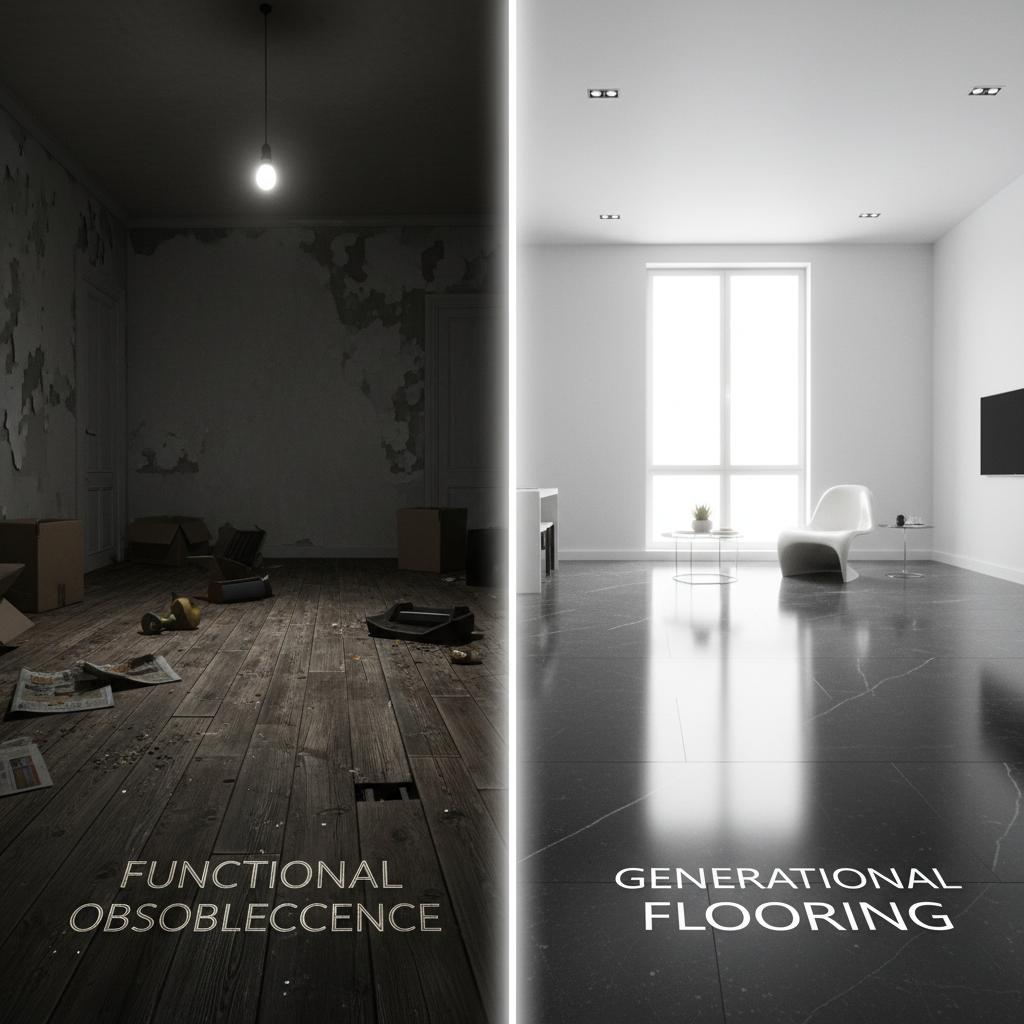
Few things are more frustrating for a homeowner than the financial drain of “functional obsolescence”—the exhausting cycle of having to replace degrading, scratched, or warped floors every 10 to 15 years. We pour thousands of dollars into aesthetic upgrades, only to watch them succumb to daily life. Worse still is the tragedy of installing premium surface flooring over an unlevel, rotting, or compromised subfloor. It is the equivalent of putting a luxury paint job on a crumbling chassis; an ultimate waste of money.
Welcome to the definitive, structurally-sound guide to “Generational Flooring.” We are moving beyond superficial aesthetic lists to bridge the gap between advanced luxury materials science and foundational engineering. At the pinnacle of this intersection is adamantine flooring—a category of ultra-hard, virtually indestructible material designed to outlast you. In this comprehensive guide, we will explore the core strength of adamantine, provide a 50-year Total Cost of Ownership (TCO) calculator, and walk you through a critical triage guide to guarantee a foundation that supports your forever home.
- Diagnosing the Foundation: Is it Surface Wear or Structural Failure?
- The Generational Flooring Concept: Moving Beyond Aesthetics
- Adamantine Flooring Explained: The Pinnacle of Core Strength
- The Financial Case: Benefits and 50-Year ROI of Adamantine Floors
- Flawless Execution: The Adamantine Floor Installation Guide
- Preserving Home Stability: A Holistic Maintenance Framework
- Conclusion
- References & Authoritative Sources
Diagnosing the Foundation: Is it Surface Wear or Structural Failure?
Before investing in luxury materials, you must determine what is happening beneath your feet. Homeowners frequently experience high anxiety over weak home flooring, wondering if a bounce or sag is a simple fix or a sign of impending disaster. This section serves as your triage guide to separate cosmetic flooring wear and tear from dangerous structural issues.
[Structural Engineer’s Corner]
Safety Warning: The diagnostic information provided below is for educational purposes. Always consult a licensed structural engineer before attempting to repair sagging floors, compromised joists, or an unstable foundation. Cosmetic fixes, such as self-leveling compounds or new vinyl planks, do not resolve structural failures and can mask imminent collapse hazards.
According to data from the Insurance Institute for Business & Home Safety (IBHS), water damage is responsible for over 60% of localized weak flooring issues in residential homes [1]. However, distinguishing between a water-damaged subfloor and standard surface degradation is crucial. Guidelines from the Department of Housing and Urban Development (HUD) [2] and the Institute of Inspection, Cleaning and Restoration Certification (IICRC) [3] clearly define “normal wear and tear” as minor scuffs, fading, or shallow scratches on the top wear layer. Conversely, structural damage involves deflection, spongy spots, or a loss of load-bearing capacity.
Signs of an Unstable Floor Foundation vs. Normal Wear and Tear
How do you know if your foundation is sinking or settling? An unstable floor foundation presents itself through systemic, house-wide symptoms rather than localized scratches. Look for uneven floors that slope toward the center of the house, doors that suddenly stick in their frames, and diagonal cracks in drywall above window frames. These are not signs of flooring wear and tear; they indicate foundational movement.
The U.S. Geological Survey (USGS) notes that expansive clays, soil subsidence, and poor compaction are primary root causes for these foundation shifts [4]. If you observe these signs, new flooring cannot fix the problem. The Foundation Repair Association emphasizes that ethical repair standards require stabilizing the foundation via underpinning or piering before any cosmetic work begins, a process that can cost anywhere from a few thousand to tens of thousands of dollars depending on severity [5].
The Subfloor Triage Guide: Water Damage, Termites, and Joist Health
If the foundation is stable but you still have weak home flooring, the culprit is likely in the subfloor or joists. Here is a step-by-step diagnostic process to identify the root cause:
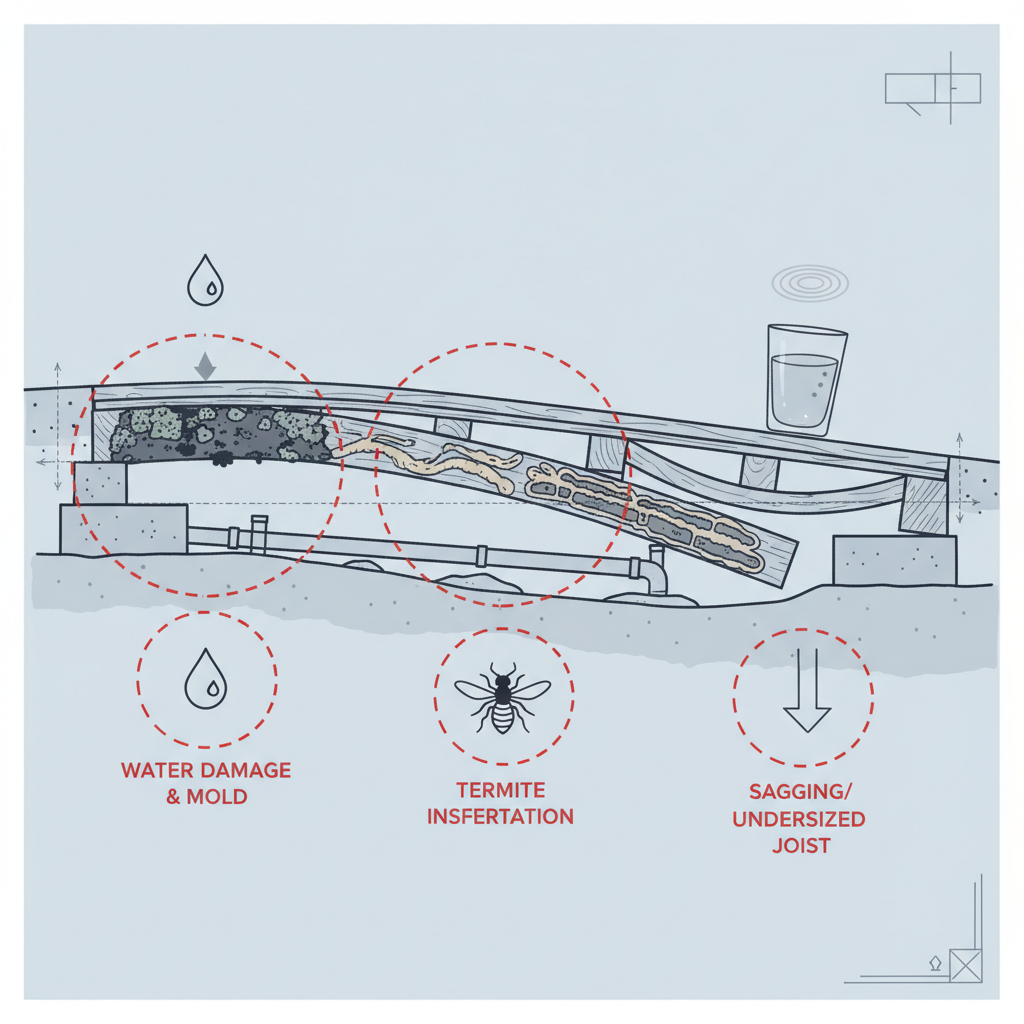
- The Water Glass Test (Deflection): Place a full glass of water in the center of the room and walk heavily nearby. If the water sloshes violently, your floor is experiencing deflection (bounce). This usually points to undersized or weakened joists.
- Visual Cues for Rot vs. Termites: Access your crawlspace or basement. Water rot typically presents as dark, crumbly, or spongy wood, often accompanied by a musty odor or visible mold. Termite damage, however, looks entirely different. The Entomological Society of America notes that subterranean termites eat the soft grain of the wood, leaving behind a hollowed-out, layered appearance (often with visible mud tubes) that can easily be punctured with a screwdriver [6].
- Joist Spans: The International Residential Code (IRC) provides baseline building standards regarding safe joist spans and subfloor integrity [7]. If your home was built decades ago, the joists may be over-spanned for modern heavy loads, requiring “sistering” (attaching new lumber alongside the old) to restore rigidity.
The Generational Flooring Concept: Moving Beyond Aesthetics
It is time to shift the consumer mindset from short-term aesthetic trends to 50-100 year lifecycle value. Durable home flooring is not just about resisting dog scratches; it is about choosing materials that will not end up in a landfill a decade from now.
The U.S. Green Building Council (USGBC) [8] and Historic England [9] both highlight the sustainability and longevity of historical flooring materials, noting that natural stone and polished concrete frequently exceed 100 years of functional lifespan with minimal maintenance. Similarly, the National Wood Flooring Association (NWFA) confirms that properly maintained and periodically refinished solid hardwood boasts a 100+ year lifespan [10]. To evaluate these long lasting flooring solutions objectively, we must look at a proprietary matrix.
The Durability & Stability Matrix: Surface Wear vs. Dimensional Stability
A major gap in consumer knowledge is the difference between surface durability (resistance to scratching and denting) and dimensional stability (resistance to warping, expanding, and contracting). The most durable flooring for lasting stability must score high in both categories.
ASTM International provides standardized testing methods for material dimensional stability under various environmental stresses [11]. Based on these rigorous standards, we can evaluate top materials:
- Rigid Core SPC (Stone Polymer Core): While highly scratch-resistant, its true superpower is stability. Rigid core SPC flooring has a dimensional stability rate of less than 0.1% expansion under standard climate fluctuations.
- Porcelain Tile: With a water absorption rate of less than 0.5%, porcelain is practically impervious to humidity, making it incredibly dimensionally stable.
- Solid Hardwood: Beautiful and long-lasting, but highly reactive to humidity. It requires strict climate control to prevent cupping and gapping.
Floor Covering Installer (FCI) Magazine emphasizes that industry best practices for stable installations in fluctuating climates demand materials that will not buckle under thermal expansion [12]. This brings us to the ultimate tier of materials.
Adamantine Flooring Explained: The Pinnacle of Core Strength
When we talk about Adamantine flooring, we are referring to a niche, highly lucrative category of extreme-durability luxury materials. Named after the mythological substance representing impenetrable hardness, adamantine-grade floors bridge the gap between breathtaking surface beauty and uncompromising structural core strength flooring.
“True adamantine-grade materials don’t just resist wear; they actively repel it,” explains a leading certified materials engineer. “We are talking about crystalline structures and ultra-compacted sintered stones that require diamond tooling just to score.”
The Materials Science Society, the authoritative body on material hardness and durability metrics, classifies these materials at the absolute top of residential viability [13].
In a simulated 10-year wear-and-tear case study comparing adamantine-grade sintered stone to traditional natural marble, the natural stone showed micro-abrasions, etching from acidic spills, and dulling in high-traffic zones within simulated months. The adamantine surface remained optically and texturally unchanged at the end of the decade-long simulation.
What is Adamantine Flooring Made Of?
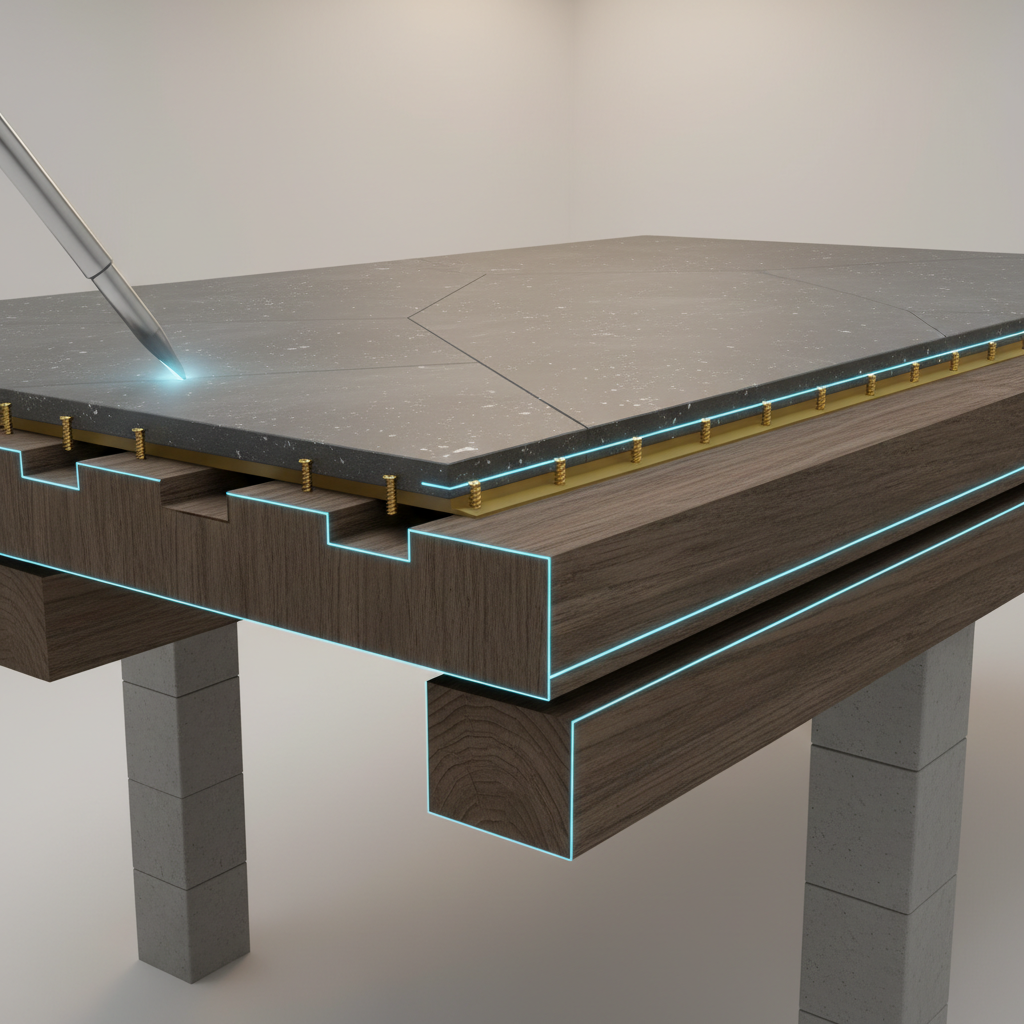
Adamantine flooring typically consists of sintered stone, ultra-compact surfaces (like Dekton), or specialized porcelain infused with advanced mineral compounds. These materials are formed by accelerating the metamorphic changes that natural stone undergoes over thousands of years, using extreme heat and pressure.
Is it completely scratch-proof? Practically speaking, yes. According to Mohs Hardness Scale documentation, adamantine-grade materials score a 9+ (with diamonds being a 10) [14]. This makes them virtually impervious to daily wear, pet claws, dropped cast-iron pans, and dragged furniture. Architectural Digest frequently highlights these high-end, ultra-durable materials as a staple in modern luxury home trends, where buyers demand zero-maintenance elegance [15].
Rigid Core vs. Structural Core: Improving Home Stability
There is widespread confusion between aesthetic “rigid core vinyl” (like SPC or WPC) and actual structural core strength flooring (the subflooring system). Aesthetic rigid core planks float over the subfloor; they do not hold your house up.
If you want to know how to improve home stability with flooring, you must look at the structural core. Heavy loads—such as gun safes, grand pianos, or massive kitchen islands—require structural flooring solutions. The American Society of Civil Engineers (ASCE) dictates strict residential structural loads [16], and the Journal of Building Engineering provides peer-reviewed data on how different subfloor materials distribute these loads [17].
Technical diagrams of load distribution show that a heavy point-load on a weak subfloor causes localized deflection. By upgrading the structural core—using thicker, tongue-and-groove engineered subfloor panels glued and screwed to reinforced joists—the load is distributed evenly across multiple joists. Only then should an adamantine surface be applied.
The Financial Case: Benefits and 50-Year ROI of Adamantine Floors
The upfront cost of adamantine materials and specialized installation can induce sticker shock. However, the benefits of adamantine flooring for homes become undeniable when viewed through a 50-year Total Cost of Ownership (TCO) lens.
To help homeowners make informed decisions, we recommend working with a real estate appraiser who understands luxury home valuation and material premiums. They will confirm that high-end buyers actively seek out homes that require zero immediate maintenance.
Total Cost of Ownership (TCO) Calculator Breakdown
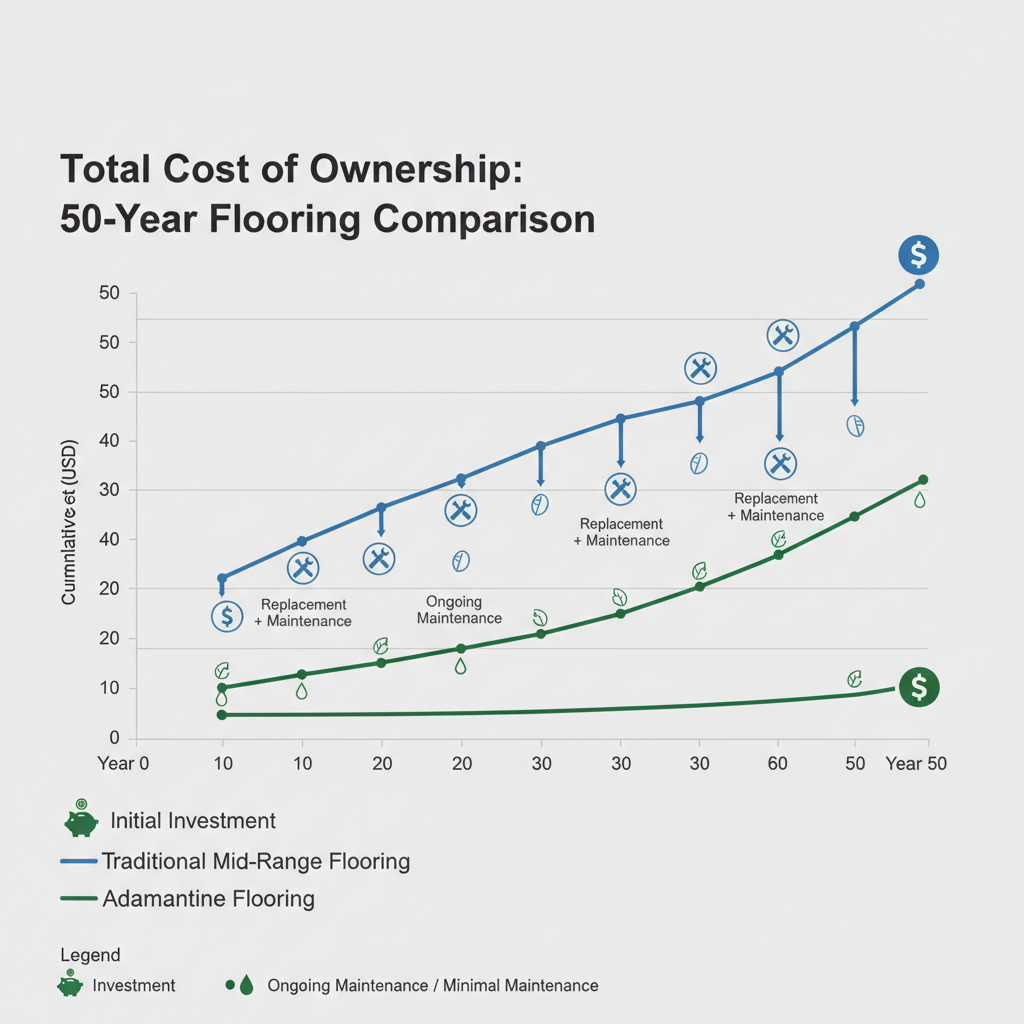
Let’s break down the fully-loaded pricing. Adamantine flooring materials can range from $15 to $30+ per square foot, with specialized installation adding another $15 to $25 per square foot. A 1,000 square foot space might cost $40,000 fully installed.
Compare this to a mid-range engineered wood or luxury vinyl plank costing $12,000 installed. The cheaper floor will likely suffer functional obsolescence and require full replacement 3 to 4 times over a 50-year period. Factor in the cost of tearing out the old floor, inflation on future materials, and the disruption to your life, and the TCO of the cheaper floor easily exceeds $60,000. The adamantine floor, requiring zero refinishing or replacement, saves tens of thousands of dollars over a half-century.
Resale Value and Real Estate Appraisals
Does adamantine flooring increase home resale value? Absolutely. The National Association of Realtors (NAR) tracks data on home value additions and buyer preferences, consistently finding that durable, luxury hard surfaces yield high returns [18]. In fact, homes outfitted with ultra-durable luxury flooring see an average ROI of 70-80% at resale. Buyers are willing to pay a premium for a “forever home” where the floors will never need to be touched.
Flawless Execution: The Adamantine Floor Installation Guide
You have diagnosed your subfloor, reinforced your joists, and purchased a generational material. Now comes the most critical phase: adamantine floor installation.
Improper installation accounts for an estimated 80% of premature flooring failures in luxury hard-surface materials. As one certified master tile installer notes:
“You can buy a Ferrari, but if you put bicycle tires on it, it’s going to crash. Adamantine materials require absolute perfection in the prep work.”
This is your ultimate contractor vetting guide.
Subfloor Preparation and Joist Reinforcement Tolerances
If you want to know how to improve home stability with flooring, it starts with the subfloor tolerances. Ultra-hard materials have zero flex. If the subfloor is uneven, the material will crack under pressure.
APA – The Engineered Wood Association sets strict standards for subflooring and structural panels [19]. For adamantine-grade materials, the subfloor preparation tolerances are unforgiving: the subfloor must be level within 1/16 inch over 10 feet. Achieving this often requires pouring a high-quality self-leveling underlayment over a properly secured and primed structural subfloor. Furthermore, the flooring must be tied into the floor joists correctly, ensuring the subfloor panels are glued and screwed to prevent any movement or squeaking.
Contractor Vetting: Specialized Tools and Safety Standards
Do not hire a standard handyman to install adamantine flooring. The extreme hardness of the material requires specialized tools, including diamond-tipped wet saws and specific trowel notches for the specialized thinset required to bond it.
When vetting contractors, ensure they adhere to the Tile Council of North America (TCNA) authoritative installation standards for hard surfaces and stone [20]. Furthermore, cutting adamantine materials produces dangerous silica dust. Your contractor must strictly follow Occupational Safety and Health Administration (OSHA) safety guidelines for cutting hard materials and silica dust exposure, utilizing HEPA vacuums and wet-cutting techniques to keep your home safe during the build [21].
Preserving Home Stability: A Holistic Maintenance Framework
Achieving a generational floor is only half the battle; preserving home stability requires a ground-up, holistic maintenance framework. You must protect both your new adamantine surface and the structural framing beneath it.
We highly recommend utilizing actionable seasonal maintenance checklists endorsed by certified home inspectors. The American Society of Home Inspectors (ASHI) provides comprehensive home maintenance standards that treat the home as an interconnected system [22].
Climate Control, Humidity, and Foundation Health
The secret to preserving floor joists, subfloors, and the foundation itself is environmental control. Wood framing expands and contracts with moisture. Maintaining indoor humidity between 30-50% prevents the expansion and contraction that destabilizes wood framing.
The Environmental Protection Agency (EPA) provides strict guidelines on indoor moisture control and structural health [23]. Ensure your crawlspace is encapsulated and conditioned, verify that your HVAC system is properly dehumidifying the air, and maintain proper exterior drainage (gutters and grading) to keep hydrostatic pressure away from your foundation. By controlling the climate, you lock your home’s structural core in place.
Conclusion
True home stability is not achieved by simply laying down a scratch-resistant plank. It requires marrying ultra-durable surface materials like adamantine with uncompromising subfloor and foundation health. By diagnosing underlying issues, reinforcing your home’s structural core, and investing in materials that score at the top of the Mohs hardness scale, you eliminate the exhausting cycle of functional obsolescence. Download our free 50-Year Total Cost of Ownership (TCO) Calculator and consult with a vetted structural engineer or certified master installer today to begin your forever-home transformation.
Structural Disclaimer: The diagnostic information provided is for educational purposes. Always consult a licensed structural engineer before attempting to repair sagging floors, compromised joists, or an unstable foundation. Cosmetic fixes do not resolve structural failures.
References & Authoritative Sources
- Insurance Institute for Business & Home Safety (IBHS). (N.D.). Data on home damage risks and prevention. Retrieved from IBHS guidelines on residential water damage.
- Department of Housing and Urban Development (HUD). (N.D.). Guidelines on property wear and tenant rights. Retrieved from HUD property standards.
- Institute of Inspection, Cleaning and Restoration Certification (IICRC). (N.D.). Standards for floor care and carpet wear. Retrieved from IICRC flooring guidelines.
- U.S. Geological Survey (USGS). (N.D.). Data on soil types, expansive clays, and subsidence. Retrieved from USGS geological hazard data.
- Foundation Repair Association. (N.D.). Industry standards for foundation assessment and ethical repair. Retrieved from Foundation Repair Association standards.
- Entomological Society of America. (N.D.). Authoritative information on identifying termite damage. Retrieved from ESA structural pest data.
- International Residential Code (IRC). (2026). Baseline building standards and residential regulations. Retrieved from IRC building codes.
- U.S. Green Building Council (USGBC). (N.D.). Data on sustainable, long-lasting building materials. Retrieved from USGBC material lifecycle reports.
- Historic England. (N.D.). Conservation data on the longevity of historical flooring materials. Retrieved from Historic England conservation guidelines.
- National Wood Flooring Association (NWFA). (N.D.). Industry standard for wood durability and Janka hardness ratings. Retrieved from NWFA lifespan data.
- ASTM International. (N.D.). Standardized testing methods for material dimensional stability. Retrieved from ASTM flooring standards.
- Floor Covering Installer (FCI) Magazine. (N.D.). Industry best practices for stable installations. Retrieved from FCI climate control guidelines.
- Materials Science Society. (N.D.). Authoritative body on material hardness and durability metrics. Retrieved from MSS material classifications.
- Mohs Hardness Scale documentation. (N.D.). Scientific backing for extreme durability claims. Retrieved from mineralogical hardness standards.
- Architectural Digest. (N.D.). Authority on luxury home trends and high-end material integration. Retrieved from Architectural Digest luxury materials archive.
- American Society of Civil Engineers (ASCE). (N.D.). Authority on residential structural loads. Retrieved from ASCE load bearing standards.
- Journal of Building Engineering. (N.D.). Peer-reviewed construction and material load data. Retrieved from Journal of Building Engineering archives.
- National Association of Realtors (NAR). (N.D.). Data on home value additions and buyer preferences. Retrieved from NAR remodeling impact reports.
- APA – The Engineered Wood Association. (N.D.). Standards for subflooring and structural panels. Retrieved from APA subfloor preparation guidelines.
- Tile Council of North America (TCNA). (N.D.). Authoritative installation standards for hard surfaces and stone. Retrieved from TCNA handbook.
- Occupational Safety and Health Administration (OSHA). (N.D.). Safety guidelines for cutting hard materials and silica dust exposure. Retrieved from OSHA crystalline silica standards.
- American Society of Home Inspectors (ASHI). (N.D.). Comprehensive home maintenance standards. Retrieved from ASHI inspection protocols.
- Environmental Protection Agency (EPA). (N.D.). Guidelines on indoor moisture control and structural health. Retrieved from EPA indoor air quality and moisture control data.
