For modern homeowners and active families, the quest for the perfect flooring often feels like an unwinnable battle. On one side is the desire for breathtaking, luxury aesthetics; on the other is the chaotic reality of sprawling pets, racing children, and the inevitable spills of daily life. Historically, achieving a beautiful home meant accepting the constant anxiety of easily scratched floors, dulling finishes, and the looming expense of refinishing.
Today, that compromise is officially obsolete. Welcome to the era of the “Compromise-Free Home.”
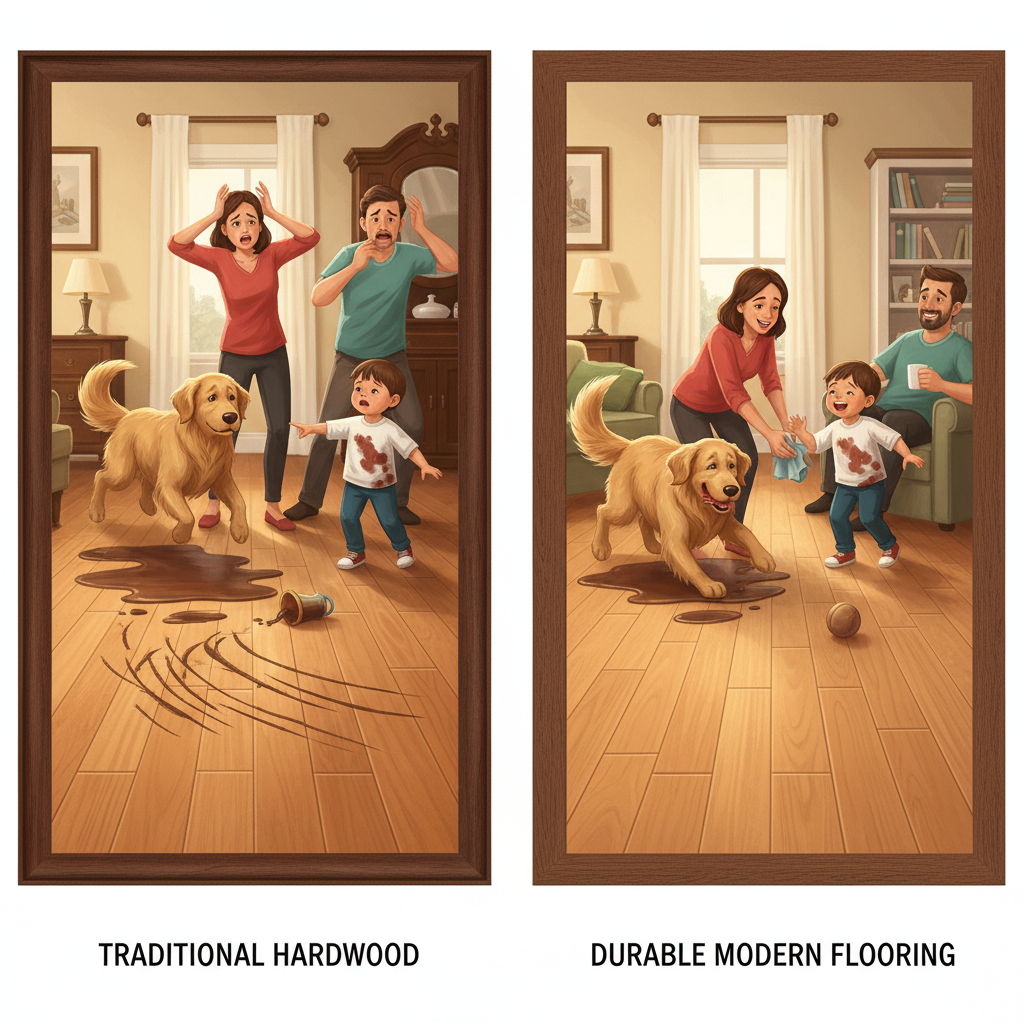
Thanks to rapid advancements in material science, a new tier of “Generational Floors” has emerged. By leveraging revolutionary Adamantine technology and acrylic-infused engineered wood, homeowners can now install surfaces that render pet scratches and family spills virtually harmless. This comprehensive guide will take you deep into the material science of modern durability, outline a strategic “Zone Defense” for your home’s high-traffic areas, and provide expert lifecycle management tips to protect your investment for decades to come.
- The Science of Durability: Why Traditional Floors Fail in Active Homes
- Enter Adamantine Flooring: The ‘Generational Floor’ Explained
- Engineered Family Flooring: Authentic Wood Without the Worry
- The ‘Zone Defense’ Strategy: Matching Durable Floors to Household Threats
- Installation & Lifecycle Management: Protecting Your Investment
- Conclusion
- References & Authoritative Sources
The Science of Durability: Why Traditional Floors Fail in Active Homes
To understand why modern flooring technology is so revolutionary, we must first analyze the root causes of floor degradation in high-traffic family homes. The failure of traditional hardwood or basic laminate is rarely just about “bad materials.” Instead, it is a matter of physics.
When we look at the “Science of Abrasion,” we see that microscopic dirt, grit, and small stones tracked indoors act exactly like sandpaper under the weight of human footfalls. Over time, this constant friction strips away traditional polyurethane finishes, leading to dull, easily scratched floors. Understanding the difference between surface scratches (which only affect the topcoat) and deep gouges (which penetrate the wood veneer or core) is critical. According to the experts at Ted Todd Fine Wood Floors, identifying this difference dictates whether a floor needs a simple topcoat refresh or a complex, localized repair [1].
To combat this, residential design is increasingly borrowing from commercial-grade durability standards. Preventative architecture—such as the strategic placement of heavy-duty walk-off mats at entryways—can capture up to 80% of abrasive grit before it ever reaches your primary living spaces, a strategy highly recommended by commercial experts like Spectra Contract Flooring [2].
The Mechanics of Abrasion and High-Traffic Wear
High traffic floor wear is not uniform; it is highly dependent on the specific mechanical forces applied to the surface. For instance, the impact of a stiletto heel concentrates a person’s entire body weight into a fraction of a square inch, exerting enough pounds per square inch (PSI) to dent solid oak. Conversely, bare feet or soft-soled shoes cause minimal impact but can leave behind natural oils that attract abrasive dust.
Pet claws present a different mechanical challenge. A dog running to the door creates a rapid, repetitive gouging motion. Traditional polyurethane finishes simply lack the tensile strength to resist this concentrated, sharp force, leading to the rapid deterioration of the floor’s visual appeal and structural integrity.
Enter Adamantine Flooring: The ‘Generational Floor’ Explained
If you are seeking a true “forever floor,” Adamantine flooring represents a revolutionary hybrid category that demands your attention. Positioned as a one-time, long-term investment for modern luxury homes, Adamantine bridges the gap between the waterproof nature of luxury vinyl and the premium feel of high-end hard surfaces.
The secret to durable adamantine flooring for modern homes lies in its proprietary finish. Utilizing the material science of aluminum oxide nanoparticles, the surface is subjected to an intense UV-curing process during manufacturing. This process creates a protective barrier that is exponentially harder than traditional site-applied finishes. According to Diamond Quanta, innovators in thermal and optics technology, this nanoparticle integration achieves a hardness level comparable to sapphire and ruby gemstones on the Mohs scale [3].
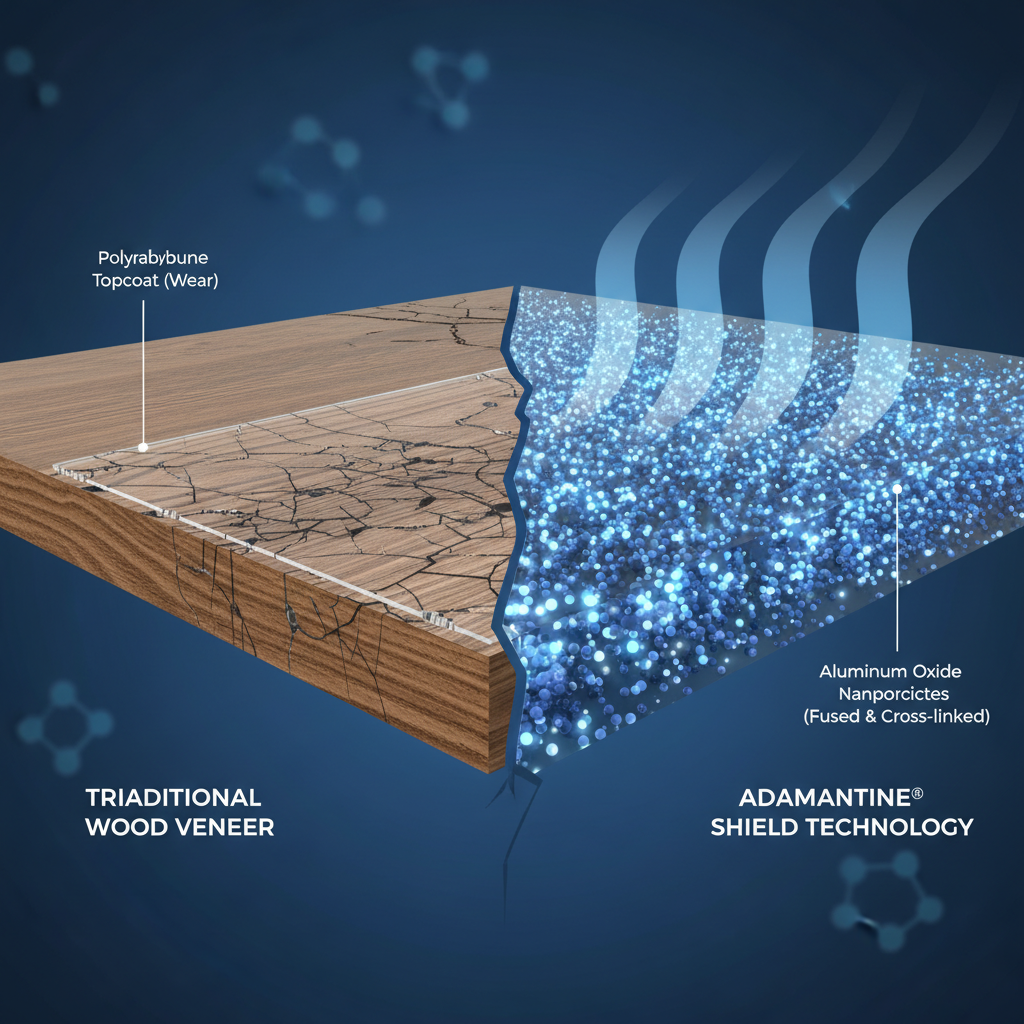
The practical results of this technology are staggering. Adamantine flooring offers 3x greater scratch resistance than traditional polyurethane. Furthermore, the primary manufacturer, Adamantine.info, notes that these floors are 100% waterproof and come backed by an unprecedented 50-year residential warranty, solidifying their status as a generational investment [4].
Nanoparticle Technology vs. Traditional Polyurethane
When asking how Adamantine flooring compares to polyurethane finishes, the answer lies in chemical bonding. Traditional polyurethane sits on top of the wood as a distinct layer, which can peel, chip, or wear down unevenly. In contrast, Adamantine’s nanoparticle technology is factory-applied and thermally fused to the hybrid core. This creates a cross-linked, impenetrable wear layer that does not just sit on the surface but acts as a structural shield, ensuring the floor never requires sanding or site-refinishing.
Engineered Family Flooring: Authentic Wood Without the Worry
For those who demand the authentic warmth and texture of real wood, engineered family flooring provides a compromise-free solution. High-end engineered hardwood utilizes advanced factory finishes to withstand the rigors of kids and pets while delivering unparalleled elegance.
When selecting the best engineered flooring for active families, the species of the top wood veneer matters immensely. The National Wood Flooring Association (NWFA) utilizes the Janka hardness scale to measure wood’s resistance to denting and wear [5]. For active homes, dense species like Hickory (Janka rating 1820) are vastly superior to softer woods like American Cherry or Walnut.
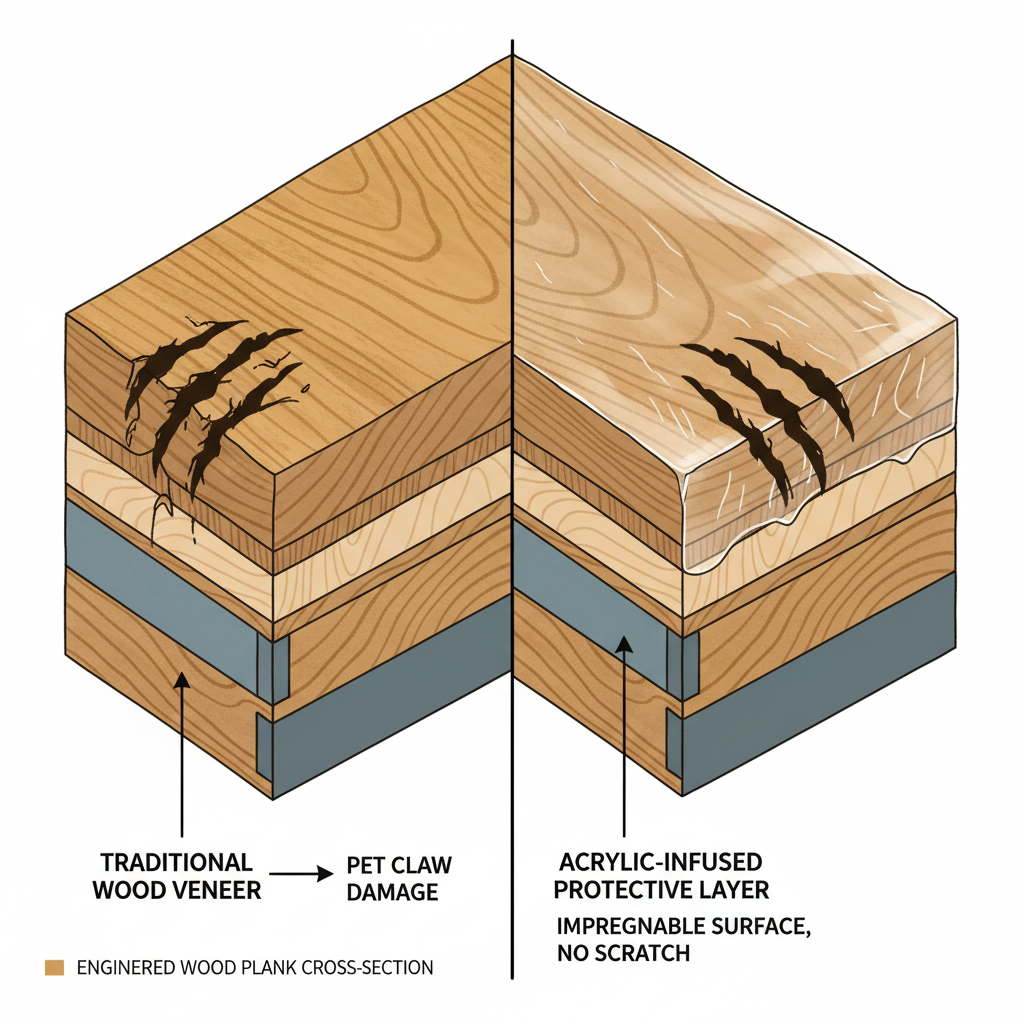
Beyond the wood species, the structural benefits of multi-ply cross-grain construction make engineered wood highly resistant to the moisture and humidity fluctuations that cause solid hardwood to warp or buckle. But the true game-changer is the concept of “The Pet-Proof Wood Floor.” Innovators like Nydree Flooring have pioneered a process of liquid acrylic infusion, where liquid acrylic is forced into the wood veneer under immense pressure [6]. This creates a wear layer—often 1/10-inch thick—that is up to 300% more dent-resistant than standard wood, preventing dog claws and dropped toys from penetrating the surface.
Acrylic-Infused and Color-Infused Veneers
Modern manufacturing has also solved the aesthetic issue of scratch visibility. By utilizing color-infused and acrylic-infused veneers, the stain penetrates the entire thickness of the wear layer rather than just sitting on top. If a scratch resistant engineered flooring plank somehow does sustain a deep gouge, it will not reveal a glaring streak of raw, unstained wood underneath. Additionally, opting for matte or wire-brushed finishes over high-gloss options naturally camouflages minor daily wear-and-tear, keeping the floor looking pristine with less maintenance.
The ‘Zone Defense’ Strategy: Matching Durable Floors to Household Threats
No single flooring material is perfect for every square inch of a house. To optimize your budget and your home’s longevity, employ a “Zone Defense” strategy. This involves evaluating the specific traffic, moisture, and impact threats of each room and matching them with the appropriate durable home floors.
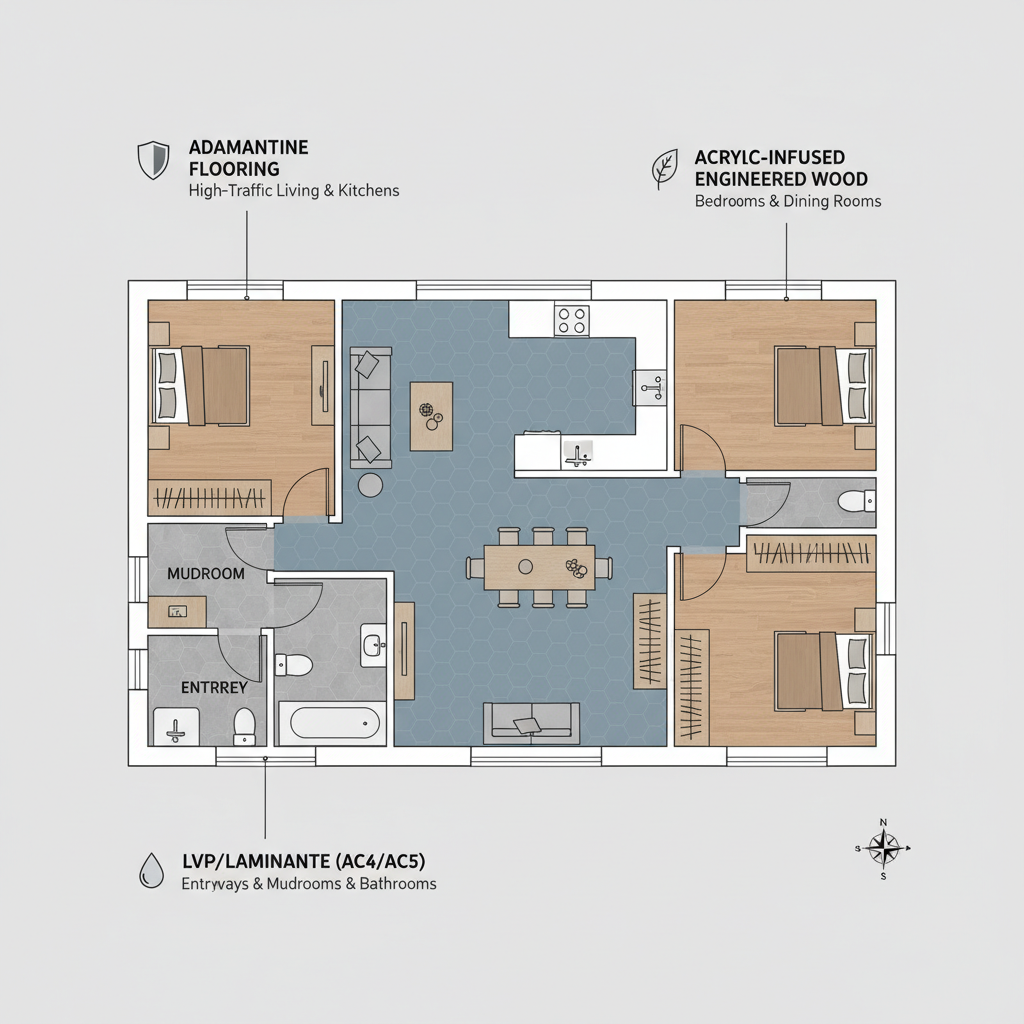
To help you decide, consider this Custom Durability Matrix:
- Water Resistance: Adamantine (High), LVP (High), Engineered Wood (Medium/Low)
- Scratch Resistance: Adamantine (High), Acrylic-Infused Engineered (High), Laminate (Medium/High)
- Impact Resistance: Engineered Wood (High), Adamantine (High), LVP (Medium)
Distributors like T&A Supply [7] and retailers such as Lynch Carpet & Flooring [8] consistently highlight that matching the material to the lifestyle is key to long-term satisfaction. Furthermore, independent testing methodologies from organizations like Consumer Reports confirm that categorizing floors by their specific resistance properties yields the most accurate real-world performance expectations [9].
LVP and Laminate: The High-Traffic Champions
For mudrooms, entryways, and bustling family rooms, Luxury Vinyl Plank (LVP) and high-quality Laminate are the undisputed high-traffic champions. When selecting family friendly flooring for high traffic areas, look for Laminate with an AC (Abrasion Class) rating of AC4 or AC5, which denotes commercial-grade durability suitable for heavy residential use.
It is also crucial to address common concerns for families with crawling babies. Modern, high-quality LVP has made massive strides in reducing VOC (Volatile Organic Compound) emissions, making them safe for indoor air quality. Additionally, to combat the “hollow” acoustic performance sometimes associated with floating vinyl or laminate floors, investing in a premium, sound-dampening underlayment is essential for maintaining a quiet, peaceful home environment.
Installation & Lifecycle Management: Protecting Your Investment
Even the most technologically advanced floors can fail if improperly installed or maintained. Protecting your investment requires strict adherence to lifecycle management protocols, ensuring your easy clean family floors remain beautiful and your warranties remain intact.
The installation of Adamantine flooring is often touted as a “Zero-Maintenance Installation.” Because it is a factory-applied, 100% waterproof hybrid system, it cannot be site-refinished. To preserve its 50-year warranty, professional installation using specific polyurethane (PU) adhesives is required for optimal moisture resistance and bond strength, a standard echoed by installation experts at CabStone [10].
When it comes to daily maintenance, a proactive “Spill Response Guide” is your best defense. The experts at Family Handyman recommend material-safe cleaning recipes, such as a highly diluted vinegar and water solution for vinyl, while strictly advising against the use of steam mops on standard laminate or engineered wood, which can force moisture into the seams [11].
Subfloor Preparation and Warranty Preservation
The invisible hero of any durable adamantine floor installation—or any rigid core floor—is the subfloor. Proper subfloor leveling and moisture mitigation are the absolute foundation of a floor’s lifespan. If a subfloor is uneven, the locking mechanisms of floating floors will constantly flex under foot traffic, eventually snapping and causing the floor to separate. Ensuring your subfloor meets the manufacturer’s strict flatness tolerances (typically within 3/16 of an inch over a 10-foot span) is non-negotiable for warranty preservation.
The Repair vs. Replace Decision Matrix
When disaster strikes and you are left with damaged family room flooring, you need a clear Repair vs. Replace Decision Matrix. According to flooring professionals at Corlew and Perry, localized damage like a deep gouge or a single warped plank does not always necessitate a full room replacement [12].
For LVP and Adamantine, a step-by-step methodology allows professionals to cut out a single damaged plank from the center of the room, prepare the exposed subfloor, and glue down a perfectly matched replacement plank seamlessly. However, if the damage involves widespread buckling, squeaking, or shifting, this indicates severe subfloor moisture issues, moving the needle from a simple repair to a mandatory full replacement to protect the home’s structural integrity.
Conclusion
The evolution of family flooring has officially moved past the era of easily damaged traditional woods and high-maintenance surfaces. By embracing the material science behind high-tech Adamantine finishes and acrylic-infused engineered hardwoods, you are investing in a “Compromise-Free Home.”
Investing in these advanced materials upfront saves decades of refinishing costs, repair headaches, and daily stress. You no longer have to choose between a beautiful, magazine-worthy aesthetic and a lived-in, joyful family environment. Take the next step toward your generational floor today: order material samples, consult with a certified local installer to assess your subfloor, and begin planning your home’s ultimate zone defense strategy.
Disclaimer: Flooring warranties and installation requirements vary by manufacturer. Always consult specific product guidelines and certified professionals before installation.
References & Authoritative Sources
- Ted Todd Fine Wood Floors. (N.D.). Expert insights on hardwood floor care, scratch prevention, and repair methodologies.
- Spectra Contract Flooring. (N.D.). Commercial flooring insights on extreme durability and preventative architecture.
- Diamond Quanta. (N.D.). Innovations in Adamantine Thermal/Optics technology and material strength.
- Adamantine.info. (N.D.). Primary manufacturer technical specifications, 100% waterproof capabilities, and 50-year warranty data.
- National Wood Flooring Association (NWFA). (N.D.). Industry standards for wood flooring, wear layers, and Janka hardness ratings.
- Nydree Flooring. (N.D.). Innovations in acrylic-infused, high-durability engineered hardwood for commercial and pet-heavy residential use.
- T&A Supply. (N.D.). Distributor insights on kid and pet-friendly flooring properties.
- Lynch Carpet & Flooring. (N.D.). Retailer advice on practical flooring that grows with a family.
- Consumer Reports. (N.D.). Independent testing methodologies for flooring durability and scratch resistance.
- CabStone. (N.D.). Professional flooring installation best practices and polyurethane adhesive science.
- Family Handyman. (N.D.). Practical, DIY home maintenance and material-safe deep cleaning guides.
- Corlew and Perry. (N.D.). Flooring professional insights on actionable, long-lasting repair solutions and subfloor damage.
