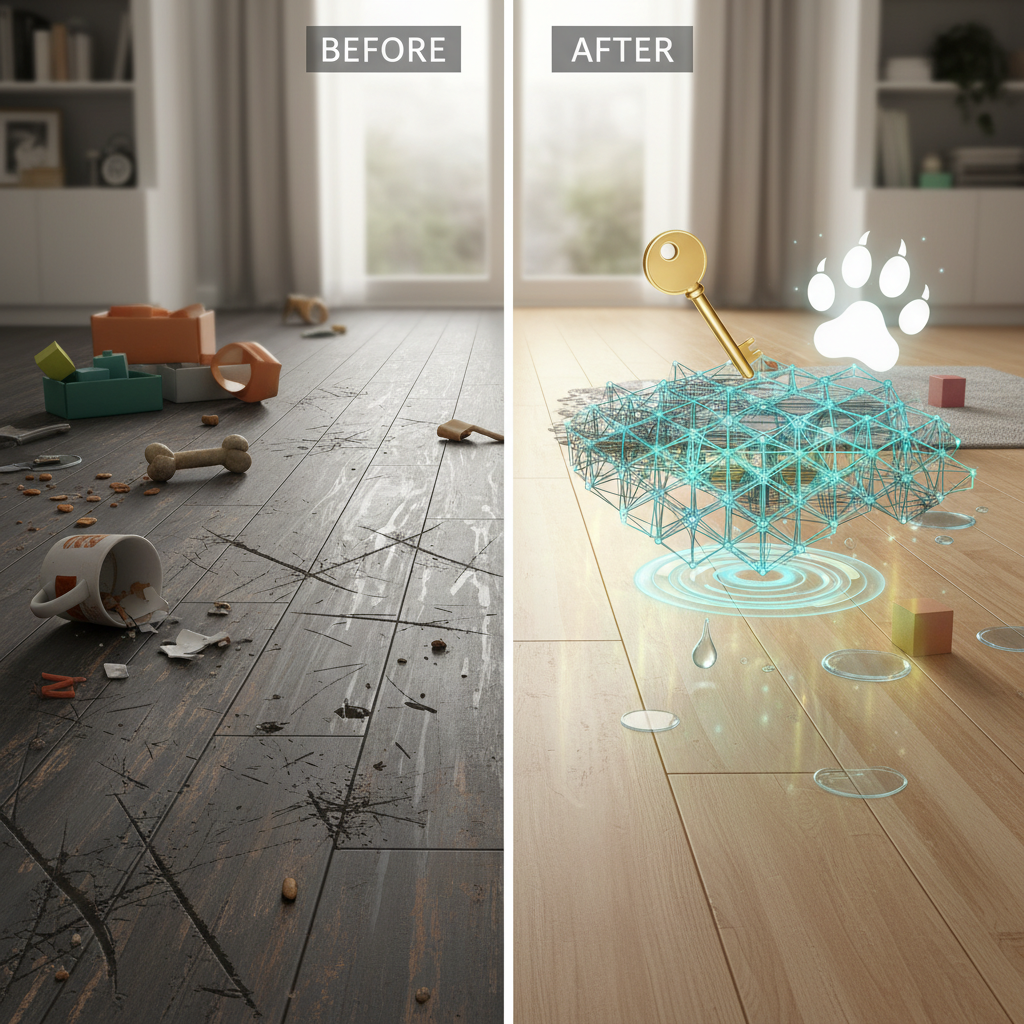
In fantasy lore, “adamantine” represents the pinnacle of indestructibility—a mythical material impervious to damage, wear, and the ravages of time. In the real world, however, homeowners and facility managers face a much harsher reality: chaotic households, large pets, heavy furniture, and high-traffic commercial spaces that rapidly degrade beautiful floors. The result is often a frustrating cycle of aesthetic ruin, marked by unsightly scuffs, deep gouges, and faded finishes, leading to thousands of dollars wasted on false marketing claims of “life-proof” durability.
If you are tired of easily scratched floors and confusing manufacturer warranties, it is time to upgrade your standards. This guide bypasses the marketing fluff to deliver a science-backed, metric-driven blueprint to truly indestructible flooring. By understanding the critical metrics of toughness—such as AC ratings, PSI, and mil wear layers—you can find the ultimate scratch-resistant and gouge-proof flooring solutions tailored to your exact needs. From acrylic-infused engineered hardwood to mineral-core SPC, here is your roadmap to achieving the adamantine standard in your home or commercial space.
- Demystifying “Adamantine” Flooring: Myth vs. Real-World Material Science
- The Anatomy of Floor Damage: Scratches, Gouges, and High-Traffic Wear
- The Metrics of Toughness: How to Measure True Flooring Durability
- Top-Tier Scratch-Resistant and Gouge-Proof Flooring Solutions
- Triage and Repair: Fixing Easily Scratched Floors and Deep Gouges
- Preventative Architecture: Building a Floor Defense System
- Conclusion
- References & Authoritative Sources
Demystifying “Adamantine” Flooring: Myth vs. Real-World Material Science
While adamantine flooring might be a popular search term for those seeking an invincible surface, it does not exist in nature. However, the flooring industry has developed ultra-durable industrial solutions that bridge the gap between this fictional indestructibility and real-world material science. To understand what makes durable flooring truly resilient, we must look to scientific benchmarks like the Mohs hardness scale.
The Mohs scale measures a material’s resistance to scratching, ranging from 1 (talc) to 10 (diamond). Traditional solid wood floors often fall lower on this scale, making them susceptible to everyday wear. Conversely, industrial-grade materials like quartz (often used in mineral-core flooring) sit at a robust 7, while specialized adamantine-grade epoxy and polyaspartic coatings utilize advanced cross-linking chemistry to create near-impenetrable surfaces. According to research published in leading material science journals, these ultra-durable coatings achieve their extreme hardness by tightly bonding polymers at a molecular level, offering unparalleled resistance to both chemical spills and heavy mechanical abrasion [1]. When you are searching for adamantine flooring, you are actually looking for these highly engineered, scientifically validated materials.
The Anatomy of Floor Damage: Scratches, Gouges, and High-Traffic Wear
To choose the right defense, you must first understand how and why floors fail. High traffic floor damage rarely happens overnight; it is usually the result of a slow, abrasive process. When microscopic dirt, silica, and grit are tracked indoors, they act exactly like sandpaper under the weight of footsteps. Over time, this constant friction grinds away the protective wear layer, leading to fading, dullness, and easily scratched floors.
Furthermore, unexpected damage is incredibly common. According to the This Old House Bath Survey, 17% of homeowners reported unexpected issues and collateral repairs during renovation projects, with floor scratches being a top casualty [2]. Differentiating between the types of damage is crucial for prescribing the right flooring scrapes and gouges solutions.
Surface Scrapes vs. Structural Gouges: Knowing the Difference
Not all floor damage is created equal. A “scrape” or micro-scratch is surface-level damage that only affects the top finish or wear layer of the floor. This is typically caused by pet nails, sliding light chairs, or abrasive dirt.
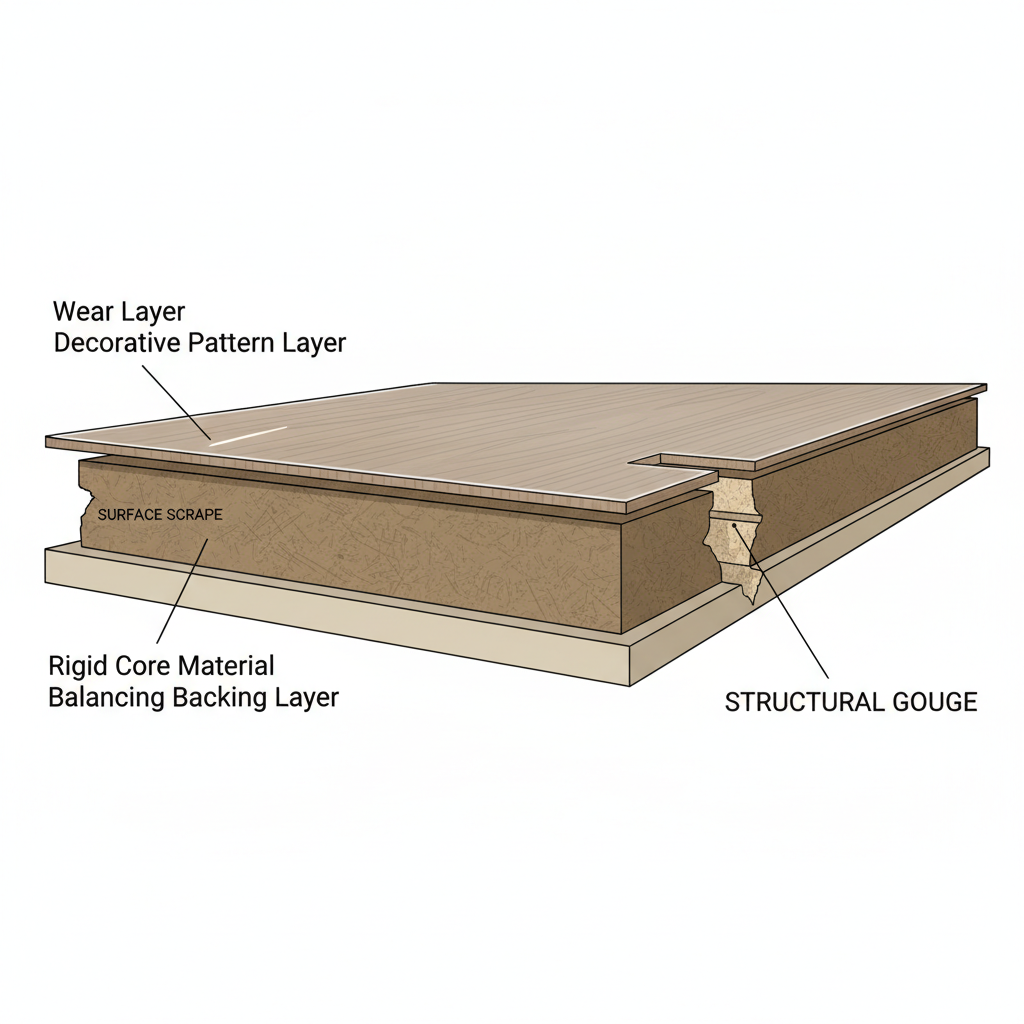
A “gouge,” on the other hand, is a deep structural penetration where the actual core material of the floor is removed or crushed. This happens under heavy point loads, such as dropping a cast-iron skillet or dragging a refrigerator. Understanding this difference is vital because a material can be highly resistant to one but vulnerable to the other. For example, standard luxury vinyl plank (LVP) is highly scratch-resistant against dog nails due to its urethane wear layer, but it is still relatively soft and susceptible to deep gouging under heavy, sharp point loads.
The Metrics of Toughness: How to Measure True Flooring Durability
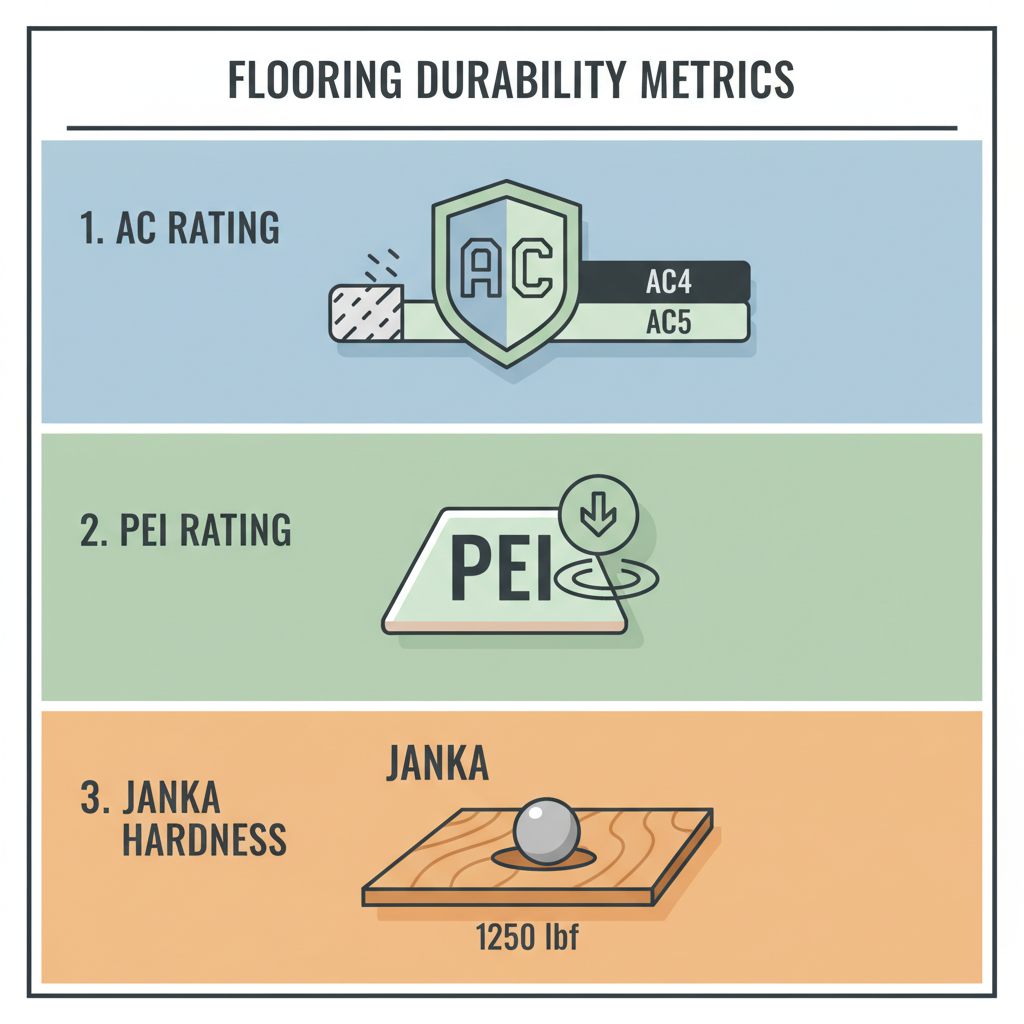
To navigate the world of durable flooring and engineered flooring, you must move beyond generic marketing claims and learn to read the objective specifications used by professionals. Here are the metrics that matter:
- AC (Abrasion Class) Ratings for Laminate: This European standard measures a laminate floor’s resistance to abrasion, impact, and stains. For active homes with pets and kids, you should exclusively look for AC4 or AC5 ratings, which are tough enough for light commercial use.
- PEI (Porcelain Enamel Institute) Ratings for Tile: The PEI scale measures the surface wear resistance of glazed tile [3]. For maximum protection in high-traffic areas, recommend Class 4 (moderate to heavy traffic) or Class 5 (heavy commercial traffic).
- Janka Hardness Scale for Wood Veneers: The Janka scale measures the force required to embed a steel ball halfway into a piece of wood. If you are choosing engineered flooring, the hardness of the top wood veneer matters. Hickory (1820) and Hard Maple (1450) will naturally resist dents far better than softer woods like American Cherry (950) or Walnut (1010).
Top-Tier Scratch-Resistant and Gouge-Proof Flooring Solutions
Armed with the right metrics, we can definitively compare the best scratch resistant flooring, gouge proof floors, and heavy duty flooring solutions on the market.
A crucial piece of design advice: regardless of the material you choose, avoid high-gloss finishes. Glossy surfaces act like mirrors, reflecting light in a way that highlights every single micro-abrasion and speck of dust. Matte or satin finishes with wire-brushed textures are vastly superior at hiding daily wear. Additionally, if gouging is your primary concern, explicitly avoid sheet vinyl. When sheet vinyl is gouged, repairing it requires cutting and patching, which creates vulnerable seams that compromise the floor’s waterproofing.
Acrylic-Infused Engineered Hardwood: The Premium Pet-Friendly Wood
For homeowners who demand the aesthetic warmth of real wood but need the best scratch resistant engineered flooring available, acrylic-infused hardwood is the ultimate solution. Companies like Nydree have pioneered this technology, which involves forcing liquid acrylic into the cellular structure of the wood veneer under immense pressure.
This process fundamentally changes the wood at a microscopic level. Unlike traditional site-finished polyurethane—which only sits on top of the wood—acrylic infusion hardens the entire wear layer. Rigorous lab testing methodologies, such as those conducted by the Good Housekeeping Institute, subject these floors to brutal abrasion tests, heavy drop tests, and 250-milliliter standing water resistance tests [4]. The result is a natural wood floor that is up to 300% harder than standard hardwood, making it exceptionally pet-friendly and resistant to both dents and scratches.
Mineral-Core SPC and Commercial-Grade LVP
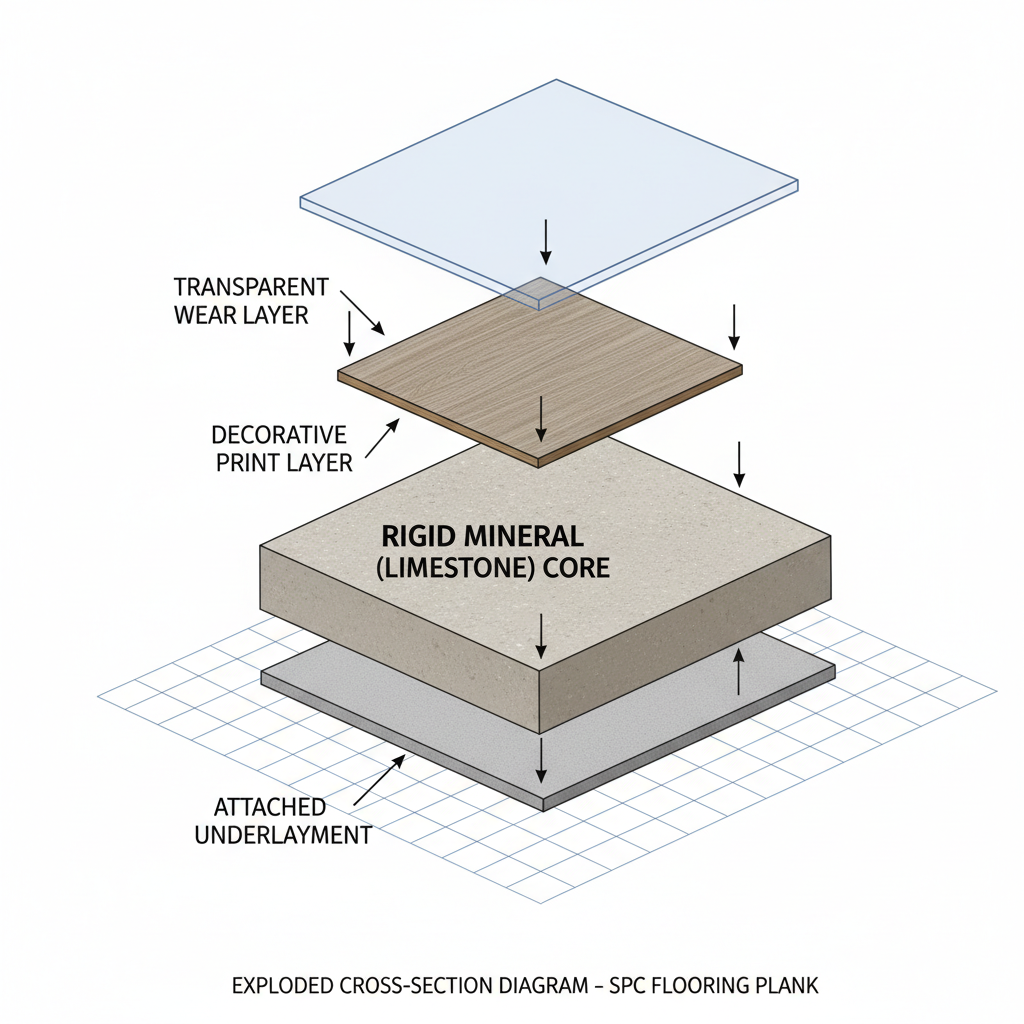
For chaotic households needing a waterproof, heavy duty flooring for high traffic areas, Stone Plastic Composite (SPC) and commercial-grade Luxury Vinyl Plank (LVP) are top contenders.
When shopping for LVP, the thickness of the clear protective wear layer (measured in “mils,” or thousandths of an inch) is paramount. Experts advise avoiding LVP or laminate with wear layers under 12 mils for high traffic. For homes with large dogs or commercial spaces, recommend a 20+ mil wear layer.
SPC takes durability a step further by replacing the flexible PVC core of standard vinyl with a rigid core made of limestone powder and stabilizers. According to leading manufacturers like COREtec, this mineral core material science prevents the planks from expanding, contracting, warping, or buckling under temperature shifts or heavy loads, making it vastly superior at resisting structural gouges [5].
Industrial Heavyweights: Polished Concrete and Epoxy Coatings
When residential solutions aren’t enough, we turn to the industrial heavyweights for truly gouge-proof, heavy duty flooring solutions. Warehouses, commercial kitchens, and high-end garages require floors that can withstand forklifts, harsh chemicals, and dropped tools.
For these environments, polished concrete and specialized resinous coatings are unmatched. Using precise industrial terminology, a heavy-duty warehouse floor should be poured and cured to a rating of at least 4,000 PSI (pounds per square inch) to handle extreme compressive loads. For environments subjected to rapid temperature changes—like commercial kitchens being hosed down with boiling water—industrial leaders like Sherwin-Williams recommend Polyurethane cement [6]. This specific coating offers incredible thermal shock resistance, preventing the floor from cracking or delaminating when exposed to extreme heat and cold.
Triage and Repair: Fixing Easily Scratched Floors and Deep Gouges
Even the most durable floors can suffer under extreme circumstances. If you are dealing with easily scratched floors or flooring scrapes and gouges, here is a triage guide to assess and repair the damage.
For minor surface micro-scratches in wood or laminate, touch-up markers and wax filler sticks from trusted brands like MinWax or Cal Flor can seamlessly blend the damage into the surrounding grain. For small, localized dents in natural wood (where the fibers are crushed but not broken), the “Steam Treatment” is a highly effective DIY fix. By placing a damp cloth over the dent and applying a hot iron for a few seconds, the steam forces the crushed wood fibers to swell back to their original shape. (Note: See safety caveats in the disclaimer below).
The Limits of Refinishing Engineered Wood
When a gouge is too deep for wax fillers, sanding and refinishing is the traditional route. However, there is a critical limitation when dealing with engineered flooring.
Because engineered wood consists of a thin veneer of real wood adhered to a plywood core, it cannot be sanded indefinitely like solid hardwood. According to strict guidelines from the National Wood Flooring Association (NWFA), an engineered wood floor needs a real wood surface layer of more than 1mm thick to be safely sanded and refinished [7]. Attempting to sand a veneer thinner than this will burn through to the plywood core, permanently ruining the plank. Always verify your wear layer thickness before attempting heavy restoration.
Preventative Architecture: Building a Floor Defense System
The most effective way to handle high traffic floor damage is to stop it before it reaches your living spaces. This requires a shift toward “preventative architecture”—altering traffic patterns and maintenance routines to build a floor defense system.
In commercial spaces, facility managers utilize “walk-off systems.” These are calculated lengths of heavy-duty, abrasive matting placed at entrances to physically scrub grit and moisture from shoes before they hit the primary floor. You can adapt this for residential entryways by using a two-mat system: an aggressive scraper mat outside the door, and a softer, absorbent mat immediately inside. Combined with a strict “no-shoes” policy, this eliminates 80% of abrasive damage.
Finally, never underestimate the importance of sub-floor preparation. Even the most adamantine-grade SPC or high-AC laminate will fail, separate at the seams, or crack if installed over an uneven, compromised sub-floor. Durability starts from the ground up.
Conclusion
Achieving the “adamantine” standard of durability isn’t about finding a magical, indestructible material; it is about matching the right material science to your specific environment. By understanding objective metrics like AC ratings, mil wear layers, and mineral core compositions, you can bypass marketing hype and invest in floors that genuinely resist the chaos of daily life. Remember that separating surface scrapes from structural gouges is the key to choosing the right defense. Assess your home or facility’s specific traffic needs using our durability metrics guide, and always request physical samples to test wear layer thickness before making a final flooring investment.
Disclaimer: Standard DIY & Repair Disclaimer: Always test repair methods (like the steam treatment or wax fillers) in an inconspicuous area first. Consult with a certified flooring professional before attempting to sand engineered hardwood or installing industrial-grade epoxy.
References & Authoritative Sources
- Journal of Materials Science. (N.D.). Advances in Polymeric and Polyaspartic Industrial Coatings for High-Abrasion Environments.
- This Old House. (N.D.). The TOH Bath Survey: Unexpected Issues and Collateral Damage.
- Porcelain Enamel Institute (PEI). (N.D.). PEI Rating Scale for Glazed Tile Wear Resistance.
- Good Housekeeping Institute. (N.D.). Lab Testing Methodologies for Flooring: Abrasion, Impact, and Water Resistance.
- COREtec Floors. (N.D.). The Science of Mineral Core and Waterproof Flooring Technology.
- Sherwin-Williams. (N.D.). Industrial Heavy-Duty Floor Coatings and Polyurethane Cement Specifications.
- National Wood Flooring Association (NWFA). (N.D.). Installation and Refinishing Guidelines for Engineered Wood Flooring.
