There is a growing frustration among high-end homeowners and custom builders when it comes to expansive open floor plans: the rapid, inevitable degradation of traditional flooring. In large, continuous spaces, the flaws of luxury vinyl plank (LVP), laminate, and even standard hardwood become glaringly obvious. Accelerated wear in high-traffic zones and visible seam separation can quickly turn a luxury architectural design into a maintenance nightmare.
Enter the “Forever Floor” paradigm. The industry is witnessing a massive shift away from disposable, temporary flooring toward industrial-grade adamantine and seamless poured systems. By merging extreme, multi-decade durability with high-end, seamless aesthetics, these advanced materials solve the problems of high-traffic wear and visual clutter permanently. This definitive blueprint explores the science, return on investment (ROI), design strategies, and installation realities of integrating adamantine and seamless flooring into your open-concept living space.
- The Open-Concept Dilemma: Visible Seams and High-Traffic Wear
- What is Adamantine Flooring? The 50-Year Solution
- The Rise of Seamless Flooring in Modern Homes
- Calculating the True ROI: Adamantine vs. Traditional Flooring
- Designing with Seamless Floors: Zoning Without Walls
- The Science of Installation: Subfloors, Moisture, and Curing
- Conclusion
- References & Authoritative Sources
The Open-Concept Dilemma: Visible Seams and High-Traffic Wear
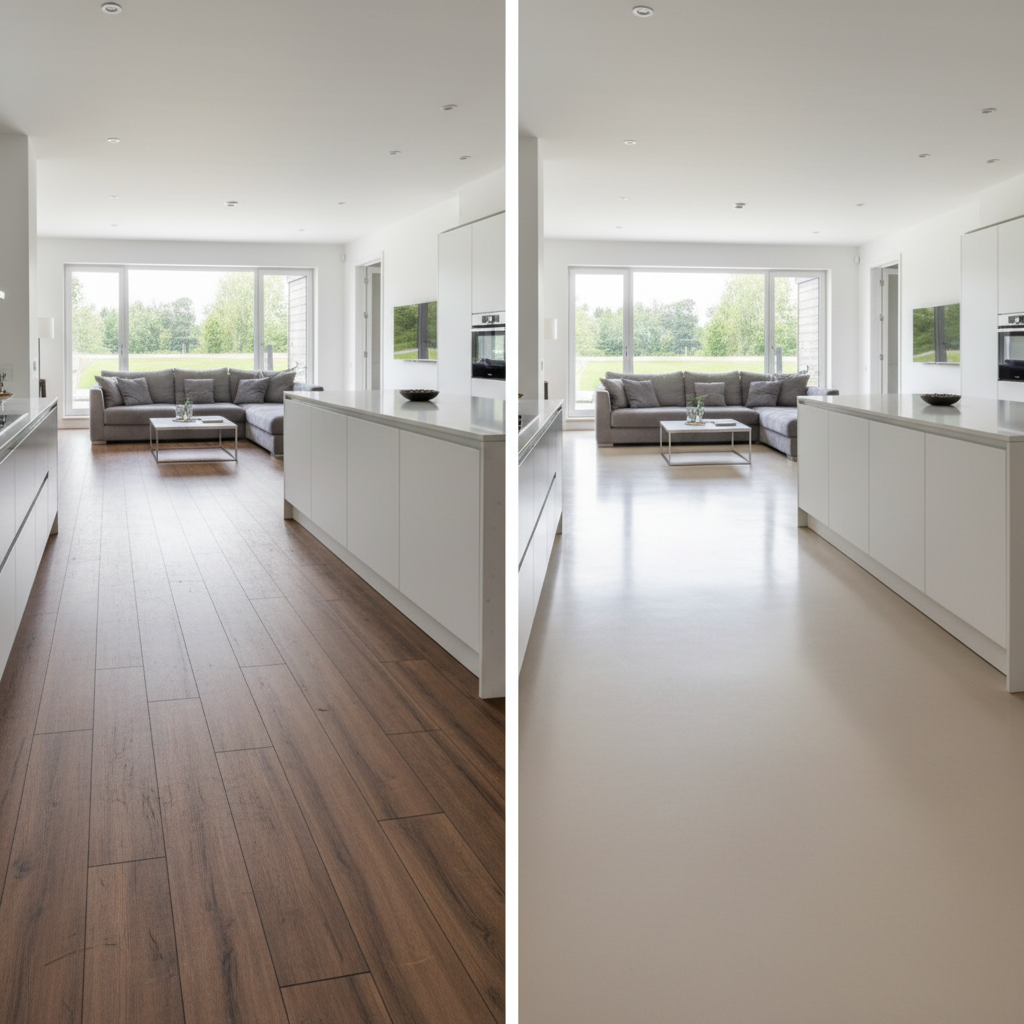
Expansive, multi-use spaces demand a lot from their foundational surfaces. Traditional flooring materials often fail because they were not engineered to handle the unique environmental and physical stresses of a massive, uninterrupted footprint. When a kitchen flows directly into a dining area and living room, the floor is subjected to varying temperatures, moisture levels, and abrasive dirt.
The physics of thermal expansion and contraction play a massive role in this failure. Vinyl and laminate planks naturally expand in warmth and humidity and contract in the cold. In a standard-sized room, expansion gaps hidden under baseboards accommodate this shift. However, across a 1,000-square-foot open concept, the cumulative expansion is too great for the click-lock mechanisms to handle, leading to visible flooring seams. Furthermore, abrasive dirt tracked across these long, continuous pathways acts like sandpaper, causing high traffic floor wear that dulls finishes and degrades the material prematurely.
Beyond physical degradation, there is a profound psychological impact to disjointed open concept floors. When homeowners attempt to solve wear issues by piecing together different materials—tile in the kitchen meeting wood in the living room—the resulting visual clutter increases cognitive load, making the home feel chaotic and visually shrunken.
Why Floating Floors Fail in Expansive Spaces
A frequent question among homeowners is, “Why is my LVP separating at the seams?” The answer lies in the sheer scale of the space. Massive open spaces lack natural breaks, such as doorways or narrow thresholds, putting immense, uninterrupted stress on the interlocking joints of floating floors.
When diagnosing floor separation, it is critical to use a diagnostic checklist to differentiate between “peaking” (where planks push up against each other due to a lack of expansion space) and “gapping” (where planks pull apart, often due to extreme contraction or heavy furniture pinning the floor down). A major culprit behind both issues is poor subfloor preparation. According to the Certified Flooring Installers (CFI), click-lock systems require strict subfloor levelness tolerances—typically no more than a 3/16 inch variance per 10 feet [1]. Any dip or crown beyond this forces the joints to flex and eventually snap. Homeowners must heed explicit warnings against common DIY mistakes, such as gluing down floating floors to fix gaps, which restricts natural movement, exacerbates the damage, and instantly voids manufacturer warranties.
The Psychology of Disjointed Floors
The aesthetic pain point of an open floor plan is just as critical as the structural one. Abrupt flooring transitions, awkward metal T-moldings, and mismatched materials disrupt the eye’s natural glide across a room.
The American Society of Interior Designers (ASID) notes that spatial planning and color theory are vital in managing visual fields [2]. When a floor is broken up by different materials, it subconsciously segments the room, destroying the expansive, airy feel that open concepts are meant to provide. A unified, seamless floor reduces visual noise, allowing the architecture and furnishings to stand out while creating a calming, cohesive environment.
What is Adamantine Flooring? The 50-Year Solution
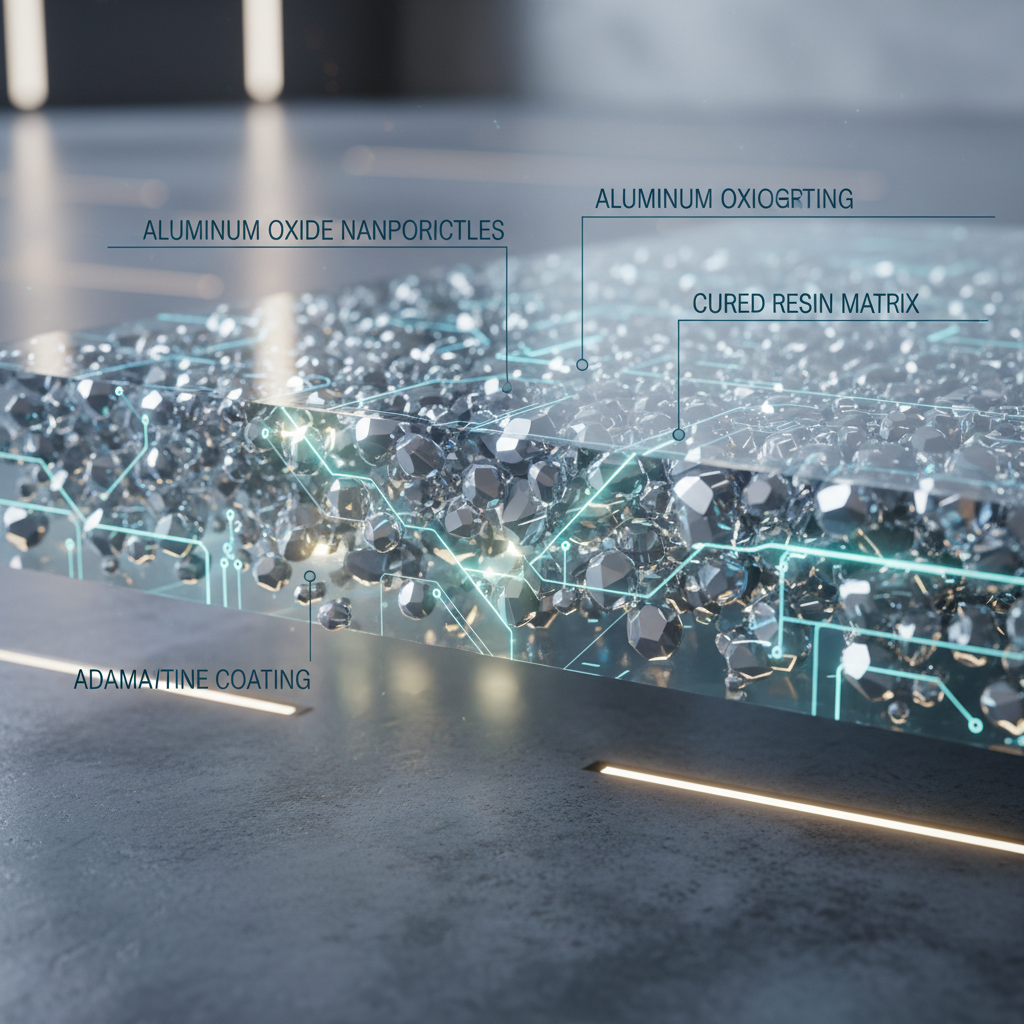
Adamantine flooring represents the apex of high-performance hybrid flooring. It utilizes advanced nanotech coating solutions to create a surface of unparalleled resilience. Named after the mythological substance known for its indestructibility, adamantine flooring incorporates aluminum oxide nanoparticles—one of the hardest minerals on earth—into its wear layer.
Materials engineers explain that when aluminum oxide is suspended in a specialized resin and cured using ultraviolet (UV) light, it creates an impenetrable matrix. This process grants the floor extreme scratch, UV, and chemical resistance. Standardized drop and scratch tests, heavily documented by industrial authorities like Concrete Construction Magazine, prove that these surfaces can withstand impacts that would easily gouge solid oak or shatter ceramic tile [3]. The secret lies in the physics of kinetic energy dissipation; the dense mineral aggregate within the adamantine layer absorbs and disperses the shock of dropped objects, preventing localized structural failure.
The Nanotech Revolution in Floor Coatings
For those asking, “What is an adamantine floor coating?”, it is a revolutionary step beyond traditional sealers. When comparing adamantine floor coating solutions to polyaspartic and standard epoxy, adamantine is vastly superior in preventing peeling, chipping, and the yellowing UV-fading that plagues older epoxies.
Industrial safety data reveals that these coatings offer exceptional chemical resistance to harsh household cleaners, acidic spills, and even chlorinated solvents. Furthermore, in high-end tech homes or environments with sensitive electronics, the physics of electrostatic dissipative (ESD) multi-layer coating systems can be integrated into adamantine floors to safely ground static charges [4].
Industrial Strength Meets Residential Needs
How does adamantine hold up against large dogs, heavy traffic, and the rigors of daily life? The benefits of adamantine flooring for homes are vast. It is completely waterproof, making it ideal for continuous kitchen-to-living-room layouts. It effortlessly withstands dropped cast-iron pans, high heels, and the frantic scratching of large pet claws.
To maintain this pristine finish indefinitely, experts recommend a 3-Zone Defense System: utilizing exterior/interior entry mats to catch grit, implementing daily micro-cleaning to remove abrasive particles, and relying on the adamantine coating’s inherent durability [5]. Additionally, premium adamantine systems often feature the integration of fiberglass reinforcement within the substrate layers to eliminate air pockets, ensuring the floor remains structurally sound for decades.
The Rise of Seamless Flooring in Modern Homes
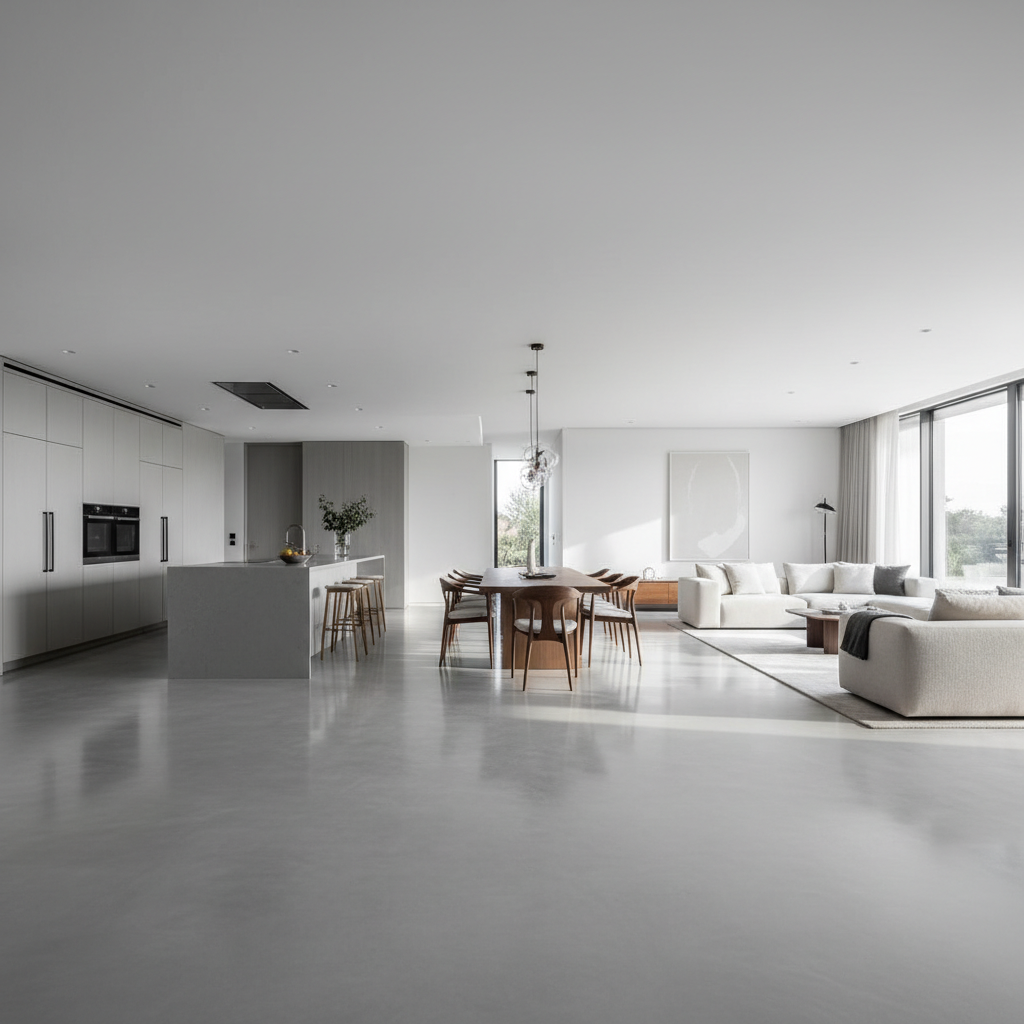
To truly capitalize on an open floor plan, eliminating joints and grout lines entirely is the ultimate design flex. Seamless flooring—achieved through poured systems like epoxy, polyurethane, polished concrete, and terrazzo—is rapidly transitioning from commercial spaces into high-end modern homes.
The primary difference between these systems lies in their chemical makeup. Epoxy systems are incredibly hard and bond tenaciously to concrete, while urethane (polyurethane) systems offer more flexibility and superior resistance to thermal shock and UV light. When applied correctly, these systems not only look spectacular but also offer significant LEED certification benefits for large-scale, eco-conscious builds by utilizing low-VOC, sustainable materials [7].
Top Poured Systems: Epoxy, Concrete, and Terrazzo
When exploring the different types of durable seamless flooring for large spaces, homeowners often ask if luxury options like terrazzo are worth the high upfront cost. Terrazzo, a composite material poured in place and polished to a high shine, is the gold standard for durability and aesthetics. However, industry data from Spectra Contract Flooring indicates that terrazzo installations require a scope of at least 2,500 square feet to achieve true cost-efficiency [6].
Choosing the right system requires understanding the two-axis matrix of resinous flooring: the installation method and thickness on one axis, versus the chemical makeup on the other. A thin-mil epoxy coating might suffice for a basement, but a 1/4-inch troweled urethane mortar or polished concrete is required for a massive, high-traffic living space.
Passing the Kitchen-to-Living Room Stress Test
The ultimate measure of the best seamless flooring for open concept living is the “Kitchen-to-Living Room Stress Test.” When selecting a unified material, it must be evaluated based strictly on the most demanding zone in the open plan—the kitchen. If the floor cannot handle dropped knives, boiling water spills, and heavy foot traffic, it will not survive as a whole-house solution.
A room-by-room durability matrix shows that while hardwood may be preferred for a living room, it fails the kitchen moisture test. Poured seamless floors pass with flying colors. But is seamless flooring slippery when wet? Modern thermosetting resins can be customized with micro-aggregates to provide slip resistance while simultaneously protecting against abrasions, mold, and odors, making them perfectly safe and hygienic for kitchen environments.
Calculating the True ROI: Adamantine vs. Traditional Flooring
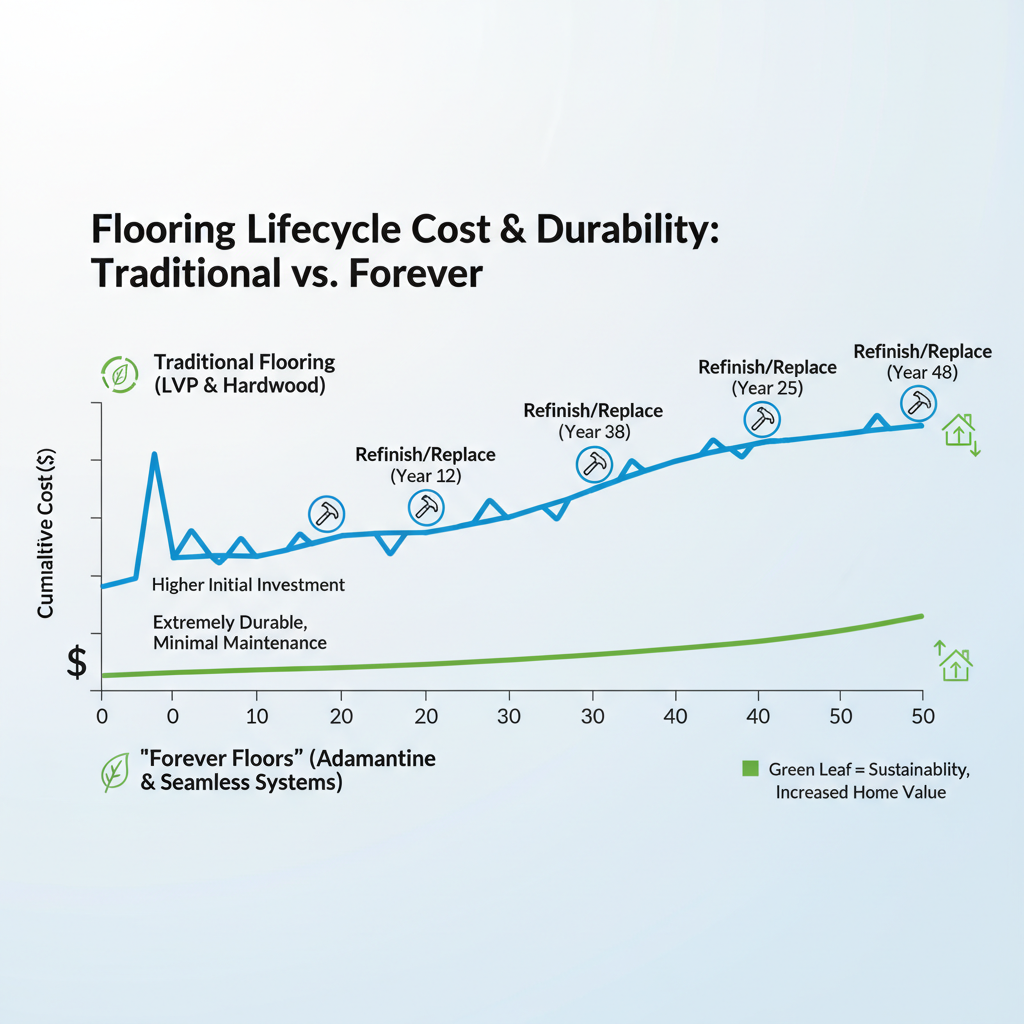
Transitioning to objective, engineering-based durability metrics reveals why the initial investment in these premium floors makes financial sense. A transparent, decade-by-decade Lifecycle ROI Calculator demonstrates that the 50-year cost of adamantine and seamless floors is drastically lower than the replacement cycles of traditional materials.
While LVP may need replacing every 10 to 15 years, and hardwood requires costly refinishing every decade, adamantine offers a virtually zero-maintenance lifespan. The U.S. Green Building Council (USGBC) recognizes these 50-year material lifespans as a cornerstone of sustainable building, as they eliminate the environmental and financial waste of cyclical flooring replacement [7]. Furthermore, data from the National Association of Realtors (NAR) highlights that upgrading to premium, permanent floors increases home resale value by an average of 2-5%, offsetting the higher upfront installation costs [8]. The benefits of adamantine flooring for homes extend far beyond aesthetics; it is a calculated, wealth-preserving asset.
Designing with Seamless Floors: Zoning Without Walls
A common fear regarding durable open space flooring is that a single, continuous hard surface will feel cold or sterile. The goal of open concept flooring is to unify large spaces without losing the intimacy of distinct living areas. This is achieved through advanced interior design principles that create “rooms within rooms.”
Certified interior designers emphasize the importance of color cohesion and visual flow. One highly effective architectural concept is the inclusion of “dirty kitchens” or secondary prep pantries to manage visual mess, keeping the primary seamless open space pristine [9]. To ensure the space remains physically cozy, homeowners should leverage the technical requirements and thermal mass benefits of heated flooring systems (radiant heating) installed directly under stone, concrete, or poured resin floors.
Using Texture, Tone, and Area Rugs
How do you make a massive open floor plan feel grounded? The answer lies in the strategic use of texture and tone. By grounding spaces using specific area rug placements and contrasting textures, you can define a living room or dining area without breaking the visual flow of the floor beneath it.
If utilizing a seamless-look adamantine plank system rather than a poured floor, the psychological impact of plank length and width is crucial. Wider, longer planks (e.g., 9 inches wide by 6 feet long) reduce the number of seams and trick the eye into perceiving the room as even more expansive and luxurious.
Managing Acoustics in Expansive Hard-Surface Rooms
A significant challenge with durable open space flooring is the severe acoustic and echoing issues that arise in large, hard-surface rooms. Without soft materials to absorb sound, open concepts can become uncomfortably loud.
To combat this, detailed acoustic underlayments are necessary beneath any floating or glued-down hard floors to dampen footfalls and prevent echoing. For poured seamless floors, the acoustic management must move upward. Utilizing ceiling treatments—such as exposed wooden beams, acoustic drop panels, or textured paint—helps to absorb the sound waves bouncing off the seamless floors, ensuring the space remains acoustically comfortable.
The Science of Installation: Subfloors, Moisture, and Curing
The dream of a “forever floor” relies entirely on the preparation beneath it. Seamless flooring installation is a highly technical, unforgiving process. Industrial authorities like Sherwin-Williams stress that the resinous flooring chemistry and application require absolute precision, strict environmental controls (regulating temperature and humidity), and rigorous subfloor preparation [10].
The Pre-Pour Checklist: Moisture Mitigation
Does concrete need to cure before applying epoxy or resin? Absolutely. A critical item on the pre-pour checklist is understanding that new concrete must be at least 30 days old before the installation of most epoxy or urethane systems. This waiting period allows excess moisture to escape.
Professional moisture mitigation techniques, including calcium chloride or relative humidity testing, are mandatory prior to pouring. If moisture vapor transmission rates are too high, a moisture-mitigating epoxy primer must be applied. Furthermore, the absolute necessity of urethane patching and diamond-grinding the concrete prep cannot be overstated; failing to profile the concrete correctly will inevitably lead to the epoxy peeling and failing.
Understanding Curing Times and Logistics
Homeowners often ask, “How long does it take to install seamless flooring?” The logistics differ vastly from laying traditional tile or wood. While the actual pouring of thermosetting resins can be relatively fast, the curing process requires patience.
Cure times can take up to one week to achieve full chemical and mechanical resistance, during which the floor cannot be subjected to heavy traffic or water exposure. When comparing the installation complexity and labor hours, thermosetting resins require intense, time-sensitive chemical mixing and rapid application, whereas cementitious terrazzo involves a longer process of pouring, curing, and extensive mechanical polishing. Both require highly skilled, specialized labor to ensure a flawless, lifetime finish.
Conclusion
Transitioning from disposable, high-maintenance flooring to the 50-year adamantine and seamless paradigm is a profound upgrade for any open-concept home. By eliminating vulnerable joints, grout lines, and the rapid degradation associated with traditional materials, homeowners save significant money over the long term while permanently eradicating visual clutter. The “Forever Floor” blueprint successfully merges industrial-grade durability with high-end residential aesthetics, ensuring your home withstands the rigors of daily life without sacrificing beauty. If you are ready to elevate your open-concept living space, consult with a certified industrial flooring contractor or specialized interior designer to assess your subfloor and request a quote for an adamantine or poured seamless flooring system today.
Pricing, lifecycle estimates, and installation timelines are based on manufacturer averages and may vary by region and site conditions. Always consult a certified flooring contractor for specific subfloor assessments and moisture testing.
References & Authoritative Sources
- Certified Flooring Installers (CFI). (N.D.). Professional Installation Standards and Subfloor Preparation.
- American Society of Interior Designers (ASID). (N.D.). Spatial Planning and Design Psychology in Open Concepts.
- Concrete Construction Magazine. (N.D.). Industrial Flooring Benchmarks and Abrasion Resistance Testing.
- QuestMark. (N.D.). Chemical Resistant Epoxies and ESD Solutions.
- Zep Inc. (N.D.). Commercial-Grade Floor Care and Application Techniques.
- Spectra Contract Flooring. (N.D.). Commercial Flooring Installation and Lifecycle Costs.
- U.S. Green Building Council (USGBC). (N.D.). LEED Certification Guidelines and Sustainable Material Lifespans.
- National Association of Realtors (NAR). (N.D.). Real Estate Value Impacts of Premium Materials.
- PepperJack Interiors / Laura Neuman. (N.D.). Family-Centric Open Concept Design and Lifestyle Planning.
- Sherwin-Williams. (N.D.). Resinous Flooring Chemistry, Specification, and Installation Scheduling.
