Every year, commercial property owners in North America spend an estimated $2.4 billion on the remediation of moisture-related flooring failures [1]. For residential homeowners, the financial toll is equally devastating, yet entirely preventable. Too often, the focus during a renovation is placed solely on surface aesthetics—the color, the grain, the finish—while the catastrophic risks of moisture penetration, wood rot, and structural deflection are ignored until it is too late.
True flooring durability is not just about resisting scratches; it is about “bottom-up” floor defense. This definitive guide shifts the focus from how floors look to how they survive. By understanding the mechanics of subfloor vulnerability and embracing a system approach to installation, you can protect your home from the ground up. We will explore how advanced materials, specifically the impenetrable shield of Adamantine flooring, act as a structural safeguard, providing technical triage guides, preventative economics, and a deep dive into the material science that keeps your subfloor intact.
- The Mechanics of Subfloor Vulnerability: Identifying the Hidden Threats
- Proactive Defense: How to Strengthen Subfloor Integrity
- Adamantine Flooring: The Ultimate Structural Shield
- Comparing Durable Flooring Solutions for Subfloor Defense
- The Lifecycle Protection Plan: Securing Your Investment
- Conclusion
- References & Authoritative Sources
The Mechanics of Subfloor Vulnerability: Identifying the Hidden Threats
To prevent flooring structural failure, we must first diagnose the root causes of subfloor degradation. The structural layer beneath your finished floor—typically plywood or Oriented Strand Board (OSB)—is highly susceptible to environmental changes, moisture, and improper load distribution.
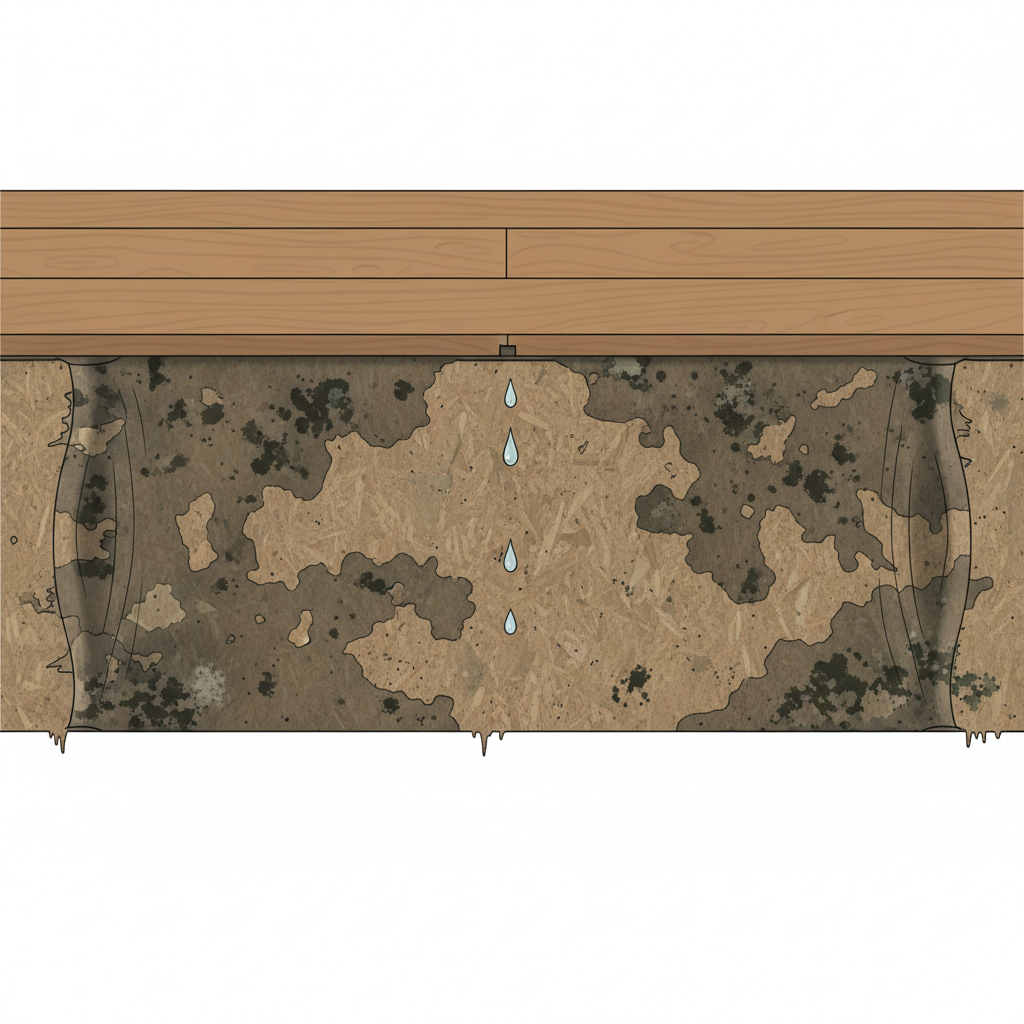
When addressing subfloor water damage, timing is everything. According to certified water damage restoration professionals at Guarantee Restoration, the “24-hour rule” is critical: if a leak sits on a floor for 24 hours or more, the subfloor will likely need to be dried out completely using professional mitigation equipment, or entirely replaced [2]. Furthermore, structural stability is governed by strict engineering metrics. The standard floor deflection rating desired for residential stability is L/360, meaning the floor should not bend more than the span length divided by 360 under a live load [3]. Understanding these metrics is the first step in identifying hidden threats.
Diagnosing Weak Subfloor Issues: Bounces, Squeaks, and Sags
Weak subfloor issues often present themselves through distinct auditory and tactile symptoms. A floor that feels bouncy or sags underfoot is a primary indicator of a compromised structure. However, it is vital to differentiate between superficial issues and actual structural failure. For instance, a slightly spongy feel might simply be the result of underlayment compression—such as a crushed foam pad beneath a laminate floor.
Conversely, a true sag or a deep squeak indicates a structural root cause. Squeaks generally occur due to friction when a subfloor panel moves up and down against a nail. Data from Huber Engineered Woods emphasizes that inadequate fastener holding power and poor panel stiffness are the primary culprits behind these auditory warnings [4]. If your floor exhibits significant bouncing, it may point to improper joist spacing or advanced wood rot. The threshold between a DIY fix and hiring a pro is clear: while silencing a localized squeak with specialized screws can be a weekend project, widespread sagging or load-bearing failures require the assessment of a licensed structural engineer or a professional building inspection service like Inspect My Home [3].
Subfloor Water Damage and ‘The New Build Trap’
When assessing subfloor water damage, a proper triage guide is essential to determine if a wet subfloor can be saved. Superficial surface water stains on OSB can often be dried and treated, but structural delamination—where the wood fibers swell, separate, and lose their binding resins—requires immediate replacement to prevent catastrophic flooring structural failure. Guidelines from LP Building Solutions stress the importance of verifying structural integrity after any significant water exposure [5].
A particularly insidious threat is “The New Build Trap.” Many homeowners assume a brand-new house is immune to flooring failures. However, trapped construction moisture and high indoor humidity can cause premature buckling and subfloor rot. Concrete slabs that have not properly cured release immense amounts of moisture vapor. Engineering firms like CTLGroup emphasize the critical importance of concrete moisture testing protocols, such as Relative Humidity (RH) testing, and proper slab acclimation before any flooring is laid [1]. If a new build floor fails due to bypassed moisture testing, homeowners often have legal and warranty recourse against the builder for failing to meet industry installation standards.
Proactive Defense: How to Strengthen Subfloor Integrity
Transitioning from diagnosis to structural solutions involves addressing weaknesses before any new flooring is installed. The preventative economics of doing it right the first time cannot be overstated; spending a few hundred dollars on subfloor reinforcement can save thousands in future tear-outs. If you want to prevent subfloor damage, you must ensure the foundation is rigid, level, and secure.
The ‘Adhesive + Fastener Synergy’ and Joist Reinforcement
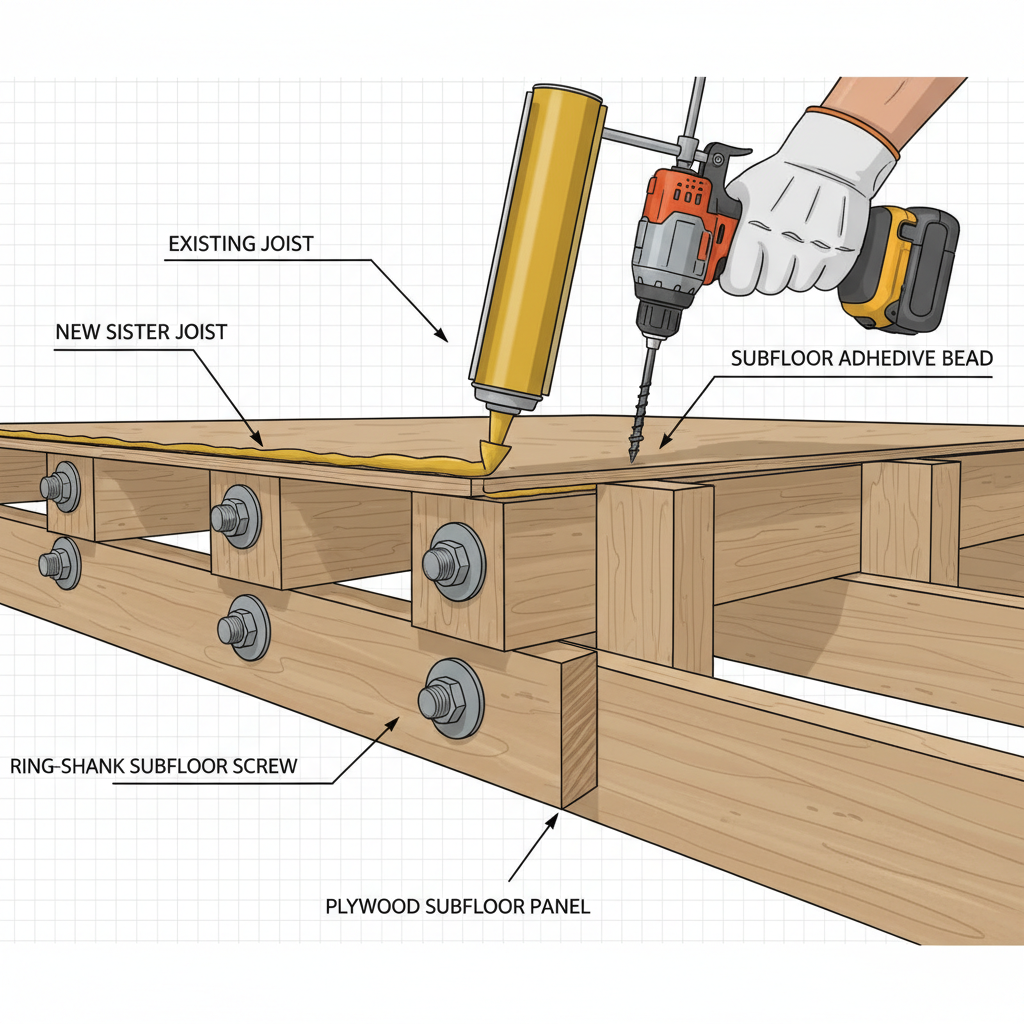
To truly strengthen subfloor integrity, contractors rely on the “Adhesive + Fastener Synergy.” When installing or repairing subfloor panels, using specialized polyurethane subfloor adhesives in conjunction with ring-shank nails or subfloor screws creates a significantly stiffer floor than using either method alone. The adhesive acts as a structural bridge, preventing the friction that causes squeaks and adding immense rigidity.
If the joists themselves are compromised or undersized, you may need to sister a floor joist. This process involves bolting a new, healthy piece of lumber directly alongside the weakened joist. Structural engineering guidelines dictate specific overlap lengths and staggered bolting patterns to ensure the load is properly transferred and the L/360 deflection limit is achieved [3]. Additionally, installing blocking or bridging (cross-bracing) between joists prevents them from twisting and dramatically increases overall floor stiffness. Note: Always use proper safety protocols and temporary shoring when repairing severely damaged floor joists.
Utilizing Self-Leveling Compounds and Premium Panels
Modern subfloor defense also relies on advanced materials. Upgrading to premium engineered subfloor panels, such as LP Legacy, provides superior moisture resistance and fastener holding power compared to standard commodity OSB [5].
For uneven floors, applying a self-leveling compound on a wood subfloor is a highly effective way to prevent subfloor damage and protect the locking mechanisms of rigid core flooring. Experts at Poured Floors Group note that pourable self-leveling materials typically possess 3 to 10 times the compressive strength of traditional patching methods [6]. However, successful application requires strict adherence to specific curing times, the use of specialized acrylic primers to seal the wood, and controlled environmental conditions to prevent the compound from cracking or debonding.
Adamantine Flooring: The Ultimate Structural Shield
Once the subfloor is reinforced, the next layer of defense is the floor covering itself. Adamantine flooring represents a premium, ultra-durable hybrid flooring category designed specifically to act as an impenetrable structural shield. By deconstructing the material science behind it, we can understand exactly how adamantine flooring protects subfloors from the top down.
Deconstructing the Hybrid Rigid Core
When evaluating Adamantine flooring structural integrity benefits, the focus immediately shifts to its unique composition. Unlike traditional vinyl, Adamantine features a highly dense, waterproof hybrid rigid core. This core provides exceptional dimensional stability, meaning it aggressively resists expanding and contracting under extreme temperature shifts—a common cause of seam failure in lesser materials.
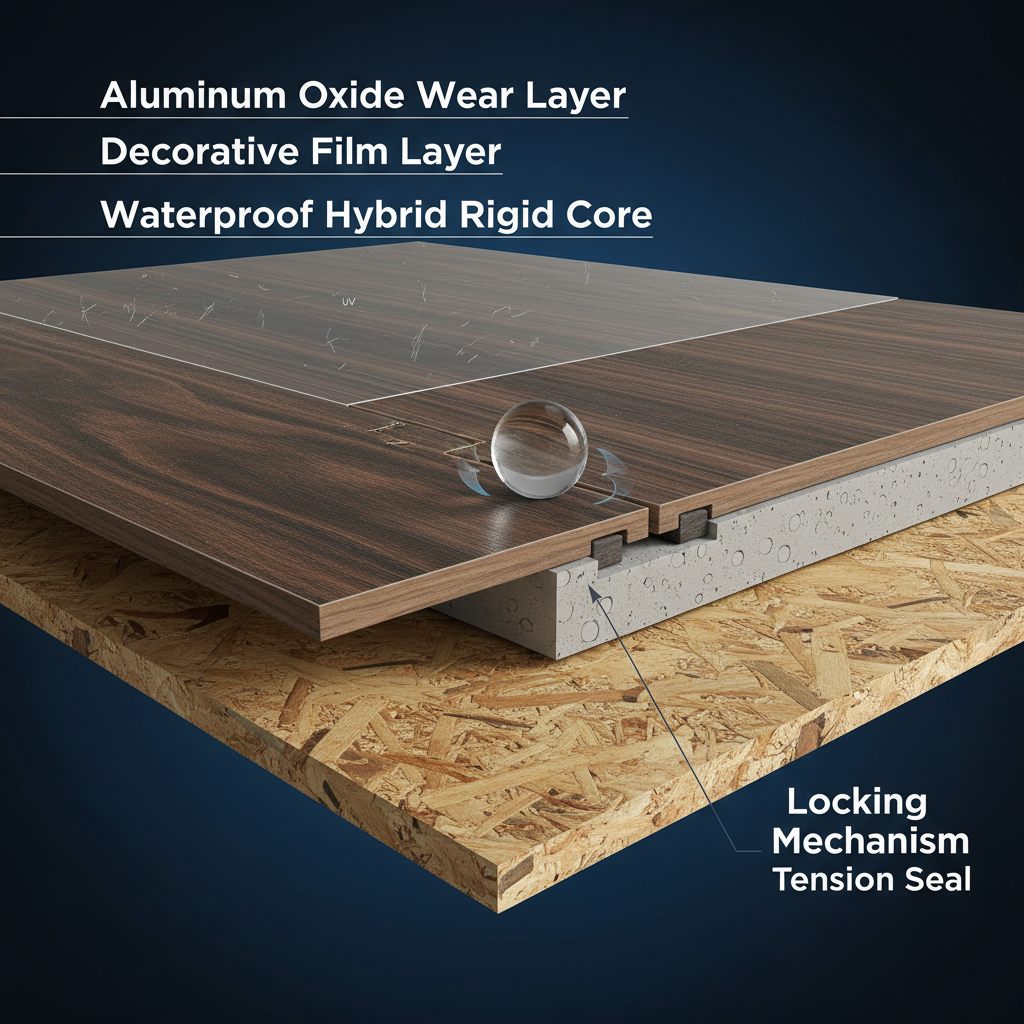
Furthermore, Adamantine flooring provides 50% more dent resistance than traditional hardwood. Structural comparison charts between Adamantine, standard SPC (Stone Polymer Composite), and WPC (Wood Plastic Composite) reveal that Adamantine’s core density allows it to survive severe impact tests, such as dropped cast iron pans, without transferring that concussive force to the subfloor below. The surface is protected by an advanced wear layer infused with aluminum oxide. The chemical and physical role of aluminum oxide—one of the hardest minerals on earth—is to provide extreme scratch resistance and UV stability, ensuring the floor maintains its integrity and color for decades. This is why manufacturer technical data sheets from Adamantine.info confidently back the product with a 50-year residential warranty covering structural integrity [7].
The ‘System Approach’ to Blocking Moisture
Adamantine does not just repel water; it utilizes a “system approach” to prevent mold on the subfloor. To understand this, one must understand the physics of moisture migration. Water naturally seeks the path of least resistance, often utilizing capillary action to draw itself down through microscopic gaps in flooring seams.
Adamantine flooring combats this through the synergy of its waterproof core and its precision-milled locking mechanism. Imagine a cross-section of the floor: the aluminum oxide layer repels surface spills, while the hybrid core refuses to absorb moisture. At the edges, the specialized locking mechanism creates a watertight tension seal. Independent lab tests on seam permeability under standing water confirm that this technology effectively blocks capillary action, preventing liquid from ever reaching the vulnerable OSB below [8]. This makes it a premier waterproof flooring solution for kitchens, bathrooms, and basements.
Comparing Durable Flooring Solutions for Subfloor Defense
While Adamantine is a top-tier choice, evaluating the best flooring to prevent subfloor damage requires comparing it against other durable flooring solutions based on specific threat types: water, scratches, and impact.
Adamantine vs. LVP and Sheet Vinyl: The Seam Vulnerability Test
A common question among homeowners is whether water seeps through LVP (Luxury Vinyl Plank) seams. While the planks themselves are waterproof, standard LVP seams can be vulnerable to standing water over time. When ranking floors by seam vulnerability, sheet vinyl technically outperforms standard LVP in flood scenarios simply because it lacks seams. However, Adamantine’s advanced locking tension bridges this gap, offering the aesthetic of planks with the watertight security of a sheet.
If a waterproof floor does suffer a compromised seam, trapped moisture becomes a severe hazard. Certified water damage restoration specialists warn that water trapped between a waterproof floor and a wood subfloor creates a perfect incubator for mold [2]. Actionable steps for a compromised seam include immediately extracting surface water, carefully unclicking the affected planks (a benefit of floating floors like Adamantine), and running dehumidifiers directly on the subfloor before reinstalling.
Commercial-Grade Durability: Epoxy, LVT, and Total Cost of Ownership
For commercial spaces or high-traffic residential garages, durable flooring options like epoxy coatings and commercial LVT (Luxury Vinyl Tile) are often considered. Epoxy provides a seamless, highly chemical-resistant barrier, while commercial LVT offers extreme wear resistance.
When analyzing the Total Cost of Ownership, facility managers and experts at Spectra Contract Flooring note that while epoxy has a high upfront installation cost, its longevity in hygienic environments is unmatched [9]. LVT, on the other hand, offers easier localized repairs. When choosing commercial flooring, it is also vital to review industry wear layer standards (e.g., 20 mil versus 12 mil LVP) as outlined by the National Wood Flooring Association (NWFA) and Floor Covering Weekly [8][10], as well as slip-resistance (Coefficient of Friction – COF) ratings. Furthermore, many modern LVT and hybrid options contribute to LEED-certified flooring standards, offering a strong overlap between environmental sustainability and long-term durability. For ultimate water resistance in commercial wet areas, porcelain tile remains a standard, boasting a water absorption rate of 0.5 percent or less as defined by ASTM C373 [11].
The Lifecycle Protection Plan: Securing Your Investment
Protecting your subfloor is not a one-time event; it requires a preventative lifecycle plan. From the moment the subfloor is exposed during construction to the daily rigors of family life, proactive subfloor protection ensures your investment survives.
Installation: Vapor Barriers and Sealants
The first step in prevention occurs before the flooring is laid. Do you need a vapor barrier over a wood subfloor? The answer depends on the environment below. The International Residential Code (IRC) outlines specific standards for moisture barriers, particularly over crawlspaces and concrete slabs [12].
When selecting the best waterproof barrier for a plywood subfloor, homeowners must choose between painted-on subfloor sealants and physical plastic vapor barriers. While painted sealants offer a seamless topical coat, heavy physical vapor barriers (like 6-mil polyethylene) provide superior long-term efficacy against rising dampness. It is crucial to verify the chemical compatibility between any subfloor adhesives used and the chosen vapor barrier. Ultimately, the underlayment and the flooring must work in conjunction to create a complete moisture system. Standard operating procedures from the University of Michigan EHS highlight that controlling moisture at this foundational level is the most effective method for preventing indoor mold growth [13].
Daily Use and High-Stress Events: Moving and Pets
Once the floor is installed, daily habits dictate its lifespan. To prevent subfloor damage from pets, particularly urine which can seep into seams and permanently damage wood subfloors, immediate remediation is required. Standard cleaners are insufficient; protocols dictate the use of enzymatic treatments that break down the uric acid crystals before they can penetrate the locking mechanisms of your durable flooring solutions.
High-stress events, such as moving heavy furniture or undergoing secondary construction, pose massive risks for impact damage. Moving and logistics experts at U-Pack recommend utilizing specific, industry-standard commercial-grade protection products [14]. Instead of relying on thin plastic drop cloths, lay down heavy-duty, breathable surface protectors like Ram Board or X-Board. These materials distribute the weight of heavy loads, preventing the concussive force from denting the flooring or compromising the subfloor joists below. Finally, in flood-prone areas, adhering to FEMA guidelines for flood prevention and structural recovery—which includes utilizing 100% waterproof closed-cell materials—can mean the difference between a simple cleanup and a total structural loss [15].
Conclusion
The health of your home relies on a critical shift in perspective: flooring must be viewed not merely as an aesthetic choice, but as a vital structural shield. By embracing the preventative economics of “bottom-up” floor defense, you safeguard your property against the hidden, catastrophic costs of wood rot, moisture penetration, and joist failure. Investing in proper subfloor preparation and advanced materials like Adamantine flooring’s hybrid core technology saves thousands in reactive repairs. We encourage you to assess your current subfloor health using the triage guides provided, and to consult with a certified flooring installer to discuss integrating a truly impenetrable flooring system into your next renovation or new build project.
Disclaimer: This article provides informational guidelines on structural integrity and subfloor protection. For severe water damage, structural sagging, or new build failures, always consult a licensed structural engineer or certified water damage restoration professional.
References & Authoritative Sources
- CTLGroup. (N.D.). Concrete Moisture and Structural Failures Data. Retrieved from comprehensive research findings on moisture-related flooring failures.
- Guarantee Restoration. (N.D.). Water Damage Remediation and Structural Drying Guidelines. Retrieved from comprehensive research findings on subfloor water damage.
- Inspect My Home. (N.D.). Professional Building Inspection Service: Critical Defect Criteria and Load-Bearing Failures. Retrieved from comprehensive research findings on weak subfloor issues.
- Huber Engineered Woods. (N.D.). Engineering Data on Fastener Holding Power and Panel Stiffness. Retrieved from comprehensive research findings on weak subfloor issues.
- LP Building Solutions. (N.D.). Guidelines on Structural Integrity After Water Exposure and Premium Subflooring Installation. Retrieved from comprehensive research findings on subfloor water damage.
- Poured Floors Group. (N.D.). Self-Leveling and Structural Underlayments Expertise. Retrieved from comprehensive research findings on strengthening subfloor integrity.
- Adamantine.info. (N.D.). Official Manufacturer Specifications, Warranty Data, and Structural Claims. Retrieved from comprehensive research findings on Adamantine flooring.
- Floor Covering Weekly. (N.D.). Industry Trends, Material Testing Authority, and Wear Layer Standards. Retrieved from comprehensive research findings on durable flooring.
- Spectra Contract Flooring. (N.D.). Commercial Flooring Installation Experts and Material Longevity Insights. Retrieved from comprehensive research findings on durable flooring solutions.
- National Wood Flooring Association (NWFA). (N.D.). Comparative Baseline Standards for Flooring Durability. Retrieved from comprehensive research findings on Adamantine flooring.
- American Society for Testing and Materials (ASTM). (N.D.). ASTM C373 Standard for Water Absorption in Tiles. Retrieved from comprehensive research findings on best flooring to prevent subfloor damage.
- International Code Council (ICC). (N.D.). International Residential Code (IRC) Standards for Moisture Barriers and Subfloor Integrity. Retrieved from comprehensive research findings on subfloor protection.
- University of Michigan EHS. (N.D.). Standard Operating Procedures for Preventing Mold and Floor Damage. Retrieved from comprehensive research findings on preventing subfloor damage.
- U-Pack. (N.D.). Moving and Logistics Guidelines on Floor Protection During High-Stress Events. Retrieved from comprehensive research findings on preventing subfloor damage.
- Federal Emergency Management Agency (FEMA). (N.D.). Guidelines for Flood Prevention and Structural Recovery. Retrieved from comprehensive research findings on preventing subfloor damage.
