If you are a homeowner, a parent, or a pet owner, you likely know the frustration of easily damaged floors. The sinking feeling of watching a dropped pan dent a supposedly “hard” wood plank, or seeing dog claws leave permanent trails across a high-traffic hallway, is all too common. Dealing with high maintenance floors that require constant buffing, specialized cleaning, and endless worry is a burden that detracts from the comfort of your home.
Enter the concept of “adamantine flooring.” In the industry, the word “adamantine” is frequently tossed around as a marketing buzzword meant to evoke images of indestructible, diamond-like surfaces. But what does it actually mean when applied to residential flooring?
This article is your definitive, science-backed guide to cutting through the industry jargon. We are going to reveal the real materials, the hidden installation secrets, and the commercial-grade maintenance blueprints required to achieve a truly life-proof, generational floor. Whether you are looking for scratch resistant flooring solutions or aiming to balance extreme durability with high-end design, this guide will help you build a foundation for enduring style.
- Decoding “Adamantine Flooring”: Marketing Myth vs. Material Science
- Premium Quality Flooring: Balancing Enduring Style with Extreme Durability
- Diagnosing Easily Damaged Floors: The Refinish vs. Replace Matrix
- The Hidden Foundation: High Quality Adamantine Flooring Installation
- The Low-Maintenance Blueprint: Protecting Your Flooring Investment
- Conclusion
- References & Authoritative Sources
Decoding “Adamantine Flooring”: Marketing Myth vs. Material Science
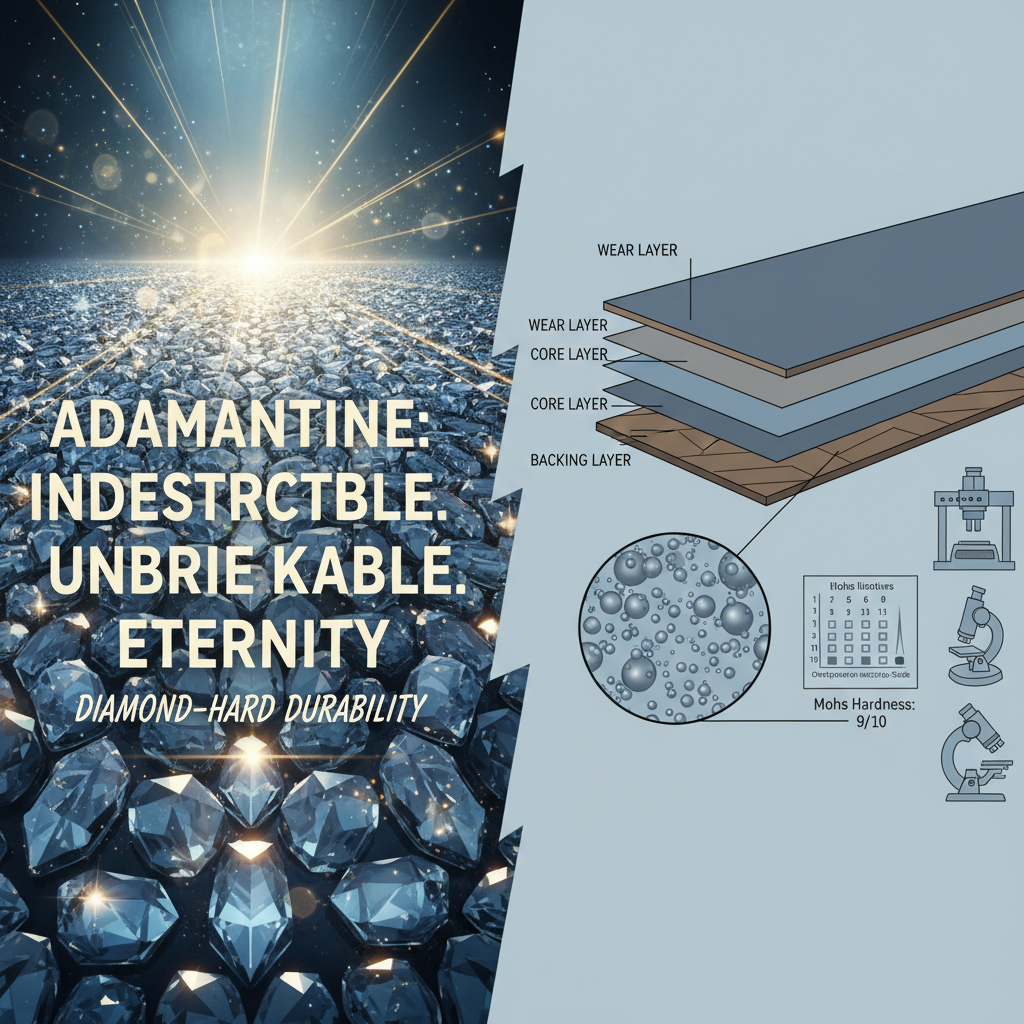
The term “adamantine” literally translates to “unbreakable” or “diamond-like.” However, when shopping for durable flooring, it is crucial to separate marketing myths from actual material science. No floor is entirely immune to the laws of physics, but by understanding the scientific metrics used to measure durability, you can find materials that come incredibly close.
To establish true durability, materials scientists rely on the Mohs hardness scale, which ranks materials from 1 (talc) to 10 (diamond) based on their ability to resist scratching [1]. When a manufacturer claims a floor is “adamantine,” you must look past the brochure and ask where the material falls on this scale. Furthermore, water resistance is a key component of durability. The Tile Council of North America (TCNA) sets rigorous standards for premium materials, noting that true porcelain tile must have a water absorption rate of under 0.5%, making it virtually impervious to moisture damage [2].
What Does “Adamantine” Actually Mean for Your Home?
When we talk about adamantine flooring, it is important to clarify the difference between residential “durable” grades and commercial “adamantine” grades. In industrial settings, adamantine-level durability is typically achieved using thick epoxy coatings, specialized commercial porcelain, or polished concrete.
For residential applications, the user intent behind the search for adamantine flooring is usually a desire for the absolute hardest, most scratch-proof floor available that still looks like it belongs in a home. However, as industrial flooring contractors and materials scientists will point out, the claim of a completely “scratch-proof” floor is a marketing exaggeration [1]. Even the hardest glazed porcelain can be scratched by materials higher on the Mohs scale, such as certain types of sand or quartz tracked in on shoes. The goal is not invincibility, but rather finding a material with a wear layer robust enough to withstand decades of heavy residential abuse without showing visible degradation.
Top Contenders for Adamantine-Grade Durability
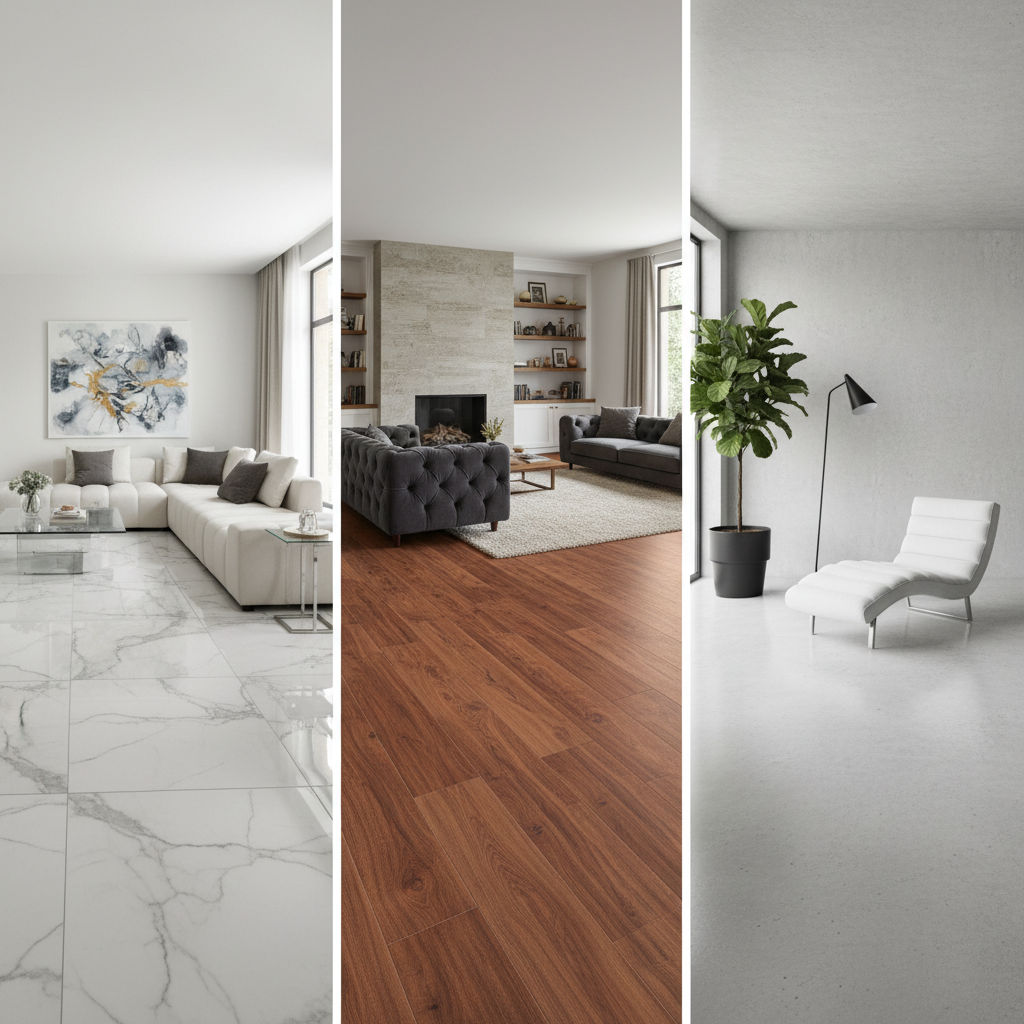
If you are seeking the ultimate scratch resistant flooring solutions, three top contenders bridge the gap between industrial strength and residential beauty: high-end porcelain tile, hybrid luxury planks, and decorative concrete.
While industrial epoxy coatings offer phenomenal chemical and impact resistance for garages or warehouses, they often lack the warmth desired for living spaces. High-end residential porcelain, however, offers a comparable level of surface hardness while mimicking the look of natural wood or stone. To validate these durability claims, independent testing organizations utilize the Taber Abrasion Test. As detailed by Li Wang, a flooring testing lead at Consumer Reports, this rigorous methodology measures how well a surface withstands repetitive friction, proving that premium porcelain and high-quality hybrid options consistently outlast traditional softwoods and cheap laminates [3].
Premium Quality Flooring: Balancing Enduring Style with Extreme Durability
For affluent homeowners, upgrading a home is not just about finding a floor that won’t scratch; it is about investing in “generational flooring.” Premium quality flooring balances aesthetic luxury with extreme longevity.
When evaluating long lasting premium flooring options, the conversation must shift from mere surface-level aesthetics to architectural longevity and real estate value. According to luxury real estate agents and design publications like Architectural Digest, installing premium, permanent flooring is one of the few home upgrades that consistently yields a high return on investment (ROI), as buyers are willing to pay a premium for homes that will not require a flooring overhaul in the next decade [4]. Choosing the best durable flooring for enduring style means selecting materials that will look as timeless in fifty years as they do today.
Natural Stone & Exotic Hardwoods: Generational Investments
When discussing premium quality flooring, natural stone and exotic hardwoods are the gold standards for generational investments. Materials like natural quartzite and granite can easily last 50 to 100 years or more with proper care. Quartzite, formed through the geological heating and pressurization of sandstone, is incredibly dense and ranks high on the Mohs scale, making it highly resistant to scratches and etching [1].
Similarly, exotic hardwoods like Brazilian Cherry or Tigerwood offer incredible density compared to domestic oak. This density is measured by the Janka hardness scale, which calculates the force required to embed a steel ball halfway into the wood. While these materials are stunning and durable, buyers must be conscious of their environmental impact. It is highly recommended to source these premium exotic woods through suppliers certified by the Forest Stewardship Council (FSC), ensuring the materials are harvested using sustainable forestry practices that protect global ecosystems [5].
High-End LVP & Laminate: The Chameleon Materials
For those seeking durable stylish flooring upgrades without the structural weight of stone or the maintenance of exotic wood, high-end Luxury Vinyl Plank (LVP) and premium laminate are the ultimate “chameleon” materials. Modern manufacturing, utilizing photorealistic 3D printing technology, allows these synthetic options to flawlessly mimic premium materials like reclaimed barn wood or Carrera marble.
However, not all LVP and laminate are created equal. To ensure true scratch resistance, you must evaluate their technical specifications. For laminate, look for the AC (Abrasion Class) rating. An AC rating of 3 or 4 is ideal for heavy-traffic residential areas, indicating the floor has passed rigorous tests for abrasion, impact, and staining. For LVP, durability is dictated by the mil-thickness of its clear wear layer; a wear layer of 20 mil or higher is required for true adamantine-like resilience. Interior design authorities, such as Elle Decor, frequently highlight how these high-performance chameleon materials can be seamlessly integrated into current home decor trends, offering high-end looks on a high-traffic budget [6].
Diagnosing Easily Damaged Floors: The Refinish vs. Replace Matrix
Even with the best intentions, many homeowners find themselves living with easily damaged floors. If your current floors are scratching, denting, or buckling, you are likely facing the classic “Refinish vs. Replace” dilemma. Worn out flooring not only diminishes the aesthetic appeal of your home but can also present structural and legal dangers, such as tripping hazards.
Making the right financial decision requires a comprehensive matrix based on your floor’s current material, the depth of the damage, and your budget. More importantly, it requires diagnosing whether the damage is merely on the surface or indicative of a deeper, hidden failure.
Identifying the Root Cause: Surface Wear vs. Structural Failure
The first step in addressing easily damaged floors is identifying the root cause. Is the damage a result of mechanical wear (like heavy furniture and pet claws), or is it a symptom of water damage and structural failure?
According to building pathology experts at Inspectapedia, many surface issues—such as cracked tiles, buckling laminates, or squeaking hardwoods—are actually caused by subfloor deflection or moisture vapor transmission from below [7]. A diagnostic checklist, ideally reviewed by a licensed home inspector, should include checking for acoustic signs like increased squeaking (which points to subfloor degradation) and looking for cupping or crowning in wood planks, which almost always indicates a hidden moisture issue rather than just surface-level wear.
DIY Tests Before You Call a Pro
Before paying for a professional consultation for your worn out flooring, there are clear, step-by-step DIY tests you can perform to assess the state of your floor’s finish.
Carly Harrington, a flooring restoration expert at Floor Coverings International, recommends the “water drop test” for solid hardwood floors [8]. Simply drop a small amount of water onto a high-traffic area of the floor. If the water beads up, the polyurethane finish is still intact, and the floor may just need a deep clean and a fresh topcoat. If the water immediately soaks into the wood, turning it dark, the finish has completely worn away, and the floor requires full sanding and refinishing. Additionally, you can check the wear layer thickness of engineered hardwood by removing a floor register vent and looking at the cross-section of the plank to see if there is enough veneer left (typically at least 2-3mm) to survive a sanding machine.
The Hidden Foundation: High Quality Adamantine Flooring Installation
The most expensive, adamantine-grade material in the world will fail prematurely if it is installed poorly. When users search for high quality adamantine flooring installation, they are often focused on the visual result, but the reality is that longevity is dictated by what lies beneath.
A long lasting floor installation requires meticulous attention to the hidden foundation. Even the best materials will buckle, crack, or separate without expert installation techniques, proper expansion gaps, and strict adherence to subfloor leveling tolerances. For instance, large-format premium porcelain requires a subfloor flat to within 3/16 of an inch over a 10-foot span; any deviation can lead to hollow spots and cracked tiles.
Subfloor Preparation: The Secret to a Lifetime Floor
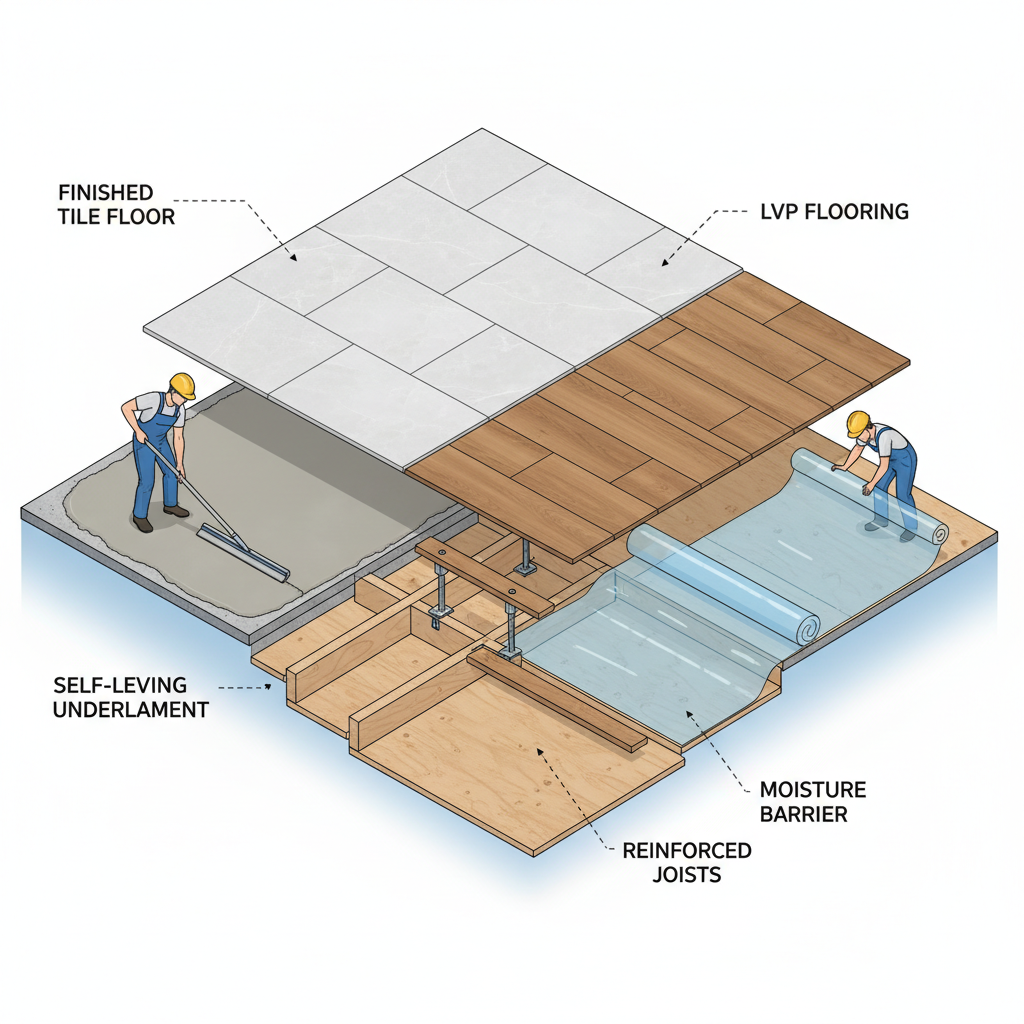
Subfloor preparation is the undisputed secret to a long lasting floor installation. This process involves repairing damaged joists, leveling low spots with self-leveling underlayment, and grinding down high spots.
Furthermore, moisture testing concrete slabs is an absolutely critical step before installing wood or vinyl. Recognized home improvement authorities like This Old House emphasize that failing to install a proper moisture barrier over a concrete slab will inevitably lead to warped planks and mold growth [9]. Additionally, if you are upgrading to heavy natural stone, the subfloor must be structurally reinforced to handle the immense dead weight, preventing joist sagging and catastrophic tile failure down the line.
Understanding the True Costs of Premium Installation
When budgeting for high quality adamantine flooring installation, consumers are often blindsided by hidden costs because typical cost guides ignore the realities of subfloor prep and material hardness.
Adam Graham, a construction industry analyst at Fixr.com, provides highly accurate, aggregated national cost data indicating that while the average cost to install a laminate floor ranges from $1,500 to $3,500, subfloor repair or replacement can add an additional $1.50 to $7.00 per square foot to the project [10]. Furthermore, materials with high AC ratings or thick wear layers are physically harder to cut, which can increase labor time and dull contractor tools faster. Finally, investing in a premium 3-in-1 underlayment is essential for floating floors, as it provides crucial sound reduction, thermal insulation, and moisture protection, directly impacting the floor’s overall lifespan and acoustic feel.
The Low-Maintenance Blueprint: Protecting Your Flooring Investment
Once your premium floor is installed, protecting that investment becomes the priority. Many homeowners are burdened by high maintenance floors that require constant upkeep.
The ultimate goal is to implement a “Low-Maintenance Blueprint” that contrasts the high cost and time of maintaining delicate materials (like solid hardwood that requires periodic waxing and refinishing) against the ease of modern scratch resistant flooring solutions like LVP or glazed porcelain. By adopting the right strategies, you can significantly extend the life of your floor while reducing your daily workload.
Commercial Cleaning Standards for Residential Floors
To truly protect your investment from becoming high maintenance floors, it is wise to adopt commercial janitorial standards for your residential applications. Commercial spaces experience exponentially more foot traffic than homes, yet their floors last for decades due to strict maintenance protocols.
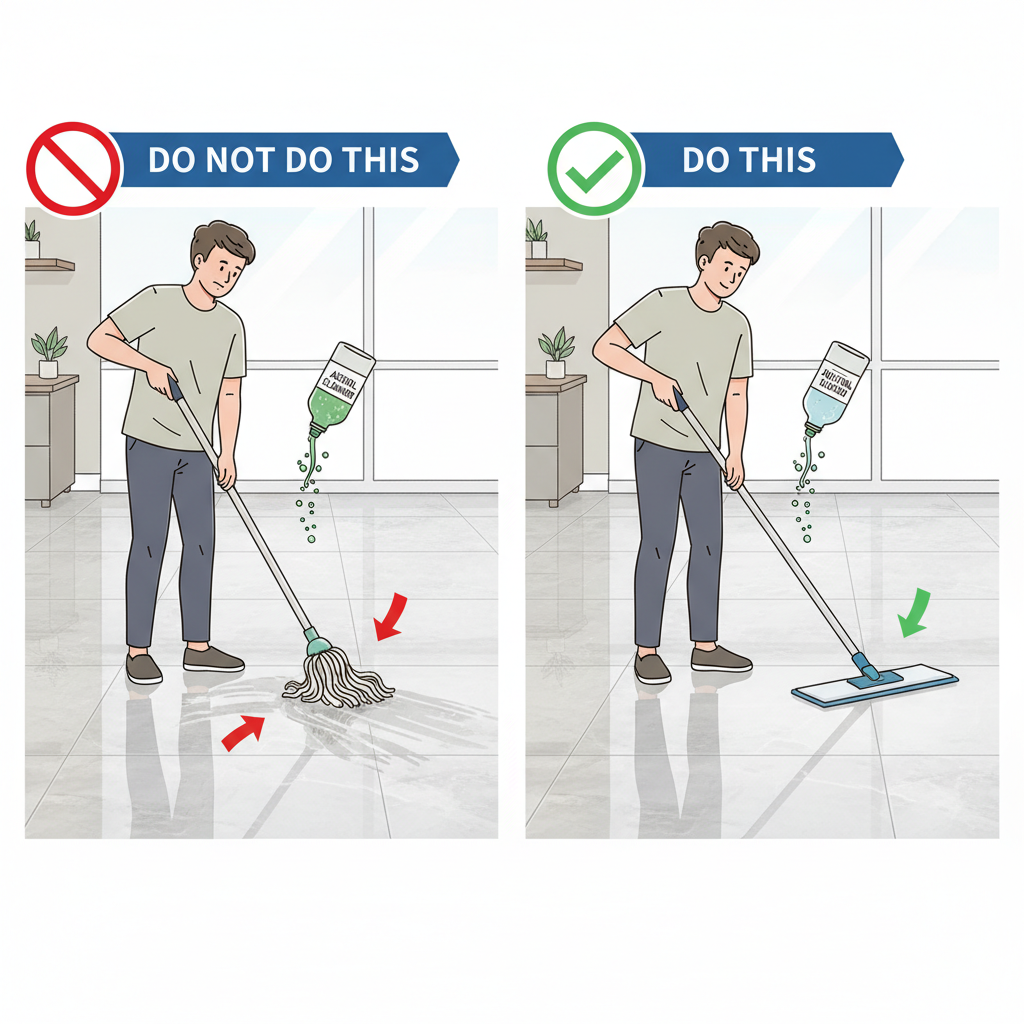
According to commercial floor care standards provided by organizations like Ramco Building Maintenance, the key to longevity is preventing the cumulative chemical damage caused by improper cleaning agents [11]. There is a vast chemical difference between oil-based wood treatments and modern polyurethane finishes. Using harsh, acidic, or highly alkaline cleaners can strip the protective wear layer off LVP and dull the finish of porcelain. Always use pH-neutral cleaning solutions to prevent chemical degradation. Furthermore, ditch the traditional cotton string mop, which simply pushes dirty water into grout lines and seams. Instead, use flat microfiber mops that trap abrasive dirt and require significantly less liquid, preventing moisture from seeping into the joints of your flooring.
Conclusion
Achieving true “adamantine” flooring is not about finding a magical, indestructible product in a catalog. It is a comprehensive process that bridges material science, generational longevity, and high-end design. It requires selecting scientifically proven, premium materials like high-end porcelain, luxury vinyl plank, or natural stone. It demands executing flawless subfloor preparation and expert installation to ensure structural integrity. Finally, it relies on adhering to strict, commercial-grade maintenance protocols to protect the surface from daily wear and tear. By prioritizing these elements, you ensure a phenomenal return on investment and a home that remains beautiful for decades. We encourage you to assess your current subfloor health using the DIY tests provided in this guide, and to contact a Certified Flooring Installer (CFI) to get an accurate quote on a truly enduring flooring upgrade.
*Disclaimer: Pricing estimates are based on national averages and may vary by region. Always consult a licensed Certified Flooring Installer (CFI) or structural engineer for specific subfloor assessments and structural repairs.*
References & Authoritative Sources
- Materials Scientist / Industrial Flooring Contractor Consensus. (N.D.). Mohs Hardness Scale and the Limits of Scratch-Proof Flooring Materials.
- Tile Council of North America (TCNA). (N.D.). Industry Standards for Porcelain Hardness and Water Absorption Rates. Retrieved from TCNA guidelines.
- Wang, L. / Consumer Reports. (N.D.). Flooring Wear Resistance and the Taber Abrasion Test Methodology. Consumer Reports.
- Architectural Digest / Luxury Real Estate Market Insights. (N.D.). The ROI of Premium Flooring and Architectural Longevity. Architectural Digest.
- Forest Stewardship Council (FSC). (N.D.). Standards for Sustainable Sourcing of Exotic Hardwoods.
- Elle Decor. (N.D.). Integrating Durable Flooring Types with Current Home Decor Trends. Elle Decor.
- Inspectapedia. (N.D.). Building Pathology: Subfloor Deflection and Moisture Vapor Transmission. Inspectapedia.
- Harrington, C. / Floor Coverings International. (N.D.). DIY Diagnostic Tests for Worn Out Flooring and Finish Restoration. Floor Coverings International.
- This Old House. (N.D.). Subfloor Repair Necessities and Structural Reinforcement for Heavy Flooring. This Old House.
- Graham, A. / Fixr.com. (N.D.). National Average Cost Data for Laminate Installation and Subfloor Repair. Fixr.com.
- Ramco Building Maintenance. (N.D.). Commercial Janitorial Standards for Floor Care and Preventative Maintenance. Ramco Building Maintenance.
