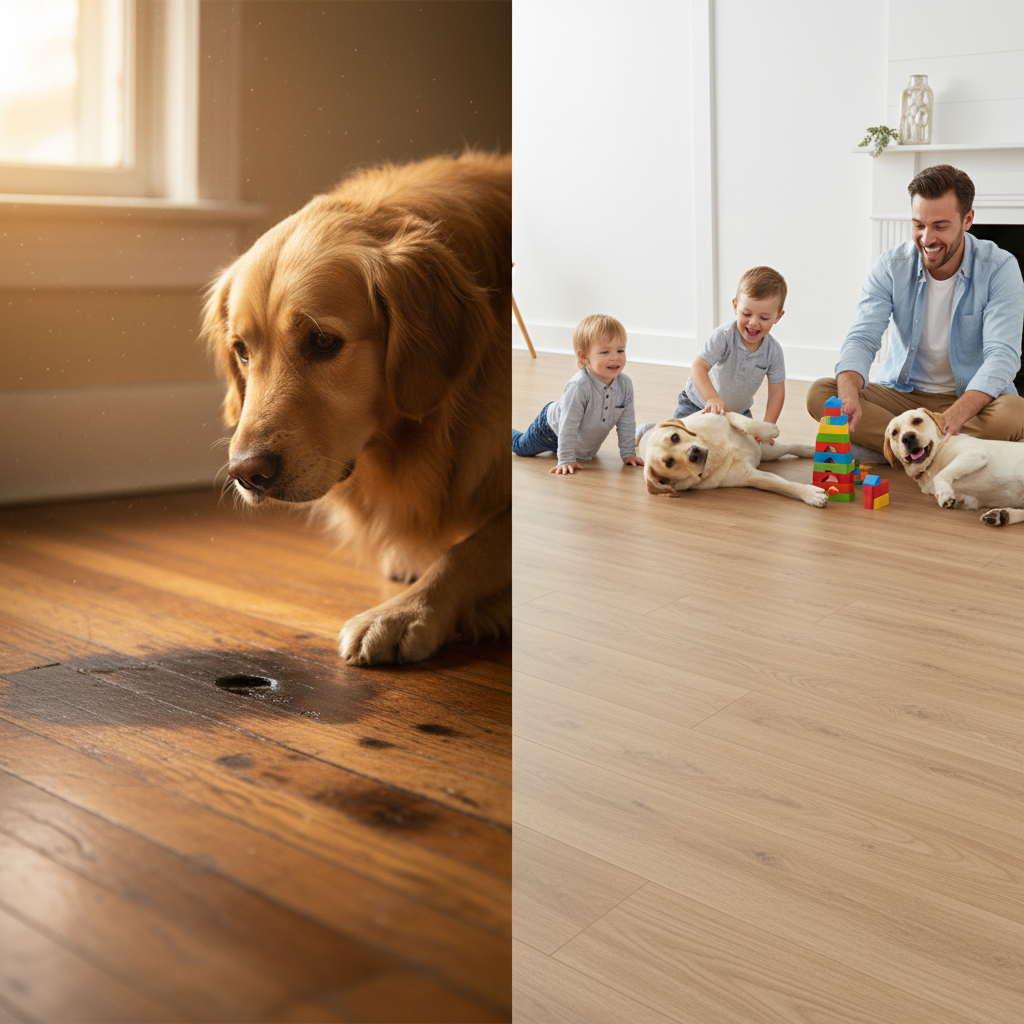
There is a unique kind of heartbreak that comes from watching a beautiful, expensive home renovation slowly degrade under the weight of daily life. For active families, the dream of pristine interiors often clashes violently with reality: the frantic scrambling of a large dog chasing a tennis ball, a toddler’s spilled juice box left unnoticed, or the heavy scrape of a dining chair pushed back too hastily. If you are exhausted by the financial loss of easily scratched hardwood floors and the constant anxiety of pet damage, you are not alone.
Enter the concept of “adamantine flooring.” More than just a marketing buzzword, adamantine flooring represents a science-backed, lifetime investment in ultra-durable, virtually indestructible materials. This comprehensive guide will cut through deceptive industry jargon to reveal true worry-free flooring solutions. We will explore the material science behind these indestructible surfaces, detail the true return on investment (ROI), and provide a reality check on installation so you can finally achieve a beautiful, stress-free home.
- The Heartbreak of High Maintenance: Why Traditional Floors Fail
- What is Adamantine Flooring? The Science of Indestructibility
- Worry-Free Flooring for Dogs and Kids: The Active Family Solution
- Top Low Maintenance Flooring Options Evaluated
- The True ROI: Benefits of Installing Adamantine Flooring
- How to Install Adamantine Durable Floors (And Avoid Costly Mistakes)
- Conclusion
- References & Authoritative Sources
The Heartbreak of High Maintenance: Why Traditional Floors Fail
To understand the value of an indestructible floor, we must first examine why traditional materials fail so spectacularly under the stress of modern, active households. Many homeowners find themselves asking, “Why does my hardwood floor scratch so easily?” The answer lies in the cellular structure of the wood itself. According to the National Wood Flooring Association (NWFA), wood hardness is measured using the Janka hardness scale. Softwoods commonly used in older homes or budget renovations, such as Pine and Douglas Fir, have Janka ratings well under 1000, making them highly susceptible to deep gouges and surface scratches from everyday traffic [1].
Beyond physical scratches, damaged flooring from pets is a leading cause of premature floor replacement. A common, highly distressing question is whether pet urine can permanently ruin hardwood floors. The reality is grim. Guidelines from the Institute of Inspection, Cleaning and Restoration Certification (IICRC) explain that pet urine can penetrate unsealed wood in under four hours [2]. This causes a chemical reaction that results in permanent black stains, warping, and eventually, severe subfloor rot that standard cleaning cannot fix.
Furthermore, the burden of upkeep drives many homeowners to seek a high maintenance floor replacement. Traditional materials are exhausting to maintain. Data from ISSA (The Worldwide Cleaning Industry Association) indicates that natural stone and traditional hardwood require professional maintenance, such as waxing, sealing, or refinishing, every one to three years [3]. For a busy family, this constant cycle of delicate cleaning and expensive professional upkeep is simply unsustainable.
What is Adamantine Flooring? The Science of Indestructibility
When we talk about “adamantine flooring,” we are not referring to a single brand or a magical new tree species. We are defining the absolute pinnacle of ultra-durable materials. To separate marketing fluff from reality, we must look at the material science.
Consumers frequently ask, “Is there any flooring that is 100% scratch proof?” To build immense trust and transparency: no flooring on earth is 100% scratch-proof against every conceivable threat. However, long lasting scratch proof flooring in the “adamantine” category gets incredibly close. The durability of these floors is rigorously tested using the Taber Abrasion Test. According to ASTM International standards, adamantine-grade floors can withstand up to 10,000 abrasion cycles without significant wear, a staggering number compared to standard residential finishes [4].
This extreme resilience is largely due to advanced surface treatments. The application of aluminum oxide finishes, for instance, increases scratch resistance by up to 400% compared to standard polyurethane coatings [5]. When you purchase adamantine-grade flooring, you are buying a scientifically engineered shield for your home.
Demystifying Wear Layers and Aluminum Oxide
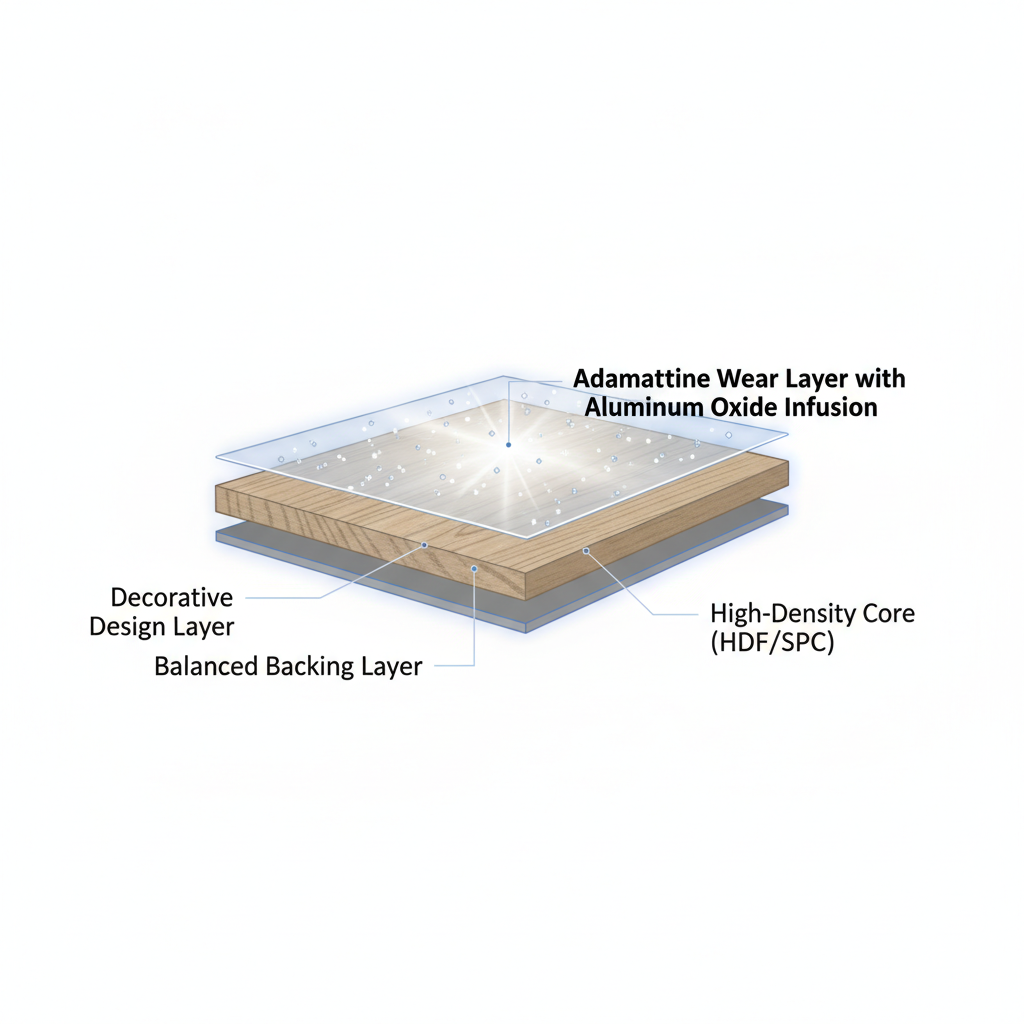
To truly understand adamantine flooring, you need a brief masterclass in the anatomy of durable materials. The secret lies in the “wear layer”—the clear, protective topcoat that shields the printed design and core of the floor.
According to glossary insights from the Floor Covering Institute, wear layers are measured in “mils” (one-thousandth of an inch) [6]. A standard residential floor might have a 12-mil wear layer, which is adequate for light foot traffic. However, true adamantine-grade Luxury Vinyl Plank (LVP) features a 20-mil commercial wear layer or higher. When this thick wear layer is infused with aluminum oxide—one of the hardest minerals on earth—the result is a floor that boasts a Janka equivalent rating exceeding 3000. Whether it is engineered stone compositions or rigid core LVP, this combination of a thick mil rating and mineral-infused coating is what creates a truly indestructible surface.
Worry-Free Flooring for Dogs and Kids: The Active Family Solution
Shifting from technical specifications to lifestyle benefits, adamantine-grade materials are the ultimate worry-free floors for households constantly battling chaos. When evaluating the best durable flooring for active families, you must address the dual-threat of pet claws and child-related impacts.
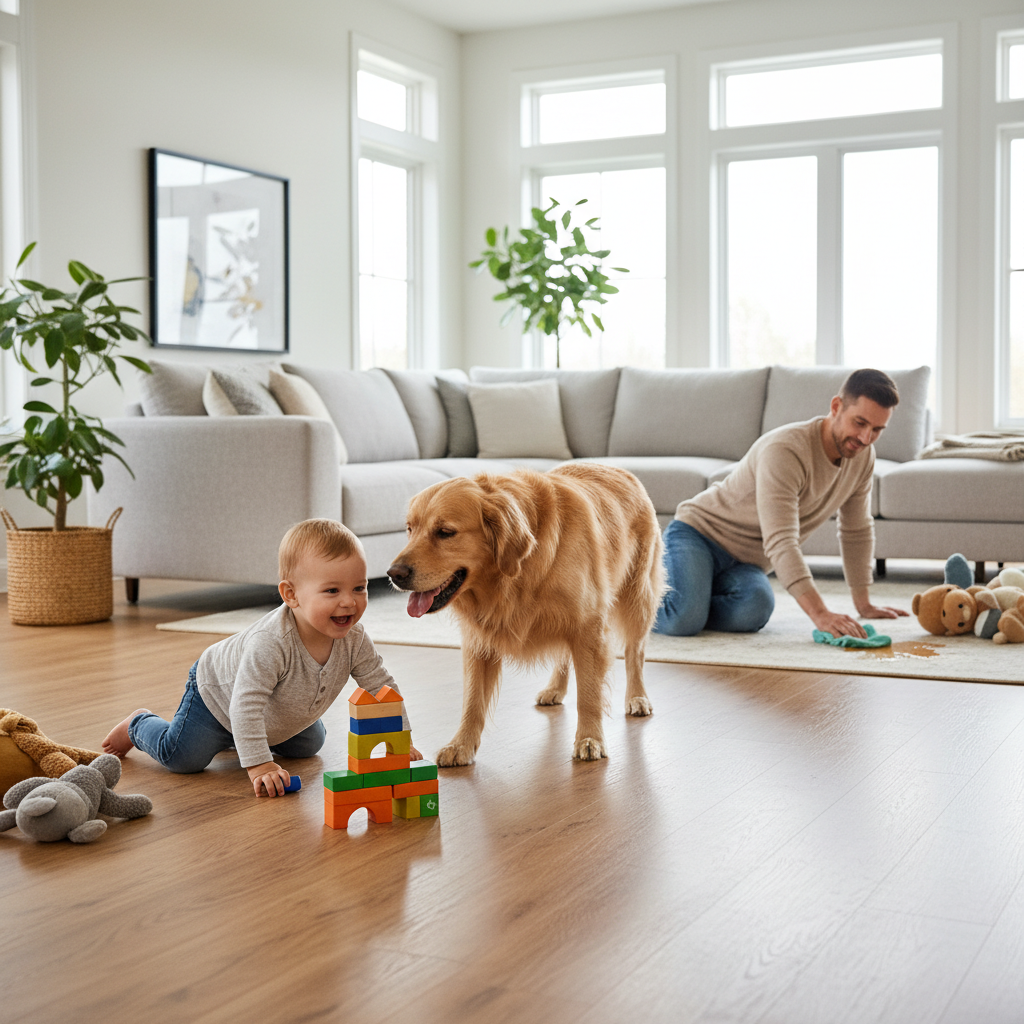
For pet owners asking, “What is the best scratch-proof flooring for large dogs?”, the answer goes beyond just avoiding scratches. It is also about the health of the animal. Insights from the American Veterinary Medical Association (AVMA) highlight the importance of paw traction and joint health on hard floors [7]. High-quality rigid core LVP often features embossed textures that not only mimic real wood grain but provide essential grip for aging dogs, preventing hip injuries caused by slipping on high-gloss traditional floors.
For parents, safety and spill resistance are paramount. Worry-free flooring for dogs and kids must be 100% waterproof to handle knocked-over water bowls and potty-training accidents. Furthermore, the American Academy of Pediatrics notes the critical nature of fall prevention in the home, stating that slip-resistant flooring can reduce household fall risks by 30% [8]. Finally, when selecting these synthetic materials, it is vital to look for GREENGUARD Certification. This ensures the flooring meets strict indoor air quality standards and emits low Volatile Organic Compounds (VOCs), making it completely safe for babies crawling on the floor [9].
Top Low Maintenance Flooring Options Evaluated
If you are looking for low maintenance flooring options, the market offers several highly durable choices, but they are not all created equal. When comparing materials to find the easiest flooring to keep clean, Consumer Reports data shows that Luxury Vinyl Plank (LVP) holds over 30% of the durable flooring market share, consistently rating at the top for low maintenance and ease of care [10].
When evaluating durable flooring, consider the “Cleaning Difficulty Rating.” Interestingly, aesthetics play a massive role in maintenance. Mid-tone floors with heavy, realistic grain patterns hide dirt, dust, and pet hair 50% better than dark, glossy floors [11]. This means less time sweeping and more time enjoying your home.
Porcelain tile is another adamantine-grade contender. The Tile Council of North America (TCNA) notes that properly installed porcelain tile has a lifespan of 50+ years [12]. While the tile itself is virtually indestructible and waterproof, it is important to remember that grout lines will require periodic sealing to remain truly low maintenance. For those wondering how to clean adamantine floors, the beauty lies in simplicity: a damp mop and a pH-neutral cleaner are generally all that is required to keep them looking pristine for decades.
The True ROI: Benefits of Installing Adamantine Flooring
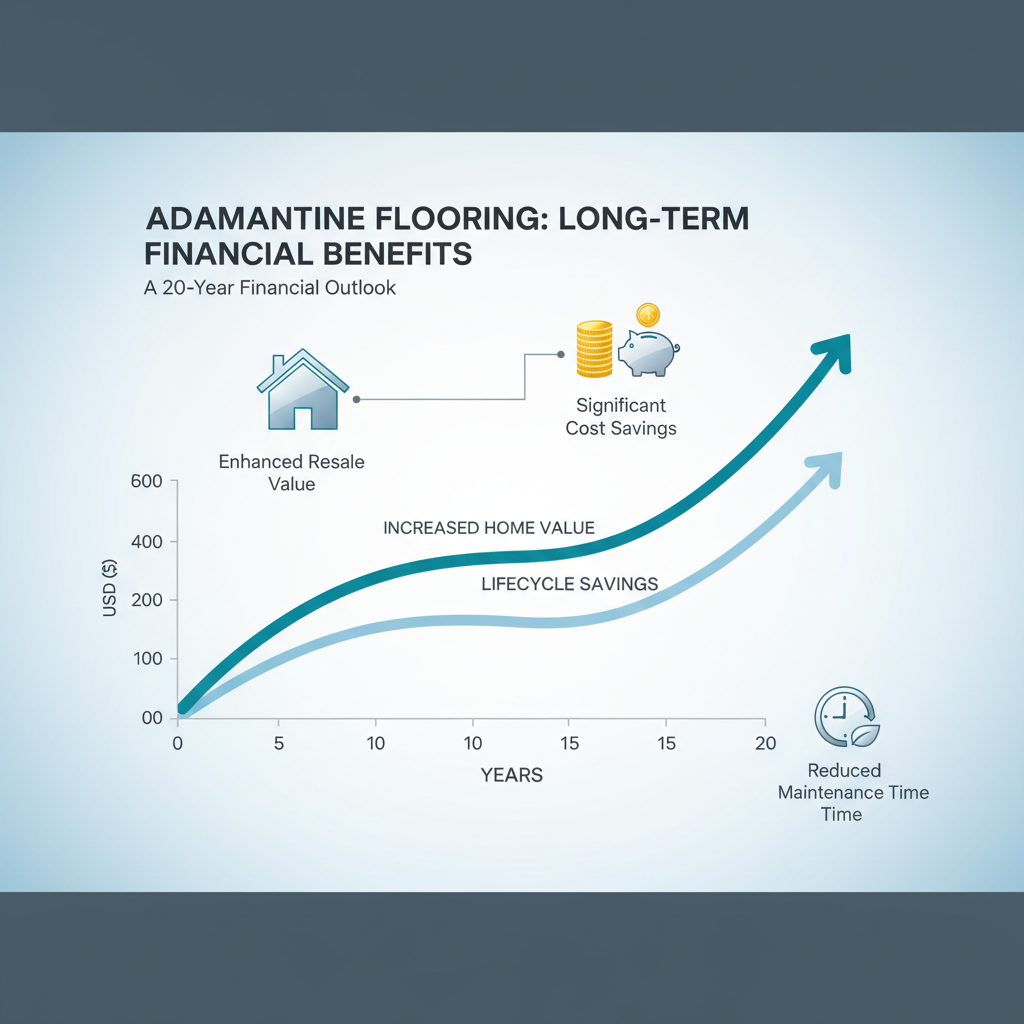
Upgrading to premium, indestructible materials is a significant financial commitment. Homeowners rightly ask, “Is adamantine flooring worth the money?” and “Does adamantine flooring increase home value?” To answer this, we must look at the true Cost of Ownership over a 20-year span.
The benefits of installing adamantine flooring extend far beyond daily peace of mind; they offer a tangible financial return. Data from the National Association of Realtors (NAR) indicates that installing premium durable flooring can yield a 70% to 80% ROI upon the resale of your home [13]. Buyers actively seek out homes with modern, waterproof, and pet-proof flooring, viewing it as a massive value-add.
Furthermore, the lifecycle savings are immense. By eliminating the need for professional refinishing, deep carpet cleaning, and premature replacements, low-maintenance floors reduce household repair costs by up to $500 annually. Add to that the estimated 40 hours of cleaning time saved each year, and the premium upfront cost of adamantine flooring pays for itself multiple times over [14].
How to Install Adamantine Durable Floors (And Avoid Costly Mistakes)
Even the most indestructible material will fail if installed incorrectly. For users ready to execute a renovation, understanding how to install adamantine durable floors is critical. While many ask, “Can I install durable flooring myself?”, the reality of achieving a flawless, long-lasting finish often requires professional intervention.
Professional installation for premium durable flooring typically ranges from $2 to $5 per square foot [15]. While DIY installation is possible with click-lock systems, the Certified Floorcovering Installers (CFI) organization emphasizes a sobering statistic: improper subfloor preparation accounts for 60% of all hard surface flooring failures [16]. If you do choose the DIY route, it is imperative to follow safety guidelines from the Occupational Safety and Health Administration (OSHA) regarding the proper use of flooring saws and cutting tools [17].
The Pre-Installation Checklist: Subfloors and Acoustics
The secret to a successful installation happens before a single plank is laid. To truly install adamantine durable floors correctly, you must master the pre-installation checklist.
First is subfloor remediation. If you are replacing floors damaged by pets, you must use enzymatic cleaners on the wooden subfloor to neutralize old urine crystals; otherwise, the odor will persist even under 100% waterproof LVP. Next is leveling. Adamantine-grade rigid core floors require a perfectly flat subfloor to prevent the locking mechanisms from breaking under foot traffic.
Acoustics are another critical factor. To prevent the annoying “click-clack” noise of dog nails, you must select a high-quality acoustic underlayment with a strong Sound Transmission Class (STC) rating. Finally, expert licensed general contractors advise that a professional finish requires undercutting door jambs—sliding the flooring seamlessly under the door frame rather than cutting around it—and leaving precise expansion gaps at the perimeter to allow the house to naturally expand and contract without buckling the floor.
Conclusion
Upgrading to adamantine-grade flooring is far more than a simple home improvement project; it is a transformative lifestyle choice. By investing in scientifically backed, ultra-durable materials featuring 20-mil wear layers and aluminum oxide finishes, you effectively eradicate the daily anxiety of floor maintenance. You create a home that effortlessly withstands the beautiful chaos of active kids and large pets, all while securing a strong long-term financial ROI.
Stop living in fear of the next spill or scratch. We encourage you to order samples of 20-mil wear layer LVP or other adamantine-grade materials to test their durability in your own home. Better yet, contact a certified local flooring installer today for a comprehensive subfloor assessment, and take the first step toward a truly indestructible, worry-free home.
Disclaimer: Flooring prices, return on investment (ROI), and installation costs vary significantly by region, material availability, and local market conditions. The information provided is for educational purposes. Always advise consulting with a certified flooring installer or structural engineer for specific structural assessments and accurate quotes tailored to your home.
References & Authoritative Sources
- National Wood Flooring Association (NWFA). (N.D.). Janka Hardness Scale and Wood Species Characteristics.
- Institute of Inspection, Cleaning and Restoration Certification (IICRC). (N.D.). Standards for Water and Odor Remediation.
- ISSA (The Worldwide Cleaning Industry Association). (N.D.). Data on Floor Maintenance Times and Costs.
- ASTM International. (N.D.). Standard Test Method for Abrasion Resistance of Organic Coatings by the Taber Abraser.
- Floor Covering Weekly. (N.D.). Advancements in Wear Layer Technology and Aluminum Oxide Finishes.
- Floor Covering Institute. (N.D.). Industry Trends and Material Analysis Glossary.
- American Veterinary Medical Association (AVMA). (N.D.). Guidelines on Pet Health and Safe Home Environments.
- American Academy of Pediatrics. (N.D.). Guidelines on Home Safety and Fall Prevention.
- GREENGUARD Certification. (N.D.). Authority on Low Chemical Emissions for Child Safety.
- Consumer Reports. (N.D.). Unbiased Product Testing and Durability Ratings for Flooring.
- World Floor Covering Association (WFCA). (N.D.). Consumer Guides on Flooring Care and Characteristics.
- Tile Council of North America (TCNA). (N.D.). Standards for Tile Durability and Installation.
- National Association of Realtors (NAR). (N.D.). Data on Home Renovations and Resale Value.
- Appraisal Institute. (N.D.). Insights on How Premium Materials Affect Home Valuation.
- Home Improvement Industry Data. (2026). Average Flooring Installation Cost Data and Market Analysis.
- Certified Floorcovering Installers (CFI). (N.D.). Flooring Installation Standards and Training.
- Occupational Safety and Health Administration (OSHA). (N.D.). Safety Guidelines for Using Flooring Saws and Tools.
