For industrial facility managers and heavy manufacturing plant operators, few operational failures are as financially devastating as a compromised floor. When standard industrial epoxy systems buckle under the relentless pressure of heavy dynamic loads and harsh chemical spills, the resulting facility downtime can bleed an operation of up to $10,000 per hour. This exorbitant financial drain makes frequent floor replacement not just a maintenance headache, but a critical threat to a company’s bottom line.
Bulletproofing that bottom line requires moving beyond the false economy of cheap, temporary coatings and investing in engineered, high-performance solutions. Chief among these is adamantine flooring—a virtually indestructible system rooted in advanced materials science. This article serves as your definitive blueprint to extreme durability. By deconstructing the micro-engineering of adamantine systems, analyzing the true financial return on investment (ROI), diagnosing the root causes of floor failure, and detailing flawless installation protocols, we will map out exactly how to secure a facility floor that lasts decades, not just years.
- Stop the Cycle: The Hidden Costs of Frequent Floor Replacement
- Deconstructing Adamantine: The Engineering Behind Extreme Durability
- The Heavyweight Champions: Best High-Performance Flooring for Heavy Loads
- Next-Gen Resins: The Future of Durable Flooring Technology
- Flawless Execution: Engineered Strength Flooring Installation
- The Ultimate Guide to Extreme Durability Flooring Solutions for 2026
- Conclusion
- References & Authoritative Sources
Stop the Cycle: The Hidden Costs of Frequent Floor Replacement
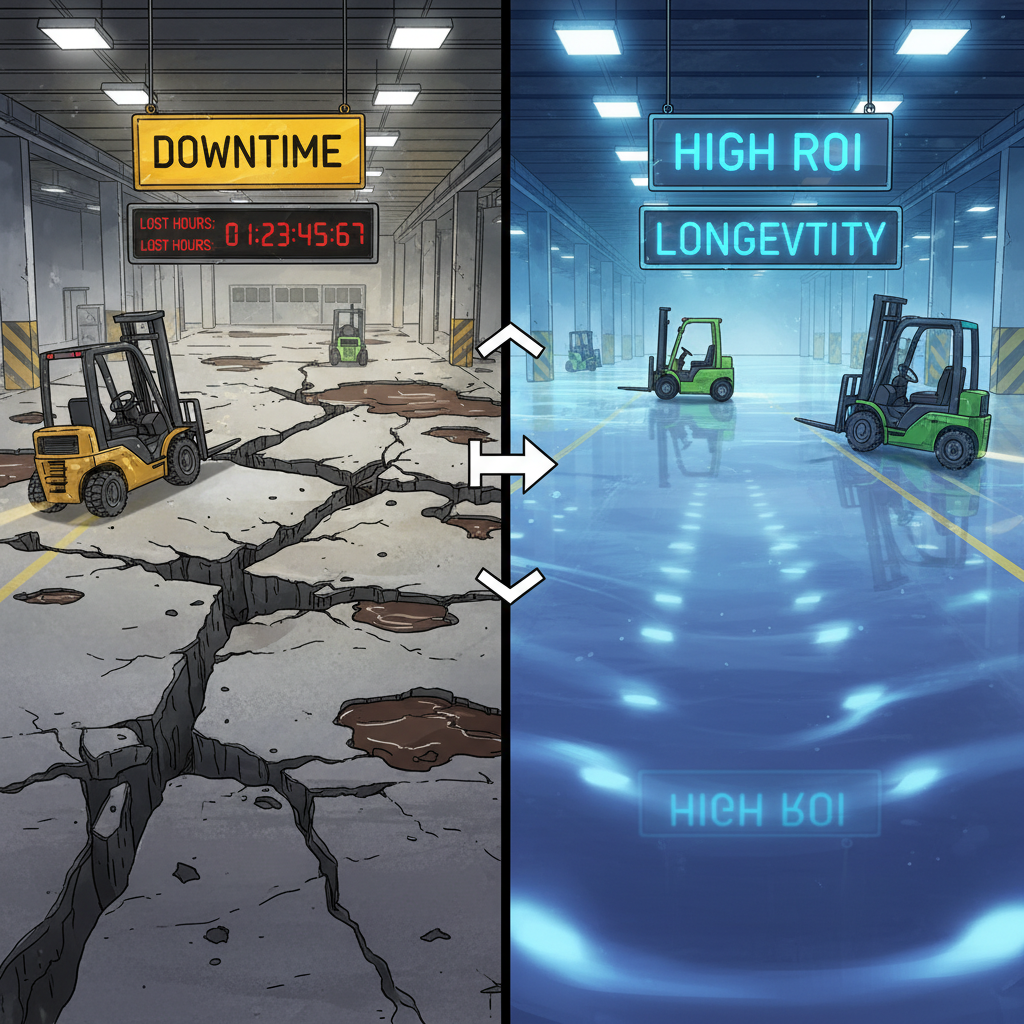
The cycle of frequent floor replacement is a massive operational blind spot for many commercial construction decision-makers. Standard epoxy systems, often chosen for their low upfront costs, frequently fail within a mere 2 to 3 years when subjected to heavy-traffic zones and punishing industrial environments. The true cost of these failures extends far beyond the price of new resin.
When calculating the Total Cost of Ownership (TCO) for industrial flooring, facility managers must factor in the catastrophic hidden costs of halted production. Data published by Plant Engineering Magazine highlights the severe financial impact of industrial maintenance, noting that unexpected facility downtime can cost heavy manufacturing sectors up to $10,000 per hour [1]. Furthermore, deteriorating floors present severe safety liabilities. The Bureau of Labor Statistics (BLS) consistently tracks workplace injuries directly related to poor facility conditions, including trips, slips, and falls caused by uneven or spalling concrete [2]. When viewed through the lens of TCO, investing in a high-performance system that lasts 20 years is exponentially more cost-effective than enduring the compounding financial and safety penalties of a cheap epoxy floor that fails biennially.
Diagnosing Industrial Flooring Wear and Tear
To break the cycle of failure, one must first understand how industrial flooring wear and tear occurs. Floor degradation is rarely a single catastrophic event; rather, it is a progressive breakdown. According to the Society for Protective Coatings (SSPC), analyzing coating degradation reveals that abrasive wear—caused by constant foot traffic, dragging pallets, and rolling machinery—accounts for roughly 60% of all industrial floor deterioration [3].
It is crucial to differentiate between types of wear. Abrasion wears down the topcoat, leaving the substrate vulnerable. Spalling occurs when the concrete itself breaks apart, often due to moisture or impact, while delamination is the failure of the chemical bond between the resin and the concrete. Fortunately, proactive measures can significantly mitigate these issues. Standards established by ISSA (The Worldwide Cleaning Industry Association) demonstrate that implementing a proper, daily maintenance protocol can extend the functional life of an industrial floor by up to 40% [4].
Bulletproofing Against Heavy Impact Floor Damage
While gradual wear is inevitable, acute heavy impact floor damage from dropped tools, heavy parts, or machinery crashes can instantly compromise a facility’s structural integrity. Standard epoxy is notoriously brittle and can easily shatter under sudden, localized force.
When a floor suffers deep impact damage, the resulting cracks and spalls are more than just cosmetic eyesores. Unrepaired floor cracks increase forklift tire wear and associated maintenance costs by up to 30%, while simultaneously creating dangerous operational hazards. The National Safety Council (NSC) frequently highlights the severe workplace trip hazards and material handling risks stemming from damaged, uneven floors [5]. To combat this, advanced high-performance urethane floors are engineered for exceptional energy absorption, boasting impact resistance ratings that exceed 160 inch-pounds, effectively bulletproofing the concrete substrate beneath.
Deconstructing Adamantine: The Engineering Behind Extreme Durability
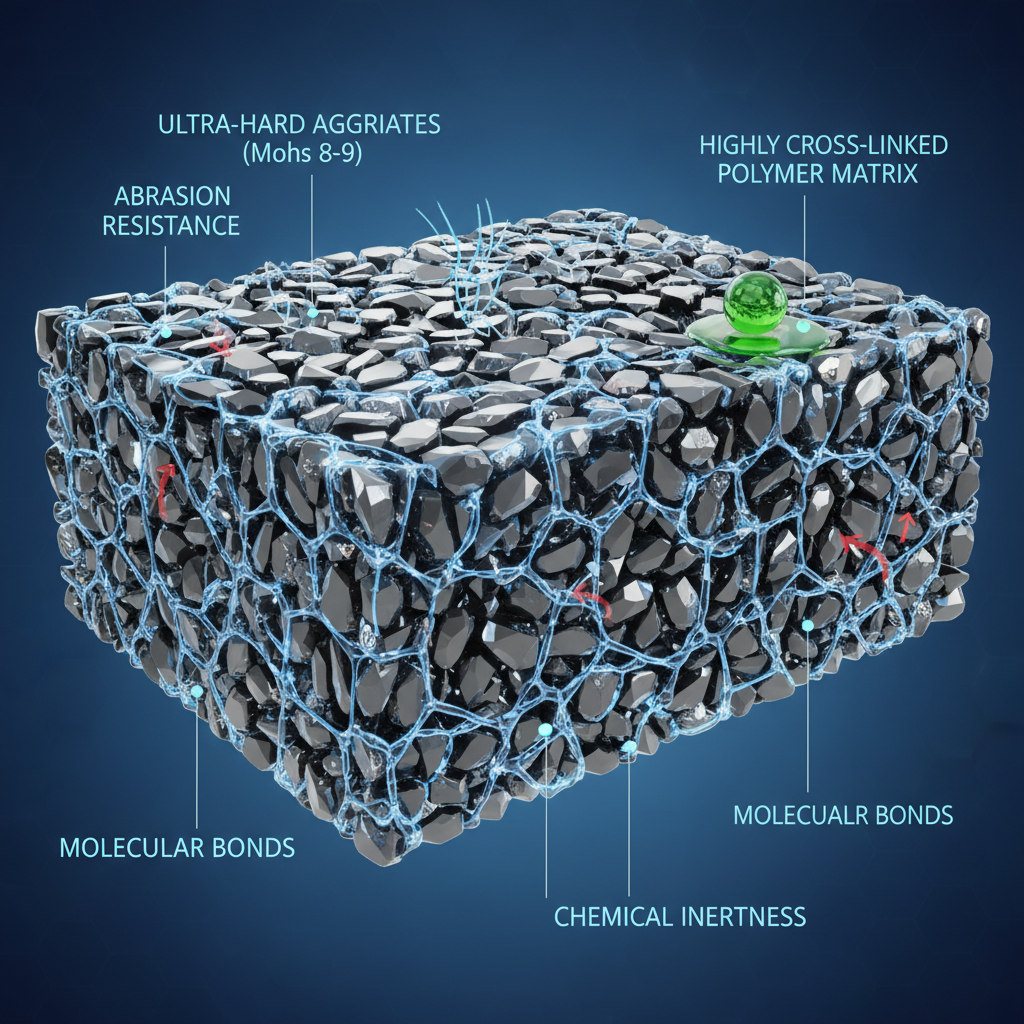
If standard epoxy is the fragile glass of the flooring world, adamantine flooring is the ballistic armor. But what exactly is adamantine flooring made of? The answer lies in the micro-engineering of its aggregate matrix and polymer cross-linking.
Unlike basic epoxies that rely solely on liquid resins, adamantine systems incorporate ultra-hard, non-porous aggregates tightly bound within a high-density polymer matrix. Research in the Journal of Materials Science regarding aggregate hardness and bonding mechanics illustrates how these densely packed particles distribute kinetic energy and resist crushing forces [6]. Specifically, the aggregates used in adamantine flooring feature a Mohs hardness scale rating of 8 to 9—making them nearly as hard as diamonds. Furthermore, the engineering behind adamantine flooring durability relies heavily on thermal stability. Structural engineering principles dictate that a floor coating must expand and contract at the same rate as the concrete beneath it. Adamantine systems are engineered with a thermal expansion coefficient that perfectly matches standard concrete, virtually eliminating the risk of delamination caused by thermal shock.
How Adamantine Flooring Resists Extreme Wear
The practical mechanics of how adamantine flooring resists extreme wear are proven through rigorous, standardized testing. When subjected to heavy forklift traffic and constant abrasion, adamantine systems vastly outperform traditional coatings. This is verified by specific ASTM testing methods, notably ASTM D4060 (the Taber abrasion test), where adamantine samples consistently show less than 10mg of loss per 1,000 cycles [7].
Beyond physical abrasion, industrial floors must survive highly corrosive chemical spills. Whether facing battery acid in a charging station or hydraulic fluids in an aviation hangar, adamantine’s non-porous, highly cross-linked surface acts as an impenetrable barrier. Aligning with NACE International standards for corrosion control, adamantine flooring demonstrates 100% resistance to standard industrial solvents and highly aggressive synthetic hydraulic fluids like Skydrol, ensuring the floor remains unscarred and structurally sound [8].
The Heavyweight Champions: Best High-Performance Flooring for Heavy Loads
For environments like airplane hangars, heavy equipment garages, and heavy manufacturing plants, facility managers require the absolute best high-performance flooring for heavy loads. In these settings, understanding the difference between static load resistance (stationary heavy equipment) and dynamic load resistance (moving forklifts and vehicles) is critical.
Authoritative guidelines from the American Society of Civil Engineers (ASCE) regarding load-bearing calculations emphasize that the flooring overlay must not become the point of failure under extreme compression [9]. Similarly, the Material Handling Institute (MHI) sets strict standards for warehouse infrastructure to withstand the punishing impacts of material handling equipment [10]. To meet these rigorous demands, true high-performance flooring systems are engineered to withstand static loads exceeding 10,000 PSI. Furthermore, to adequately distribute heavy industrial point loads and prevent concrete crushing, these systems require a minimum applied thickness of 1/4 inch (250 mils).
Next-Gen Resins: The Future of Durable Flooring Technology
The materials science behind durable flooring technology is evolving rapidly, moving away from legacy epoxies toward highly advanced polymer formulations. The Polymer Science Society frequently publishes foundational research on how new resin durabilities and chemical bonding techniques are reshaping industrial infrastructure [11].
One of the most significant leaps in advanced flooring technology upgrades is the development of polyaspartic coatings. These next-gen resins differ from traditional epoxy by offering a much wider application temperature range and curing up to 4x faster, drastically reducing facility downtime. Additionally, the integration of nanotechnology into protective topcoats has revolutionized scratch resistance. By embedding microscopic nano-particles into the resin matrix, manufacturers have improved the abrasion resistance of these topcoats by up to 25%, creating a surface that repels micro-scratches and maintains its high-gloss finish even in harsh environments.
Smart Upgrades: Antimicrobial Solutions and Rapid-Cure Systems
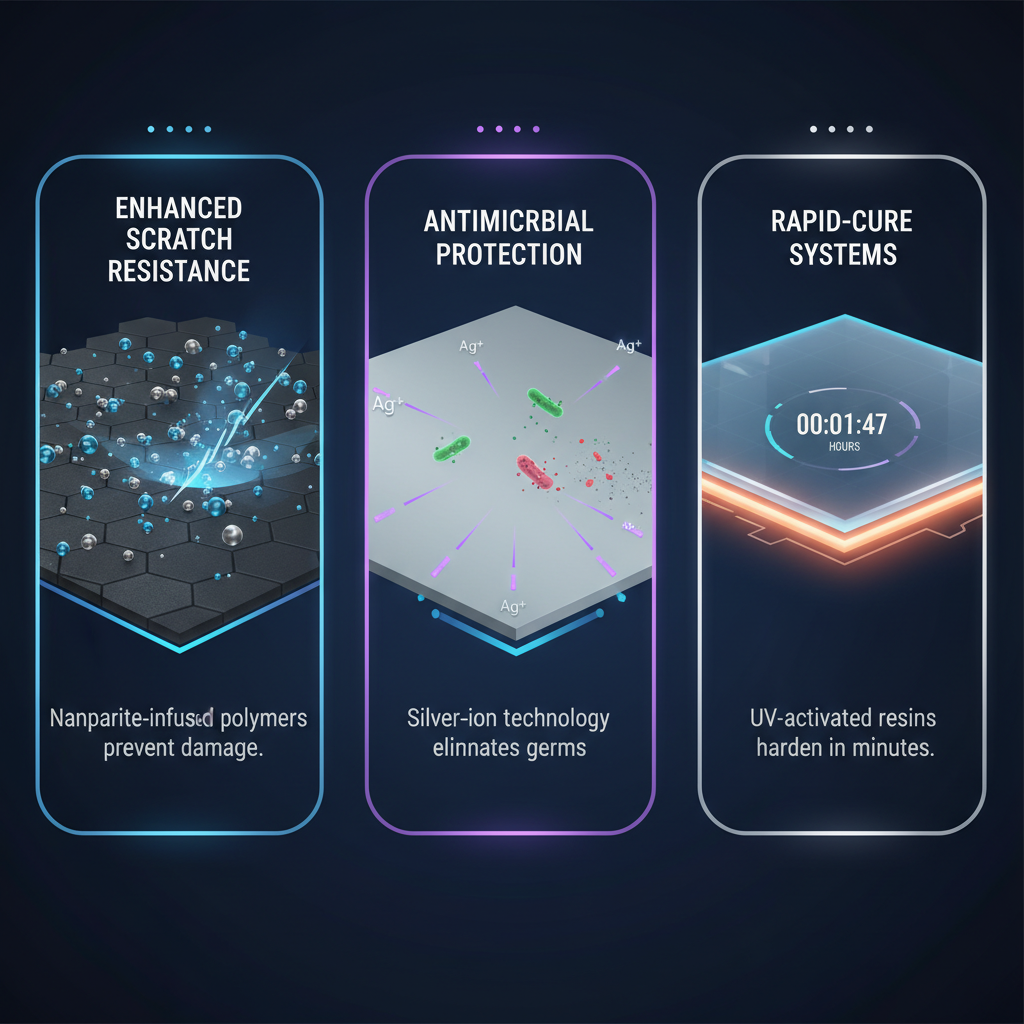
Future-proofing a facility means looking beyond just physical durability and incorporating smart, advanced flooring technology upgrades. In food processing, pharmaceutical, and healthcare environments, hygiene is as critical as structural strength. By integrating silver-ion antimicrobial additives directly into the resin matrix, modern floors can actively fight contamination. According to guidelines and data supported by the Centers for Disease Control and Prevention (CDC) regarding hygienic surfaces, these silver-ion additives can reduce bacterial growth on the floor surface by an astonishing 99.9% [12].
Simultaneously, the demand for minimal operational disruption has led to the perfection of rapid-cure systems. Advanced rapid-cure polyurea technologies now allow for a full return-to-service in as little as 2 to 4 hours after application, meaning a facility can be upgraded overnight without losing a single shift of production.
Flawless Execution: Engineered Strength Flooring Installation
Even the most scientifically advanced adamantine resin will fail catastrophically if applied incorrectly. A high-performance floor is only as strong as its installation. The critical steps of engineered strength flooring installation revolve around rigorous mechanical surface preparation and strict environmental controls.
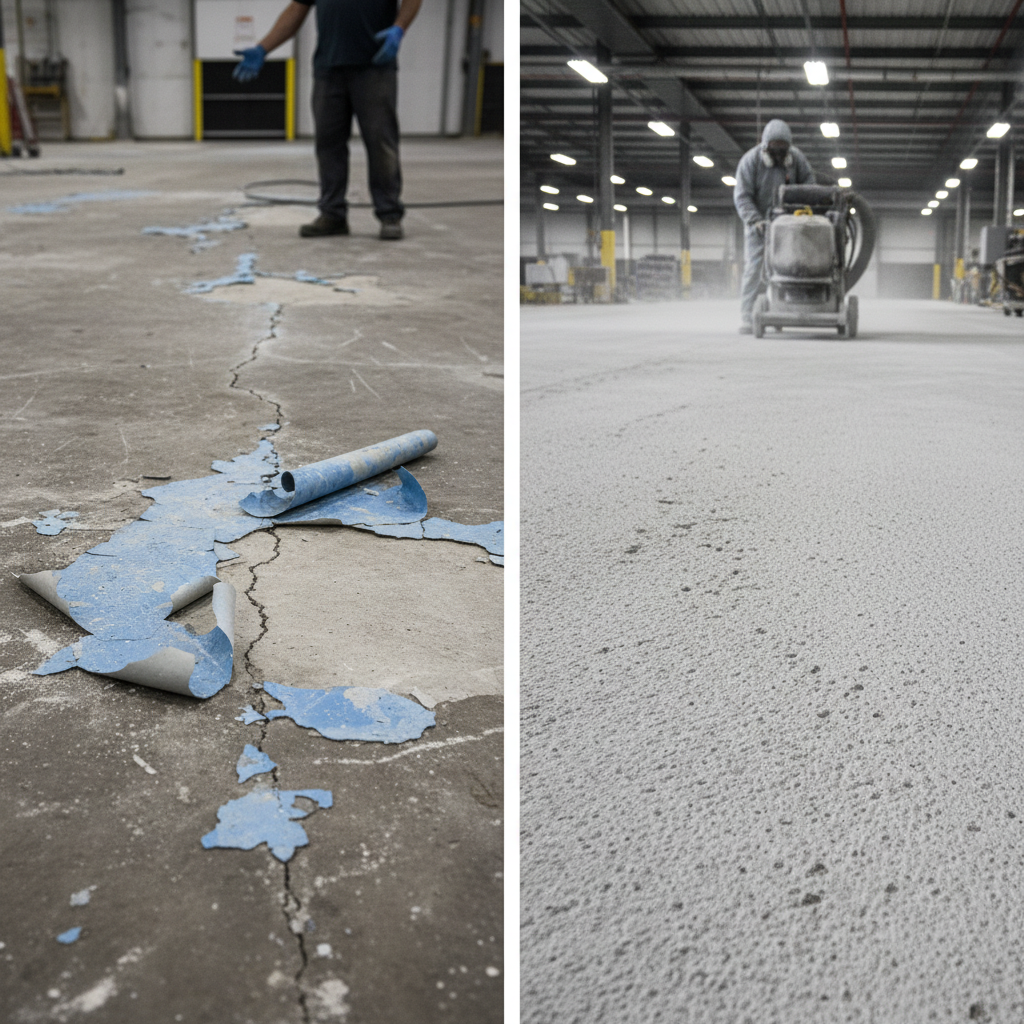
Industry data reveals a staggering reality: up to 80% of premature flooring failures are due to improper surface preparation. The concrete substrate must be mechanically profiled—usually via shot blasting or diamond grinding—to create a porous texture that allows the resin to penetrate and bond. The International Concrete Repair Institute (ICRI) provides the definitive Concrete Surface Profile (CSP) guidelines that professional installers must follow to ensure mechanical adhesion [13]. Furthermore, best practices outlined by the Floor Covering Installation Contractors Association (FCICA) dictate that environmental conditions must be meticulously controlled [14]. Moisture vapor trapped in the concrete is a silent killer of resinous floors; therefore, Moisture Vapor Emission Rates (MVER) must be rigorously tested and mitigated to below 3 lbs/1,000 sq ft before any high-performance coating is applied.
The Ultimate Guide to Extreme Durability Flooring Solutions for 2026
When evaluating extreme durability flooring solutions for 2026 and beyond, facility managers must match the specific chemistry of the floor to the unique demands of their industry. The top-tier options generally fall into three categories: Adamantine systems (for ultimate impact and abrasion resistance), Urethane Cement (for wet, thermal-shock prone environments), and Polyaspartic coatings (for rapid return-to-service and UV stability).
Authoritative sources on advanced building materials, such as the Construction Specifier [15] and the National Terrazzo and Mosaic Association (NTMA) [16], consistently highlight these systems for their longevity. For instance, urethane cement systems are uniquely engineered to withstand extreme thermal shock, easily tolerating high-pressure steam cleaning and temperatures up to 250°F without delaminating. When properly specified and flawlessly installed, these true extreme durability solutions offer a functional lifespan of 15 to 20+ years before requiring any significant resurfacing.
Conclusion
Upgrading your facility from a standard, failing epoxy to an engineered adamantine or high-performance flooring system is not merely an aesthetic or maintenance decision; it is a critical financial strategy. By embracing advanced materials science and demanding flawless installation protocols, industrial facility managers can permanently stop the cycle of frequent, costly replacements. We encourage operations directors and plant managers to consult with licensed structural flooring engineers and utilize Total Cost of Ownership (TCO) calculators. By mapping out your facility’s long-term flooring ROI, you can eliminate the hidden costs of downtime and secure an indestructible foundation for your business for decades to come.
Pricing, ROI calculations, and lifespan estimates are industry averages; actual results depend on specific facility conditions, substrate health, and installation quality.
References & Authoritative Sources
- Plant Engineering Magazine. (N.D.). Data on industrial maintenance costs and facility downtime.
- Bureau of Labor Statistics (BLS). (N.D.). Data on workplace injuries and lost time due to poor facility conditions.
- Society for Protective Coatings (SSPC). (N.D.). Analysis on coating degradation and surface preparation.
- ISSA (The Worldwide Cleaning Industry Association). (N.D.). Standards for facility cleaning and maintenance.
- National Safety Council (NSC). (N.D.). Statistics on workplace trip, slip, and fall hazards.
- Journal of Materials Science. (N.D.). Peer-reviewed studies on aggregate hardness and bonding.
- ASTM International. (N.D.). ASTM D4060: Standard Test Method for Abrasion Resistance of Organic Coatings by the Taber Abraser.
- NACE International. (N.D.). Corrosion control and protective coating standards.
- American Society of Civil Engineers (ASCE). (N.D.). Load bearing calculations and structural integrity guidelines.
- Material Handling Institute (MHI). (N.D.). Standards for warehouse infrastructure and material handling impacts.
- Polymer Science Society. (N.D.). Research on resin durability and chemical bonding.
- Centers for Disease Control and Prevention (CDC). (N.D.). Guidelines for hygienic surfaces in healthcare and food processing environments.
- International Concrete Repair Institute (ICRI). (N.D.). Concrete Surface Profile (CSP) guidelines.
- Floor Covering Installation Contractors Association (FCICA). (N.D.). Best practices for commercial flooring installers.
- Construction Specifier. (N.D.). Peer-reviewed articles on advanced building materials and architectural specifications.
- National Terrazzo and Mosaic Association (NTMA). (N.D.). Standards for highly durable, long-lasting decorative flooring systems.
