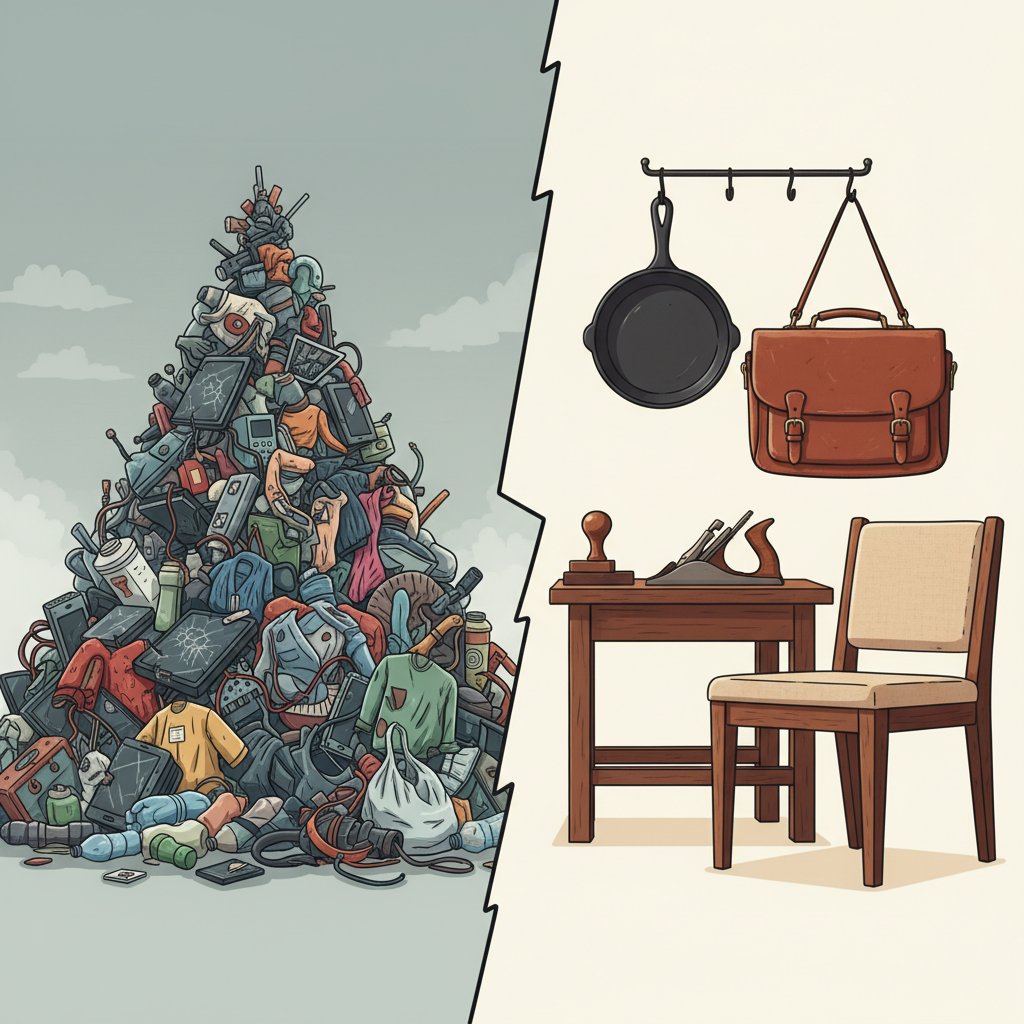
We are living in the disposable age. For decades, consumers have been trapped in a frustrating “product death cycle,” forced to endlessly replace household appliances, fast fashion, and electronics that seem designed to fail the moment their warranties expire. This phenomenon, driven by planned obsolescence, has sparked a growing rebellion among value-driven consumers who are tired of throwing their hard-earned money into landfills. Enter the modern ethos of “Adamantine.”
Historically, adamantine referred to a mythological, indestructible material. Today, it represents the pinnacle of durable design and premium craftsmanship. It is the ultimate antidote to the disposable age. This comprehensive guide will expose the deceptive tricks of cheap manufacturing, explore the rigorous material science behind truly indestructible goods, and prove the undeniable financial and environmental return on investment (ROI) of adopting a “Buy It For Life” mentality.
- The Disposable Age: Exposing Poorly Made Cheap Products
- The Science of Adamantine: Engineering Durable Goods Built to Last
- Decoding Premium Craftsmanship: The Hidden Cost of Quality
- The ROI of ‘Buy It For Life’: Why You Should Invest in Durable Design
- Eco-Luxury: The Rise of Sustainable Premium Craftsmanship
- Conclusion
- References & Authoritative Sources
The Disposable Age: Exposing Poorly Made Cheap Products
The modern consumer landscape is flooded with easily broken consumer goods, engineered not for longevity, but for rapid replacement. This cycle is not an accident; it is a calculated business model. Manufacturers of poorly made cheap products rely on the assumption that consumers will accept a baseline level of fragility in exchange for a lower upfront price tag. However, as Tod Marks, a leading expert on consumer purchasing and repair habits at Consumer Reports, has highlighted, this constant cycle of buying and replacing ultimately drains consumer wallets and degrades overall satisfaction [1].
Beyond mere frustration, there are severe consequences to this race to the bottom. When easily broken consumer goods fail catastrophically, they can cause physical harm or property damage. The McCune Law Group, an authority on consumer rights, notes that the legal ramifications of product liability and design defects are significant when manufacturers prioritize cost-cutting over basic safety and structural integrity [2].
The Illusion of Quality: Psychological Tricks in Manufacturing
To mask the reality of poorly made cheap products, many manufacturers employ deceptive psychological tricks. The most prevalent is the “illusion of quality.” Because consumers inherently associate heft with durability and premium materials, brands often add artificial weights to cheap electronics—such as budget headphones or plastic appliances—to simulate a premium feel. Consumer protection advocates and independent product teardowns have repeatedly exposed these practices, revealing that the reassuring weight of a product is often just a useless piece of scrap metal glued to the interior chassis [3]. Understanding these tricks is the first step in breaking free from deceptive marketing.
The True Cost of the ‘Product Death Cycle’
The financial trap of easily broken consumer goods extends far beyond the initial purchase price. Manufacturers have created perverse incentives where they profit not just from the sale of fragile goods, but from the fear of their inevitable failure. Extended warranties, for instance, typically cost 10 to 30 percent of a product’s retail price, acting as a highly profitable insurance policy against intentional fragility [4].
Furthermore, the economics of repair have fundamentally shifted. In the early 1990s, consumers generally wouldn’t bother fixing products that cost under $30. Today, due to the rising costs of proprietary parts and the intentional difficulty of modern repair, that threshold has risen to about $100 [5]. This shift guarantees that millions of moderately priced items are sent straight to the landfill rather than the repair shop.
The Science of Adamantine: Engineering Durable Goods Built to Last
Transitioning away from disposable commodities requires an understanding of what physically makes adamantine products survive decades of use. True durability is an intersection of material science, structural engineering, and uncompromising quality control. It is the foundation of durable design, ensuring that products can withstand extreme stress, daily wear, and the test of time.
To understand this, we look to authoritative bodies like the Journal of Materials Science, which provides peer-reviewed data on material hardness, tensile strength, and fatigue resistance [6]. Similarly, the American Society for Testing and Materials (ASTM) establishes the rigorous, standardized durability testing protocols that separate legitimate durable goods built to last from mere marketing hype [7].
Marketing vs. Material Science: What is Truly Indestructible?
Many brands throw around the word “indestructible,” but material science engineers are quick to point out the physics behind product failure [8]. True adamantine products rely on materials with verifiable scientific properties: high-carbon steel for edge retention, titanium for an unparalleled strength-to-weight ratio, and Kevlar for extreme abrasion resistance.
For example, in the outdoor gear industry, the Interagency Grizzly Bear Committee (IGBC) serves as an objective, third-party standard for ruggedness, certifying coolers and containers only after they survive prolonged, aggressive physical assaults by live bears [9]. When a product passes tests of this magnitude, the marketing claims align with the material science.

The Anatomy of Durability: Overcoming Technological Obsolescence
A product can be physically indestructible but still fall victim to technological obsolescence—the phenomenon where hardware outlasts its software support or relevance. Economically, Dr. Chris Drew defines durable goods as items that do not wear out quickly and yield utility over time rather than being completely consumed in one use, typically lasting over three years [10]. However, true durable goods built to last aim for decades, not just years.
Academic research, including studies by Eatwell (2016) and Kesavan (2005), reinforces the long-term cost-effectiveness of durable goods [11][12]. To overcome technological obsolescence, modern durable design heavily incorporates modularity and the “right-to-repair.” By engineering products with standardized, easily replaceable components, manufacturers ensure that a single failing part—or an outdated microchip—does not condemn the entire physical structure to the scrap heap.
Decoding Premium Craftsmanship: The Hidden Cost of Quality
While material science dictates a product’s physical survival, premium craftsmanship dictates its soul. True craftsmanship is an aspirational pursuit, defined by meticulous attention to detail, the use of rare or heritage materials, and the application of generational skills. Organizations like The Crafts Council and the Heritage Crafts Association serve as leading authorities in preserving these traditional skills and maintaining the rigorous standards that separate authentic craft from mass-produced luxury [13][14].

Designed to Inspire: The Intersection of Art and Utility
When premium craftsmanship designed to inspire enters the realm of bespoke art and luxury interior design, the time investment becomes staggering. Handcrafted items elevate living spaces by blending flawless utility with unique human expression. For instance, data from luxury design house Fromental reveals that artists spend up to 600 hours meticulously stitching individual panels for bespoke wall coverings [15].
This level of dedication is why authorities in luxury architectural interior design, such as Oliver Burns Studio, and master craftsmen of historical designs, like H.J. Nick, emphasize that true luxury cannot be expedited [16][17]. The hidden cost of quality is the sheer volume of human hours, expertise, and passion woven into the final product.
Spotting the Red Flags: High Quality vs. Low Quality Craftsmanship
Understanding premium quality also means knowing how to identify its absence. Low quality craftsmanship issues are not just aesthetic annoyances; in larger investments like home construction, they can be disastrous. Rushed work, substandard materials, and improper installation lead to structural weaknesses and safety hazards.
Legally, there is a distinct difference between a design defect (a flaw in the engineering blueprint) and a workmanship defect (a failure in the execution and building process), as defined by construction defect authorities like Florida Hardhat Law and attorney Bryan A. Woods [18]. To mitigate these risks, modern builders and project managers rely on advanced quality control processes and platforms like PRO CREW SCHEDULE to ensure that every phase of construction meets rigorous craftsmanship standards [19]. For consumers, spotting the visual red flags—such as uneven joinery, loose stitching, or misaligned seams—is crucial before committing to a purchase.
The ROI of ‘Buy It For Life’: Why You Should Invest in Durable Design
The “Buy It For Life” (BIFL) movement is rooted in a simple mathematical truth: buying one expensive, high-quality item is exponentially cheaper over a lifetime than repeatedly buying cheap replacements. Renowned industrial designer Yves Behar has long championed the value of sustainable, long-lasting design, noting that products should be built to serve generations, not just temporary trends [20]. When you invest in durable design, you are securing a tangible financial return.
Durable Design as a Profit Center and Consumer Savings
For businesses, durable design is a profit center that drastically reduces warranty claims, returns, and brand damage. For consumers, the ROI is measured in cost-per-use. Real-world case studies consistently prove the financial viability of premium materials. In one notable example, a 500-unit apartment building that chose to invest in durable design only had to replace six doors after 11 years of continuous use [21].
The Anthesis Group, a global sustainability consultancy, highlights that the ROI of sustainable product design extends beyond direct financial savings; it builds unparalleled customer loyalty and mitigates supply chain risks [22].
Navigating the ‘Buy It For Life’ Market
Finding high quality long lasting products requires looking past marketing gloss and examining the supply chain. Consumers should seek out brands that offer legitimate lifetime warranties without hidden loopholes. Furthermore, the source of the product matters. Directories like Maker’s Row are invaluable for connecting consumers and businesses with vetted, ethical domestic manufacturers who prioritize quality over volume [23].
Whether it is investing in Japanese selvedge denim—known for its tight, durable weave—or a meticulously engineered vacuum cleaner, purchasing long lasting quality goods aligns with the ethos of simple, sustainable living championed by advocates like author Eliza Cross [24]. It is about buying less, but buying better.

Eco-Luxury: The Rise of Sustainable Premium Craftsmanship
Ultimately, the concepts of durability and craftsmanship converge on the most pressing issue of our time: environmental sustainability. The Ellen MacArthur Foundation, a leading authority on the circular economy, emphasizes that keeping products and materials in use for as long as possible is fundamental to sustainable design principles [25]. The Industrial Designers Society of America (IDSA) echoes this, integrating longevity into professional design standards [26]. Durable design is the ultimate form of eco-friendliness because it stops waste at the source.
When Heritage Meets Sustainability
Today, sustainable premium craftsmanship represents a modern evolution where heritage techniques meet eco-responsibility. Luxury brands are increasingly adopting circular economy principles, utilizing reclaimed materials, organic textiles, and energy-efficient processes like 3D printing to reduce their carbon footprint without sacrificing quality.
The data reflects this shift: currently, 70 percent of the wood product used by premium designers is certified by the Forest Stewardship Council (FSC), ensuring sustainable sourcing, while 78 percent of particle boards contain reusable products [27][28]. Heritage brands like Atelier Rebul and advocates like Artisans Collection are pioneering this space, demonstrating that true eco-luxury—from sustainably sourced furniture to refillable luxury fragrance designs—is not only possible but essential [29][30].
Conclusion
The transition from the disposable age to the era of Adamantine design requires a fundamental shift in how we value our goods. True quality is an investment that pays compounding dividends in longevity, aesthetic pleasure, and environmental preservation. By understanding the material science behind durability and recognizing the hallmarks of authentic premium craftsmanship, consumers can protect themselves from the financial drain of the product death cycle.
Challenge yourself today: audit your next major purchase using the “Buy It For Life” criteria. Look past the upfront price tag, calculate the long-term cost-per-use, verify the materials, and demand true craftsmanship. Invest in design that is built to last, and designed to inspire.
The financial ROI models and legal definitions of product liability provided are for informational purposes and do not constitute formal financial or legal advice.
References & Authoritative Sources
- Tod Marks. (N.D.). Insights on Consumer Purchasing and Repair Habits. Consumer Reports.
- McCune Law Group. (N.D.). Product Liability, Design Defects, and Consumer Rights.
- Consumer Protection Advocates / Consumer Reports. (N.D.). Product Teardowns and the Psychological Link Between Weight and Quality.
- Journal of Materials Science. (N.D.). Peer-Reviewed Data on Material Hardness and Durability.
- American Society for Testing and Materials (ASTM). (N.D.). Standardized Durability Testing Protocols.
- Material Science Engineering Principles. (N.D.). Physics of Product Failure and Extreme Durability Claims.
- Interagency Grizzly Bear Committee (IGBC). (N.D.). Certifications for Cooler Durability and Bear Resistance.
- Dr. Chris Drew. (N.D.). Economic Definitions and Classifications of Durable Goods.
- Eatwell. (2016). Academic References on the Economics of Durable Goods.
- Kesavan. (2005). Cost-Effectiveness of Durable Goods.
- The Crafts Council. (N.D.). Craft Skills and Standards.
- Heritage Crafts Association. (N.D.). Advocacy for Traditional Craftsmanship Skills.
- Fromental. (N.D.). Data on Bespoke Wall Coverings and Artisan Time Investment.
- Oliver Burns Studio. (N.D.). Luxury Architectural Interior Design.
- H.J. Nick. (N.D.). Historical Designs and Master Craftsmanship.
- Florida Hardhat Law / Bryan A. Woods. (N.D.). Construction Defect Law and Poor Workmanship Claims.
- PRO CREW SCHEDULE. (N.D.). Construction Management Software and Quality Control Processes.
- Yves Behar. (N.D.). Industrial Design and Sustainability Advocacy.
- Anthesis Group. (N.D.). Global Sustainability and ROI of Sustainable Product Design.
- Maker’s Row. (N.D.). Connecting Businesses with Vetted American Manufacturers.
- Eliza Cross. (N.D.). Advocacy for Simple, Sustainable Living.
- Ellen MacArthur Foundation. (N.D.). The Circular Economy and Sustainable Design Principles.
- Industrial Designers Society of America (IDSA). (N.D.). Professional Design Standards.
- Forest Stewardship Council (FSC). (N.D.). Global Authority on Sustainable Wood Sourcing and Certification.
- Atelier Rebul. (N.D.). Sustainable Luxury Practices and Refillable Designs.
- Artisans Collection. (N.D.). Eco-Friendly Traditional Craftsmanship and Sustainable Material Sourcing.
- Premium Design Industry Data. (N.D.). FSC Certified Wood Product Usage Statistics.
- Sustainable Manufacturing Data. (N.D.). Reusable Products in Particle Board Manufacturing.
- Atelier Rebul Heritage. (N.D.). Circular Economy Principles in Heritage Brands.
- Artisans Collection Advocacy. (N.D.). Sustainable Material Sourcing in Craftsmanship.
