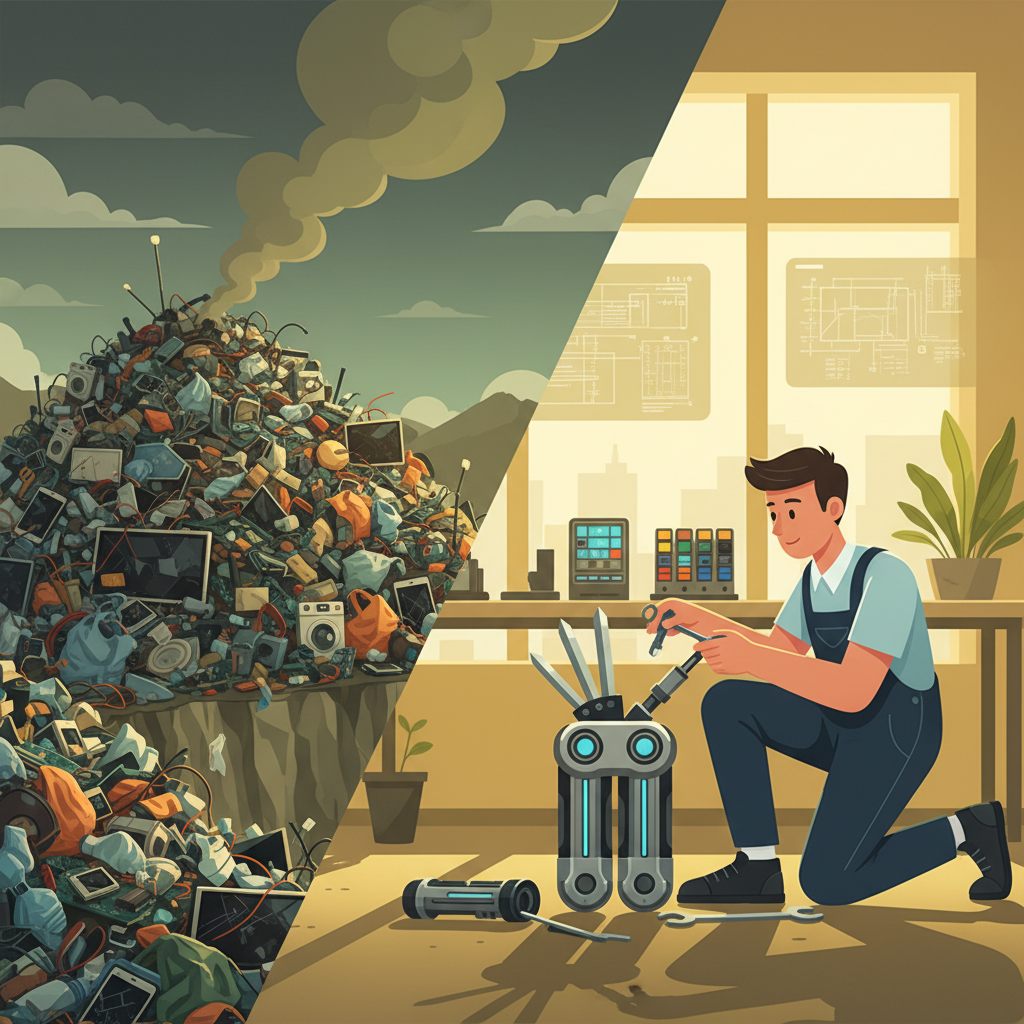
Every year, millions of tons of manufactured goods end up in landfills, a testament to the massive industrial and environmental costs of premature product failure and planned obsolescence. For decades, the manufacturing paradigm has been plagued by a critical disconnect: the chasm between pristine initial CAD designs, the gritty realities of the manufacturing floor, and the unpredictable, harsh conditions of real-world service. When products fail prematurely, it is rarely due to a single catastrophic event; rather, it is the culmination of microscopic material degradation, flawed lifecycle planning, and sometimes, intentional systemic obsolescence.
To combat this, modern product development must move beyond the rudimentary concept of “sturdiness.” The future belongs to predictable lifecycle management. This definitive guide explores how to engineer products for a lifetime by fusing advanced material science, Multi-Criteria Decision Making (MCDM), and emotionally resonant design. By bridging the gap between theoretical durability models and real-world degradation, engineers and industrial designers can eradicate premature failure, navigate emerging compliance risks, and build products that genuinely stand the test of time.
- The Anatomy of Premature Product Failure and Wear
- Advanced Material Strength: The Foundation of Physical Durability
- Lifetime Durability Engineering: Predictive Lifecycle Management
- Designing Products for Maximum Durability: The Circular Approach
- Conclusion
- References
The Anatomy of Premature Product Failure and Wear
Understanding why products fail requires a shift in narrative from simple, observable breakage to the systemic and mechanical root causes that compromise structural integrity. Premature product failure is frequently the result of a disconnect between design intent and actual service conditions. Mechanically, this manifests through microscopic vulnerabilities; strategically, it often stems from inherently flawed business cases.
To establish a baseline for engineering durability, we must rely on fundamental engineering failure analysis. According to resources like the IDC Online Technical References, failure is rarely an isolated incident but a progressive deterioration [1]. Furthermore, industrial data reveals that material wear and tear causes more than 50 percent of the loss of performance of production machines in manufacturing industries [2]. Understanding the distinction between expected operational wear and catastrophic damage is the first step in lifetime durability engineering.
Mechanical Root Causes: Stress Concentrators and Tribology
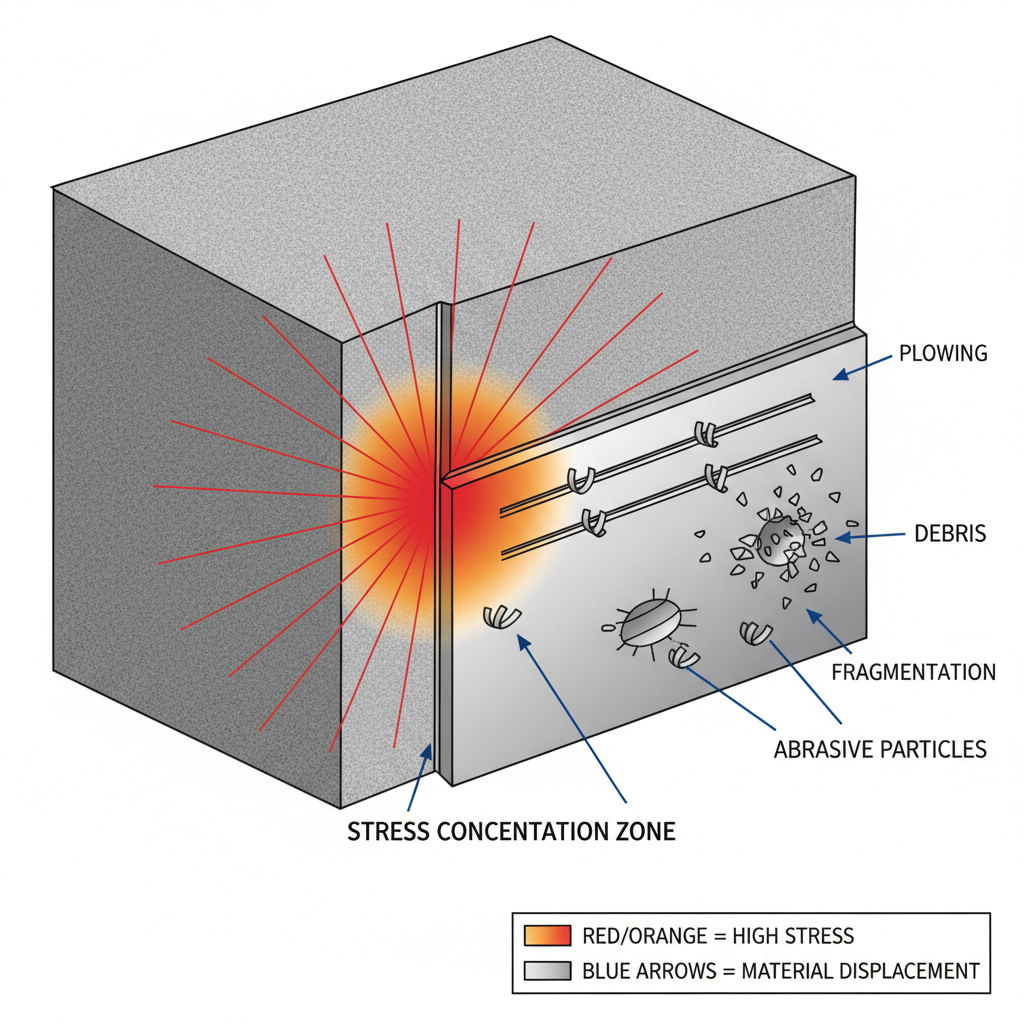
At the micro-level, material wear and tear is a complex study of tribology—the science of interacting surfaces in relative motion. Wear is not a singular force but a synergistic overlap of multiple mechanisms. Abrasive wear, for instance, occurs through specific micro-mechanisms: plowing (where material is displaced to the sides of a groove), cutting (where material is removed entirely as debris), and fragmentation (where localized fracture occurs). When abrasive wear overlaps with adhesive wear (material transfer between surfaces) and fretting (micro-motion wear), the degradation of the material accelerates exponentially.
However, material degradation is only part of the equation. Fatigue failure is frequently initiated by stress concentrators—or “stress raisers.” Design elements such as sharp fillets, sudden changes in cross-section, and unmitigated notches act as focal points for mechanical stress, leading to sub-surface cracks that propagate over time. Mitigating these mechanical root causes requires more than just robust design; it demands a holistic view of the product’s environment. For example, addressing an often-overlooked content gap in manufacturing, the specific impact of operational habits and rigorous operator training plays a massive role in mitigating micro-level abrasive wear. Proper lubrication protocols and operational discipline can extend the life of a machine component just as effectively as upgrading the material itself.
The Systemic Flaw: Planned Obsolescence and Compliance Risks
While mechanical failure is a matter of physics, planned obsolescence issues are a strategic business choice—and an increasingly risky one. Obsolescence can be categorized into three distinct types: desirability (aesthetic changes that make older models feel outdated), functional (designing parts to fail after a certain lifespan), and systemic (such as software updates that render older hardware incompatible).
Historically, this concept was brought into the public consciousness by Vance Packard in his seminal 1960 book, The Waste Makers, which critiqued the deliberate shortening of product lifespans to drive continuous consumption [3]. Today, planned obsolescence is evolving from a mere consumer complaint into a severe corporate compliance risk. International legal landscapes are shifting dramatically to penalize unsustainable manufacturing. A prime example is France’s landmark 2015 energy transition law, which allows judges to impose fines of up to 5% of a company’s annual sales if they are found guilty of deliberately shortening product lifespans [4]. Engineering durability is no longer just a best practice; it is rapidly becoming a legal mandate.
Advanced Material Strength: The Foundation of Physical Durability
To engineer products capable of withstanding extreme environmental, chemical, and operational stresses, designers must look to next-generation materials. Advanced material strength is not merely about bulk mass; it is about manipulating atomic and molecular structures to achieve unprecedented strength-to-weight ratios and thermal resistance. Research from leading institutions, such as the MIT Materials Research Laboratory, and publications in high-impact journals like Nature Materials, continually push the boundaries of what is physically possible, transitioning theoretical chemistry into tangible industrial applications [5].
High-Entropy Alloys, CMCs, and Carbon Composites

When engineering materials for extreme durability, traditional metals often fall short. High strength material solutions now heavily feature refractory multiple-principal-element alloys (high-entropy alloys), Ceramic Matrix Composites (CMCs), and advanced carbon composites. These materials are specifically engineered to perform in environments subjected to elevated temperatures, radiation, and dynamic strain.
For instance, carbon fiber composites, renowned for their atomic lattice structure, can achieve tensile strengths well over 500 MPa, making them indispensable in aerospace and automotive applications where weight reduction and structural integrity are paramount [6]. Similarly, advanced ceramics have revolutionized thermal resistance. 3M’s Nextel ceramic fibers are a prime example, engineered to retain their flexibility and structural integrity at continuous temperatures up to 2372ºF (1300°C) [7]. By utilizing chromium/nickel-boosted steel alloys and CMCs, engineers can drastically reduce operational downtime and enhance workplace safety in extreme environments.
Overcoming Manufacturing Bottlenecks for Ultra-Tough Materials
The transition of these ultra-tough materials from the laboratory to commercial application is fraught with practical manufacturing bottlenecks. The very properties that give advanced materials their strength—extreme hardness, thermal resistance, and shear strength—make them notoriously difficult to machine.
The intersection of advanced material strength and traditional CNC machining presents a significant economic hurdle. According to research aligned with the University of Wisconsin-Madison College of Engineering, in aerospace applications, the failure rate for tooling when machining high-strength materials can reach up to 25% [8]. Overcoming these bottlenecks requires a pivot toward advanced additive manufacturing (3D printing) and specialized, diamond-coated tooling. Engineers must factor the manufacturability of a material into the early design phases to ensure that the cost of production does not outweigh the benefits of the material’s extreme durability.
Lifetime Durability Engineering: Predictive Lifecycle Management
The era of empirical guesswork and “deemed to satisfy” rules in engineering is over. Lifetime durability engineering is a proactive, multi-criteria discipline that relies on quantitative data science to predict and guarantee service life. By establishing foundational engineering standards from authoritative organizations like ASTM International and ISO, engineers can accurately calculate target service life and conduct formal durability assessments [9]. This rigorous approach is what separates theoretical durability models from the harsh realities of real-world degradation.
Multi-Criteria Decision Making (MCDM) for Material Selection
Treating durability as a quantifiable data science requires sophisticated frameworks. Multi-Criteria Decision Making (MCDM) is a vital methodology for optimal material selection. MCDM allows engineers to systematically balance conflicting criteria: cost, manufacturability, environmental impact, and long-term chemical/physical degradation mechanisms.
As highlighted in peer-reviewed engineering research published by Taylor & Francis, MCDM bridges the critical gap between micro-level chemical degradation models and practical, macro-level construction specifications [10]. Instead of selecting a material based solely on its initial tensile strength, MCDM algorithms evaluate how that material will behave over a 20-year lifecycle, factoring in thermal cycling, abrasive wear, and supply chain availability, ensuring true lifetime durability engineering.
Real-Use Aging and Quantitative Service Life Models
A material’s specification sheet only tells the story of its pristine state. To truly guarantee engineering durability, engineers must utilize quantitative service life models backed by lab tests that accurately mimic real-use environmental aging. Environmental exposure—such as fluctuating humidity, UV radiation, and extreme thermal cycling—drastically alters the molecular structure of high-strength fibers and synthetic rubbers over time.
The National Institute of Standards and Technology (NIST) provides premier measurement science and data on this front, particularly regarding the artificial aging of aramids and ultrahigh molar mass polyethylene [11]. By utilizing NIST’s standardized testing protocols, engineers can predict how a material will degrade decades before it actually fails. Furthermore, highlighting real-world corporate testing protocols, such as W. L. Gore’s rigorous real-life performance assessments, demonstrates that predictive lifecycle management must involve testing materials not just in sterile labs, but in the exact, chaotic environments where they will ultimately be deployed [12].
Designing Products for Maximum Durability: The Circular Approach
Physical robustness is only half of the durability equation. Designing products for maximum durability requires a strategic focus during the initial ideation phase, integrating mechanical survival with emotional longevity. This approach aligns with comprehensive ecodesign strategies, such as those pioneered by Brezet & Van Hemel, and utilizes frameworks established by the Industrial Designers Society of America (IDSA) [13]. By designing for the circular economy, engineers can create wear resistant product design that actively combats the throwaway culture of modern consumption.
The Synergy of Physical and Emotional Durability
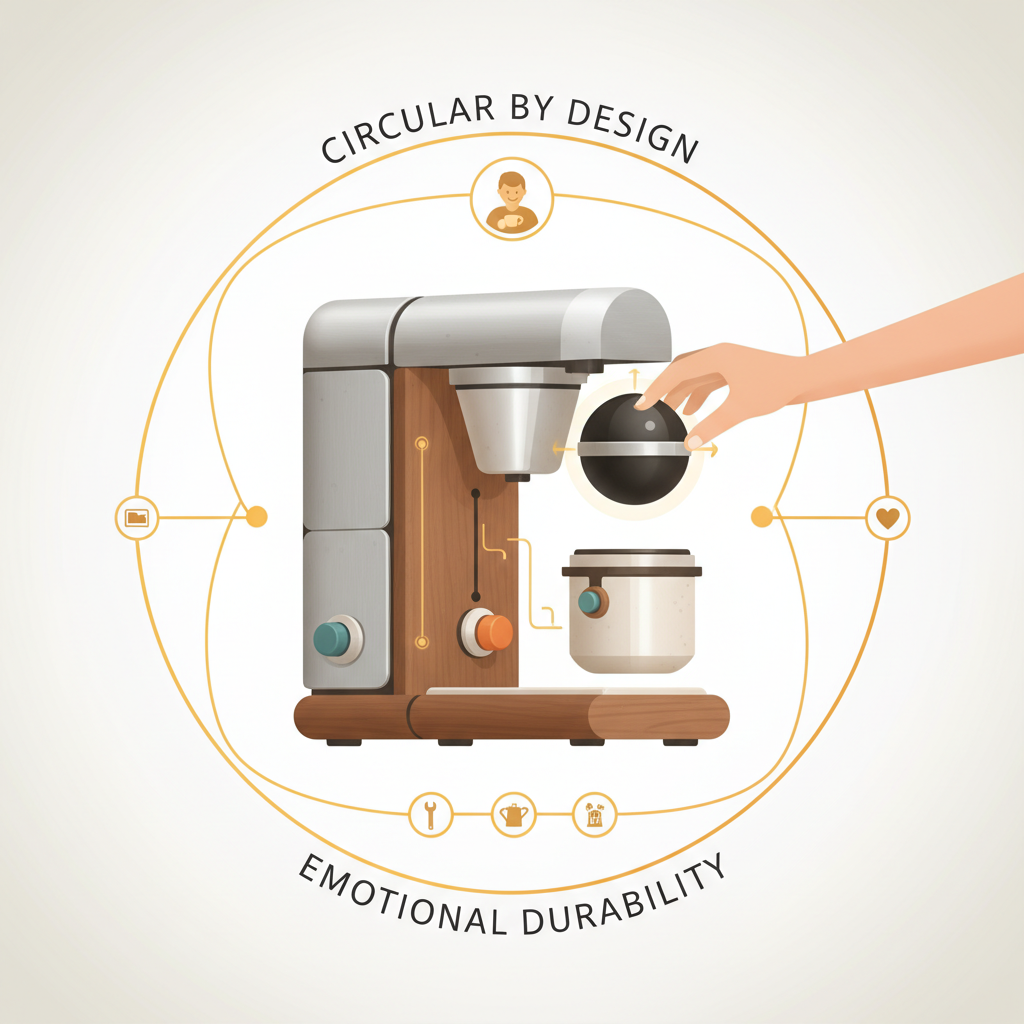
A product engineered to last a century is ultimately a failure if the user discards it after three years because it looks outdated or feels obsolete. This is where physical durability must synergize with emotional durability. Emotional durability refers to the relevance, desirability, and timeless aesthetics that foster a deep user attachment, extending the product’s active lifespan.
The Ellen MacArthur Foundation, a leading global authority on the circular economy, emphasizes that durable product design must encompass both physical resilience and emotional resonance [14]. Real-world case studies of brands known for extreme durability, such as Patagonia in outdoor apparel and Miele in home appliances, prove that consumers will maintain, repair, and cherish products that are designed with timeless aesthetics and uncompromising quality [15]. When emotional durability is achieved, the physical engineering is allowed to fulfill its maximum potential.
Design for Dis- and Reassembly: Modularity and Procurement
To truly engineer products for a lifetime, designers must embrace the “Design for Dis- and Reassembly” methodology. Monolithic, glued-together products are the enemy of longevity. Modularity improves wear resistant product design by allowing users to easily replace high-wear components—such as tungsten carbide cutting edges or synthetic rubber seals—rather than disposing of the entire product.
Academic research on product longevity from institutions like Chalmers University of Technology (notably works by Haug 2016 and Cooper 2004) underscores the necessity of modularity in sustainable design [16]. However, modularity introduces a significant procurement challenge: ensuring that replacement parts remain available decades after the initial purchase. Insights from industry experts like StudioRed Product Development highlight the danger of relying on consumer-grade, off-the-shelf components that will inevitably face obsolescence [17]. Designing for a lifetime means engineering custom, timeless interfaces or sourcing industrial-grade components guaranteed by suppliers to outlast the product’s intended lifecycle.
Conclusion
The transition from designing for temporary sturdiness to engineering for lifetime durability is a fundamental paradigm shift in modern manufacturing. It requires a holistic, uncompromising approach that balances ESG (Environmental, Social, and Governance) metrics with harsh mechanical realities. By fusing advanced material science, predictive MCDM modeling, and emotionally resonant, modular design, engineers can successfully combat both mechanical wear and the systemic flaws of planned obsolescence. Engineering for a lifetime is no longer just a premium feature reserved for niche brands; it is an environmental imperative and a strict regulatory necessity. Industrial designers, mechanical engineers, and product managers must audit their current product development lifecycles, integrate quantitative durability assessments into their material selection phases, and commit to the adamantine advantage of lifetime design.
Disclaimer: Engineering specifications and material selections should always be verified against current localized standards (e.g., ASTM, ISO) for safety compliance.
References
- IDC Technologies. (N.D.). Fundamental Engineering Failure Analysis. IDC Online Technical References.
- MaintainX & Mascherpa s.p.a. (N.D.). Industrial Tribology and Wear Prevention Mechanisms.
- Packard, V. (1960). The Waste Makers. David McKay Company.
- Government of France. (2015). French Energy Transition for Green Growth Law (Loi relative à la transition énergétique pour la croissance verte).
- MIT Materials Research Laboratory. (N.D.). Advanced Materials Research. Nature Materials.
- Journal of Materials Science. (N.D.). Tensile Strength Data for Carbon Fiber Composites.
- 3M. (N.D.). 3M Nextel Ceramic Fibers and Composites Technical Data.
- University of Wisconsin-Madison College of Engineering. (N.D.). Materials for Extreme Environments and Advanced Manufacturing Tooling Failure Rates.
- ASTM International & International Organization for Standardization (ISO). (N.D.). Foundational Engineering Standards for Material Testing and Durability.
- Taylor & Francis. (N.D.). Peer-Reviewed Engineering and Materials Science Research on Multi-Criteria Decision Making (MCDM).
- National Institute of Standards and Technology (NIST). (N.D.). Artificial Aging of Aramids and Ultrahigh Molar Mass Polyethylene.
- W. L. Gore & Associates. (N.D.). Real-Life Performance Assessments and Corporate Testing Protocols.
- Industrial Designers Society of America (IDSA) & Brezet, H., Van Hemel, C. (1997). Ecodesign: A Promising Approach to Sustainable Production and Consumption.
- Ellen MacArthur Foundation. (N.D.). Circular Economy and Emotional/Physical Durability Strategies.
- Patagonia & Miele. (N.D.). Corporate Case Studies on Generational Durability and Timeless Design.
- Haug, A. (2016) & Cooper, T. (2004). Design for Longevity and Product Lifespans. Chalmers University of Technology.
- StudioRed Product Development. (N.D.). Practical Industry Expertise on Component Lifecycles and Procurement.
