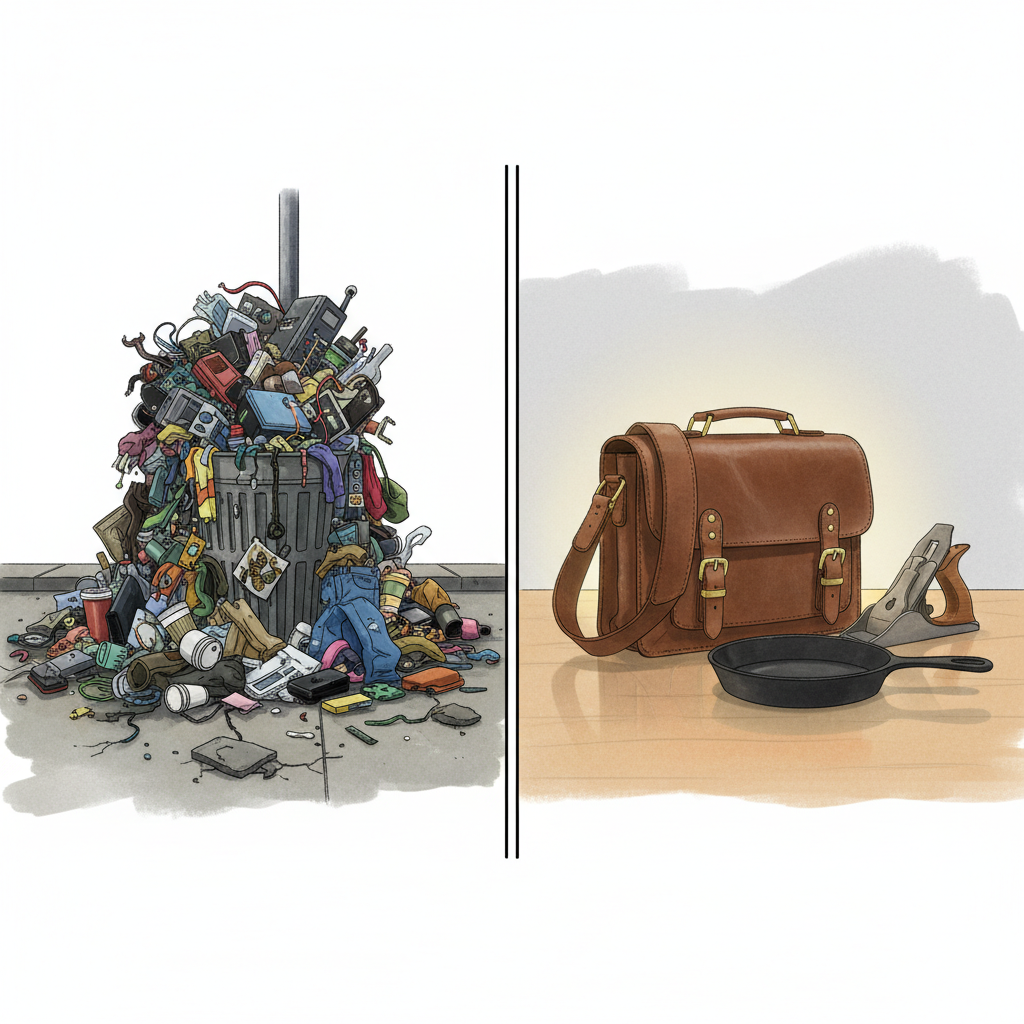
We have all felt the sting of the modern disposable culture. You purchase a highly anticipated product, only to watch it fail months later, forcing you back into the endless, frustrating cycle of replacing broken products. Today’s market is saturated with poorly made goods engineered for short product lifespans, leaving conscious consumers and value-driven buyers wasting money on items destined for the landfill.
But there is an antidote to this throwaway era. Enter the concept of “Adamantine.” Historically relegated to mythology to describe indestructible weapons and armor, adamantine is no longer just a fantasy—it is a modern, achievable standard for unyielding durability.
Welcome to the Anti-Disposable Manifesto. This comprehensive guide is an expert-backed framework designed to empower you. By the end of this article, you will possess the knowledge to audit premium craftsmanship, defeat the traps of planned obsolescence, and curate a lifelong portfolio of ultra-durable, repairable, and appreciating assets. Let’s explore the science of true durability, master the pre-purchase craftsmanship audit, navigate consumer advocacy, and learn how to identify investment-grade design.
- The Science of Durability: What Does ‘Adamantine’ Actually Mean in Products?
- The Craftsmanship Audit: Spotting Genuine Premium Quality vs. Luxury Washing
- The Economics of ‘Buy It For Life’ (BIFL) and Long-Lasting Quality
- Consumer Advocacy: Navigating Broken Products and Deceptive Replacements
- Investment Piece Craftsmanship: When Durable Design Appreciates
- Conclusion
- References & Authoritative Sources
The Science of Durability: What Does ‘Adamantine’ Actually Mean in Products?
When we talk about adamantine products in the real world, we are bridging the gap between the fantasy of indestructible materials and the reality of modern, high-durability manufacturing. In materials science and gemology, “adamantine” is a highly specific classification.
According to the Gemological Institute of America (GIA), adamantine luster refers to the supreme, brilliant, diamond-like reflection of light off a surface, which is inherently tied to a material’s density and hardness [1]. To understand this physical toughness, we look to the Mohs hardness scale. A perfect example of real-world adamantine material is Corundum (often referred to historically as adamantine spar), which boasts a Mohs hardness of 9—second only to diamond at a perfect 10 [1].
When manufacturers aim for adamantine-level durable design, they aren’t just using standard steel. They are looking to advanced materials science. As detailed in peer-reviewed insights from the Journal of Materials Science, the development of ultra-durable synthetic materials—such as advanced ceramics, titanium alloys, and high-carbon composites—allows modern consumer goods to achieve a level of physical resilience that vastly outperforms traditional manufacturing metals [2].
Beyond Physical Toughness: The Concept of Emotional Durability

However, true durable design goes far beyond mere physical robustness. A titanium casing means nothing if the product inside becomes obsolete or aesthetically displeasing within a year. This brings us to the critical concept of “emotional durability”—designing products that people actually want to keep for a lifetime, ensuring long lasting quality.
Established industrial design frameworks, such as those championed by the Industrial Designers Society of America (IDSA), emphasize that longevity requires a blend of timeless aesthetics, user-centric ergonomics, and mechanical reliability [3]. Engineers must design products for maximum longevity by anticipating how a user’s relationship with the object will evolve. Furthermore, the Ellen MacArthur Foundation highlights that emotional durability is a cornerstone of the circular economy; when we form an attachment to our belongings, we are more likely to repair and maintain them, directly reducing environmental waste and supporting sustainable practices [4].
The Craftsmanship Audit: Spotting Genuine Premium Quality vs. Luxury Washing
We live in an era of “luxury washing,” where clever marketing jargon masks mass-produced mediocrity. To avoid poorly made goods, consumers must deconstruct what premium craftsmanship actually means.
True premium craftsmanship represents the intersection of high-quality materials, expert artisan skill, and meticulous attention to detail. According to standards set by The Crafts Council, genuine craftsmanship indicators include heritage manufacturing techniques, ethical material sourcing, and the visible hand of the maker—elements that cannot be replicated on an automated assembly line [5]. This level of dedication explains the cost disparity. As noted by the Harvard Business Review in their analyses of the economics of premium and luxury goods, you are paying for the time, specialized labor, and rigorous quality control that mass-market brands simply bypass to keep margins high [6].
Exposing Planned Obsolescence and Proprietary Traps
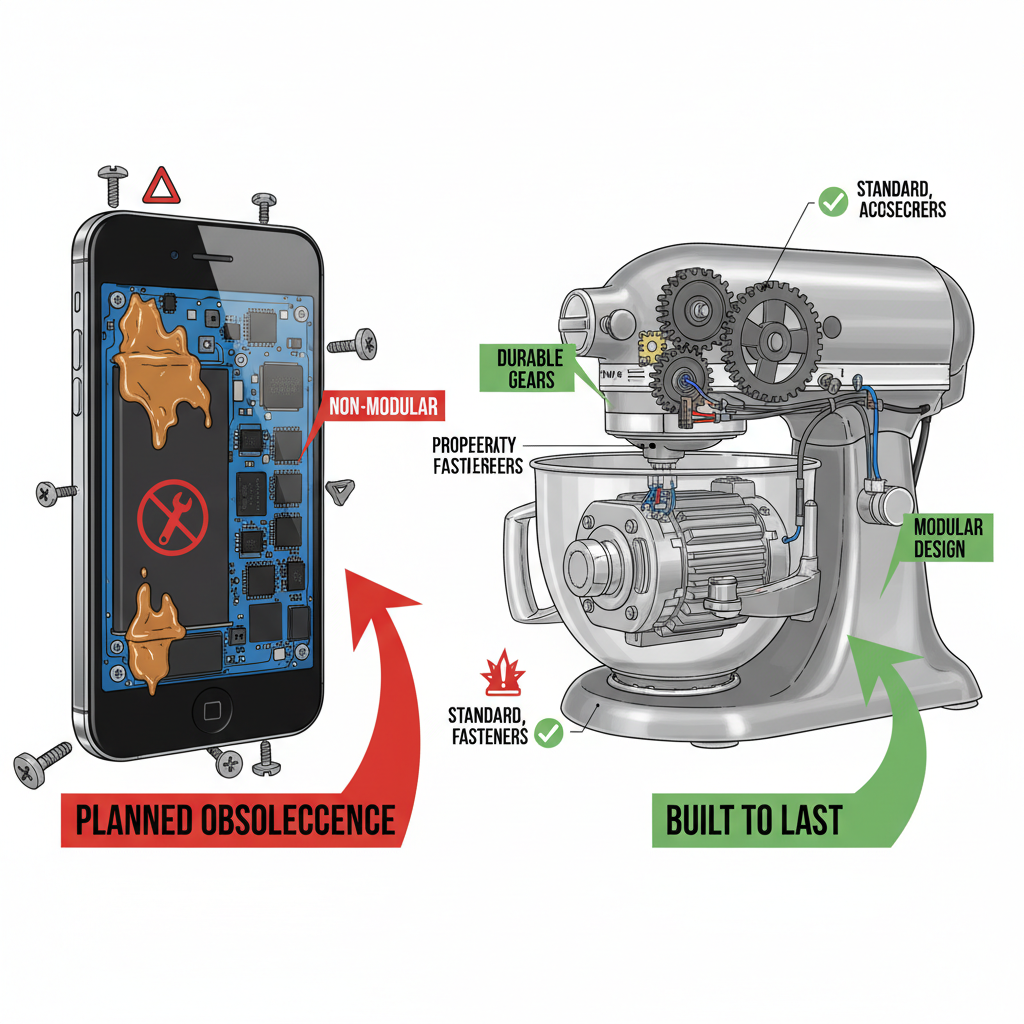
To navigate this landscape, you need “x-ray vision” to spot red flags before purchasing. The most insidious threat to your wallet is planned obsolescence—the intentional engineering of a short product lifespan.
Independent testing authorities like Consumer Reports continually highlight the mechanical reasons behind premature product failures [7]. A classic hallmark of poorly made goods is the use of proprietary traps. Manufacturers frequently use non-standard screws, glued-in batteries, and digitally locked components to create repair monopolies. When a single, cheap component fails, the lack of third-party repair options forces you to buy an entirely new unit. Recognizing these traps is your first line of defense.
The Pre-Purchase Physical Inspection Checklist
How can you tell if a product is poorly made before handing over your credit card? You must perform a pre-purchase physical inspection to identify high quality long lasting products.
- Unibody Construction: Look for unibody steel forging in tools and cookware, which eliminates weak weld points.
- Modularity: In electronics and appliances, search for modular components that can be easily unscrewed and swapped out.
- The Seam Pull Test: For textiles and leather goods, gently pull at the stitching; if you see light through the seam or the thread feels loose, the premium craftsmanship is an illusion.
- Objective Certifications: Look for objective standards of repairability, such as the LONGTIME label, a European certification body that rigorously evaluates products based on their sturdiness, repairability, and long-term reliability [8].
The Economics of ‘Buy It For Life’ (BIFL) and Long-Lasting Quality
The “Buy It For Life” (BIFL) movement is a consumer philosophy that prioritizes long-term value, repairability, and sustainability over initial low costs. But is BIFL always more expensive? Not necessarily.
Consider Lodge Manufacturing, which was founded 123 years ago; their highly affordable cast-iron skillets prove the multi-generational lifespan of well-made, accessible products [9]. In economic terms, durable goods built to last are defined by academics like Dr. Chris Drew as items specifically designed to yield utility over time, typically for a period of more than three years [10]. However, true BIFL items measure their lifespan in decades. Consumer behavior experts at the American Marketing Association (AMA) note that the psychological shift toward BIFL is driven by a desire for authenticity and a rejection of the fatigue associated with constant consumption [11]. The business case for long lasting quality is clear: it drastically reduces warranty claims and builds unshakeable brand loyalty.
The Hidden Costs: Maintenance and Technological Obsolescence
To provide a balanced view, we must address the “cons” of durable goods built to last. The myth of zero-effort longevity is just that—a myth. If you buy it for life, you must maintain it for life.
WIRED Magazine, known for its deep-dive teardowns and maintenance guides, emphasizes that achieving a lifetime of use requires specific maintenance routines, whether that means re-foaming vintage speaker surrounds, regularly seasoning cast iron, or oiling leather boots [12]. Furthermore, consumers must be wary of technological obsolescence in electronics, where the hardware outlasts the software support. Always review the fine print of famous “lifetime” warranties (like those from Darn Tough or Le Creuset) to understand exactly what constitutes normal wear and tear versus a manufacturer defect.
Lifecycle Transparency and Standardized Metrics
Why are product lifecycles getting shorter? From a B2B supply-chain perspective, rapid technological advancement and intense market competition force quick replacements.
Supply chain authorities like StockIQ Technologies and Vergent Products utilize concepts like NRND (Not Recommended for New Design) to signal when a component is nearing the end of its life [13, 14]. Unfortunately, this lifecycle transparency is rarely communicated to the end consumer. To combat this, there is a growing institutional push for standardized metrics. The National Institute of Standards and Technology (NIST) is actively researching circular economy metrics and standardized life-expectancy scores, which would finally allow consumers to objectively compare the true long lasting quality of competing products before purchase [15].
Consumer Advocacy: Navigating Broken Products and Deceptive Replacements
Even with the best research, defects happen. When replacing broken products, consumers often face immense friction, navigating complex warranties and unhelpful customer service. You must become your own advocate.
Your primary legal shield in the United States is the Magnuson-Moss Warranty Act, which governs consumer product warranties and prevents manufacturers from drafting highly deceptive or unfair warranty terms [16]. If a product fails, you have rights. Furthermore, if you suspect your poorly made goods are actually dangerous, you should immediately check official databases. The U.S. Consumer Product Safety Commission (CPSC) and the National Highway Traffic Safety Administration (NHTSA) provide step-by-step, searchable portals to verify if your broken item is part of a larger safety recall [17, 18].
The Refurbished Replacement Controversy
One of the most frustrating experiences when replacing broken products is the DOA (Dead On Arrival) replacement controversy. You buy a brand-new, premium item, it arrives defective, and the manufacturer insists on replacing it with a refurbished unit under warranty.
Consumer protection guidelines generally dictate that if a product is defective out of the box, you are entitled to a new replacement or a full refund, as the original contract of sale for a “new” item was never fulfilled. If a manufacturer refuses to honor this and tries to force a refurbished replacement for a DOA item, consumers can and should escalate the issue by disputing the charge with their credit card company under the Fair Credit Billing Act, citing that the goods received were not as described.
Investment Piece Craftsmanship: When Durable Design Appreciates

At the absolute pinnacle of adamantine quality is investment piece craftsmanship. This is where durable design transcends utility and becomes a financial asset. We must differentiate between mere luxury (which depreciates the moment you buy it) and true investment-grade items.
The data speaks for itself: luxury watches, for example, often appreciate enormously over time, with the secondary market seeing an 18% growth in value in 2022 alone [19]. But what makes inspiring premium craftsmanship designs hold or increase their value? According to luxury authentication experts at MyArtBroker and Brown & Company Jewelers, it comes down to provenance, rarity, and uncompromising material standards [19, 20].
The Slow Design Movement and Collectible Assets
Inspiring premium craftsmanship designs are increasingly rooted in the “Slow Design” movement. This philosophy prioritizes handmade distinctiveness, ethical practices, and unique storytelling over mass production.
Publications like the Business of Fashion and Design Limited Edition note that artisans are redefining modern luxury by creating “collectible design” [21, 22]. When you purchase a piece by renowned designers—whether it’s the contemporary textile work of Carla Fernández or the timeless sculptural furniture of Isamu Noguchi—you are not just buying a function; you are buying a piece of art history. The emotional and community “soul” of these handmade objects directly translates to their tangible premium market value.
Value Determinants: Provenance, Purity, and the Secondary Market
If you are looking to invest in investment piece craftsmanship, you must adhere to strict buying criteria.
- Material Purity: Avoid mass-produced “luxury” and gold-plated items, which hold little to no intrinsic secondary market value. Focus on material purity (solid 18k gold, platinum, full-grain heritage leather).
- Provenance: Understand that provenance is everything. Expert buyers know that retaining original tags, boxes, certificates of authenticity, and service records is non-negotiable.
In the secondary market, a flawless luxury watch without its original papers will sell for significantly less than a slightly worn one with a complete, documented history.
Conclusion
The journey from understanding the scientific reality of adamantine materials to mastering the craftsmanship audit is a transformative one. By recognizing the markers of emotional durability, exposing the traps of planned obsolescence, and understanding the rigorous maintenance required for “Buy It For Life” goods, you are no longer at the mercy of disposable culture. You now possess the tools to identify true investment-grade pieces that appreciate in both utility and value.
Armed with this Anti-Disposable Manifesto, we challenge you: perform a rigorous craftsmanship audit on the next premium item you plan to purchase. Look for the unibody construction, check the seams, and ask yourself if it’s built for the landfill or built for life.
What is the longest-lasting “Buy It For Life” item you currently own? Share your adamantine-quality discoveries in the comments below!
Disclaimer: The information provided regarding consumer rights, warranties (such as the Magnuson-Moss Warranty Act), and investment appreciation is for educational purposes only and does not constitute formal legal or financial advice.
References & Authoritative Sources
- Gemological Institute of America (GIA). (N.D.). Adamantine Luster and Mineral Hardness: The Mohs Scale. Retrieved from gia.edu
- Journal of Materials Science. (N.D.). Development and Properties of Ultra-Durable Synthetic Materials. Springer. Retrieved from springer.com/journal/10853
- Industrial Designers Society of America (IDSA). (N.D.). Frameworks for Industrial Design and Product Longevity. Retrieved from idsa.org
- Ellen MacArthur Foundation. (N.D.). Circular Economy and Emotional Durability in Design. Retrieved from ellenmacarthurfoundation.org
- The Crafts Council. (N.D.). Standards of Artisanal Preservation and Craftsmanship Indicators. Retrieved from craftscouncil.org.uk
- Harvard Business Review. (N.D.). The Economics and Marketing of Premium and Luxury Goods. Retrieved from hbr.org
- Consumer Reports. (N.D.). Product Testing Methodologies and Identifying Poor Quality Construction. Retrieved from consumerreports.org
- LONGTIME Label Expert Committee. (N.D.). Objective Standards for European Sustainability and Repairability Certifications. Retrieved from longtimelabel.com
- Lodge Manufacturing. (N.D.). Company History and Cast-Iron Durability.
- Drew, C. (N.D.). Economic Definitions of Durable Goods. Helpful Professor. Retrieved from helpfulprofessor.com
- American Marketing Association (AMA). (N.D.). Consumer Behavior Shifts Toward BIFL and Authenticity. Retrieved from ama.org
- WIRED Magazine. (N.D.). Consumer Electronics Longevity, Teardowns, and Maintenance Guides. Retrieved from wired.com
- StockIQ Technologies. (N.D.). Supply Chain Management and NRND Status Planning. Retrieved from stockiqtech.com
- Vergent Products. (N.D.). Electronics Manufacturing and Lifecycle Management. Retrieved from vergentproducts.com
- National Institute of Standards and Technology (NIST). (N.D.). Research on Circular Economy Metrics and Life-Expectancy Scores. Retrieved from nist.gov
- Federal Trade Commission. (N.D.). Magnuson-Moss Warranty Act.
- U.S. Consumer Product Safety Commission (CPSC). (N.D.). Official Product Safety Recall Database.
- National Highway Traffic Safety Administration (NHTSA). (N.D.). Vehicle and Equipment Recall Database.
- MyArtBroker. (N.D.). Luxury Investments and Secondary Market Valuations. Retrieved from myartbroker.com
- Brown & Company Jewelers. (N.D.). Fine Jewelry Craftsmanship, Heritage, and Authentication. Retrieved from brownjewelers.com
- Business of Fashion. (N.D.). The Economics and Trends of Collectible Design and Luxury Fashion.
- Design Limited Edition. (N.D.). High-End Collectible Design and Luxury Furniture Curation. Retrieved from designlimitededition.com
