For centuries, human imagination has been captivated by the mythological concept of “adamantine”—a legendary, unyielding metal representing the absolute pinnacle of unbreakable quality. From ancient epics to modern fantasy, it is the material of the gods, impervious to the ravages of time and impact. Yet, when we step out of mythology and into the modern consumer landscape, we are met with a starkly different reality: a world plagued by planned obsolescence, where products break too easily, and the phrase “they don’t make them like they used to” is a daily frustration.
Today, discerning consumers and B2B procurement professionals are tired of replacing the same items year after year. They are searching for a bridge between the legendary durability of myth and the tangible reality of modern manufacturing. This article moves beyond superficial marketing fluff to define the real-world “Adamantine Standard.” By exploring the hard material science of unbreakable materials, exposing the hidden economics of poor manufacturing, and introducing the “Quality Investment Portfolio” framework, this guide will equip you with the exact engineering benchmarks and economic strategies needed to identify and invest in genuine premium durability.
- The Myth vs. Reality: Defining ‘Adamantine Quality’ in the Modern World
- The Economics of Fragility: Why Are Products Breaking Too Easily?
- Demystifying Maximum Durability Manufacturing Standards
- The 5-Point ‘Adamantine Standard’ Consumer Checklist
- The Environment-Based Material Matrix
- Building Your ‘Quality Investment Portfolio’ of Physical Goods
- Conclusion
- References & Authoritative Sources
The Myth vs. Reality: Defining ‘Adamantine Quality’ in the Modern World

When a brand claims its product possesses “adamantine quality,” what does that actually mean? To understand what the adamantine standard of quality looks like in the real world, we must first separate the mythological origins of the word from the objective, scientific metrics used to measure supreme hardness and durability today.
From Mythology to Manufacturing: The Etymology of Unbreakable
The pursuit of what is the adamantine standard of quality begins with the word itself. According to Merriam-Webster, the etymology of “adamantine” traces back to the Greek word adamas, which translates to “untameable” or “unbreakable” [1]. Historically, it was used to describe the hardest known substances, eventually becoming synonymous with diamond.
Over time, the term evolved. As noted by Vocabulary.com, while it retains its roots in fantasy lore, “adamantine” has transitioned into a powerful figurative benchmark in modern product marketing [2]. Today, it describes an unyielding, rigid commitment to premium manufacturing standards. When a modern manufacturer invokes the adamantine standard, they are signaling a departure from disposable culture, promising a product built with uncompromising structural integrity.
The Closest Real-World Materials to Adamantine
While magical metals do not exist, material science experts have developed and identified real-world unbreakable materials that come astonishingly close to the adamantine ideal. According to publications in Materials Science and Engineering Journals, the closest modern equivalents include engineered marvels like graphene, tungsten, and high-grade steel alloys [3].
To ground these claims in reality, scientists rely on objective hardness scales. The Mohs Hardness Scale measures a material’s scratch resistance (where diamond scores a perfect 10), while the Vickers Hardness Test measures the hardness of metals through indentation. However, true adamantine quality requires distinguishing between hardness (resistance to scratching) and toughness (resistance to fracturing or impact). Tungsten, for example, is incredibly hard but can be brittle. Graphene, a single layer of carbon atoms, boasts unprecedented tensile strength, making it both incredibly tough and resilient. The real-world adamantine standard is found in the precise engineering of these materials to balance both hardness and toughness for specific applications.
The Economics of Fragility: Why Are Products Breaking Too Easily?
If we possess the technology to create near-indestructible alloys and polymers, why are consumers constantly dealing with products breaking too easily? The answer lies not in a lack of scientific capability, but in the systemic, profit-driven economics of modern manufacturing.
Planned Obsolescence and the 40% Failure Rate
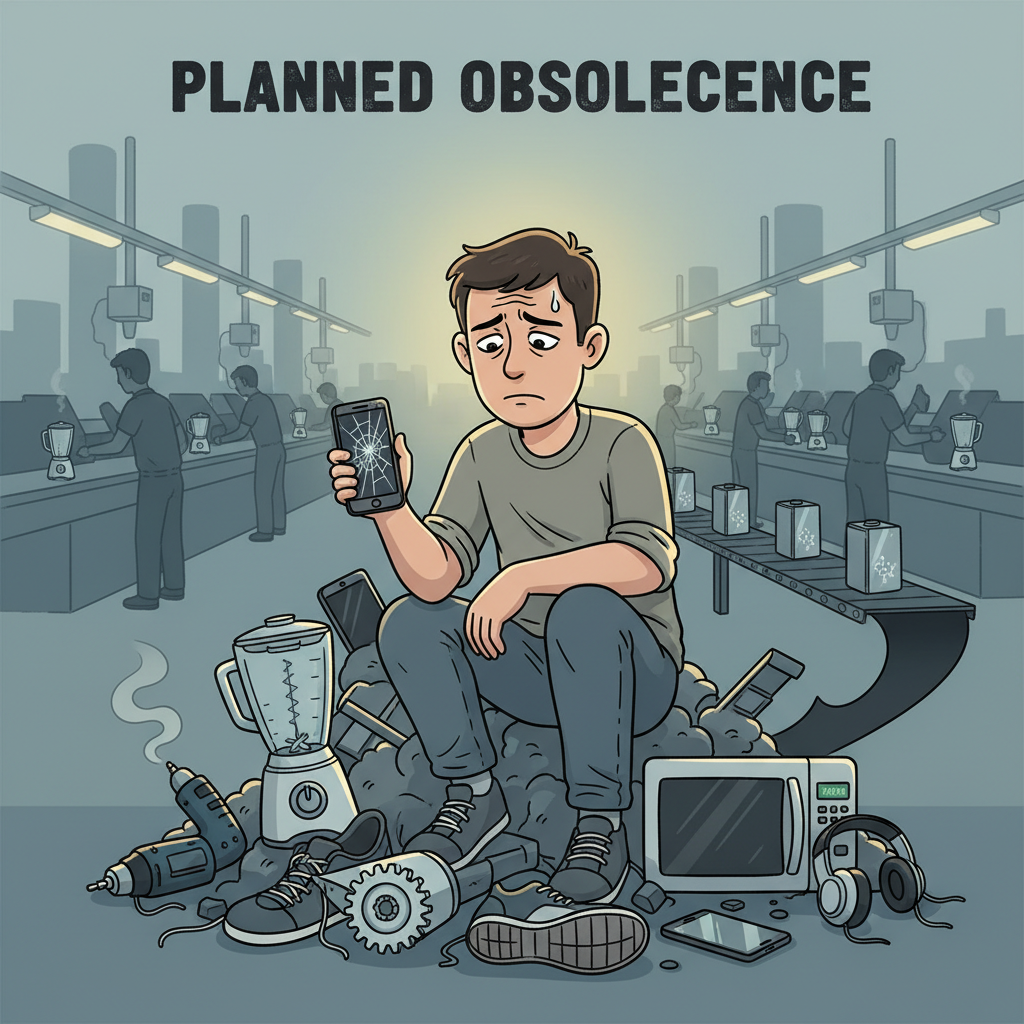
The frustration of products breaking too easily is often by design. This phenomenon, known as planned obsolescence, occurs when manufacturers intentionally design flaws or use inferior components to artificially limit a product’s lifespan, forcing the consumer to purchase a replacement. Industrial design experts, such as Dr. Miles Park, have extensively documented the mechanics of this practice, noting how the quiet substitution of durable metal gears for fragile plastic ones in household appliances has drastically reduced product longevity [4].
The consequences of this race to the bottom are staggering. According to data from Product Focus, an estimated 40% of all new product launches fail, with inferior quality and poor material durability issues being primary culprits [5]. Historical case studies are littered with massive product flops—from notoriously unreliable automotive transmissions to early-generation smart devices that degraded within months—all caused by a failure to prioritize durability.
The 100x Rule: The True Cost of Poor Quality (CoPQ)
The acceptance of low quality manufacturing standards creates a devastating financial ripple effect. While manufacturers might save pennies on cheaper components, the Cost of Poor Quality (CoPQ) is exponential. Experts at High Value Manufacturing Consulting refer to this as the “100x rule”: the cost of correcting poor quality—factoring in recalls, warranty claims, and catastrophic brand damage—is often around 100 times the initial price of the cheap part involved [6].
This deterioration is industry-wide. JD Power’s Initial Quality Survey (IQS) data recently highlighted a 180% increase in the range of quality ratings among automotive manufacturers, proving a rapid deterioration of capability and consistency across the board [7]. For the consumer, buying cheap means paying a compounding “fragility tax” over a lifetime of replacements.
Demystifying Maximum Durability Manufacturing Standards
To escape the cycle of fragility, consumers and procurement officers must learn how true premium durability is objectively measured. The adamantine standard is not a marketing buzzword; it is a measurable threshold defined by rigorous maximum durability manufacturing standards.
Beyond Marketing: Understanding ASTM and ACI Benchmarks
When a company claims maximum durability manufacturing standards, those claims must be backed by authoritative testing bodies like ASTM International (American Society for Testing and Materials) [8] and the American Concrete Institute (ACI) [9]. These organizations set the definitive benchmarks for material performance.
For instance, in structural engineering, true durability is proven through highly specific metrics. To pass rigorous durability testing, concrete might be required to demonstrate a maximum charge passed of 1500 coulombs (measured in accordance with ASTM C1202) to ensure resistance to chloride ion penetration, and a maximum length change of 0.05% (determined per ASTM C157/C157M) to prevent cracking over time. Understanding these benchmarks empowers buyers to look past the marketing copy and demand the data.
Tensile, Compressive, and Impact Resistance Explained

- Tensile Strength: A material’s ability to resist being pulled apart or stretched (crucial for suspension cables or woven fabrics).
- Compressive Strength: A material’s ability to bear heavy weight without crushing (vital for concrete foundations).
- Impact Resistance (Toughness): A material’s ability to absorb sudden energy and deform without fracturing (essential for phone cases or safety helmets).
Premium durability is achieved when a manufacturer selects the exact material engineered to withstand the specific type of stress the product will face in the real world.
The 5-Point ‘Adamantine Standard’ Consumer Checklist
How can the average buyer navigate this complex landscape? By utilizing a structured approach to identify products with unbreakable adamantine durability. Research from BEUC (The European Consumer Organisation) shows that consumers are almost three times more likely to choose products with the highest durability ratings when that information is clearly presented [10]. Here is how to identify premium quality materials using the Adamantine Standard checklist.
1. Repairability by Design
The European Commission estimates that a staggering 80% of a product’s environmental impact is determined at the design phase [11]. True adamantine quality recognizes that over decades of use, even the toughest materials may require maintenance. Therefore, the first standard is “repairability by design.” According to product lifecycle management experts at Dassault Systèmes, high repairability indexes—meaning parts are accessible, unglued, and standardized—are a hallmark of a product engineered for a lifetime of use, rather than a landfill [12].
2. The Sensory & Scientific Material Verification
Identifying premium materials requires a combination of tactile inspection and scientific verification. Tactilely, look for high weave density in fabrics, substantial weight in metals, and smooth, flawless finishes. Scientifically, demand rigorous third-party certifications. For textiles, certifications like OEKO-TEX or GOTS (Global Organic Textile Standard) are non-negotiable; they guarantee not only that the material is free from harmful chemicals, but that the fibers meet strict standards for structural integrity and premium quality [13].
The Environment-Based Material Matrix
Even the strongest materials will succumb to poor material durability issues if they are deployed in the wrong environment. Long lasting premium materials must be matched to their specific microclimates.
Combating UV Radiation, Moisture Decay, and Corrosion
The U.S. Department of Housing and Urban Development (HUD User) emphasizes “Durability by Design,” noting that environmental stressors are the primary catalysts for material degradation [14]. Contractor experts, such as those at Truitt & White, stress the importance of selecting materials based on geographical context [15].
For example, standard steel may be incredibly strong, but in a highly corrosive coastal environment, it will rapidly degrade. Here, an adamantine standard requires marine-grade stainless steel or specialized fiber cement. Similarly, RYAM provides insights on evaluating specialty materials engineered specifically to combat UV radiation and moisture decay, ensuring that the chosen material matrix perfectly aligns with the environmental threats it will face [16].
Building Your ‘Quality Investment Portfolio’ of Physical Goods
The final step in mastering the adamantine standard is a paradigm shift: treating the purchase of physical goods not as an expense, but as an investment in unbreakable quality.
Applying Stock Market ‘Quality Investing’ to Buy-It-For-Life Goods
In the financial sector, institutions like BlackRock define “Quality Investing” as a strategy that targets companies with low debt, stable earnings, and strong balance sheets to weather market volatility [17]. Consumers can apply this exact rigorous mindset to physical products to achieve premium durability.
Just as a financial analyst uses discounted cash flow (DCF) to determine the present value of future earnings, a consumer can view a durable good as an asset that “pays dividends” by eliminating future replacement costs. However, vigilance is required. Financial studies indicate that a company can sustain its “quality” factor for about 11 months on average before requiring reassessment [18]. Similarly, consumers must constantly reassess brand loyalty; just because a brand produced adamantine-quality goods a decade ago does not guarantee their current manufacturing standards remain unyielding.
Calculating Lifetime ROI and Cost-Per-Use

To truly justify the upfront cost of premium durability, consumers should utilize a simple Lifecycle Cost Analysis (LCCA). Utilizing methodologies similar to those championed by Consumer Reports for tracking long-term product value [19], calculate the “Cost-Per-Use.”
If a fast-fashion winter coat costs $50 but must be replaced every year due to failing zippers and torn seams, its 10-year cost is $500 (plus the time and frustration of shopping). Conversely, a $400 coat built to the adamantine standard—featuring heavy-duty YKK zippers, reinforced stitching, and a lifetime warranty—costs significantly less over that same decade, yielding a high lifetime ROI and a vastly superior daily experience.
Conclusion
The journey from the mythological forge to the modern factory floor reveals a powerful truth: while magical, indestructible metals exist only in fantasy, the real-world “Adamantine Standard” is entirely achievable. By rejecting the economics of fragility, demanding adherence to rigorous ASTM and ACI manufacturing standards, and prioritizing repairability by design, we can identify materials and products that are genuinely built to last.
Investing in premium durability is no longer just a luxury; it is a financial strategy and an environmental imperative. We challenge you to audit your next major purchase. Apply the 5-Point Adamantine Standard Checklist, calculate the true Cost-Per-Use, and build your own Quality Investment Portfolio of physical goods.
Financial disclaimer: Sections discussing ‘Quality Investing’ are for conceptual comparison to consumer purchasing habits and do not constitute formal financial or stock market advice.
References & Authoritative Sources
- Merriam-Webster. (N.D.). Adamantine Definition & Meaning. Retrieved from Merriam-Webster Dictionary.
- Vocabulary.com. (N.D.). Adamantine – Dictionary Definition. Retrieved from Vocabulary.com.
- Materials Science and Engineering Journals. (N.D.). Comparative Hardness and Tensile Strengths of Graphene, Tungsten, and High-Grade Alloys.
- Park, M. (N.D.). Industrial Design and the Mechanics of Planned Obsolescence.
- Product Focus. (N.D.). Product Management Statistics: The 40% Failure Rate. Retrieved from Product Focus.
- High Value Manufacturing Consulting. (N.D.). The Cost of Poor Quality (CoPQ) and the 100x Rule. Retrieved from High Value Manufacturing Consulting.
- JD Power. (N.D.). Initial Quality Survey (IQS) Data and Industry Quality Trends.
- ASTM International. (N.D.). Standard Test Method for Electrical Indication of Concrete’s Ability to Resist Chloride Ion Penetration (ASTM C1202) and Standard Test Method for Length Change of Hardened Hydraulic-Cement Mortar and Concrete (ASTM C157/C157M). Retrieved from ASTM.org.
- American Concrete Institute (ACI). (N.D.). Guidelines for Concrete Durability and Exposure Classes.
- BEUC (The European Consumer Organisation). (N.D.). Consumer Engagement in the Circular Economy and Durability Ratings. Retrieved from BEUC.eu.
- European Commission. (N.D.). Ecodesign and the Environmental Impact of Product Design.
- Dassault Systèmes. (N.D.). Product Lifecycle Management and Measuring Repairability Indexes. Retrieved from 3ds.com.
- OEKO-TEX / GOTS. (N.D.). Standard Certifications for Natural Fibers and Sustainability.
- HUD User (U.S. Department of Housing and Urban Development). (N.D.). Durability by Design: A Guide for Residential Builders and Designers. Retrieved from huduser.gov.
- Truitt & White. (N.D.). Contractor Expertise on Material Selection for Specific Microclimates. Retrieved from truittandwhite.com.
- RYAM. (N.D.). Evaluating Specialty Materials for Cost and Environmental Durability. Retrieved from ryam.com.
- BlackRock. (N.D.). Quality Investing: Definitions and ETF Structures. Retrieved from blackrock.com.
- Financial Market Studies. (N.D.). Sustaining the Quality Factor in Financial Portfolios.
- Consumer Reports. (N.D.). Methodology for Tracking Long-Term Product Value and Durability.
