You hear the sudden, sickening crash from the other room, followed by an ominous silence. You rush in to find a heavy toy truck has just crash-landed, leaving a permanent crater in your beautiful new floor. For parents in active homes, this scene is all too familiar. The constant barrage of dropped toys, scraped chairs, pet claws, and mysterious spills can feel like a relentless assault on your home’s foundation, turning a significant investment into a source of daily stress.
Choosing a new floor feels like navigating a minefield of confusing technical jargon and too-good-to-be-true marketing claims. What does an “AC4 rating” even mean? Is a “20 mil wear layer” enough? Making the wrong choice means facing thousands of dollars and years of frustration with a floor that simply can’t keep up.
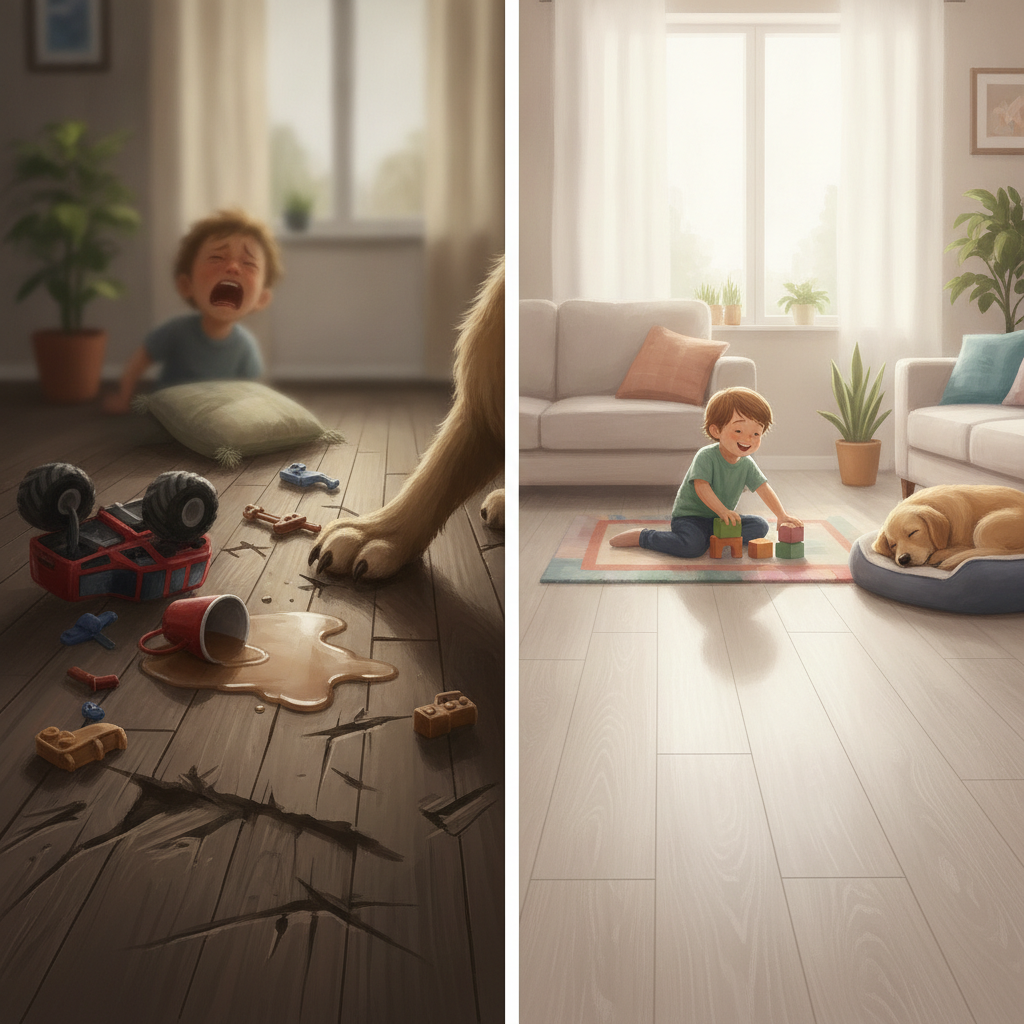
This is where the chaos stops. Welcome to the Indestructible Floor Playbook. We’ve done the exhaustive research to translate complex technical data into a simple, actionable guide. This article introduces our proprietary “Family-Proof Scorecard,” an easy-to-understand tool that empowers you to look past the sales pitch and confidently choose a truly impact resistant flooring solution that protects your investment and brings peace of mind back to your active home.
- Decoding Durability: Understanding the Science Behind Tough Floors
- The 2026 Family-Proof Scorecard: Rating the Most Durable Flooring Options
- Beyond Durability: The Family-Friendliness Factor
- Proactive Protection: How to Prevent Scratches, Dents, and Wear
- Your Floor, Your Fortress
- References & Authoritative Sources
Decoding Durability: Understanding the Science Behind Tough Floors
Before you can choose the toughest floor, you need to understand how durability is actually measured. The flooring industry uses a set of standardized tests and ratings to quantify a material’s resistance to scratches, dents, and daily wear. Getting familiar with this language is the single most important step in making an informed decision and avoiding costly mistakes.
Key Durability Metrics at a Glance:
- AC Rating (Abrasion Class): Measures scratch and wear resistance, primarily for laminate flooring.
- Wear Layer Thickness (mils): The key to scratch resistance in Luxury Vinyl Flooring (LVP/LVT).
- Janka Hardness Scale: Rates the dent resistance of wood and bamboo species.
- Core Type (SPC/WPC): Determines the dent resistance and stability of LVP.
- PEI Rating (Porcelain Enamel Institute): Grades the wear resistance of ceramic and porcelain tile.
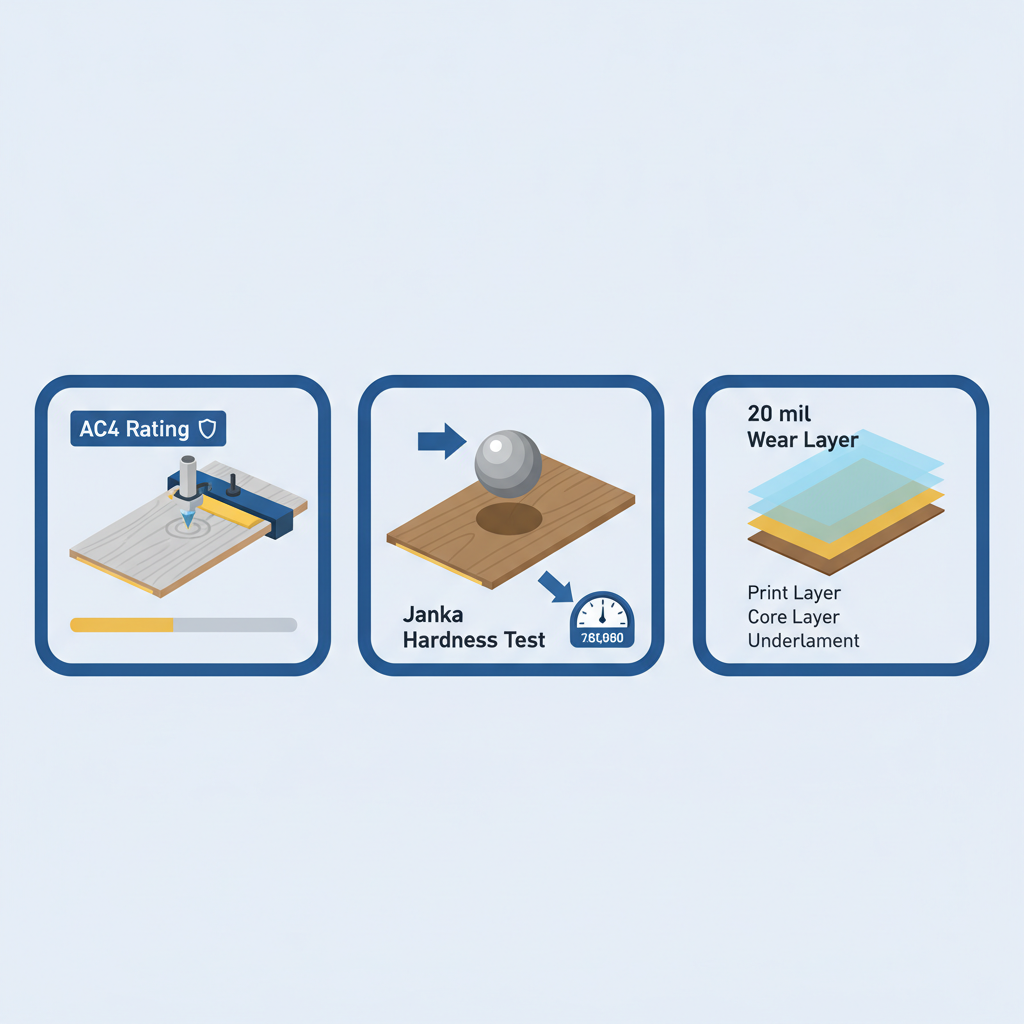
Scratch Resistance: The AC Rating and Wear Layer Explained
Scratches from pet nails, dragged furniture, and abrasive dirt are the number one enemy of a pristine floor. Two key metrics tell you how well a floor will stand up to this daily grind.
For laminate flooring, the gold standard is the Abrasion Class (AC) Rating. Overseen by organizations like the North American Laminate Flooring Association (NALFA), this rating system subjects flooring to a series of tests to simulate real-world wear and tear.[1]
- AC1: Moderate Residential (e.g., bedrooms)
- AC2: General Residential (e.g., living rooms)
- AC3: Heavy Residential / Moderate Commercial (e.g., busy homes, hallways)
- AC4: General Commercial (e.g., small offices, cafes)
- AC5: Heavy Commercial (e.g., department stores, public buildings)
For a busy family home, an AC3 rating is the minimum you should consider, while an AC4 rating provides commercial-grade scratch resistance that can handle almost anything your family throws at it.
For Luxury Vinyl Plank (LVP), scratch resistance comes from its transparent top wear layer, measured in mils (one-thousandth of an inch). This isn’t the thickness of the plank, but just the protective top coating. A thicker wear layer means more protection. For an active home, a 20 mil (0.5mm) wear layer is considered the sweet spot, offering commercial-grade durability that is ideal for maximum protection against scratches and scuffs.
Dent & Impact Resistance: The Janka Hardness Scale and Core Density
Dents from dropped pots, heavy toys, or even high heels can permanently mar a floor’s surface. A floor’s ability to resist these impacts comes down to its hardness and core construction.
For solid hardwood and bamboo, dent resistance is measured by the Janka Hardness Scale. This test, originally developed by the U.S. Department of Agriculture, measures the force required to embed a 0.444-inch steel ball halfway into a piece of wood.[2] The higher the number, the harder and more dent-resistant the wood. For example, popular species like Strand-woven bamboo (3000-5000) and Brazilian Walnut (3684) are top performers, offering incredible resistance to impacts.
In the world of Luxury Vinyl Plank, dent resistance is all about the core. There are two main types:
- WPC (Wood Polymer Composite): This core contains wood pulp and foaming agents, making it softer, quieter, and more comfortable underfoot. However, it is more susceptible to dents from heavy furniture or sharp impacts.
- SPC (Stone Polymer Composite): This core is made from a mixture of limestone powder, PVC, and stabilizers. The result is a much denser, more rigid plank that is significantly more resistant to dents and impacts. For high-traffic areas and homes with kids, an SPC core is the superior choice for dent resistance.
For Tile: Understanding the PEI Rating
For ceramic and porcelain tile, the key durability metric is the PEI Rating, established by the Porcelain Enamel Institute and promoted by authorities like the Tile Council of North America (TCNA).[3] This rating classifies a tile’s resistance to abrasion and its suitability for different applications.
- Class 1: No foot traffic (wall tile only)
- Class 2: Light traffic (e.g., residential bathrooms)
- Class 3: Light to moderate traffic (most residential applications)
- Class 4: Moderate to heavy traffic (all residential and light commercial)
- Class 5: Heavy to extra-heavy traffic (all residential and heavy commercial)
For any high-traffic area in your home—kitchens, entryways, hallways—you should look for a tile with a PEI rating of Class 4 or 5. These tiles are designed for heavy commercial traffic, making them exceptionally durable and virtually scratch-proof in a home environment.
The 2026 Family-Proof Scorecard: Rating the Most Durable Flooring Options
Now that you speak the language of durability, let’s put the most popular flooring options to the test. Our Family-Proof Scorecard rates each material on a 1-5 scale across the five factors that matter most to an active family. Use this as your at-a-glance guide to finding the perfect match for your home’s unique challenges.
| Flooring Material | Scratch Resistance | Dent Resistance | Water Resistance | Safety (VOCs/Slip) | Maintenance | Overall Score |
|---|---|---|---|---|---|---|
| LVP (SPC Core) | 4 | 4 | 5 | 5 | 5 | 4.6 |
| Laminate (AC4+) | 5 | 3 | 3 | 4 | 4 | 3.8 |
| Porcelain Tile | 5 | 5 | 5 | 4 | 3 | 4.4 |
| Engineered Hardwood | 3 | 3 | 2 | 4 | 2 | 2.8 |
| Strand-Woven Bamboo | 4 | 5 | 2 | 4 | 2 | 3.4 |
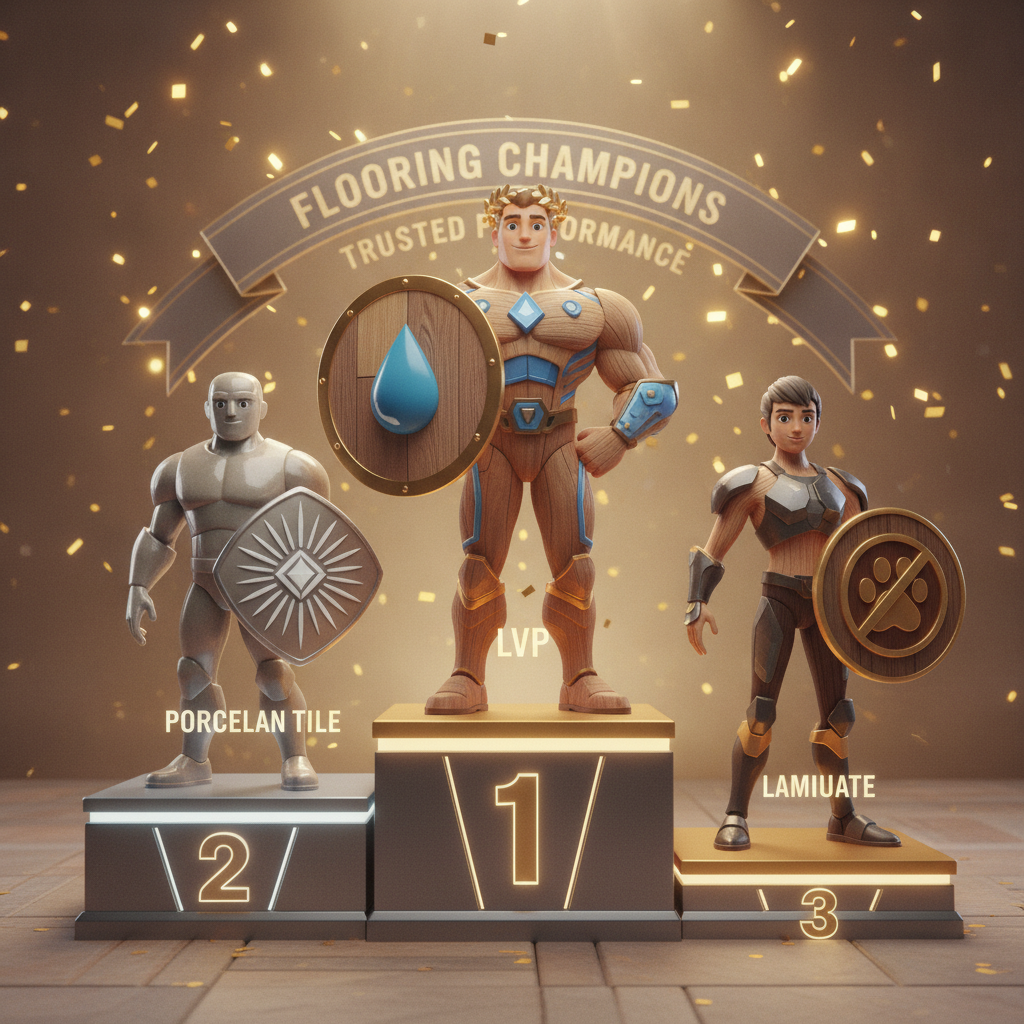
Champion for All-Around Performance: Luxury Vinyl Plank (LVP/LVT)
Luxury Vinyl Plank with an SPC core is the undisputed MVP for most active families, and for good reason. It masterfully combines durability, practicality, and style. Modern LVP is 100% waterproof, meaning spills from sippy cups or pet bowls are a non-issue. For maximum durability, look for products with a 20 mil or thicker wear layer and a rigid SPC core, which provides superior resistance to both scratches and dents.
Crucially for parents, many reputable LVP brands carry FloorScore certification. This independent certification, managed by the Resilient Floor Covering Institute (RFCI), ensures the flooring meets strict indoor air quality standards for low volatile organic compound (VOC) emissions, making it a safe and non-toxic option for homes with children.[4]
Champion for Scratch Resistance: High-Pressure Laminate
If your primary concern is scratches from pet claws or dragged toys, modern laminate flooring is an incredible contender. Thanks to its incredibly tough, factory-fused top layer, a high-quality laminate with an AC4 or AC5 rating offers some of the best scratch resistance on the market. As NALFA standards confirm, an AC4 rating is designed for light commercial use, making it more than a match for a busy household.
So, which is more durable: luxury vinyl or laminate? Laminate typically wins on pure scratch resistance, but LVP is superior when it comes to water resistance and denting. If your home is prone to spills (kitchens, bathrooms), LVP is the safer bet. If scratches are your main foe, AC4 laminate is your champion.
Champion for Ultimate Durability: Porcelain & Ceramic Tile
When it comes to sheer, brute-force durability, nothing beats porcelain tile. It is virtually scratch-proof, completely waterproof, and impossible to dent. This incredible toughness comes from its material hardness; on the Mohs scale of mineral hardness, developed by Friedrich Mohs, porcelain rates a 7 or higher, making it harder than granite.[5] Combined with a PEI rating of Class 4 or 5, porcelain tile will look the same in 20 years as it does on day one.[3]
However, this indestructibility comes with trade-offs. Tile is hard and cold underfoot, which can be less comfortable for toddlers, and dropped glasses will certainly shatter. Grout lines also require periodic sealing and cleaning, though using a modern epoxy grout instead of traditional cement-based grout can provide superior stain and crack resistance in busy kitchens and mudrooms.
The Natural Choice: Engineered Hardwood & Strand-Woven Bamboo
For many, the timeless beauty of real wood is non-negotiable. While traditional solid hardwood can be soft and prone to damage, modern alternatives offer a much more durable solution. Engineered hardwood, constructed with a core of layered plywood, is more dimensionally stable and less susceptible to warping from moisture changes than solid wood.
For maximum durability, look for engineered wood with a thick top veneer and a factory-applied aluminum oxide finish, a practice endorsed by the National Wood Flooring Association (NWFA).[6] This finish is significantly harder and more scratch-resistant than standard polyurethane.
Even better for dent resistance is strand-woven bamboo. This manufacturing process compresses bamboo fibers with intense heat and pressure, creating a flooring material that is two to three times harder than Red Oak on the Janka scale, making it one of the most dent-resistant natural flooring options available.
Beyond Durability: The Family-Friendliness Factor
A floor that can survive your family is great, but a floor that helps your family thrive is even better. The best flooring for active homes considers factors beyond simple impact resistance, creating a healthier, safer, and more comfortable environment. This holistic approach is crucial, with organizations like the American Academy of Pediatrics emphasizing the importance of healthy home environments for child development.[7]
Health & Safety: VOCs, Slip Resistance, and Air Quality
A healthy home starts with clean air. Volatile Organic Compounds (VOCs) are chemicals that can be released into the air from building materials, including some types of flooring. For peace of mind, always look for flooring with FloorScore certification, which guarantees low VOC emissions and contributes to better indoor air quality.[4]
Safety underfoot is also paramount, especially in areas that can get wet like kitchens and entryways. The industry standard for measuring slip resistance is the Dynamic Coefficient of Friction (DCOF). According to ASTM International standards, a DCOF rating of >0.42 is the accepted minimum for surfaces that may be walked on when wet, reducing the risk of slips and falls.[8]
Comfort & Noise: Creating a Quieter, Softer Play Space
The relentless pitter-patter of little feet (and the thunderous crash of dropped toys) can create a noisy home. Hard surfaces like tile reflect sound, while softer materials like LVP with a WPC core or those installed with a quality underlayment can help dampen it.
Comfort is another key consideration, especially in playrooms and kids’ bedrooms. While tile is incredibly durable, it’s also unforgivingly hard. LVP with a WPC core offers more cushion, and pairing any floating floor (like LVP or laminate) with a high-quality acoustic underlayment can dramatically improve both underfoot comfort and noise reduction, creating a more peaceful living space.
Proactive Protection: How to Prevent Scratches, Dents, and Wear
Choosing a durable floor is half the battle; the other half is protecting your investment. A few simple, proactive strategies can dramatically reduce wear and tear, keeping your floors looking new for years.
The “Kid-Proof Your Floors” Checklist:
- Entry Mats: Place high-quality mats both outside and inside every exterior door.
- Furniture Pads: Apply thick felt pads to the bottom of all furniture, especially chairs and tables that move often.
- Area Rugs: Use area rugs in high-play zones and under dining tables.
- High Chair Mat: Place a durable polycarbonate mat under high chairs to catch dropped food and protect from scraping legs.
- “Soft” Toy Zones: Designate carpeted areas or play mats for play with hard, heavy toys.
- Regular Cleaning: Sweep or vacuum frequently to remove abrasive grit and dirt.
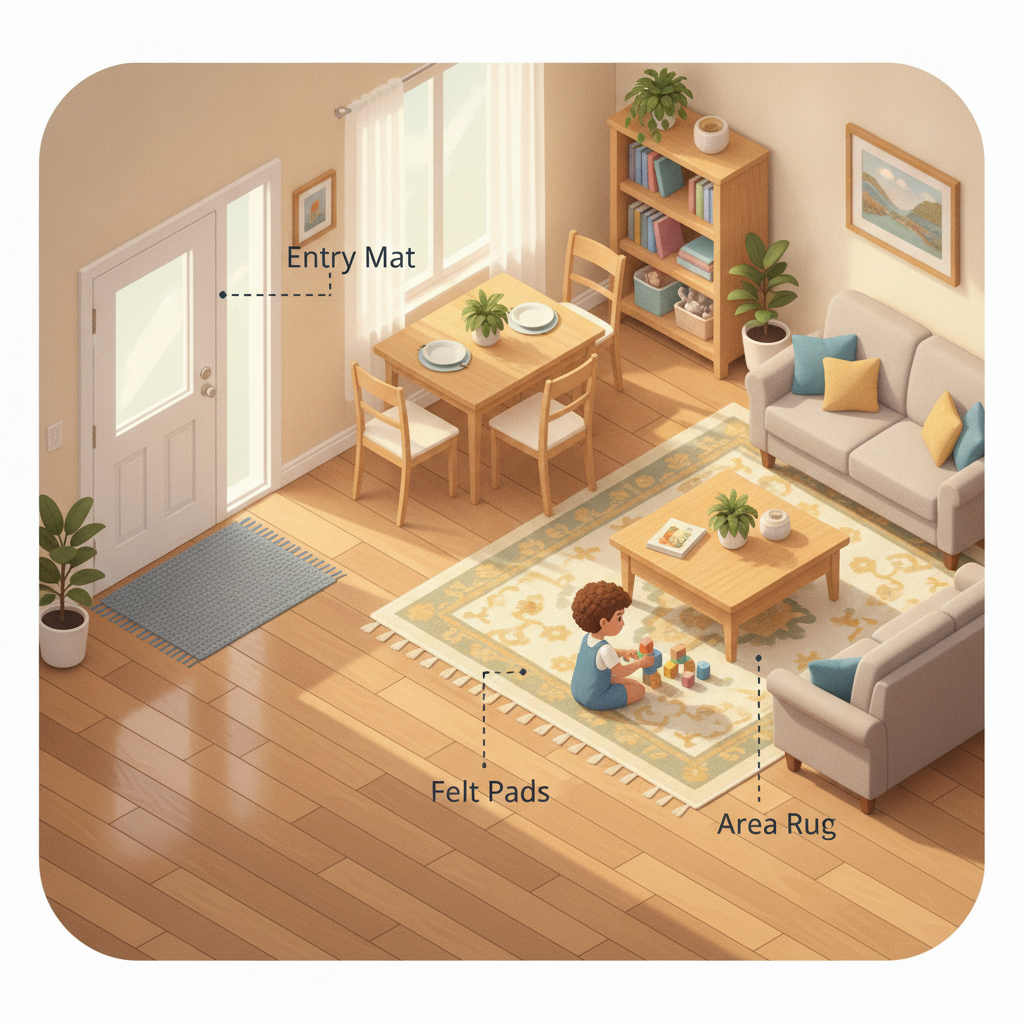
Your First Line of Defense: Mats, Rugs, and Furniture Pads
The most effective way to prevent floor damage is to stop it at the source. Gritty dirt and small pebbles tracked in on shoes are a primary cause of scratches. A coarse mat outside the door to scrape off debris and a softer, absorbent mat inside can trap up to 80% of dirt before it ever reaches your floor.
For furniture, heavy-duty felt pads are essential. Check them regularly and replace them when they get worn or embedded with grit. When it comes to product recommendations, trusted sources like the Good Housekeeping Institute often test and review items like protective mats and cleaning supplies, leveraging their authority to help consumers make smart choices.[9]
A Triage Guide for Common Floor Damage
Even with the best prevention, accidents happen. Knowing how to deal with minor damage can save you from costly professional repairs.
What Kind of Scratch/Dent Do You Have?
- Is it a surface scuff or a deep gouge?
- Surface Scuff: Often removable with cleaning or a minor DIY fix.
- Deep Gouge: May require a professional-grade filler kit or plank replacement.
- Is it a dent in wood or a scratch on vinyl?
- Dent in Wood: Minor dents can often be steamed out.
- Scratch on Vinyl/Laminate: Requires a dedicated repair kit.
For any major repairs, always consult the guidelines from the product manufacturer or a professional organization like the National Wood Flooring Association (NWFA) for wood-specific issues.[6]
Fixing Scuffs and Light Scratches on LVP & Laminate
For minor surface scratches on LVP or laminate, the first step is to thoroughly clean the area. Often, what looks like a scratch is just a scuff mark that can be removed with a tennis ball or a microfiber cloth and the manufacturer-approved cleaning solution. For slightly deeper scratches that have not penetrated the wear layer, you can purchase a dedicated LVP or laminate repair kit. These kits come with a wax or putty filler that you match to your floor’s color, filling the scratch to make it virtually invisible.
Removing Minor Dents from Wood Floors
One of the most effective DIY tricks for wood floors is removing shallow dents with steam. This method works best on solid wood but can also be used cautiously on engineered hardwood. Place a few drops of water in the dent, cover it with a damp cloth, and press a hot iron over the cloth in a circular motion for a few seconds. The steam causes the compressed wood fibers to swell back to their original height. This technique can be remarkably effective, but it’s wise to test it on an inconspicuous area first. For deep gouges or widespread damage, it’s always best to call a professional floor refinisher.
Your Floor, Your Fortress
Choosing a floor for an active home is more than an aesthetic decision—it’s an investment in your family’s daily life and your own peace of mind. The constant worry over every dropped cup and scraped toy can be exhausting. But you are now armed with the knowledge to fight back.
By understanding the data behind durability—the AC ratings, the Janka scale, and the importance of a wear layer—you can see past the marketing and evaluate flooring like a pro. By using the Family-Proof Scorecard to balance scratch resistance with safety, water resistance with comfort, you can select a floor that truly fits your lifestyle. And by implementing proactive protection strategies, you can ensure that your beautiful, durable new floor stays that way for years to come. You are now empowered to choose the perfect, worry-free foundation for your family’s story.
Ready to choose your indestructible floor? Download our free ‘Family-Friendly Flooring Shopping Checklist’ to take with you to the store and compare products like a pro.
This article provides general guidance. Always consult with a professional flooring installer for advice specific to your home’s subfloor and conditions. Verify all technical specifications and warranty details directly with the product manufacturer before purchasing.
References & Authoritative Sources
- North American Laminate Flooring Association (NALFA). (N.D.). NALFA Certification Seal. Retrieved from NALFA’s official website.
- U.S. Department of Agriculture, Forest Service. (N.D.). Wood Handbook–Wood as an Engineering Material. Retrieved from the Forest Products Laboratory.
- Tile Council of North America (TCNA). (N.D.). Understanding the PEI Rating. Retrieved from TCNA’s official publications and resources.
- Resilient Floor Covering Institute (RFCI). (N.D.). FloorScore. Retrieved from the official FloorScore website.
- National Park Service. (N.D.). Mohs Hardness Scale. Retrieved from NPS.gov.
- National Wood Flooring Association (NWFA). (N.D.). Technical Guidelines. Retrieved from the NWFA’s official website for industry standards.
- American Academy of Pediatrics. (N.D.). Creating a Healthy Home Environment. Retrieved from healthychildren.org.
- ASTM International. (N.D.). ASTM D1037 – Standard Test Methods for Evaluating Properties of Wood-Base Fiber and Particle Panel Materials. Retrieved from ASTM.org.
- Good Housekeeping Institute. (N.D.). Product Testing and Reviews. Retrieved from goodhousekeeping.com.
