The sound is unmistakable: a heavy pot slipping from your grasp, a dropped tool, a child’s toy tumbling end over end. It’s followed by a moment of dreaded silence before you look down to see the damage—a new chip, a fresh crack, or a deep gouge in your beautiful floor. It’s a frustratingly common experience that leaves homeowners wondering if a truly invincible floor, an “Adamantine Flooring,” is just a myth.
The quest for a floor that can withstand the rigors of daily life is real. But the marketing language of “durable” and “long-lasting” is often vague, leaving you to guess which material will actually hold up to your family, your pets, and your life.
This guide is different. We’re moving beyond generic lists to provide a powerful decision-making framework: The Ultimate Flooring Durability Matrix. We will deconstruct what durability truly means, empowering you to understand the critical trade-offs between scratch, chip, and crack resistance. By the end of this article, you won’t just know which floors are tough; you’ll know which floor is the perfect kind of tough for your specific home.
- Deconstructing ‘Durability’: Beyond the Marketing Hype
- The Science of Strength: Decoding Durability Ratings Like a Pro
- The Ultimate Flooring Durability Matrix [Material Showdown]
- Application-Based Guide: The Best Flooring for Your Lifestyle
- The Unseen Foundation: Preventing Damage Before It Starts
- First Aid for Floors: A Practical Guide to Repairing Damage
- Conclusion: Your Blueprint for a Lasting Floor
- References
Deconstructing ‘Durability’: Beyond the Marketing Hype’
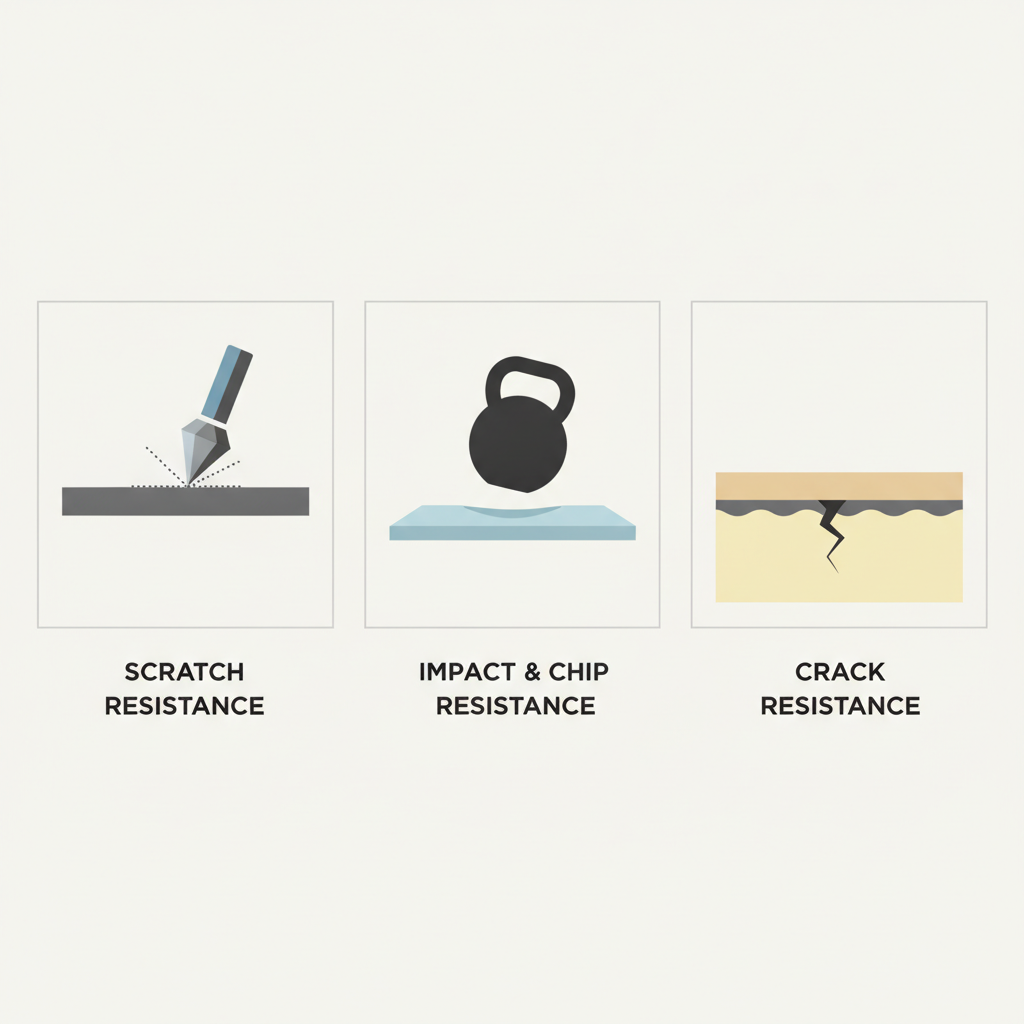
The word “durable” is perhaps the most overused and least understood term in the flooring industry. What makes a floor truly durable? It’s not a single quality, but a combination of distinct characteristics. Think of it this way: a diamond is incredibly hard and scratch-resistant, but a sharp blow can shatter it. A rubber ball, on the other hand, isn’t scratch-proof, but you can drop it all day without it chipping. Flooring materials behave in much the same way. Independent bodies like Consumer Reports conduct rigorous tests, running abrasive machines and dropping heavy objects to measure these different facets of durability.[1] Let’s break them down.
Scratch Resistance: The Battle Against Abrasives
Scratch resistance refers to a floor’s ability to withstand surface-level damage from friction and sharp objects. This is your primary defense against pet claws, dragged furniture, and the grit and sand tracked in on shoes. For many modern flooring types, this protection comes from a specialized top layer. In Luxury Vinyl Tile (LVT) and laminate, this is a transparent “wear layer.” In hardwood, it’s a polyurethane or aluminum oxide topcoat. Materials that are inherently hard all the way through, like porcelain tile, offer the highest level of scratch resistance.
Chip & Impact Resistance: Resilience vs. Brittleness
Chip and impact resistance is a floor’s ability to absorb the energy of a dropped object without cracking or having a piece break off. This is where the distinction between hardness and resilience becomes critical. As noted in tests by Consumer Reports, hard and dense materials like porcelain tile, while excellent against scratches, can be brittle and may chip or crack if a heavy object is dropped on them.[1]
Conversely, resilient materials like Luxury Vinyl Plank (LVP) are designed to flex slightly under impact, absorbing the force and preventing damage. The core of the flooring plays a huge role here. Vinyl planks with a Stone Plastic Composite (SPC) core are more rigid and dent-resistant than their Wood Plastic Composite (WPC) counterparts, offering superior protection against impacts. This is the essence of choosing a chip-proof floor—it’s about resilience, not just hardness.
Crack Resistance: It’s All About the Foundation
When it comes to crack-resistant flooring, the material itself is only half the story. More often than not, cracks that span across multiple tiles or run the length of a room are a symptom of a deeper problem within the subfloor or foundation. Foundation repair specialists at Matthews Wall Anchor & Waterproofing Services confirm that issues like foundation settlement or hydrostatic pressure are primary causes of floor cracks.[2]
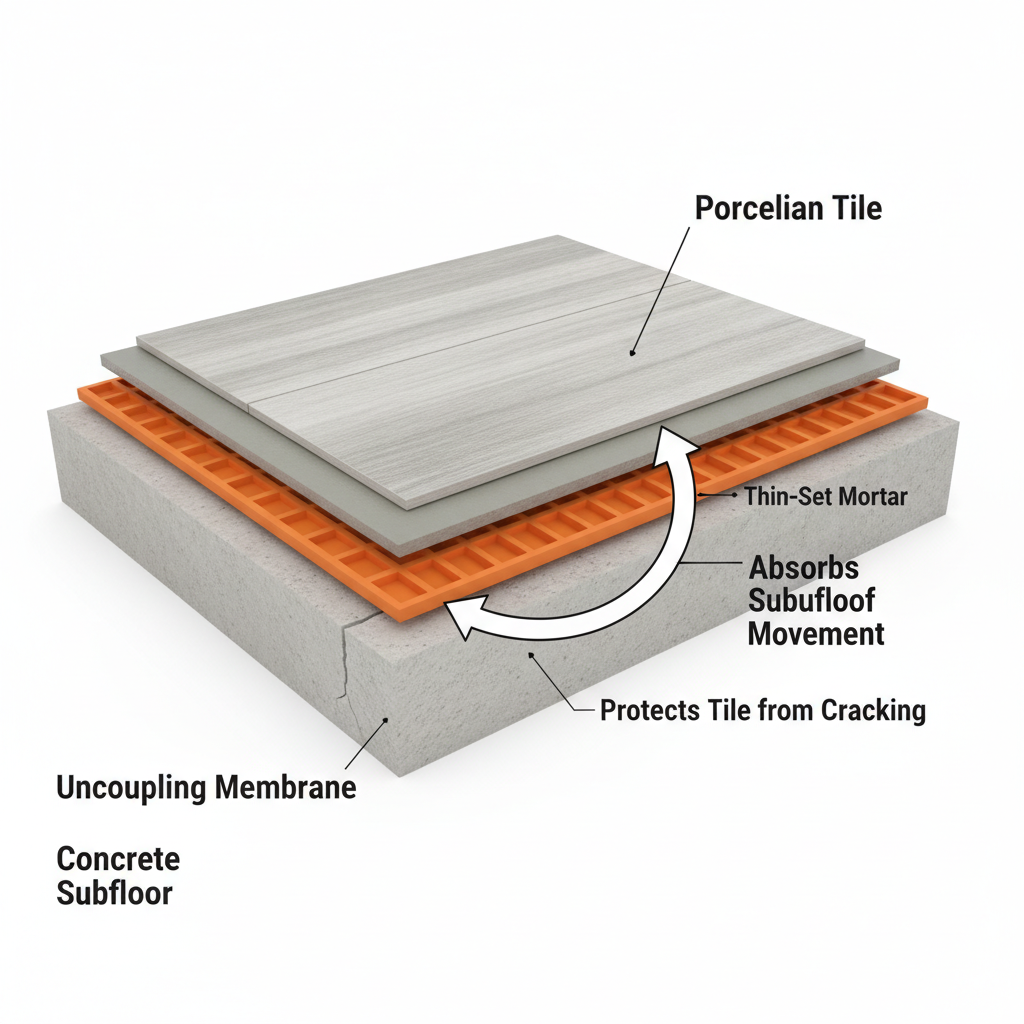
For tile installations, movement or shifts in the subfloor are a common enemy. This is why modern installation techniques often involve an uncoupling membrane. As experts at Schluter Systems explain, these membranes create an intermediate layer that “uncouples” the tile from the subfloor, allowing for independent movement and preventing subfloor cracks from transferring to your tile.[3]
The Science of Strength: Decoding Durability Ratings Like a Pro
To move past marketing claims and assess true durability, you need to speak the language of the industry. Three key rating systems tell you exactly how a floor is expected to perform under stress. Understanding these will transform you from a confused customer into an empowered buyer.
Laminate’s AC Rating: From Light Residential to Heavy Commercial
The Abrasion Class (AC) rating is a standardized measure of a laminate floor’s durability against abrasion, impact, stains, and burns. The ratings, which range from AC1 to AC5, provide a clear guide to the product’s intended use.
| AC Rating | Traffic Level | Ideal Application |
|---|---|---|
| AC1 | Moderate Residential | Bedrooms, closets (rarely sold today) |
| AC2 | General Residential | Living rooms, dining rooms |
| AC3 | Heavy Residential | Any room in a home, including high-traffic areas |
| AC4 | Light Commercial | Small offices, boutiques, cafes |
| AC5 | Heavy Commercial | Public buildings, department stores, showrooms |
Pro Tip: For any active home, look for a laminate with a rating of at least AC3. For homes with pets, kids, or very busy entryways, an AC4 rating provides an extra layer of security.
Tile’s PEI Rating: Measuring Wear Resistance for Glazed Tile
The Porcelain Enamel Institute (PEI) rating applies to glazed ceramic and porcelain tiles and measures the abrasion resistance of the glaze. This rating is critical for ensuring you don’t install a tile meant for walls on a high-traffic floor. The Tile Council of North America (TCNA) recognizes this as a key standard for proper specification.[4]
- PEI 0: No foot traffic. Wall use only.
- PEI 1: Very light traffic (e.g., residential bathroom).
- PEI 2: Light traffic (e.g., residential areas where soft footwear is used).
- PEI 3: Light to moderate traffic (suitable for all residential applications).
- PEI 4: Moderate to heavy traffic (suitable for all residential and light commercial applications).
- PEI 5: Heavy to extra-heavy traffic (suitable for all residential and heavy commercial applications).
Luxury Vinyl’s Wear Layer: Why Mils Matter
For luxury vinyl flooring (LVT/LVP), the most important durability metric is the thickness of its wear layer, measured in mils (one-thousandth of an inch). This transparent top layer is what protects the photographic image layer from scratches, scuffs, and stains. A thicker wear layer means a longer life for your floor.
- 6-10 mils: Suitable for light residential traffic (e.g., bedrooms).
- 12-20 mils: The sweet spot for most residential applications, including homes with pets and kids. A 20 mil wear layer is considered excellent for residential use.
- 20+ mils: Commercial-grade durability, ideal for very high-traffic homes or commercial spaces.
The Ultimate Flooring Durability Matrix [Material Showdown]
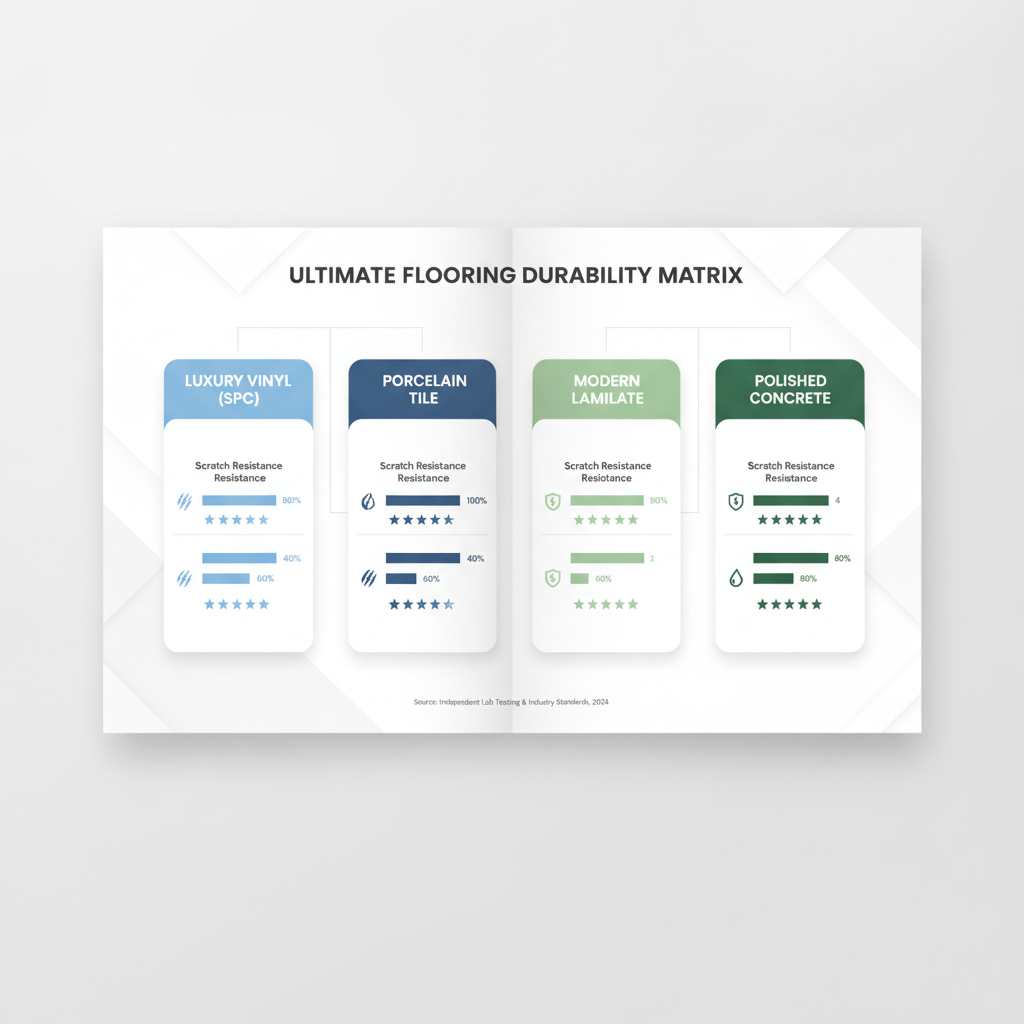
Now, let’s put it all together. There is no single “most durable flooring material” for every situation. The perfect choice is a trade-off based on your priorities. Use this matrix to compare the top contenders and find the best fit for your home. (Ratings are on a 1-5 scale, with 5 being the highest).
| Material | Scratch Resistance | Chip/Impact Resistance | Water Resistance | Stain Resistance | Comfort |
|---|---|---|---|---|---|
| Luxury Vinyl (SPC) | 4 | 5 | 5 | 5 | 4 |
| Porcelain Tile | 5 | 2 | 5 | 5 | 1 |
| Modern Laminate | 4 | 3 | 3 | 4 | 3 |
| Polished Concrete | 4 | 5 | 5 | 4 | 1 |
Luxury Vinyl (SPC/LVP): The Resilient All-Rounder
Luxury vinyl is the champion of balanced performance. Its greatest strength is its impact resistance; it can handle dropped dishes and toys with ease. Modern versions with a Stone Plastic Composite (SPC) core are exceptionally rigid and dent-resistant, making them an ideal impact-resistant flooring choice. While its scratch resistance is very good with a thick (20+ mil) wear layer, it’s not quite as foolproof as porcelain tile. Its waterproof nature and comfort underfoot make it a fantastic all-around solution.
Porcelain Tile: The Scratch-Proof King (with a Catch)
When it comes to pure surface hardness and scratch resistance, nothing beats porcelain tile. It laughs at pet claws and dragged chairs. According to industry standards like ASTM C648, tile demonstrates incredible breaking strength under static loads. However, this hardness is also its weakness. As Consumer Reports has found, porcelain is brittle and can chip or crack from a sharp, heavy impact.[1] It’s also cold and hard underfoot, offering little in the way of comfort.
Modern Laminate: High-Tech Durability on a Budget
Laminate flooring has come a long way. High-quality modern laminate with an AC4 or AC5 rating offers fantastic scratch resistance that can rival more expensive options. However, its core is typically a high-density fiberboard, making it more susceptible to chipping from sharp impacts than luxury vinyl. While many new products feature enhanced water resistance, it remains a weak point compared to the fully waterproof nature of vinyl and tile.
Polished Concrete: The Industrial Powerhouse
For raw, brute-force durability, polished concrete is in a class of its own. It is highly resistant to both scratches and heavy impacts. However, it is an unforgiving surface—extremely hard and cold. According to experts at Orange County Decorative Concrete, proper installation with control joints is crucial to manage its natural tendency to crack over time, and it requires periodic resealing to maintain its stain resistance.[5]
Application-Based Guide: The Best Flooring for Your Lifestyle
Knowing the data is one thing; applying it is another. Here’s how to choose the best flooring for the most demanding areas of your home.
For Homes with Pets: Prioritizing Scratch Resistance and Cleanability
For pet owners, the biggest battle is against claws and accidents.
Top Choice: Luxury Vinyl (SPC) with a 20+ mil wear layer. It offers excellent scratch protection, is 100% waterproof for easy cleanup of accidents, and is quieter and more comfortable for your pets’ joints.
Runner-Up: Porcelain Tile. It is virtually scratch-proof and completely waterproof. The only downsides are its hardness, which can be tough on older pets, and the potential for grout lines to stain if not properly sealed.
Pro Tip: “We often guide clients with large dogs toward LVT. While tile is technically harder, the resilience of vinyl means less noise from clicking nails and it’s a bit more forgiving if an older pet stumbles.” – Quote from a certified flooring designer.
For Kitchens: Balancing Impact, Water, and Stain Resistance
The kitchen is a drop zone for everything from silverware to cast iron pans.
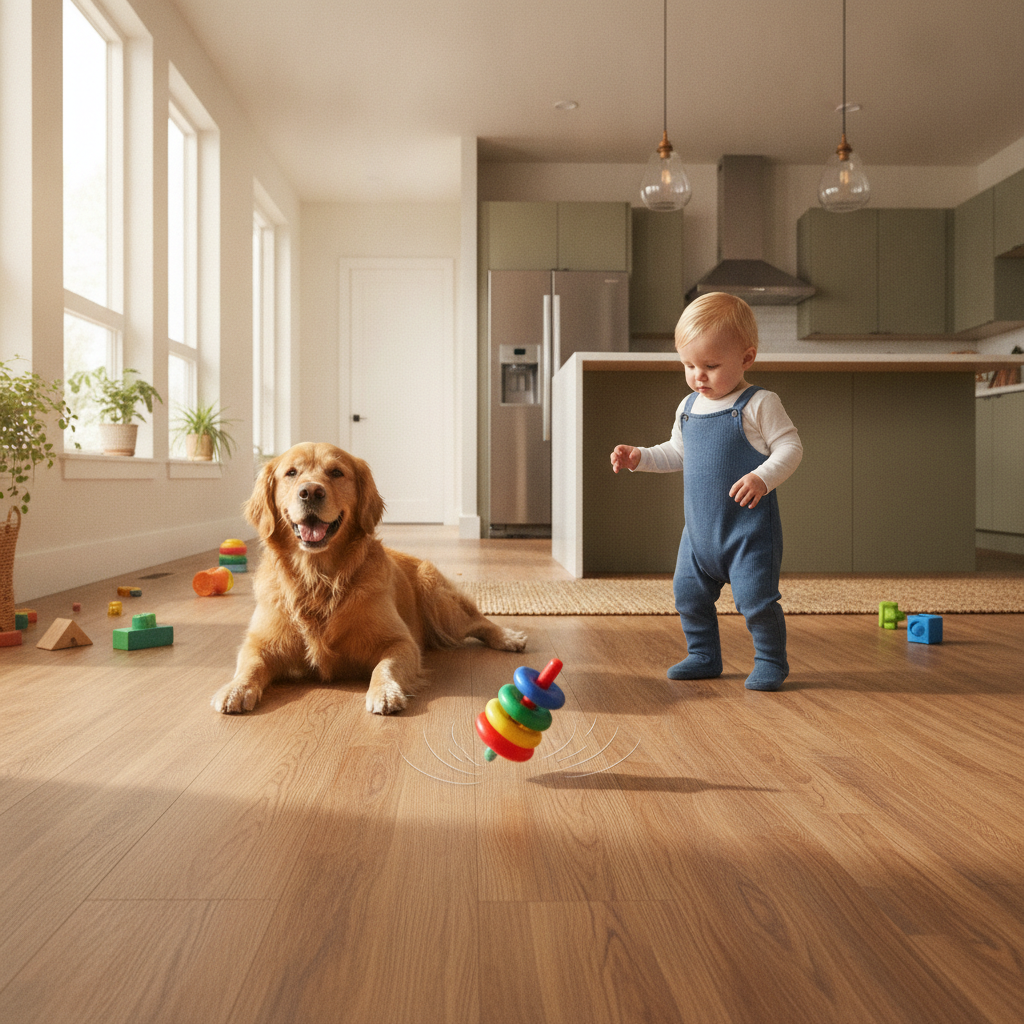
Top Choice: Luxury Vinyl (SPC). Its superior impact resistance means a dropped pot is far less likely to cause a chip or crack. It’s also waterproof, stain-resistant, and more comfortable to stand on for long periods of cooking. Imagine dropping a heavy pan: on LVT, it might leave a small dent; on tile, it could create a spiderweb of cracks.
Runner-Up: Porcelain Tile. It’s impervious to water, won’t be damaged by hot pans, and is incredibly easy to clean. Its main drawback is the risk of chipping or cracking from dropped items.
For Entryways & Hallways: The Front Line Against Wear
These high-traffic areas are where your floor faces its toughest enemy: the abrasive grit and dirt tracked in from outside. This grit acts like sandpaper, grinding away at the floor’s finish.
Top Choice: Porcelain Tile with a PEI rating of 4 or 5. Its exceptional surface hardness is the best defense against the constant abrasion of foot traffic.
Runner-Up: High-Quality Laminate with an AC4 rating. It provides excellent scratch resistance at a lower price point than tile, making it a great choice for busy hallways.
The Unseen Foundation: Preventing Damage Before It Starts
Even the most durable flooring material can fail if it’s not installed correctly. Preventing cracks and chips often begins before the first plank or tile is even laid. A stable, level subfloor is the non-negotiable foundation for a long-lasting floor.
The Critical Role of an Uncoupling Membrane for Tile
If you’re installing tile, especially over a concrete slab or a large wooden subfloor, an uncoupling membrane is your best insurance against cracks. As pioneered by manufacturers like Schluter Systems, these membranes create a buffer zone. They are engineered with a geometric structure that allows the subfloor to expand, contract, or shift slightly without transferring that stress to the rigid tile above, effectively neutralizing a primary cause of cracking.[3]
Subfloor Prep 101: Why Level and Stable is Non-Negotiable
An uneven or flexing subfloor is a recipe for disaster. For floating floors like vinyl and laminate, high spots create wear points and low spots cause planks to flex and eventually break at the joints. For tile, voids in the mortar bed caused by an uneven subfloor leave the tile unsupported and vulnerable to cracking under pressure.
As professional installers from firms like IOC Construction often note, skipping proper subfloor preparation is the most common and costly mistake they see.[6] Before any installation, ensure your subfloor is:
- Flat: Check for high and low spots.
- Clean: Free of all dust, debris, and old adhesive.
- Dry: Moisture is an enemy to almost all flooring types.
- Structurally Sound: No excessive bounce or deflection.
First Aid for Floors: A Practical Guide to Repairing Damage
Despite your best efforts, damage can happen. Fortunately, many common issues can be fixed without replacing the entire floor.
When to Call a Pro: While minor cosmetic repairs are DIY-friendly, widespread issues like multiple cracked tiles, water damage, or significant subfloor problems require professional assessment and repair.
Fixing Minor Chips in Laminate and Luxury Vinyl
For small chips and deep gouges in laminate or vinyl, a color-matched floor repair putty (like Roberts putty) is an effective solution. The process is simple and can be seen in many video tutorials from sources like The Home Depot’s YouTube channel.[10]
- Clean the Area: Make sure the chip is free of dust and debris.
- Apply the Putty: Use a small putty knife to press the filler firmly into the damaged area, slightly overfilling it.
- Scrape Excess: Smooth the putty knife across the surface to remove any excess, leaving a level finish.
- Clean and Cure: Wipe away any residue with a clean cloth and allow the putty to cure according to the manufacturer’s instructions.
Pro Tip: To get a perfect color match, buy a few shades of putty and mix them together. Test your custom color on a spare plank or in an inconspicuous area like a closet before applying it to the repair.
Repairing a Single Cracked or Chipped Tile
Filling a crack in a tile is a temporary fix at best. The proper solution is to replace the damaged tile. This requires care and the right tools.
- Safety First: Always wear safety glasses and gloves to protect against sharp tile fragments.
- Remove Grout: Use a grout removal tool to carefully scrape out the grout from all sides of the damaged tile.
- Break and Remove the Tile: Cover the tile with a towel. Use a hammer and chisel to carefully break the tile from the center outwards. Remove the pieces, being careful not to damage surrounding tiles.
- Prepare the Subfloor: Scrape away all the old thin-set mortar to create a clean, level base.
- Set the New Tile: Apply fresh thin-set mortar to the area, comb it with a notched trowel, and press the new tile firmly into place, ensuring it’s level with the surrounding tiles.
- Grout and Seal: After the mortar has cured (typically 24 hours), apply grout around the new tile. Once the grout has cured, seal it to protect against stains.
For detailed guidance, always refer to the best practices outlined by the Tile Council of North America (TCNA).[4]
Conclusion: Your Blueprint for a Lasting Floor
The search for a mythical “Adamantine Flooring” ends here. The reality is that the perfect floor isn’t a single, indestructible material, but rather the right material chosen for the right reasons. True durability comes from making an informed choice.
By moving beyond simple marketing terms and using a framework like the Durability Matrix, you can analyze the specific strengths of each flooring type and match them to the unique demands of your home. Whether you need the scratch-proof hardness of porcelain tile for your entryway, the resilient, impact-absorbing nature of luxury vinyl for your kitchen, or the budget-friendly toughness of a high-AC laminate, you now have the knowledge to choose with confidence. You are equipped to invest not just in a new floor, but in a lasting foundation for your life.
Ready to find your perfect floor? Revisit our Durability Matrix to compare your top choices, and tell us in the comments which material best fits your home’s needs!
This article provides general guidance and DIY repair tips. Flooring installation and structural assessments can be complex. Always consult with a certified professional for specific projects and follow manufacturer instructions. DIY repairs are performed at your own risk.
References
- Consumer Reports. (N.D.). Best Flooring for High-Traffic Areas & Best Flooring From Consumer Reports’ Tests.
- Matthews Wall Anchor & Waterproofing Services. (N.D.). Floor Cracks. Retrieved from matthewswallanchor.com.
- Schluter Systems. (N.D.). Three reasons why your floor is cracking. Retrieved from schluter.com.
- Tile Council of North America (TCNA). (2022). Cracked Tile: Common Causes and Misconceptions. Retrieved from tcnatile.com.
- Orange County Decorative Concrete. (N.D.). Scratch Resistant Floors. Retrieved from orangecountydecorativeconcrete.com.
- IOC Construction. (N.D.). How to Select Flooring for High-Traffic Commercial Spaces. Retrieved from iocconstruction.com.
- The Spruce. (N.D.). The 8 Most Durable Flooring Options. Retrieved from thespruce.com.
- Flooring America. (N.D.). The Most Durable Flooring Options. Retrieved from flooringamerica.com.
- HomeGuide. (N.D.). 2024 Floor Repair Cost | Fix Flooring Scratches & Damage. Retrieved from homeguide.com.
- The Home Depot. (N.D.). How to Repair Laminate Flooring. Retrieved from The Home Depot YouTube Channel.
