Your floors are the foundation of your home’s design and function, but for many, they are a source of constant frustration. The initial joy of a new floor quickly fades with the first deep scratch from a dragged chair, the scuff marks in the entryway, and the slow, inevitable wear and tear in high-traffic hallways. You find yourself spending more time and money on special cleaners and repairs than you ever imagined, only to watch your investment lose its luster. It’s a cycle of disappointment that leads to a single, critical question: how do you choose a floor that lasts?
This is not just another list of flooring types. This is an investor’s guide to making one of the most important long-term decisions for your home. We will move beyond the showroom sales pitch and adopt a new mindset, treating your floor not as a decorative expense, but as a high-performance asset.
In this comprehensive guide, we will decode the science behind true durability, breaking down the industry ratings that separate the contenders from the pretenders. We will provide a framework for calculating the true cost of ownership over decades, not just the price per square foot. Finally, we will deliver a clear, data-driven analysis of the best long-lasting flooring options, empowering you to select a floor that pays you back in longevity, low maintenance, and increased home equity.
- Why Quality Flooring is an Investment, Not an Expense
- Decoding Durability: The Science Behind a Tough Floor
- The Top Tiers of Durable Flooring: A Comparative Analysis
- Spotlight on Adamantine Flooring: Myth vs. Reality
- Tailored Solutions: The Most Durable Flooring for Your Lifestyle
- Protecting Your Investment: Maintenance, Repair, and Prevention
- Conclusion: Make a Confident, Lasting Investment
- References
Why Quality Flooring is an Investment, Not an Expense
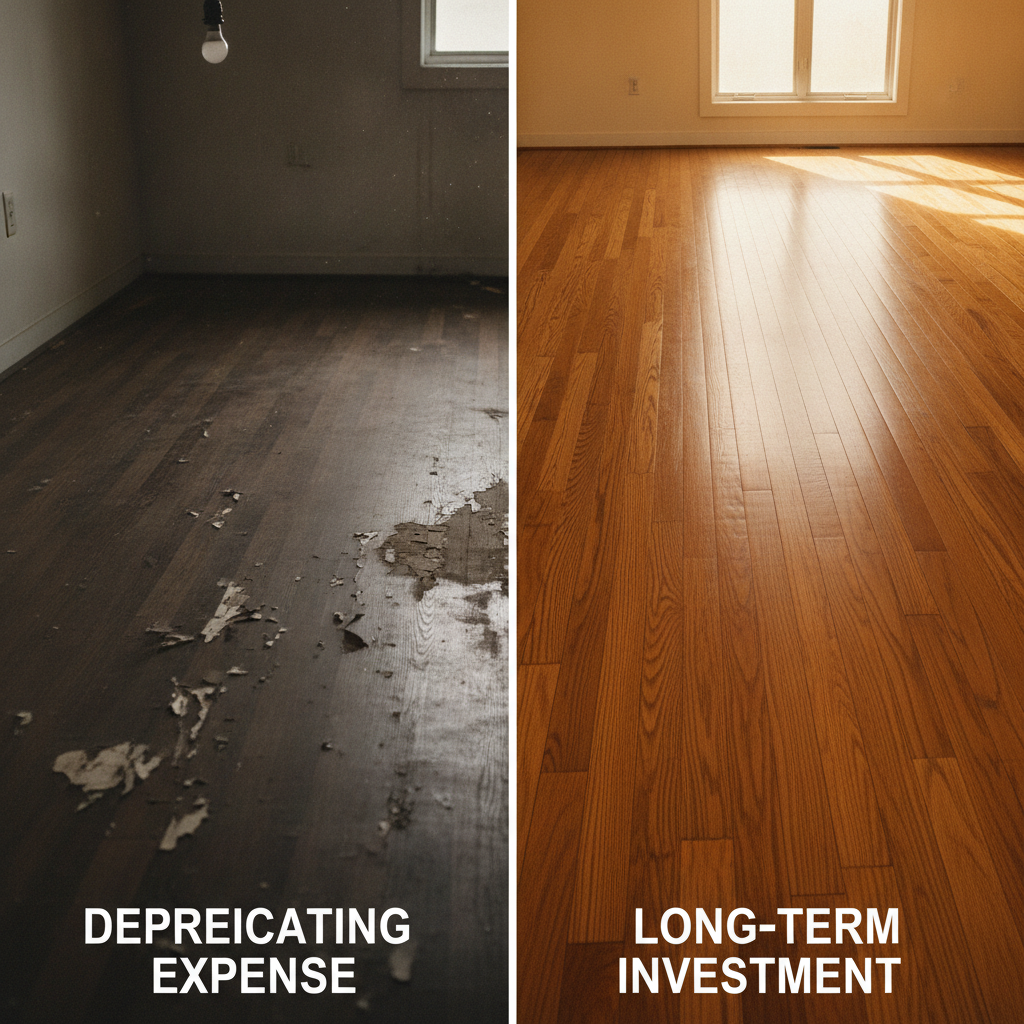
When faced with a flooring decision, the temptation to choose a less expensive option is strong. However, this short-term saving often leads to significant long-term costs. Cheap flooring is an expense—a temporary fix that depreciates quickly. Quality, durable home flooring is an investment that appreciates in value through longevity, lower maintenance, and a higher home resale price.
The hidden costs of budget flooring accumulate over time:
- Frequent Replacement: A low-quality carpet might last 5-7 years, while cheap laminate can peel or chip in even less time. A quality hardwood or tile floor can last a lifetime, eliminating the repeated cost and disruption of replacement.
- High Maintenance & Repairs: Lower-grade materials are more susceptible to flooring scratches and scuffs, water damage, and staining, leading to higher floor maintenance costs for specialized cleaners, repair kits, or professional restoration.
- Negative Impact on Home Value: According to real estate professionals, flimsy, worn-out flooring is a major red flag for potential buyers. As one veteran real estate appraiser notes, “Buyers perceive worn flooring as a sign of a poorly maintained home, which can lower offers or even kill a deal. In contrast, a pristine, high-quality floor like solid hardwood can be a major selling point that justifies a higher asking price.”
Data from the National Association of Realtors (NAR) consistently shows that new or refinished wood flooring provides one of the highest returns on investment of any home improvement project, often recouping over 100% of its cost at resale [1]. This highlights the market’s recognition of quality flooring as a tangible asset.
20-Year Cost of Ownership: Budget vs. Quality Flooring (Example)
| Feature (per 1,000 sq. ft.) | Budget Laminate ($2/sq ft) | Quality Hardwood ($8/sq ft) |
|---|---|---|
| Initial Cost | $2,000 | $8,000 |
| Lifespan | 10 years | 100+ years |
| Replacements in 20 Yrs | 1 (at year 10) | 0 |
| Cost of Replacement | ~$2,500 (inflation adjusted) | $0 |
| Professional Refinishing | N/A | 1 (at year 15) @ ~$4/sq ft = $4,000 |
| Total 20-Year Cost | $4,500 | $12,000 |
| Value at 20 Years | $0 (Needs replacing again) | ~$12,000+ (Asset value retained) |
This simplified table illustrates the core principle: the initial savings on a cheap floor are erased by the cost of replacing it, while the quality floor retains and even grows its value.
Calculating the True Cost of Ownership
To make a true long term flooring investment, you must look beyond the price tag and calculate the Total Cost of Ownership (TCO). This is a comprehensive evaluation of all expenses associated with a floor over its entire life.
Key factors in your TCO calculation include:
- Material & Installation: The upfront cost of the flooring and professional installation.
- Maintenance: The annual cost of required cleaners, sealants, waxes, and professional services. For example, professional carpet cleaning can cost $0.20-$0.40 per square foot, while professional tile and grout sealing can run $0.75-$2.50 per square foot.
- Repairs & Refinishing: The potential cost to fix damage or refinish the surface. Refinishing a hardwood floor, for instance, costs roughly $3-$8 per square foot but can make it look brand new, extending its life for another decade or more.
- Expected Lifespan: The most critical factor. Dividing the total costs by the number of years the floor is expected to last reveals its true annual cost.
By using this framework, you can clearly see how a more expensive but long-lasting flooring option often has a lower annual cost than a “cheaper” alternative that needs frequent replacement.
Decoding Durability: The Science Behind a Tough Floor
To invest wisely, you need to speak the language of durability. Manufacturers use standardized tests and ratings to quantify how well a floor will stand up to wear and tear. Understanding these metrics empowers you to see past marketing claims and evaluate a product’s true performance potential. Here is a quick glossary of the most important durability ratings.
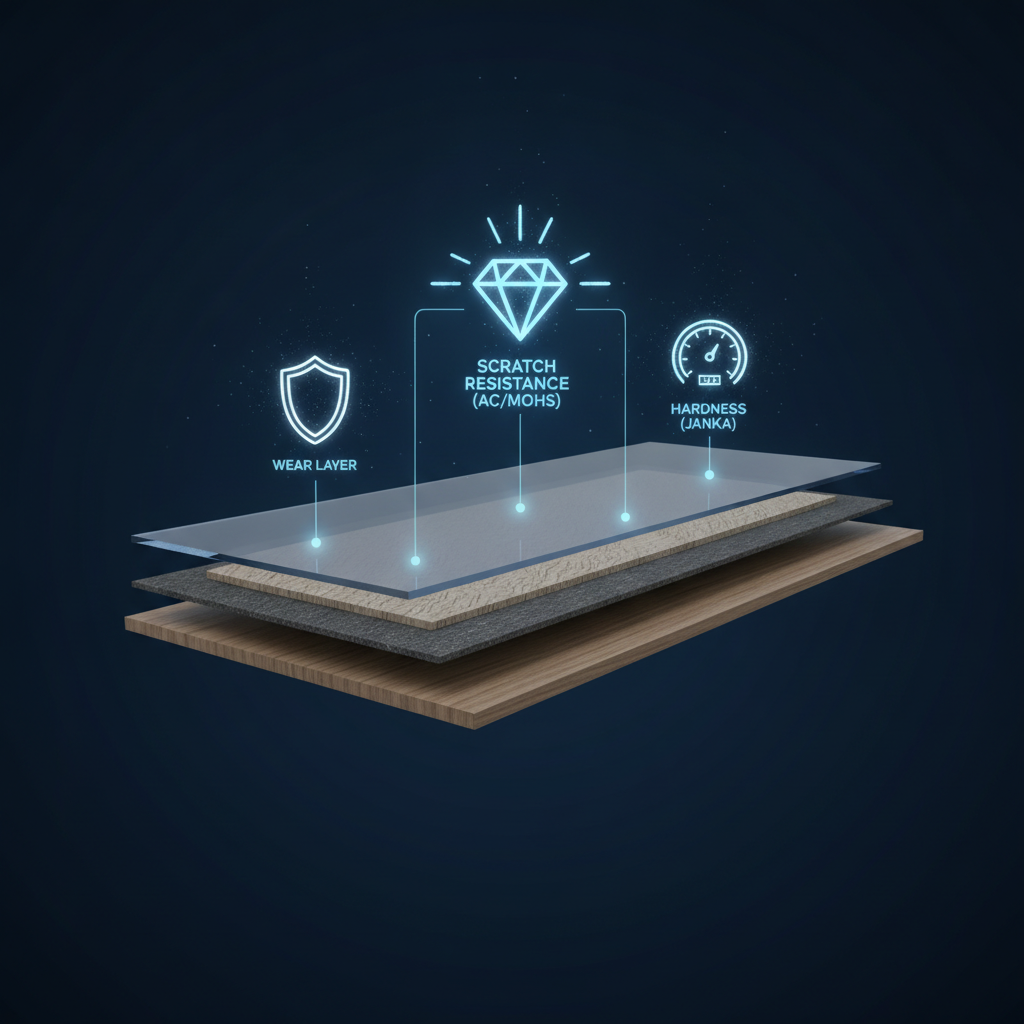
Glossary of Durability
- AC Rating (Abrasion Class): Used for laminate flooring, this rates resistance to abrasion, impact, stains, and burns.
- Wear Layer: The top protective coating on Luxury Vinyl Plank (LVP), measured in mils (thousandths of an inch).
- Janka Hardness Scale: Measures the resistance of wood species to denting and wear.
- PEI Rating (Porcelain Enamel Institute): Rates the abrasion resistance and durability of a ceramic or porcelain tile’s glaze.
- Mohs Scale: A universal scale of mineral hardness from 1 (softest) to 10 (hardest), used to gauge the scratch resistance of tile and stone.
These standards are established by authoritative bodies like the National Wood Flooring Association (NWFA) [2], the Tile Council of North America (TCNA) [3], and ASTM International [4] to provide objective measures of performance.
For Laminate & LVP: AC Ratings and Wear Layers
Modern laminate and luxury vinyl plank are engineered products designed for high performance. Their durability comes from their layered construction, and the key to their toughness lies in the top layers.
For laminate flooring, the AC Rating is the most important indicator of durability. The scale runs from AC1 to AC5:
- AC1: Light residential use (e.g., bedrooms).
- AC2: Moderate residential use (e.g., living rooms).
- AC3: Heavy residential use and light commercial use.
- AC4: General commercial use (e.g., offices, cafes).
- AC5: Heavy commercial use (e.g., department stores).
For a truly durable home floor, especially in high-traffic areas, look for a rating of AC3 or higher.
For Luxury Vinyl Plank (LVP), the critical feature is the wear layer. This is a clear, protective topcoat that shields the printed design layer from scratches, scuffs, and stains. According to the Resilient Floor Covering Institute (RFCI), this layer is paramount for performance [5].
- Wear Layer Thickness: Measured in mils. For residential use, 12 mil is a good starting point, but for a long-lasting, scratch resistant flooring solution, 20 mil or higher is the gold standard.
- Wear Layer Composition: Many premium products enhance this layer with additives like aluminum oxide or ceramic beads for superior scratch resistance.
For Hardwood: The Janka Hardness Scale
The Janka hardness scale measures the force required to embed a 0.444-inch steel ball halfway into a piece of wood. The higher the number, the harder and more resistant the wood is to denting. As the National Wood Flooring Association (NWFA) outlines, this is a crucial metric for choosing a durable species [2].
A seasoned flooring installer might advise, “A family with large dogs and active kids should steer clear of a soft pine. I’d guide them toward a hard maple or a Brazilian cherry. The Janka rating isn’t just a number; it’s a prediction of how your floor will look in five years.”
Janka Hardness Ratings for Common Woods
| Wood Species | Janka Rating | Relative Hardness |
|---|---|---|
| Douglas Fir | 660 | Soft |
| Red Oak | 1290 | Industry Benchmark |
| White Oak | 1360 | Hard |
| Hard Maple | 1450 | Very Hard |
| Hickory | 1820 | Very Hard |
| Brazilian Cherry | 2350 | Extremely Hard |
For Tile: PEI Ratings and the Mohs Scale
For ceramic and porcelain tile, durability is measured by the glaze’s ability to withstand abrasion. The PEI Rating, established by the Tile Council of North America (TCNA), classifies this resistance [3].
- PEI Class I: Walls only. No foot traffic.
- PEI Class II: Light traffic (e.g., residential bathrooms).
- PEI Class III: Light to moderate traffic (all residential areas).
- PEI Class IV: Moderate to heavy traffic (all residential and light-to-medium commercial).
- PEI Class V: Heavy to extra-heavy traffic (all residential and commercial).
For any residential floor, a PEI Class III is sufficient, but for maximum durability in kitchens, entryways, and hallways, choosing a PEI Class IV tile is a wise investment.
The Mohs scale is also relevant, especially for unglazed tile and natural stone. It measures a material’s inherent resistance to being scratched. Porcelain tile typically rates between 7 and 9 on the Mohs scale, making it harder than granite (6-7) and extremely difficult to scratch.
The Top Tiers of Durable Flooring: A Comparative Analysis
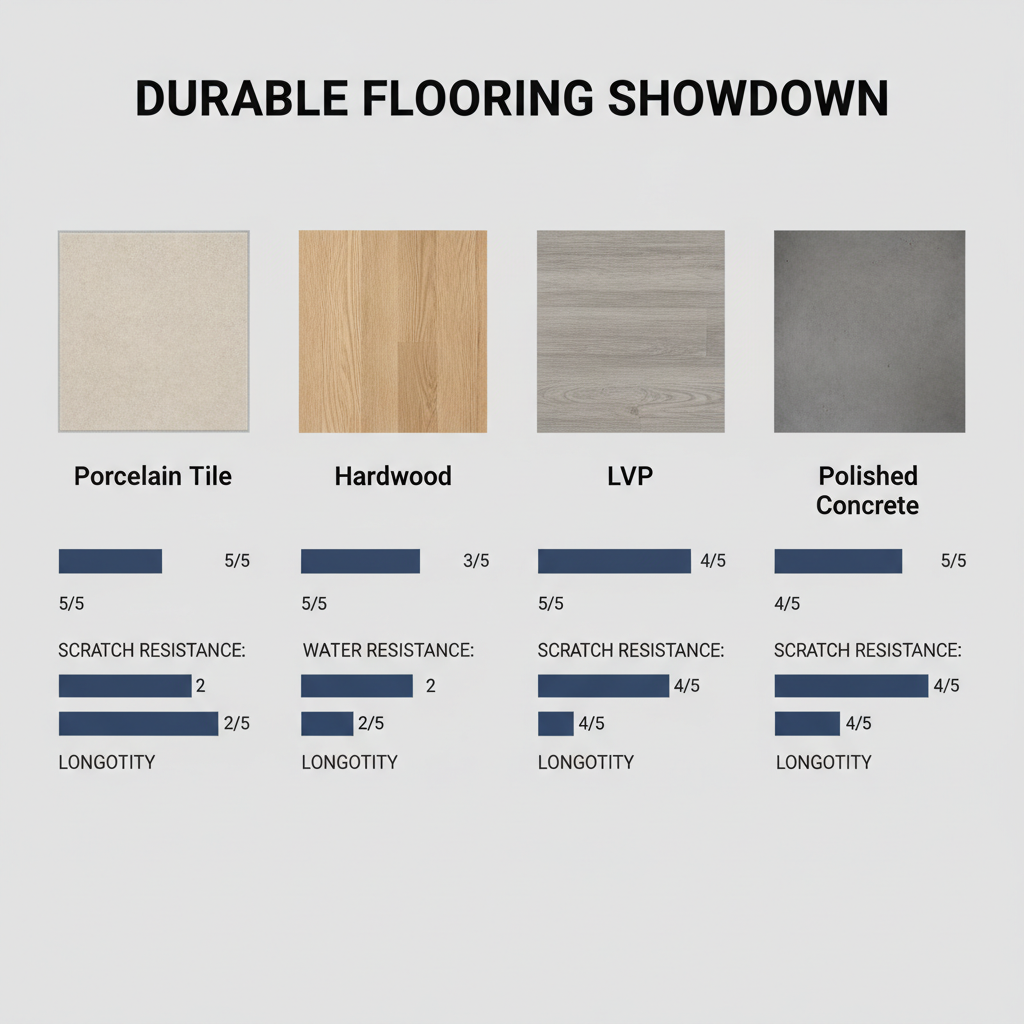
With a solid understanding of durability metrics, we can now analyze the best-in-class materials for a long-lasting flooring investment. Each option is rated on a standardized Durability Scorecard to provide a clear, at-a-glance comparison.
Porcelain & Ceramic Tile: The Lifetime Champion
Porcelain tile is an undisputed leader in durability. Made from finer, denser clay and fired at higher temperatures than standard ceramic, it is exceptionally hard, dense, and non-porous. With proper installation according to TCNA standards, a high-quality porcelain tile floor has an expected lifespan of 50+ years [3].
Durability Scorecard: Porcelain Tile
- Scratch Resistance: 5/5
- Water Resistance: 5/5
- Longevity: 5/5
- Maintenance: 4/5 (Grout requires periodic sealing)
Its near-total impermeability makes it ideal for kitchens, bathrooms, and basements. However, its longevity is critically dependent on a rigid, perfectly prepared subfloor and the correct use of grout and sealants. A poor installation job is the single biggest cause of tile failure.
Hardwood (Solid & Engineered): The Refinishable Asset
Hardwood flooring is a timeless choice that functions as a long-term financial asset. Its primary investment value comes from its ability to be sanded and refinished, effectively creating a brand-new surface. Solid hardwood can be refinished 5-7 times, giving it a functional lifespan of over 100 years [2].
Durability Scorecard: Solid Hardwood (e.g., Oak, Maple)
- Scratch Resistance: 3/5 (Depends on species and finish)
- Water Resistance: 2/5 (Susceptible to moisture damage)
- Longevity: 5/5 (Due to refinishing)
- Maintenance: 3/5 (Requires specific care)
A certified real estate appraiser from The Appraisal Institute might state, “Solid hardwood flooring consistently adds measurable value to a home. It’s one of the few features that buyers across all price points recognize as a premium, long-lasting upgrade.”
Engineered hardwood, with a thick top veneer, offers similar refinishing potential with added dimensional stability, making it suitable for a wider range of environments. Over time, high-quality wood develops a desirable ‘patina,’ adding character that synthetic materials cannot replicate.
High-Performance Laminate & LVP: The Modern Contenders
Once seen as budget options, today’s premium laminate and LVP are technological marvels. They offer hyper-realistic wood and stone visuals combined with exceptional performance, making them serious contenders for any durable home flooring project.
Durability Scorecard: Premium LVP (20+ mil wear layer)
- Scratch Resistance: 4/5
- Water Resistance: 5/5
- Longevity: 3.5/5 (15-30 year warranties typical)
- Maintenance: 5/5
Durability Scorecard: High-Performance Laminate (AC4+)
- Scratch Resistance: 5/5
- Water Resistance: 3/5 (Water-resistant, not waterproof)
- Longevity: 3.5/5 (15-30 year warranties typical)
- Maintenance: 5/5
When choosing between them, the decision often comes down to scratch vs. water resistance. High-performance laminate with an AC4 or AC5 rating offers some of the best scratch resistance on the market. Premium LVP, being a solid polymer material, is 100% waterproof, making it a superior choice for bathrooms and basements.
Polished Concrete & Natural Stone: The Indestructible Classics
For ultimate longevity, polished concrete and natural stone like slate, granite, or travertine are in a class of their own. These materials are not just laid on top of the subfloor; they become part of the home’s structure. With proper care and sealing, their lifespan is measured in centuries, not decades. Natural stone can easily last for over 100 years.
Durability Scorecard: Natural Stone / Polished Concrete
- Scratch Resistance: 4/5 (Can scratch, but often adds to patina)
- Water Resistance: 4/5 (Requires proper sealing)
- Longevity: 5/5
- Maintenance: 3/5 (Sealing is critical)
An interior designer might remark, “We specify slate or polished concrete when a client wants a floor that feels permanent and elemental. It’s a bold aesthetic choice that communicates timelessness and strength, forming a neutral, indestructible canvas for the rest of the home’s design.”
Spotlight on Adamantine Flooring: Myth vs. Reality
The term “Adamantine flooring” has emerged in searches for the ultimate durable floor, evoking a sense of near-indestructibility. But what is it? Currently, “Adamantine” is more of a conceptual or brand name for various high-performance, industrial-grade flooring systems rather than a single, defined material. These are often resinous or composite systems designed to outperform even the toughest traditional options.
To evaluate such a product, one must look past the marketing and demand the same objective data we’ve discussed: official ASTM or ISO certification numbers for scratch, abrasion, and impact resistance [4].
A materials scientist analyzing a sample might explain, “The durability likely comes from a unique polymer matrix, possibly incorporating micro-particles of extremely hard materials like silicon carbide or diamond dust, bonded under immense heat and pressure.”
What is Adamantine Flooring Made Of?
The composition of these premium systems is typically a proprietary secret but often involves advanced polymer chemistry. Based on manufacturer technical data sheets and patent filings, they are often multi-component systems poured as a liquid or applied in layers, which then chemically cure to form a seamless, incredibly hard surface. This is fundamentally different from planks or tiles that are simply laid down.
How Adamantine Compares to Epoxy and Polished Concrete
These systems compete directly with established high-durability commercial floors. A commercial flooring contractor would compare them on several key points:
| Feature | Adamantine Flooring (Conceptual) | High-Solids Epoxy | Polished Concrete |
|---|---|---|---|
| Composition | Proprietary polymer composite | Two-part resin system | Densified and polished concrete slab |
| Installation | Highly specialized, proprietary | Specialized, multi-step process | Multi-stage grinding and polishing |
| Aesthetics | Often seamless, modern, custom colors | Seamless, high-gloss, can be decorative | Industrial, minimalist, natural variations |
| Performance | Claims superior scratch/impact resistance | Excellent chemical/abrasion resistance | Extremely durable, but can chip/stain if unsealed |
| Cost | Premium / Very High | High | Moderate to High |
The Investment Case: Adamantine Flooring and Home Value
Installing an ultra-premium system like Adamantine flooring is a significant investment. Its value at resale depends on how it’s presented.
A luxury real estate agent might advise, “For a high-end buyer, a unique feature like this is a huge draw. They’re not just buying a house; they’re buying a problem-free lifestyle. A floor that will never scratch or stain is a powerful story to tell.”
To capture this value, documentation is key. Keep all warranty information, technical specifications, and maintenance guides. When listing the home, don’t just say “new floors.” Use a feature sheet description like this:
Home features a professionally installed Adamantine flooring system, a commercial-grade polymer composite offering unparalleled scratch, stain, and impact resistance. This seamless, low-maintenance surface is warrantied for a lifetime, providing a beautiful and indestructible foundation for modern living.
Tailored Solutions: The Most Durable Flooring for Your Lifestyle
The best durable floor is not just strong—it’s the right kind of strong for your specific needs. Here are targeted recommendations for the most common household challenges.
For High-Traffic Areas: Entryways, Hallways, and Kitchens
These areas are assault courses of foot traffic, dirt, and spills. The goal here is maximum abrasion resistance.
- Top Choice: Porcelain tile with a PEI Class IV or V rating. Its hardness is unmatched for resisting the grit and grime tracked in from outside.
- Excellent Alternative: High-performance laminate with an AC4 or AC5 rating. Its topcoat is specifically designed to withstand the constant friction of foot traffic.
- Strong Contender: Luxury vinyl plank with a 20 mil or thicker commercial-grade wear layer.
For Homes with Kids and Pets: The Scratch & Scuff Challenge
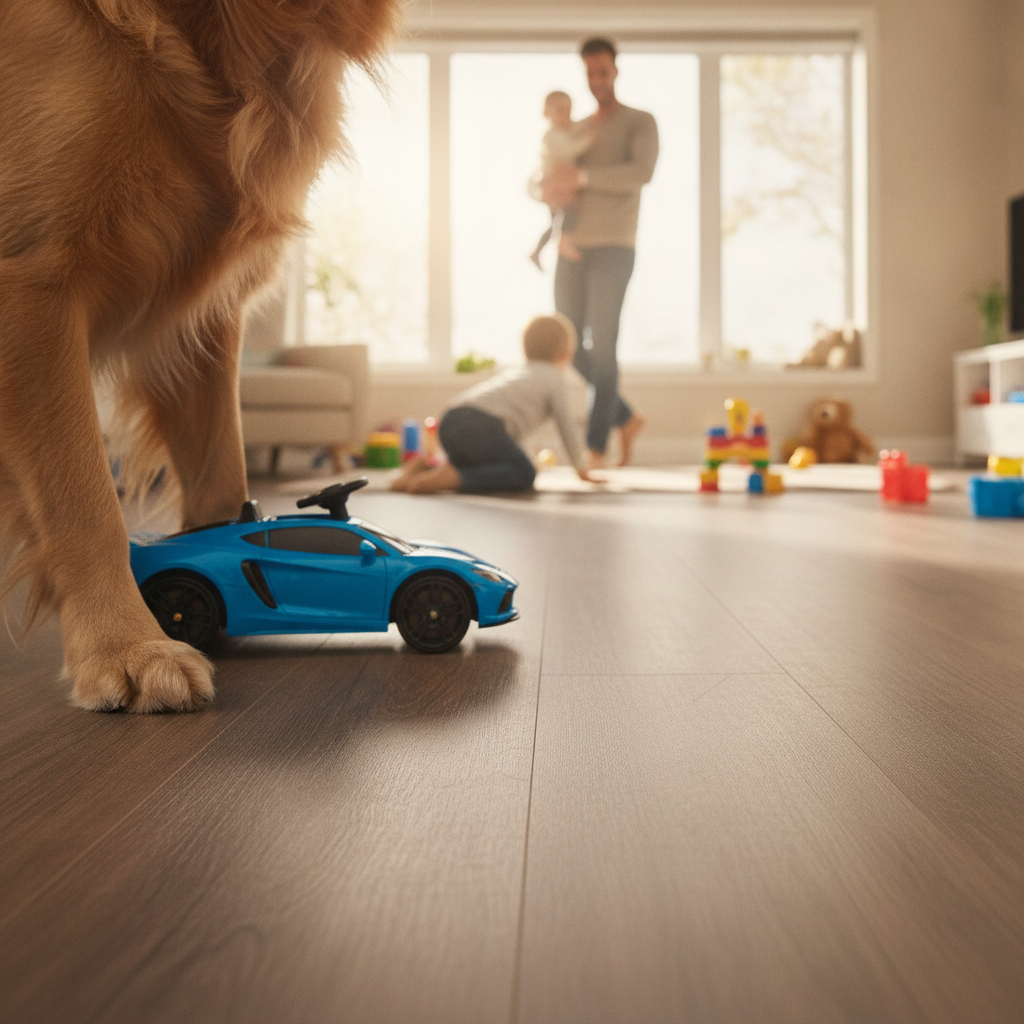
This is a battle against claws, dropped toys, and constant activity. The key properties are scratch resistance and ease of cleaning.
- Top Choice: Premium LVP with a 20+ mil wear layer enhanced with ceramic beads or aluminum oxide. It is highly scratch-resistant, waterproof for easy cleanup of spills and accidents, and slightly softer underfoot than tile, making it safer for tumbles.
- Excellent Alternative: High-quality, AC4-rated laminate flooring is exceptionally resistant to scratches from pet nails.
- Pro Tip: Choose a floor with a matte or low-gloss finish. These finishes are far better at hiding the micro-scratches and scuffs that are inevitable in an active home. Also, preventative measures like regular pet nail trims and felt pads on all furniture legs are essential.
Protecting Your Investment: Maintenance, Repair, and Prevention
Choosing a durable material is only half the battle. Proper installation and maintenance are what guarantee a lifetime of performance.
How to Fix Scratches and Scuffs on Any Floor
Even the toughest floors can show signs of life. The key is to address damage correctly based on the material and severity.
- Surface Scuffs (on LVP or Laminate): Often, a simple wipe with a tennis ball or a microfiber cloth with a manufacturer-approved cleaner can remove rubber or paint transfers.
- Finish Scratches (on Hardwood): If a scratch is only in the top polyurethane layer, it can often be masked with a stain marker or a product like Minwax Hardwood Floor Reviver.
- Deep Gouges (in Wood or LVP): These require a filler. Use a color-matched wood putty for hardwood or a specific LVP repair kit. Fill the gouge, level it, and let it cure.
Disclaimer: Always test any repair product or chemical on an inconspicuous area first, such as inside a closet or under a large piece of furniture, to ensure it doesn’t discolor the floor.
The Critical Role of Subfloor and Installation
A floor is only as good as its foundation. According to the Certified Flooring Installers Association (CFI), a vast majority of flooring failures are not due to the material itself, but to improper subfloor preparation or installation techniques [6]. A subfloor that is not perfectly level, clean, and dry will cause planks to squeak, tiles to crack, and seams to separate.
Hiring a certified, experienced installer is the best insurance policy for your investment. Before hiring, ask them:
- Are you certified by the CFI or the manufacturer of my chosen flooring?
- What is your process for assessing and preparing my subfloor?
- Can you provide references for similar jobs?
- What does your installation warranty cover?
Conclusion: Make a Confident, Lasting Investment
Choosing a new floor should not feel like a gamble. By shifting your perspective from that of a decorator to that of a savvy investor, you can transform the decision from a short-term expense into a long-term asset. The key is to look beyond surface beauty and understand the science of durability—the AC ratings, Janka scores, and PEI classes that define a floor’s ability to withstand life.
The right floor is one that not only looks beautiful on day one but continues to perform for decades, demanding little in return. It’s a floor that resists scratches from your dog’s paws, endures the chaos of family life, and ultimately adds tangible value to your home when it’s time to sell.
We encourage you to use the Total Cost of Ownership framework to evaluate your options. Calculate the true, long-term cost, and you will find that investing in quality is almost always the more economical choice. By doing so, you can confidently select a floor that will serve as the strong, beautiful, and worry-free foundation of your home for a lifetime.
This article provides informational guidance on flooring as a home investment. Consult with a qualified financial advisor for personalized financial advice and a certified flooring professional before making any purchase or installation decisions.
References
- National Association of Realtors (NAR). (Annual). Remodeling Impact Report. Retrieved from nar.realtor.
- National Wood Flooring Association (NWFA). (n.d.). Official Flooring Industry Guide to Wood Species & Grades. Retrieved from nwfa.org.
- Tile Council of North America (TCNA). (n.d.). TCNA Handbook for Ceramic, Glass, and Stone Tile Installation. Retrieved from tcnatile.com.
- ASTM International. (n.d.). Building Construction Standards. Retrieved from astm.org.
- Resilient Floor Covering Institute (RFCI). (n.d.). Resources on Resilient Flooring Standards. Retrieved from rfci.com.
- Certified Flooring Installers Association (CFI). (n.d.). Installation Standards & Certification. Retrieved from cfiinstallers.org.
