Are you tired of looking at floors marred by scratches from pet claws, dents from dropped toys, and the dulling effects of daily foot traffic? The search for a beautiful floor that can actually withstand the rigors of a busy life is a common frustration for homeowners. It’s a quest for a “forever floor”—a surface that promises longevity and resilience. This isn’t a new desire. Over a century ago, this same pursuit led to the creation of a material so tough it was named after the mythical, unbreakable substance: Adamantine flooring.
While you can no longer buy the original Adamantine, its spirit lives on in a new generation of high-tech, wear-resistant floors. This is your definitive, data-driven playbook for finding them. We’re moving beyond simple lists of materials to give you the tools you need to make a confident, long-term investment. Inside, you’ll find our proprietary “Durability Scorecard” for at-a-glance comparisons, a lifestyle-first framework to match the right material to your real-world needs, and expert-backed advice to ensure you choose a floor you’ll love for decades to come.
We’ll decode the science of durability, compare the top contenders head-to-head, and show you how to choose a floor that is truly future-proof—one that combines timeless style with a healthy home environment.
- What Was Adamantine Flooring? The Original Quest for Durability
- The Modern ‘Adamantine’: What Makes a Floor Truly Durable Today?
- The Top 5 Contenders for the Most Durable Home Flooring
- Lifestyle-Proofing Your Home: The Best Flooring for High Traffic, Pets, and Kids
- Your ‘Forever Floor’ as a Long-Term Investment
- Future-Proofing Your Choice: Timeless Style & A Healthy Home
- Quick Fixes: How to Handle Scratches and Common Wear
- Conclusion: Your Forever Floor Awaits
- References & Authoritative Sources
What Was Adamantine Flooring? The Original Quest for Durability
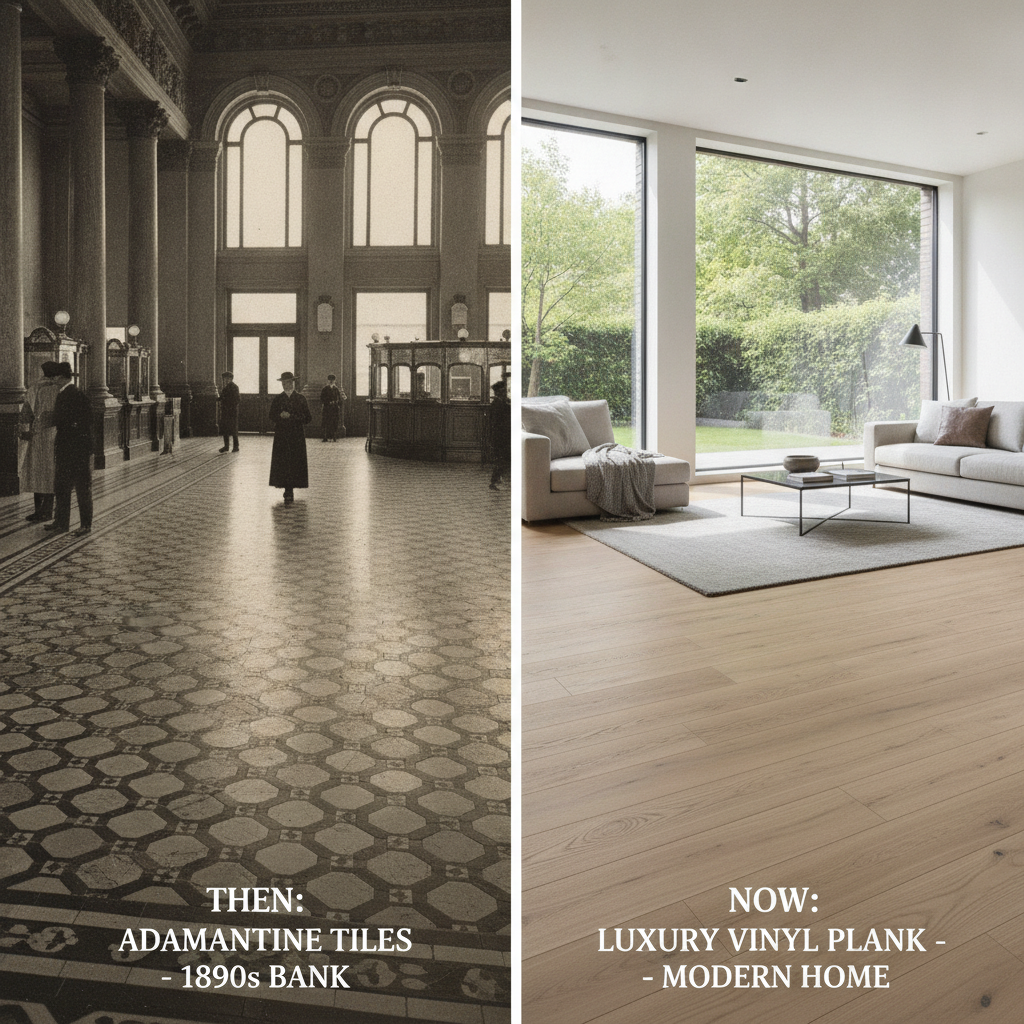
Before the advent of modern luxury vinyl and advanced laminates, the search for an indestructible floor led innovators to create Adamantine flooring. This historical material serves as the benchmark in the quest for durability, and understanding its legacy helps us appreciate the technology in today’s options. It was an early form of highly durable composite flooring, answering the call for a surface that could resist the immense wear and tear of the late 19th and early 20th centuries.
While the term is now used colloquially by homeowners searching for the toughest flooring available, the original Adamantine was a specific product line. It has since been discontinued, its production ceasing decades ago as manufacturing processes and material science evolved. However, its core mission—to create a future-proof home flooring solution—is more relevant than ever. This “Then and Now” journey bridges that historical ambition with the cutting-edge materials that are its true modern successors.
The History and Makeup of a Near-Indestructible Floor
Original Adamantine flooring was a type of vitrified mosaic tile or clinker tile, renowned for its incredible density and strength. Patented in the late 1800s, these tiles were created by compressing clay dust under immense pressure and firing it at extremely high temperatures until it vitrified, or turned glass-like.[1] This process created a non-porous, exceptionally hard material that was resistant to moisture, stains, and abrasion. Marketed for its stone-like durability and intricate patterns, it became a popular choice for high-traffic commercial spaces like banks and railway stations, as well as the vestibules and kitchens of upscale homes. Its legacy is a testament to the enduring desire for a floor that simply will not wear out.
The Modern ‘Adamantine’: What Makes a Floor Truly Durable Today?
While the original Adamantine is a piece of history, the science of creating incredibly durable flooring has advanced dramatically. To make an informed decision, you need to understand the language of durability. Today’s “forever floors” are defined by a set of standardized metrics that measure their resistance to scratches, dents, and daily wear. Mastering these concepts will transform you from a hopeful buyer into a confident expert.
Decoding Durability: Key Metrics You MUST Know
When you’re comparing flooring options, you’ll encounter technical jargon. Don’t be intimidated. These three key ratings are the most important indicators of a floor’s resilience.
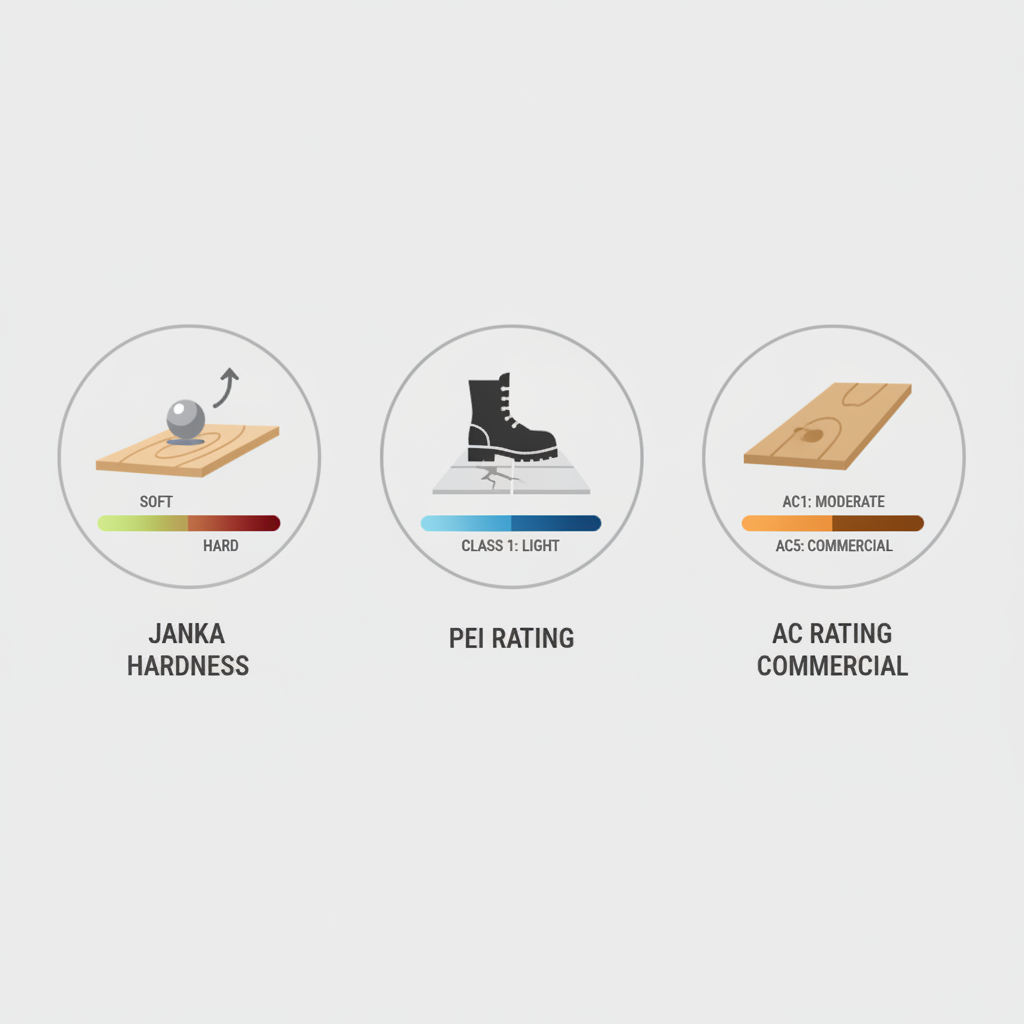
- Janka Hardness Test (for Wood): This test measures the force required to embed a 0.444-inch steel ball halfway into a piece of wood. A higher number means the wood is harder and more resistant to denting. For example, a soft wood like Douglas Fir has a rating of 660, while an extremely hard exotic like Brazilian Walnut boasts a rating over 3600. The National Wood Flooring Association (NWFA) recognizes the Janka test as a key measure of wood species’ durability.[2]
- PEI Rating (for Tile): The Porcelain Enamel Institute (PEI) rating measures the abrasion resistance of a tile’s glaze. It’s a crucial indicator of how well a tile will hold up to foot traffic without showing wear. The scale, established by standards bodies like the Tile Council of North America (TCNA), runs from 1 to 5: PEI 1 is for wall use only, while PEI 5 is tough enough for heavy commercial traffic.[3] For most residential applications, a PEI rating of 3 or 4 is excellent.
- AC Rating (for Laminate): The Abrasion Class (AC) rating is a measure of a laminate floor’s durability against scratches, stains, and fading. Think of it like a boxing weight class for your floor. The ratings, based on testing standards from organizations like ASTM International,[4] range from AC1 (light residential use, like a bedroom) to AC5 (heavy commercial use, like a department store). For a busy home, especially with pets and kids, look for a rating of AC3 or higher.
The Science of Wear Resistance: It’s All About the Wear Layer
It’s crucial to understand the difference between hardness (dent resistance) and wear resistance (scratch resistance). A very hard floor can still scratch. The secret to a scratch-resistant surface lies in its topmost layer.
For materials like Luxury Vinyl Tile (LVT) and laminate, this is the wear layer. This transparent top coating is the floor’s first line of defense. Its thickness is measured in mils (not to be confused with millimeters). A basic wear layer might be 8 mil, suitable for light traffic, while heavy-duty commercial LVT can have a wear layer of 40 mil or more.
For hardwood and laminate, this protection comes from the factory finish. Modern high-quality finishes are infused with microscopic particles of aluminum oxide, a substance nearly as hard as diamond. According to industry research, these advanced polyurethane finishes can increase the life of a wood floor’s finish by 5 to 10 times compared to older, simpler coatings. The Resilient Floor Covering Institute (RFCI) helps set standards for these types of flooring, ensuring consumers can trust the product’s performance claims.[5]
Beyond the Surface: Why Subfloor and Installation Quality Matter
You can buy the most durable, expensive flooring in the world, but if it’s installed improperly or over a faulty subfloor, its lifespan will be drastically cut short. Professional installers consistently point to subfloor preparation as the single most critical factor for a long-lasting floor.
A subfloor must be clean, flat, and structurally sound. Any dips, peaks, or moisture issues will translate to the surface, causing planks to flex, seams to separate, and tiles to crack. Before hiring an installer, ask them these crucial questions:
- How will you assess my subfloor’s condition?
- What is your process for leveling an uneven subfloor?
- How will you test for moisture, especially in a basement or on a concrete slab?
A quality installation is the foundation of a durable floor. Skimping here is a mistake that will almost certainly lead to premature flooring failure.
The Top 5 Contenders for the Most Durable Home Flooring
Now that you understand the science, let’s meet the modern champions of durability. We’ve analyzed the top materials and created our “Durability Scorecard” for each, rating them on the factors that matter most in a busy home.
1. Porcelain & Ceramic Tile: The Reigning Champion of Hardness
Tile is the classic choice for areas that demand extreme durability and water resistance, like kitchens and bathrooms. Porcelain, which is fired at higher temperatures and made from more refined clay, is denser and more durable than standard ceramic.
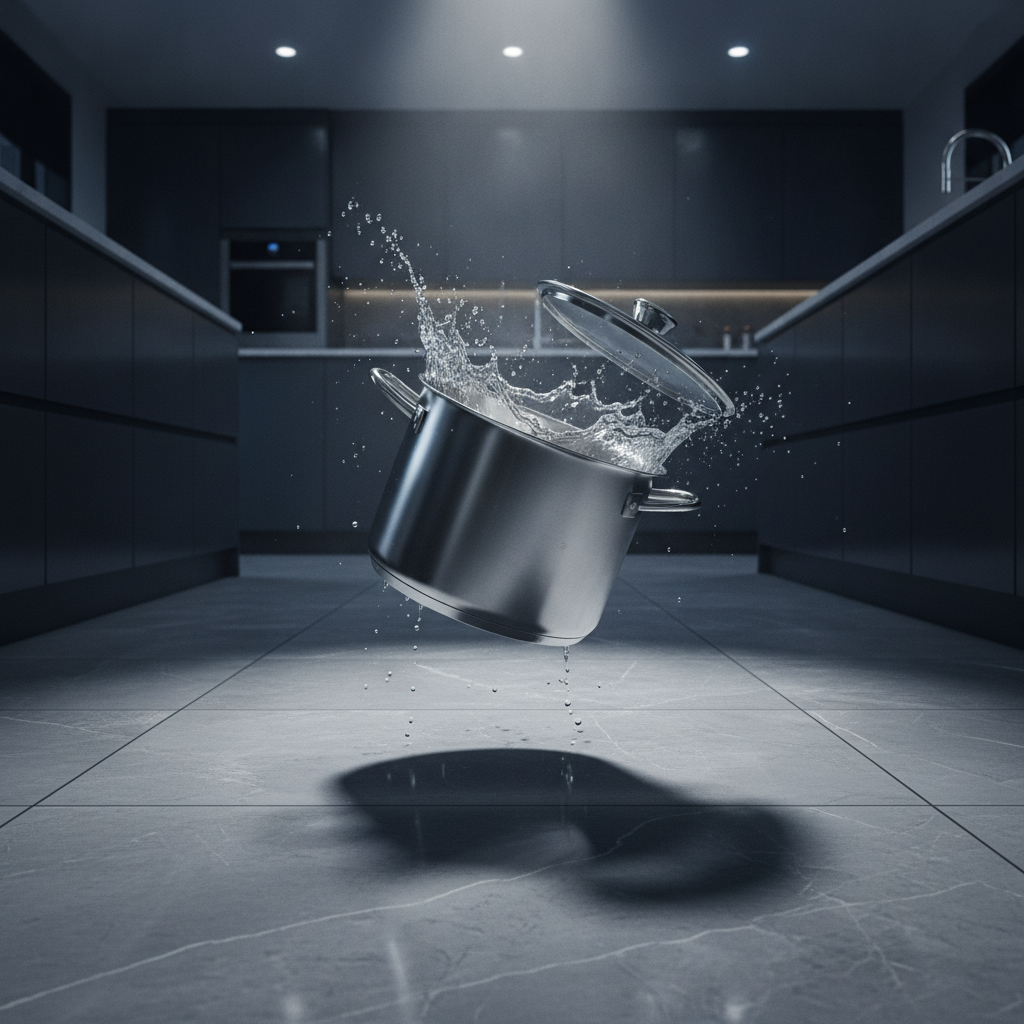
Why it’s a contender: With a hardness of 7 or higher on the Mohs scale (a scientific scale for mineral hardness),[7] porcelain is exceptionally difficult to scratch. It’s waterproof, fireproof, and when properly installed, can easily last for 50 years or more. Its PEI rating can go as high as 5, making it suitable for any level of foot traffic.[3]
The Durability Scorecard:
- Scratch Resistance: 9/10
- Dent/Impact Resistance: 9/10
- Moisture Resistance: 10/10
- Maintenance: 7/10 (The tile itself is low-maintenance, but grout lines require regular cleaning and occasional sealing).
2. Luxury Vinyl Tile (LVT/LVP): The Versatile Contender
Modern Luxury Vinyl Tile (LVT) and Luxury Vinyl Plank (LVP) are nothing like the sheet vinyl of the past. This multi-layered, rigid product offers a fantastic balance of durability, comfort, and realism, convincingly mimicking wood or stone.
Why it’s a contender: LVT is typically 100% waterproof, making it a star performer in kitchens, bathrooms, and basements. Its durability comes from its wear layer, which can range from 8 mil for light use to a robust 40 mil for commercial applications. For most homes, a 20 mil wear layer is a great target for high-traffic areas. High-end LVT often comes with residential warranties of 25 years to a lifetime.
The Durability Scorecard:
- Scratch Resistance: 8/10 (Dependent on wear layer quality).
- Dent/Impact Resistance: 7/10 (Can be dented by very heavy objects).
- Moisture Resistance: 10/10
- Maintenance: 9/10 (Requires no sealing or special cleaners).
3. High-AC Laminate: The Scratch-Resistant Specialist
Laminate flooring has long been a go-to for homeowners seeking a tough, budget-friendly alternative to hardwood. Its construction—a high-density fiberboard core with a high-resolution image layer and a protective topcoat—makes it uniquely resistant to surface abrasion.
Why it’s a contender: Laminate’s superpower is scratch resistance. Models with an AC4 or AC5 rating are designed for commercial traffic and hold up exceptionally well to pet claws and dragged furniture. While traditional laminate was susceptible to water damage, many modern products now feature water-resistant cores and edge sealants.
The Durability Scorecard:
- Scratch Resistance: 10/10 (With a high AC rating).
- Dent/Impact Resistance: 8/10
- Moisture Resistance: 6/10 (Water-resistant, but not fully waterproof like vinyl).
- Maintenance: 8/10 (Easy to clean, but standing water should be avoided).
4. Polished Concrete & Epoxy Coatings: The Industrial-Strength Option
Once confined to garages and commercial spaces, polished concrete and high-quality epoxy floor coatings are surging in popularity for residential interiors. They offer a unique, modern aesthetic combined with unparalleled toughness.
Why it’s a contender: This is arguably the most dent-proof flooring you can install. It’s a seamless, non-porous surface that is incredibly easy to clean and hypoallergenic. The cost to install can range from $3 to $12 per square foot, making it a potentially cost-effective long-term solution.[13] It is practically impervious to water and stains when properly sealed.
The Durability Scorecard:
- Scratch Resistance: 8/10 (Can be scratched by dragging heavy, sharp objects, but is highly resistant).
- Dent/Impact Resistance: 10/10
- Moisture Resistance: 10/10
- Maintenance: 10/10 (Among the easiest of all floors to maintain).
5. Solid Hardwood: The Timeless & Repairable Classic
While solid hardwood may not top the charts for initial scratch or dent resistance, its unique form of durability lies in its incredible longevity and repairability. It’s an investment that can truly last a lifetime.
Why it’s a contender: Solid hardwood is the only flooring on this list that can be fully sanded down and refinished multiple times. This means scratches, dents, and wear from decades of use can be completely erased, revealing a brand-new surface. A well-maintained hardwood floor can last over 100 years and can be refinished up to 7-10 times throughout its life.[2]
The Durability Scorecard:
- Scratch Resistance: 5/10 (Varies by species and finish).
- Dent/Impact Resistance: 4/10 (Varies by species).
- Moisture Resistance: 2/10 (Highly susceptible to water damage).
- Maintenance: 6/10 (Requires careful cleaning and climate control).
- Longevity/Repairability: 10/10
Lifestyle-Proofing Your Home: The Best Flooring for High Traffic, Pets, and Kids
The most durable floor in the world is useless if it doesn’t fit your lifestyle. Here’s how to match the right material to the toughest real-world challenges.
The Ultimate Pet-Friendly Floor: Our Top 3 Picks
Pets introduce a unique combination of challenges: scratches from claws, potential water damage from accidents, and the need for easy cleaning. Beyond durability, factors like traction are also important. As the American Kennel Club (AKC) advises for pet-safe homes, a floor that is too slippery can be difficult and even dangerous for some dogs, particularly older ones.[8]
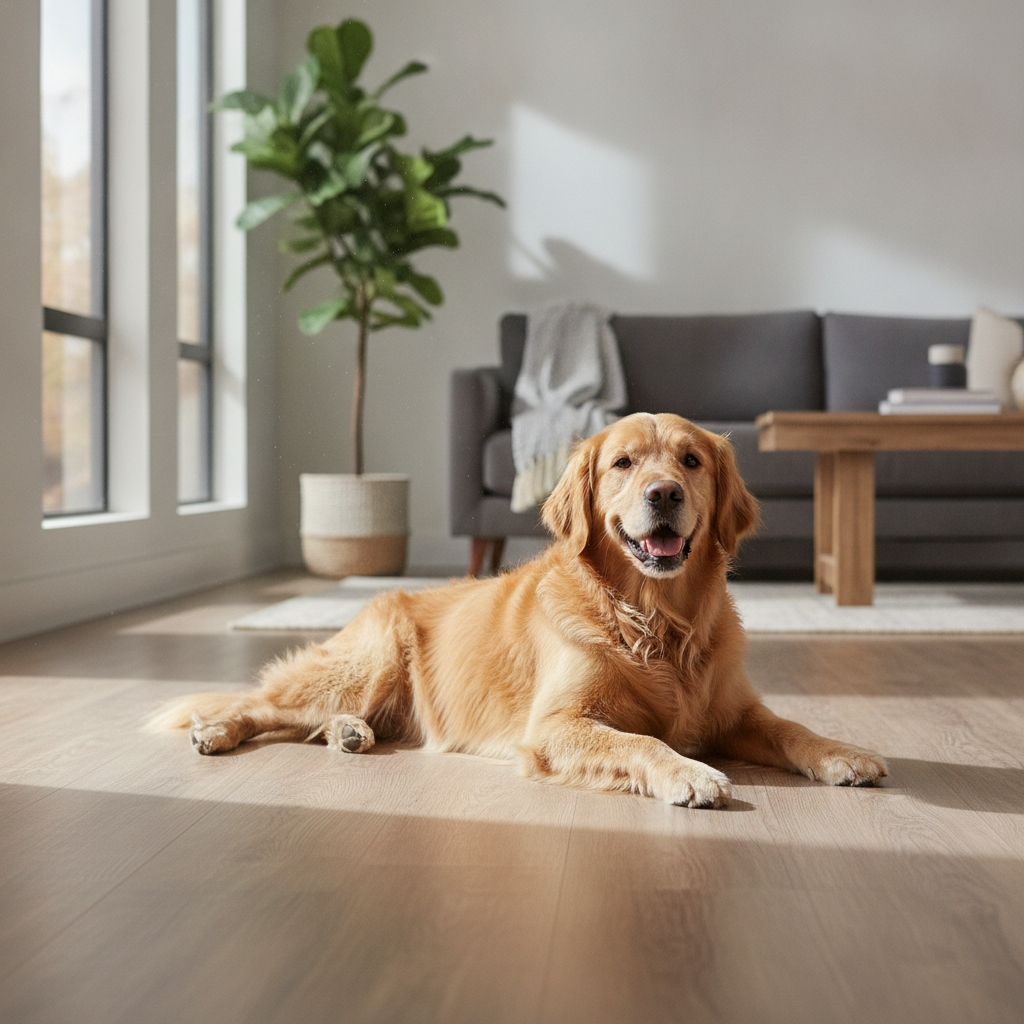
- Luxury Vinyl (LVT/LVP): The clear winner. It’s waterproof, highly scratch-resistant (with a 20 mil+ wear layer), easy to clean, and offers more texture and “give” than tile, providing better traction for paws.
- High-AC Laminate: The best choice for scratch resistance. An AC4 or AC5 laminate is virtually immune to dog nails. Just be sure to choose a water-resistant model and clean up any spills promptly.
- Porcelain Tile: Unbeatable for scratch and water resistance. Its only downsides are that it can be cold and hard underfoot, and the slippery nature of some high-gloss tiles can be a problem for pets. Choosing a tile with a textured, matte finish can improve traction.
High-Traffic Hallways & Kitchens: What Can Take the Beating?
Entryways, hallways, and kitchens are the workhorses of the home. They see constant foot traffic, tracked-in grit that acts like sandpaper, and in the kitchen, the risk of dropped pots and spills. Research shows that these high-traffic areas can experience wear up to 50% faster than other parts of the same room.
For these zones, you need a floor that excels in both scratch and impact resistance.
- Top Choice: Porcelain tile with a PEI rating of 4 or 5 is the champion here. It resists scratches from dirt and isn’t fazed by dropped cans or pans.
- Excellent Alternative: High-AC Laminate (AC4+) is another fantastic option, offering superior scratch resistance for entryways where grit is a major concern.
- Strong Contender: Polished concrete provides the ultimate impact resistance and is incredibly easy to clean after kitchen spills.
Your ‘Forever Floor’ as a Long-Term Investment
Choosing a floor isn’t just about how it looks today; it’s a major financial decision that impacts your home’s value and your long-term budget.
The Low-Maintenance Champions vs. The High-Maintenance Divas
The time and money you spend on upkeep should be a major factor in your decision.
Low-Maintenance Champions: These floors require little more than regular sweeping and occasional damp mopping.
- Epoxy/Polished Concrete: The king of “set it and forget it.”
- Luxury Vinyl Tile (LVT): No sealing, no waxing, no special cleaners needed.
- Sheet Vinyl: With few or no seams, it’s incredibly simple to keep clean.
High-Maintenance Divas: These floors are beautiful but require significant commitment.
- Porous Natural Stone (Marble, Travertine): These materials are soft and stain easily. The Natural Stone Institute recommends they be professionally cleaned and sealed every 6-12 months to prevent damage.[10]
- Soft Hardwoods (Pine, Fir): Their low Janka ratings mean they will show dents and dings from everyday life, requiring a more careful and considered approach to living.
Repairability: Can Your Floor Be Saved?
Accidents happen. A key component of a floor’s long-term value is its ability to be repaired.
- Best for Repair: Solid hardwood is unmatched. It can be completely refinished to look brand new.
- Good for Repair: LVT and laminate are typically installed as floating floors, meaning a single damaged plank can often be replaced without disturbing the rest of the floor.
- Difficult to Repair: Sheet vinyl and tile are much harder to spot-repair seamlessly. A deep chip in a tile often means breaking it out and replacing it, which can be a difficult DIY task. Following NWFA guidelines for hardwood refinishing[2] or the manufacturer’s instructions for plank replacement is key to a successful repair.
A 2019 study by the National Association of Realtors (NAR) found that new wood flooring can provide a return on investment of over 100% at resale,[9] partly because buyers recognize this long-term, repairable value.
Future-Proofing Your Choice: Timeless Style & A Healthy Home
A truly “future-proof” floor isn’t just physically durable—it’s also stylistically timeless and contributes to a healthy indoor environment.
Fads come and go, but certain styles endure. Interior designers often point to natural materials, neutral colors, and classic patterns like wide-plank wood looks as safe bets for long-term aesthetic appeal.
Equally important is a floor’s impact on your home’s air quality. Many modern flooring products can release Volatile Organic Compounds (VOCs). To ensure a healthy home, look for products with third-party certifications like FloorScore or GreenGuard, which test for strict low-VOC emissions. For wood products, look for the Forest Stewardship Council (FSC) certification to ensure it comes from responsibly managed forests. Authoritative bodies like the U.S. Green Building Council (USGBC) champion these standards as critical for sustainable and healthy homes.[11]
Quick Fixes: How to Handle Scratches and Common Wear
Even with the most durable floor, scuffs and scratches can happen. Knowing how to deal with them can save you a lot of stress and money.
A Triage Guide for Scratched Hardwood Floors
For hardwood owners, seeing a new scratch can be heartbreaking. But most can be fixed. Use this triage guide to determine the right course of action.
- Level 1: Minor Scuff in the Finish. If the scratch is white and only in the top polyurethane layer, you can often fix it with a DIY approach. Start with the least invasive method, like a purpose-made scratch repair pen.
- Level 2: Scratch into the Wood Stain. If the scratch shows lighter-colored wood underneath, you’ll need a stain-matching touch-up marker or kit. Be careful to test in an inconspicuous area first, as a color mismatch can look worse than the original scratch.
- Level 3: Deep Gouge or Widespread Wear. If you have deep gouges or if the finish is worn away in large patches, it’s time to call a professional. You have two options:
- Screen and Recoat: For surface-level wear without deep scratches, a pro can lightly abrade (screen) the top finish and apply a new coat. This is much faster and cheaper than a full refinish, typically costing $1-$2 per square foot.[13]
- Full Sand and Refinish: For deep scratches and gouges, the entire floor must be sanded down to bare wood and have new stain and finish applied. This is a major project, costing $3-$8 per square foot,[13] but it restores the floor to a like-new condition.
Conclusion: Your Forever Floor Awaits
The quest for the perfect floor, which began with materials like Adamantine, has culminated in an incredible array of modern, high-performance options. The “forever floor” is not a single product, but rather the perfect intersection of material science and your personal lifestyle. It’s the floor that can handle your kids, your pets, and your busy schedule without demanding constant worry and maintenance.
By understanding the key metrics of durability, using our Durability Scorecard to compare your options, and choosing a material that aligns with your long-term goals for maintenance and value, you are empowered to make a smart, confident decision. You can now walk into a showroom armed with the knowledge to see past the marketing hype and select a floor that will truly last a lifetime.
Ready to find your perfect forever floor? Download our free ‘Flooring Decision Checklist’ to take with you to the showroom and compare your options like a pro.
This article provides general guidance. Flooring performance can vary based on brand, installation quality, and specific home environment. Always consult with a professional flooring installer for personalized advice and quotes. This article may contain affiliate links.
References & Authoritative Sources
- U.S. Patent and Trademark Office. (N.D.). Patent Archives. Historical patent records for flooring materials from the late 19th and early 20th centuries.
- National Wood Flooring Association (NWFA). (N.D.). Official Finishing Guidelines & Janka Hardness Information. Retrieved from the NWFA website.
- Tile Council of North America (TCNA). (N.D.). PEI Rating System for Ceramic Tile. Retrieved from the TCNA website.
- ASTM International. (N.D.). Flooring Standards. Retrieved from the ASTM International website.
- Resilient Floor Covering Institute (RFCI). (N.D.). Standards for Resilient Flooring. Retrieved from the RFCI website.
- Consumer Reports. (N.D.). Flooring Reviews and Ratings. Retrieved from the Consumer Reports website.
- Mohs Scale of Mineral Hardness. (N.D.). Geological and mineralogical reference materials defining the scratch resistance of materials.
- American Kennel Club (AKC). (N.D.). Information on Pet-Safe Home Environments. Retrieved from the AKC website.
- National Association of Realtors (NAR). (2019). Remodeling Impact Report. Retrieved from the NAR website.
- Natural Stone Institute. (N.D.). Maintenance Guidelines for Natural Stone Surfaces. Retrieved from the Natural Stone Institute website.
- U.S. Green Building Council (USGBC). (N.D.). Information on LEED and Sustainable Building Materials. Retrieved from the USGBC website.
- Institute of Inspection, Cleaning and Restoration Certification (IICRC). (N.D.). Standards for Floor Care and Maintenance. Retrieved from the IICRC website.
- HomeAdvisor / Angi. (N.D.). Flooring Cost Data. Retrieved from the HomeAdvisor and Angi websites.
