There is a unique frustration in watching a newly renovated floor succumb to scratches, dents, and peeling just a few years after installation—especially when it was sold under the promise of “high durability.” For financially savvy homeowners and property managers, premature flooring failure is more than an aesthetic nuisance; it is a compounding financial drain. The flooring market is saturated with opaque marketing jargon, making it increasingly difficult to separate genuine material science from clever sales pitches.
Enter the debate between ultra-resilient “adamantine” solutions and traditional vinyl. Which flooring offers superior durability when subjected to the relentless realities of high traffic, pets, and moisture? This guide bypasses the marketing fluff to provide a science-backed, Total Cost of Ownership (TCO) comparison. We will deconstruct the true lifespan of these materials, evaluate them using objective industry metrics, and expose the hidden installation errors that secretly destroy your investment from the subfloor up.
- Demystifying the Contenders: What Exactly is Adamantine Flooring?
- Objective Durability Metrics: Moving Beyond Marketing Fluff
- The Hidden Killers of Flooring Lifespan
- Total Cost of Ownership (TCO): A 20-Year Financial Analysis
- Repair vs. Replace: Managing Vinyl Wear and Tear
- Long-Lasting Alternatives for the Eco-Conscious
- Conclusion
- References & Authoritative Sources
Demystifying the Contenders: What Exactly is Adamantine Flooring?
When researching high durability adamantine floors, consumers are often met with a wall of buzzwords. In the flooring industry, “adamantine” (derived from the Greek word for “unbreakable”) is rarely a single, naturally occurring material. Instead, it is a classification used to describe ultra-durable, industrial-grade flooring solutions engineered to withstand extreme wear.
To understand its true capabilities, we must look at the composite structure. As noted by materials engineers specializing in high-performance polymers, adamantine-grade flooring relies on cross-linked chemical structures that resist both extreme shear and compressive forces. Peer-reviewed durability metrics published in the Journal of Materials in Civil Engineering confirm that these advanced composite resin systems drastically outperform traditional residential flooring in abrasion resistance and load-bearing capacity [1].
The Anatomy of Adamantine: Polyaspartic, Epoxy, and Reinforced SPC
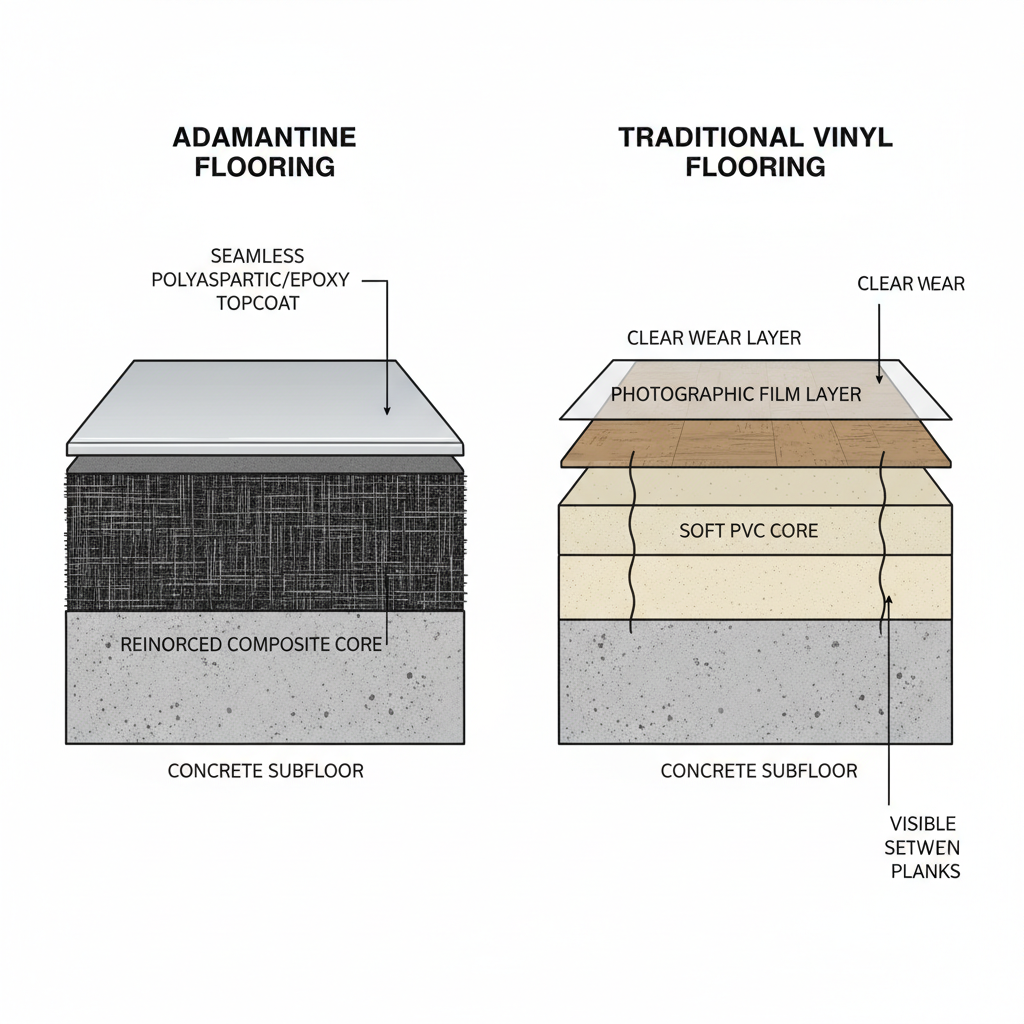
The secret to adamantine flooring lies in its anatomy, which typically consists of polyaspartic coatings, industrial epoxy, or heavily reinforced Stone Polymer Composite (SPC) cores.
Unlike standard floors that simply rest on a subfloor, polyaspartic and epoxy systems undergo a rigorous chemical curing process. When applied, these resins create a monolithic, seamless surface that bonds directly with the concrete substrate. The topcoat thickness in these systems is measured in mils (thousandths of an inch) or even fractions of an inch, providing unparalleled chemical resistance against automotive fluids, harsh cleaners, and organic solvents. The curing process requires specific temperature and humidity controls, transforming the liquid resin into a highly dense, non-porous shield that is virtually impervious to daily residential or commercial hazards.
Understanding Vinyl Durability: LVP, LVT, and Sheet Vinyl
To accurately compare these premium systems to standard options, we must recognize that vinyl flooring durability is not a monolith. The lifespan of a vinyl floor depends entirely on its specific construction: Luxury Vinyl Plank (LVP), Luxury Vinyl Tile (LVT), or traditional sheet vinyl.
The defining factor for vinyl’s longevity is its wear layer—the clear urethane coating applied over the photographic film layer. Wear-layer specifications from top manufacturers typically range from a budget-friendly 6 mil (suitable only for light, low-traffic areas) to a robust 20+ mil designed for commercial use. When matched with the appropriate environment, high-quality LVP with a 20+ mil wear layer can last 20 to 25 years in residential settings. However, once this microscopic wear layer is breached, the floor’s aesthetic and structural integrity rapidly declines.
Objective Durability Metrics: Moving Beyond Marketing Fluff
To determine which flooring offers superior durability, we must abandon subjective marketing claims and rely on standardized testing metrics. The American Society for Testing and Materials (ASTM) provides rigorous protocols for evaluating flooring wear, slip resistance, and load limits [2].
When evaluating durable flooring options, industry professionals cross-reference these ASTM standards with established benchmarks like the Janka hardness scale (used primarily for wood comparisons) and the Mohs hardness scale (used for minerals and tiles). By applying these objective metrics, we can accurately predict how a floor will perform a decade after installation.
Scratch, Impact, and Water Resistance Showdown
When directly comparing adamantine and vinyl across specific resistance categories, the differences become stark.
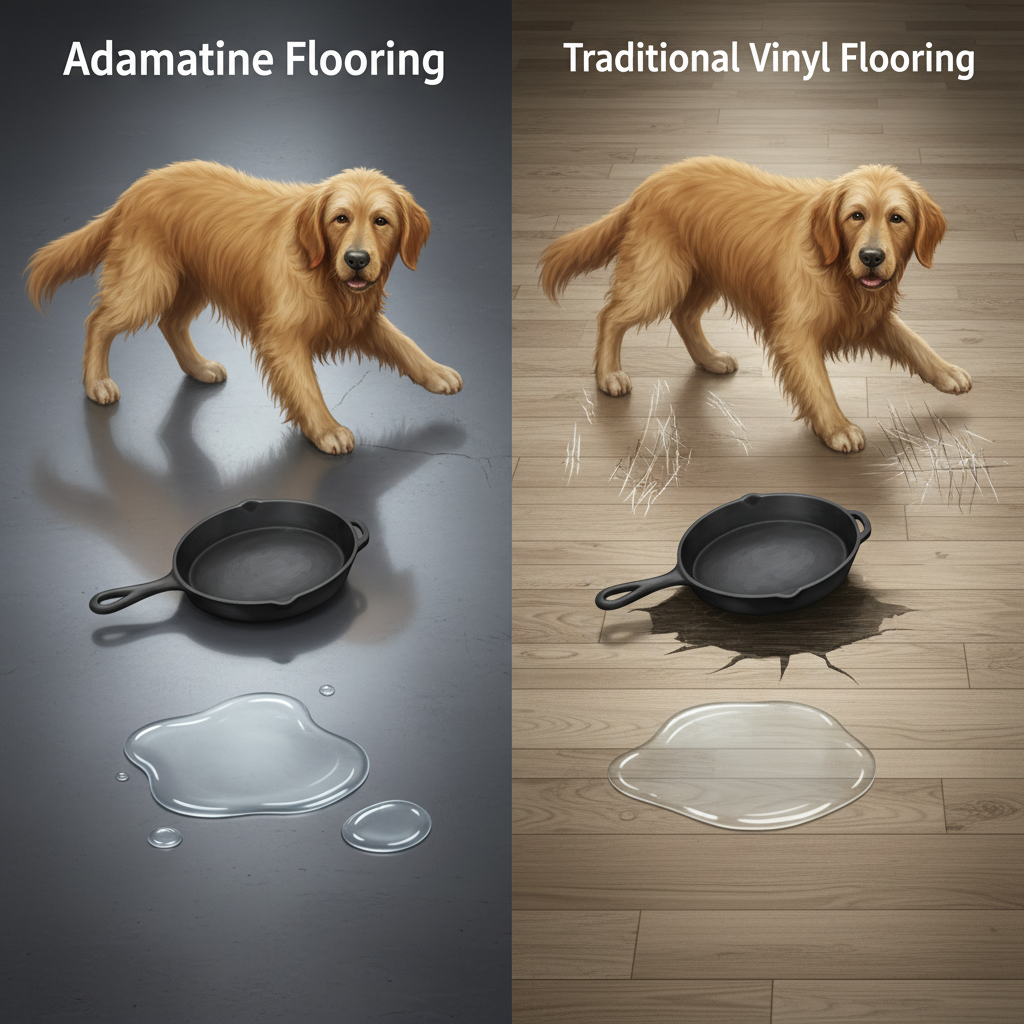
- Scratch Resistance: While a 20-mil LVP can resist moderate dog scratches, heavy, repetitive clawing will eventually dull the urethane finish. Adamantine topcoats, particularly polyaspartic blends, rank significantly higher on the Mohs scale, easily shrugging off pet claws and dragged furniture.
- Impact Resistance: Dropping a heavy cast-iron pan will likely dent or permanently gouge traditional LVP, as the core is relatively soft. Commercial facility managers frequently note that high-traffic impact requires rigid solutions. Commercial grade epoxy and adamantine systems can withstand 10,000+ psi of pressure, making them virtually immune to blunt-force drops.
- Water Resistance: Both high-end LVP and adamantine floors are technically waterproof from the top down. However, adamantine’s seamless installation means there are no joints for standing water to seep through, offering superior protection against catastrophic flooding.
The Hidden Killers of Flooring Lifespan
Even the most durable flooring options are useless if installed incorrectly. Consumers frequently blame the flooring material for short flooring lifespan issues, completely unaware that invisible installation errors are the true culprits.
According to independent flooring inspectors from the National Institute of Certified Floorcovering Inspectors (NICFI), the vast majority of flooring complaints are not manufacturing defects, but rather catastrophic failures in site preparation [3].
Subfloor Preparation and the 85% Moisture Rule
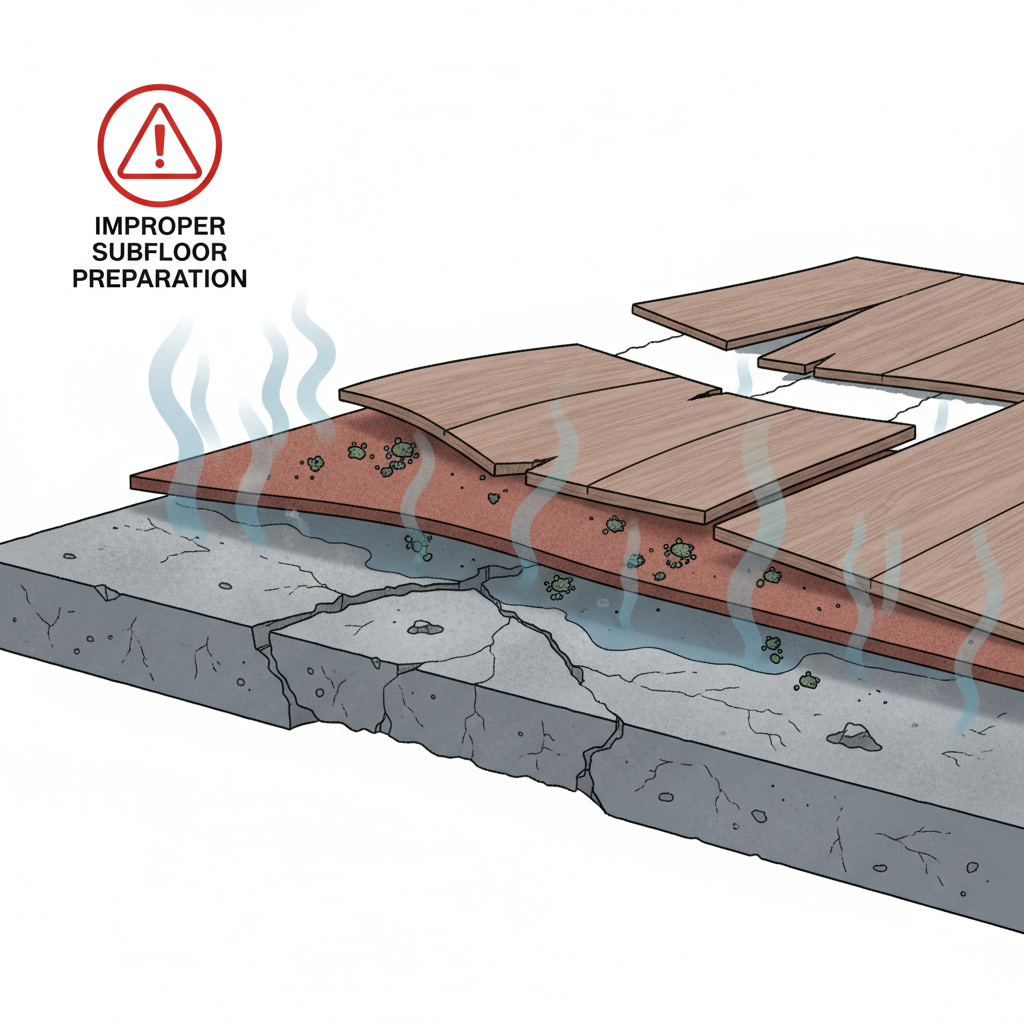
The structural integrity of your floor is only as good as the subfloor beneath it. Industry failure analysis data reveals a shocking truth: over 60% of premature LVP failures (such as unlocking joints and cracking) are due to improper subfloor preparation. Furthermore, moisture-related issues account for up to 85% of all flooring failures.
Before laying any vinyl flooring, rigorous moisture testing protocols, such as calcium chloride tests, must be executed. If the concrete slab is emitting too much moisture vapor, it will cause vinyl planks to cup, warp, and trap mold. Additionally, the subfloor must be meticulously leveled. Technical installation standards dictate that subfloors must be flat to within 3/16 inch over a 10-foot span for most rigid core flooring. Failing to meet this tolerance creates hollow spots that flex under foot traffic, inevitably snapping the locking mechanisms of vinyl flooring and causing severe wear and tear.
Total Cost of Ownership (TCO): A 20-Year Financial Analysis
When evaluating adamantine flooring vs traditional vinyl, looking solely at the retail price per square foot is a financial trap. To find superior flooring lifespan solutions, savvy homeowners use a Lifecycle Cost Analysis (LCCA) to compare the Total Cost of Ownership over a 20-year period.
Furthermore, data from real estate authorities, including the Appraisal Institute and the National Association of Realtors (NAR), indicates that premium, generational flooring significantly impacts home valuation and return on investment (ROI), whereas budget vinyl is often viewed as a temporary finish by prospective buyers [4].
Upfront Investment vs. Generational Longevity
Does the higher initial cost of adamantine flooring justify itself? Consider the compounding costs of replacing budget vinyl.
20-Year TCO Comparison Breakdown:
- Traditional Vinyl (Mid-Grade LVP):
- Upfront Cost: $4 – $7 per sq. ft. (installed)
- Lifespan: 7 – 10 years (under heavy traffic)
- 20-Year Scenario: Requires at least one, possibly two, full replacements.
- Hidden Costs: Furniture removal, baseboard replacement, disposal fees, and labor for each replacement cycle.
- Adamantine Flooring (Polyaspartic/Epoxy):
- Upfront Cost: $8 – $12+ per sq. ft. (installed)
- Lifespan: 20 – 30+ years (Generational)
- 20-Year Scenario: Zero replacements required; minimal maintenance.
- Hidden Savings: Increases home resale value, no recurring installation disruptions.
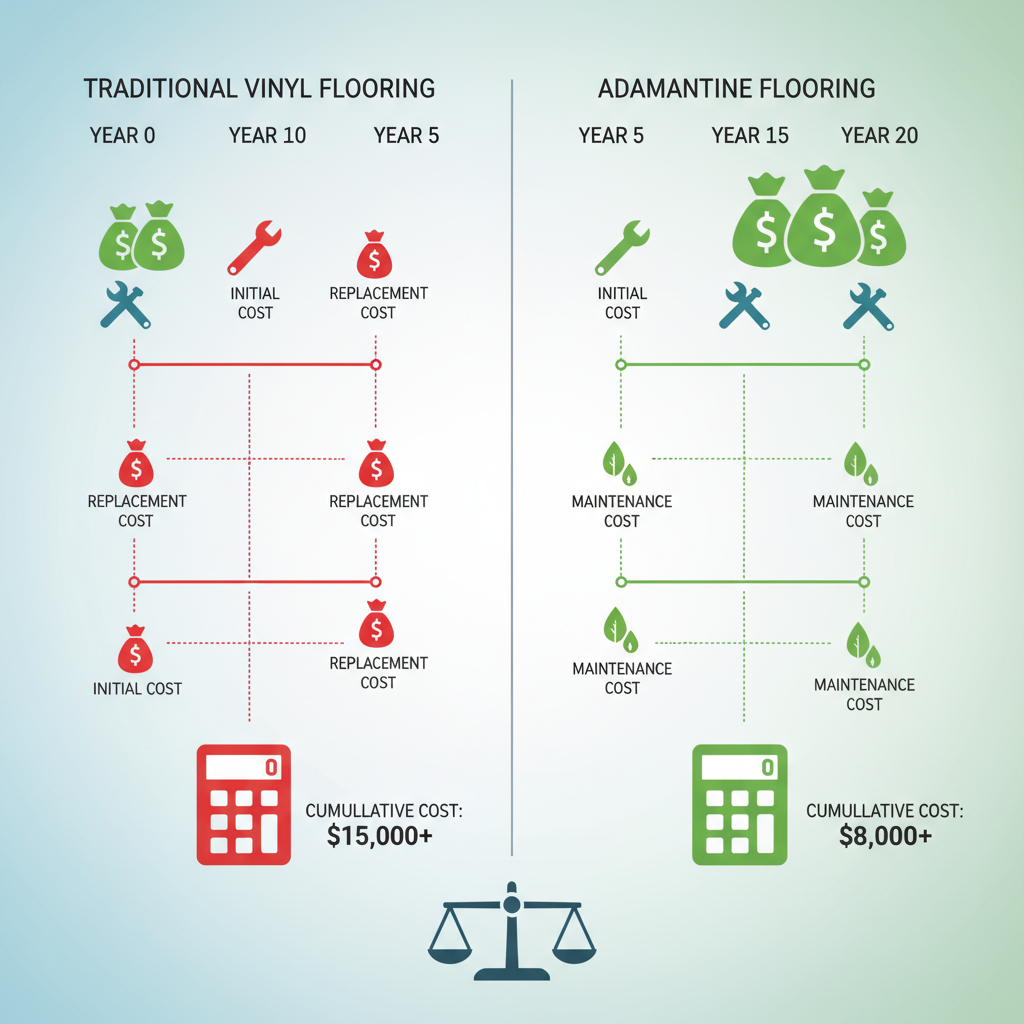
Over two decades, the “expensive” adamantine floor actually costs significantly less than the cyclical replacement of traditional vinyl.
Repair vs. Replace: Managing Vinyl Wear and Tear
If you are currently experiencing vinyl flooring wear and tear, you must decide whether to attempt a repair or invest in a full replacement. Following maintenance advice directly from the World Floor Covering Association (WFCA) and manufacturer warranty guidelines is critical to extending your floor’s remaining life [5].
Diagnosing Delamination, Scuffing, and UV Fading
Proper diagnosis dictates the cure.
- Cosmetic Wear (Scuffing & Fading): Surface scuffs can often be buffed out using manufacturer-approved acrylic finishes. However, UV fading is a permanent chemical degradation. Direct UV exposure can cause noticeable fading in standard vinyl within 3-5 years. Preventative window treatments (like UV-blocking films or blinds) are essential to mitigate this.
- Structural Wear (Delamination & Peeling): If the clear wear layer is peeling away from the photographic layer (delamination), or if the planks are separating at the seams, the floor has structurally failed. This cannot be polished away and requires replacement.
How to Seamlessly Replace Damaged Vinyl Planks
When replacing damaged vinyl floors, the method depends on the installation type.
For modern floating LVP, replacing a single damaged plank is highly manageable. A skilled DIYer can cut out the damaged plank and glue a replacement into the existing matrix in approximately 30 to 45 minutes.
Conversely, removing older, glued-down sheet vinyl or LVT is a labor-intensive nightmare. Professional installers often rely on the “heat and peel” method, using specialized heat guns to soften the decades-old adhesive before scraping the subfloor raw. Crucial Safety Warning: If your home was built before the 1980s, the Environmental Protection Agency (EPA) strongly advises testing older vinyl floors and their adhesives for asbestos before attempting any removal [6].
Long-Lasting Alternatives for the Eco-Conscious
For consumers disillusioned with the cyclical waste of vinyl but still seeking long lasting flooring materials, the market offers exceptional sustainable alternatives. You do not have to sacrifice durability for environmental responsibility.
When sourcing long lasting vinyl flooring alternatives, look for products carrying FloorScore or GREENGUARD certifications, which guarantee low VOC emissions and superior indoor air quality. Additionally, referencing the U.S. Green Building Council (USGBC) guidelines can help identify materials that offer generational lifespans without filling landfills [7].
Modern Linoleum and Strand-Woven Bamboo
Do not confuse true linoleum with cheap sheet vinyl. Modern linoleum is made from 100% natural materials (linseed oil, pine rosin, wood flour) and is homogeneous, meaning the color goes all the way through the material. A properly maintained linoleum floor can easily last 40 years.
For those who prefer a wood aesthetic, strand-woven bamboo is an engineering marvel. By shredding bamboo fibers and compressing them under extreme heat and resin, the resulting planks are incredibly dense—measuring 2 to 3 times harder than traditional red oak on the Janka hardness scale, making it highly resistant to dents and heavy traffic.
Conclusion
When the dust settles on the durability debate, the verdict is clear: Traditional vinyl, specifically high-mil LVP, remains an excellent, budget-conscious choice for a 15-to-20-year timeline—provided it is installed flawlessly. However, for homeowners and facility managers seeking a true “buy-it-for-life” solution, adamantine and industrial-grade coatings offer vastly superior long-term durability and a much lower Total Cost of Ownership.
Regardless of which material you choose, remember that the subfloor and moisture management dictate the ultimate lifespan of your investment. Before undertaking your next renovation, we highly recommend consulting with a certified flooring inspector or specialized contractor to evaluate your subfloor and ensure your new floors are built to last a lifetime.
Disclaimer: Pricing and lifespan estimates are averages; actual results depend heavily on installation quality and environmental factors. Includes a standard safety warning regarding asbestos testing before removing pre-1980s vinyl flooring.
References & Authoritative Sources
- Journal of Materials in Civil Engineering. (N.D.). Peer-reviewed durability metrics and abrasion resistance standards for composite resin flooring systems.
- ASTM International. (N.D.). Standardized testing methods for flooring wear, slip resistance, and load limits. Retrieved from ASTM standards database.
- National Institute of Certified Floorcovering Inspectors (NICFI). (N.D.). Failure analysis data regarding moisture, subfloor preparation, and premature flooring degradation.
- Appraisal Institute / National Association of Realtors (NAR). (N.D.). Data on how premium flooring impacts home valuation, lifecycle cost analysis, and real estate ROI.
- World Floor Covering Association (WFCA). (N.D.). Maintenance standards and manufacturer warranty guidelines for resilient flooring.
- Environmental Protection Agency (EPA). (N.D.). Asbestos safety guidelines and testing protocols for pre-1980s vinyl flooring removal.
- U.S. Green Building Council (USGBC) / GREENGUARD Certification Database. (N.D.). Sustainable material guidelines and indoor air quality certifications for eco-friendly flooring alternatives.
