In the realms of fantasy and gaming, “adamantine” represents the ultimate, indestructible material—a mythical substance impervious to damage, wear, and time. For active homeowners, parents, and pet owners, the search for “adamantine flooring” is a very real, frustration-driven quest. You want a surface that can survive a dropped cast-iron skillet, the frantic scampering of a heavy dog, or the daily chaos of children’s toys without bearing permanent battle scars.
Unfortunately, the flooring industry is rife with marketing hyperbole that blurs the lines between reality and fiction. The most common and expensive mistake homeowners make is conflating scratch resistance with dent resistance—assuming a floor that won’t scratch also won’t shatter or dent when a heavy object falls.
This definitive, science-backed guide bridges the gap between the myth of indestructible floors and the reality of modern material science. By deconstructing the physics of durability, exposing warranty loopholes, and providing an exclusive “Durability Matrix,” we will help you navigate past the marketing hype to find truly life-proof flooring solutions for your home.
- The Myth vs. Reality of “Adamantine” Flooring
- The Ultimate Durability Matrix: Top Impact-Resistant Flooring Materials
- Room-by-Room Guide: Best Impact Resistant Flooring for Homes
- The “LifeProof” Reality Check: Warranties, Subfloors, and Hidden Costs
- Triage and Repair: Dealing with Floor Damage from Dropped Objects
- Conclusion
- References
The Myth vs. Reality of “Adamantine” Flooring
When consumers search for adamantine flooring, they are looking for a silver bullet for durable flooring. While a truly indestructible floor does not exist in the real world, material science has evolved to offer incredibly close alternatives that can withstand extreme residential abuse.
To understand what makes a floor tough, we have to look at mineralogy and industrial engineering. The Mohs Hardness Scale, the standard mineralogy reference for scratch resistance, dictates that harder materials will scratch softer ones [1]. While diamonds sit at a 10, the hardest real-world flooring materials, like certain porcelains and natural stones, sit around a 7 or 8. However, extreme hardness often comes with brittleness. As the American Concrete Institute notes in their guidelines for high-durability industrial surfaces, structural integrity relies on a balance of compressive strength and flexibility, not just surface hardness [2].
The Physics of Durability: Scratch vs. Dent Resistance
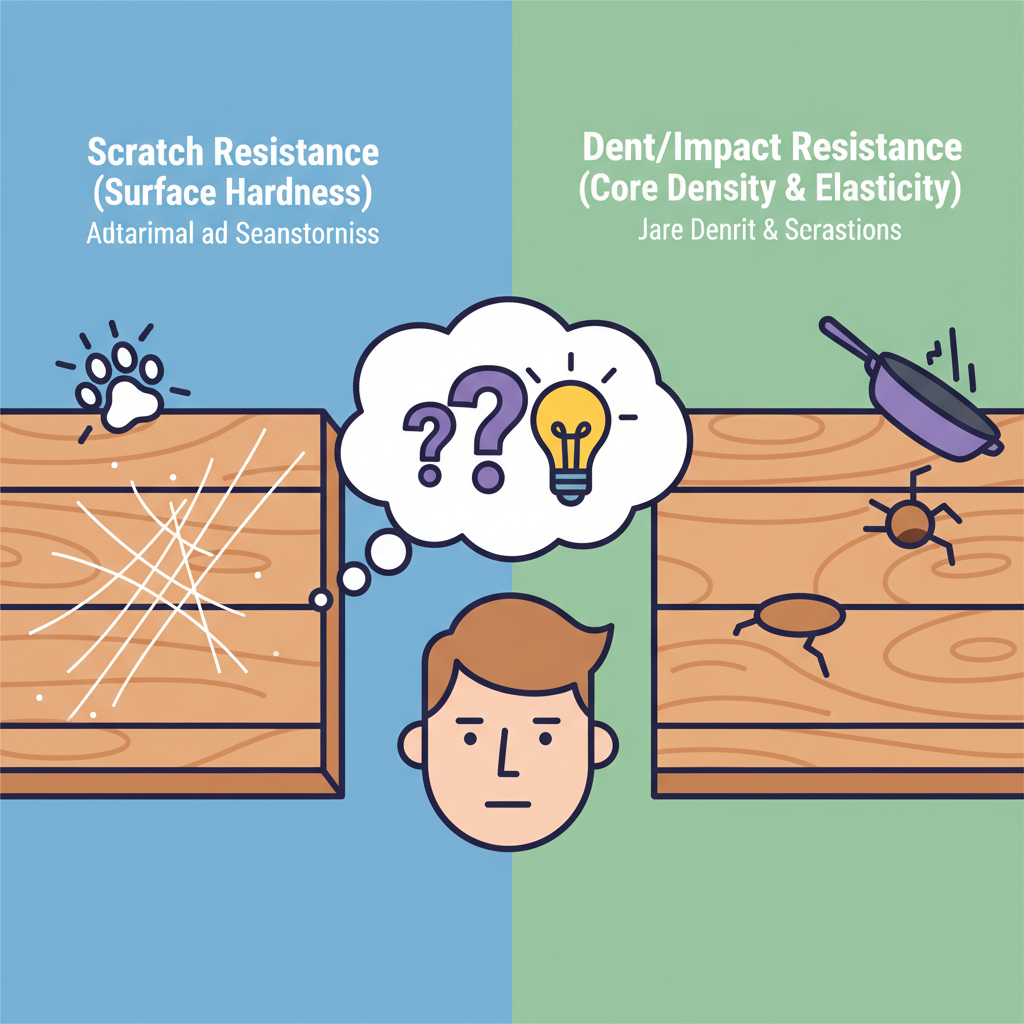
The secret to finding scratch and dent resistant floors lies in understanding that these two types of damage require entirely different physical properties to prevent.
Surface hardness prevents scratches. It is a measure of the topcoat’s ability to resist abrasion from grit, pet nails, or sliding furniture. This is typically measured by the Taber Abrasion Test, which spins a weighted, abrasive wheel against the floor’s surface to see how many cycles it takes to wear through the finish [3].
Structural elasticity and core density prevent dents. Dent resistance dictates how well a floor can absorb blunt force—like a dropped mug or a heavy piece of furniture—without crushing the core or shattering the surface. This is measured by the Janka hardness scale (for wood) or core density metrics (for synthetics).
A floor can be entirely scratch-proof (like glass) but easily shattered by a dropped object. Conversely, a floor can be highly dent-proof (like vulcanized rubber) but easily scratched by a sharp edge. The North American Laminate Flooring Association (NALFA) emphasizes that true durability testing protocols must evaluate both impact resistance and surface wear independently to give consumers an accurate picture of a floor’s lifespan [3].
The Ultimate Durability Matrix: Top Impact-Resistant Flooring Materials
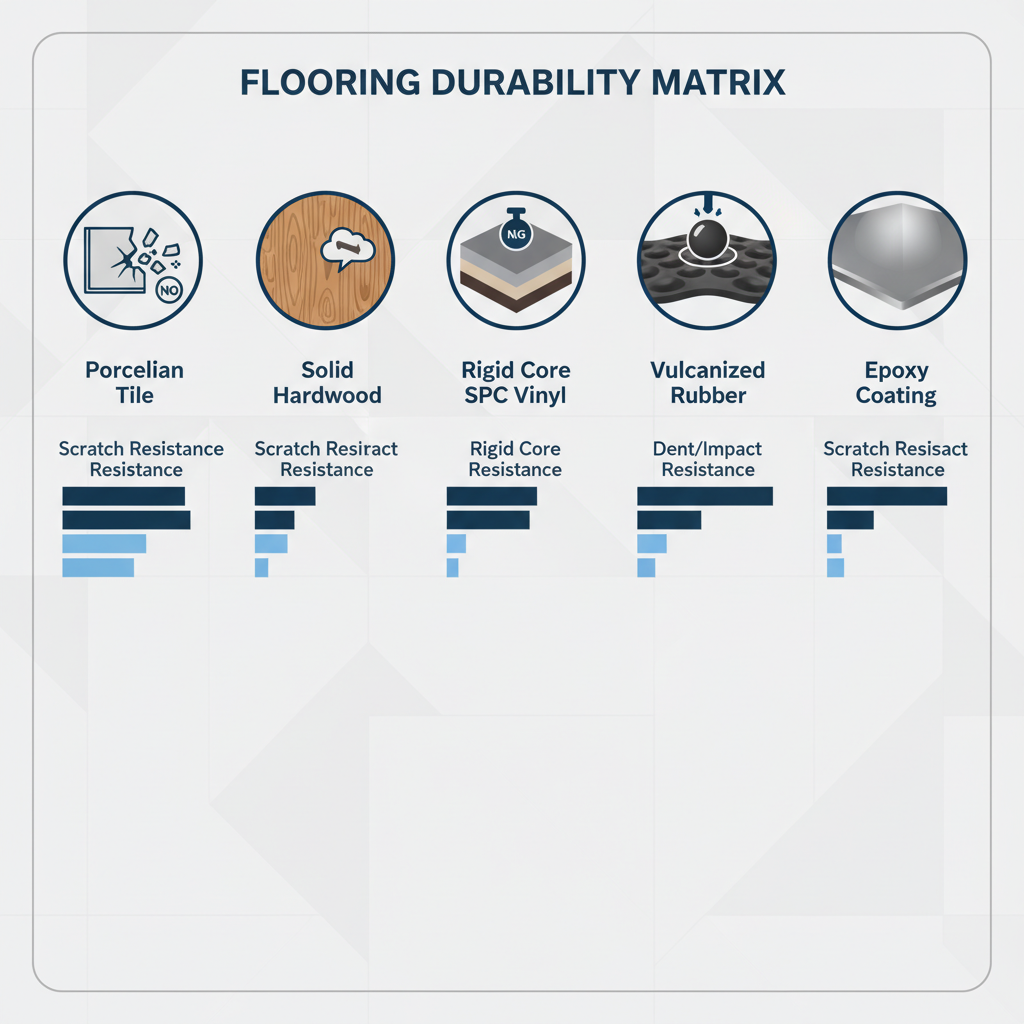
To find the best impact resistant flooring, broad research must be narrowed down into actionable data. The following “Durability Matrix” compares major durable flooring types across critical vectors: scratch resistance, dent resistance, and overall lifespan.
According to lifecycle averages from the National Association of Home Builders (NAHB), materials like porcelain tile can boast a lifespan of 50+ years when properly installed [4]. However, as Certified Flooring Installers (CFI) often point out:
“Manufacturer laboratory claims rarely account for uneven subfloors or real-world drops. A floor’s true longevity is dictated by how its core handles daily impact, not just how its wear layer performs in a vacuum” [5].
The Durability Matrix (Scored 1-10)
- Porcelain Tile: Scratch Resistance: 9 | Dent/Impact Resistance: 4 (Prone to shattering) | Lifespan: 50+ Years
- Solid Hardwood (Oak): Scratch Resistance: 5 | Dent/Impact Resistance: 6 | Lifespan: 100+ Years (with refinishing)
- Rigid Core SPC Vinyl: Scratch Resistance: 8 | Dent/Impact Resistance: 9 | Lifespan: 15-25 Years
- Vulcanized Rubber: Scratch Resistance: 4 | Dent/Impact Resistance: 10 | Lifespan: 20+ Years
- Epoxy Coating: Scratch Resistance: 8 | Dent/Impact Resistance: 10 | Lifespan: 10-20 Years
Stone Polymer Composite (SPC) & Rigid Core Vinyl
For residential homes seeking a dual-threat solution for scratch and dent resistant floors, Stone Polymer Composite (SPC) is the reigning champion. Unlike traditional Wood Plastic Composite (WPC), SPC features a core made of limestone powder and stabilizers.
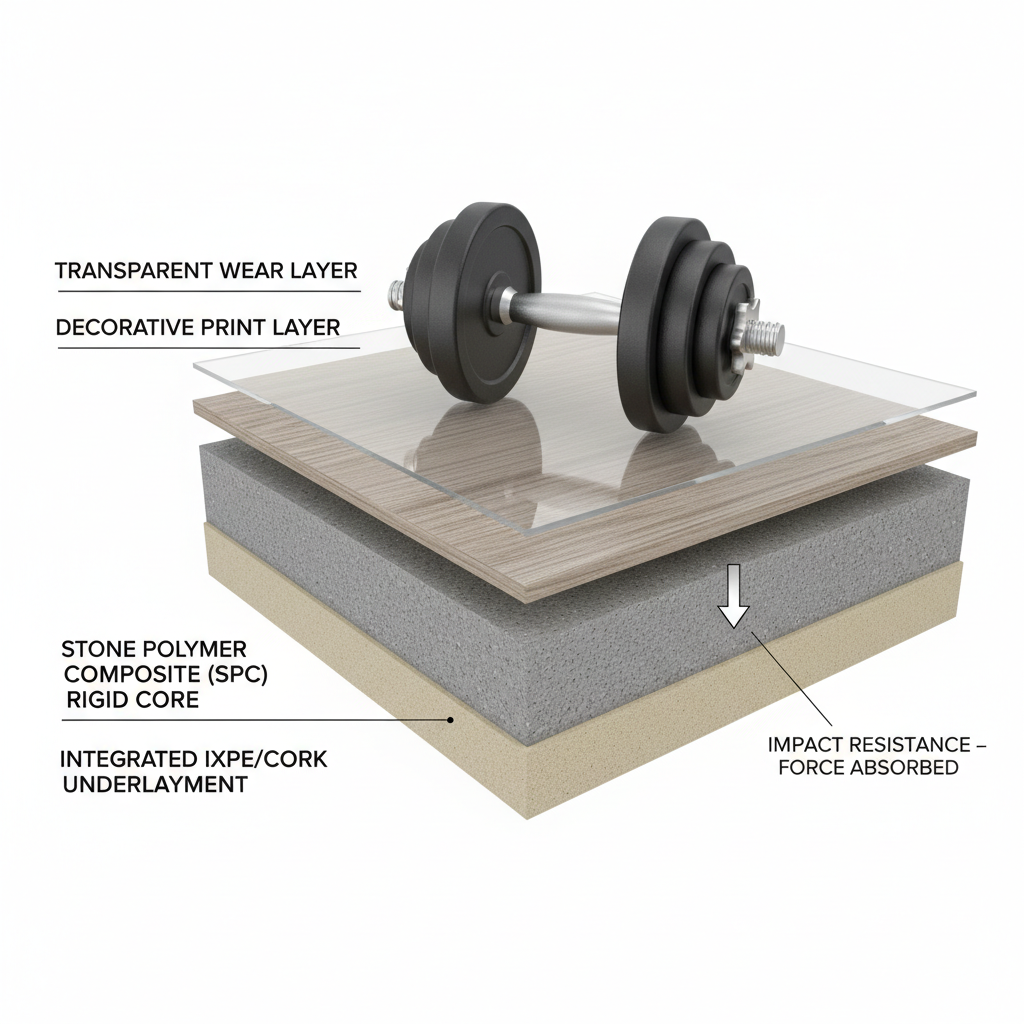
The Multilayer Flooring Association (MFA) notes that SPC flooring has a core density of approximately 2,000 kg/m³, making it significantly more dense and dent-resistant than WPC [6]. Because the core is essentially stone, it does not compress under heavy furniture or blunt impacts. To ensure it is truly life proof flooring, experts recommend pairing this dense core with a 20-mil or higher wear layer to protect against surface scratches in high-traffic areas.
Heavy Duty Flooring Solutions for Extreme Zones
When dealing with garages, home gyms, or workshops, residential aesthetics must take a backseat to pure load-bearing capacity. These extreme zones require heavy duty flooring solutions.
Commercial-grade epoxy and polyaspartic coatings are the closest real-world equivalents to adamantine flooring. According to the American Society of Concrete Contractors (ASCC), a standard industrial epoxy floor coating can withstand compressive stress exceeding 10,000 psi, making the coating structurally stronger than the concrete beneath it [7]. Furthermore, these commercial-grade materials can be textured to meet rigorous Occupational Safety and Health Administration (OSHA) standards for dynamic coefficient of friction (DCOF), ensuring commercial slip resistance even when wet [8].
High-Elasticity Floors: Forgiving Drops and Bumps
Sometimes, the best way to survive an impact is not to resist it rigidly, but to absorb it. High-elasticity materials—like rubber, cork, and premium linoleum—are the ultimate flooring that withstands drops and bumps.
These materials focus on “forgiveness.” Data shows that rubber flooring can absorb up to 30% more impact energy than standard hard surfaces like concrete or tile [9]. The Journal of Materials Science highlights that the high elasticity and rebound rates of these cellular materials allow them to compress under the blunt force of a dropped weight and immediately return to their original shape, preventing permanent structural damage [10].
Room-by-Room Guide: Best Impact Resistant Flooring for Homes
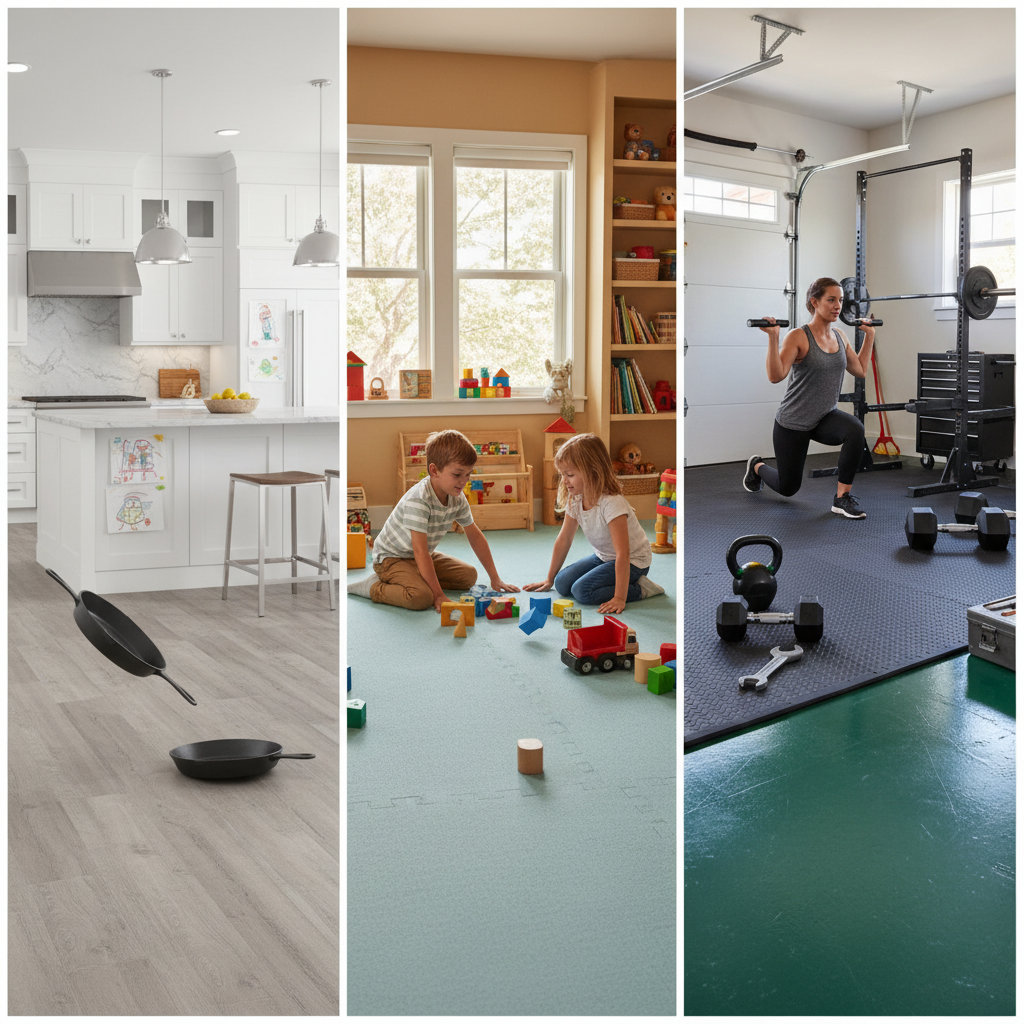
Because “impact” means dropping a 45lb weight in a gym versus dropping a cast-iron skillet in a kitchen, choosing the best impact resistant flooring for homes requires a room-by-room strategy. Standardized testing methodologies, such as ASTM D2794 (Standard Test Method for Resistance of Organic Coatings to the Effects of Rapid Deformation/Impact), prove that context dictates performance [11]. The World Floor Covering Association (WFCA) advises consumers to match the material’s specific impact rating to the room’s primary use-case [12].
Life-Proof Flooring for Active Families and Pets
For living rooms and playrooms, the search for life proof flooring for active families goes beyond just surviving drops; it must also be safe. A “Day in the Life” stress test for a family involves spilled juice, dog claws, dropped toys, and children playing directly on the surface.
While impact resistance is crucial, indoor air quality is paramount. When selecting synthetic rigid core floors, ensure they carry FloorScore ratings and phthalate-free certifications to guarantee low Volatile Organic Compounds (VOCs) [13]. Furthermore, the necessity of a high-quality underlayment cannot be overstated. A premium cork or cross-linked polyethylene (IXPE) underlayment acts as a shock absorber, drastically improving the floor’s overall impact resistance and acoustic comfort.
The “LifeProof” Reality Check: Warranties, Subfloors, and Hidden Costs
“LifeProof” has become a genericized term for indestructible floors, but it is also a specific, highly popular brand sold by Home Depot. While rigid-core vinyls offer incredible life proof flooring solutions, an objective look at the fine print reveals hidden costs and warranty loopholes that consumers must understand.
A deep dive into Home Depot’s LifeProof Technical Specifications reveals strict subfloor flatness requirements—typically allowing no more than a 3/16-inch variance over a 10-foot span [14]. If your subfloor is uneven, the rigid drop-and-lock mechanisms will bear the brunt of foot traffic and eventually snap. The Better Business Bureau (BBB) frequently fields consumer complaints regarding “lifetime” warranty fulfillment issues, where manufacturers void the warranty entirely upon discovering that the subfloor was not perfectly leveled prior to installation [15]. True durability starts beneath the surface.
Triage and Repair: Dealing with Floor Damage from Dropped Objects
Even the most durable floors can succumb to a freak accident. When facing floor damage from dropped objects, homeowners need a diagnostic flowchart: Assess, Repair, and Prevent.
First, use a severity scale (1-5) to assess the damage:
- Micro-scratch: Topcoat only. (DIY fixable)
- Deep scratch: Penetrates the design layer. (Requires board replacement or color-matching putty)
- Surface Dent: Core compressed, but surface intact. (Triage depends on material)
- Gouge/Crush: Core exposed and structural integrity compromised. (Requires replacement)
- Shatter: Material broken, potential subfloor damage. (Requires professional replacement)
The Tile Council of North America (TCNA) notes that shattered porcelain tiles (Severity 5) must be chipped out and replaced, as the sharp edges pose a hazard and compromise the waterproofing [16]. Conversely, the National Wood Flooring Association (NWFA) provides specific diagnostics for wood, where a Severity 3 dent might be entirely reversible [17].
How to Fix Dented Floorboards (Wood vs. LVP)
If you are dealing with dented floorboards, your repair method depends entirely on the material.
For solid hardwood, minor to moderate dents can often be steamed out. According to guidelines from This Old House, the “wet towel and iron” method works by applying a damp cloth over the dent and pressing a hot iron to it [18]. The steam penetrates the crushed wood fibers, causing them to swell back to their original shape.
WARNING: Never use the steam method on Luxury Vinyl Plank (LVP), laminate, or engineered wood. Heat and steam will melt the synthetic wear layer, delaminate the core, and permanently ruin the floor.
For LVP or laminate, a dented or crushed board cannot be repaired; it must be replaced. Professional floorboard replacement typically costs $100 to $300 per board depending on the locking mechanism and labor. For extensive water or structural damage following a massive impact, consult the Institute of Inspection, Cleaning and Restoration Certification (IICRC) directory for professional restoration standards [19].
Preventing Easily Scratched Floors
Often, easily scratched floors are the result of poor maintenance rather than poor material choice. The root causes of scratches are usually tracked-in silica grit (which acts like sandpaper) and unclipped pet nails.
Immediate mitigation includes placing high-quality felt pads under all furniture, using doormats at every entrance, and avoiding vacuum cleaners with aggressive beater bars.
Long-term prevention comes down to topcoat chemistry. Floor Covering Installer Magazine highlights that flooring treated with an Aluminum Oxide finish is up to 10 times more scratch-resistant than floors with traditional polyurethane finishes [20]. If you are installing natural wood, consult the American Hardwood Information Center to select a species with a high Janka rating (like Hickory or Hard Maple) paired with a factory-applied, UV-cured aluminum oxide finish for maximum scratch mitigation [21].
Conclusion
The quest for “adamantine flooring” doesn’t end with a mythical, indestructible material; it ends with smart material science. By understanding the critical difference between surface scratch resistance (hardness) and structural dent resistance (elasticity and core density), you can stop falling for marketing hype and start making informed investments.
Remember to match the flooring material to the room’s specific impact risks—opting for dense SPC in high-traffic living areas, elastic rubber in home gyms, and commercial epoxy in garages. Rely on standardized testing like ASTM and NALFA, and always prioritize proper subfloor preparation to protect your investment and your warranty.
Save the Durability Matrix for your next showroom visit, and you will be well-equipped to choose a floor that effortlessly handles life’s everyday bumps, drops, and scratches.
Disclaimer: The floor repair methods described in this article, particularly the use of heat and steam on wood floors, carry inherent risks of burns or further property damage if performed incorrectly. Always test repair methods in an inconspicuous area first. The handling and application of chemical coatings (like epoxy and polyaspartic) require proper ventilation and personal protective equipment. Consult manufacturer guidelines or a licensed professional before attempting complex DIY repairs or chemical applications.
References
- Mohs Hardness Scale. (N.D.). Standard mineralogy reference for scratch resistance and material hardness.
- American Concrete Institute (ACI). (N.D.). Guidelines on high-durability concrete and industrial surface structural integrity.
- North American Laminate Flooring Association (NALFA). (N.D.). Standardized testing protocols on durability, including the Taber Abrasion Test and impact resistance.
- National Association of Home Builders (NAHB). (N.D.). Study of Life Expectancy of Home Components.
- Certified Flooring Installers (CFI). (N.D.). Industry insights regarding real-world flooring longevity versus manufacturer laboratory claims.
- Multilayer Flooring Association (MFA). (N.D.). Technical data and core density specifications for Stone Polymer Composite (SPC) and Wood Plastic Composite (WPC).
- American Society of Concrete Contractors (ASCC). (N.D.). Standards and compressive strength guidelines for concrete coatings and epoxy.
- Occupational Safety and Health Administration (OSHA). (N.D.). Commercial slip resistance and dynamic coefficient of friction (DCOF) safety standards.
- General Industry Data / Journal of Materials Science. (N.D.). Impact energy absorption rates of vulcanized rubber versus standard hard surfaces.
- Journal of Materials Science. (N.D.). Peer-reviewed properties on material elasticity, cellular compression, and rebound rates.
- ASTM International. (N.D.). ASTM D2794: Standard Test Method for Resistance of Organic Coatings to the Effects of Rapid Deformation (Impact).
- World Floor Covering Association (WFCA). (N.D.). Consumer and trade standards for flooring selection and impact ratings.
- FloorScore Certification. (N.D.). Recognized indoor air quality standard and directory for hard surface flooring materials.
- Home Depot. (N.D.). LifeProof Technical Specifications and official product warranty data.
- Better Business Bureau (BBB). (N.D.). Consumer complaint analysis regarding flooring warranty fulfillment and subfloor installation requirements.
- Tile Council of North America (TCNA). (N.D.). Authority on tile shatter characteristics, safety, and repair standards.
- National Wood Flooring Association (NWFA). (N.D.). Wood-specific impact diagnostics and damage assessment guidelines.
- This Old House. (N.D.). Traditional DIY home repair guidelines for safely raising wood grain dents using steam.
- Institute of Inspection, Cleaning and Restoration Certification (IICRC). (N.D.). Standards for professional floor restoration and damage mitigation.
- Floor Covering Installer Magazine. (N.D.). Trade publication detailing finish chemistry, including Aluminum Oxide versus Polyurethane durability.
- American Hardwood Information Center. (N.D.). Data on wood species hardness (Janka scale) and finish compatibility.
