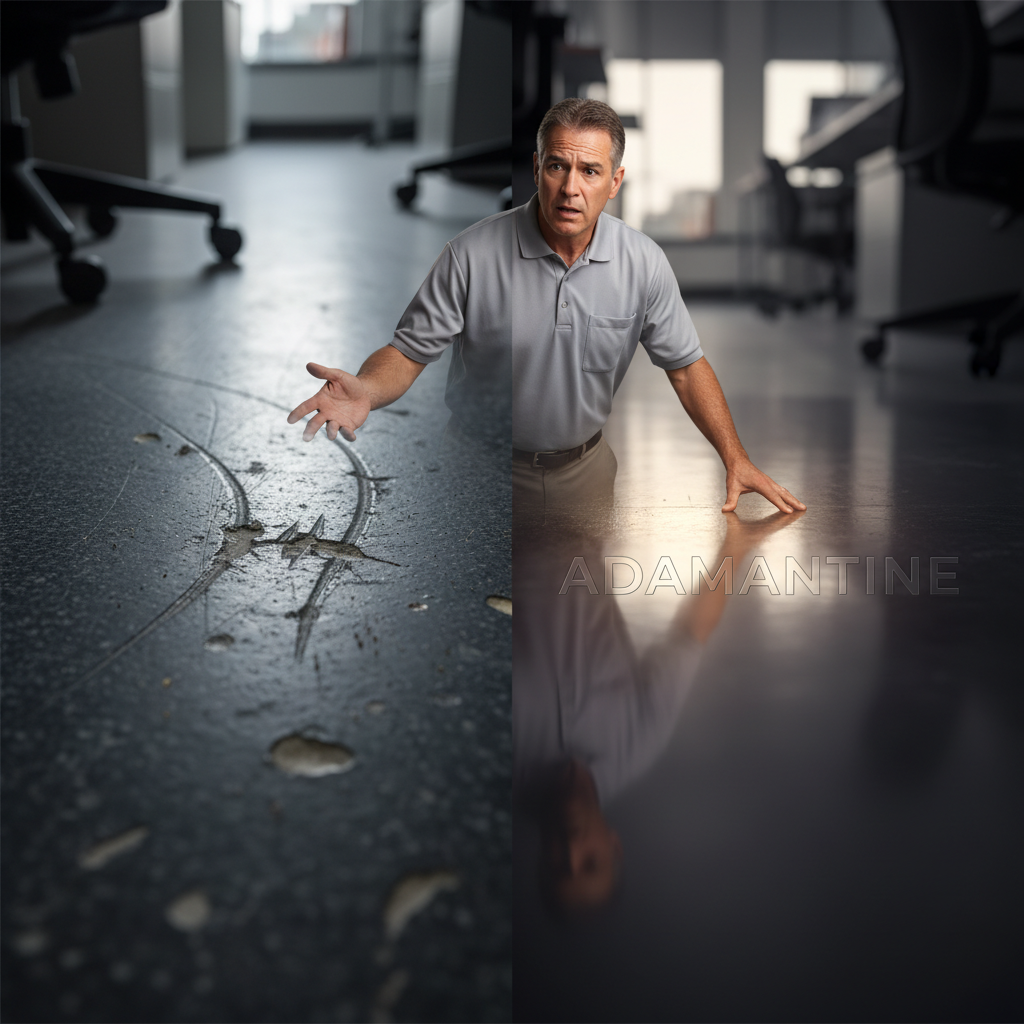
It is a frustrating reality for facility managers worldwide: over 60% of hard surface flooring complaints in commercial offices are directly related to caster wheel scratching, scuffing, and gouging. You invest heavily in outfitting a workspace, only to find the floors shredded by the very chairs your employees sit on. Compounding the issue is a marketplace flooded with vague marketing jargon—promises of “adamantine” strength or “scratch-proof” surfaces—that often lead to voided warranties and severe, premature floor damage.
This definitive guide is designed to cut through the industry noise. We will demystify the physics of wear layers, provide actionable, immediate steps to stop caster damage in its tracks (including the highly effective polyurethane wheel swap), and equip you with a Total Cost of Ownership (TCO) framework. Whether you are specifying materials for a new build or trying to save your current floors, this is your blueprint for truly durable commercial office flooring.
- Decoding the Jargon: What Exactly is ‘Adamantine’ Flooring?
- The Physics of Floor Wear: Why Rolling Chairs Destroy Offices
- Top Durable Commercial Office Flooring Solutions
- How to Prevent Rolling Chair Floor Damage (Immediate & Long-Term Fixes)
- Triage and Repair: Fixing Office Chair Floor Damage
- Maximizing ROI: The Total Cost of Ownership (TCO) Framework
- Conclusion
- References & Authoritative Sources
Decoding the Jargon: What Exactly is ‘Adamantine’ Flooring?
When searching for the ultimate scratch resistant office flooring, you will likely encounter the term “adamantine.” Derived from the Greek word for “unbreakable,” adamantine flooring sounds like the perfect solution. However, it is crucial to understand that “adamantine” is primarily a marketing term, not a specific natural material. In the commercial flooring industry, it is typically used to describe ultra-durable industrial epoxy coatings or specialized, ultra-hard porcelain tiles designed for extreme-wear environments.
Is adamantine flooring suitable for standard office environments? While incredibly tough, these industrial-grade solutions are often overkill—and cost-prohibitive—for standard corporate spaces. According to peer-reviewed data on surface hardness published in the Journal of Materials in Civil Engineering, the true measure of a floor’s resilience lies in its chemical composition and surface density, not its marketing moniker [1].
To put this extreme durability into perspective, a certified industrial flooring contractor notes:
“True adamantine-grade epoxy coatings are engineered for heavy manufacturing, capable of withstanding compressive strengths of over 10,000 PSI” [2].
For a standard office, achieving exceptional durability requires looking at specific topcoat chemistries and wear ratings, such as those analyzed by Coatings World Magazine and the Porcelain Enamel Institute (PEI) [3], [4].
Marketing Hype vs. Material Science: The Mohs Scale and PEI Ratings
To find genuinely scratch resistant office flooring, you must differentiate between dent resistance (impact) and scratch resistance (material removal). A floor can be hard enough to resist a dropped hammer but still be easily scratched by a piece of grit caught under a chair wheel. Furthermore, the visual finish matters; matte finishes naturally hide micro-scratches far better than high-gloss surfaces.
When evaluating topcoats, rely on established scientific metrics rather than sales pitches:
- Aluminum Oxide: Often used in high-end laminate, rigid core, and hardwood finishes, aluminum oxide ranks an impressive 9 out of 10 on the Mohs hardness scale (just below diamonds), offering extreme resistance to micro-scratches [3].
- Polyurethane/Urethane: A softer, more flexible topcoat. While excellent at resisting scuffs and chemical stains, it is more susceptible to sharp scratches unless reinforced with ceramic beads or aluminum oxide.
- PEI Rating: For ceramic and porcelain tiles, the PEI scale dictates wear resistance. A PEI rating of 4 or 5 is considered highly scratch resistant and suitable for heavy commercial traffic [4].
The Physics of Floor Wear: Why Rolling Chairs Destroy Offices
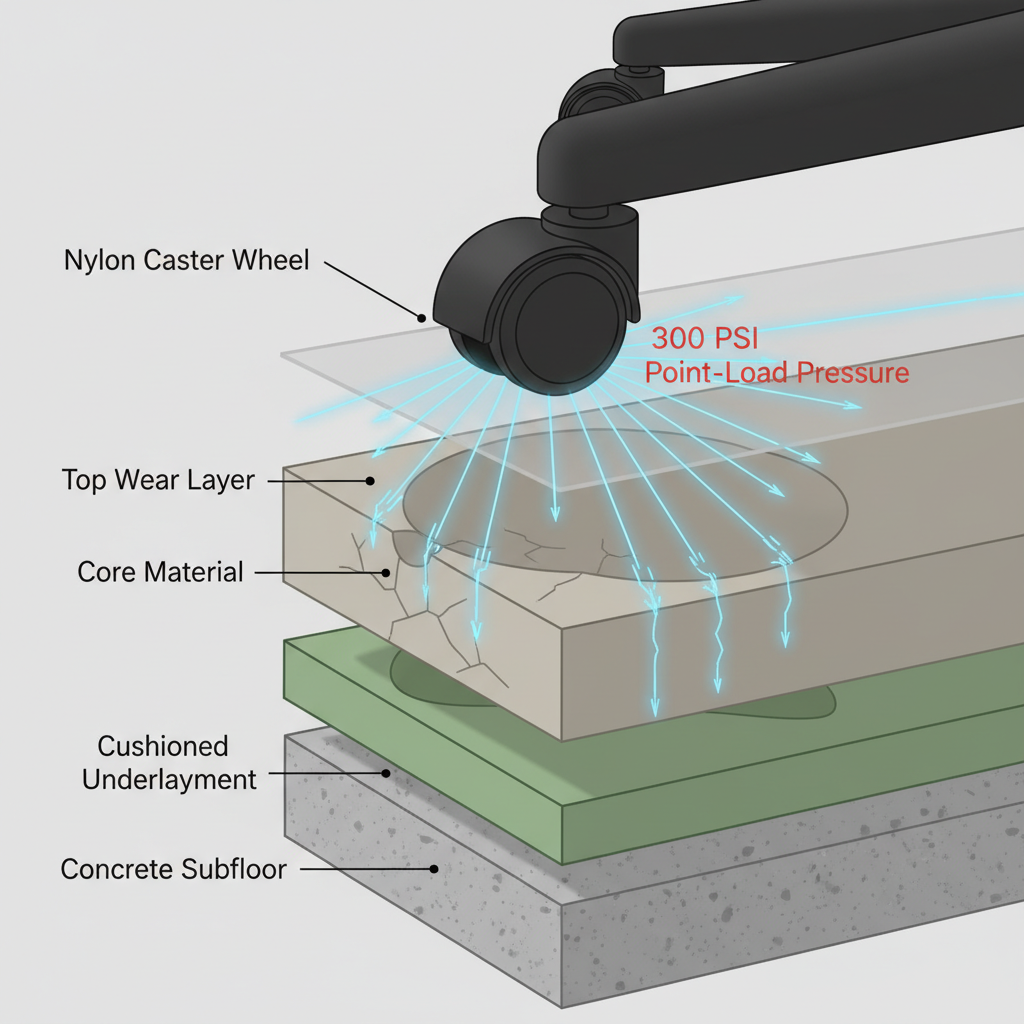
Why do rolling chairs cause such disproportionate office chair floor damage? The answer lies in the mechanics of point-load pressure. When a 180-pound employee sits in a standard office chair, their weight isn’t distributed evenly across the floor. It is concentrated onto the tiny contact points of five hard plastic caster wheels.
According to standards set by BIFMA (Business and Institutional Furniture Manufacturers Association), standard hard plastic (nylon) casters can exert over 300 PSI (pounds per square inch) directly onto a floor surface [5]. This intense, focused pressure acts like a dull knife, dragging dirt and grit across the floor, leading to the scratched floors from rolling chairs that plague so many facilities.
The 300 PSI Problem: Nylon Casters vs. Wear Layers
This 300 PSI point-load easily cuts through standard residential flooring. To combat high traffic flooring wear, you must understand wear layers. Measured in mils (thousandths of an inch) for vinyl and millimeters for other resilient floors, the wear layer is the transparent shield protecting the printed design.
A residential floor might have a 6-mil to 12-mil wear layer, which will fail rapidly under office chairs. For commercial environments, a 20-mil wear layer is the absolute minimum recommendation. Furthermore, when specifying floors, look for materials that have been rigorously tested. ASTM International provides standard test methods for flooring durability, such as the Taber Abrasion Test, which measures how much wear a surface can take before the design is compromised [6]. Ideally, office flooring should boast a commercial caster rating of at least 25,000 cycles to ensure longevity.
Telegraphing and Subfloor Failures
A frequently overlooked cause of office chair floor damage is “telegraphing.” This occurs when the subfloor beneath the luxury vinyl tile (LVT) or laminate is uneven. Even minor imperfections, like a stray staple, a divot, or an un-sanded plywood seam, will “telegraph” through to the surface.
When a rolling chair passes over these hidden micro-ridges, the 300 PSI pressure instantly crushes the flooring material against the hard imperfection below, causing immediate cracking or delamination. As one veteran commercial flooring installer emphasizes:
“You can buy the most expensive, durable LVT on the market, but if you skip the self-leveling compound and subfloor preparation, rolling chairs will destroy it from the bottom up in a matter of months” [7].
Top Durable Commercial Office Flooring Solutions
Selecting the right commercial office flooring requires balancing budget, aesthetics, and extreme durability. According to Floor Covering Weekly and BOMA International, Luxury Vinyl Tile (LVT) currently accounts for over 30% of new commercial flooring installations due to its versatility [8], [9]. However, hard surfaces aren’t the only option; commercial carpet tiles remain highly relevant, particularly because they can reduce ambient office noise by up to 30% compared to hard surfaces, solving a major complaint in open-plan offices.
For facility managers prioritizing durable office floors, the following categories represent the pinnacle of modern material science.
SPC (Stone Plastic Composite): The Closest Thing to ‘Rolling Chair Proof’
If you are searching for rolling chair proof flooring, SPC rigid core vinyl is the closest the industry has come to a bulletproof solution. To understand why, we must look at a cross-section of the material. Standard LVT relies on a flexible PVC core, while WPC (Wood Plastic Composite) uses a core mixed with wood flour and foaming agents, making it comfortable but susceptible to heavy dents.
SPC, however, utilizes a dense limestone core. According to technical specifications highlighted in Floor Covering News, SPC flooring boasts a core density of approximately 2,000 kg/m3 [10]. This massive density makes it highly resistant to the indentation and point-load pressure caused by heavy casters, preventing the structural crushing that ruins softer vinyls.
Heavy Duty Commercial Resilient and Rubber Flooring
For environments that blur the line between corporate office and industrial space—such as high-traffic lobbies, mailrooms, or tech labs—heavy duty commercial flooring for offices is required.
Homogeneous sheet vinyl, where the color and material are uniform throughout its entire thickness (meaning there is no printed wear layer to scratch off), is a top contender. It can boast a staggering static load limit of up to 1,000 PSI. Alternatively, commercial rubber flooring is an exceptional choice. Not only does it absorb the impact of rolling loads, but it also adheres strictly to workplace safety standards. OSHA guidelines prioritize floor safety, and rubber flooring offers a 10-15% slip resistance improvement over standard Vinyl Composition Tile (VCT), easily meeting ADA guidelines for commercial slip resistance [11], [12].
How to Prevent Rolling Chair Floor Damage (Immediate & Long-Term Fixes)
If you are not in a position to replace your floors, you need actionable strategies on how to prevent rolling chair floor damage right now. Implementing a tiered prevention strategy is far more cost-effective than dealing with premature floor failure.
The $30 Fix: Upgrading to Polyurethane Rollerblade Wheels
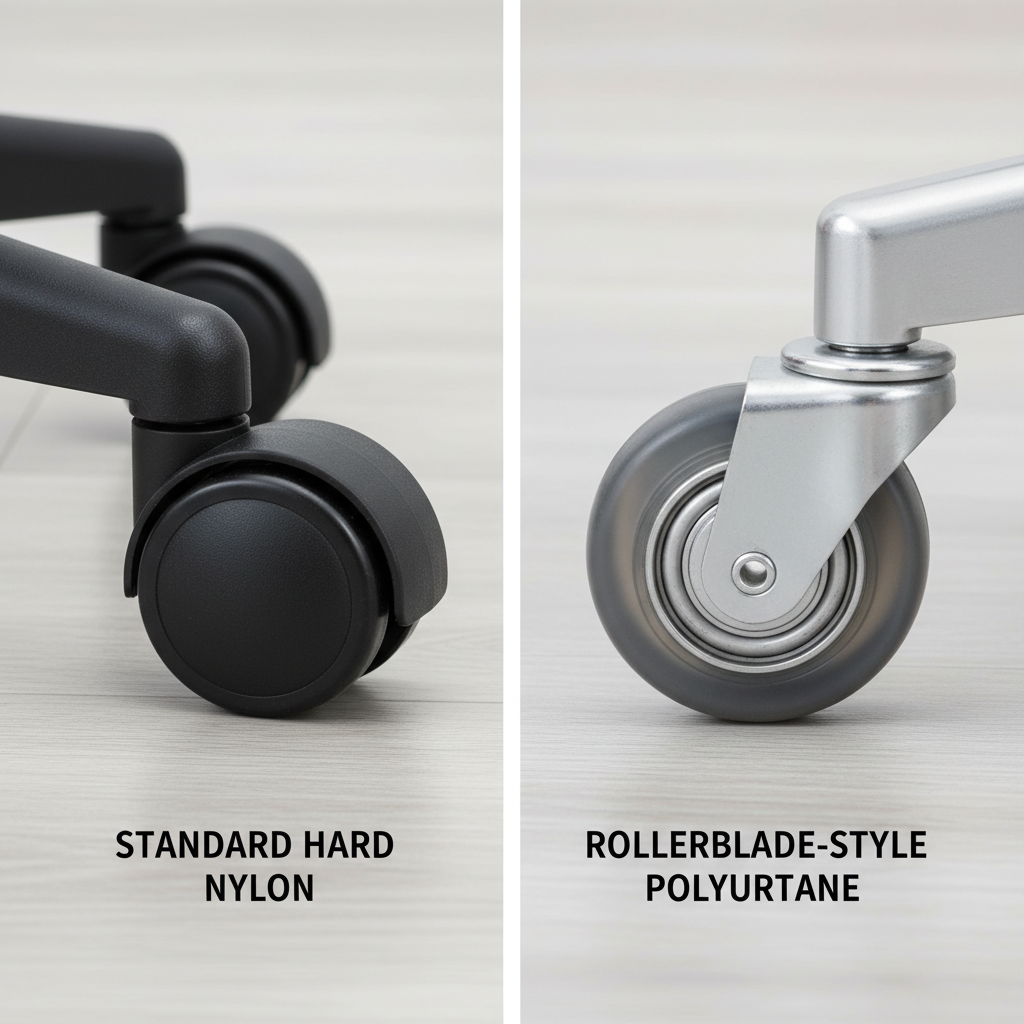
The single most effective, low-cost intervention for protecting the best flooring for rolling office chairs is to throw away the factory-standard hard nylon casters. Upgrading to rollerblade-style polyurethane wheels changes the physics of the floor interaction. Polyurethane is softer, absorbing the point-load pressure rather than transferring it to the floor, and it glides smoothly without dragging grit.
As demonstrated in our original step-by-step visual guides and videos, swapping these wheels takes less than five minutes per chair: simply pull the old friction-stem caster out of the base and push the new polyurethane wheel in. This simple $30 upgrade can reduce floor wear by up to 80%. Furthermore, guidelines from Ergonomics Plus note that optimizing floor rolling resistance with better wheels significantly reduces worker fatigue and lower back strain [13].
The Hidden Danger of Chair Mats
Plastic chair mats are the traditional go-to solution, but they harbor a hidden danger. Dirt, sand, and grit inevitably get trapped under the flexible plastic. As the employee rolls over the mat, the mat flexes, grinding the trapped grit directly into the floor finish like coarse sandpaper.
Furthermore, facility managers must read the fine print: many flooring warranties are explicitly voided if protective chair mats aren’t used, regardless of the manufacturer’s “scratch-proof” claims. If you must use mats, upgrade to tempered glass chair mats. They do not flex, they eliminate the sandpaper effect, and high-quality versions can withstand up to 1,000 lbs of weight without cracking.
Traffic Mapping and Walk-Off Zones
High traffic flooring wear doesn’t happen evenly. Facility managers should utilize “traffic mapping” to identify the primary pathways from entrances to desks. The goal is to stop the abrasive grit before it ever reaches the rolling chairs.
Implementing proper walk-off zones at building entrances is critical. According to ISSA (The Worldwide Cleaning Industry Association), a properly designed walk-off matting system (spanning 15 to 20 feet inside an entrance) can capture up to 80% of dirt and moisture before it reaches the main floor [14]. By starving the office of abrasive grit, you drastically extend the life of the flooring beneath the rolling chairs.
Triage and Repair: Fixing Office Chair Floor Damage
When preventative measures fail, you must diagnose the root cause of the office chair floor damage before attempting repairs. Damage generally falls into three categories: delamination (the layers of the floor are separating, requiring board replacement), indentation (crushed cores, also requiring replacement), and scratching/scuffing.
For surface-level triage, adhere to floor repair standards set by the Institute of Inspection, Cleaning and Restoration Certification (IICRC) [15], and consult techniques from the National Wood Flooring Association (NWFA) or Hardwood Floors Magazine for natural materials [16].
Scuff Marks vs. Deep Scratches
It is vital to clarify the difference between a scuff and a scratch. A scuff is material transfer—rubber or plastic from the shoe or wheel left on top of the floor. A scratch is material removal—the wear layer has been gouged out.
For scuffs, a simple tennis ball rubbed over the mark will often lift the transferred material. For actual scratched floors from rolling chairs, commercial scratch repair kits (utilizing wax fillers or specialized markers) can mask the damage. However, based on unbiased product testing methodologies from Consumer Reports, these kits are cosmetic fixes, not structural ones [17].
Warning: Never use harsh chemical solvents, heavy abrasives, or steam mops to clean caster wheel marks off commercial LVT, as these will melt the polyurethane topcoat, permanently dull the finish, and worsen the damage.
Maximizing ROI: The Total Cost of Ownership (TCO) Framework
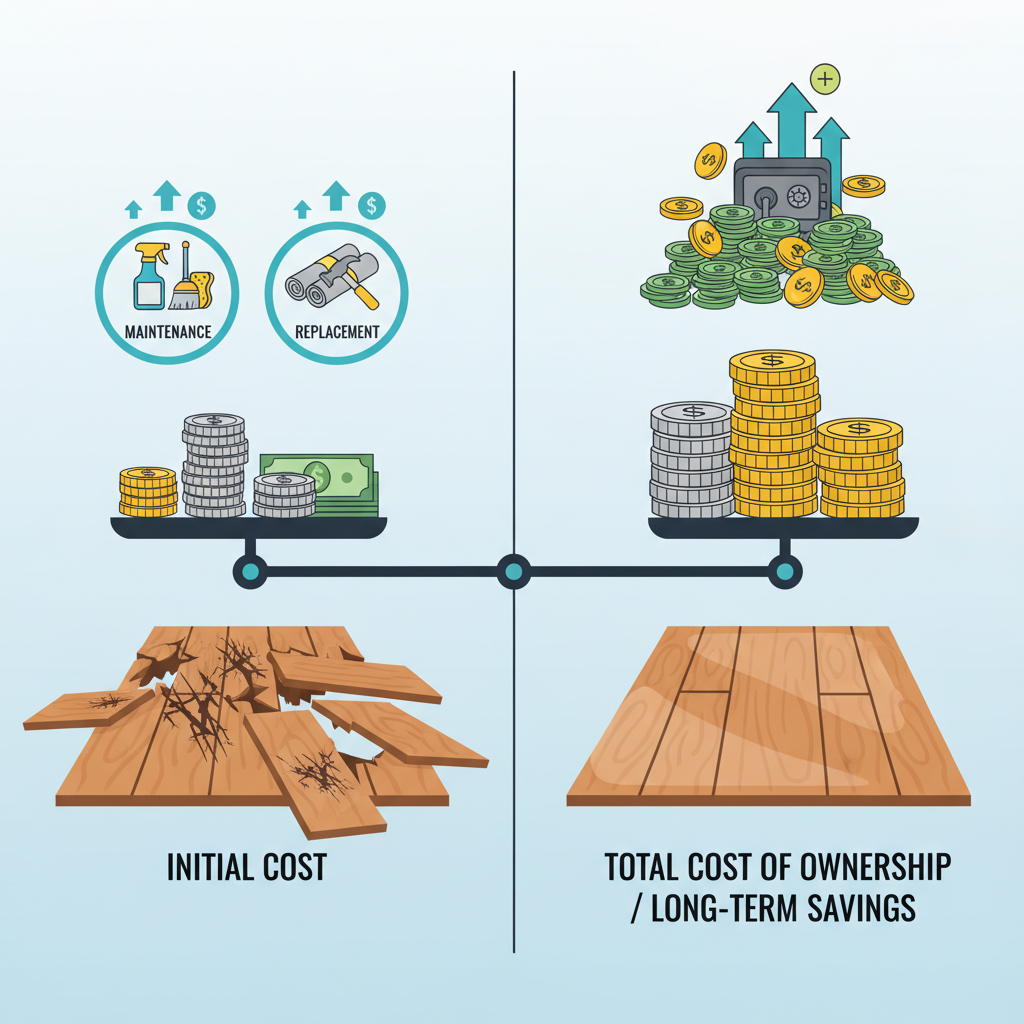
Ultimately, specifying durable commercial flooring solutions requires shifting your perspective away from the initial installation price tag. To truly maximize ROI, facility managers must adopt a 10-to-20-year lifecycle analysis.
The American Institute of Architects (AIA) and the International Facility Management Association (IFMA) strongly advocate for using Lifecycle Cost Analysis (LCCA) frameworks [18], [19]. A proper TCO calculation includes:
- Initial material and installation costs (including critical subfloor prep).
- Daily and periodic maintenance costs (chemicals, labor, stripping/waxing).
- Expected lifespan and replacement cycle costs.
For example, while polished concrete has a significantly higher initial installation cost than standard VCT, its 20-year TCO is often 60% lower because it eliminates the need for constant stripping, waxing, and burnishing. When you factor in the cost of replacing cheap LVT every five years due to rolling chair damage, investing in heavy-duty SPC or homogeneous vinyl yields massive long-term savings.
Conclusion
The quest for the perfect office floor requires looking past the marketing hype. “Adamantine” may sound impressive, but true durability in the corporate environment relies on the material science of SPC rigid cores, thick commercial wear layers, and high Mohs scale ratings. Remember that no floor is entirely invincible to the 300 PSI point-load of a hard plastic wheel dragging abrasive grit. Preventing damage through a $30 polyurethane wheel upgrade and strategic walk-off matting is infinitely more cost-effective than a total floor replacement. By mastering the Total Cost of Ownership framework, you can specify floors that not only look beautiful on day one but withstand the rigorous daily grind of the modern office for decades to come.
We encourage facility managers to download a TCO calculator template or contact a certified commercial flooring contractor today to audit your current office flooring and caster setups.
Disclaimers: Consult a certified commercial flooring contractor or structural engineer before making structural changes or specifying materials for high-load environments. Flooring warranties vary by manufacturer.
References & Authoritative Sources
- Journal of Materials in Civil Engineering. (N.D.). Peer-Reviewed Data on Surface Hardness. American Society of Civil Engineers.
- Certified Industrial Flooring Contractor. (N.D.). Expert Quote on Adamantine-Grade Epoxy Compressive Strength.
- Coatings World Magazine. (N.D.). Technical Data on Floor Finishes and Aluminum Oxide Mohs Hardness.
- Porcelain Enamel Institute (PEI). (N.D.). PEI Wear Rating System for Commercial Tile.
- BIFMA (Business and Institutional Furniture Manufacturers Association). (N.D.). Standards for Chair Casters and Point-Load Pressure.
- ASTM International. (N.D.). Standard Test Methods for Flooring Durability and Taber Abrasion Test.
- Commercial Flooring Installer. (N.D.). Expert Quote on Subfloor Preparation and Telegraphing.
- Floor Covering Weekly. (N.D.). Industry Standard Publication for Commercial Flooring Trends.
- BOMA International (Building Owners and Managers Association). (N.D.). Authority on Facility Management and Flooring Trends.
- Floor Covering News. (N.D.). Technical Specifications and Core Density of Rigid Core (SPC) Flooring.
- OSHA (Occupational Safety and Health Administration). (N.D.). Guidelines for Workplace Floor Safety.
- ADA (Americans with Disabilities Act). (N.D.). Guidelines for Commercial Space Slip Resistance.
- Ergonomics Plus. (N.D.). Workplace Ergonomics: Floor Rolling Resistance and Worker Fatigue.
- ISSA (The Worldwide Cleaning Industry Association). (N.D.). Efficacy of Walk-Off Matting Systems in Commercial Facilities.
- IICRC (Institute of Inspection, Cleaning and Restoration Certification). (N.D.). Floor Repair and Restoration Standards.
- National Wood Flooring Association (NWFA) & Hardwood Floors Magazine. (N.D.). Industry Guidelines for Floor Damage Repair Techniques.
- Consumer Reports. (N.D.). Methodology for Unbiased Product Testing of Floor Scratch Repair Kits.
- AIA (American Institute of Architects). (N.D.). Commercial Building Specifications and Lifecycle Cost Analysis (LCCA).
- IFMA (International Facility Management Association). (N.D.). Total Cost of Ownership (TCO) Frameworks for Facility Managers.
