There is perhaps nothing more frustrating for a homeowner or facility manager than watching a pristine new floor suffer irreversible damage from an everyday spill or a routine cleaning misstep. For years, the flooring industry has relied on confusing marketing jargon, tossing around terms like “stain-proof” and “indestructible” without providing the scientific backing to support those claims. The reality is that without understanding the chemical interactions between your floor and the substances it encounters, you are leaving your investment vulnerable.
This guide serves as a scientifically-backed masterclass on achieving truly resilient floors. We are moving beyond the marketing myths to explore the material science of adamantine flooring, the chemistry of chemical resistance, and the critical importance of professional installation protocols. Whether you are seeking a pet-proof solution for a busy household or an OSHA-compliant surface for an industrial facility, this comprehensive roadmap will help you navigate the complex world of high-performance flooring.
- What is Adamantine Flooring? The Material Science of Durability
- The Chemistry of Stains: Why Easily Stained Floors Fail
- Adamantine Flooring Household Chemical Resistance: The Stress Test
- Best Stain Resistant Flooring for Homes: Residential Alternatives
- How to Clean Adamantine Flooring Stains and Remediate Damage
- Durable Adamantine Floor Installation: The Criticality of Surface Prep
- Conclusion
- References
What is Adamantine Flooring? The Material Science of Durability
When discussing the pinnacle of chemical resistant floor protection, adamantine flooring stands in a class of its own. Adamantine is not a single naturally occurring stone, but rather an ultra-durable, highly resilient category of engineered floor coatings designed to withstand extreme mechanical and chemical stress. The material science behind adamantine relies on advanced polymer resilience, creating a tightly cross-linked molecular structure that prevents harsh liquids and heavy impacts from penetrating the surface.
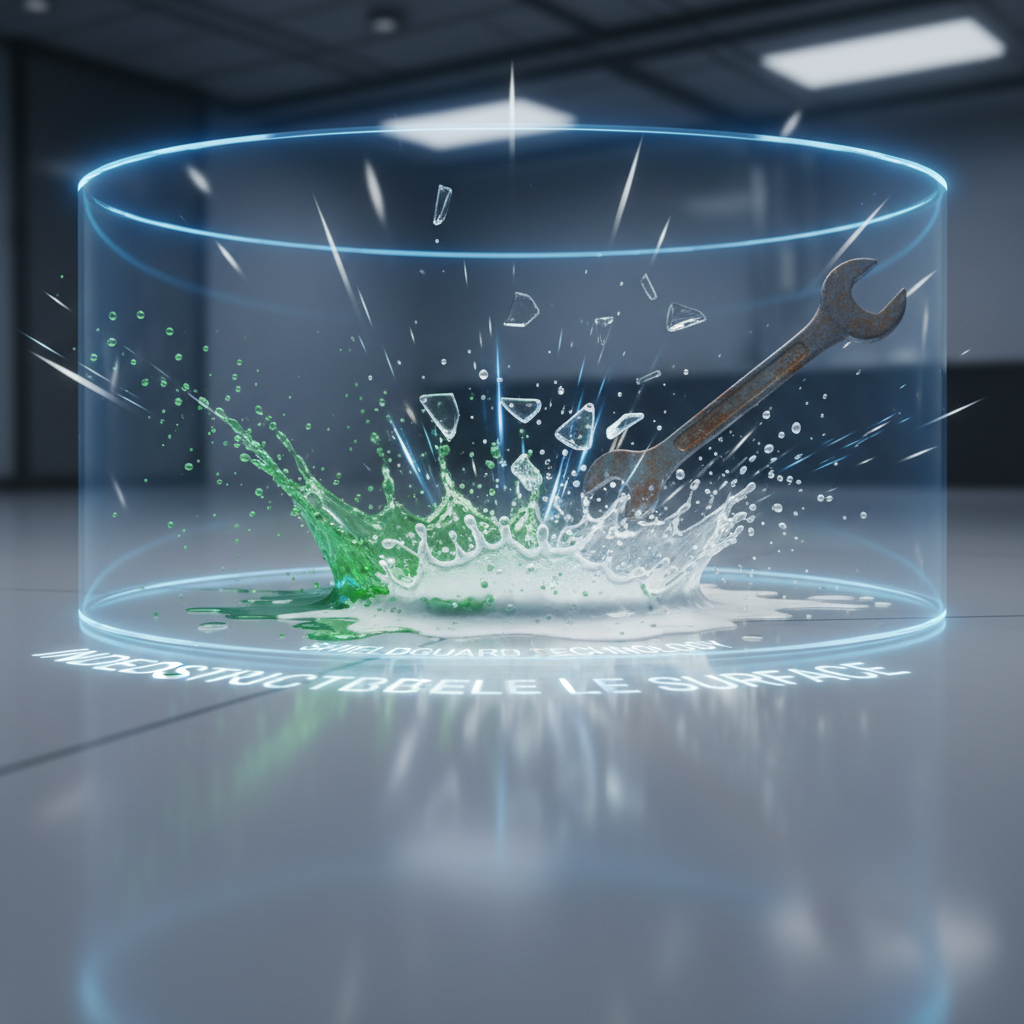
From a return-on-investment (ROI) perspective, the lifecycle cost of adamantine makes it highly attractive for commercial and premium residential applications. In fact, adamantine coatings can increase floor lifespan by up to 300% compared to standard epoxies in high-traffic industrial settings. This exceptional durability is supported by peer-reviewed studies on high-performance polymers, such as those frequently detailed in the Journal of Materials Science, which highlight how tightly bound polymer matrices resist degradation over time [1]. Furthermore, adamantine systems can be formulated to meet or exceed the rigorous slip resistance standards established by the National Floor Safety Institute (NFSI), ensuring that safety is not compromised for the sake of durability [2].
Adamantine vs. Epoxy and Polyaspartic Coatings
To truly understand adamantine, it is helpful to compare it against other heavy-duty chemical resistant flooring options: traditional epoxy and polyaspartic coatings.
Standard chemical resistant epoxy systems typically range from 1/16 to 1/4 inch in thickness to meet industrial compliance and durability standards. While epoxy is incredibly strong and forms a rigid, protective layer, it can be susceptible to UV yellowing and requires a lengthy curing process, often taking several days before it can handle vehicular or heavy foot traffic.
Polyaspartic coatings, on the other hand, represent a leap in curing technology. Polyaspartic floor coatings cure up to 4 times faster than traditional epoxies and offer superior resistance to UV yellowing and harsh solvents. Adamantine flooring systems often utilize proprietary blends that combine the thick, impact-resistant build of premium epoxies with the rapid-cure, UV-stable, and highly chemical-resistant topcoats characteristic of advanced polyaspartics, resulting in a hybrid floor that outperforms either material on its own.
The Chemistry of Stains: Why Easily Stained Floors Fail
To prevent household chemical floor damage, you must first understand the mechanics of how a floor stains. Staining is not a uniform process; it generally falls into two categories: surface-level stains and through-body penetration. Surface stains sit on top of the wear layer and can usually be wiped away, whereas through-body penetration occurs when a liquid seeps into the pores of the flooring material, physically altering its chemical structure or color.
Many easily stained floors fail because consumers unknowingly use the wrong cleaning agents, stripping away protective sealants and exposing the vulnerable material beneath. The Environmental Protection Agency (EPA) provides extensive data on chemical safety and material interactions, and the real-world consequences of ignoring this chemistry are stark: improper use of household cleaning chemicals causes irreversible damage to over 15% of newly installed residential floors within the first 3 years [3].
Another frustrating phenomenon is “wicking.” This occurs when a liquid penetrates deeply into the subfloor or the grout bed. You might clean the surface stain successfully, but as the moisture evaporates, the deeply embedded stain is drawn back up to the surface, making it reappear days later. Understanding these mechanics, alongside tile porosity and absorption standards set by the Tile Council of North America (TCNA), is crucial for selecting the right material [4].
Porosity and the Myth of ‘Stain Proof Flooring Solutions’
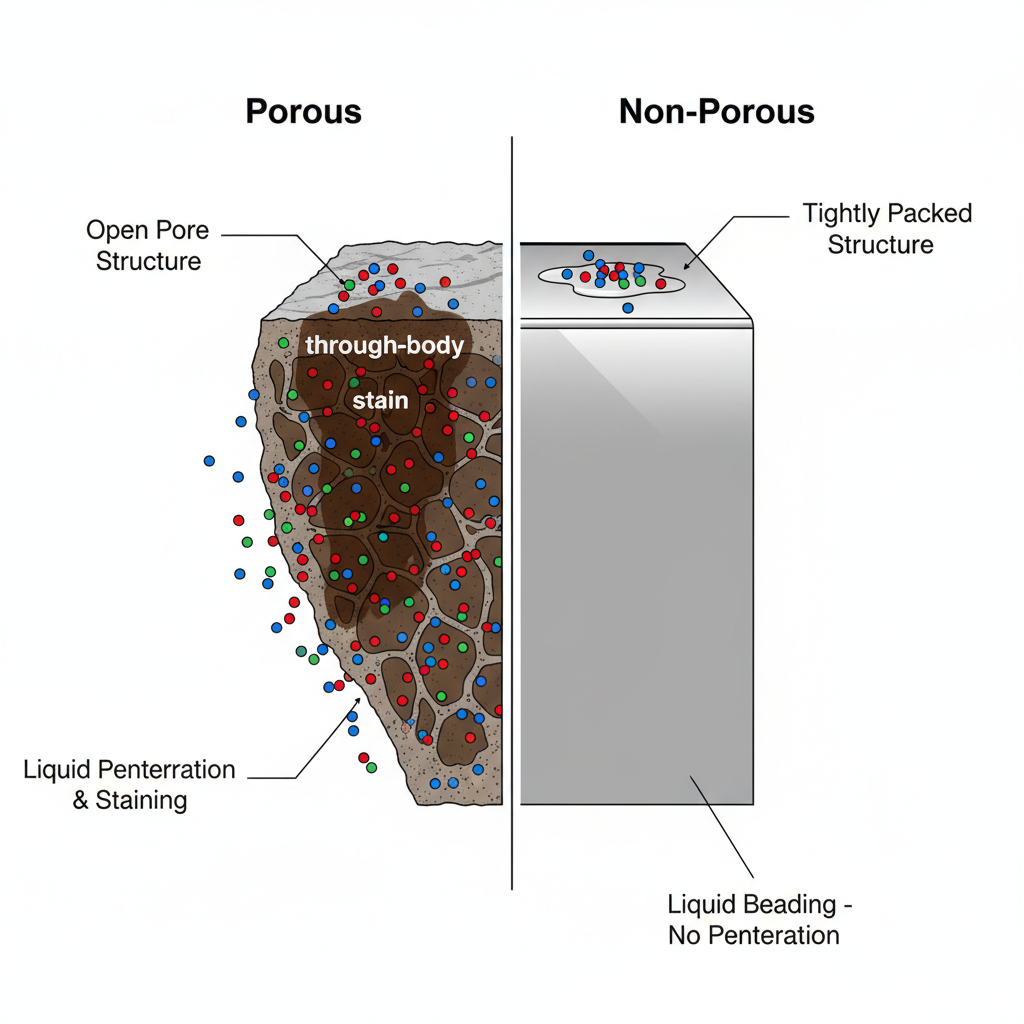
The flooring industry loves to market “stain proof flooring solutions,” but true 100% stain-proofing is largely a myth. A floor’s ability to resist stains is directly tied to its porosity—the amount of empty space within the material that can absorb liquids.
Natural stone, while beautiful, is highly porous. Natural stone floors without proper sealing are 80% more likely to absorb organic stains within the first hour of exposure compared to glazed porcelain. This is why authoritative bodies like the Marble Institute of America emphasize strict, regular sealing guidelines for natural stone to artificially lower its porosity and protect it from daily spills [5]. Engineered solutions, by contrast, are manufactured to have near-zero porosity from the start, offering a much more realistic approach to stain resistance.
Adamantine Flooring Household Chemical Resistance: The Stress Test
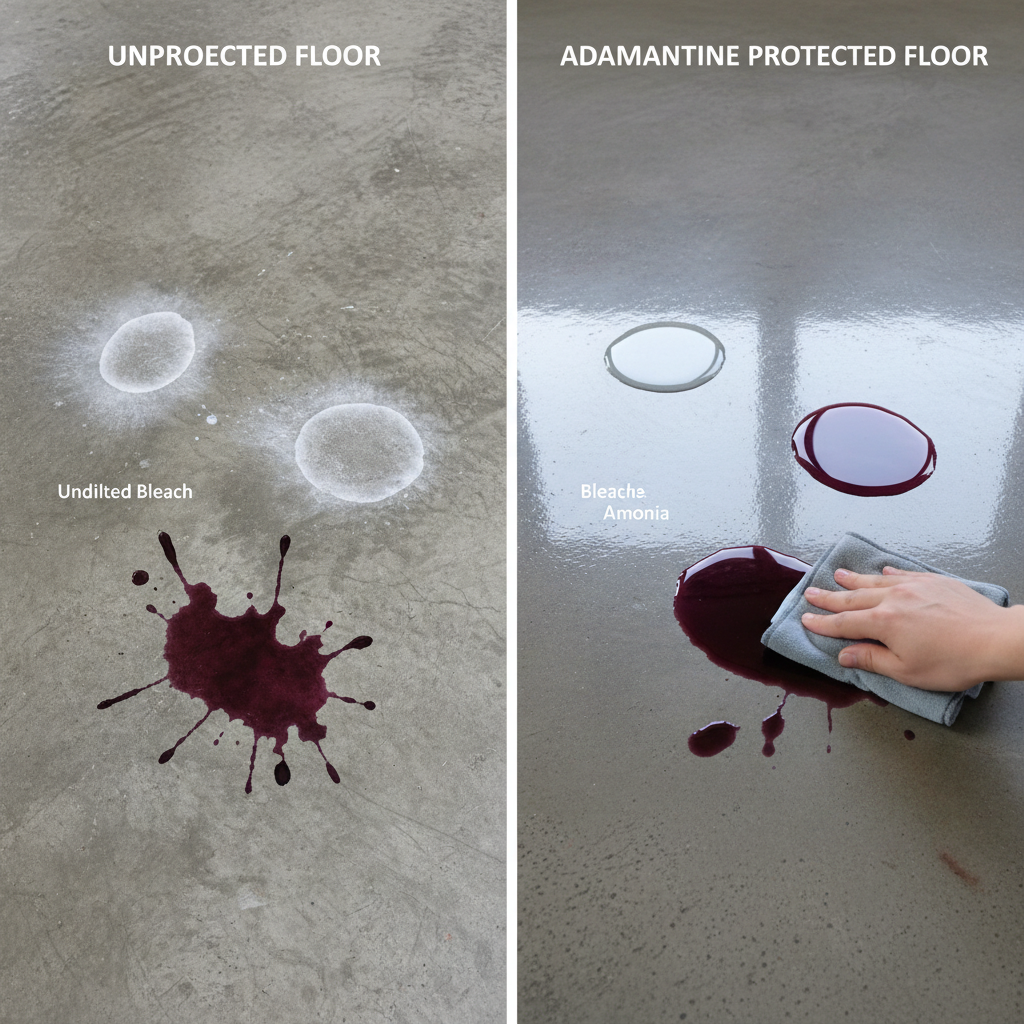
To validate the claims surrounding adamantine flooring household chemical resistance, we must look at how the material performs under a documented stress test. Imagine a 24-hour exposure test using three of the most notorious household culprits: undiluted bleach, ammonia-based window cleaner, and acidic red wine.
When these substances are left to pool on a standard hardwood or unsealed concrete floor, the results are catastrophic. Bleach strips the color, ammonia eats through the polyurethane finish, and red wine leaves a permanent dark shadow. However, when applied to a fully cured adamantine surface, the high cross-link density of the polymer acts as an impenetrable shield.
After 24 hours of continuous exposure, the bleach, ammonia, and wine can simply be wiped away with a damp cloth, leaving zero discoloration, etching, or dulling of the finish. This exceptional chemical resistant flooring capability aligns with scientific data on the chemical interactions of common cleaning products with floor polymers, as researched by organizations like the American Cleaning Institute [6]. Because the adamantine surface is non-porous and chemically inert to most household acids and alkalis, the liquids are forced to evaporate or sit harmlessly on the surface rather than reacting with the floor itself.
Best Stain Resistant Flooring for Homes: Residential Alternatives
While adamantine is the gold standard for industrial and garage settings, it may be overkill—or aesthetically mismatched—for a cozy living room or bedroom. When searching for the best stain resistant flooring for homes, it is essential to segment your choices by room and lifestyle. A home with large, active dogs requires a different solution than a formal dining room.
Homeowners are increasingly prioritizing durability over delicate aesthetics. Recent industry data shows that over 65% of homeowners prioritize stain and scratch resistance over aesthetics when choosing flooring for high-traffic areas. Independent, rigorous product testing on flooring durability, such as those conducted by Consumer Reports, consistently highlights that engineered materials outperform natural wood and unsealed stone in active households [7].
Luxury Vinyl Plank (LVP) vs. Glazed Porcelain
For residential stain resistant flooring, the two leading contenders are Luxury Vinyl Plank (LVP) and glazed porcelain tile.
LVP has revolutionized the residential market. Luxury Vinyl Plank (LVP) accounts for over 40% of the stain-resistant residential market due to its non-porous wear layer. This clear, urethane-based topcoat prevents spills from reaching the printed design layer beneath. It is highly resilient against pet accidents and dropped food, though it can be susceptible to damage from harsh petroleum-based solvents.
Glazed porcelain, however, is the closest a homeowner can get to industrial adamantine performance indoors. Glazed porcelain tile offers a near 0.5% or less water absorption rate, making it the closest residential option to being truly stain-proof. Because it is fired at extreme temperatures and coated in a liquid glass glaze, it is impervious to almost all household chemicals, organics, and standing water.
How to Clean Adamantine Flooring Stains and Remediate Damage
Even with the most resilient surfaces, knowing how to clean adamantine flooring stains properly is vital to maintaining the floor’s integrity and avoiding the voiding of manufacturer warranties. The key to tackling stubborn flooring stains is moving beyond basic DIY internet hacks—like mixing vinegar and baking soda, which often just neutralizes into saltwater—and utilizing advanced chemistry.
For organic stains (like pet urine or food spills), enzymatic cleaners are highly effective as they literally digest the organic matter without relying on harsh acids. For porous materials that have suffered a deep stain, applying a poultice—a paste that draws the stain out of the stone as it dries—is the professional standard. Always adhere to the global standards for professional cleaning and restoration set by the Institute of Inspection, Cleaning and Restoration Certification (IICRC) to ensure you are using the correct pH-neutral cleaners for your specific floor type [8].
Assessing Household Chemical Floor Damage: Repair or Replace?
If a mistake has been made, you must assess the household chemical floor damage accurately. Use this simple symptom checker:
- Dull Spots (Etching): If the floor looks dull but the color is intact, an acidic chemical has likely eaten away the top microscopic layer of the finish. This can often be repaired by a professional through buffing and recoating.
- Discoloration/Bleaching: If the actual color of the floor has changed, the chemical has penetrated the wear layer.
- Pitting or Bubbling: This indicates a severe chemical reaction that has destroyed the structural integrity of the material.
For anything beyond a superficial dull spot, it is highly recommended to consult the professional damage repair and mitigation protocols outlined by the Restoration Industry Association (RIA) [9]. Disclaimer: Attempting to fix severe chemical burns or deep etching with DIY sanding or over-the-counter chemicals can exacerbate the damage and permanently ruin the floor. Always seek professional restoration help for structural chemical damage.
Durable Adamantine Floor Installation: The Criticality of Surface Prep
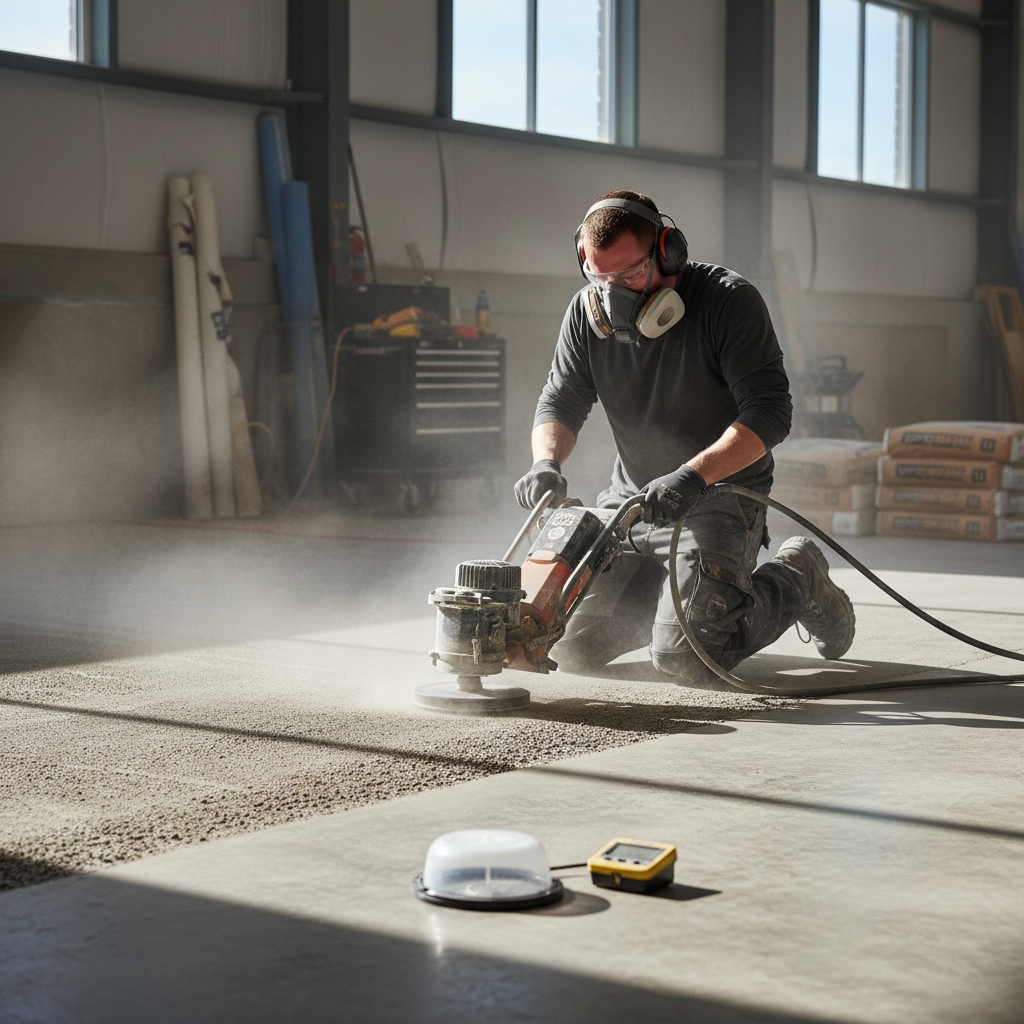
The most critical secret to durable adamantine floor installation has nothing to do with the liquid coating itself; it is entirely about the concrete beneath it. Even the most advanced, expensive chemical-resistant flooring will fail catastrophically if the installation is rushed.
The statistics are sobering: over 80% of high-performance floor coating failures are attributed to improper concrete surface preparation and moisture issues rather than material defects. If concrete is too smooth, dirty, or damp, the adamantine polymer cannot achieve a mechanical bond.
Professional installers rely on strict standards. They use diamond grinding or shot blasting to achieve the correct Concrete Surface Profiles (CSP), a metric defined by the International Concrete Repair Institute (ICRI) that dictates the necessary roughness for coating adhesion [10]. Furthermore, they will never pour a floor without first conducting rigorous calcium chloride moisture testing, adhering to the standards set by the American Concrete Institute (ACI), to ensure hidden hydrostatic pressure won’t push the coating off the slab from below [11].
Conclusion
Achieving a truly indestructible floor requires looking past flashy marketing and understanding the underlying science of the materials you choose. Adamantine flooring offers unparalleled chemical resistance and longevity, making it an exceptional investment for high-stress environments. However, true durability relies on understanding material porosity, matching the specific flooring chemistry to your environment (whether residential or commercial), and, most importantly, demanding flawless surface preparation during installation. Science, chemistry, and meticulous preparation will always triumph over empty “stain-proof” claims. Before your next major renovation, we highly encourage you to consult with a certified flooring contractor and insist on proper moisture testing to protect your investment for decades to come.
Disclaimer: Always consult specific manufacturer warranty guidelines before applying strong chemicals or attempting DIY stain removal. Chemical resistance can vary based on exact product formulations and installation quality.
References
- Journal of Materials Science. (N.D.). Peer-reviewed studies on high-durability polymers and their applications.
- National Floor Safety Institute (NFSI). (N.D.). Authoritative slip resistance standards crucial for commercial flooring.
- Environmental Protection Agency (EPA). (N.D.). Data on chemical safety and material interactions.
- Tile Council of North America (TCNA). (N.D.). Tile porosity and absorption standards.
- Marble Institute of America. (N.D.). Authoritative care and sealing guidelines for natural stone.
- American Cleaning Institute. (N.D.). Scientific data on chemical interactions of cleaning products.
- Consumer Reports. (N.D.). Independent, rigorous product testing on flooring durability and stain resistance.
- Institute of Inspection, Cleaning and Restoration Certification (IICRC). (N.D.). Global standards for professional cleaning and restoration.
- Restoration Industry Association (RIA). (N.D.). Professional damage repair and mitigation protocols.
- International Concrete Repair Institute (ICRI). (N.D.). Concrete Surface Profiles (CSP) essential for coating adhesion.
- American Concrete Institute (ACI). (N.D.). Standards for concrete moisture testing and preparation.
