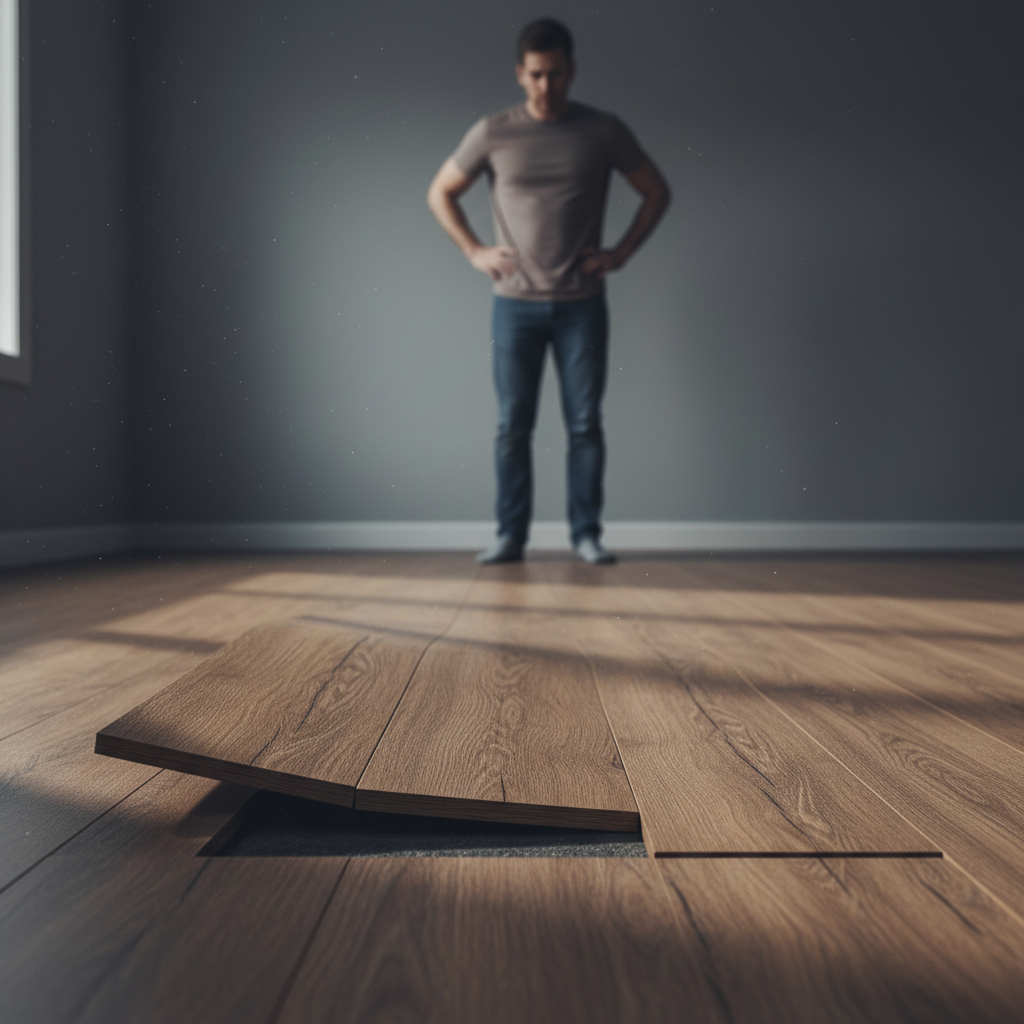
Few home improvement nightmares are as frustrating—or as costly—as investing in premium flooring, only to have it squeak, buckle, or break apart months later. For many homeowners and DIY renovators, the root cause isn’t a defective product, but rather the wavy, imperfect subfloor hiding beneath it. In a market flooded with vague “lifeproof” marketing claims, it is easy to become paralyzed by confusion. Can you install that beautiful new floor directly over a subtle dip in your living room, or are you doomed to the messy, intimidating process of pouring self-leveling concrete?
This guide demystifies the material science behind “adamantine” rigid core flooring, exploring exactly how its dense composition bridges minor dips and adapts to challenging environments. More importantly, we will strip away the marketing fluff to provide the definitive mathematical threshold—the strict 3/16-inch rule—for when subfloor leveling transitions from an optional upgrade to a mandatory requirement. By understanding the physics of your floor, you can protect your investment and ensure a flawless installation.
- Diagnosing Uneven Subfloor Problems and Variations
- The Tolerance Threshold: Measuring Imperfect Subfloor Challenges
- The Material Science of Adamantine Flooring and Rigid Core Adaptability
- Uneven Subfloor Flooring Solutions: When to Bridge vs. When to Level
- Installing Over Uneven Subfloors: Truths, Myths, and Warranties
- Conclusion
- References & Authoritative Sources
Diagnosing Uneven Subfloor Problems and Variations
Before you can choose the right flooring, you must understand the foundation you are building upon. Uneven subfloor problems are rarely just cosmetic; they are often the first symptom of underlying environmental or structural issues. Properly diagnosing these subfloor variations is the critical first step in any successful flooring project.
Root Causes: Settling vs. Structural Failure
When faced with a bouncing or dipping floor, the most urgent question is whether the unevenness is a natural quirk of an aging home or a dangerous red flag. It is vital to differentiate between cosmetic unevenness, such as minor joist settling over decades, and structural foundation failure, such as cracked supports or termite damage. According to structural repair experts at Space Construction Inc, ignoring damaged joists and simply covering them with new flooring is a recipe for catastrophic failure [1].
Furthermore, environmental factors play a massive role. Low areas in a wavy subfloor can create moisture traps. The Environmental Protection Agency (EPA) warns that hidden moisture in subfloors is a primary catalyst for mold growth and material degradation [2]. If your uneven subfloor problems are accompanied by musty odors or soft spots, you must address the root cause—water damage—before laying a single plank.
Types of Subfloor Materials: From Plywood to MgO
Subfloor variations aren’t just about dips and humps; they are also about the materials themselves. Traditional plywood remains the industry standard. Standard plywood sheets typically measure 4 feet by 8 feet and are either 5/8 or 3/4 inches thick. Its cross-laminated structure is specifically designed to prevent expansion and contraction, providing a stable base for most flooring types.
However, modern construction has introduced advanced alternatives. Magnesium Oxide (MgO) boards are gaining traction for their incredible environmental and safety benefits, containing no asbestos, silica, or formaldehyde. Experts at Ambient Building Products and MagMatrix Boards note that these advanced sulfate MgO panels offer superior fire resistance and stability compared to traditional oriented strand board (OSB) [3], [4]. Alternatively, thick Wood Plastic Composite (WPC) variants used for subfloors, typically 20-25mm thick, are becoming popular in high-moisture environments where traditional wood might swell.
The Tolerance Threshold: Measuring Imperfect Subfloor Challenges
Even the most robust flooring materials cannot defy physics. Navigating imperfect subfloor challenges requires a strict adherence to industry standards. Attempting to “eyeball” a floor’s flatness is the leading cause of voided warranties and ruined renovations.
The Physics of Flooring Failure
What actually happens when you install rigid materials over a wavy subfloor? The answer lies in the mechanical failure of the locking systems. Floating floors rely on a click-lock mechanism to hold the planks together seamlessly. When installed over a dip, walking across the floor forces the plank to bend into the void. This constant flexing causes severe stress fatigue on the joints. Professional installers at Floor Boys, LLC emphasize that this repeated stress inevitably leads to acoustic annoyances like popping and creaking, severe telegraphing (where the floor mirrors the subfloor’s bumps), and ultimately, broken joints and buckling planks [5].
How to Measure Subfloor Dips: The 3/16-Inch Rule
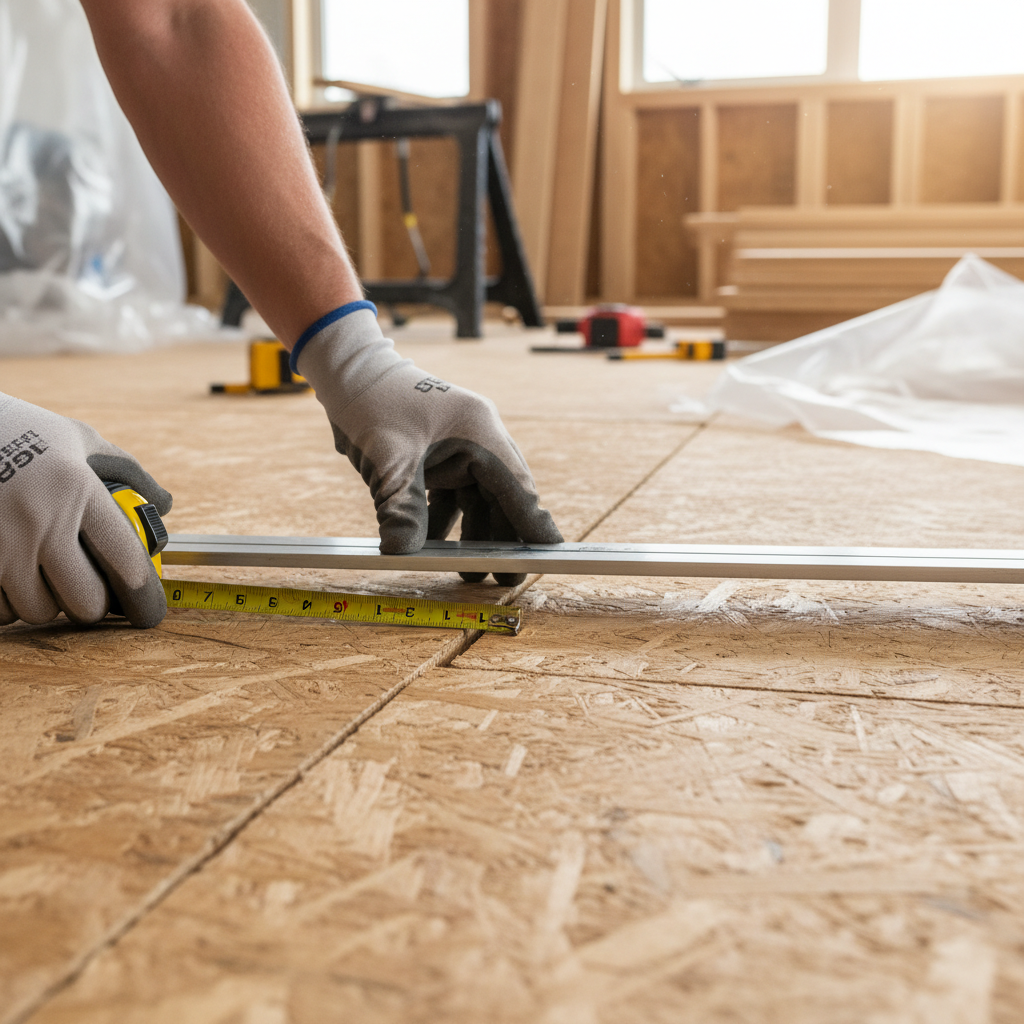
To determine if you have a subfloor tolerant flooring situation, you must measure the deflection accurately. The golden rule, mandated by manufacturers and outlined by the National Wood Flooring Association (NWFA) and the Tile Council of North America (TCNA), is the 3/16-inch rule: hardwood and luxury vinyl plank (LVP) installations can fail if the subfloor varies more than 3/16 of an inch over a 10-foot span [6].
To measure this, you need a 10-foot straight edge (or a tightly pulled string line). Lay the straight edge across the floor in multiple directions. Wherever you see a gap beneath the straight edge, slide a tape measure into the void. If the gap is deeper than 3/16 of an inch, the subfloor fails the tolerance test, and correction is mandatory.
The Material Science of Adamantine Flooring and Rigid Core Adaptability
To combat imperfect subfloors, the flooring industry has engineered incredibly dense materials, often marketed under terms implying indestructibility. Understanding the science behind these materials reveals how they achieve their remarkable adaptability.
What Makes a Floor ‘Adamantine’? (SPC vs. WPC)
The term “adamantine” traditionally means unbreakable or diamond-like. In the flooring market, adamantine flooring is often used as a descriptive term or brand identifier for ultra-durable Stone Plastic Composite (SPC) flooring featuring limestone cores and commercial-grade wear layers. Authoritative sources like Flooring Inc and independent reviewers at Floor Critics note that while no floor is truly indestructible, these high-density composites represent the pinnacle of hard-surface durability [7], [8].
When evaluating rigid core adaptability, it is crucial to understand the difference between SPC and WPC. SPC is manufactured with a core of limestone powder and stabilizers, resulting in extreme density and impact resistance—perfect for heavy traffic areas and bridging minor subfloor gaps. WPC (Wood Plastic Composite), on the other hand, utilizes a core of wood dust and plastic. As noted by Madison Flooring, WPC incorporates a foaming agent that provides better acoustic comfort and a softer underfoot feel, making it ideal for second-story bedrooms [9].
How Rigid Core Adapts to Subfloors and Temperature Swings
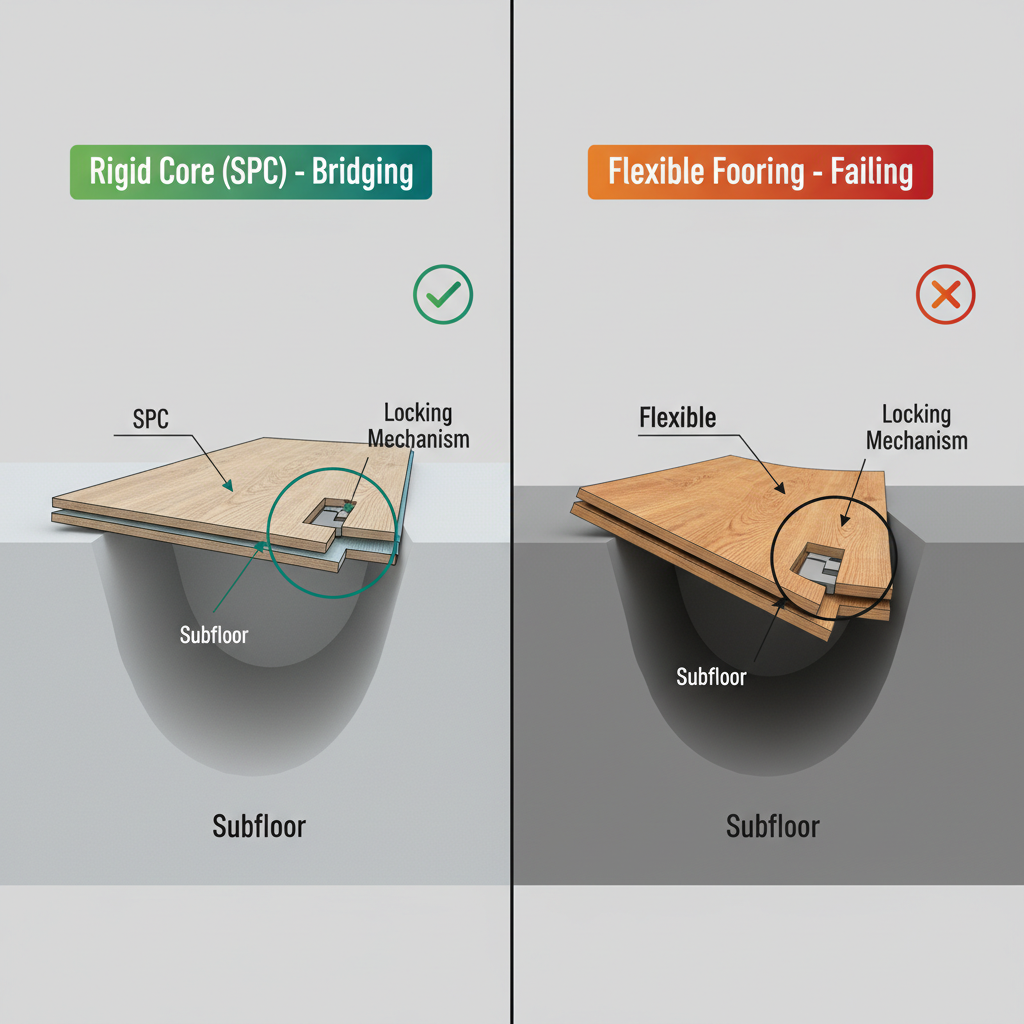
How rigid core adapts to subfloors is largely due to its structural density. Unlike flexible luxury vinyl that drapes over every imperfection, a rigid core plank acts like a bridge, spanning minor dips (those within the 3/16-inch tolerance) without bending.
Furthermore, adamantine rigid core flooring adaptability extends to severe environmental conditions. These floors are manufactured using high-temperature extrusion processes that create an impervious core. This process ensures the planks resist warping in sunrooms or conservatories subject to massive temperature swings, a robustness confirmed by experts at Wood and Beyond Blog [11]. Additionally, their conducive thickness range of 4mm to 8mm allows for highly efficient thermal transfer, making them perfectly compatible with underfloor heating systems, as highlighted by Paramount Flooring [10].
Uneven Subfloor Flooring Solutions: When to Bridge vs. When to Level
Knowing your subfloor’s variance and understanding your flooring’s capabilities allows you to make an informed decision. Uneven subfloor flooring solutions generally fall into two categories: utilizing tolerant flooring to bridge minor gaps, or undertaking mandatory subfloor correction for severe variations.
The Best Flooring for Uneven Subfloors (Minor Variations)
If your subfloor dips are within the 3/16-inch tolerance, floating floors—specifically luxury vinyl, laminate, and engineered wood—are the best flooring for uneven subfloors. The physics of their interlocking floating mechanisms allow them to bridge these minor gaps without telegraphing the imperfections to the surface.
To further mask minor imperfections safely, pairing these floors with a specialized, high-quality acoustic underlayment is highly recommended. Third-party lab tests for acoustic underlayments, such as those produced by Eco Cork Foam, demonstrate that a dense, single-layer underlayment can absorb minor subfloor grit and slight variations while providing vital moisture protection and sound dampening [12].
Mandatory Subfloor Correction (Severe Variations)
When variations exceed the 3/16-inch rule, you must pivot to mandatory subfloor correction. Field reports from contractors often detail nightmare scenarios where subfloors can drop 1+ inches over a 4-foot span [13]. In these extreme cases, extensive plywood tapering and sanding high spots are required. For concrete subfloors, self-leveling compounds are the standard fix. However, it is critical to note that cement-based fillers will crack and fail if mechanical fasteners (like nails or staples) are driven into them later.
For budget-conscious renovators dealing with challenging wood subfloors, a controversial “Glue Down” workaround is sometimes discussed on platforms like the Hardwood Flooring Talk Forum [13]. This involves using a thick polyurethane adhesive to act as both a glue and a minor leveling agent. While polyurethane’s chemical properties allow it to fill small voids, this method carries significant risks, requires advanced skill to ensure a level finish, and is generally not recommended as a substitute for proper subfloor leveling.
Installing Over Uneven Subfloors: Truths, Myths, and Warranties
The internet is rife with DIY hacks for installing over uneven subfloors, many of which will actively destroy your new floor. Protecting your investment requires separating fact from fiction.
The Danger of Double Underlayment
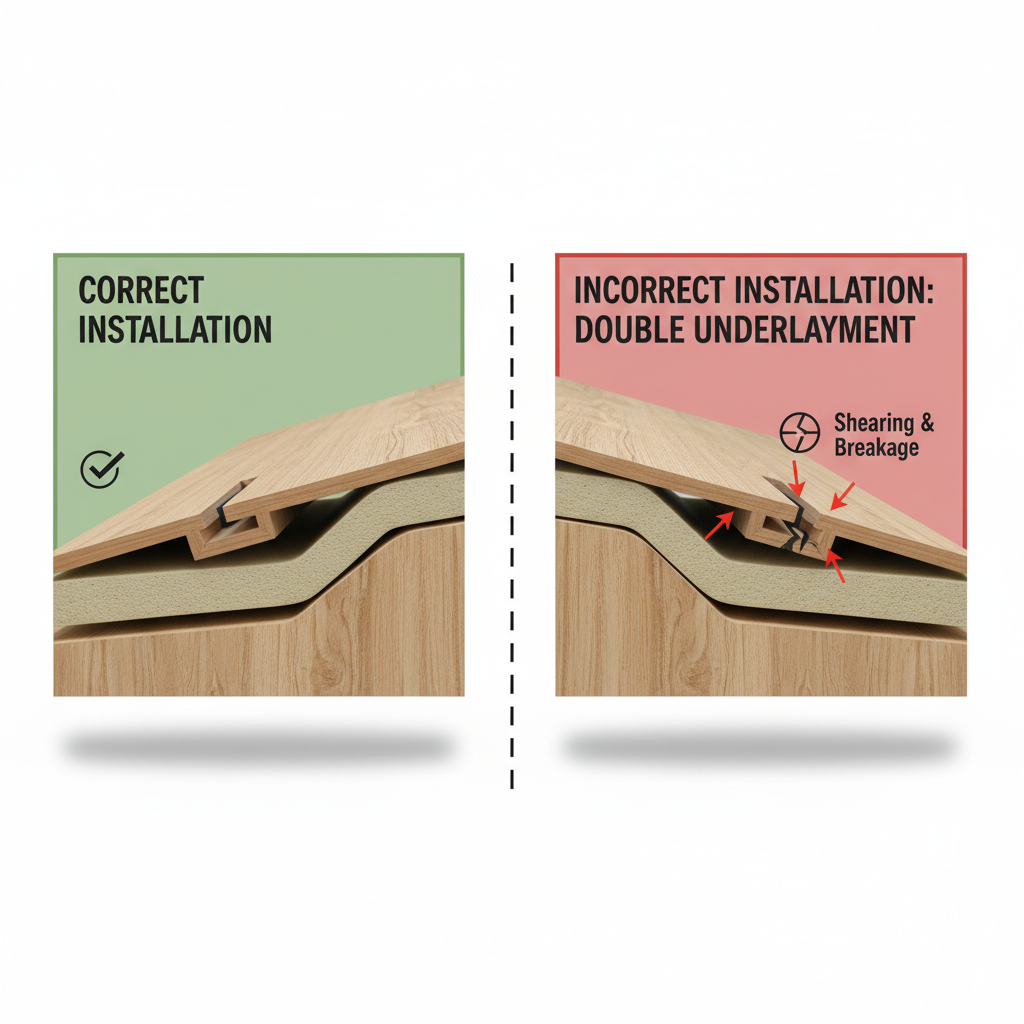
The most pervasive and destructive myth is the “double underlayment” hack. Many DIYers assume that if one layer of foam underlayment is good, two layers will provide enough cushion to absorb a wavy subfloor. This is entirely false. Flooring experts at FloorVenue explicitly warn against this practice [14]. Adding excessive cushion creates a soft, unstable base. When you walk on the floor, the planks compress deeply into the double underlayment, causing the locking mechanisms to shear and break under the extreme angle. Not only does this guarantee mechanical failure, but it also instantly voids virtually all manufacturer warranties.
Technical Tolerances for Advanced DIYers
For advanced DIYers and professionals utilizing self-leveling products, adhering to strict technical tolerances is non-negotiable. If you are using a gypsum-based underlayment to level a floor before laying rigid core, exact manufacturer specifications must be followed. InterfaceInc’s technical guidelines dictate that gypsum-based underlayment must be installed at a commercial strength of 3500 psi or higher to withstand the static loads of modern flooring [15]. Furthermore, it is an absolute necessity to seal the gypsum properly before installation to prevent dusting and structural movement.
For those working with commercial Raised Access Floors (RAF), the tolerances are even tighter. The maximum gap between panels must be no more than 1 mm, and the height difference between adjacent panels shall not exceed 0.75 mm [15]. Precision is the ultimate insurance policy.
Conclusion
Adamantine and rigid core flooring represent a massive leap forward in material science, offering incredible durability, thermal adaptability, and the structural density required to bridge minor subfloor imperfections. However, even the most advanced SPC core cannot defy physics. The longevity of your floor is entirely dependent on the foundation beneath it. Always remember the golden rule: variations must not exceed 3/16 of an inch over a 10-foot span. Proper subfloor diagnosis and preparation are the ultimate insurance policies for your flooring investment. Grab a 10-foot level and check your subfloors today before purchasing your flooring, and never hesitate to consult a professional if your floor drops beyond the acceptable tolerance.
Disclaimer: This article provides general guidelines for flooring installation. For severe subfloor variations, bouncing floors, or suspected foundation issues, always consult a licensed structural engineer or professional flooring contractor.
References & Authoritative Sources
- Space Construction Inc. (N.D.). Expertise in structural repair, joist reinforcement, and foundation stabilization. Retrieved from spaceconstructioninc.com
- Environmental Protection Agency (EPA). (N.D.). Moisture and Mold Guidance.
- Ambient Building Products. (N.D.). Detailed breakdown of subflooring fabrication and material science. Retrieved from ambientbp.com
- MagMatrix Boards. (N.D.). Specialists in advanced sulfate MGO subfloor panels. Retrieved from magmatrixboards.com
- Floor Boys, LLC. (N.D.). Professional flooring installers detailing strict prep standards and consequences of failure. Retrieved from floorboys.com
- National Wood Flooring Association (NWFA) & Tile Council of North America (TCNA). (N.D.). Subfloor Flatness Standards and Guidelines.
- Flooring Inc. (N.D.). Authoritative industry definitions and material breakdowns.
- Floor Critics. (N.D.). Comprehensive, independent wear-and-tear reviews.
- Madison Flooring. (N.D.). Expertise on design flexibility and core construction differences. Retrieved from madisonflooringnc.com
- Paramount Flooring. (N.D.). Climate adaptability insights for temperature swings. Retrieved from paramountflooring.ca
- Wood and Beyond Blog. (N.D.). Flooring expert insights into material robustness. Retrieved from woodandbeyond.com
- Eco Cork Foam. (N.D.). Third-party lab tested underlayment solutions for leveling. Retrieved from ecfunderlayment.com
- Hardwood Flooring Talk Forum. (N.D.). Contractor insights, manufacturer specs, and real-world workarounds. Retrieved from hardwoodflooringtalk.com
- FloorVenue. (N.D.). Authoritative warnings on warranty voids and underlayment misuse. Retrieved from floorvenue.com.au
- InterfaceInc. (N.D.). Official Installation Instructions and Technical Specifications. Retrieved from interfaceinc.scene7.com
