There is a quiet frustration echoing through modern homes and commercial spaces alike: the financial and emotional drain of replacing failing floors every five to ten years. You invest in what appears to be a premium product, only to watch it succumb to premature scratching, edge peeling, or catastrophic buckling. This widespread cycle of failure is largely driven by the “Wear Layer Illusion”—a pervasive marketing deception that tricks buyers into equating overall plank thickness with actual surface durability.
True flooring resilience is not an accident of aesthetics. It is a precise science. This definitive, engineer-backed guide bypasses the superficial marketing jargon to reveal the hidden material science of multi-layer construction. By decoding advanced inner core technologies and defining the true metrics of adamantine finishes, we will equip you with the knowledge to ensure your next flooring investment is truly your last.
- The “Wear Layer Illusion”: Why Poor Flooring Durability Plagues Modern Homes
- Decoding Adamantine Flooring: The Science of Diamond-Like Durability
- The Anatomy of Unbreakable Floors: Benefits of Multi-Layer Construction
- Inner Layer Technology: The Hidden Core Dictating Lifelong Performance
- The Silent Killer: Preventing Flooring Structural Failure
- The Generational Investment: Lifecycle ROI of Performance Flooring
- Conclusion
- References & Authoritative Sources
The “Wear Layer Illusion”: Why Poor Flooring Durability Plagues Modern Homes
When consumers ask, “Why is my new luxury vinyl floor scratching so easily?” or “What type of flooring has the worst durability?”, the answer almost always traces back to a fundamental misunderstanding of how flooring is engineered. Many buyers assume that a thicker plank inherently means a stronger floor. In reality, overall plank thickness matters far less than the mil thickness and the specific chemical makeup of the topmost wear layer.
Vinyl floors with a wear layer under 12 mil show visible wear patterns up to three times faster in high-traffic residential areas compared to 20+ mil commercial grades. However, thickness alone does not guarantee poor flooring durability will be avoided. To objectively quantify durability, industry engineers rely on standardized abrasion testing, most notably the Taber Abrasion Test (ASTM D4060) defined by ASTM International [1]. This test measures how many cycles of an abrasive wheel a surface can withstand before the protective coating is breached.
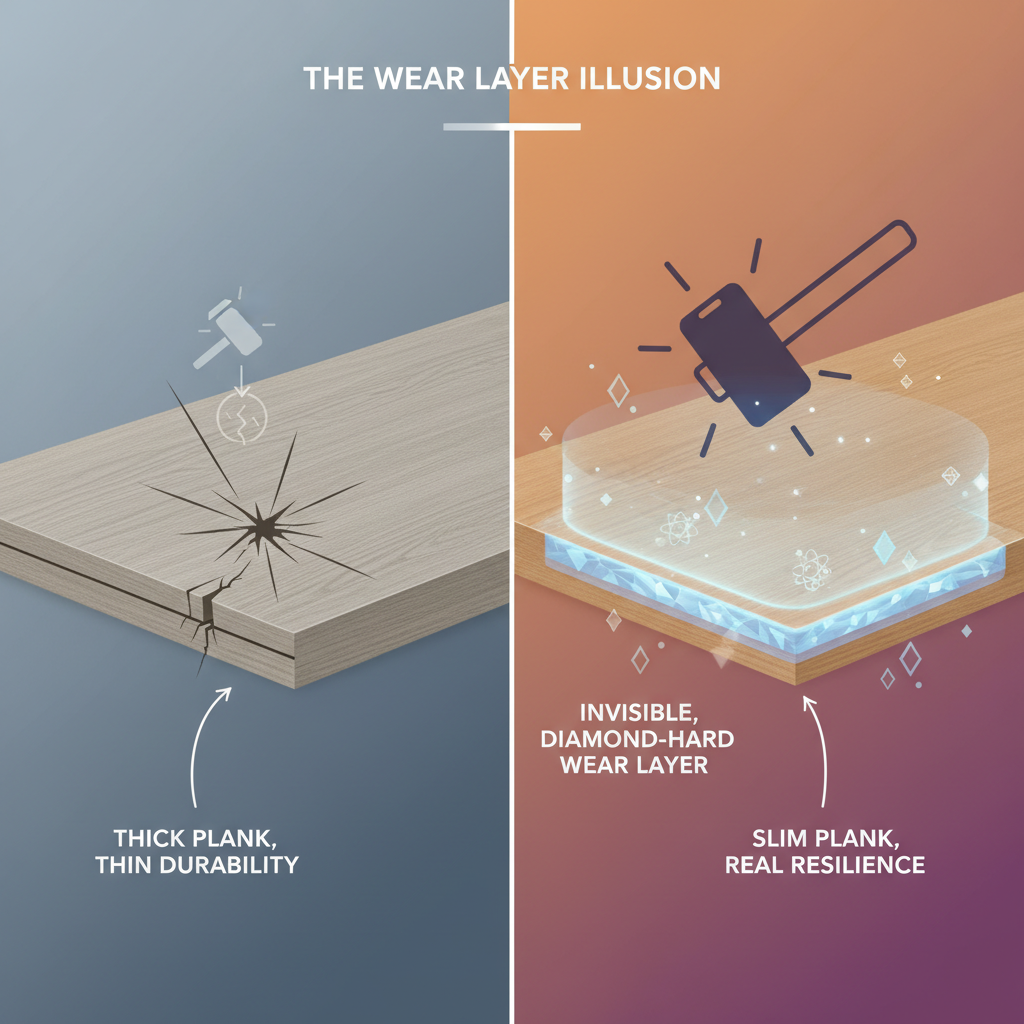
Consumer Reports also utilizes rigorous, standardized durability testing methodologies to evaluate flooring, consistently finding that the quality of the surface coating is paramount [2]. As product engineers frequently note, the raw thickness of a wear layer is only half the equation; the quality of the UV-cured urethane coating—often enhanced with microscopic ceramic beads or aluminum oxide—is what truly dictates scratch and scuff resistance.
Diagnosing Premature Wear: Normal Use vs. Manufacturer Defect
When premature flooring wear occurs, homeowners are often left wondering how to prove their case for a warranty claim. Differentiating between normal wear-and-tear (which is unwarranted) and a genuine manufacturer defect (which is warranted) requires an objective eye.
According to guidelines established by the National Institute of Certified Floorcovering Inspectors (NICFI), true manufacturer defects often present as widespread delamination, improper milling, or wear layers peeling away from the decor layer under normal foot traffic [3]. Conversely, localized deep scratches from dragging heavy furniture or pet damage typically fall under warranty exclusions. If you are navigating a rejected claim, referencing the dispute resolution standards provided by the World Floor Covering Association (WFCA) can help clarify the exact verbiage to look for in manufacturer warranty exclusions and guide your next steps [4].
Decoding Adamantine Flooring: The Science of Diamond-Like Durability
In the pursuit of lifelong performance, the term “adamantine” frequently surfaces. But what is adamantine flooring made of, and is it suitable for residential use? In materials science, “adamantine” refers to a diamond-like hardness and luster. In the flooring industry, it represents a highly specialized niche of ultra-durable finishes, moving far beyond standard polyurethane.
Adamantine flooring for lifelong durability is achieved through advanced chemical engineering, often utilizing synthetic diamond-like carbon (DLC) coatings or heavy concentrations of aluminum oxide. Peer-reviewed data from the Journal of Materials Science highlights that these adamantine material properties and synthetic DLC coatings offer unparalleled resistance to abrasion and chemical degradation [5].

To ground this abstract marketing term in reality, we can look to the Mohs hardness scale. Using baseline hardness comparisons from the National Wood Flooring Association (NWFA) [6], a standard polyurethane finish might sit lower on the scale, susceptible to grit and pet claws. An adamantine finish, however, approaches the upper echelons of the Mohs scale, vastly outperforming traditional epoxy or standard luxury vinyl plank (LVP) coatings. While the cost per square foot for true adamantine-coated performance flooring is higher upfront, its integration into high-end residential and commercial spaces offers a permanent, “buy it for life” solution that easily withstands dropped tools and heavy traffic.
The Anatomy of Unbreakable Floors: Benefits of Multi-Layer Construction
What exactly is multi-layer flooring? It is an engineered product—such as Stone Plastic Composite (SPC) or Wood Plastic Composite (WPC)—designed to solve the inherent weaknesses of traditional solid materials. The benefits of multi-layer flooring construction lie in its “Synergy System,” where each distinct layer performs a highly specialized function.
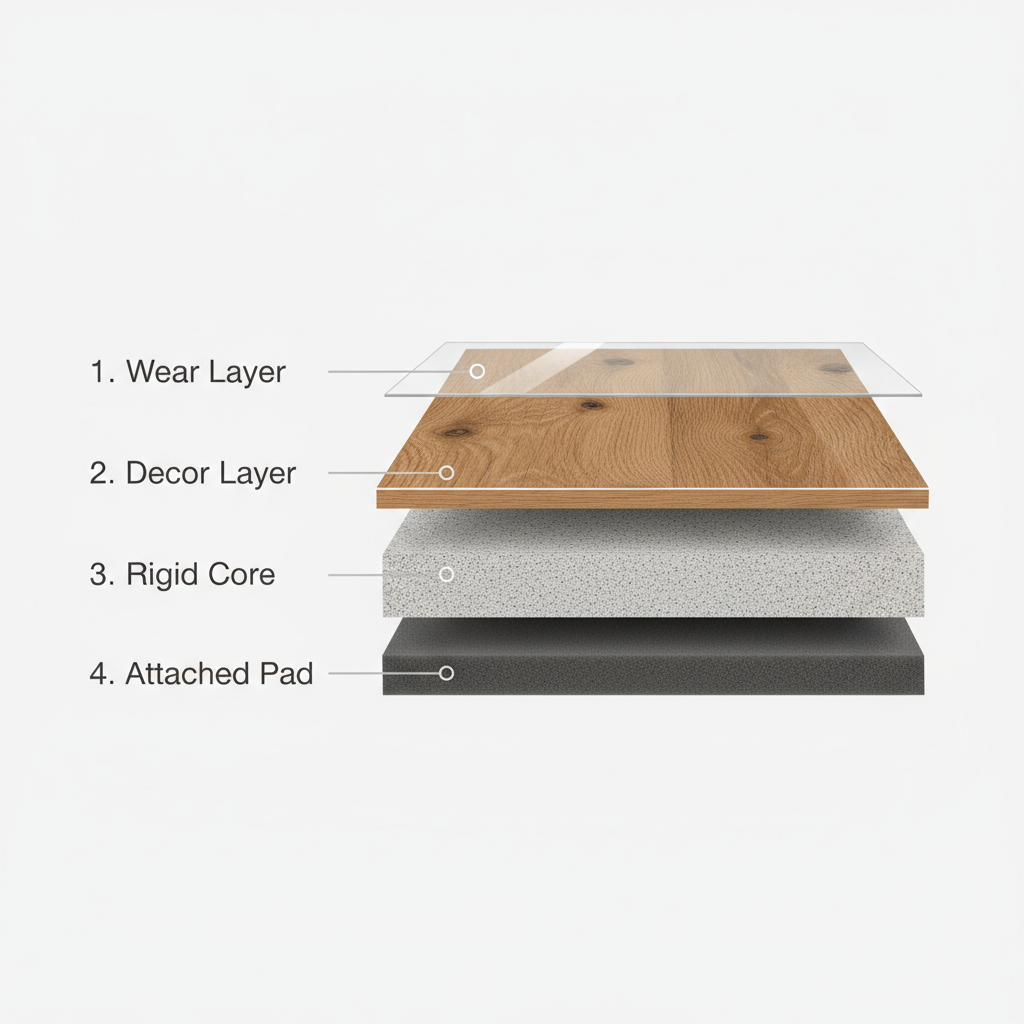
A standard multi-layer plank consists of four primary components:
- The Wear Layer: The transparent, adamantine-fortified shield protecting against scratches and stains.
- The Decor Layer: The high-definition photographic print providing the aesthetic realism of wood or stone.
- The Rigid Core: The structural heart of the plank, providing dimensional stability and dent resistance.
- The Attached Pad: An underlayment (often cork or EVA foam) that absorbs sound and provides thermal insulation.
How are multi-layer floors bonded together to ensure durable multi-layer construction? The prevention of delamination over time relies on extreme manufacturing precision. The Multilayer Flooring Association (MFA), the primary body for industry standards and construction definitions, outlines strict performance metrics for these products [7]. Technical insights from Adhesives & Sealants Industry Magazine reveal that modern manufacturing utilizes advanced heat-pressing and sophisticated adhesive bonding technologies to fuse these layers under immense pressure, creating a unified, unbreakable plank that resists separating even in environments with extreme temperature fluctuations [8].
Inner Layer Technology: The Hidden Core Dictating Lifelong Performance
While the wear layer protects the surface, the hidden core dictates the floor’s structural integrity. Why do inner layers matter in flooring? Because they are the invisible foundation governing waterproofness, dent resistance, and acoustic properties.
Over the years, inner layer technology has evolved dramatically from moisture-sensitive Medium-Density Fiberboard (MDF) and High-Density Fiberboard (HDF) to advanced waterproof composites like WPC, SPC, and emerging Magnesium Oxide (MgO) cores.
What is SPC core technology? Stone Polymer Composite (SPC) utilizes a mixture of natural limestone powder, polyvinyl chloride, and stabilizers to create an incredibly dense, rigid core. Peer-reviewed data from the Journal of Applied Polymer Science demonstrates the superior material properties of these flooring composites, noting that SPC cores offer vastly improved impact resistance compared to traditional WPC cores [9]. In fact, a high-density SPC core layer improves dent resistance by up to 40% compared to standard flexible vinyl cores.
Furthermore, do core layers affect soundproofing between floors? Absolutely. The density and composition of the inner layer, combined with the attached pad, play a massive role in acoustic insulation. Authoritative data from the Institute of Noise Control Engineering confirms that the specific inner layer technology directly impacts a building’s Impact Insulation Class (IIC) and Sound Transmission Class (STC) ratings, making premium multi-layer floors significantly quieter than cheap laminates [10].
The Silent Killer: Preventing Flooring Structural Failure
Even the most advanced adamantine, multi-layer flooring will fail if its foundation is compromised. Flooring structural failure is a high-stakes problem that borders on home safety, often manifesting as severe buckling, cupping, or subfloor collapse.
What causes hardwood floors to buckle and lift? How can you tell if the subfloor under the flooring is rotting? The answer almost always points to moisture. Moisture intrusion from concrete slabs or crawlspaces is responsible for approximately 85% of structural flooring failures in residential homes. Hydrostatic pressure can force water vapor up through a concrete slab, destroying adhesives and warping planks from the bottom up.
Preventing this silent killer requires strict adherence to building science. The American Society of Civil Engineers (ASCE) provides critical guidelines on structural loads and subfloor deflection limits, ensuring the joists and subfloor do not flex excessively under weight [11]. Furthermore, mitigating hydrostatic pressure requires following the Environmental Protection Agency (EPA) guidelines on indoor moisture control and mold prevention [12].
The Inspector’s Subfloor Preparation Checklist
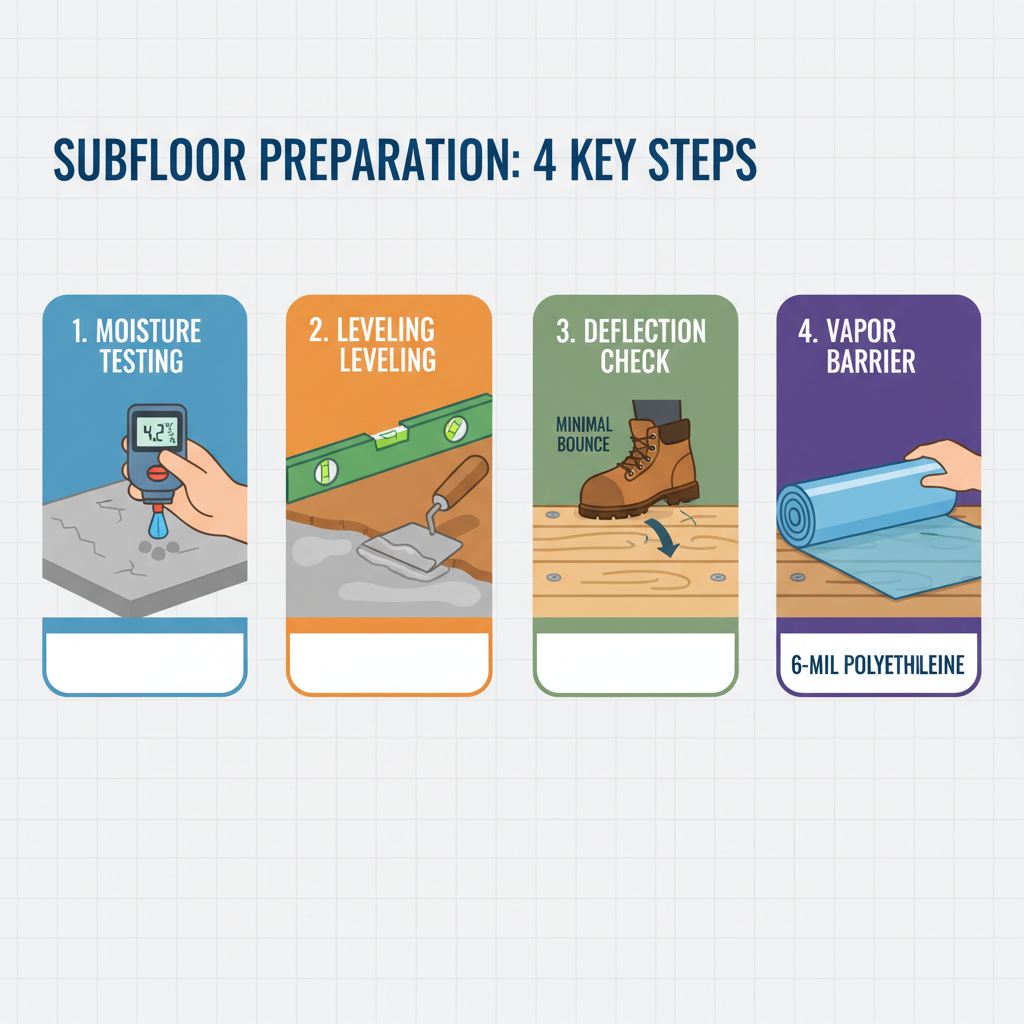
To ensure your warranties remain valid and your performance flooring lasts a lifetime, subfloor preparation cannot be ignored. Based on standards heavily sourced from Certified Flooring Installers (CFI) guidelines [13], this expert checklist is essential prior to installation:
- Moisture Testing: Always conduct a Calcium Chloride test or relative humidity (RH) in-situ probe test on concrete slabs.
- Leveling: Ensure the subfloor is flat to within 3/16 of an inch over a 10-foot radius. Grind down high spots and fill low spots with a Portland cement-based patching compound.
- Deflection Check: Verify that wood subfloors have minimal vertical deflection (bounce) to prevent the locking mechanisms of rigid core planks from snapping.
- Vapor Barrier: Install an appropriate 6-mil polyethylene vapor barrier over concrete or crawlspaces to block rising moisture.
The Generational Investment: Lifecycle ROI of Performance Flooring
What is the best flooring investment for a forever home? It is one that shifts your mindset from the initial upfront cost to the total cost of ownership over decades. Lifelong performance flooring is a generational investment.
When you factor in the costs of tearing out and replacing cheap, failing floors every decade, the economics heavily favor doing it right the first time. Performance flooring systems can reduce long-term maintenance costs by up to 30% over a 10-year lifecycle compared to standard commercial tile. Trusted lifecycle assessment data from the Building Research Establishment (BRE) confirms that premium materials offer vastly superior long-term value [15].
Furthermore, installing high-end, lifelong performance flooring does more than just save you money on replacements; it actively builds equity. According to data from the Appraisal Institute regarding the ROI of permanent home upgrades, installing premium engineered floors can increase property resale value by up to 2.5% [14]. Finally, these premium products often carry rigorous indoor air quality certifications. The American Society of Interior Designers (ASID) recognizes standards like FloorScore, ensuring that your performance flooring contributes to a healthier indoor environment and potential LEED building credits [16].
Conclusion
True flooring durability is not an accident of aesthetics, nor is it found in generic marketing claims about plank thickness. It is the direct result of engineered multi-layer construction, advanced inner core technology, and adamantine wear layers working in perfect synergy. By understanding the material science behind the “Wear Layer Illusion,” you can protect your home from costly premature failures and structural disasters.
Before making your next flooring purchase, demand the specification sheets from your retailer. Scrutinize the mil thickness, verify the core density, and ask about the wear layer’s chemical makeup. For ultimate peace of mind on your upcoming renovation, consult a certified flooring inspector to evaluate your subfloor. Invest in the science of your floors today, and they will perform for a lifetime.
Disclaimer: Information regarding structural subfloor integrity and moisture mitigation is for educational purposes. Always consult a licensed structural engineer or certified flooring inspector for site-specific diagnostics.
References & Authoritative Sources
- ASTM International. (N.D.). ASTM D4060 – Standard Test Method for Abrasion Resistance of Organic Coatings by the Taber Abraser.
- Consumer Reports. (N.D.). Standardized Durability Testing Methodologies for Flooring.
- National Institute of Certified Floorcovering Inspectors (NICFI). (N.D.). Failure Analysis and Independent Inspection Guidelines.
- World Floor Covering Association (WFCA). (N.D.). Consumer Guidelines and Dispute Resolution Standards.
- Journal of Materials Science. (N.D.). Adamantine Material Properties and Synthetic Diamond-Like Carbon Coatings.
- National Wood Flooring Association (NWFA). (N.D.). Baseline Hardness Comparisons for Standard Flooring.
- Multilayer Flooring Association (MFA). (N.D.). Industry Standards, Definitions, and Performance Metrics for Multilayer Flooring.
- Adhesives & Sealants Industry Magazine. (N.D.). Bonding Technologies in Multi-Layer Manufacturing.
- Journal of Applied Polymer Science. (N.D.). Material Properties of Flooring Composites: SPC vs. WPC Impact Resistance.
- Institute of Noise Control Engineering. (N.D.). Acoustic Properties of Building Materials and Inner Layers.
- American Society of Civil Engineers (ASCE). (N.D.). Guidelines on Structural Loads and Deflection Limits.
- Environmental Protection Agency (EPA). (N.D.). Indoor Moisture Control and Mold Prevention Guidelines.
- Certified Flooring Installers (CFI). (N.D.). Insights on Physical Installation Processes and Subfloor Preparation.
- Appraisal Institute. (N.D.). ROI of Permanent Home Upgrades and Property Value Increases.
- Building Research Establishment (BRE). (N.D.). Lifecycle Assessment Data for Building Materials.
- American Society of Interior Designers (ASID) & FloorScore. (N.D.). Standards for Commercial Space Materials and Indoor Air Quality Certifications.
