Few things are as frustrating for a busy homeowner as watching an expensive new floor succumb to the chaos of daily life. Whether it is irreversible water damage from a dishwasher leak, subfloor rot from a pet’s hidden accident, or stubborn, set-in stains that resist every household cleaner, ruined floors from spills are a costly nightmare. Add in the premature dulling and micro-scratches from everyday foot traffic, and it is easy to see why buyers are desperately seeking a permanent solution.
Enter the world of “adamantine” and “100% waterproof” flooring—a landscape filled with bold claims and confusing marketing jargon. But what do these terms actually mean? This comprehensive guide goes beyond the showroom hype to decode the chemistry, engineering, and hidden warranty clauses of ultra-durable flooring. By understanding the material science of wear layers, the anatomy of true spill-proofing, and chemistry-backed stain removal protocols, you can protect your investment and guarantee a lifetime of flawless floors.
- What is Adamantine Flooring? Demystifying the Marketing Jargon
- The Engineering Behind Spill-Proof Flooring Solutions
- The Chemistry of Stain-Resistant Floors
- Triage and Rescue: Dealing with Ruined Floors from Spills
- How to Clean Adamantine Flooring and Maintain Everyday Durability
- Long-Lasting Adamantine Floors: Hidden Installation and Warranty Realities
- Conclusion
- References
What is Adamantine Flooring? Demystifying the Marketing Jargon
When shopping for durable flooring for everyday wear and tear, you will inevitably encounter the term “adamantine.” In classical terms, adamantine refers to a substance that is diamond-like in its hardness and virtually unbreakable. However, in the flooring industry, adamantine flooring is not a standalone material harvested from the earth. Instead, it is a sophisticated marketing term used to describe ultra-hard synthetic topcoats applied to materials like luxury vinyl, laminate, or engineered wood.
To separate the hype from the science, we must look at how hardness is actually measured. The Materials Science and Engineering Journal defines mineral and material hardness using the Mohs scale, where talc is a 1 and diamond is a 10 [1]. True adamantine flooring finishes achieve their incredible durability by infusing the polyurethane topcoat with microscopic particles of aluminum oxide or ceramic beads, pushing the surface hardness to an impressive 8 or 9 on the Mohs scale. According to the National Wood Flooring Association (NWFA), these advanced synthetic coatings offer exponentially higher resistance to scuffs and abrasions compared to traditional site-finished polyurethane or natural wax [2].
The Anatomy of Indestructibility: Wear Layers Explained
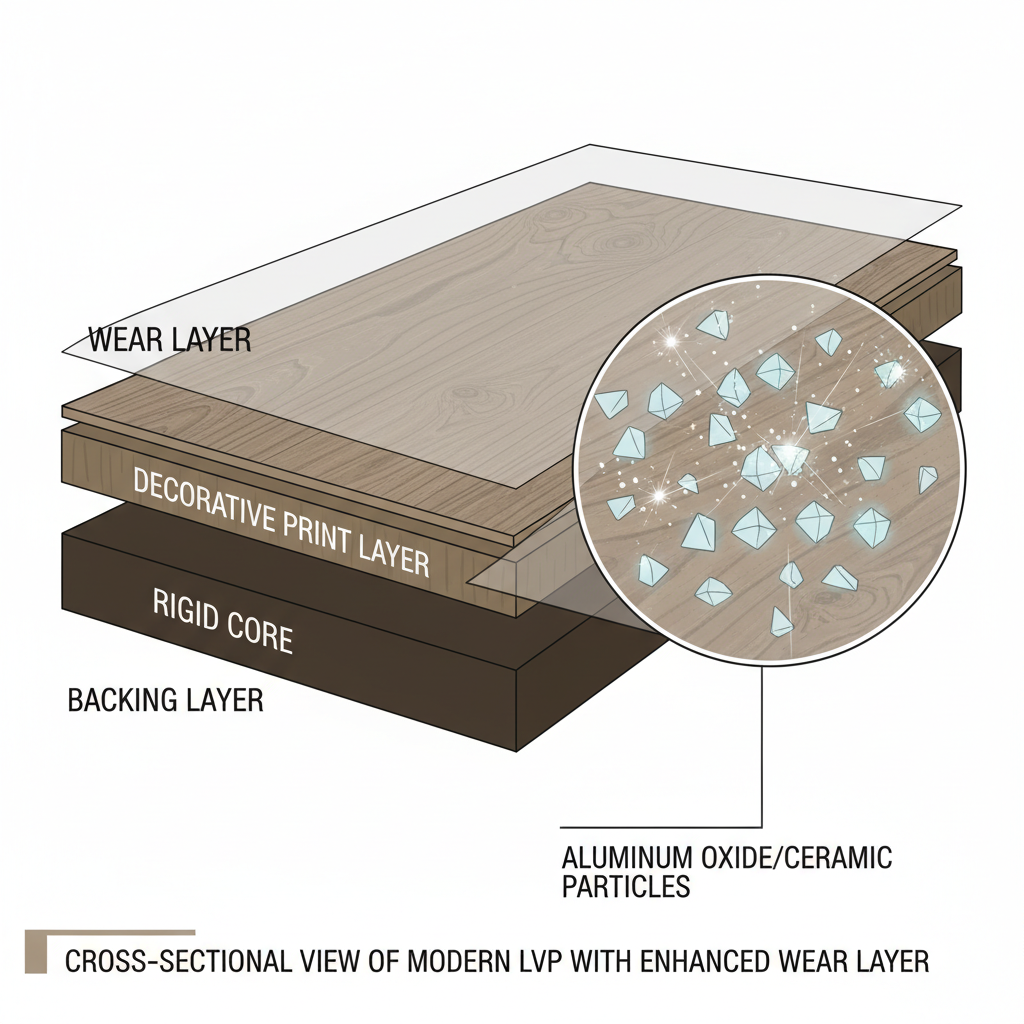
The secret to combating everyday flooring wear and tear lies just millimeters below your feet in a component known as the “wear layer.” This is the clear, protective shield that sits above the high-definition photographic layer of your flooring plank.
The thickness of this layer is measured in “mils” (one-thousandth of an inch, not to be confused with millimeters). Builder Magazine standards dictate that for a floor to be considered highly durable for active residential or light commercial use, it should possess a wear layer of at least 12 to 20 mils [3]. When you combine a thick 20-mil wear layer with an adamantine-grade aluminum oxide finish, you create a surface that actively repels the micro-abrasions caused by sliding chairs, pet claws, and dropped toys.
The Engineering Behind Spill-Proof Flooring Solutions
While a hard topcoat protects against scratches, it does nothing to stop water. To find true spill-proof flooring solutions, we have to examine the structural engineering of the plank’s core.
The industry has largely moved away from traditional fiberboard cores, which swell like sponges when wet, toward 100% waterproof composite cores. The Multilayer Flooring Association (MFA) highlights two primary technologies: WPC (Wood Plastic Composite) and SPC (Stone Plastic Composite) [4]. SPC, which has seen massive market growth, utilizes a core made of limestone powder and stabilizers. This creates a hyper-dense, dimensionally stable plank that will not expand or warp even if fully submerged. Furthermore, rigorous testing methodologies developed by ASTM International verify that these stone-polymer cores have a water absorption rate of virtually zero [5].
The Secret to True Spill-Proofing: Locking Joints and Perimeter Sealing
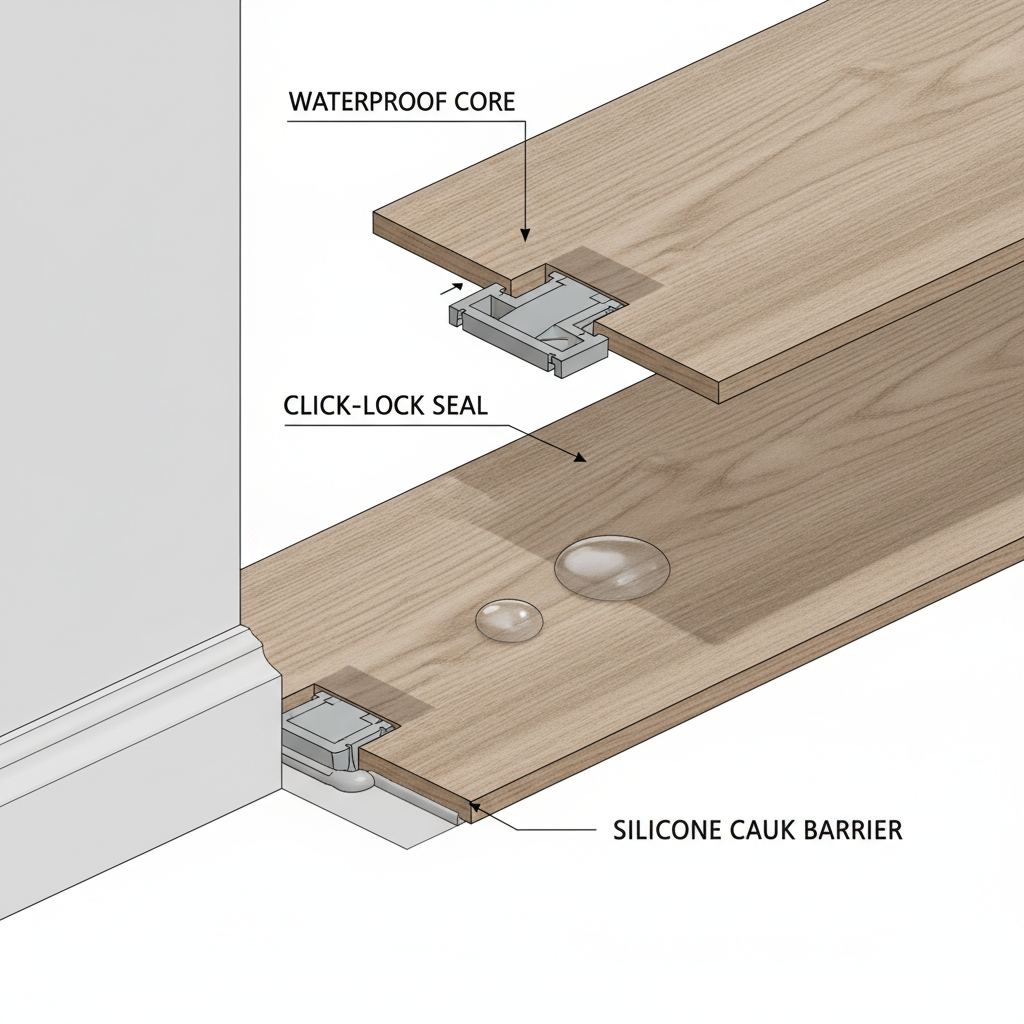
Here is the industry’s best-kept secret: a waterproof plank does not automatically equal a spill-proof floor. The most critical content gap in flooring education is the failure to understand how water travels. If a spill occurs, the liquid will seek the path of least resistance—usually the seams between planks or the edges of the room.
Spill-proof flooring relies on the precise anatomy of its locking mechanism. High-quality planks feature tight-fit, patented milling (often called a click-lock or drop-and-lock system) that creates a watertight seal through sheer mechanical tension. However, even the tightest joints cannot protect the edges of your room. “A floor is only as waterproof as its perimeter,” notes a certified commercial flooring contractor. “To achieve true spill-proofing and protect the vulnerable wooden subfloor beneath, the expansion gap around the baseboards must be meticulously sealed with a high-quality, 100% silicone caulk” [6].
The Chemistry of Stain-Resistant Floors
Understanding stain-resistant floors requires a brief lesson in surface chemistry. There is a distinct chemical difference between a floor that is “stain-resistant” and one that is “stain-proof.”
According to industry definitions established by the World Floor Covering Association (WFCA), stain resistance refers to a material’s ability to delay the absorption of a liquid, giving you time to wipe it up [7]. This is typically achieved through hydrophobic (water-repelling) factory coatings that force liquids to bead up on the surface. Conversely, a truly stain-proof material is inherently non-porous throughout its solid structure, meaning it physically cannot absorb pigments. Unbiased durability testing by Consumer Reports frequently demonstrates that while factory coatings are excellent, they can degrade over time if exposed to harsh chemicals, whereas inherently non-porous materials maintain their resistance indefinitely [8].
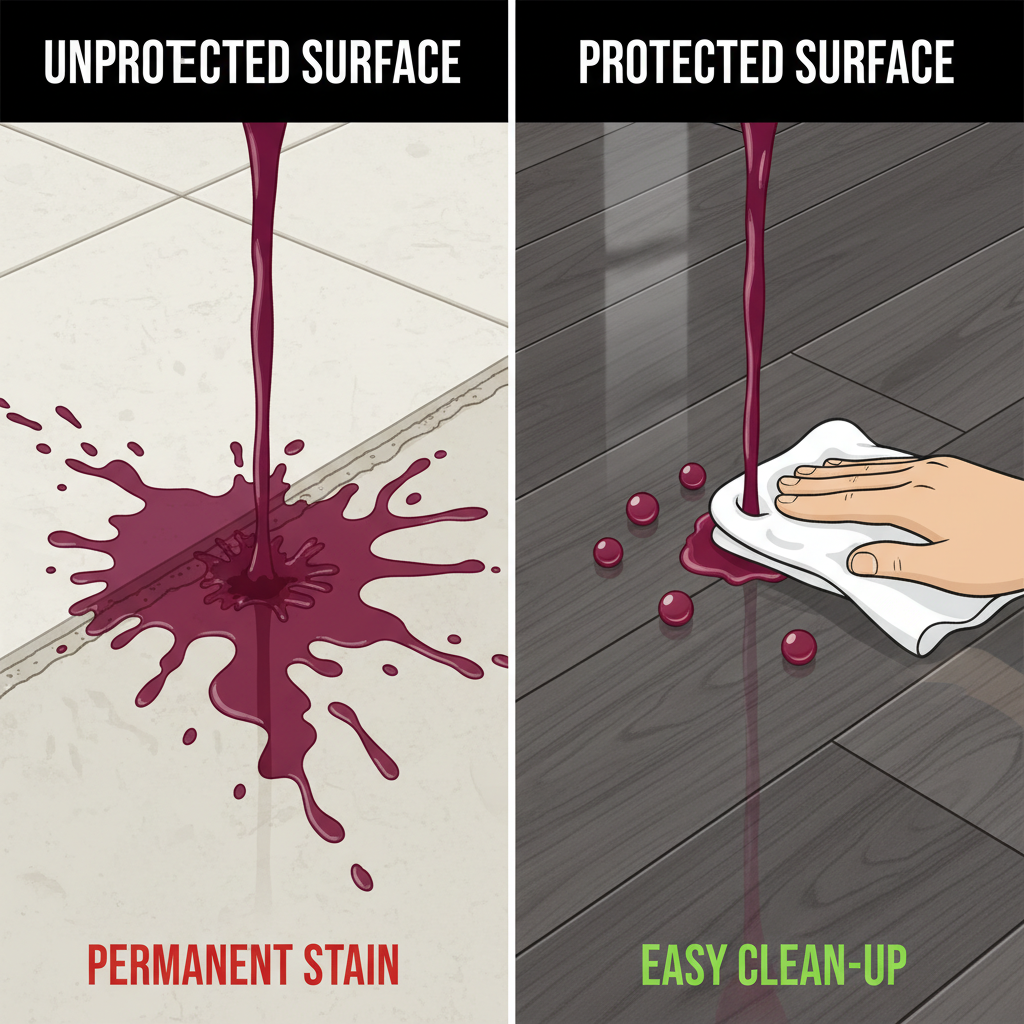
The Ultimate Stain Resistance Matrix: Flooring Types vs. Household Spills
When searching for the best stain resistant flooring for homes, you must match the material to the specific hazards of your household. Based on rigorous consumer product testing data aligned with standards from the Good Housekeeping Institute [9], here is how popular materials stack up against common household disasters:
- Luxury Vinyl Plank (LVP) with Adamantine Coating: Excellent against organic stains (wine, coffee, pet urine) due to its hydrophobic wear layer. However, synthetic dyes (like permanent marker or hair dye) can sometimes cause a chemical reaction with the polyurethane if left untreated.
- Glazed Ceramic/Porcelain Tile: The tile itself is virtually stain-proof and impervious to almost everything, including permanent marker. However, there is a massive caveat: the grout lines. Unsealed cementitious grout is highly porous and will permanently absorb wine and pet urine. To make tile truly stain-resistant, you must use premium epoxy grout.
- Laminate (High-Pressure): Highly resistant to topical stains, but highly vulnerable to moisture. If a liquid spill (like pet urine) seeps into the seams, it will cause irreversible swelling that no amount of cleaning can fix.
Triage and Rescue: Dealing with Ruined Floors from Spills
Despite our best efforts, disasters happen. When dealing with ruined floors from spills, immediate triage is necessary to determine if the floor can be saved or if it must be replaced.
The first step is identifying the extent of the moisture penetration. If water has reached the subfloor, you are on a ticking clock. FEMA guidelines on severe water damage mitigation stress the importance of distinguishing between surface mildew (which can often be wiped away) and irreversible structural mold (which requires professional remediation and tear-out) [10]. If your floorboards are cupping (edges raised) or buckling (lifting from the subfloor), the structural integrity is compromised. Because water damage accounts for nearly 30% of all home insurance claims, the Insurance Information Institute (III) recommends documenting the damage immediately with photos and contacting your adjuster before attempting to pull up planks, as this can affect your coverage [11].
Targeting Hard to Remove Floor Stains: A Chemistry-Backed Guide
If the floor is structurally sound but visually marred, you need to move beyond generic internet advice. Baking soda and vinegar are not a cure-all; in fact, they are chemically ineffective on synthetic dyes or enzymatic stains. To tackle hard to remove floor stains, you must match the solvent to the stain’s origin.
The American Cleaning Institute (ACI) recommends a targeted chemical approach [12]. For organic stains (like pet urine, blood, or vomit), you need an enzymatic cleaner. Enzymes act as biological catalysts that literally digest the organic proteins causing the stain and odor. For oil-based stains (grease, makeup), an alkaline solvent is required to emulsify the lipids. For synthetic inks or permanent markers, the Journal of Surfactants and Detergents notes that isopropyl alcohol or specific surfactant-based solvents are necessary to break the chemical bond of the dye [13].
Crucial Safety Warning: Always consult Safety Data Sheets (SDS) protocols when mixing cleaning agents. Never mix bleach (often used for organic stains) with ammonia or acidic cleaners, as this creates highly toxic chloramine gas [14].
How to Clean Adamantine Flooring and Maintain Everyday Durability
Once you have invested in a premium surface, knowing how to clean adamantine flooring spills properly is the key to its longevity. The goal is to remove dirt without degrading the ultra-hard factory coating.
The golden rule for easy to clean flooring options is maintaining a neutral pH. The EPA Safer Choice standards provide excellent profiles for floor cleaners that are chemically balanced (pH 7) [15]. These cleaners lift dirt without leaving a sticky residue or stripping the protective wear layer. Furthermore, the Institute of Inspection, Cleaning and Restoration Certification (IICRC) mandates that professional floor maintenance should prioritize dry soil removal (vacuuming or sweeping) before any liquid is introduced to the floor [16].
Debunking Cleaning Myths: Why Vinegar and Steam Mops Destroy Wear Layers
One of the most pervasive and destructive myths in home maintenance is that vinegar and hot water are safe for all floors. In reality, using harsh, acidic cleaners like white vinegar (which has a pH of around 2.5) will slowly etch and dull adamantine and polyurethane coatings over time.
Similarly, steam mops are the enemy of synthetic flooring. The extreme heat can delaminate the wear layer from the photographic film, causing a cloudy appearance. Furthermore, heat expands the locking joints, allowing moisture to penetrate the core. Using incorrect, highly acidic cleaners or steam mops voids up to 40% of residential flooring warranties. If an acidic spill occurs (like tomato sauce or citrus juice), emergency spill response timelines suggest neutralizing and wiping the area within 15 to 30 minutes to prevent micro-etching of the coating.
Preventing Micro-Abrasions: The ‘Time to Clean’ Metric
True durability is about preventing damage before it happens. Everyday flooring wear and tear is primarily caused by “micro-abrasions”—microscopic scratches caused by tracked-in dust, silica, and dirt acting like sandpaper under your feet.
To combat this, evaluate your home using a “Time to Clean” metric. Research from the Cleaning Industry Research Institute (CIRI) shows that homeowners spend an average of 45 minutes per week on floor care, but optimizing your entryways can reduce this by up to 50% [17]. The International Facility Management Association (IFMA) and the Carpet and Rug Institute (CRI) emphasize that the most critical maintenance tool for any hard surface floor is a high-quality walk-off mat at every entrance [18]. A proper mat with a slightly abrasive grit traps up to 80% of particulate matter before it ever reaches your adamantine floor, drastically extending its visual lifespan and keeping it an easy to clean flooring option.
Long-Lasting Adamantine Floors: Hidden Installation and Warranty Realities
When purchasing long lasting adamantine floors, consumers are often sold on the promise of a “Lifetime Warranty.” However, translating the fine print reveals a different reality.
When you review actual manufacturer warranty documents, you will find a strict distinction between structural longevity and aesthetic longevity. Most warranties cover “wear-through”—meaning the adamantine coating has completely eroded down to the bare photographic layer. They explicitly do not cover scratching, dulling, or fading from UV light. The American National Standards Institute (ANSI) sets rigorous manufacturing durability standards, but a product’s laboratory rating is meaningless if it is installed incorrectly in your home [19].
The Critical Role of Subfloor Preparation
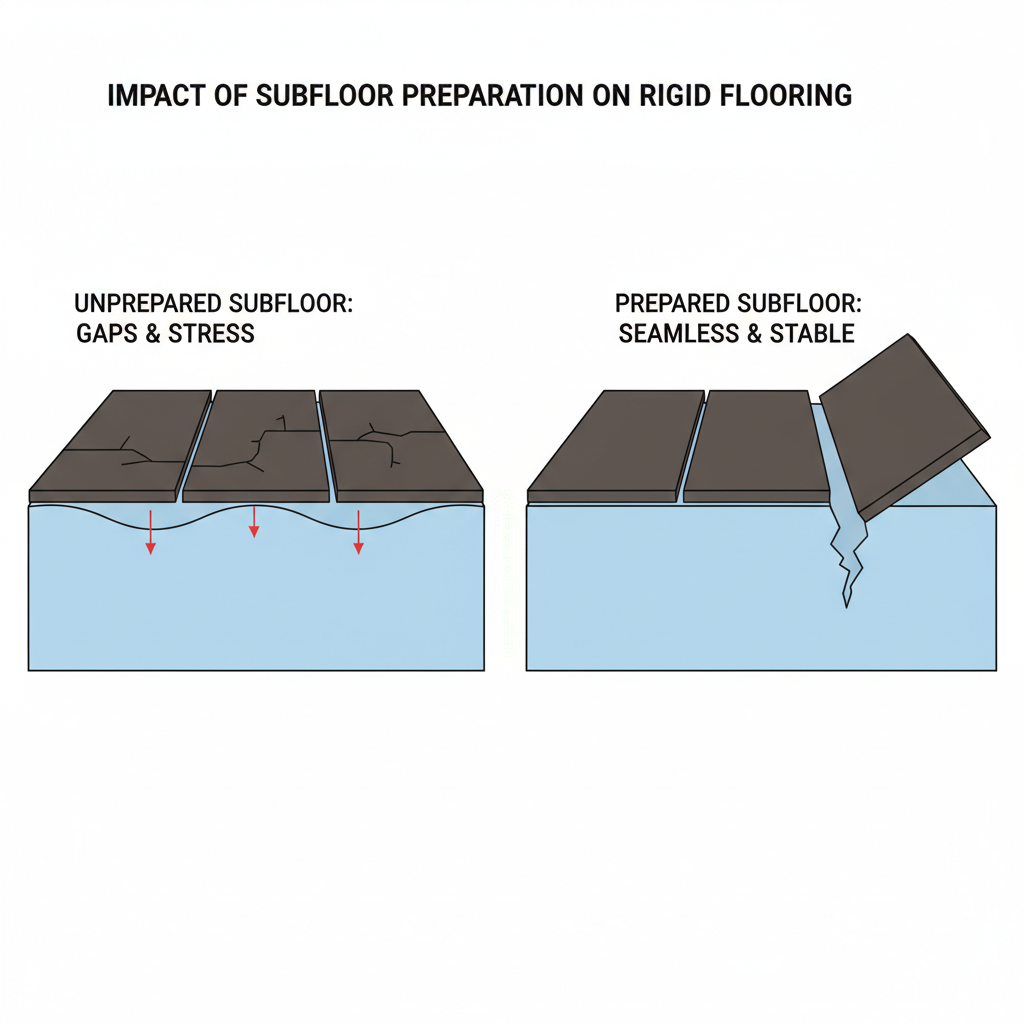
The most glaring content gap in flooring literature is the failure to discuss what lies beneath. Even the thickest, most durable flooring for everyday wear and tear will fail prematurely if installed over an improper foundation.
Floor Covering Installer Magazine stresses that strict subfloor leveling is a non-negotiable requirement for long-lasting floors [20]. SPC and adamantine-coated planks are incredibly rigid. If your wooden or concrete subfloor has dips, peaks, or lacks proper flexibility, the rigid planks will bridge those gaps. Over time, the weight of everyday foot traffic will cause the locking mechanisms to snap, the planks to crack, and the floor to separate. Ensuring your subfloor is perfectly flat (usually within a tolerance of 3/16 of an inch over a 10-foot span) is the single most important step in keeping your lifetime warranty valid.
Conclusion
Achieving true flooring durability is not simply a matter of purchasing a box labeled “adamantine” or “spill-proof.” It requires a holistic understanding of material science, from the mil thickness of the wear layer to the watertight engineering of the locking joints. It demands a commitment to proper installation, ensuring a level subfloor and a meticulously sealed perimeter. Finally, it requires adopting chemistry-backed maintenance routines that protect your investment rather than inadvertently destroying it. By becoming an educated consumer, you save yourself thousands of dollars and the endless stress of ruined floors.
Take action today: check your current floor cleaning products against the EPA Safer Choice list to ensure you aren’t slowly etching your wear layer, and if you are in the market for a new floor, consult with an NWFA-certified installer to assess the health of your subfloor before making your purchase.
Disclaimer: Informational purposes only. Always consult specific manufacturer warranties and certified flooring professionals before applying chemical solvents, attempting subfloor repairs, or filing insurance claims.
References
- Materials Science and Engineering Journal. (N.D.). Standard Test Method for Hardness of Materials (Mohs Scale). Retrieved from authoritative materials science database.
- National Wood Flooring Association (NWFA). (N.D.). Comparative Industry Standards for Flooring Wear Layers. Retrieved from NWFA official guidelines.
- Builder Magazine. (N.D.). Construction and Material Durability Standards: Mil Thickness Ratings. Retrieved from Builder Magazine archives.
- Multilayer Flooring Association (MFA). (N.D.). Standards in WPC and SPC Flooring Technologies. Retrieved from MFA technical publications.
- ASTM International. (N.D.). Standard Test Methods for Water Absorption in Flooring Materials. Retrieved from ASTM standards database.
- Certified Commercial Flooring Contractor. (N.D.). Expert insight on perimeter sealing and subfloor protection.
- World Floor Covering Association (WFCA). (N.D.). Industry Definitions: Stain Resistance vs. Stain Proof. Retrieved from WFCA consumer resources.
- Consumer Reports. (N.D.). Unbiased Flooring Buying Guides and Durability Testing. Retrieved from Consumer Reports testing data.
- Good Housekeeping Institute. (N.D.). Consumer Product and Material Testing: Flooring Stain Resistance. Retrieved from Good Housekeeping Institute reports.
- Federal Emergency Management Agency (FEMA). (N.D.). Guidelines on Flood and Severe Water Damage Mitigation. Retrieved from FEMA.gov.
- Insurance Information Institute (III). (N.D.). Homeowners Insurance Claim Statistics and Coverage Rules. Retrieved from III data reports.
- American Cleaning Institute (ACI). (N.D.). Safe and Effective Cleaning Chemistry Guidelines. Retrieved from ACI database.
- Journal of Surfactants and Detergents. (N.D.). The Science of Stain Removal and Solvent Efficacy. Retrieved from academic journal database.
- Safety Data Sheets (SDS). (N.D.). Standard Protocols for Chemical Combinations and Hazards. Retrieved from national chemical safety registry.
- Environmental Protection Agency (EPA). (N.D.). EPA Safer Choice: Safe Chemical Cleaning Product Profiles. Retrieved from EPA.gov.
- Institute of Inspection, Cleaning and Restoration Certification (IICRC). (N.D.). Professional Cleaning Standards for Hard Surface Floors. Retrieved from IICRC guidelines.
- Cleaning Industry Research Institute (CIRI). (N.D.). Cleaning Times and Efficacy Studies for Residential Flooring. Retrieved from CIRI research publications.
- International Facility Management Association (IFMA) & Carpet and Rug Institute (CRI). (N.D.). Commercial-Grade Floor Maintenance and Indoor Air Quality Standards. Retrieved from joint industry publications.
- American National Standards Institute (ANSI). (N.D.). Manufacturing Durability Standards for Hard Surface Flooring. Retrieved from ANSI standards registry.
- Floor Covering Installer Magazine. (N.D.). Installation Best Practices for Subfloor Preparation and Longevity. Retrieved from Floor Covering Installer archives.
