There’s a familiar, sinking feeling that comes with seeing the first deep scratch on a brand-new floor. It’s the frustration of watching high-traffic areas turn dull and worn, or the endless battle against stains and water damage. For too many homeowners, flooring is a cycle of disappointment and costly replacement. You invest time and money into a beautiful surface, only for it to fail under the pressures of daily life—kids, pets, dropped objects, and moving furniture.
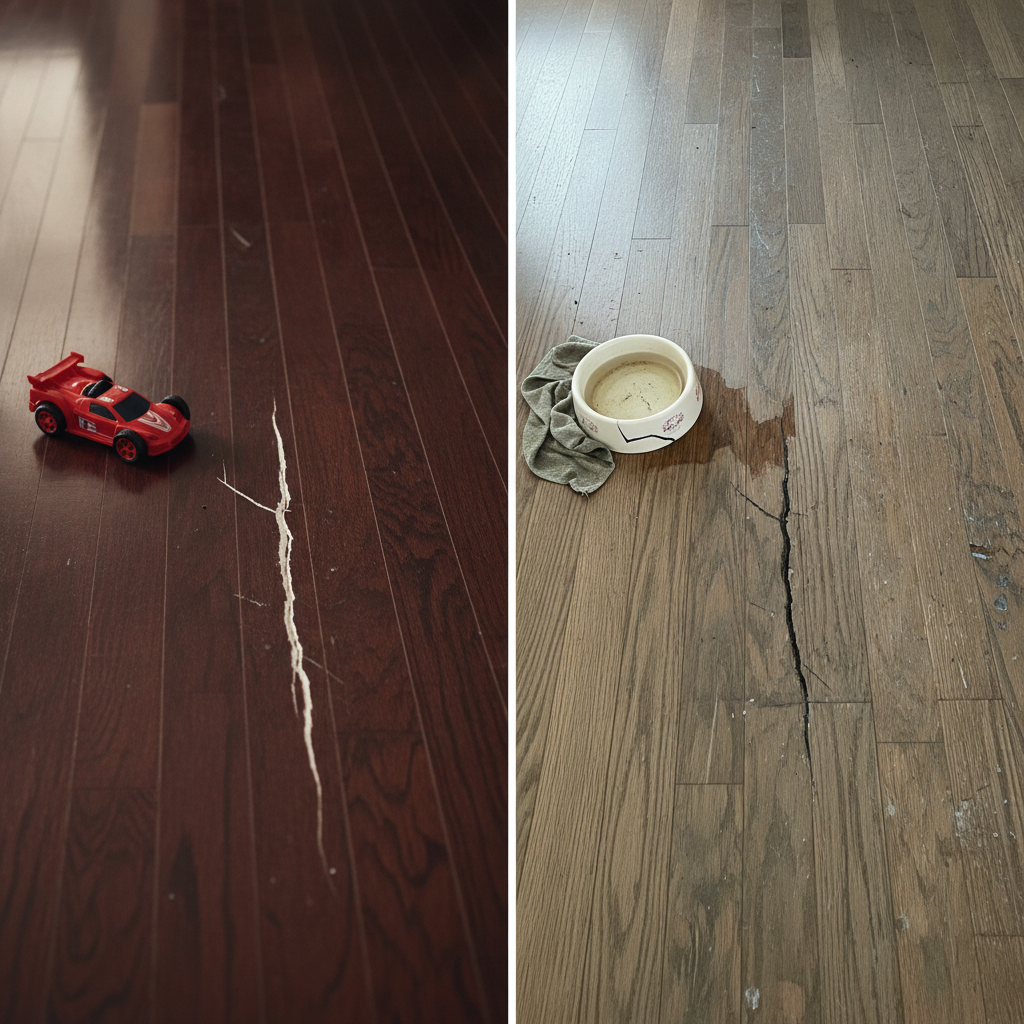
But what if you could break that cycle? What if you could choose a floor just once, confident that it would not only withstand the rigors of your life but also enhance your home’s value for decades to come? This is the promise of a ‘Forever Floor’—an investment in adamantine durability, timeless style, and lasting peace of mind.
This is not just another list of “top 10 durable floors.” This is your definitive playbook. Inside, you’ll find a data-driven Durability Scorecard that objectively ranks top materials, a Total Cost of Ownership analysis to evaluate your floor as a financial asset, and an expert-backed, four-step checklist. Together, they form a complete system to help you make a confident, future-proof decision and find the one floor you’ll never have to replace.
- The Vicious Cycle: Why Most Floors Fail and Cost You More
- Decoding Durability: What Makes a Floor Last a Lifetime?
- The Durability Scorecard: Ranking the Top ‘Forever Floor’ Contenders
- Beyond Durability: Calculating Your Floor’s True Long-Term Value
- Your ‘Forever Floor’ Checklist: A 4-Step Guide to the Perfect Choice
- Frequently Asked Questions (FAQ)
- Conclusion
- References & Authoritative Sources
The Vicious Cycle: Why Most Floors Fail and Cost You More
The frustration you feel with floors that scratch, warp, or wear out isn’t just in your head; it’s a common and expensive problem. The cycle of frequent floor replacement is a significant financial and emotional drain, but it’s often preventable. Understanding why floors fail prematurely is the first step toward choosing one that won’t.
According to flooring industry experts, the root cause of failure is often hidden from plain sight. A staggering number of issues trace back to one critical, often overlooked area: the subfloor. In fact, some reports from flooring inspectors suggest that up to 90% of all flooring failures are related to moisture issues originating in the subfloor.[1]
As one certified flooring inspector with over 20 years of experience notes, “Homeowners see a scratch or a warped plank and blame the material, but I usually find the real culprit underneath. The most common mistake I see is an installer laying a beautiful new floor over a concrete slab that hasn’t been properly tested for moisture. It’s a ticking time bomb, and the homeowner is the one who pays the price when the floor starts to cup or delaminate a year later.”
The 3 Hidden Culprits of Premature Flooring Failure
Beyond subfloor issues, most premature flooring failures can be attributed to a breakdown in one of three key areas. Avoiding these pitfalls is essential to breaking the replacement cycle.
- Poor Material-to-Lifestyle Match: Selecting a floor based on looks alone without considering its use-case is a recipe for disaster. A soft pine hardwood, for example, might look beautiful in a showroom but will quickly become dented and scratched in a home with large dogs and active children. Similarly, a water-sensitive material installed in a moisture-prone basement is destined to fail.
- Improper Installation: This is the single most critical—and most common—point of failure. A floor is only as good as its installation. Shortcuts like failing to acclimate materials, ignoring subfloor flatness requirements, or using the wrong adhesive can lead to gapping, buckling, and squeaking. Crucially, as organizations like the Certified Flooring Installers (CFI) emphasize, failing to follow the manufacturer’s precise installation guidelines will almost always void the product’s warranty, leaving you with no recourse.[2]
- Inconsistent or Incorrect Maintenance: Even the most durable floor can be damaged by neglect or improper care. Using harsh, unapproved chemical cleaners on a luxury vinyl floor can strip its protective layer, while letting spills sit on a hardwood floor can cause permanent staining and water damage. A lack of preventative care, like using furniture pads or doormats to trap abrasive grit, accelerates wear and tear on any surface.
Decoding Durability: What Makes a Floor Last a Lifetime?
When you start shopping for durable home flooring, you’re immediately hit with a barrage of technical terms: Janka ratings, PEI scores, wear layers, and AC ratings. Understanding this language is the key to moving beyond marketing claims and truly comparing products. These industry standards are the objective measures of how a floor will perform in your home.
Here’s a simple breakdown of the four most important durability metrics:
| Metric | What It Measures | Applicable Flooring | What to Look For |
|---|---|---|---|
| Janka Hardness Test | The resistance of a wood species to denting and wear. It measures the force required to embed a steel ball into the wood. | Solid Hardwood, Engineered Hardwood, Bamboo | A higher number indicates a harder, more dent-resistant wood. For example, Brazilian Walnut (~3680) is much harder than Red Oak (~1290). Sourced from standards by the National Wood Flooring Association (NWFA).[3] |
| PEI Rating | The abrasion resistance and durability of a ceramic or porcelain tile’s glaze. | Ceramic & Porcelain Tile | The Porcelain Enamel Institute (PEI) rating ranges from 1 to 5. For residential floors, a PEI of 3 is good for light traffic, while a PEI of 4 or 5 is recommended for high-traffic areas like kitchens and entryways, per the Tile Council of North America (TCNA).[4] |
| AC Rating | The Abrasion Class rating for laminate flooring, measuring resistance to scratches, stains, and impact. | Laminate Flooring | The rating goes from AC1 (light residential) to AC5 (heavy commercial). For a durable home floor, look for a rating of AC3 or higher. |
| Wear Layer Thickness | The thickness of the top protective layer on vinyl flooring, which provides scratch and stain resistance. | Luxury Vinyl Tile (LVT/LVP), Sheet Vinyl | Measured in mils (1/1000th of an inch). A 6-12 mil layer is acceptable for low-traffic areas, but for a truly durable, pet-friendly floor, a 20 mil or thicker wear layer is the gold standard. |
The Durability Scorecard: Ranking the Top ‘Forever Floor’ Contenders
To cut through the confusion, we’ve created a data-driven Durability Scorecard. We’ve ranked the top contenders for a “Forever Floor” based on the key performance metrics that matter most in a busy home. Each score is on a 1-10 scale, where 10 represents the highest level of performance.
| Flooring Material | Scratch Resistance | Impact Resistance | Moisture Resistance | Overall Durability |
|---|---|---|---|---|
| Porcelain Tile | 10 | 9 | 10 | 9.7 |
| Luxury Vinyl Tile (LVT) | 8 | 8 | 9 | 8.3 |
| Hardwood (e.g., Brazilian Walnut) | 7 | 7 | 4 | 6.0 |
| Engineered Hardwood | 6 | 6 | 5 | 5.7 |
| Laminate Flooring (High AC) | 8 | 7 | 5 | 6.7 |
| Sealed Concrete | 7 | 10 | 8 | 8.3 |
*Note: Scores are based on high-quality examples of each material. Moisture Resistance score is heavily influenced by objective measures like the ASTM C373 water absorption test.[5]*
Champion: Porcelain & Ceramic Tile
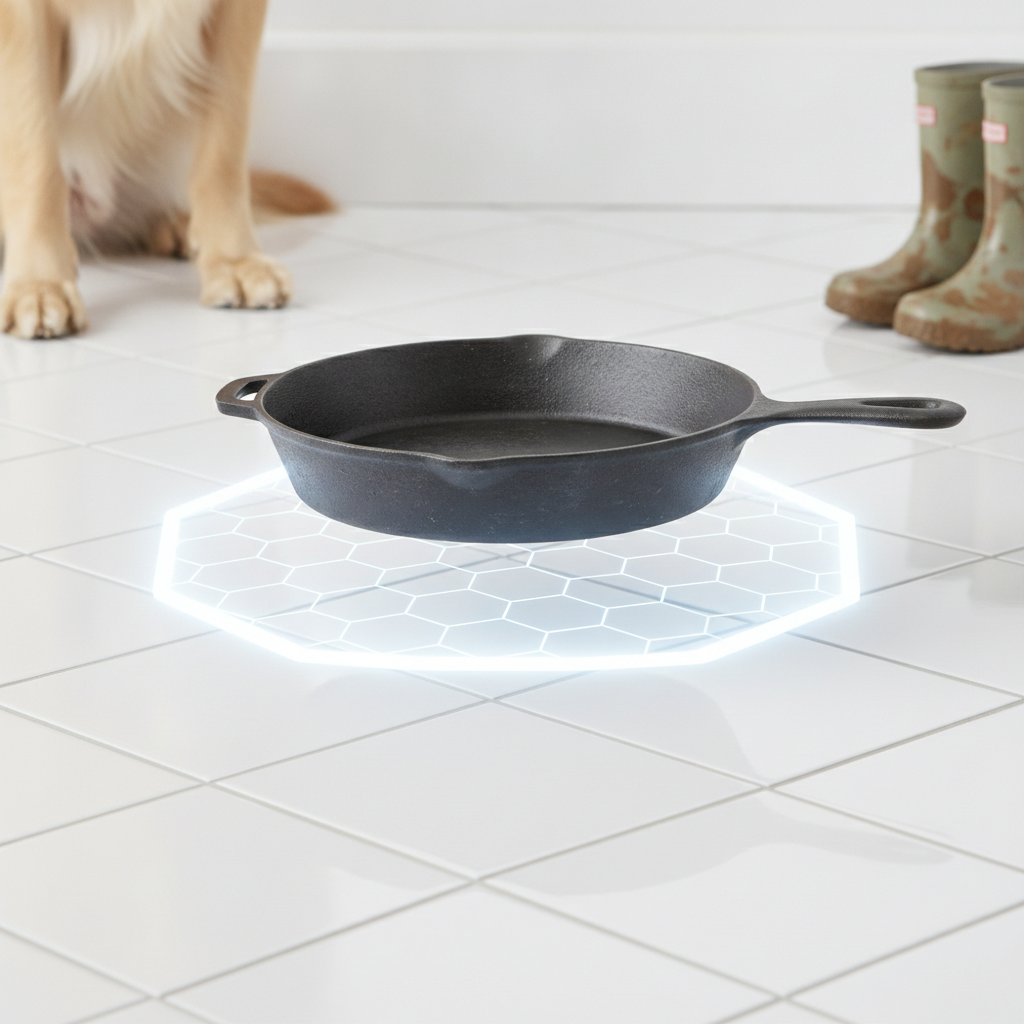
With near-perfect scores across the board, porcelain tile is the undisputed champion of durability. It is incredibly hard, making it almost impossible to scratch with pet claws or furniture. Its dense body gives it superior impact resistance, and its non-porous nature makes it waterproof.
- Key Data: According to the ASTM C373 standard test, porcelain tile has an extremely low water absorption rate of less than 0.5%, making it ideal for kitchens, bathrooms, and basements.[5]
- Expert Insight: When choosing tile, look for a PEI rating of 4 (for heavy residential traffic) or 5 (for heavy residential/light commercial traffic). The Tile Council of North America (TCNA) confirms that these ratings ensure the glaze can withstand years of heavy use without wearing through.[4]
Top Contender: Luxury Vinyl Tile (LVT)
Modern LVT is an engineering marvel, offering a powerful combination of resilience and realism. Its durability comes from its multi-layer construction, specifically its commercial-grade wear layer. This clear top coat is what defends against scratches, scuffs, and stains.
- Key Data: For homes with pets, kids, and high traffic, a wear layer of 20 mil or greater is the recommended specification. This provides a thick, robust barrier that significantly outperforms the thinner layers found on cheaper vinyl products.
- Expert Insight: Not all LVT is created equal. Look for reputable brands known for their durable product lines, such as Shaw Floorte or Coretec, which often feature enhanced wear layers and rigid core constructions for added stability and impact resistance.
The Timeless Classic: Hardwood & Engineered Wood
While not as impervious as tile or LVT, high-quality hardwood is a timeless choice that can absolutely be a lifetime floor. Its durability is a function of two things: the hardness of the wood species and the quality of the finish.
- Key Data: The Janka hardness test is your best guide. A hard species like Brazilian Walnut (Janka rating of ~3680) is nearly three times more resistant to denting than a common choice like Red Oak (Janka rating of ~1290), according to data from the National Wood Flooring Association (NWFA).[3]
- Expert Insight: Modern, factory-applied finishes have revolutionized hardwood’s scratch resistance. Many high-end pre-finished wood floors come with multiple coats of an Aluminum Oxide urethane finish, which contains microscopic crystals of one of the hardest minerals on earth, creating a surface that is dramatically tougher than site-applied finishes.
Beyond Durability: Calculating Your Floor’s True Long-Term Value
A true “Forever Floor” isn’t just physically tough; it’s also a sound financial investment. To understand this, you need to look beyond the price tag per square foot and calculate the Total Cost of Ownership (TCO). This framework considers all costs over the entire life of the floor, giving you a much clearer picture of its long-term value.
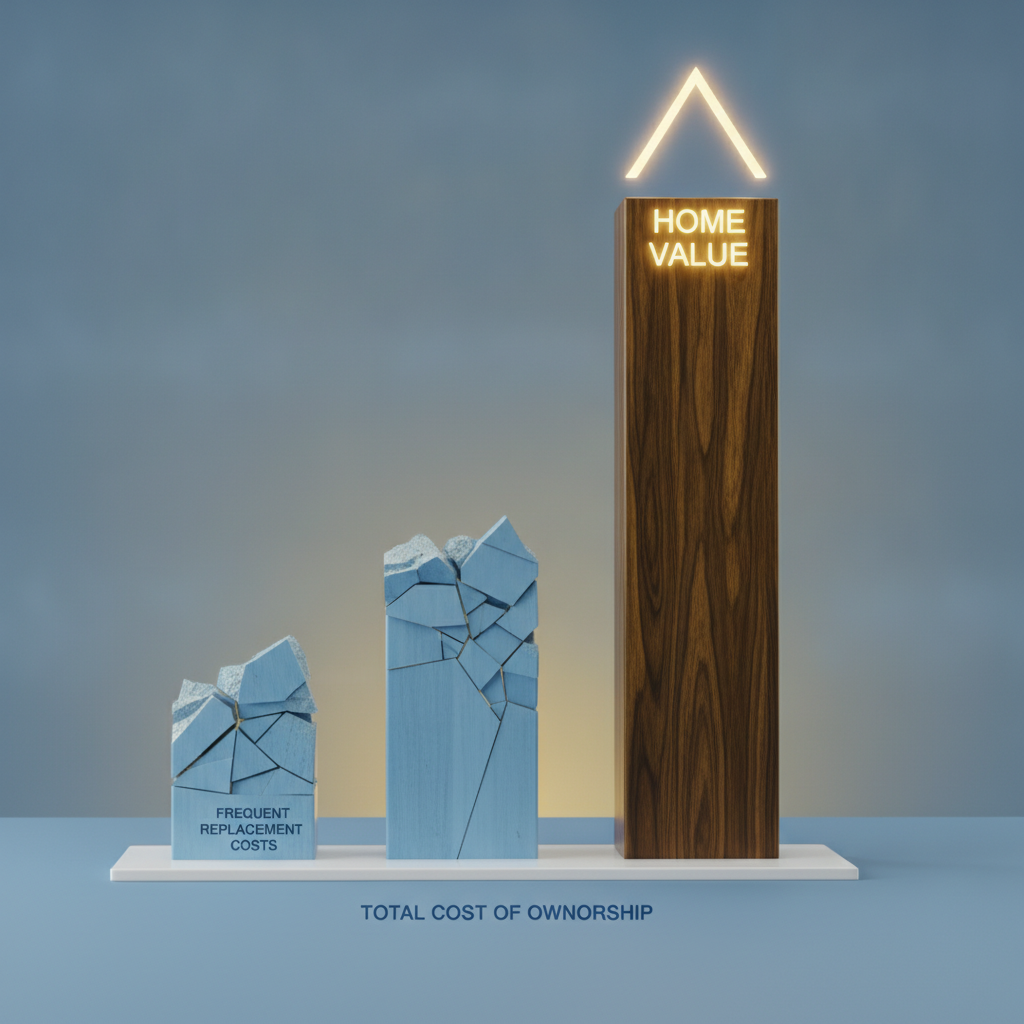
A recent “Remodeling Impact Report” from the National Association of Realtors (NAR) highlights this perfectly. It found that new wood flooring can increase a home’s sale price by up to 2.5%, demonstrating its power as a financial asset.[6]
Factor 1: Initial Cost & Installation
This is the upfront cost of materials and professional labor. While LVT may have a lower initial material cost, complex tile patterns or high-end hardwood can be more expensive. According to cost data aggregators like HomeAdvisor, installation costs can vary widely by region and complexity, so getting multiple quotes is essential.[7]
Factor 2: Maintenance Costs & Lifespan
This is where the long-term value equation becomes clear.
- Hardwood: While it has a higher upfront cost, its primary long-term expense is refinishing, which costs an average of $3 to $8 per square foot. However, this only needs to be done every 10-20 years, and a well-maintained hardwood floor can last 30, 50, or even 100+ years.
- LVT: LVT requires virtually no maintenance costs—no sealing, waxing, or refinishing. However, its typical lifespan is 15-25 years. Once its wear layer is compromised or it becomes significantly damaged, the entire floor must be replaced.
Factor 3: Return on Investment (ROI) & Home Value
Flooring has a significant impact on how buyers perceive your home. As one real estate appraiser with 25 years of experience puts it, “Hardwood floors are still the gold standard for resale. Buyers see them as a premium, long-lasting feature and are often willing to pay more for a home that has them. High-quality tile also signals durability and value, especially in kitchens and baths.”
The NAR report confirms this, stating that homeowners can expect to recoup 70-80% of their investment in new hardwood floors upon resale.[6] While LVT is highly functional, it does not yet command the same level of perceived value or ROI as authentic hardwood.
Your ‘Forever Floor’ Checklist: A 4-Step Guide to the Perfect Choice
Making a confident decision requires a systematic approach. As a veteran flooring professional, I can tell you that following these four steps will ensure you choose a floor that you’ll love for a lifetime.
Step 1: Assess Your Lifestyle (The ‘Use-Case’ Audit)
Before you look at a single sample, analyze your needs. Be brutally honest about how you live.
- The Busy Family with Pets: You need maximum scratch and stain resistance. Your top candidates are Porcelain Tile and LVT with a 20+ mil wear layer. The constant traffic, spills, and pet claws demand a surface that is nearly indestructible and easy to clean.
- The Empty-Nesters: You may have less foot traffic but prioritize timeless style and home value. This makes classic Hardwood a prime choice. You can afford to choose a slightly softer species for its looks and know it will be well-cared for.
- The Minimalist in a Modern Condo: Aesthetics and ease of care are paramount. Sealed Concrete offers an industrial-chic look with unparalleled durability and minimal maintenance. Large-format porcelain tiles also fit this profile perfectly.
Step 2: Evaluate Your Home’s Foundation (The Subfloor Check)
Your new floor is only as stable as the subfloor it rests on. A quick check can prevent catastrophic failure. Look for signs of water damage, soft or spongy spots, and significant unlevelness. For concrete subfloors, a professional must conduct a moisture test. Manufacturers specify a maximum Moisture Vapor Emission Rate (MVER) for their products; exceeding this will void the warranty and lead to failure.
Step 3: Interrogate the Warranty (What ‘Lifetime’ Really Means)
A “Lifetime Warranty” rarely means for your entire life. It’s a marketing term that refers to the expected useful life of the product under specific conditions. You must read the fine print.
- Differentiate Warranty Types: A wear warranty covers the complete wearing-through of the top layer. A structural warranty covers manufacturing defects like delamination. A finish warranty covers peeling or blistering of the factory finish.
- Know the Exclusions: Nearly all warranties are voided by improper installation, subfloor moisture damage, using unapproved cleaning products, or damage from things like pet urine or scratches.
Step 4: Vet Your Installer (The Most Critical Hire)
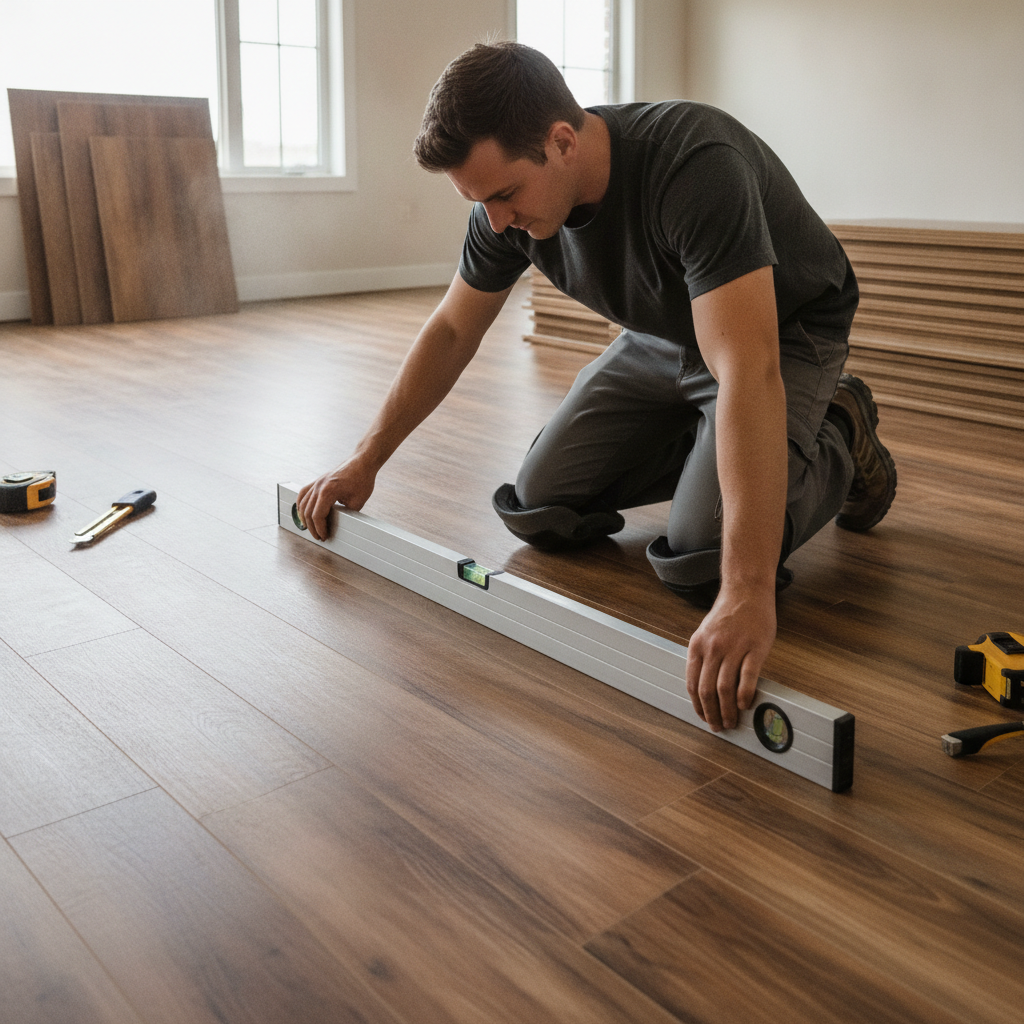
The best flooring material in the world will fail if installed incorrectly. Your installer is the most important part of your flooring project.
- Demand Certification: Hire installers who are certified by reputable organizations like the Certified Flooring Installers (CFI).[2] This proves they have been trained and tested on industry-best practices.
- Ask Critical Questions: Ask them: “How will you test my subfloor for moisture?”, “How will you prep the subfloor to meet manufacturer specifications?”, and “Are you licensed and insured?”
As one master craftsman always says, “The material is just the potential. The installer is the one who turns that potential into a permanent, beautiful part of the home.”
Frequently Asked Questions (FAQ)
What is the absolute most scratch-resistant flooring for large dogs?
For large, active dogs, porcelain tile is the number one choice. Its surface hardness (Mohs rating of 7-8) is greater than that of metal, meaning dog nails cannot scratch it. A dog’s nails can exert several hundred pounds per square inch (PSI) of pressure, which can easily dent wood, but tile is unaffected. The second-best option is a high-quality LVT with a commercial-grade wear layer of 20 mils or more, preferably with an aluminum oxide coating for extra protection.
Is tile or LVT better for low maintenance and durability?
It’s a trade-off. Porcelain tile is more durable in terms of scratch and impact resistance—it’s harder to damage. However, its grout lines can be a maintenance pain point, as they can stain and require periodic sealing and scrubbing. LVT has no grout lines, making daily cleaning simpler. An expert tip to make tile lower-maintenance is to use a high-performance epoxy grout, which is stain-proof and never needs sealing.
Can any hardwood floor truly be a ‘lifetime’ floor?
Absolutely, but with two critical conditions: it must be solid (not engineered) hardwood, and it must be properly cared for. Solid hardwood can be sanded down and refinished multiple times over its life, essentially creating a brand-new surface each time. There are countless examples in historic homes, as documented by organizations like the National Trust for Historic Preservation, where original hardwood floors are still beautiful after more than 100 years of use.[8]
Conclusion
Choosing a floor for your home is one of the most important decisions you’ll make. It’s the foundation of your home’s design and the surface that endures the story of your life. By moving beyond simple aesthetics and embracing an evidence-based approach, you can end the costly cycle of replacement and make a truly future-proof investment.
The ‘Forever Floor’ Playbook is built on three core tenets:
- Choose with Data: Use the Durability Scorecard to objectively compare materials based on their real-world performance against scratches, impacts, and moisture.
- Analyze the Investment: Look past the initial price tag and use the Total Cost of Ownership model to understand the long-term financial value of your choice.
- Execute with Confidence: Follow the 4-Step Checklist to ensure your choice fits your lifestyle, your home is properly prepared, and your installation is flawless.
By adopting this playbook, you are empowered to select a beautiful, adamantine floor with total confidence—a floor that will not only stand the test of time but will add lasting value and enjoyment to your home for decades to come.
The cost figures and ROI percentages mentioned in this article are estimates based on national averages and can vary significantly by location, materials, and labor. Consult with a qualified financial advisor and a local flooring professional for personalized advice.
References & Authoritative Sources
- National Institute of Certified Floorcovering Inspectors (NICFI). (N.D.). Common Causes of Flooring Failure.
- Certified Flooring Installers (CFI). (N.D.). Installation Standards and Guidelines.
- National Wood Flooring Association (NWFA). (N.D.). Official Flooring Guide: Janka Hardness Ratings.
- Tile Council of North America (TCNA). (N.D.). Understanding the PEI Rating System.
- ASTM International. (N.D.). ASTM C373-18: Standard Test Methods for Determination of Water Absorption. Retrieved from ASTM.org.
- National Association of Realtors (NAR). (N.D.). Remodeling Impact Report.
- HomeAdvisor (Angi). (N.D.). Flooring Installation Cost Guides.
- National Trust for Historic Preservation. (N.D.). Preservation Resources: Maintaining Historic Floors.
