Are you searching for “Adamantine Flooring”? If so, you’re on a quest for the ultimate flooring solution—something truly indestructible, a permanent foundation for your home that laughs in the face of scratches, dents, and spills. You’re tired of floors that wear out quickly, the constant worry over damage from kids and pets, and the costly cycle of frequent floor replacement.
The truth is, “adamantine” is a term borrowed from mythology and fiction to describe an unbreakable material. It doesn’t exist as a real product. But your search for it reveals a powerful need: a floor that delivers absolute peace of mind.
This guide respects that quest. We’ve created The Adamantine Standard—a myth-busting, data-driven framework to find the closest real-world equivalent to this mythical ideal. Forget confusing marketing jargon and subjective advice. Here, we introduce our proprietary Durability Scorecard, a system that scientifically ranks actual flooring materials on the metrics that matter most. We will deconstruct the science of strength, pit the top contenders against each other, and show you how to choose a floor that is not just durable, but a true, future-proof investment for your home.

- What is “Adamantine Flooring”? The Myth and the Reality
- The Science of Durability: How We Measure a Floor’s True Strength
- The Ultimate Flooring Showdown: The Durability Scorecard
- Future-Proofing Your Floors: An Investment in Timelessness and Function
- Common Failures: 5 Reasons Your Flooring is Wearing Out Prematurely
- The Homeowner’s ER: A Practical Guide to Repairing Scratches and Dents
- FAQ: Your Top Questions About Flooring Durability Answered
- Your Foundation for the Future
- References & Authoritative Sources
What is “Adamantine Flooring”? The Myth and the Reality
Let’s be clear: you cannot walk into a store and buy “Adamantine Flooring.” The term originates from stories and games to describe a legendary, diamond-hard substance. So, why are people searching for it? Because it perfectly captures the desire for a permanent flooring solution that eliminates the common frustrations of scratches, dents, and premature wear.
Instead of chasing a fantasy, we can use this concept as our benchmark. A hypothetical adamantine floor would possess specific, measurable characteristics:
- Extreme Hardness: Resists dents and impacts from dropped objects.
- Superior Abrasion Resistance: Impervious to scratches from pet claws, furniture, and foot traffic.
- Total Water Immunity: Will not swell, warp, or stain when exposed to moisture.
- Incredible Longevity: Lasts for the lifetime of the home without needing replacement.
The good news is that we can measure these exact traits in real-world materials using principles of materials science and established industry testing standards. Organizations like ASTM International develop and publish thousands of technical standards that are used globally to assess the properties of materials, from their resistance to abrasion to their structural strength.[1] By using these scientific benchmarks, we can move beyond the myth and find the flooring that truly meets the Adamantine Standard.
The Science of Durability: How We Measure a Floor’s True Strength
To find the most durable home floors, we need to speak the language of durability. Understanding the key industry ratings is the single most powerful tool you have to cut through marketing hype and make an informed decision. This is how the experts evaluate a floor’s ability to withstand the rigors of daily life.
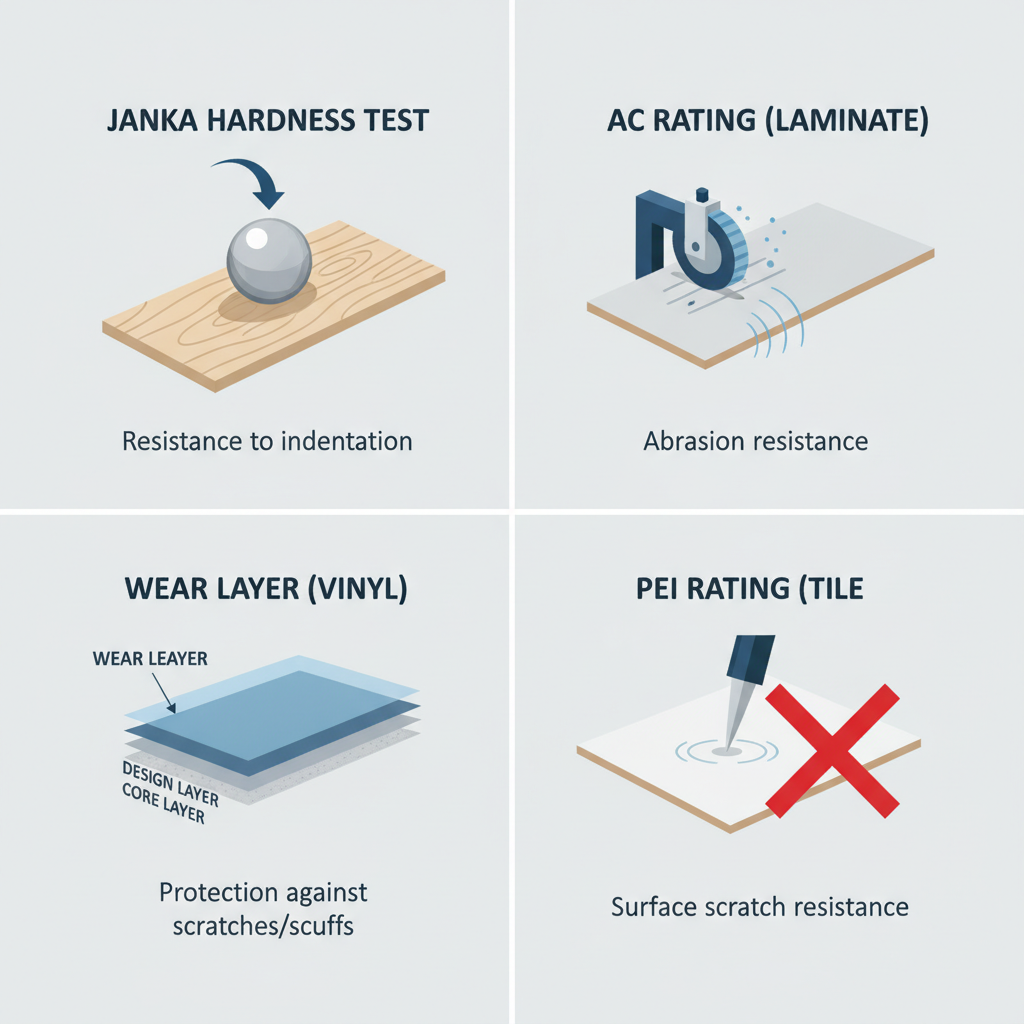
Hardness & Dent Resistance: Janka (Wood) and Mohs (Hard Surfaces)
A floor’s hardness determines its ability to resist denting from heavy furniture or a dropped can of soup. For wood and bamboo, this is measured by the Janka Hardness Test. As defined by industry authorities like the National Wood Flooring Association (NWFA), this test measures the force required to embed a steel ball into the wood.[2] A higher number means a harder, more dent-resistant wood.
Janka Hardness Comparison (Approximate Ratings)
- Red Oak: ~1290
- White Oak: ~1360
- Hard Maple: ~1450
- Hickory: ~1820
- Brazilian Cherry: ~2350
- Strand-Woven Bamboo: 3000-5000+
For hard surfaces like tile and stone, we can refer to the Mohs scale of mineral hardness, which rates a material’s ability to resist being scratched by another. On a scale of 1 (Talc) to 10 (Diamond), porcelain tile typically rates a 7-8, making it harder than granite and extremely resistant to scratches.
Scratch & Abrasion Resistance: AC Rating (Laminate) and PEI Rating (Tile)
This measures how well the surface of a floor holds up to foot traffic, friction, and scuffs.
For laminate flooring, the key metric is the Abrasion Class (AC) Rating. The North American Laminate Flooring Association (NALFA) uses this rating to classify durability.[4]
- AC1: Light residential (e.g., bedrooms)
- AC2: Moderate residential (e.g., living rooms)
- AC3: Heavy residential / Light commercial
- AC4: General commercial (Excellent for any area of a home)
- AC5: Heavy commercial (Maximum durability for the busiest homes)
For ceramic and porcelain tile, the Porcelain Enamel Institute (PEI) Rating measures the wear resistance of the glaze. The Tile Council of North America (TCNA) recognizes this as a critical standard for selecting the right tile for the right application.[3]
- PEI 1-2: Wall tile only.
- PEI 3: Light to moderate residential traffic.
- PEI 4: Moderate to heavy residential traffic (suitable for all home areas).
- PEI 5: Heavy residential and commercial traffic.
The Unsung Hero of Durability: The Wear Layer (LVP & Resilient Flooring)
For resilient flooring like Luxury Vinyl Plank (LVP), the most important component for durability is the wear layer. This is a clear, protective top coating that shields the printed design from scratches, scuffs, and stains. According to the Resilient Floor Covering Institute (RFCI), the quality and thickness of this layer are paramount to the floor’s lifespan.[5]
It’s measured in mils (one-thousandth of an inch). Don’t confuse this with millimeters (mm).
- 6-12 mil: Basic, entry-level protection for low-traffic areas.
- 12-20 mil: Good quality for most residential uses.
- 20 mil (0.5mm) or more: The gold standard. High-quality LVP features a wear layer of 20 mil or more, which is critical for its long-term durability in high-traffic zones and homes with pets and kids. Some premium products even infuse this layer with ceramic beads or aluminum oxide for enhanced scratch protection.
The Ultimate Flooring Showdown: The Durability Scorecard
Now that we understand the science, let’s see how the real-world contenders stack up. We’ve developed the Durability Scorecard to rank the top flooring categories on a 1-10 scale across the most critical performance metrics. This provides a clear, at-a-glance comparison to help you find your “adamantine” solution.
Champion of Durability: Porcelain & Ceramic Tile
Scorecard: Scratch Resistance: 9/10 | Dent Resistance: 10/10 | Water Resistance: 10/10 | Lifespan: 10/10
Porcelain tile is the undisputed champion of all-around durability. It is fired at extremely high temperatures, making it incredibly dense and strong. According to standards upheld by the TCNA, porcelain tile is defined by its water absorption rate of less than 0.5%, making it functionally waterproof.[3] High-quality porcelain suitable for floors will carry a PEI rating of 4 or 5, ensuring it can handle the heaviest residential traffic without showing wear.
- Pros: Virtually scratch-proof, waterproof, stain-proof, and can easily last 50+ years.
- Cons: Can be cold and hard underfoot, installation is labor-intensive and costly, and grout lines require maintenance.
The All-Around Performer: High-Quality Luxury Vinyl Plank (LVP)
Scorecard: Scratch Resistance: 8/10 | Dent Resistance: 7/10 | Water Resistance: 9/10 | Lifespan: 7/10
Modern LVP is a technological marvel and a far cry from the sheet vinyl of the past. Its strength lies in its multi-layer construction. As a resilient floor, it has some give, making it more comfortable underfoot and less likely to shatter dropped dishes. Its primary defense is a robust wear layer of 20 mil or more, which provides excellent protection against scratches and scuffs. Look for products with a rigid core (SPC – Stone Plastic Composite) for added dent resistance and FloorScore® certification, which ensures the product meets strict indoor air quality standards.[6]
- Pros: Highly water-resistant (often 100% waterproof), comfortable, quiet, and available in countless realistic wood and stone looks.
- Cons: Can be dented by very heavy furniture; quality varies dramatically based on wear layer and core thickness.
The Scratch-Resistant Specialist: High-Pressure Laminate
Scorecard: Scratch Resistance: 10/10 | Dent Resistance: 8/10 | Water Resistance: 5/10 | Lifespan: 6/10
When it comes to resisting scratches, high-quality laminate flooring is king. Its top layer is exceptionally tough, often reinforced with aluminum oxide. Laminate flooring with an AC4 or AC5 rating is designed for commercial-level scratch and abrasion resistance, making it an ideal choice for homes with large dogs and active children.[4] While historically vulnerable to water, many modern laminates now feature enhanced water-resistant cores and edge sealants, though they are still not as waterproof as vinyl or tile.
- Pros: Unmatched scratch resistance for the price, highly impact-resistant, easy to install.
- Cons: Core is typically moisture-sensitive, cannot be refinished, and can sound hollow underfoot.
The Natural Powerhouse: Strand-Woven Bamboo & Hardwoods
Scorecard: Scratch Resistance: 6/10 | Dent Resistance: 7/10 | Water Resistance: 3/10 | Lifespan: 9/10
The timeless beauty of wood is undeniable, and with the right choice, it can be a durable, lifelong floor. Solid hardwood’s greatest asset is its ability to be sanded and refinished multiple times, essentially erasing decades of wear. For sheer hardness, strand-woven bamboo is a natural champion. It can achieve Janka hardness ratings over 5000, making it significantly harder and more dent-resistant than traditional hardwoods like Oak (approx. 1300).[2]
- Pros: Can last over 100 years (solid hardwood), adds significant resale value, can be repaired and refinished.
- Cons: Susceptible to scratches and water damage, requires more careful maintenance.
The Industrial Modernist: Sealed & Polished Concrete
Scorecard: Scratch Resistance: 8/10 | Dent Resistance: 10/10 | Water Resistance: 8/10 | Lifespan: 10/10
For a truly permanent flooring solution, it’s hard to beat the slab your house is built on. When properly sealed and polished, concrete floors can last over 100 years with minimal maintenance. It offers a unique, modern aesthetic and is virtually indestructible when it comes to dents and traffic. It can be stained, dyed, or scored to create a variety of looks.
- Pros: Extremely durable and long-lasting, low maintenance, unique modern aesthetic.
- Cons: Very hard and cold underfoot, can be prone to cracking if the subfloor shifts, and can be expensive to finish.
Future-Proofing Your Floors: An Investment in Timelessness and Function
A truly “adamantine” floor isn’t just about resisting damage today; it’s about making a smart investment that pays dividends for decades. Future-proofing your floors means considering three key pillars: financial return, timeless style, and functional adaptability.
Choosing a Floor That Adds to Your Home’s Resale Value
Flooring is one of the few home improvements that can provide a significant return on investment (ROI). According to the National Association of Realtors® (NAR) 2022 Remodeling Impact Report, homeowners can recover 118% of the cost of installing new wood flooring upon resale.[7] Refinishing existing hardwood floors provides an even higher ROI at 147%. This makes hardwood an investment grade flooring choice. Materials like natural stone and high-end, large-format porcelain tile also have broad buyer appeal and contribute to a home’s perceived value. Authoritative sources like Remodeling Magazine’s “Cost vs. Value” report consistently confirm the high value retention of quality flooring projects.[9]
Timeless Design: Styles That Won’t Look Dated in 10 Years
Future-proofing also means choosing a style that endures. While trendy patterns and colors can be exciting, they can also quickly date your home. To ensure your investment lasts, opt for classic, neutral choices that serve as a versatile backdrop for any decor.
Consider these timeless options:
- Natural-finish oak hardwood: The universal standard for classic appeal.
- Large-format neutral tile: Gray, beige, or slate-look tiles in 12″x24″ or larger formats.
- Natural stone: Materials like slate and travertine offer organic, lasting beauty.
Furthermore, as you plan for the future, consider principles of universal design. Resources from organizations like AARP emphasize the importance of home modifications for aging in place, such as choosing slip-resistant flooring surfaces and ensuring low-profile or zero-threshold transitions between rooms.[8]
Common Failures: 5 Reasons Your Flooring is Wearing Out Prematurely
If you’re stuck in a cycle of frequent floor replacement, the problem might not be bad luck—it’s often one of these five preventable issues. Understanding why floors fail is the first step to choosing one that won’t.
Reason 1: The Wrong Material for the Location
Symptoms: Hardwood cupping in a damp basement, laminate peeling near a dishwasher, carpet matting down in a main hallway.
Cure: This is the most common mistake. Every material has its kryptonite. Putting moisture-sensitive flooring like solid hardwood or standard laminate in wet areas is a recipe for disaster. For high-traffic areas like entryways and hallways, choosing a material with a low AC or PEI rating will lead to visible wear paths in just a few years. Always match the material’s strengths to the room’s demands.
Reason 2: Improper Installation and Subfloor Prep
Symptoms: Bouncy spots, clicking sounds, peeling vinyl planks, gapping between boards.
Cure: Even the most expensive flooring will fail if installed incorrectly. A certified floor inspector will tell you that the vast majority of floor failures are due to poor subfloor preparation. A subfloor must be clean, flat, and dry. According to standards from the Certified Flooring Installers Association (CFI), skipping these crucial prep steps voids warranties and guarantees a short lifespan for your new floor.[10] Always hire a qualified, certified installer.
Reason 3: Incorrect Cleaning and Maintenance
Symptoms: A dull, hazy finish on hardwood; worn, faded spots on vinyl; eroding grout lines.
Cure: Harsh chemicals are a floor’s worst enemy. Using ammonia-based cleaners, vinegar, or “mop and shine” products can strip the protective urethane finish from wood and LVP, leaving it vulnerable to wear and stains. The Institute of Inspection, Cleaning and Restoration Certification (IICRC) recommends using only pH-neutral cleaners and following the manufacturer’s specific care instructions to the letter.[11]
The Homeowner’s ER: A Practical Guide to Repairing Scratches and Dents
Even the most durable floors can suffer occasional damage. The key is knowing how to perform triage. For minor issues, a simple DIY fix can save you from a costly replacement.
Your Scratch Repair Kit:
- For Hardwood: Use a stain-filled marker for light scratches. For deeper gouges, use a soft wax filler stick that matches the wood’s color. Brands like Minwax and Bona are authorities in wood floor care and repair products.[12]
- For LVP/Laminate: A wax-based repair kit is often the best solution. These kits come with several colors you can blend to perfectly match the spot, filling in the scratch and making it disappear.
- For Tile: A chipped tile is harder to fix, but you can often hide the damage with a dab of enamel or epoxy paint that matches the color.
For prevention, download our Floor Protection Checklist, which covers the essentials: using felt pads on all furniture, placing walk-off mats at every exterior door, and keeping pet nails trimmed.
FAQ: Your Top Questions About Flooring Durability Answered
What is the most scratch-resistant flooring for dogs?
High-pressure laminate with an AC4 or AC5 rating is the top choice for scratch resistance against dog nails. High-quality LVP with a 20 mil+ wear layer infused with ceramic beads is also an excellent, more water-resistant option.
Is laminate or vinyl more durable?
It depends on the type of durability you need. Laminate is generally more scratch-resistant, while LVP is more water-resistant and resilient against dents. For a kitchen or bathroom, LVP is superior. For a living room with large pets, AC5 laminate may be the better choice.
Is tile or hardwood more durable?
Porcelain tile is more durable in almost every measurable way—it is harder, more scratch-resistant, and waterproof. However, solid hardwood’s ability to be refinished gives it a potentially longer lifespan of over 100 years, making it a different kind of durable.
Your Foundation for the Future
The quest for “Adamantine Flooring” ends not with a mythical product, but with knowledge. The true Adamantine Standard is about understanding the science of strength, using data to compare your options, and choosing a floor that meets the unique demands of your home and lifestyle. By using the Durability Scorecard and focusing on a future-proof investment, you can break the cycle of replacement and build a foundation that is beautiful, resilient, and ready for whatever life throws at it. You are now empowered to make a confident, informed decision that will serve your home for decades to come.
Disclaimer: This article provides informational guidance and should not be considered financial or investment advice. Flooring performance can vary based on installation quality, maintenance, and specific household conditions. Consult with a qualified flooring professional and real estate agent for personalized recommendations.
References & Authoritative Sources
- ASTM International. (N.D.). Standards for Material Hardness and Abrasion Resistance. ASTM International is a global leader in the development and delivery of voluntary consensus standards. ↩
- National Wood Flooring Association (NWFA). (N.D.). Official Flooring Industry Guide to Janka Hardness. The NWFA is the leading trade association for the wood flooring industry. ↩
- Tile Council of North America (TCNA). (N.D.). TCNA Handbook for Ceramic, Glass, and Stone Tile Installation. The TCNA is the recognized authority on tile standards in North America. ↩
- North American Laminate Flooring Association (NALFA). (N.D.). Performance Standards for Laminate Floors. NALFA sets the standards for laminate flooring performance in North America, including AC ratings. ↩
- Resilient Floor Covering Institute (RFCI). (N.D.). Standards and Definitions for Resilient Flooring. The RFCI is the industry trade association for manufacturers of resilient flooring. ↩
- SCS Global Services. (N.D.). FloorScore® Indoor Air Quality Certification. FloorScore® is the most recognized indoor air quality (IAQ) certification standard for hard surface flooring materials. ↩
- National Association of Realtors®. (2022). Remodeling Impact Report. The NAR is America’s largest trade association, representing professionals in all aspects of the residential and commercial real estate industries. ↩
- AARP (American Association of Retired Persons). (N.D.). HomeFit Guide. AARP provides resources and guidelines on home modifications for safety and aging in place. ↩
- Remodeling Magazine. (Annual). Cost vs. Value Report. This annual report is an industry benchmark for analyzing the ROI of home improvement projects. ↩
- Certified Flooring Installers Association (CFI). (N.D.). Installation Standards and Guidelines. CFI is a non-profit organization dedicated to improving the quality of flooring installation. ↩
- Institute of Inspection, Cleaning and Restoration Certification (IICRC). (N.D.). Standards for Floor Care. The IICRC is a certification and standard-setting organization for the inspection, cleaning, and restoration industries. ↩
- Bona, Minwax. (N.D.). Manufacturer Guidelines for Floor Repair and Maintenance. These companies are leading authorities and manufacturers of products for wood floor finishing, repair, and care. ↩
