There are few sounds more disheartening to a homeowner than the sharp, sickening scrape of a chair leg dragged across a brand-new floor. That single scratch feels like a permanent blemish on a significant investment. In a world of overwhelming flooring choices, each promising unparalleled durability, how do you find a surface that truly stands up to the rigors of daily life? You’re tired of marketing hype and confusing technical specs, and you fear making a costly mistake.
This is not another simple “best of” list. This is the Ultimate Floor Lifecycle Guide—a definitive resource designed to empower you with a data-driven framework for selecting, protecting, and restoring your floors for a lifetime of performance. We will move beyond vague claims to give you the tools you need to make the smartest long-term investment in your home’s foundation.
Together, we will explore a quantitative Durability Scorecard to compare top materials, master proactive maintenance schedules, learn to diagnose damage like a professional, and understand the science behind the most resilient finishes. This comprehensive approach is the key to achieving what we call “Adamantine Flooring”—a surface that, with the right knowledge, can remain pristine year after year.
- The Durability Scorecard: A Data-Driven Comparison of the Most Durable Flooring
- How is Flooring Durability Measured? Key Metrics Explained
- Porcelain & Ceramic Tile: The Scratch-Resistance Champion
- Luxury Vinyl Plank (LVP): The All-Around Performer
- Laminate Flooring: The Budget-Friendly Heavy Hitter
- Hardwood & Engineered Wood: Timeless Beauty with Nuanced Durability
- Content Gap Spotlight: Analyzing Long-Term Cost of Ownership
- The Pet Owner’s Playbook: Choosing Scratch-Resistant & Safe Flooring
- Proactive Preservation: The Master Maintenance Plan to Keep Floors New
- The Triage Guide: Diagnosing & Repairing Common Floor Damage
- The Science of Surface Protection: Choosing Finishes & Heavy-Duty Coatings
- Your Floor’s Future is in Your Hands
- References & Authoritative Sources
The Durability Scorecard: A Data-Driven Comparison of the Most Durable Flooring
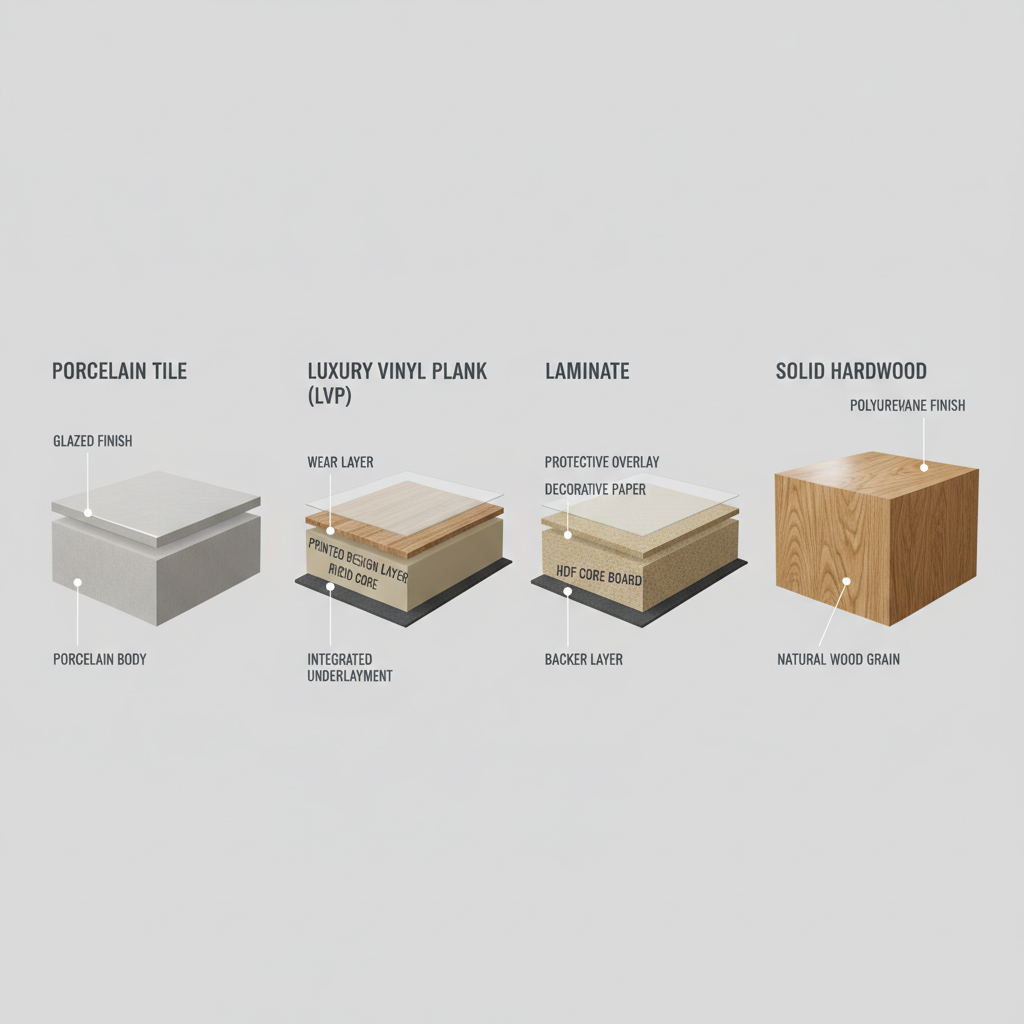
Choosing a floor shouldn’t be a guessing game. To cut through the noise, we’ve developed the Durability Scorecard. This framework evaluates the top flooring contenders on the metrics that matter most for long-term performance and value. We’ve analyzed each material based on industry standards from leading authorities like the National Wood Flooring Association (NWFA)[1] and the Tile Council of North America (TCNA)[2] to provide a clear, evidence-based comparison.
| Flooring Material | Scratch Resistance (1-10) | Water Resistance (1-10) | Average Lifespan (Years) | Long-Term Value (1-10) |
|---|---|---|---|---|
| Porcelain Tile | 10 | 10 | 50+ | 9 |
| Luxury Vinyl Plank (LVP) | 8 | 10 | 15-25 | 8 |
| Laminate | 8 | 5 | 10-20 | 7 |
| Hardwood (Solid) | 6 | 3 | 100+ (with refinishing) | 10 |
How is Flooring Durability Measured? Key Metrics Explained
To truly understand durability, you need to speak the language. These are the key industry metrics, many based on testing methods developed by bodies like ASTM International[3], that separate the weak from the strong.
- Janka Hardness Scale (for Wood): This test measures the force required to embed a 0.444-inch steel ball halfway into a piece of wood. The higher the Janka rating, the more resistant the wood is to denting and scratching.
- AC Rating (for Laminate): The Abrasion Class (AC) rating measures a laminate floor’s resistance to abrasion, impact, stains, and burns. The scale runs from AC1 (light residential use) to AC5 (heavy commercial use).
- PEI Rating (for Tile): The Porcelain Enamel Institute (PEI) rating classifies ceramic and porcelain tiles based on their surface wear resistance. The scale runs from PEI 1 (wall use only) to PEI 5 (heavy commercial traffic).
- Wear Layer Thickness (for LVP): This is the top protective coating on Luxury Vinyl Plank. Measured in mils (thousandths of an inch), a thicker wear layer provides significantly more protection against scratches and scuffs.
Porcelain & Ceramic Tile: The Scratch-Resistance Champion
When it comes to pure, unadulterated scratch resistance, nothing beats porcelain tile. Its incredible hardness, often measured on the MOHS mineral hardness scale, makes it nearly impervious to scratches from pet claws, furniture, and daily foot traffic.
According to the Tile Council of North America (TCNA), the PEI rating is the key indicator for durability[2]. For busy homes, look for tile with a PEI rating of 4 or 5, which is suitable for heavy residential or light commercial traffic. This makes it an ideal choice for entryways, kitchens, and basements. While its hardness is a benefit for durability, it can be cold and unforgiving underfoot, and grout lines require regular maintenance.
Luxury Vinyl Plank (LVP): The All-Around Performer
Luxury Vinyl Plank has surged in popularity for good reason. It combines excellent durability with 100% waterproof construction, making it a versatile choice for any room in the house. The key to LVP’s durability lies in its wear layer. For most homes, and especially those with pets, a 20 mil (0.5mm) wear layer is a high-quality standard for residential use.
Many premium LVP products enhance this protection with advanced coatings containing ceramic bead or aluminum oxide particles. These microscopic, ultra-hard additives create a surface that is exceptionally resistant to the fine scratches and scuffs that can dull a floor’s finish over time. This technology is a primary reason why modern LVP is often more durable than many older types of laminate flooring.
Laminate Flooring: The Budget-Friendly Heavy Hitter
Modern laminate is a far cry from the easily damaged product of the past. Its durability is best measured by its AC rating. For a floor that can withstand the chaos of a busy family, look for products with an AC4 or AC5 rating. These are rated for commercial use, indicating high durability that can easily handle heavy residential traffic, including the clicks and scrapes of dog claws.
Top-tier products from brands like Pergo and Mohawk have introduced technologies like water-resistant cores and advanced scratch-guard finishes, closing the gap with LVP. However, laminate’s core is still typically a wood-based fiberboard, making it more susceptible to damage from standing water than vinyl.
Hardwood & Engineered Wood: Timeless Beauty with Nuanced Durability
The timeless appeal of hardwood is undeniable, but its durability is more complex. The primary factor is the wood species itself, measured by the Janka hardness scale. For example, a harder wood like Brazilian Cherry (Janka rating of 2350) is significantly more resistant to dents than a classic Red Oak (1290)[1].
The National Wood Flooring Association (NWFA) advises that for active households, choosing a harder species is a wise first step[1]. However, the most important element protecting any wood floor is its finish. A high-quality, modern polyurethane finish is what provides the primary defense against scratches and wear. While solid hardwood can be sanded and refinished many times over its 100+ year lifespan, it remains the most susceptible to water damage and scratches of the options listed here.
Content Gap Spotlight: Analyzing Long-Term Cost of Ownership
The sticker price is only part of the story. A truly durable floor offers long-term value by minimizing replacement and major repair costs. Here’s a look at how the total cost of ownership can differ over a 20-year period.
| Flooring Material | Initial Cost/sq ft (Installed) | Estimated 20-Year Cost/sq ft | Key Considerations |
|---|---|---|---|
| Porcelain Tile | $8 – $25 | $8 – $25 | Extremely long life; cost is almost entirely upfront. Grout resealing may be needed. |
| Luxury Vinyl Plank (LVP) | $5 – $12 | $5 – $12 | No refinishing costs. May need replacement after 15-25 years. |
| Laminate | $4 – $10 | $8 – $20 | Lower initial cost, but may require replacement once or twice in 20 years. |
| Hardwood (Solid) | $10 – $25 | $13 – $33 | Highest initial cost. Will likely require one professional refinishing ($3-$8/sq ft) within 20 years. |
As a professional flooring installer might note, while hardwood has the highest 20-year cost, its potential to last a century and add significant resale value to a home makes it a unique long-term investment.
The Pet Owner’s Playbook: Choosing Scratch-Resistant & Safe Flooring
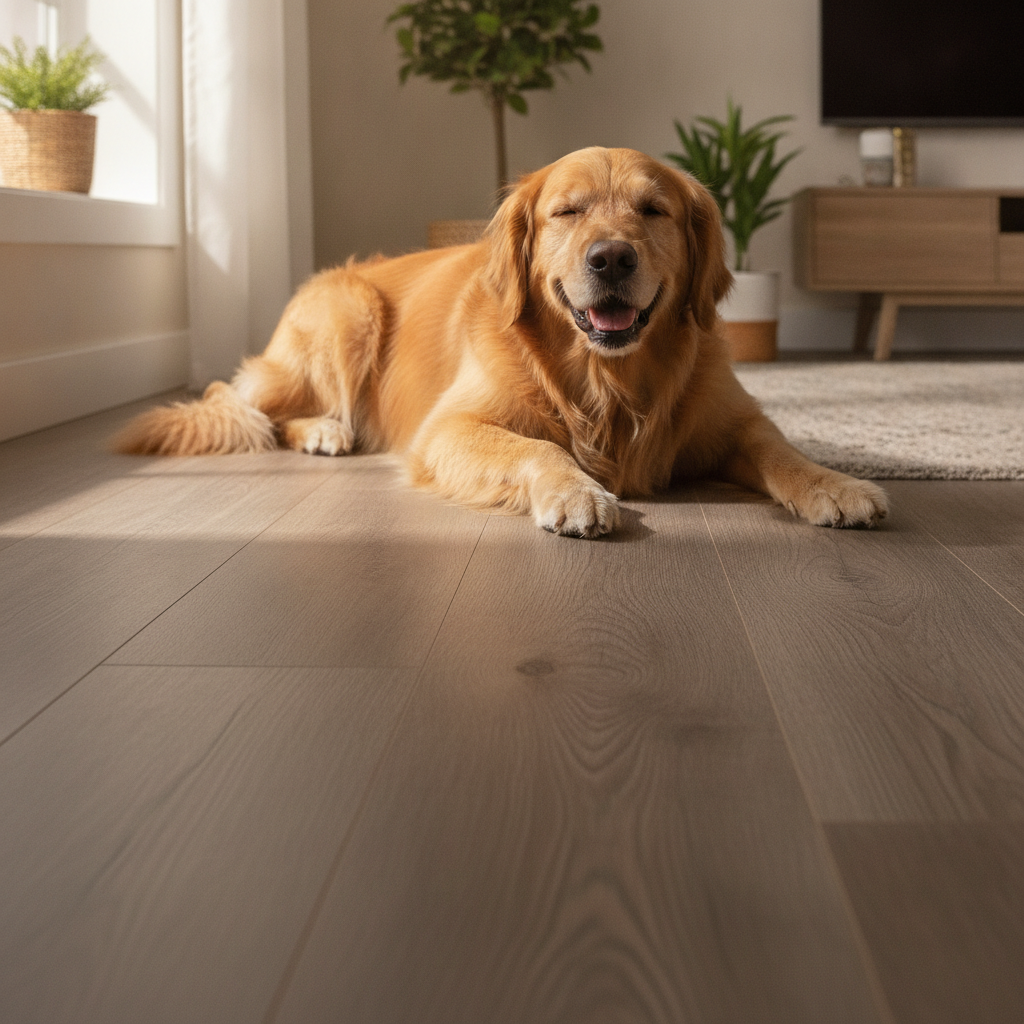
For pet owners, flooring is about more than just durability—it’s about animal safety and welfare. A floor must withstand claws and accidents while providing a comfortable environment. Based on guidance from sources like the American Kennel Club (AKC) on creating pet-safe homes, we’ve created a scorecard specifically for our four-legged friends[4].
| Flooring Material | Scratch Resistance (1-10) | Traction (1-10) | Stain Resistance (1-10) | Ease of Cleaning (1-10) |
|---|---|---|---|---|
| LVP (Textured) | 8 | 8 | 10 | 10 |
| Porcelain Tile (Matte) | 10 | 7 | 10 | 9 |
| Laminate (AC4+) | 8 | 6 | 8 | 9 |
| Hardwood | 6 | 5 | 5 | 7 |
Beyond Scratches: Why Traction Matters for Your Pet’s Health
While scratch resistance is a top concern, veterinarians often emphasize the importance of traction for a dog’s joint health. Slippery, glossy surfaces can force dogs to splay their legs to maintain balance, potentially straining their hips and joints, especially in senior dogs or breeds prone to hip dysplasia.
When choosing a floor, look for options that provide a secure grip. For tile, look for porcelain tiles with a coefficient of friction (COF) rating of 0.5 or higher to ensure better traction for pets. For LVP and laminate, choose products with an embossed or textured surface that mimics wood grain or stone, as this provides more grip than a smooth, flat finish.
Content Gap Spotlight: The Unspoken Issue of Noise
One often-overlooked aspect of pet-friendly flooring is acoustics. The constant clicking of a dog’s claws on a hard surface can be a significant source of noise in a home. Laminate flooring, especially when installed as a “floating” floor without proper underlayment, can be one of the loudest options. LVP with an attached cork or foam underlayment often performs much better in sound dampening. Tile is also loud, but its sound is typically a lower-frequency “tap” rather than a high-frequency “click.” Thoughtful placement of area rugs in high-traffic pet pathways is an excellent strategy to mitigate noise regardless of the flooring material.
Proactive Preservation: The Master Maintenance Plan to Keep Floors New
The secret to a floor that looks new for years isn’t a magic product; it’s a consistent maintenance routine. The most durable material in the world can be ruined by neglect and improper care. Following guidelines from professional organizations like the Institute of Inspection, Cleaning and Restoration Certification (IICRC)[5] and top manufacturers like Shaw Floors[6] and Bona[7], we’ve created a master plan to preserve your investment.
Your First Line of Defense: Daily & Weekly Routines
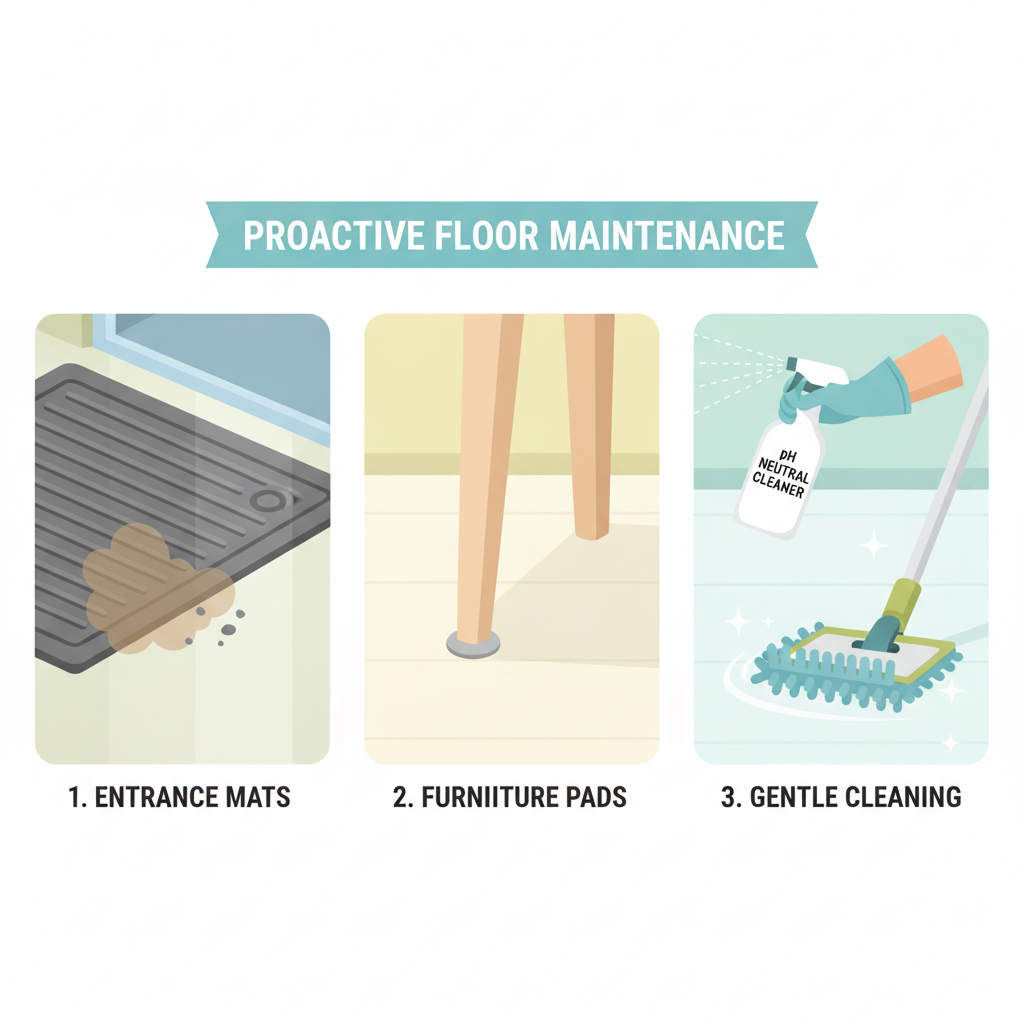
Simple, consistent habits have the biggest impact on your floor’s longevity.
- Embrace Doormats: Place high-quality mats both outside and inside every exterior door. This simple step is incredibly effective; studies show that using doormats can trap up to 80% of the dirt and debris that would otherwise be tracked into the house. This abrasive grit is a primary cause of microscopic scratches that dull a floor’s finish.
- Use Furniture Pads: Apply felt or plastic protectors to the bottom of all furniture legs, especially chairs and tables that are moved frequently. This is the single best way to prevent deep scratches.
- Sweep or Vacuum Regularly: Remove abrasive dirt and dust before it can be ground into the floor’s surface. Use a soft-bristle broom or a vacuum with a hard-floor setting (turn the beater bar off).
- Know What to AVOID: Using the wrong cleaner can cause irreversible damage.
- Hardwood/Laminate: NEVER use a steam mop, wet mop, or cleaners with vinegar or ammonia. These can damage the finish and cause the wood fibers to swell. Use only a pH-neutral cleaner designed for wood or laminate.
- LVP: Avoid abrasive cleaners, wax-based polishes, and steam mops, which can damage the wear layer and adhesive.
- Tile: Avoid harsh acids or bleach on grout lines, which can erode them over time.
The High-Traffic Zone Defense: Protecting Your Busiest Areas
Entryways, hallways, and the “work triangle” in the kitchen are your floor’s battlegrounds. Research shows that the finish on a hardwood floor in a high-traffic area can wear down 50% faster than in low-traffic areas.
To defend these zones, apply commercial durability principles at home. Use runner rugs in hallways and area rugs in living spaces to absorb the brunt of the foot traffic. In the entryway, consider a dual-mat system—a coarse scraping mat outside and a soft, absorbent mat inside. This combination is the most effective way to stop damaging dirt and moisture at the door.
Content Gap Spotlight: Adjusting Your Routine for Local Climate
Your home’s location should influence your floor care. Wood is a natural material that expands and contracts with changes in ambient moisture. In regions with high humidity, wood floors can absorb excess moisture and “cup,” where the edges of the boards are higher than the center. In dry climates or homes with forced-air heat in the winter, wood can lose moisture and shrink, causing “gapping” between boards.
The NWFA recommends using a hygrometer to monitor your home’s interior, aiming for a stable relative humidity level between 30-50% year-round[1]. For homeowners in coastal or desert areas, the fine sand and grit tracked indoors are highly abrasive. More frequent sweeping or vacuuming in these climates is not just about cleanliness—it’s essential preventative maintenance.
The Triage Guide: Diagnosing & Repairing Common Floor Damage
Even with the best care, damage can happen. The key is to correctly diagnose the problem before attempting a fix. Applying the wrong solution can make the issue worse. This triage guide, based on diagnostic principles from experts at institutions like the Certified Flooring Inspectors University (CFIU)[8], will help you assess the damage and find the right path to repair[8].
Step 1: Assess the Scratch – Is It in the Finish or the Wood?
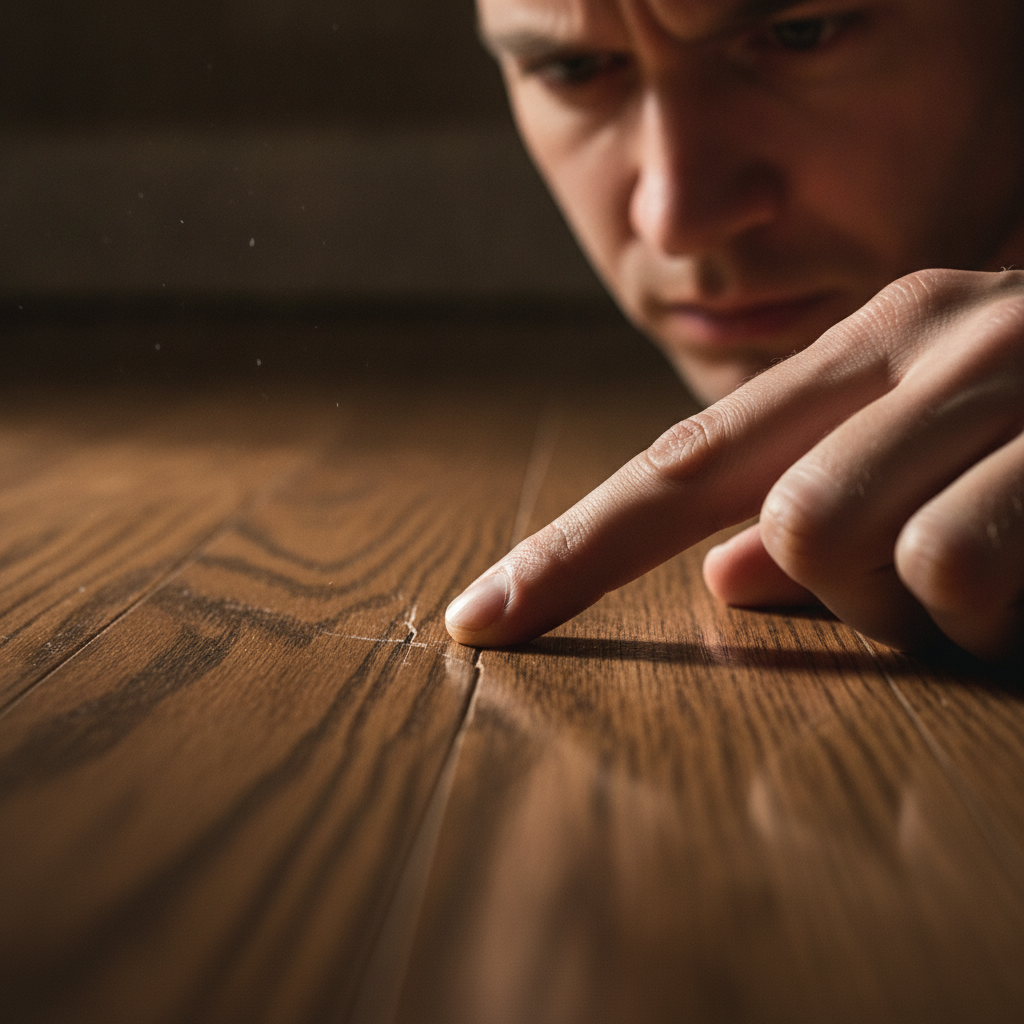
Before you reach for any repair product, you must determine the depth of the scratch.
- The Visual Test: A scratch that is only in the top polyurethane finish will often look white or very light. A scratch that has penetrated to the raw wood will be the color of the wood itself.
- The Fingernail Test: Gently run your fingernail across the scratch. If your nail doesn’t catch, it’s likely a superficial scratch in the finish. If it catches in the groove, it has penetrated into the wood.
- The Water Test: Place a single drop of water on the scratch. If it beads up, the finish is still largely intact. If it soaks in and darkens the area, the scratch has broken through the finish and exposed the raw wood.
DIY Fixes for Minor Scratches & Scuffs
For superficial scratches that are only in the finish, several simple DIY options are available. Following the instructions from reputable brands like Minwax or Varathane is crucial for success[9].
- Stain-Filled Markers & Wax Sticks: These are excellent for coloring in minor scratches that have removed a bit of the stain color but haven’t gouged the wood. They are available in a wide range of colors to match your floor.
- Restorative Polishes: Products like Bona or Rejuvenate offer polishes that can fill in microscopic scratches and restore the sheen to a dull area. They are a great option for reviving a floor with widespread, minor surface wear.
Crucial Pro-Tip: Always test any repair product in an inconspicuous area first, like inside a closet or under a large piece of furniture, to ensure it matches your floor’s color and sheen.
When to Call a Pro: Deep Gouges, Widespread Wear, and Water Damage
Some problems are simply beyond the scope of a DIY fix. Attempting a major repair without the proper tools and expertise can lead to a much costlier problem. Here is a checklist for when to call an NWFA-certified professional[1].
- Deep Gouges: If a scratch has gone deep into the wood, a simple marker won’t suffice. It may require professional filling, sanding, and spot finishing.
- Widespread Scratches: If the entire floor is covered in scratches and looks dull and worn, it’s a candidate for a “screen and recoat” or a full refinishing.
- Signs of Cupping or Buckling: If boards are warped, this indicates a significant moisture problem that must be addressed by a professional.
- Multiple Scratches Across Several Boards: This often requires sanding the entire area to blend the repair properly.
A full professional sanding and refinishing can restore a heavily damaged wood floor to like-new condition. While it is an investment, typically costing between $3 to $8 per square foot, it is far less expensive than a full replacement.
The Science of Surface Protection: Choosing Finishes & Heavy-Duty Coatings
The visible surface of your floor is almost always a protective coating. Understanding the science behind these finishes is the final piece of the durability puzzle. Whether you’re refinishing a wood floor or protecting a concrete garage floor, choosing the right coating is paramount.
For Hardwood Floors: Polyurethane vs. Hardwax Oil
When finishing or refinishing hardwood, the two dominant choices are polyurethane and hardwax oil. They offer very different approaches to protection.
| Finish Type | Durability | Look & Feel | Repairability | VOCs / Health |
|---|---|---|---|---|
| Oil-Based Polyurethane | Very High | Forms a thick, protective film. Ambers over time. | Difficult to spot-repair. Requires full sanding. | High |
| Water-Based Polyurethane | High | Forms a clear, protective film. Non-yellowing. | Difficult to spot-repair. Requires full sanding. | Low |
| Hardwax Oil | Moderate | Penetrates the wood, preserving natural feel. Matte finish. | Very easy to spot-repair by re-applying oil. | Ultra-Low |
A quality polyurethane finish, whether oil or water-based, creates a plastic-like layer on top of the wood and can last 7-10 years before needing a recoat. Hardwax oils, in contrast, become part of the wood itself. While they may require more frequent maintenance (like reapplying oil to high-traffic areas annually), they are far easier to spot-repair, making them a great choice for homeowners who prefer a more natural look and a simpler repair process. When considering finishes, it’s also wise to consult resources from the Environmental Protection Agency (EPA) regarding Volatile Organic Compounds (VOCs) and their impact on indoor air quality[10].
For Garages & Basements: Epoxy vs. Polyaspartic Coatings
For concrete floors in high-abuse areas like garages and workshops, you need an industrial-strength solution. Epoxy and polyaspartic coatings create a seamless, chemical-resistant, and incredibly durable surface. However, their success is almost entirely dependent on one factor: preparation. According to industrial coating manufacturers like Sherwin-Williams and Sika[11], proper surface preparation, including diamond grinding the concrete, is responsible for over 80% of the success of a coating application[11]. A poorly prepared floor will inevitably peel and fail.
| Coating Type | Durability & Use | Cure Time | Cost | UV Resistance (Non-Yellowing) |
|---|---|---|---|---|
| Epoxy | Excellent. Ideal for garages, workshops. Resists chemicals, impacts. | 24-72 hours | $$ | Low (can yellow with sun exposure) |
| Polyaspartic | Superior. More flexible and abrasion-resistant. | 4-6 hours | $$$ | High (ideal for areas with windows) |
While DIY kits are available, the difference between those and a multi-layer, professional-grade system is immense. For a coating that will truly last, professional installation is highly recommended.
Your Floor’s Future is in Your Hands
Achieving a floor that withstands the tests of time and traffic is not about finding a single, magical “scratch-proof” product. It is the result of a holistic, lifecycle approach. It begins with making an informed, data-driven selection that matches your lifestyle. It continues with the understanding that proactive, consistent maintenance is the most powerful strategy for ensuring longevity. And finally, it’s about having a clear diagnostic plan to make any necessary repairs manageable and effective.
By using this guide, you are empowered to move beyond the marketing claims and make a smart, long-term investment in your home. The concept of “Adamantine Flooring” is not a product you can buy, but a result you can create through knowledge, care, and a commitment to preserving the beautiful foundation of your home.
What’s your biggest flooring challenge? Share your experience or ask a question in the comments below—let’s build a community of smart homeowners!
This article provides general guidance. Always follow manufacturer-specific instructions for installation, cleaning, and repair products. For complex repairs or installations, consult a certified professional. When using chemicals or coatings, ensure proper ventilation and use personal protective equipment (PPE).
References & Authoritative Sources
- National Wood Flooring Association (NWFA). (n.d.). Technical Guidelines. The NWFA is the leading authority on wood flooring standards, installation, and finishing.
- Tile Council of North America (TCNA). (n.d.). Standards and Publications. The TCNA provides authoritative standards and testing methods for ceramic and porcelain tile, including the PEI rating system.
- ASTM International. (n.d.). Flooring Standards. ASTM develops and publishes technical standards for a wide range of materials, including flooring durability and testing methods.
- American Kennel Club (AKC). (n.d.). Home & Travel Safety. The AKC is a trusted source for dog owners, offering recommendations on creating safe and pet-friendly home environments.
- Institute of Inspection, Cleaning and Restoration Certification (IICRC). (n.d.). IICRC Standards. The IICRC is a primary standards-setting body for the professional cleaning and restoration industry.
- Shaw Floors. (n.d.). Floor Care Guides. As a major flooring manufacturer, Shaw provides authoritative care and maintenance instructions for its products.
- Bona. (n.d.). Hardwood Floor Care & Maintenance. As a leading manufacturer of floor care products and finishes, Bona provides expert guidelines on cleaning and maintenance.
- Certified Flooring Inspectors University (CFIU). (n.d.). Training Materials. CFIU is a top training organization for flooring inspectors, setting the standard for diagnosing flooring problems.
- Minwax / Varathane. (n.d.). Product Instructions and How-To Guides. As leading manufacturers of wood stains and finishes, their product documentation provides authoritative instructions for wood repair.
- United States Environmental Protection Agency (EPA). (n.d.). Volatile Organic Compounds’ Impact on Indoor Air Quality. The EPA is the authoritative source for information on VOCs and health considerations.
- Sherwin-Williams Protective & Marine / Sika Group. (n.d.). Product Data Sheets. As manufacturers of industrial coatings, their technical documents are authoritative sources on product performance and application.
