There’s nothing quite like a room bathed in natural sunlight. It lifts our spirits and makes a house feel like a home. But that same beautiful sunlight can be a destructive force, silently stealing the life and color from your beautiful floors. You invest in a stunning new floor, only to watch in frustration as the area under the rug remains vibrant while the rest of the room becomes a faded, discolored shadow of its former self. This fear of making a costly mistake—choosing a floor that can’t withstand the sun—is a major source of anxiety for homeowners.
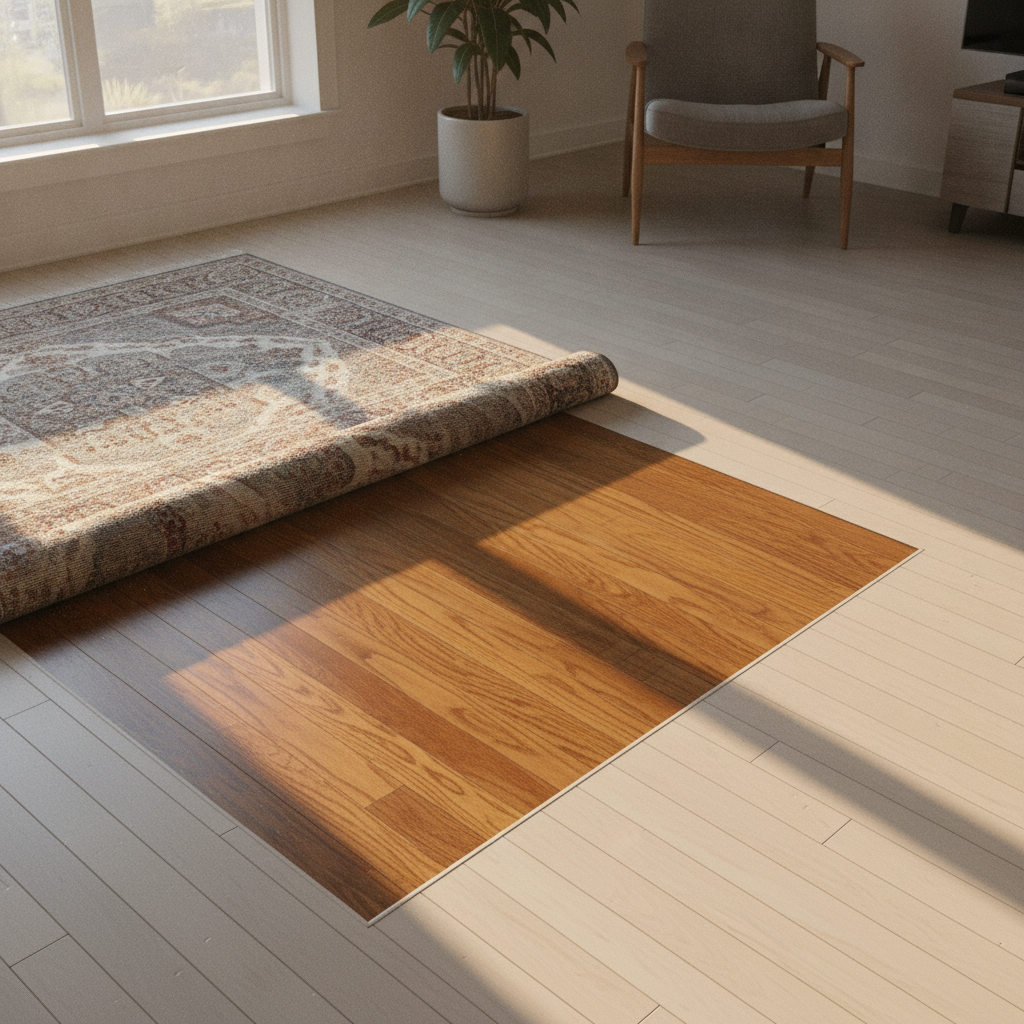
This is not just another article with generic advice. This is your definitive homeowner’s playbook for sun-proofing your floors. We will empower you with the knowledge to select, protect, and even restore your flooring with total confidence. Inside, you’ll find our proprietary Sunlight Resistance Scorecard to compare materials like a pro, a step-by-step Proactive Protection Plan for any budget, and an expert Damage Diagnostic Guide to assess your current situation.
Get ready to understand the science, discover the best materials like Adamantine flooring, and learn the strategies that will keep your floors looking rich and true for years to come.
- Understanding the Enemy: The Science Behind Sun-Faded Floors
- The Solution: A Data-Driven Guide to the Best UV Resistant Flooring
- Your Proactive Shield: How to Prevent Floor Fading on Any Surface
- Damage Control: Your Guide to Diagnosing and Repairing Faded Floors
- Frequently Asked Questions (FAQ) About UV Resistant Flooring
- Your Floors, Your Investment, Your Choice
- Sources & References
Understanding the Enemy: The Science Behind Sun-Faded Floors
Before you can choose the right defense, you need to understand the attack. The discoloration and fading you see on your floors is a chemical process triggered by the sun’s energy, a phenomenon known as photodegradation. It’s a slow, relentless process that affects nearly all materials to some degree.
Sunlight contains a spectrum of radiation, but the primary culprit for flooring discoloration is ultraviolet (UV) light. UV radiation, particularly UVA and UVB rays, carries enough energy to break down the chemical bonds in the dyes, pigments, and materials that make up your floor.
Material Scientist Explains: UV Damage vs. Sunburn
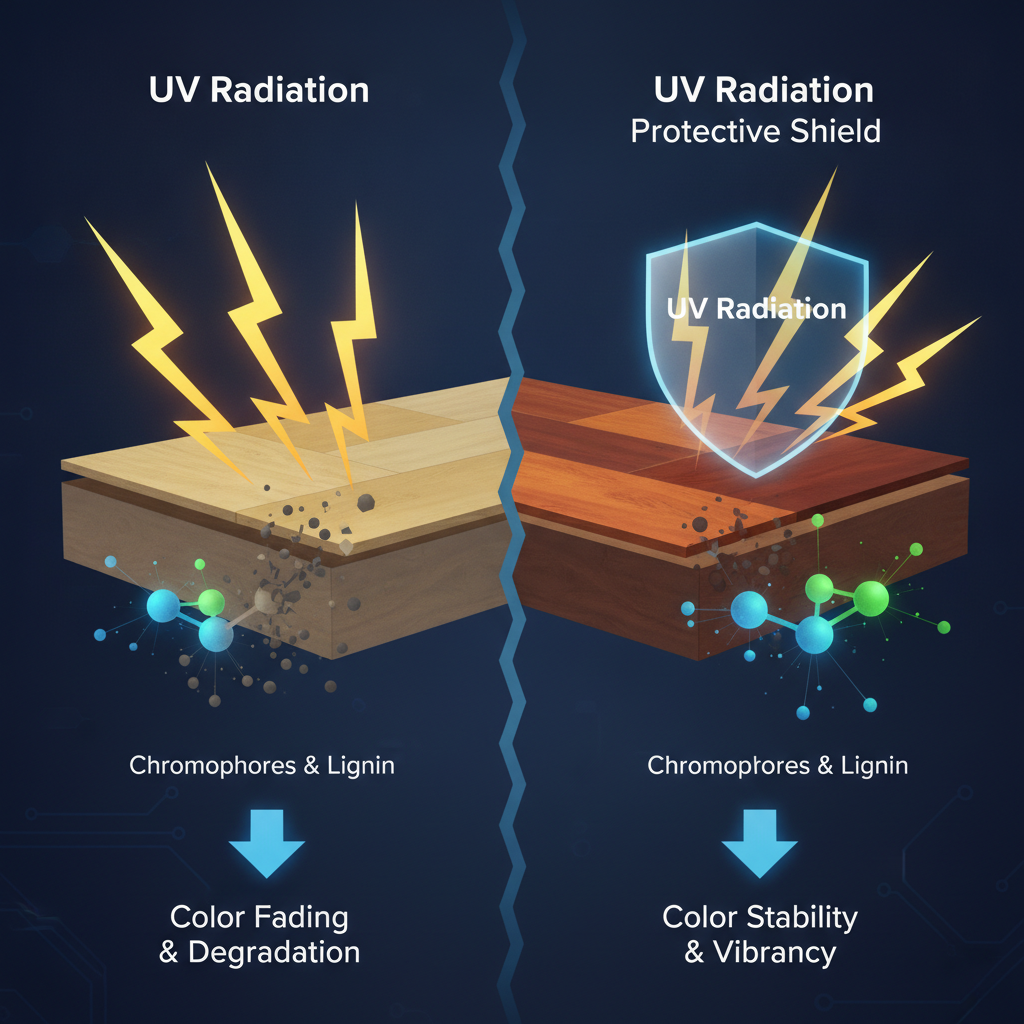
Think of sun damage to your floors like a permanent sunburn on your skin. Just as UV rays damage skin cells, they penetrate the surface of your flooring and attack the molecules responsible for its color, called chromophores.
- For Wood: UV light breaks down lignin, a natural polymer in wood that gives it rigidity. As the lignin degrades, the wood’s color begins to change. The U.S. Forest Products Laboratory notes that this chemical change is why some woods lighten (like oak) and others darken (like cherry) when exposed to sunlight.[1]
- For Vinyl & Synthetics: In materials like vinyl or laminate, UV rays attack the chemical bonds within the artificial pigments and the polymer structure itself. This can break down the color, leading to fading, or cause the material to yellow and become brittle over time, a process detailed in research covered by sources like the American Chemical Society.[2]
Glossary of Key Terms
- Photodegradation: The breakdown of materials by light, especially sunlight.
- Chromophores: The part of a molecule responsible for its color. When these are damaged, the color fades.
- UVA vs. UVB: Two types of ultraviolet radiation. UVA rays have longer wavelengths and penetrate deeper, while UVB rays are shorter and cause more surface-level damage. Both contribute to fading.
- Photobleaching: The irreversible loss of color in a material due to light exposure.
More Than Just Fading: The Full Scope of Sun Damage
While fading is the most obvious sign of sun damage, it’s not the only problem. The sun’s assault is a two-pronged attack involving both light and heat, which can cause a range of issues beyond simple discoloration.
- Brittleness and Cracking: Prolonged UV exposure can degrade the plasticizers in vinyl flooring, causing it to lose flexibility, become brittle, and eventually crack.
- Drying and Warping: The intense heat from direct sunlight can dry out natural materials like hardwood and cork. This loss of moisture can cause planks to shrink, crack, or warp, creating gaps and an uneven surface.
- Heat-Related Expansion: For “floating” floors like Luxury Vinyl Plank (LVP) and laminate, intense heat can cause the planks to expand. A certified flooring inspector from an organization like the Institute of Inspection, Cleaning and Restoration Certification (IICRC) would note that if there isn’t enough expansion gap around the perimeter of the room, this can lead to buckling or peaking at the seams.[3]
To help you identify the level of damage, consider this visual scale:
Visual Damage Scale
- Mild Damage: Noticeable color difference only when a rug or piece of furniture is moved. The floor’s texture and integrity are still intact.
- Moderate Damage: Obvious discoloration is visible across the room. For wood, the finish may appear duller. For vinyl, there might be a slight loss of sheen.
- Severe Damage: The color is significantly washed out or yellowed. Hardwood may show signs of drying, cracking, or splintering. Vinyl may feel brittle to the touch or show visible cracks, especially in high-exposure areas.
The Solution: A Data-Driven Guide to the Best UV Resistant Flooring
Choosing the right material from the start is the single most effective way to combat sun damage. Not all floors are created equal. Modern flooring technology has produced incredibly resilient options designed specifically to withstand high-sunlight environments.
To simplify your decision, we’ve developed the Sunlight Resistance Scorecard. This proprietary tool rates the top flooring categories based on the key factors that matter most in a sunny room. Our ratings are based on material science, industry performance standards (like ASTM F1700 for vinyl tile)[4], and typical manufacturer warranty coverage.
Sunlight Resistance Scorecard
(Ratings on a 1-5 scale, where 5 is best)
| Flooring Material | Fade Resistance | Heat Resistance | Warranty Coverage (for Fading) | Average Cost | Overall Score |
|---|---|---|---|---|---|
| Porcelain/Ceramic Tile | 5 | 5 | 5 | 3 | 4.5 |
| Adamantine / Premium LVP | 4 | 3 | 4 | 4 | 3.8 |
| High-Tech Laminate | 4 | 3 | 3 | 4 | 3.5 |
| Engineered Hardwood | 2 | 3 | 2 | 2 | 2.3 |
| Solid Hardwood | 2 | 2 | 1 | 2 | 1.8 |
| Natural Cork | 1 | 2 | 1 | 3 | 1.8 |
Top Contender: Adamantine Flooring & Luxury Vinyl (LVP/LVT)
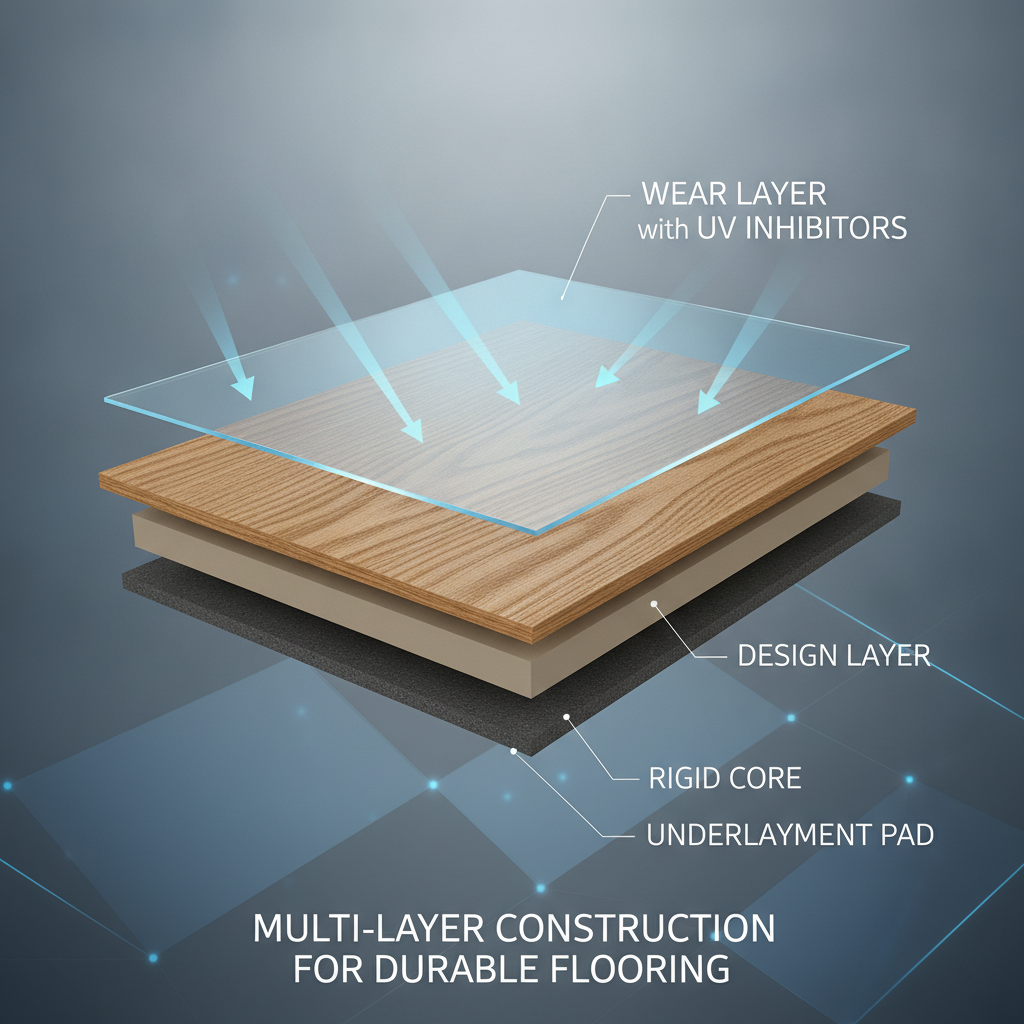
Modern Luxury Vinyl Plank (LVP) and Luxury Vinyl Tile (LVT) are engineered marvels, and a top choice for rooms with lots of sunlight. High-quality brands like Adamantine Flooring are specifically designed with sun resistance in mind. The secret lies in their multi-layer construction.
A cross-section of a premium LVP plank reveals several layers, but the most critical for sun protection is the top “wear layer.” This isn’t just a simple clear coat; it’s a high-performance urethane finish infused with UV inhibitors and often fortified with microscopic particles of aluminum oxide for extreme scratch resistance. According to industry publications and patent filings, these UV inhibitors act like a powerful sunscreen, absorbing or reflecting harmful UV radiation before it can reach the printed design layer below.[5] This technology is what allows LVP to offer stunningly realistic wood or stone visuals without the risk of fading that comes with the real thing.
The Fade-Proof Champion: Porcelain & Ceramic Tile
When absolute color permanence is the goal, nothing beats porcelain and ceramic tile. Their immunity to fading isn’t due to a protective coating; it’s baked directly into the material’s DNA.
During manufacturing, the colors and patterns on a tile are created using inorganic pigments that are fired in a kiln at temperatures exceeding 2,000°F. This process, called vitrification, fuses the pigments into the tile’s body or into a glass-like glaze on the surface. As the Tile Council of North America (TCNA) confirms, this makes the color an integral part of the tile itself, rendering it impervious to UV radiation and fading.[6] For the ultimate sun-drenched space like a sunroom or an area with floor-to-ceiling windows, you can even use outdoor-rated porcelain tile indoors for unparalleled durability and peace of mind.
The Modern Challenger: High-Tech Laminate Flooring
Laminate flooring has come a long way from its early days. While older, cheaper versions were known to fade, today’s high-tech laminate from reputable manufacturers is a strong contender for sunny rooms. Modern laminate flooring is constructed in layers: a stabilizing base, a high-density fiberboard core, a high-resolution photographic image layer, and a protective topcoat.
Similar to LVP, the magic is in this topcoat, which is packed with UV inhibitors. Leading brands have invested heavily in creating finishes that offer significant fade resistance, often backing it up with warranties that specifically cover fading from sunlight. When shopping for laminate, it’s crucial to compare the warranty terms, as they are a good indicator of the manufacturer’s confidence in their product’s UV protection.
Flooring to Be Cautious With in High-Sunlight Areas
While some materials excel in the sun, others are notoriously susceptible to fading and should be chosen with caution for bright rooms.
- Natural Hardwood: All wood is photosensitive and will change color over time. The National Wood Flooring Association (NWFA) provides guidelines showing that species like American Cherry and Brazilian Cherry will darken significantly, while others like Red Oak will lighten.[7]
- Cork: As a natural wood product, cork is very prone to fading and can become discolored quickly in direct sunlight.
- Carpet: The fade resistance of carpet depends entirely on its fiber type and how it was dyed. According to The Carpet and Rug Institute (CRI), solution-dyed fibers (where color is added to the liquid polymer before the fiber is created) are far more resistant to fading than topically-dyed fibers, where color is applied to the surface of the finished yarn.[8]
Your Proactive Shield: How to Prevent Floor Fading on Any Surface
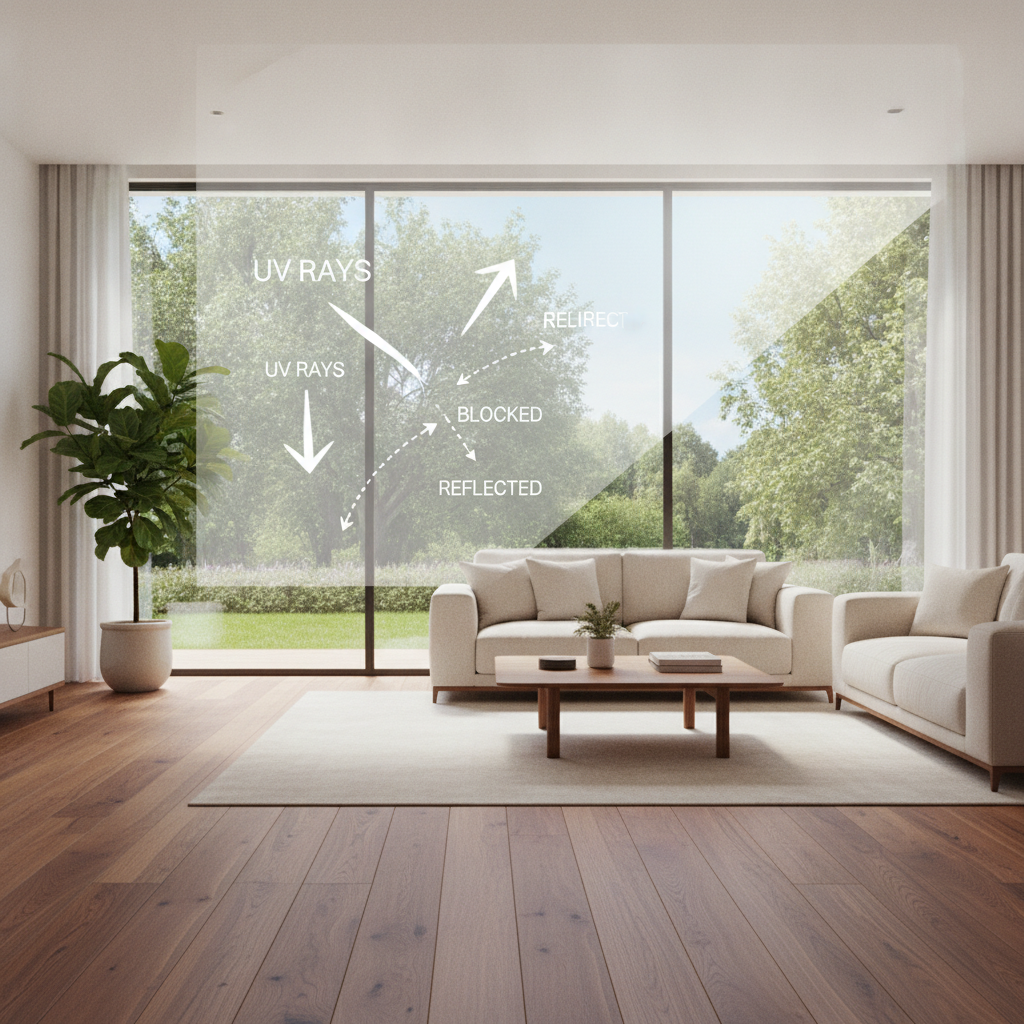
Whether you’re installing a brand-new floor or want to protect your existing one, a proactive defense is key. You can significantly reduce the risk of sun damage with a layered approach. We’ve structured this as a Home Protection Plan you can implement at any budget.
The most effective single defense is controlling the amount of UV radiation that enters the room. According to the International Window Film Association (IWFA), professionally installed window films can block up to 99.9% of UVA and UVB rays without significantly darkening your windows.[9] This is a solution so effective that even The Skin Cancer Foundation recommends window film as part of a comprehensive sun protection program.[10]
Layer 1: Smart Home & Decor Strategies
These low-cost, immediate actions can make a big difference.
- Strategic Furniture Placement: Pay attention to where the most intense sunlight falls throughout the day. Avoid placing dark-colored or valuable furniture and rugs in these direct paths.
- Rotate Rugs and Furniture: Every few months, slightly shift the position of your area rugs and furniture. This helps to even out the sun exposure over time, preventing sharp, defined lines of fading.
- Use Awnings: If your home’s architecture allows, exterior awnings can block direct sun during the hottest parts of the day while still allowing for plenty of ambient light.
Layer 2: Window Treatments That Work
Your windows are the gateways for UV radiation. Treating them is a high-impact investment.
- UV-Blocking Window Films: This is the gold standard. A thin, transparent film is applied directly to your windows, acting as a powerful shield.
- Low-E Glass: Many modern windows come with low-emissivity (low-E) coatings. The U.S. Department of Energy explains that these microscopic metallic coatings reflect UV and infrared heat while allowing visible light to pass through, protecting your floors and improving your home’s energy efficiency.[11]
- Curtains and Blinds: While any window covering helps, thermal or blackout curtains are specifically designed to block light and UV rays. Lighter-colored blinds can also reflect a significant amount of light and heat away from the room.
Window Treatment Comparison
| Treatment | UV Blockage | Cost | Visibility |
|---|---|---|---|
| Professional Window Film | 99%+ | Medium-High | Unobstructed |
| Low-E Glass Windows | 75-95% | High (Window Replacement) | Unobstructed |
| Blackout Curtains | 90-99% (when closed) | Low-Medium | Blocked (when closed) |
| Standard Blinds/Shades | 50-80% (when closed) | Low | Blocked (when closed) |
Damage Control: Your Guide to Diagnosing and Repairing Faded Floors
What if your floors are already showing signs of sun damage? Don’t panic. The first step is to accurately diagnose the problem and then explore your options. Following the standards for damage assessment set by organizations like the IICRC can help determine the best course of action.[3]
Use this simple diagnostic guide to assess your situation:
Fading Diagnostic Guide
- Assess the Location: Is the fading concentrated near windows and glass doors? If so, UV exposure is the likely cause.
- Check Under a Rug: Move an area rug that has been in place for at least a year. Is there a stark color difference? This confirms photobleaching.
- Examine the Texture: Gently run your hand over the faded area. Does it feel different from the protected area? If it feels drier, rougher (on wood), or more brittle (on vinyl), you may have damage beyond simple color loss.
- Identify the Material: The material of your floor is the single biggest factor in determining if a repair is possible.
Can It Be Fixed? Repair Options by Flooring Type
- Solid Hardwood: This is the most repairable material. Sun-faded hardwood can almost always be saved by sanding the entire floor down past the damaged layer and refinishing it with a new stain and a protective topcoat containing UV inhibitors.
- Engineered Hardwood: Repair is possible but trickier. It can be refinished only if its top layer of real wood is thick enough. Most engineered floors can only be sanded once or twice in their lifetime.
- Luxury Vinyl Plank (LVP): You cannot refinish LVP. However, because it is installed as individual planks, you can often replace just the damaged planks. It’s a great reason to always keep a few extra boxes of your flooring after installation.
- Laminate & Cork: Unfortunately, these materials generally cannot be repaired once faded. The image layer of laminate is just below the surface, so sanding is not an option. Replacement of the entire floor is often the only solution.
- Tile: Fading is not an issue. If a tile is damaged for other reasons, it can be individually replaced.
Navigating Your Warranty for Sun Damage Claims
Reading the fine print on your flooring warranty is crucial. Many warranties have specific clauses or exclusions related to fading.
- What to Look For: Look for terms like “fade resistance,” “lightfastness,” or “UV protection.” Some warranties will cover “abnormal” fading but exclude gradual changes in color, which they consider normal aging.
- Filing a Claim: If you believe you have a valid claim, you will need to provide evidence. A flooring claims inspector will advise you to gather photos showing the contrast between faded and non-faded areas, your original proof of purchase, and any documentation on the window treatments used in the room.
- Common Denials: Claims are often denied if the fading is deemed “normal” for the material, if the damage is due to extreme heat (which is often excluded), or if the homeowner did not take reasonable steps to mitigate sun exposure (like using curtains or blinds).
Frequently Asked Questions (FAQ) About UV Resistant Flooring
What type of flooring is best for a sunroom?
Porcelain tile is the absolute best choice for a sunroom. It is completely fade-proof, unaffected by heat, and extremely durable. The second-best option is a high-quality LVP like Adamantine Flooring, which is engineered with superior UV protection and is highly water-resistant, making it ideal for a room that often bridges the indoors and outdoors. Refer back to our Sunlight Resistance Scorecard for a detailed comparison.
Which flooring colors are less likely to show fading?
Lighter, more neutral colors such as beiges, light grays, and off-whites tend to show fading less dramatically than darker or more vibrant colors. Dark wood stains, deep reds, and blues will show a much more noticeable contrast when they fade. However, the most important factor is not the color itself, but the material’s inherent UV resistance. A UV-resistant dark gray LVP will perform infinitely better than a light-colored natural cork floor.
Does engineered hardwood fade less than solid hardwood?
Both engineered and solid hardwood are susceptible to fading because their top surface is real wood. The rate and nature of the color change are determined by the wood species itself.[7] However, the factory-applied finishes on high-quality engineered hardwood are often more technologically advanced than finishes applied on-site to solid hardwood. These factory finishes may contain more effective UV inhibitors, potentially slowing the fading process, but they will not prevent it entirely.
Your Floors, Your Investment, Your Choice
Protecting your floors from the sun is about protecting your investment and preserving the beauty of your home. You now have the knowledge to move forward with confidence. You understand the science of sun damage, you know that superior materials like Adamantine LVP and porcelain tile offer the best defense, and you are armed with a proactive plan to shield any floor from harmful UV rays.
By making an informed choice and taking simple preventative steps, you can enjoy those beautiful, sun-drenched rooms without worrying about your floors paying the price.
Ready to find the perfect, fade-proof floor for your sunniest rooms? Explore the Adamantine Flooring collection today or use our checklist to start protecting your current floors from sun damage now.
This article provides informational guidance. Product recommendations are based on publicly available data and industry research. Always consult with a professional flooring installer and review manufacturer specifications before making a purchase.
Sources & References
- Forest Products Laboratory (U.S. Forest Service). (N.D.). Wood Finishing: Finishing Exterior Wood. USDA.
- American Chemical Society. (N.D.). Chemical & Engineering News. Publications related to polymer chemistry and photodegradation.
- Institute of Inspection, Cleaning and Restoration Certification (IICRC). (N.D.). IICRC Standards for Inspection of Textile Floor Coverings.
- ASTM International. (N.D.). ASTM F1700 – 20: Standard Specification for Solid Vinyl Floor Tile.
- United States Patent and Trademark Office (USPTO) & Coatings World. (N.D.). Research based on publicly available patents for UV-protective coatings and technical articles on finish formulations.
- Tile Council of North America (TCNA). (N.D.). TCNA Handbook for Ceramic, Glass, and Stone Tile Installation.
- National Wood Flooring Association (NWFA). (N.D.). Technical Publication: Photosensitivity of Wood Species.
- The Carpet and Rug Institute (CRI). (N.D.). Carpet Fiber Types & Dyeing Methods.
- International Window Film Association (IWFA). (N.D.). UV Protection and Window Film.
- The Skin Cancer Foundation. (N.D.). Sun Protection and Your Home.
- U.S. Department of Energy. (N.D.). Energy Saver: Update or Replace Windows.
