That heart-stopping moment—the slip of a hand, the clang of a heavy pot, the slow-motion tumble of a can of soup from the countertop. We’ve all been there. The immediate dread isn’t about the mess; it’s about the potential damage to your beautiful, expensive floors. A dent, a crack, a chip—a permanent scar from a split-second accident. This fear of damaging a major home investment is real, and it’s compounded by a confusing marketplace filled with technical jargon and marketing hype. How do you choose a floor that can truly stand up to daily life?
Welcome to the Definitive Durability Playbook. This is not just another list of “best flooring” options. This is a comprehensive, science-backed guide that will empower you to understand the lifecycle of your floors. We will decode the industry standards that measure true strength, pit the top materials against each other in a head-to-head showdown, and provide a practical, step-by-step manual for repairing the inevitable damage when life happens. By the end of this guide, you will have the confidence to choose, protect, and maintain a floor that is built to last.
- What Makes Flooring Truly Durable? Decoding the Science of Strength
- The Ultimate Showdown: Best Impact Resistant Flooring Materials
- The Complete Flooring Repair Manual: A Practical Guide
- FAQ: Your Top Questions About Durable Flooring Answered
- Your Foundation for a Confident Decision
- References & Authoritative Sources
What Makes Flooring Truly Durable? Decoding the Science of Strength
To move beyond clever marketing and make an informed decision, you need to speak the language of durability. Flooring strength isn’t a matter of opinion; it’s a measurable science defined by standardized tests and ratings. Understanding these key metrics is the first step toward choosing a truly impact resistant flooring that fits your home and lifestyle.
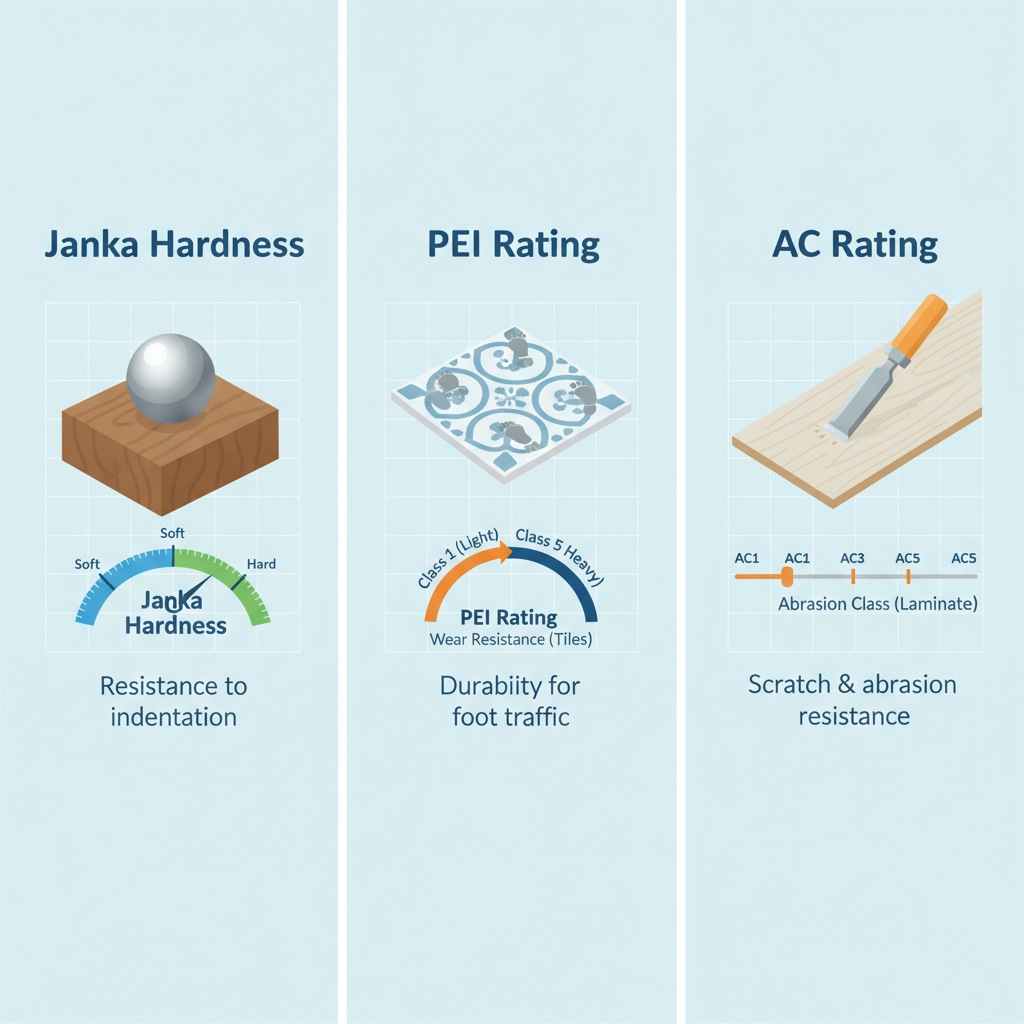
Durability Glossary: Key Terms at a Glance
- Janka Hardness Scale: A test that measures the force required to embed a steel ball into a piece of wood. It’s the primary indicator of dent resistance for hardwood and bamboo flooring. Higher numbers mean harder wood.
- PEI Rating (Porcelain Enamel Institute): A 1-to-5 scale that measures the wear and abrasion resistance of a tile’s glaze. It helps determine which tile is suitable for different traffic levels, from walls to heavy commercial areas.
- AC Rating (Abrasion Class): A 1-to-6 rating system for laminate and LVP flooring that indicates its resistance to scratches, stains, and scuffs. Higher ratings (AC3+) are recommended for residential use.
- Wear Layer: The top protective coating on Luxury Vinyl Plank (LVP) and other resilient flooring, measured in mils (thousandths of an inch). A thicker wear layer (12 mil or higher) provides better protection against scratches and scuffs.
Impact & Dent Resistance: The Janka Hardness Scale Explained
When it comes to solid hardwood or bamboo, the Janka Hardness Scale is the ultimate measure of its ability to resist dents and dings. The test measures the pounds of force (lbf) required to press a 0.444-inch steel ball halfway into the wood. A higher Janka rating means the wood is denser and more resistant to impact from dropped items.
This rating is why a floor made from Brazilian Cherry will look pristine for far longer in a busy kitchen than one made from a soft Pine.
Janka Hardness Comparison (Examples):
- Softwoods (Low Resistance): Douglas Fir (660 lbf), Yellow Pine (870 lbf)
- The Standard: Red Oak (1290 lbf) – A common benchmark for flooring.
- Hardwoods (High Resistance): Hickory (1820 lbf), Maple (1450 lbf)
- Exotics (Extreme Resistance): Brazilian Cherry (2350 lbf), Strand Woven Bamboo (3000+ lbf)
“The Janka scale is a fantastic tool, but it only tells part of the story,” notes a veteran flooring installer. “A hard wood can still be scratched. The factory finish, with its multiple layers of aluminum oxide, is what provides the primary defense against surface scratches. Always consider both Janka rating and the quality of the finish.”
Wear & Tear for Tile: Understanding PEI Ratings
For ceramic and porcelain tile, the key durability metric is the PEI rating, established by the Porcelain Enamel Institute and referenced by the Tile Council of North America (TCNA) [1]. This rating doesn’t measure breaking strength, but rather the ability of the tile’s surface glaze to resist abrasion and wear from foot traffic.
- PEI 1: No foot traffic. Recommended for walls only.
- PEI 2: Light traffic. Suitable for bathroom floors or areas where soft footwear is worn.
- PEI 3: Light to moderate traffic. Good for all residential applications.
- PEI 4: Moderate to heavy traffic. Suitable for all residential and light commercial use (e.g., offices, boutiques).
- PEI 5: Heavy to extra-heavy traffic. Can withstand heavy commercial use (e.g., shopping malls, airports).
For a kitchen or entryway, choosing a tile with a PEI rating of 3 or higher is essential for long-term durability.
“A PEI 5 tile is incredibly tough, but I’ve seen them crack a week after installation. Why? The subfloor wasn’t level or stable. A high PEI rating won’t save a tile from stress caused by an improper foundation. Your installation quality is just as important as the material itself.”
Scratch Resistance for Laminate & LVP: The AC Rating
Laminate and Luxury Vinyl Plank (LVP) flooring derive their scratch resistance from a tough, transparent top layer, often infused with aluminum oxide. The durability of this layer is measured by its Abrasion Class (AC) rating, a standard originally developed by European Producers of Laminate Flooring (EPLF) [2].
- AC1: Light residential (e.g., bedrooms, closets).
- AC2: Moderate residential (e.g., living rooms, dining rooms).
- AC3: Heavy residential / Moderate commercial (Suitable for any area in the home).
- AC4: General commercial (Can handle offices, cafes, and busy homes with kids and pets).
- AC5: Heavy commercial (Built for department stores and public buildings).
- AC6: Intense commercial (The highest durability, for extreme traffic areas).
For a busy household, especially one with pets or children, selecting a product with an AC3 rating is the minimum, while an AC4 rating provides superior, long-lasting protection against scratches from claws, toys, and dragged furniture.
The Ultimate Showdown: Best Impact Resistant Flooring Materials
Now that you understand the science, let’s see how the top contenders for durable flooring stack up in the real world. We’ll compare them based on their ability to handle the daily grind of dropped objects, heavy traffic, and moisture.
Durable Flooring Comparison Chart
| Material | Dent Resistance | Scratch Resistance | Water Resistance | Avg. Cost (Material) |
|---|---|---|---|---|
| Porcelain Tile | 5/5 | 5/5 | 5/5 | $$-$$$ |
| Luxury Vinyl Plank (LVP) | 4/5 | 4/5 | 5/5 | $$-$$$ |
| Laminate Flooring | 3/5 | 5/5 | 2/5 | $-$$ |
| High-Janka Hardwood | 3/5 | 3/5 | 1/5 | $$$-$$$$ |
Champion of Hardness: Porcelain & Ceramic Tile
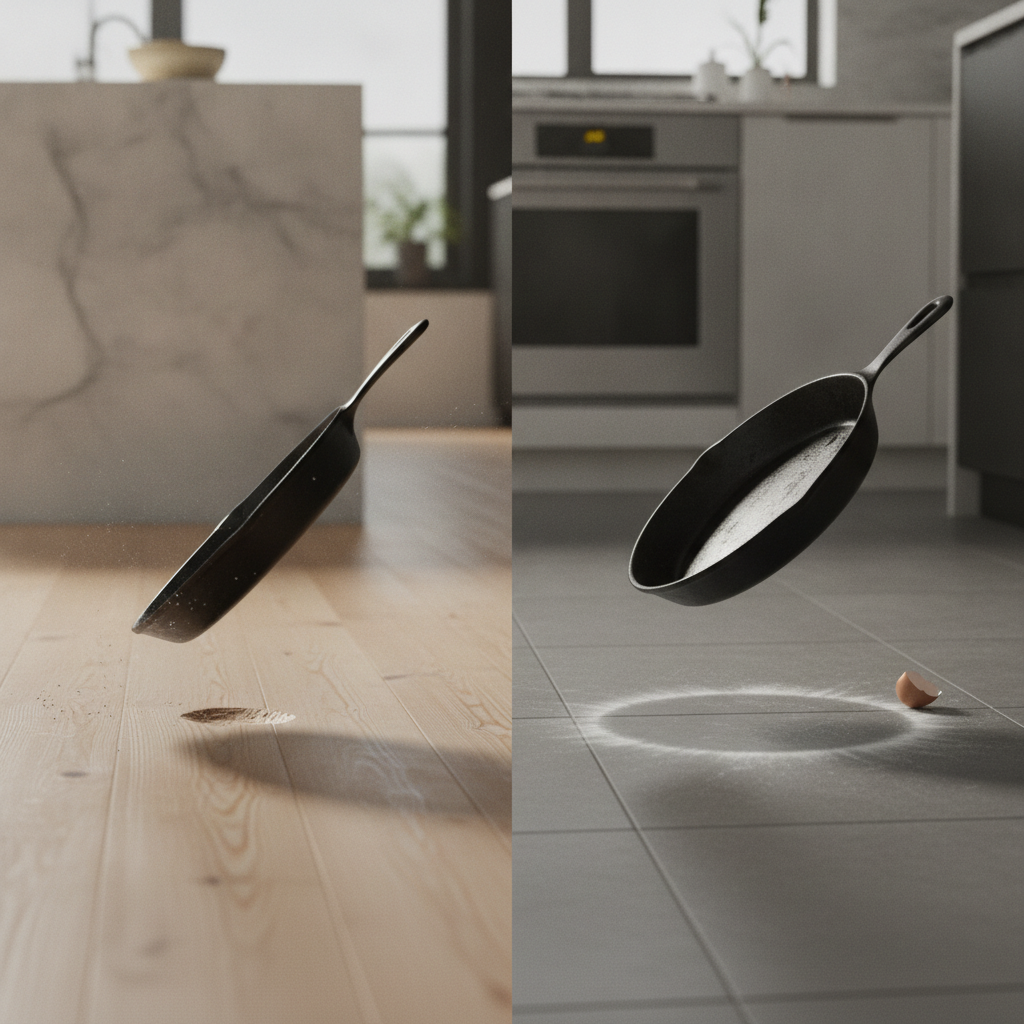
When it comes to sheer surface hardness, porcelain tile is the undisputed king. Fired at extremely high temperatures, its dense body is incredibly resistant to scratches, stains, and water. A dropped can of soup that would leave a permanent dent in hardwood will likely bounce harmlessly off a quality porcelain tile floor. Its high PEI rating (class 4 or 5) means it can withstand decades of heavy foot traffic without showing wear.
The Downside: This incredible hardness is also its main weakness. Porcelain is brittle. A very heavy object dropped from a height, like a cast iron skillet, can cause a crack or chip. Furthermore, the unforgiving surface can be hard on your joints and is more likely to break any glassware you drop on it.
“The key to a crack-proof tile floor is a rock-solid, perfectly level subfloor. Any flex or movement underneath will transfer stress directly to the tile, and it will eventually crack, no matter how strong it is. Don’t skimp on subfloor preparation.”
The All-Around Performer: Luxury Vinyl Plank (LVP)
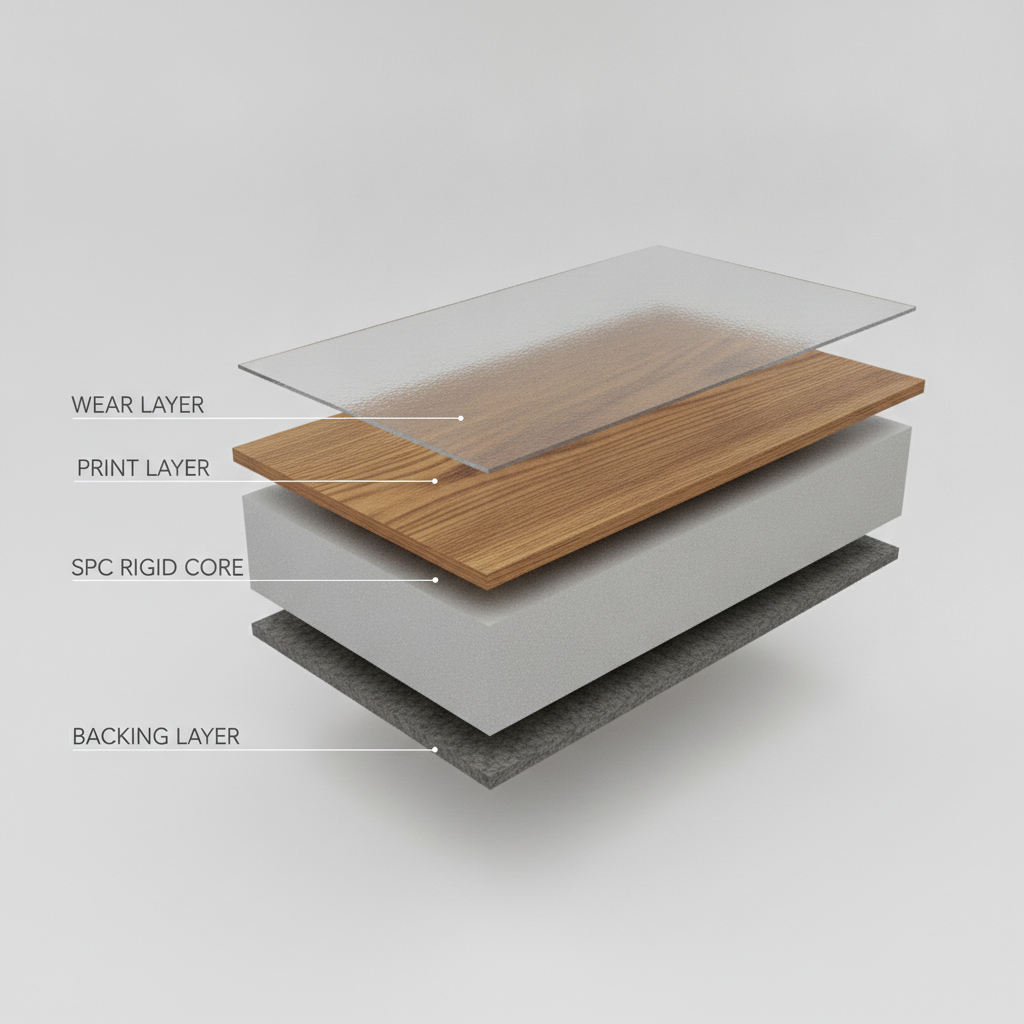
Luxury Vinyl Plank has exploded in popularity for good reason: it offers a fantastic balance of durability, comfort, and aesthetics. Its resilience comes from its multi-layered construction.
- Wear Layer: A thick, clear top layer (look for 12-20 mil) provides excellent scratch resistance.
- Print Layer: A high-definition image that realistically mimics wood or stone.
- Rigid Core: This is the key to its impact resistance. SPC (Stone Plastic Composite) cores are extremely dense and offer the best dent resistance. WPC (Wood Plastic Composite) cores are slightly softer, making them more comfortable underfoot but marginally less dent-proof.
- Backing Layer: Provides stability and sound insulation.
A dropped can on high-quality SPC vinyl may leave a tiny mark upon close inspection, but it is far less likely to cause a noticeable dent than on hardwood or even some laminates.
The Budget-Friendly Brawler: High-Pressure Laminate
Modern laminate flooring is a world away from the cheap, easily damaged products of the past. Today’s high-quality laminate features a high-density fiberboard (HDF) core and a top layer with a high AC rating (AC4 or AC5), making it one of the most scratch-resistant flooring options on the market. It’s an excellent choice for homes with large dogs or active kids.
The Downside: While its surface is tough, the core is still a wood-based product, making it vulnerable to moisture damage if spills aren’t cleaned up quickly. Heavy impacts can also sometimes chip the top layer or damage the core, and unlike wood, it cannot be refinished.
Myth vs. Fact: Modern Laminate Flooring
- Myth: Laminate always sounds hollow and fake when you walk on it.
- Fact: While older, cheap laminates had this issue, modern products that are 10-12mm thick and installed with a quality underlayment have excellent sound-dampening properties and feel solid underfoot.
Honorable Mentions & What to Avoid for High Impact Zones
Durable Options:
- Sealed Concrete: Exceptionally durable and resistant to almost everything, but very hard and requires periodic resealing.
- High-Janka Hardwoods: Woods like Hickory or Brazilian Cherry offer good dent resistance for those who must have real wood, but they still require more care than tile or LVP.
Materials to Avoid in High-Impact Areas (like kitchens):
- Softwoods: Pine, Fir, and other woods with low Janka ratings will dent very easily.
- Marble: While beautiful, marble is a relatively soft, porous stone that can be easily scratched, stained, and chipped.
- Low-Quality Sheet Vinyl: Thin, cheap vinyl can be easily gouged or torn by dropped utensils or dragged furniture.
“I often get called in to replace a 5-year-old softwood floor in a kitchen that looks like it’s been through a war. The homeowner saved a little money upfront but is now facing a full replacement. Choosing the right material for the room’s function saves thousands in the long run.”
The Complete Flooring Repair Manual: A Practical Guide
Even the most durable floor can suffer damage. The good news is that many common issues can be fixed without replacing the entire floor. This section provides actionable solutions for the most frequent types of flooring damage.
Repair Triage:
- Assess the Damage: Is it a surface scratch, a deep dent, or a structural crack?
- Identify Your Flooring: The repair method is entirely dependent on the material.
- Choose Your Method: Decide if it’s a simple DIY fix or if the scope and tools required mean it’s time to call a professional.
Fixing Dented & Scratched Hardwood Floors
Minor damage to solid hardwood is often surprisingly repairable.
Tools & Materials (for Dents):
- Clean cloth
- Water
- Household iron
DIY Fix for Minor Dents (The Steam Trick):
This method works best on shallow dents in solid (not engineered) hardwood where the wood fibers are compressed, not broken.
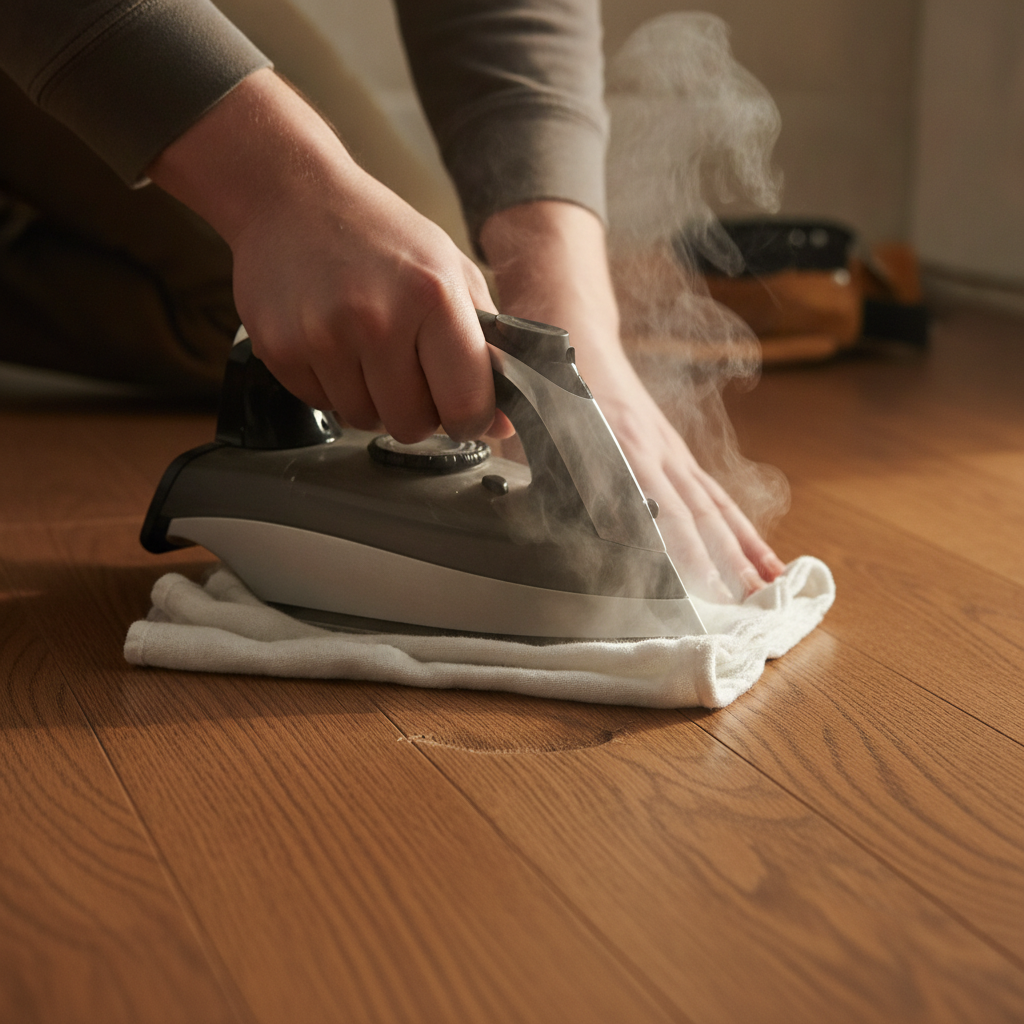
- Pour a small amount of water into the dent.
- Place a damp cloth over the dent.
- Set your iron to a high heat setting and press it onto the cloth over the dent, moving it in a circular motion for 2-3 minutes. The steam will cause the compressed wood fibers to swell back to their original shape.
- Let the area dry completely. You may need to repeat the process for deeper dents.
For surface scratches, wood stain markers or wax filler pens can work wonders. For widespread, deep damage, professional sanding and refinishing is the only solution.
“The biggest mistake homeowners make is renting a drum sander for a weekend project. Those machines can tear through a floor in seconds, creating divots and uneven spots that are impossible to fix. For a full refinish, always hire a pro.”
How to Replace a Single Cracked Tile
Replacing a single cracked tile is a manageable DIY project that can save a floor from looking ruined. The most important step is having a spare tile from the original installation to ensure a perfect match.
Tools & Materials:
- Safety goggles and gloves
- Grout removal tool (manual or oscillating)
- Hammer and chisel
- Shop vacuum
- Thin-set mortar and trowel
- New tile
- Tile spacers
- Grout and grout float
- Sponge and bucket
Step-by-Step Replacement Guide:
- Safety First: Put on your safety goggles and gloves. Chipping out old tile can send sharp fragments flying.
- Remove the Grout: Carefully use a grout removal tool to scrape out all the grout surrounding the cracked tile.
- Break Up the Tile: Cover the tile with a thick cloth and gently tap the center with a hammer to break it into smaller pieces. This relieves pressure and makes it easier to remove.
- Chisel Out the Pieces: Starting from the center, use the hammer and chisel to carefully pry out the broken tile pieces. Be careful not to damage the surrounding tiles.
- Clean the Subfloor: Vacuum up all dust and debris. Scrape away any old, dried mortar to create a clean, level surface.
- Apply New Mortar: Following the manufacturer’s instructions, mix a small batch of thin-set mortar. Apply it to the empty space with a trowel, creating notched ridges.
- Set the New Tile: Firmly press the new tile into the mortar with a slight twisting motion. Use tile spacers to ensure consistent grout lines with the surrounding tiles.
- Let it Cure: Allow the mortar to cure for at least 24 hours (or as directed by the manufacturer). Do not step on the tile during this time.
- Apply New Grout: Remove the spacers. Apply grout to the joints using a grout float, pressing it in at a 45-degree angle.
- Clean Up: After about 20-30 minutes, use a damp sponge to wipe the excess grout off the tile surface.
This process, guided by TCNA standards for proper setting and grouting, will result in a near-invisible repair [1].
Repairing Scratches and Gouges in LVP & Laminate
Since LVP and laminate cannot be sanded or refinished, repairs are focused on either concealing minor damage or replacing the affected plank.
For light surface scratches, first try cleaning the area thoroughly. If the scratch remains, purchase a repair kit that is color-matched to your specific flooring brand and model. These kits typically use a wax or putty filler to conceal the damage.
For deep gouges, chips, or broken locking mechanisms, the only solution is to replace the plank. This can be complex, especially if the damaged plank is in the middle of the room.
“To replace a center plank, you have to carefully cut it out with a multi-tool and chisel. The new plank’s locking tongue on one side needs to be trimmed off. You then use a thin bead of wood glue in the groove of the adjacent plank before carefully fitting the new piece in place. It takes patience and a steady hand.”
Before attempting any repair, always check your manufacturer’s warranty, as some DIY repairs may void coverage.
FAQ: Your Top Questions About Durable Flooring Answered
Is any flooring truly ‘indestructible’ or ‘dent-proof’?
In a residential setting, no flooring is completely indestructible. The term is better understood as “highly resistant.” While a porcelain tile floor comes close to being scratch-proof and dent-proof against everyday accidents, it can still be cracked by a severe impact. For a glimpse at truly “indestructible” flooring, look at the epoxy terrazzo floors used in airports or the thick, welded sheet vinyl in commercial kitchens. For homeowners, the goal is to choose the most impact resistant material for your lifestyle, like porcelain tile or high-density SPC vinyl, which are the closest you can get to a worry-free floor.
What is the most durable flooring for a kitchen?
The kitchen is a torture test for floors, demanding resistance to water, stains, scratches, and dropped objects. For these reasons, porcelain tile is the top recommendation for maximum durability. It is non-porous, making it impervious to water and easy to sanitize, which is a significant plus for kitchen hygiene. A very close second is high-quality LVP with an SPC core. It offers near-equal water resistance, excellent dent and scratch resistance, and is much more comfortable to stand on for long periods and more forgiving to dropped dishes.
What’s the best heavy-duty flooring for homes with large dogs and kids?
For homes with the chaotic energy of large dogs and active children, the primary concern is scratch resistance. The best options are LVP or laminate flooring with an AC4 rating or higher. The tough aluminum oxide wear layer on these products is specifically designed to stand up to the constant abrasion of dog claws, dragged toys, and heavy foot traffic. Opting for a style with a textured or wire-brushed finish can also help conceal any minor scratches that may occur over time. As part of a complete floor protection strategy, remember to use felt pads on all furniture and keep your pet’s nails trimmed regularly.
Your Foundation for a Confident Decision
Choosing a floor is about more than just color and style; it’s about investing in a surface that can withstand the rigors of your life. By moving past the marketing and understanding the science of durability—the Janka, PEI, and AC ratings—you can compare materials with clarity and confidence. You now know that the best material is always context-dependent, with porcelain reigning in the kitchen and high-AC laminate holding its own against pets and kids. Most importantly, you are equipped with the knowledge that even when accidents happen, a dent or a crack doesn’t have to be a disaster.
You have the playbook. You are ready to choose a floor not just for how it looks today, but for how it will perform for years to come.
Feeling empowered to find your perfect floor? Browse our detailed flooring product guides or use our locator to find a certified flooring professional near you.
This article contains advice on DIY repairs. Always prioritize personal safety by using appropriate protective gear. For complex damage or structural issues, consult a certified professional flooring installer. This post may also contain affiliate links.
References & Authoritative Sources
- Tile Council of North America (TCNA). (n.d.). TCNA Handbook for Ceramic, Glass, and Stone Tile Installation. Retrieved from https://www.tcnatile.com/products-and-services/publications.html
- European Producers of Laminate Flooring (EPLF). (n.d.). Standards for Laminate Flooring. The EPLF is the authoritative body that developed the AC rating system for testing the abrasion resistance of laminate floors.
