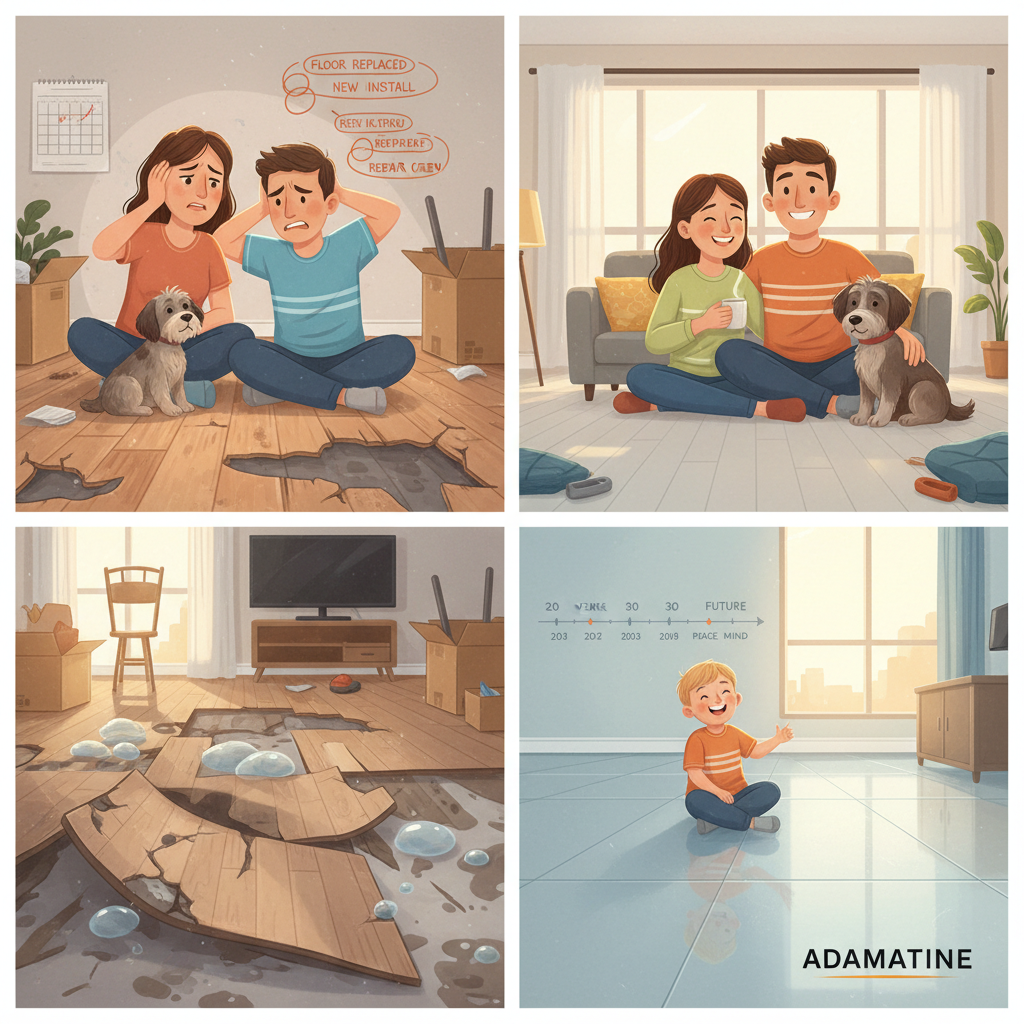
There is a hidden, compounding tax on the modern homeowner: the relentless cycle of replacing cheap, worn-out floors. Every five to seven years, families endure the financial drain, the dust-covered household disruption, and the frustration of watching once-beautiful surfaces succumb to the daily grind of paws, cleats, and spills. If you are managing a high-traffic household—balancing the chaotic energy of toddlers, the heavy footfall of active adults, and the safety needs of aging parents—standard builder-grade flooring simply will not survive.
Enter the “One-and-Done” Flooring Manifesto. It is time to stop renting your floors through frequent replacements and start investing in the “adamantine” standard. Adamantine-grade flooring is not just a design choice; it is a permanent, generational investment engineered for extreme durability and universal safety. In this comprehensive guide, we will decode the material science behind indestructible floors, explore how to balance multi-generational safety with extreme wear resistance, analyze the true Total Cost of Ownership (TCO), and reveal the installation secrets that guarantee a lifetime foundation.
- The ‘Adamantine’ Standard: Decoding the Science of Extreme Durability
- Multi-Generational Flooring: Balancing Safety, Comfort, and Extreme Wear
- Top Durable Home Flooring Options for Large, High-Traffic Families
- Diagnosing Worn Out Home Floors: The Repair vs. Replace Flowchart
- The Economics of Longevity: Calculating Total Cost of Ownership (TCO)
- The Enduring Foundation: Installation Secrets for a Lifetime Floor
- Conclusion
- References & Expert Sources
The ‘Adamantine’ Standard: Decoding the Science of Extreme Durability
In mythology and geology, “adamantine” refers to materials of impenetrable hardness, akin to a diamond. In the realm of home design, adamantine flooring represents the pinnacle of material science—ultra-durable, virtually indestructible surfaces conceptualized for extreme longevity. But what is adamantine flooring made of? Today, it takes the form of commercial-grade porcelain, rigid-core luxury vinyl with advanced composite overlays, and engineered hardwoods fortified with high-tech finishes.
Consumers often ask, “Is it truly scratch-proof?” In the literal sense, no material is entirely immune to the laws of physics if subjected to enough targeted force. However, adamantine-grade floors are engineered to resist the specific types of abrasion that ruin standard floors. According to peer-reviewed data on composite hardness published in the Journal of Materials Science [1], the integration of microscopic mineral compounds into flooring wear layers has exponentially increased their resistance to daily friction.
To avoid marketing fluff, homeowners must understand the Mohs Hardness Scale, a scientific metric used to evaluate a material’s resistance to scratching:
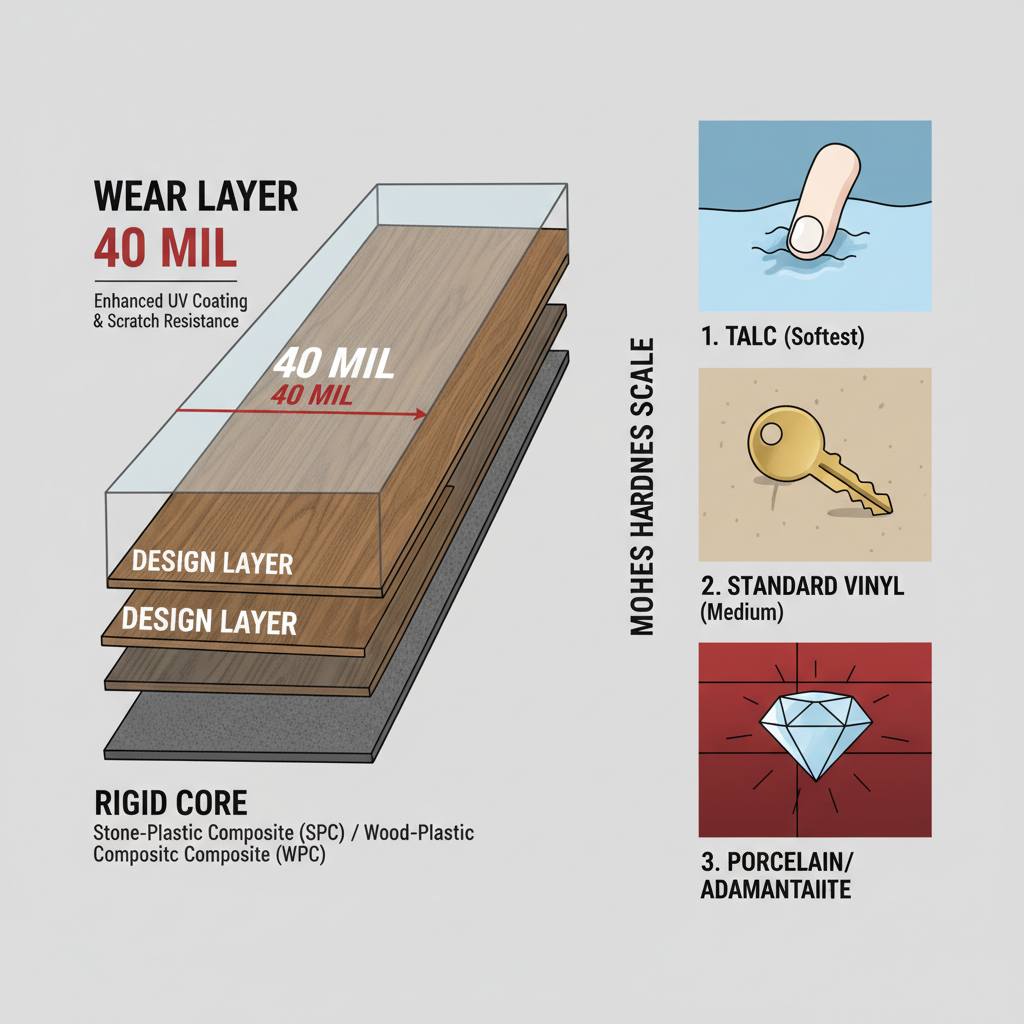
- Talc/Chalk: 1 (Easily scratched by a fingernail)
- Standard Vinyl/Linoleum: 2-3 (Prone to scuffs and gouges)
- Natural Oak Hardwood: 3-4 (Dents and scratches under heavy traffic)
- Aluminum Oxide Finishes: 8-9 (Exceptional scratch resistance)
- Commercial Porcelain Tile: 7-9 (Adamantine-grade durability)
- Diamond: 10 (The ultimate adamantine benchmark)
To measure this durability in a laboratory setting, ASTM International utilizes the Taber Abrasion Test [2]. This rigorous process involves mounting a flooring sample on a turntable and subjecting it to weighted, abrasive wheels. The number of wear cycles a floor can withstand before the pattern is damaged dictates its official durability rating.
Wear Layers, AC Ratings, and Mil Thickness Explained
When shopping for long-lasting flooring for high traffic areas, you must look past the color and texture to the technical specifications. The “wear layer” is the invisible shield protecting your floor’s design. For luxury vinyl plank (LVP), this is measured in “mils” (one-thousandth of an inch). A good wear layer thickness for high traffic is at least 20 mils, though adamantine-grade commercial options boast 28 to 40 mils.
For laminate flooring, durability is measured by an Abrasion Class (AC) rating. What does an AC4 rating mean for laminate? It signifies a commercial-grade surface designed to withstand heavy foot traffic, making it ideal for busy residential hallways and kitchens. The World Floor Covering Association (WFCA) notes that understanding these industry standards on wear layers is the single most important factor in predicting a floor’s lifespan [3].
It is vital to understand how floors wear out. Dirt and microscopic grit tracked in from outside act as sandpaper on finishes, slowly grinding away the protective layer with every footstep. Furthermore, there is a distinct difference between physical foot traffic wear and UV fading. While a thick mil layer protects against the “sandpaper effect,” you must also ensure the product has built-in UV inhibitors to prevent the sun from bleaching the floor’s color over time.
Glossary of Technical Flooring Terms:
- AC Rating: Abrasion Class rating for laminate (AC1 to AC5), measuring resistance to wear, impact, and staining.
- Mil Layer: The measurement of a vinyl floor’s clear protective topcoat.
- Janka Hardness: A test measuring the resistance of a sample of wood to denting and wear, specifically the force required to embed a steel ball halfway into the wood.
Aluminum Oxide and Advanced Scratch-Resistant Coatings
For homeowners seeking scratch-resistant adamantine floors, the conversation inevitably turns to surface coatings. Does an aluminum oxide coating prevent all scratches? While not an absolute forcefield, floors treated with aluminum oxide finishes are up to 10 times more scratch-resistant than traditional polyurethane finishes.
However, there is a critical content gap in flooring marketing: scratch-resistant does not mean dent-resistant. If you drop a cast-iron skillet on an aluminum-oxide-coated engineered wood floor, the finish may not scratch, but the wood beneath it can still dent. For true dent and scratch immunity, porcelain tile remains the champion. Data from the Tile Council of North America (TCNA) on porcelain durability standards confirms that high-density porcelain fired at extreme temperatures achieves a nearly impenetrable surface [4].
If an aluminum oxide-coated wood floor eventually does scratch, refinishing is complex. Because the coating is so hard, it requires specialized industrial sanders to remove, meaning it is often a job strictly for professionals rather than a weekend DIY project.
Multi-Generational Flooring: Balancing Safety, Comfort, and Extreme Wear
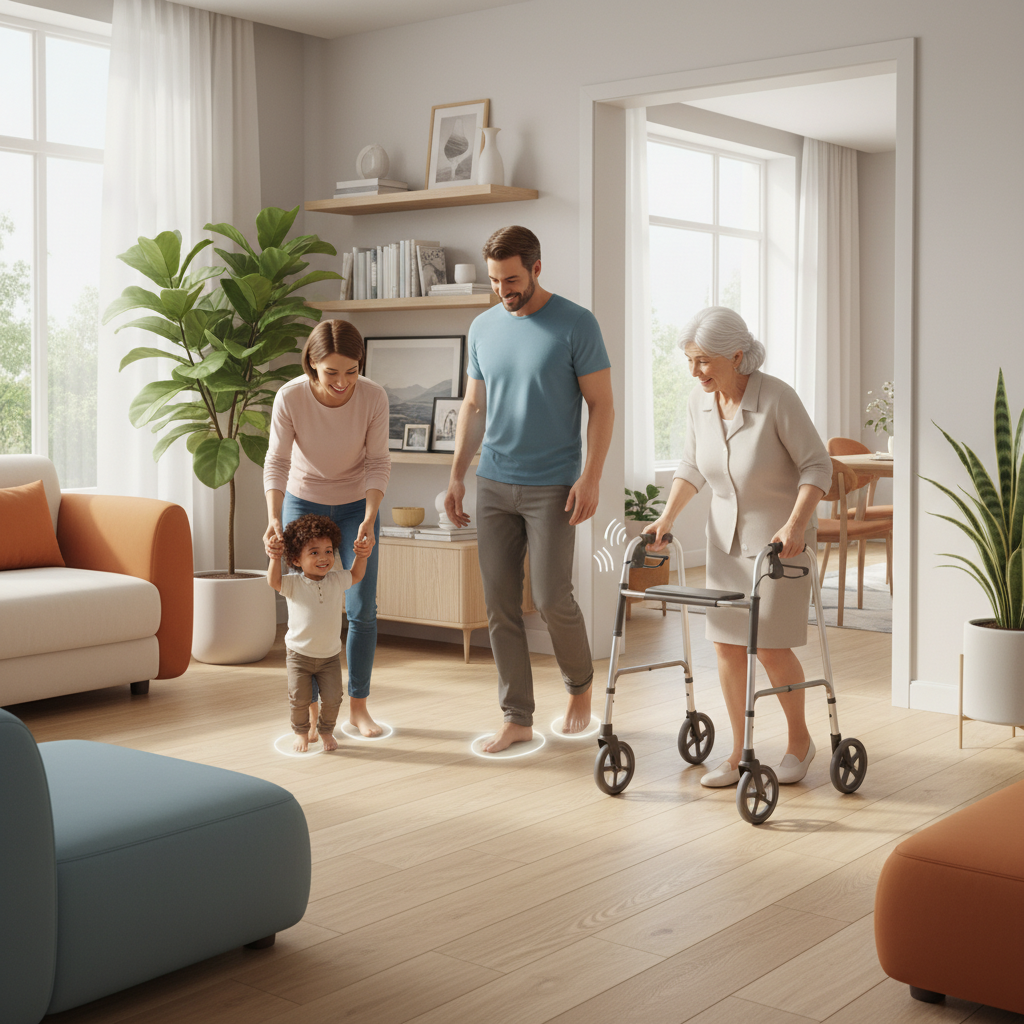
While extreme durability is vital, a home is not a commercial warehouse. It is a living space that must accommodate the delicate needs of a multi-generational family. Toddlers are learning to walk, adults are rushing through their daily routines, and seniors require stability to navigate safely.
What is the safest flooring for seniors and toddlers? Are hard floors bad for aging joints? How do you choose flooring for a multi-generational home? The answer lies in universal design. “The ideal multi-generational floor does not force a family to choose between safety and longevity,” notes a Certified Aging-in-Place Specialist (CAPS) aligned with the principles of the American Occupational Therapy Association (AOTA) [5]. “It must provide a stable, slip-resistant surface that minimizes joint impact without sacrificing the ability to withstand heavy wheelchairs or dropped toys.”
The stakes are incredibly high. The CDC reports that 3 million older adults are treated in emergency departments for fall injuries each year, making slip-resistant flooring a critical health intervention [6].
The Safety vs. Durability Matrix: Finding the Compromise-Free Floor
To navigate this, visualize a “Safety vs. Durability Matrix.” On one axis, you have shock absorption (vital for falls and aging joints); on the other, you have wear resistance.
- High Durability / Low Shock Absorption: Porcelain tile. Excellent for wear, but unforgiving on joints and dangerous for falls.
- High Shock Absorption / Low Durability: Plush carpet. Great for toddlers, but terrible for wheelchairs, allergies, and longevity.
- The Compromise-Free Zone: Cork-backed Luxury Vinyl Plank (LVP) or premium rubberized composites.
Is vinyl or laminate better for wheelchairs? Vinyl, specifically rigid-core LVP, is vastly superior. It does not easily dent under the concentrated weight of motorized wheelchair wheels, and it provides a smoother, less slippery surface than heavily embossed laminate. For wet areas, what is the best non-slip flooring for bathrooms? ADA.gov compliance standards for slip resistance recommend materials with a high Coefficient of Friction (COF), such as textured porcelain mosaics or slip-resistant vinyl [7].
Consider a recent case study of a home remodel designed specifically for a three-generation family: The homeowners replaced their mix of carpet and slippery polished hardwood with a continuous, high-quality cork-backed LVP. The cork underlayment provided necessary acoustic dampening and joint relief for the grandparents, while the 30-mil wear layer easily repelled the scratches from the family’s two golden retrievers.
Acoustic Control and Wheelchair-Friendly Transitions
Two frequently overlooked aspects of multi-generational flooring are acoustics and transitions. In a bustling home, noise reduction between floors is essential for sanity. Hard, adamantine-grade floors can turn a home into an echo chamber. Utilizing premium acoustic underlayments—like dense cross-linked foam or recycled rubber—can drastically reduce sound transmission between the first and second stories.
Furthermore, maintaining a seamless, trip-free environment is paramount. AARP guidelines for aging in place and home safety emphasize the elimination of bulky transition strips between rooms [8]. Wheelchair-friendly transitions require floors of equal height meeting flush, or the use of ADA-compliant micro-beveled reducers that prevent tripping hazards for those using walkers or shuffling their feet.
Top Durable Home Flooring Options for Large, High-Traffic Families
When evaluating durable home flooring for large families, you must account for the “Mess Factor”—the daily onslaught of spilled juice, muddy cleats, scattered toys, and pet accidents. What is the most durable flooring for a whole house? Which flooring lasts the longest? What flooring is best for dogs and kids?
“The best floor is the one you don’t have to think about. If you are spending more than 15 minutes a week maintaining a floor, it’s the wrong material for a busy family.”
— Professional Residential Cleaner
Time-to-Clean Metric:
- Carpet: High (Requires daily vacuuming, frequent deep extraction).
- Solid Hardwood: Medium (Requires specialized cleaners, immediate spill attention).
- Porcelain Tile: Low (Sweep and mop, though grout lines require periodic scrubbing).
- Luxury Vinyl Plank (LVP): Very Low (Sweep and damp mop with pH-neutral cleaner).
Navigating Waterproofing, VOCs, and Maintenance
Parents frequently ask: Is waterproof flooring really 100% waterproof? Materials like LVP and porcelain tile are inherently waterproof—they will not swell or degrade if submerged. However, your subfloor is not. If a massive spill seeps through the seams of a floating floor, it can trap moisture and cause mold. Therefore, “waterproof” means the plank itself is safe, but immediate cleanup is still required. What is the easiest flooring to keep clean? Premium LVP with a tight locking system prevents surface spills from penetrating the seams.
A major concern for parents exploring durable synthetic floors is indoor air quality. Many cheap vinyl floors off-gas Volatile Organic Compounds (VOCs). When selecting durable flooring options for large families, always look for products meeting Greenguard Certification standards for low VOC emissions [9]. The American Academy of Pediatrics stresses that minimizing synthetic chemical exposure in the home is vital for child-safe environments [10].
Another advantage of modern LVP is the ease of spot-repairing. If a single plank suffers catastrophic damage, it can often be heated, removed, and replaced without tearing up the entire room—a massive advantage over sheet vinyl or continuous hardwood.
Material Showdown: Commercial LVP vs. Porcelain Tile vs. Engineered Wood
- Commercial LVP: Is luxury vinyl plank more durable than tile? Against impact (dropping a heavy object), yes; LVP will bounce back where tile will crack. Against scratching, tile wins. LVP is the ultimate all-rounder for living rooms, basements, and bedrooms, especially in climates with high humidity where natural wood would warp.
- Porcelain Tile: Can you scratch porcelain tile? It is incredibly difficult. Fired at over 2,000 degrees Fahrenheit, it is the closest residential material to true adamantine flooring. It is ideal for entryways, bathrooms, and kitchens, particularly in warm climates.
- Engineered Wood (with Aluminum Oxide): For those who demand the aesthetic of real wood, engineered hardwood offers superior dimensional stability compared to solid wood, resisting temperature fluctuations.
- Terrazzo: Is terrazzo a lifetime floor? Yes. Often found in commercial buildings, poured terrazzo is a composite of marble chips and epoxy. It is incredibly expensive but will easily outlast the house itself.
Licensed flooring contractors consistently note that real-world longevity depends entirely on matching the material to the room’s specific stress factors. In hands-on stress testing—dragging heavy furniture, leaving standing water for 24 hours, and dropping steel weights—commercial LVP and porcelain consistently emerge as the undisputed champions of the high-traffic home.
Diagnosing Worn Out Home Floors: The Repair vs. Replace Flowchart
Before investing in an adamantine-grade replacement, you must diagnose your current situation. How do I know if my floors need to be replaced? What causes floors to wear out quickly? Can you put new flooring over worn-out hardwood?
According to a diagnostic checklist vetted by the American Society of Home Inspectors (ASHI) [11], homeowners should look for structural versus cosmetic damage.
The Repair vs. Replace Flowchart:
- Are there deep, structural soft spots or extreme squeaks? -> Replace. This indicates subfloor rot or joist failure.
- Is the hardwood cupping (edges higher than the center) or crowning? -> Investigate. This is a severe moisture issue. Fix the moisture source first. If the wood is solid and thick enough, it can be sanded and repaired.
- Is the laminate peeling at the edges or bubbling? -> Replace. Laminate cannot be refinished. Once the photographic wear layer is breached, it is dead.
- Are there surface scratches on solid hardwood? -> Repair. High-resolution before-and-after repair photos of actual projects show that a professional sand-and-refinish can make 100-year-old wood look brand new.
Identifying Irreparable High-Traffic Damage
High traffic flooring damage presents specific symptoms: scuffs, gouges, delamination, and dulling. How do you fix high traffic wear on engineered wood? If the veneer is thick enough (at least 3mm), it can be lightly sanded and recoated. If it is a micro-veneer, it must be replaced.
Why is my vinyl plank peeling at the edges? This delamination is often caused by rolling loads (like wheelchairs or heavy office chairs without protective mats) or the microscopic mechanics of material failure due to improper cleaning agents. The Institute of Inspection, Cleaning and Restoration Certification (IICRC) warns that using harsh chemicals, steam mops on vinyl, or excessive water can break down the adhesives binding the wear layer to the core [12].
Can you restore the finish on high traffic areas? A flooring restoration specialist notes, “For polyurethane-coated woods, we can do a ‘screen and recoat’ to restore the shine if the wear hasn’t penetrated to the raw wood. But for synthetics like laminate or thin LVP, once the wear layer is gone, the floor is structurally compromised and must be replaced.”
The Economics of Longevity: Calculating Total Cost of Ownership (TCO)
The frustration of frequent floor replacement costs is primarily a financial one. How much does it cost to replace flooring in a 2,000 sq ft house? What flooring has the best lifetime value? How do you finance a whole house flooring replacement?
Homeowners spend an average of $3,000 to $8,000 on a standard floor replacement, with labor accounting for up to 50% of the total cost [14]. However, replacing worn floors with high-quality, durable materials offers a massive return on investment—up to 70-80% upon home resale, according to the National Association of Realtors (NAR) [14].
To understand true value, we must calculate the Total Cost of Ownership (TCO).
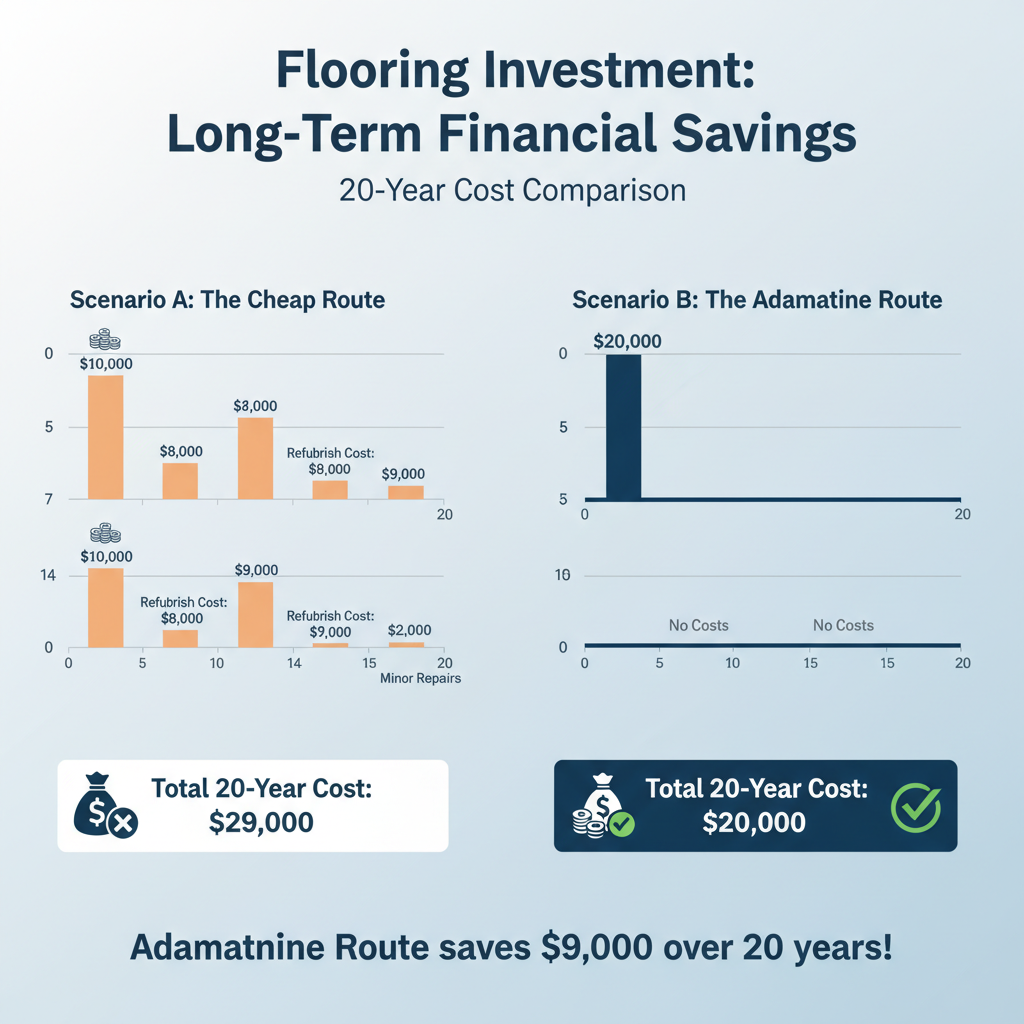
- Scenario A (The Cheap Route): You buy a $2/sq ft builder-grade laminate for a 2,000 sq ft home. Materials and labor cost roughly $8,000. It wears out in 7 years. Over 21 years, you replace it three times. Total Cost: $24,000 (plus the immense hassle of moving furniture and living in a construction zone three times).
- Scenario B (The Adamantine Route): You invest in a $6/sq ft commercial-grade LVP or porcelain tile. Materials and labor cost roughly $16,000. It lasts 25+ years. Total Cost: $16,000.
Remodeling Magazine’s Cost vs. Value Report consistently shows that investing in premium, long-lasting materials yields better long-term financial outcomes than cyclical budget replacements [13].
Deconstructing ‘Lifetime Warranties’
When seeking lifetime durable flooring solutions, consumers are heavily influenced by marketing. What does a lifetime flooring warranty actually cover? Does solid hardwood last forever?
A historic home preservationist associated with the National Trust for Historic Preservation confirms that solid hardwood can last centuries—but only if meticulously maintained and protected from modern high-traffic abuse [16].
However, modern “lifetime warranties” on synthetic floors require careful deconstruction. The Federal Trade Commission (FTC) guidelines on warranty marketing require companies to clearly state terms, but the fine print often hides massive exclusions [15].
- Residential vs. Commercial: A “lifetime residential warranty” often drops to a 5-year warranty if installed in a light commercial setting. High-traffic large families often subject their floors to commercial-level wear.
- The “Improper Maintenance” Clause: If you use the wrong floor cleaner once, or fail to put felt pads under your heavy sofa, the manufacturer can void the warranty.
- The Subfloor Clause: If the floor fails due to moisture from the concrete slab or an uneven subfloor, the warranty is voided. This brings us to the most critical aspect of adamantine flooring: the installation.
The Enduring Foundation: Installation Secrets for a Lifetime Floor
Durability does not start at the surface; it starts beneath it. Is it cheaper to install flooring yourself? While DIY installation saves on labor, it introduces catastrophic risks. The World Floor Covering Association (WFCA) states a staggering statistic: Over 80% of premature flooring failures are attributed to improper subfloor preparation and moisture issues [17].
How do you prepare a concrete subfloor for enduring flooring? It must be perfectly flat. High spots must be ground down, and low spots filled with a self-leveling compound. If a rigid adamantine floor is installed over an uneven subfloor, the locking mechanisms will snap under foot traffic, or the porcelain tiles will crack.
Why is moisture testing important before installation? Concrete is porous. Even a slab that looks dry can emit moisture vapor that will destroy a floor from the bottom up. Professional installers use the calcium chloride moisture testing process: a sealed dish of calcium chloride is weighed, placed on the bare concrete under a plastic dome for 72 hours, and weighed again. The weight difference calculates the moisture vapor emission rate. If it exceeds the flooring manufacturer’s limits, a moisture mitigation barrier must be applied.
Subfloor Prep, Acclimation, and NWFA Guidelines
For wood-based products, acclimation is a non-negotiable step that many DIYers skip. Materials must sit in the climate-controlled installation room for 3 to 5 days so their moisture content reaches equilibrium with the home’s environment.
Furthermore, specific National Wood Flooring Association (NWFA) installation guidelines dictate precise expansion gaps [18]. How much expansion gap is needed for solid wood? Typically, a minimum of 3/4 inch around all vertical perimeters is required. Without this gap, the wood will expand during humid summer months, hit the drywall, and buckle upward, destroying the floor.
For heavy lifetime floors like natural stone or large-format porcelain, structural requirements are paramount. Tile Council of North America (TCNA) substrate prep standards dictate strict limits on joist deflection (the amount the floor bounces when you walk on it) [19]. If the wooden joists beneath the subfloor flex too much, the adamantine tile above will inevitably crack. Reinforcing the subfloor with an uncoupling membrane and additional plywood is often required to create a truly enduring foundation.
Conclusion
The “One-and-Done” flooring philosophy is more than a home improvement strategy; it is a commitment to your family’s long-term peace of mind. By moving beyond the false economy of cheap, cyclical replacements and investing in the adamantine standard, you secure a foundation that effortlessly handles the chaos of kids and pets while providing a safe, slip-resistant environment for aging loved ones.
Remember that true durability is a marriage of advanced material science—like commercial-grade wear layers and aluminum oxide coatings—and meticulous, code-compliant installation. A lifetime floor is only as strong as the subfloor beneath it.
Stop renting your floors. We encourage you to consult with a certified local flooring contractor to get a quote on adamantine-grade materials tailored to your specific home layout, and finally build an enduring foundation for your multi-generational living space.
Disclaimer: Content is for informational purposes. Always consult licensed flooring contractors and structural engineers before major installations or subfloor modifications. ADA and safety guidelines should be verified with a Certified Aging-in-Place Specialist (CAPS).
References & Expert Sources
- Journal of Materials Science. (N.D.). Peer-reviewed data on composite hardness and wear resistance in synthetic materials.
- ASTM International. (N.D.). Standard Test Method for Abrasion Resistance of Organic Coatings by the Taber Abraser.
- World Floor Covering Association (WFCA). (N.D.). Industry standards on wear layers and performance data.
- Tile Council of North America (TCNA). (N.D.). Porcelain durability standards and laboratory testing results.
- American Occupational Therapy Association (AOTA) / Certified Aging-in-Place Specialist (CAPS) principles. (N.D.). Home safety recommendations and universal design.
- Centers for Disease Control and Prevention (CDC). (N.D.). Older Adult Fall Prevention Data and Emergency Department Statistics.
- ADA.gov. (N.D.). Accessibility standards for flooring surfaces and slip resistance.
- AARP. (N.D.). Guidelines for aging in place and home safety transitions.
- Greenguard Certification. (N.D.). Standards for low VOC emissions in building materials.
- American Academy of Pediatrics. (N.D.). Recommendations for child-safe home environments and chemical exposure reduction.
- American Society of Home Inspectors (ASHI). (N.D.). Diagnostic criteria for floor failure and structural integrity.
- Institute of Inspection, Cleaning and Restoration Certification (IICRC). (N.D.). Cleaning and restoration standards for hard surface flooring.
- Remodeling Magazine. (N.D.). Cost vs. Value Report: Home Improvement ROI.
- National Association of Realtors (NAR). (N.D.). Home value impact of flooring replacement and remodeling ROI.
- Federal Trade Commission (FTC). (N.D.). Guidelines on warranty marketing and consumer protection.
- National Trust for Historic Preservation. (N.D.). Data on historical material longevity and preservation.
- World Floor Covering Association (WFCA). (N.D.). Statistics on premature flooring failures and subfloor preparation.
- National Wood Flooring Association (NWFA). (N.D.). Installation guidelines and acclimation standards.
- Tile Council of North America (TCNA). (N.D.). Substrate prep standards and joist deflection requirements.
