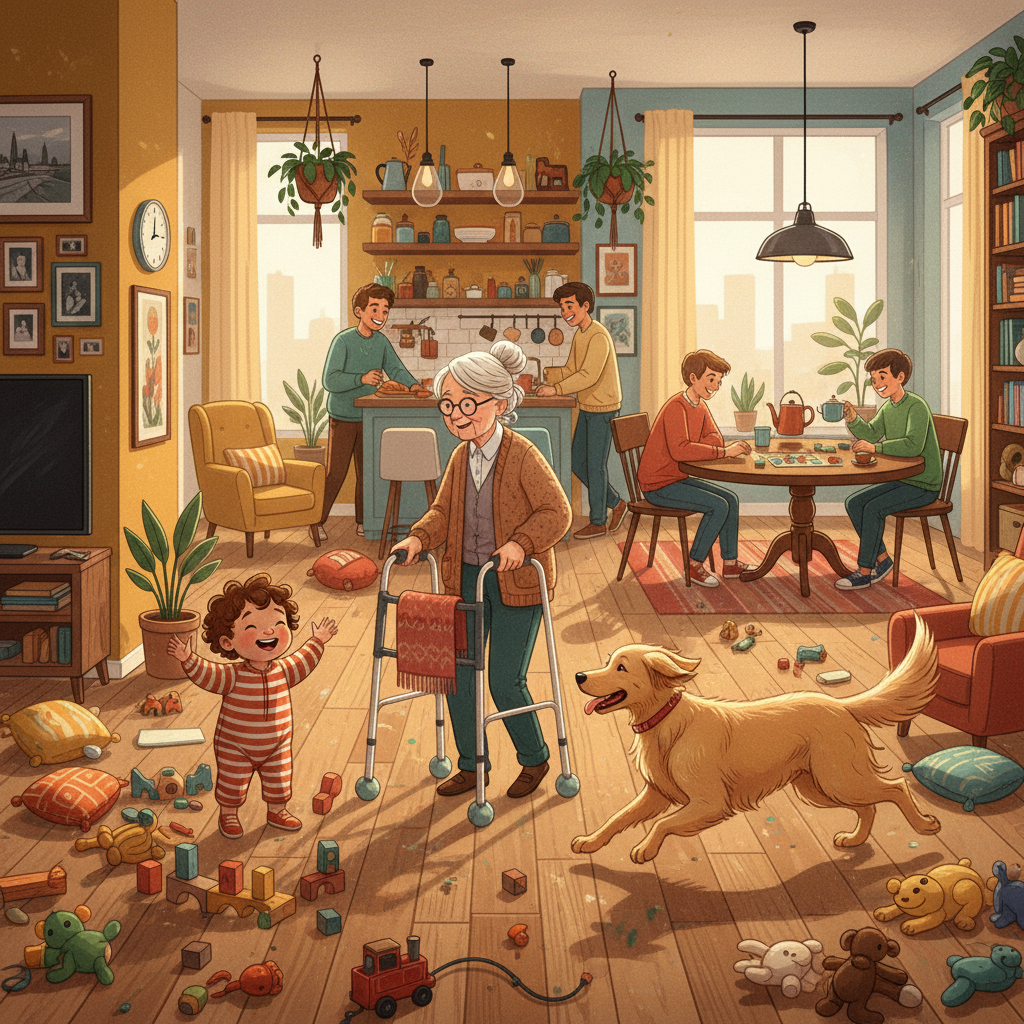
For the “Sandwich Generation,” managing a household often feels like navigating a beautiful, chaotic collision of life stages. You are tasked with maintaining a home that must withstand the relentless energy, spills, and impact of toddlers and large pets, while simultaneously ensuring the safety, comfort, and accessibility of aging parents. Caught in the middle are your home’s surfaces—most notably, your worn out family floors.
If you have spent any time researching replacements, you have likely been bombarded with marketing buzzwords like “life-proof,” “indestructible,” or “adamantine.” But what do these terms actually mean when the dog has the zoomies and a walker needs to glide smoothly across the hallway?
This definitive guide cuts through the marketing jargon to reveal the actual material science behind adamantine flooring—the industry’s standard for ultra-durable, extreme-performance surfaces. We will provide a comprehensive “Chaos Factor” matrix for selecting, installing, and maintaining floors that protect seniors, survive kids, and deliver a rock-solid 30-year return on investment (ROI).
- Demystifying ‘Adamantine Flooring’: The Science of Extreme Durability
- The ‘Chaos Factor’ Decision Matrix: Best Flooring for Multi-Generational Homes
- Top Long-Lasting Floor Solutions for High-Traffic Large Families
- The Hidden Lifespan Factor: Subfloor Prep and Professional Installation
- Triage and Maintenance: Rescuing Worn Out Family Floors
- Conclusion
- References & Authoritative Sources
Demystifying ‘Adamantine Flooring’: The Science of Extreme Durability
In mythology, “adamantine” refers to a material of impenetrable, diamond-like hardness. In the modern flooring industry, adamantine flooring refers to ultra-durable, highly scratch-resistant flooring solutions engineered with advanced performance coatings.
Homeowners frustrated by easily scratched home flooring often seek out these adamantine solutions, but it is vital to shift our focus from flashy buzzwords to quantifiable material science. To establish realistic expectations, we must first state a universal truth of home improvement: no floor is 100% scratch-proof. With enough force, any material can be damaged. However, by understanding what these floors are made of, you can select materials that are as close to indestructible as scientifically possible.
Marketing Buzzwords vs. Material Science: Wear Layers and Aluminum Oxide
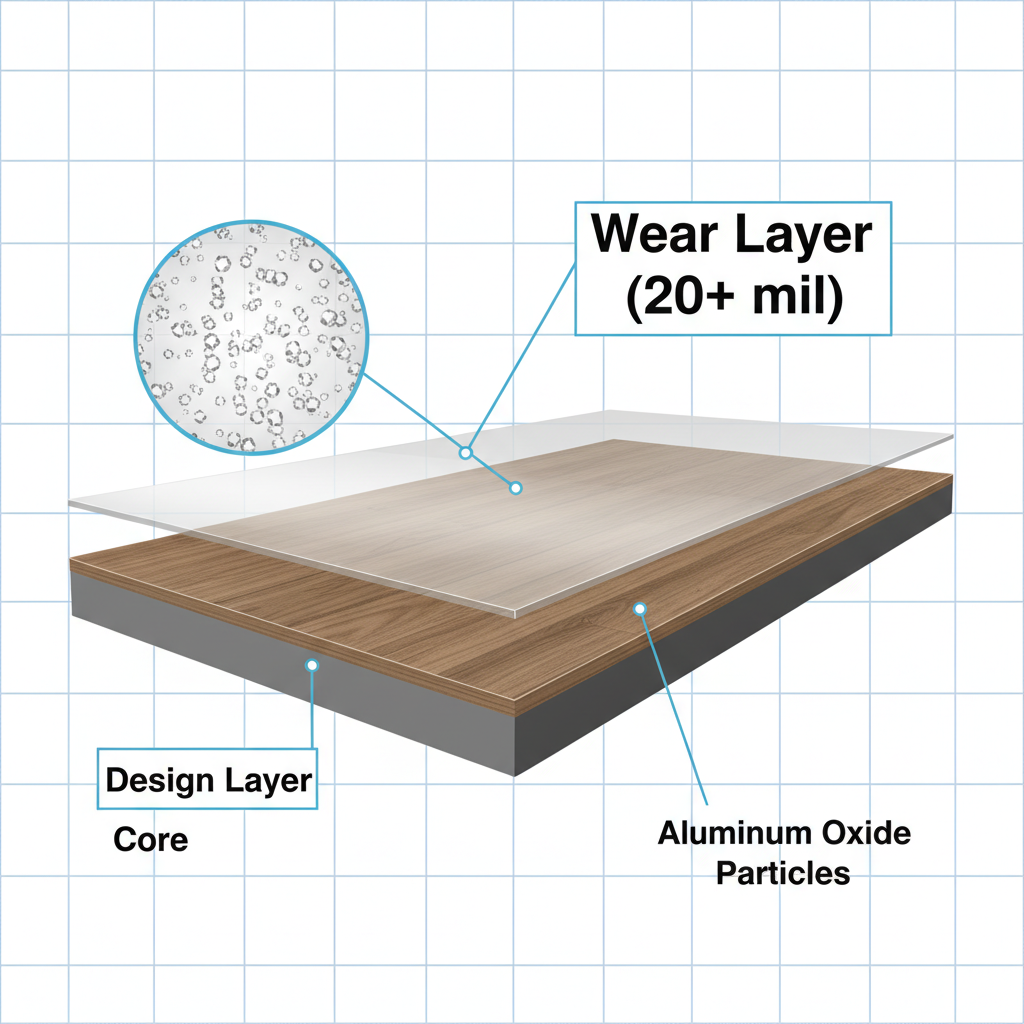
The secret to scratch resistant adamantine floors lies in the microscopic layers applied to the top of the flooring planks, particularly in Luxury Vinyl Plank (LVP) and engineered hardwoods.
To navigate the showroom floor like an expert, you need to understand the Mil Wear Layer.
Glossary Definition: A “mil” is a unit of measurement equal to one-thousandth of an inch. The wear layer is the clear, protective topcoat applied over the printed design of a vinyl plank or the top veneer of engineered wood.
For standard residential use, a 12-mil wear layer is common. However, for the extreme demands of a multi-generational home, you need adamantine-level protection. Material science dictates that high-traffic homes require a wear layer of at least 20 mil or higher.
Furthermore, the chemical composition of this finish dictates its ultimate strength. According to Mannington, a leading manufacturer and patent holder of advanced flooring technologies like ScratchResist®, polyurethane finishes infused with microscopic aluminum oxide particles can increase scratch resistance by up to 3x compared to traditional polyurethane finishes [1]. Aluminum oxide is one of the hardest minerals on earth, and when suspended in a floor’s topcoat, it creates an armor-like shield against pet claws and dropped toys.
Scratches vs. Dents: Why Your Floor is Failing
A major source of frustration for homeowners dealing with easily scratched home flooring is the confusion between a “scratch” and a “dent.” Understanding this difference is critical for diagnosing why your current floor is failing and how to choose a better replacement.
- Dents (Core Hardness): A dent occurs when the actual core material of the floor is crushed under heavy weight or impact (like dropping a cast-iron pan or wearing stiletto heels). For wood floors, this resistance is measured by the Janka Hardness Scale. The National Wood Flooring Association (NWFA) utilizes the Janka scale to determine the density of different wood species—for example, Hickory is much harder and more dent-resistant than Pine [2].
- Scratches (Finish Hardness): A scratch is a surface-level abrasion that damages the clear topcoat, not the wood or vinyl itself.
Here is the critical takeaway: The finish (such as an aluminum oxide coating) matters far more than the wood species or core material when it comes to preventing surface scratches. You could have the hardest wood on the Janka scale, but if it has a cheap, thin topcoat, it will scratch easily.
The ‘Chaos Factor’ Decision Matrix: Best Flooring for Multi-Generational Homes
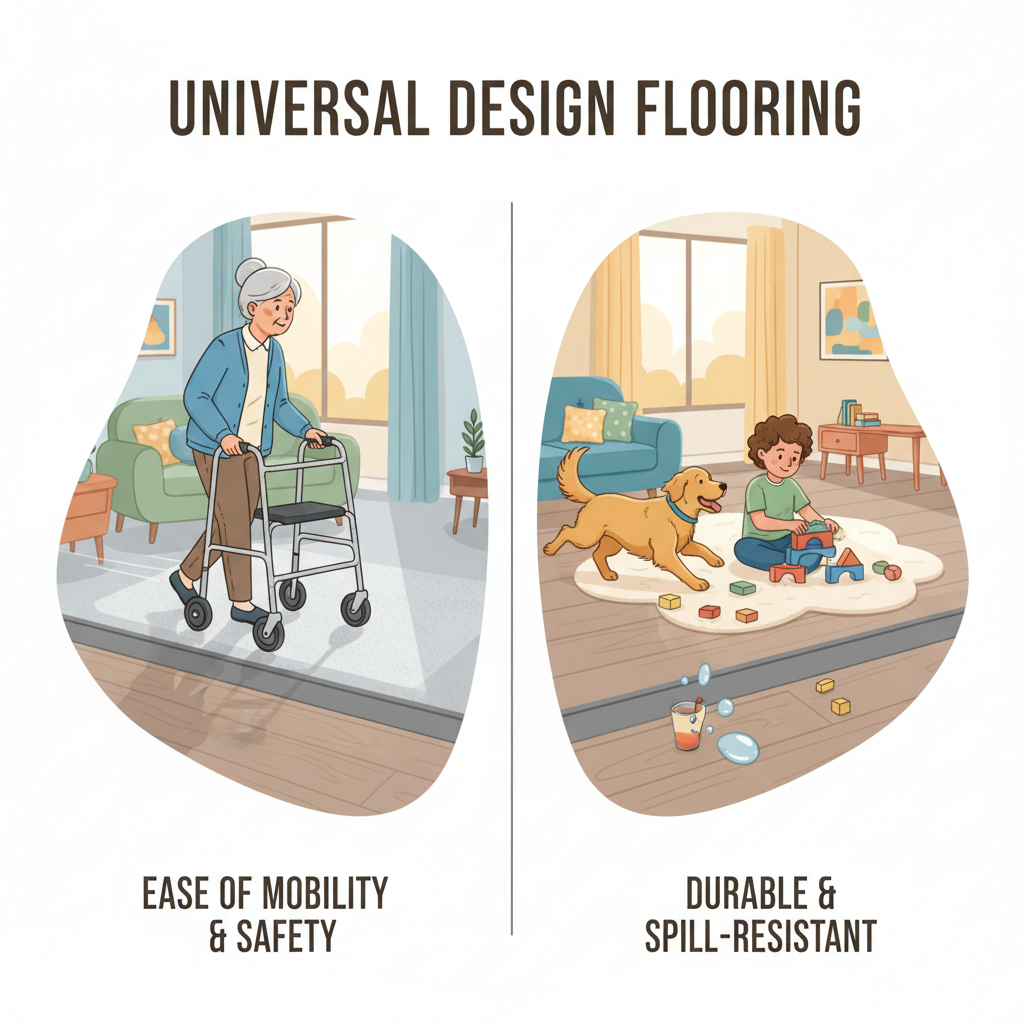
Choosing the best flooring for multi-generational homes requires pivoting from standard “durability” to the principles of Universal Design. You must evaluate your home’s unique “Chaos Factor”—a personalized matrix balancing the slip-resistant needs of seniors with the spill-proof, forgiving nature required for children.
Balancing Senior Safety with Toddler Durability
The primary challenge of multi-generational flooring is that the ideal floor for a toddler (soft, plush carpet) is often a trip hazard or mobility obstacle for a senior using a walker or wheelchair. Conversely, the most durable floor for kids and pets (hard porcelain tile) can be unforgiving during a fall and cold on aging joints.
To balance these needs, we must look at the Coefficient of Friction (CoF), which measures how slippery a surface is. Certified Aging-in-Place Specialists (CAPS) and occupational therapists emphasize that a high CoF is non-negotiable for senior fall prevention [3]. Textured surfaces provide better grip.
Additionally, acoustics play a massive role in multi-generational harmony. Hard, durable family home flooring can amplify the noise of playing children, disturbing resting seniors. Selecting materials with inherent acoustic benefits—like cork backing or utilizing premium sound-dampening underlayments—is essential for homes with varying sleep schedules.
Why Luxury Vinyl Plank (LVP) is the Ultimate Compromise
When weighing the Chaos Factor, Luxury Vinyl Plank (LVP) consistently emerges as the ultimate compromise and the best flooring for multi-generational homes.
LVP offers 100% water resistance (perfect for toddler spills and pet accidents) while providing a softer underfoot feel compared to ceramic tile, which is gentler on elderly joints. However, the true magic of LVP lies beneath the surface. The critical importance of a high-quality underlayment cannot be overstated; it provides the necessary joint comfort for seniors and vital noise reduction for the entire household.
When selecting LVP for homes with children, it is also crucial to verify environmental safety. Always look for low-VOC (Volatile Organic Compound) certifications, such as FloorScore, to ensure the durable materials you are installing are not off-gassing harmful chemicals into your family’s indoor air [4].
Room-by-Room Transition Safety Guides
Even the safest multi-generational flooring becomes a hazard if the transitions between rooms are uneven. Moving from thick carpet in a bedroom to LVP in a hallway creates a lip that can easily catch a shuffling foot or halt a wheelchair.
To reduce trip hazards for those with limited mobility, transitions must be seamless. The Americans with Disabilities Act (ADA) provides strict guidelines for accessible surfaces, stating that vertical changes in floor level should not exceed 1/4 inch. Changes between 1/4 inch and 1/2 inch must be beveled with a slope no greater than 1:2 [5].
Descriptive Transition Guide:
- Carpet to Hard Surface: Use a specialized reducer strip that creates a gentle, ADA-compliant ramp rather than a blunt edge.
- Tile to LVP: Ensure the subfloor is leveled so that the finished heights of both materials are perfectly flush, requiring only a flat T-molding or a color-matched transition bead.
Top Long-Lasting Floor Solutions for High-Traffic Large Families
For households dealing with extreme wear-and-tear, standard residential materials often fail prematurely. If you are searching for high traffic flooring for large families, you must adopt a Total Cost of Ownership (TCO) mindset. TCO looks beyond the upfront price tag and calculates the cost of the floor over a 30-year period, factoring in maintenance, repairs, and the likelihood of replacement.
Commercial-Grade LVP vs. Residential Options
One of the best secrets for durable home floors is borrowing concepts from commercial and retail spaces. There is a critical difference between standard residential LVP and commercial-grade options.
Commercial-grade LVP features wear layers of 20, 28, or even 40 mils, designed to withstand thousands of daily footsteps. Case studies from commercial property managers and testimonials from families with multiple large dogs consistently highlight commercial LVP as a “life-proof” savior [6].
Furthermore, consider the concept of “patchability.” High-traffic areas like mudrooms or main hallways will inevitably suffer damage. Utilizing modular flooring, such as high-end carpet tiles or loose-lay commercial LVP, allows you to pull up and replace a single damaged piece without tearing out the entire room’s floor.
Porcelain Tile and Engineered Hardwood: A 30-Year Investment
If your goal is absolute permanence and long lasting floor solutions for homes, large-format porcelain tile and premium engineered hardwood offer the highest long-term ROI.
While the upfront costs of these materials are higher than laminate or basic vinyl, a TCO amortization analysis proves their worth. High-quality laminate might last 15-20 years before requiring total replacement. In contrast, natural stone and porcelain tile can easily last 50+ years with proper care [7]. However, it is vital to note that tile longevity is heavily dependent on proper, routine grout sealing to prevent water infiltration and cracking.
Engineered hardwood also offers incredible longevity due to its refinishing potential. A high-quality engineered plank with a thick top veneer (3mm or more) can be sanded and refinished 1 to 2 times over its lifespan, effectively giving you a brand-new floor decades after the initial installation.
The Hidden Lifespan Factor: Subfloor Prep and Professional Installation
Here is the most overlooked truth in home improvement: the most expensive, adamantine-level, durable home floors will fail spectacularly if the subfloor beneath them is improperly prepared. Long lasting floor replacement is less about the material you buy and more about the execution of the installation.
Professional installation standards, such as those set by the National Wood Flooring Association (NWFA) and the Tile Council of North America (TCNA), dictate that a floor is only as strong as its foundation [2][8].
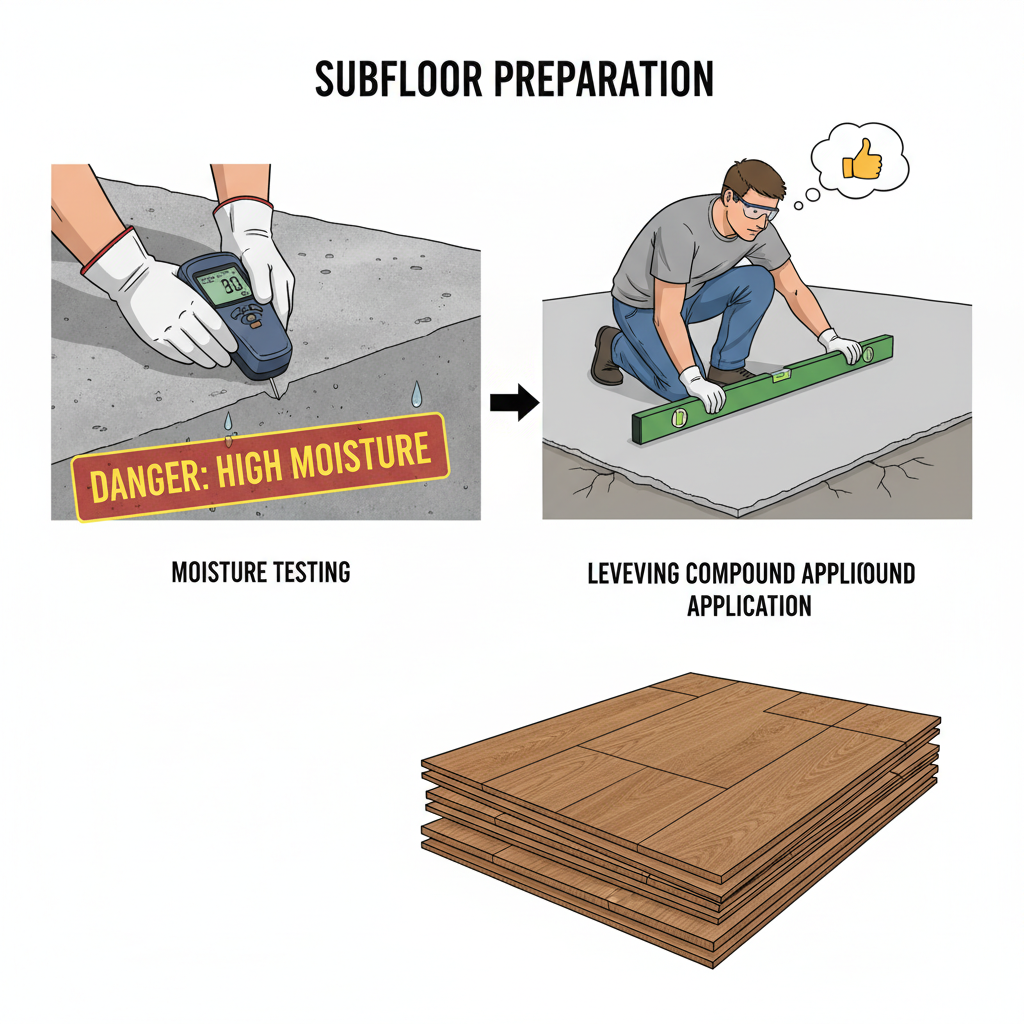
Before any new flooring is laid down, two critical steps must occur:
- Moisture Testing: Concrete slabs and wood subfloors hold hidden moisture. If a waterproof LVP or hardwood floor is installed over a damp subfloor without a proper vapor barrier, hydrostatic pressure will cause the planks to buckle, cup, or harbor toxic mold.
- Subfloor Leveling: Large-format tiles will crack, and LVP locking mechanisms will snap, if the subfloor has dips or peaks. The subfloor must be meticulously leveled using self-leveling compounds or by sanding down high spots.
Contractor Vetting Checklist:
When hiring a professional, ask these questions to ensure a high-quality job:
- “What specific moisture testing methods do you use before installation?”
- “How do you determine if the subfloor needs leveling, and what is your tolerance for variance?”
- “Are your installers certified by the NWFA, TCNA, or the manufacturer of the specific flooring material?”
Triage and Maintenance: Rescuing Worn Out Family Floors
If you are currently staring at worn out family floors, you have two options: stop the bleeding or perform surgery. Preventative maintenance can halt further degradation, while a proper diagnostic assessment will tell you if the floor can be saved.
The ‘Sandpaper Effect’: Preventing High Traffic Floor Damage
The number one cause of high traffic floor damage is not heavy furniture; it is the “sandpaper effect.” Microscopic dirt, grit, and sand tracked in from outside act like literal sandpaper under your feet, slowly grinding away the protective aluminum oxide or polyurethane finish [9].
To combat this, implement a professional-grade maintenance schedule:
- Daily: Sweep or dry dust-mop using a microfiber pad to trap microscopic grit. Avoid traditional cotton mops that just push dirt around.
- Weekly: Vacuum using a hard-floor setting (beater bar turned off).
- Monthly: Damp mop with a pH-neutral cleaner specifically formulated for your floor type.
Crucial Warning: Understand the science of your cleaners. Harsh chemicals, ammonia, and steam mops can degrade finishes faster than foot traffic. Furthermore, one of the most effective, yet rarely discussed, floor defense strategies is strict, routine pet nail trimming.
Repair, Refinish, or Replace? A Homeowner’s Diagnostic Guide
Before committing to a long lasting floor replacement, use this diagnostic checklist to see if your hardwood floors are candidates for refinishing. According to real estate data, refinished hardwood floors can increase a home’s overall value by up to 2.5%, making it a highly lucrative repair [10].
Visual Diagnostic Checklist:
- Surface Scratches (Candidate for Recoating): If the scratches are light, only affect the clear topcoat, and the wood beneath still has its color, a Bona Certified professional can often perform a dustless screen-and-recoat to restore the adamantine finish [11].
- Deep Gouges (Candidate for Refinishing): If the scratch goes through the stain and exposes raw wood, the floor will need a full sanding and refinishing.
- Gray Discoloration (Candidate for Replacement/Deep Repair): If the wood has turned gray or black, the finish has completely failed, and water/dirt has oxidized the raw wood. This often requires replacing the affected planks entirely.
A note on past maintenance: If you have historically used oil soaps, wax-based polishes, or silicone-heavy cleaners on your wood floors, you may have ruined the chances of a simple recoat. These products leave a residue that prevents new polyurethane from adhering, forcing a much more expensive full-sand restoration.
Conclusion
Achieving an “adamantine” level floor in a multi-generational home is not about finding a magical, indestructible material. It is about balancing advanced material science—like 20+ mil wear layers and aluminum oxide finishes—with the Universal Design principles of safety, CoF, and ADA compliance.
Whether you choose commercial-grade LVP for its forgiving nature or engineered hardwood for its 30-year ROI, remember that the true secret to a life-proof floor lies beneath the surface. Never compromise on subfloor preparation, always consult with professionals for aging-in-place modifications, and diligently protect your investment from the microscopic grit of daily life.
Download our free ‘Multi-Generational Flooring Chaos Factor Checklist’ to assess your home’s specific needs, or contact a certified flooring installer today to schedule a subfloor moisture test and consultation.
Disclaimer: The information provided regarding slip resistance, ADA compliance, and fall prevention is for educational purposes. Consult with a Certified Aging-in-Place Specialist (CAPS) or contractor for specific home modifications.
References & Authoritative Sources
- Mannington. (N.D.). ScratchResist® Technology and Flooring Durability. Retrieved from mannington.com.
- National Wood Flooring Association (NWFA). (N.D.). Janka Hardness Scale and Wood Floor Durability Standards.
- AARP. (N.D.). Aging-in-Place Home Modifications and Senior Safety.
- Resilient Floor Covering Institute. (N.D.). FloorScore Certification for Low VOC Flooring.
- Americans with Disabilities Act (ADA). (N.D.). Accessible Surfaces and Transition Guidelines.
- Giant Floor. (N.D.). High-Traffic and Commercial-Grade Flooring Installations.
- Fixr. (N.D.). Home Improvement Consumer Trends, Costs, and Material Lifespan Data.
- Floor Covering Installer Magazine / Tile Council of North America (TCNA). (N.D.). Installation Standards and Subfloor Preparation.
- Hardwood Revival. (N.D.). Hardwood Floor Maintenance and Damage Prevention.
- Fixr. (N.D.). ROI of Hardwood Floor Refinishing.
- Friends and Family Flooring. (N.D.). Bona Certified Hardwood Restoration and Refinishing Techniques.
