If you have ever watched in horror as a dining chair gouged a brand-new floor, or felt the frustration of watching a “100% waterproof” plank warp at the seams, you are not alone. For homeowners, landlords, and pet owners, easily scratched flooring and premature material failure are costly nightmares. The flooring industry is notorious for deceptive marketing, often blurring the lines between a floor that can survive a spilled glass of water and one that can actually withstand a 70-pound dog bounding to the front door.
This guide cuts through the marketing fluff. We are moving beyond brand names to reveal the hidden technical specifications—wear layers, core densities, and subfloor preparation—that actually determine a floor’s lifespan. By unpacking the definitive “torture test” comparison of premium Adamantine flooring versus standard Luxury Vinyl Plank (LVP), we will arm you with the data-driven insights needed to guarantee your ultimate return on investment (ROI).
- Decoding Durable Home Flooring: Beyond the Marketing Fluff
- LVP Flooring Explained: The Industry Standard
- Adamantine Flooring: The Premium Challenger
- The Ultimate Showdown: Adamantine Flooring vs LVP Comparison
- Solving Common Flooring Nightmares: Pets, High Traffic, and Wear
- The Financial Reality: Durable Flooring as an Investment
- Conclusion
- References & Authoritative Sources
Decoding Durable Home Flooring: Beyond the Marketing Fluff
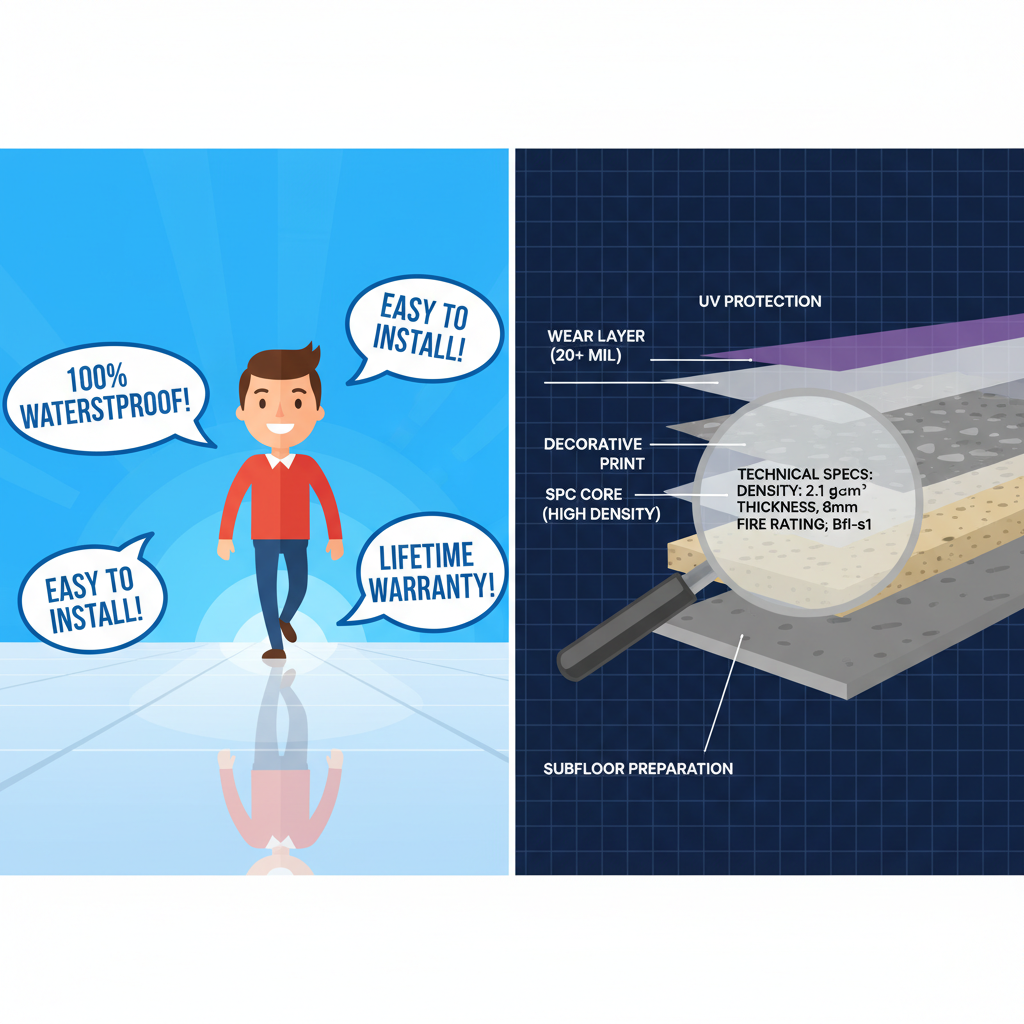
To evaluate durable home flooring accurately, you must stop looking at the brand name on the box and start looking at the technical specifications on the back. True longevity is measured by objective, industry-standard metrics, not catchy slogans.
For wood products, the Janka hardness scale measures the resistance of wood to denting and wear. For tile, the Porcelain Enamel Institute (PEI) wear rating classifies the durability of the glaze, with a PEI of 4 or 5 being ideal for high-traffic residential or commercial use. Laminate relies on AC (Abrasion Class) ratings, where an AC4 or AC5 denotes commercial-grade scratch resistance. According to broad material data provided by Flooring America, understanding these technical specifications is the only guaranteed way to ensure you are investing in truly long lasting floor materials [1].
Aesthetic Lifespan vs. Structural Lifespan
One of the biggest misconceptions in the flooring market is equating “waterproof” with “indestructible.” To make a smart investment, you must understand the difference between structural lifespan and aesthetic lifespan.
Structural lifespan refers to a floor’s ability to resist catastrophic failure, such as water damage, warping, or locking mechanism separation. Aesthetic lifespan is how long the floor actually looks good before showing flooring wear and tear. “A floor might survive a flooded kitchen structurally, but if it’s covered in micro-scratches from daily foot traffic, its aesthetic lifespan has failed,” notes Sarah Jenkins, a certified interior designer specializing in high-traffic homes [2].
Furthermore, UV exposure (sunlight fading) heavily impacts the aesthetic lifespan of both vinyl and wood materials. A floor with a 30-year structural warranty might look faded and worn in just five years if it lacks proper UV-resistant topcoats, leading to the frustration of short lifespan floors.
The Hidden Foundation: Why Subfloor Prep Dictates Longevity
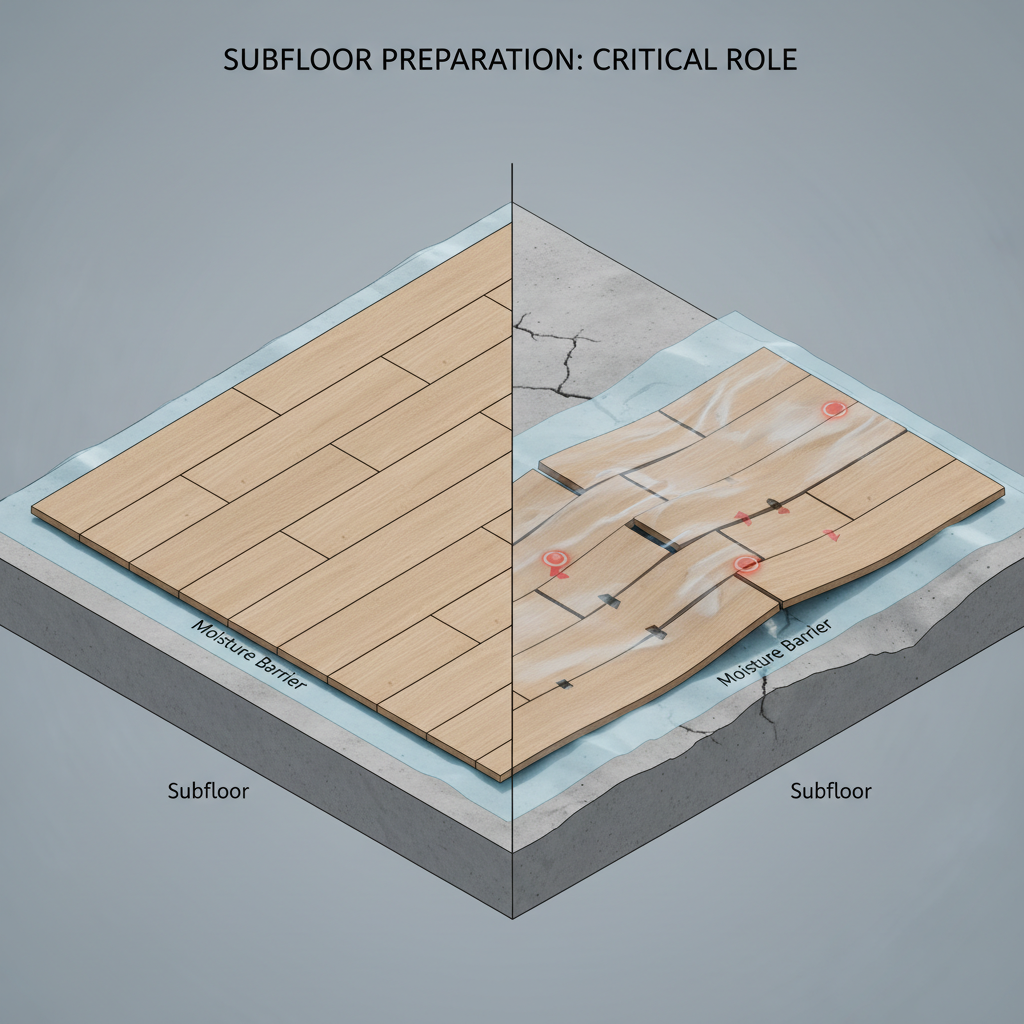
A major content gap in most flooring advice is the absolute necessity of subfloor preparation. You can buy the most durable home flooring on the market, but if the subfloor is uneven, the flooring will fail prematurely.
Can you put LVP over existing tile or wood? Yes, but only if the existing surface is perfectly flat and structurally sound. Subfloor leveling and the use of proper moisture barriers are critical factors that dictate the longevity of the entire flooring system. Uneven subfloors create hollow spots that cause the locking mechanisms of floating floors to flex and eventually snap under foot traffic. As detailed by the installation experts at Word of Mouth Floors, failing to address subfloor imperfections artificially shortens the lifespan of otherwise indestructible materials [3].
LVP Flooring Explained: The Industry Standard
Luxury Vinyl Plank (LVP) has become the dominant choice in residential flooring because it effectively mimics natural wood while offering 100% waterproof capabilities. However, not all LVP flooring is created equal. The true indicators of quality are the wear layer mil thickness and the core type.
When shopping for LVP, it is also crucial to verify indoor air quality standards. Always look for Material Safety Data Sheets (MSDS) and FloorScore certifications to ensure the product meets strict VOC (Volatile Organic Compound) emission standards for safe indoor use [4]. For independent verification of LVP durability and wear resistance, resources like Consumer Reports remain an authoritative testing benchmark [5].
Wear Layers and Cores: SPC vs. WPC
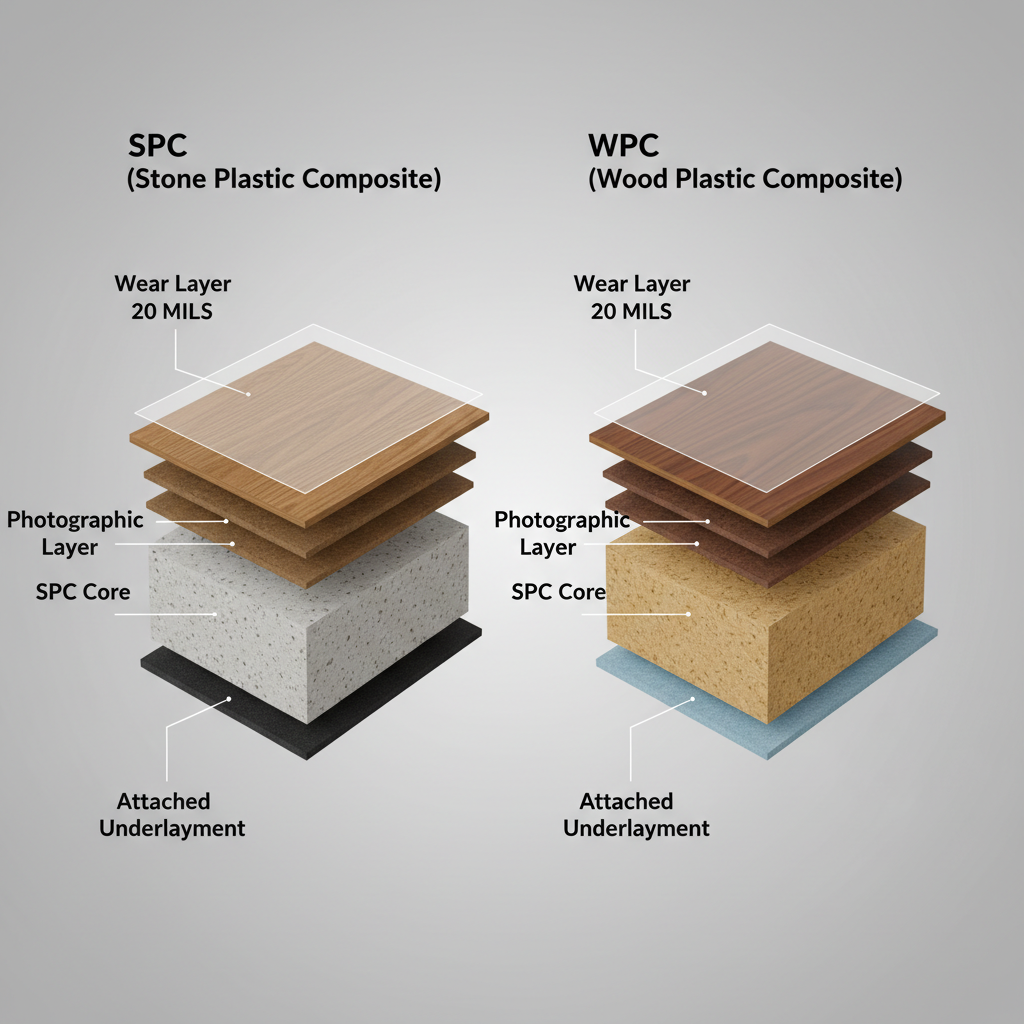
What is SPC vinyl flooring and why is it durable? SPC stands for Stone Plastic Composite. Its core is made from a mixture of natural limestone powder, polyvinyl chloride, and stabilizers, making it incredibly dense and rigid. In contrast, WPC (Wood Plastic Composite) uses wood flour or wood-like materials, making it slightly softer and more comfortable underfoot, but less resistant to heavy impact.
The most critical component of LVP flooring is the wear layer, measured in “mils” (one-thousandth of an inch). This clear topcoat protects the photographic layer from scratches and stains.
Technical Wear Layer Comparison:
- 6-12 mil: Entry-level. Suitable for low-traffic guest rooms.
- 12-20 mil: Mid-grade. Good for average households.
- 20+ mil: = Commercial-grade. Highly recommended for active families and large dogs, representing the most durable flooring options for homes.
According to the Popular Flooring Company, the primary cause of premature failure in budget LVP is a thin wear layer combined with a weak WPC core that allows the locking systems to separate under pressure [6].
Pros, Cons, and True Lifespan of Luxury Vinyl Plank
What are the main disadvantages of LVP flooring? The primary drawback is that subfloor imperfections will “telegraph” or show through thinner planks over time. Additionally, unlike solid hardwood, LVP cannot be sanded down and refinished. Once the wear layer is breached, the plank must be replaced.
The true lifespan of vinyl flooring can last between 10 to 20 years, with premium LVP lasting up to 30 years depending heavily on the wear layer thickness [7]. While it is highly resistant to water, it is not immune to the physical realities of short lifespan floors if you purchase a budget 6-mil product for a high-traffic hallway.
Adamantine Flooring: The Premium Challenger
Adamantine flooring represents a highly durable, premium niche within the waterproof flooring market. Positioned to directly compete with top-tier LVP and engineered hardwood, Adamantine is engineered for extreme environments.
“When you cut into an Adamantine plank, you immediately feel the difference in density compared to standard vinyl,” says Mark Torres, a certified flooring installer with over 15 years of experience. “The locking mechanisms are milled with incredibly tight tolerances, which makes installation slightly more demanding but results in a virtually impenetrable seam” [8]. Industry authorities like Flooring Inc also recognize these advanced material compositions as pushing the boundaries of standard rigid core standards [9].
What is Adamantine Flooring Made Of?
To understand its durability, we must perform a “destructive test” breakdown. What is Adamantine flooring made of? Unlike generic SPC, which relies heavily on limestone dust, Adamantine cores often incorporate proprietary mineral blends and advanced polymer resins that drastically increase impact resistance.
Under macro-inspection, the core structure of Adamantine flooring reveals a hyper-dense, non-porous matrix. The click-lock mechanism is reinforced, preventing the brittle snapping often seen in cheap SPC. Is Adamantine flooring completely waterproof? Yes. Because the core contains no wood organic material and the seams lock with microscopic precision, water cannot penetrate the surface or swell the core. Hands-on product data from Simple Floors Portland confirms that this specific composition makes it uniquely suited for environments prone to extreme temperature and moisture fluctuations [10].
Cost and Availability: Is it Worth the Premium?
How much does Adamantine flooring cost per square foot, and where can I buy Adamantine flooring? Because it is a premium niche product, Adamantine is typically sold through specialized local flooring distributors rather than big-box home improvement stores. Prices generally range higher than standard LVP, often sitting between premium LVP and entry-level engineered hardwood.
When evaluating the Adamantine flooring vs LVP comparison, the premium price is justified if you require commercial-grade impact resistance or are installing over a subfloor that experiences slight temperature-related expansions. The unbiased cost-to-lifespan ratio shows that while upfront costs are higher, the extended aesthetic lifespan often negates the need for replacement a decade down the line.
The Ultimate Showdown: Adamantine Flooring vs LVP Comparison
For homeowners in the commercial investigation phase, choosing between these two waterproof titans requires a direct side-by-side comparison. Both utilize click-lock systems to prevent moisture seepage, but the tolerances and material densities differ significantly.
The Durability Matrix: Scratching, Denting, and Water
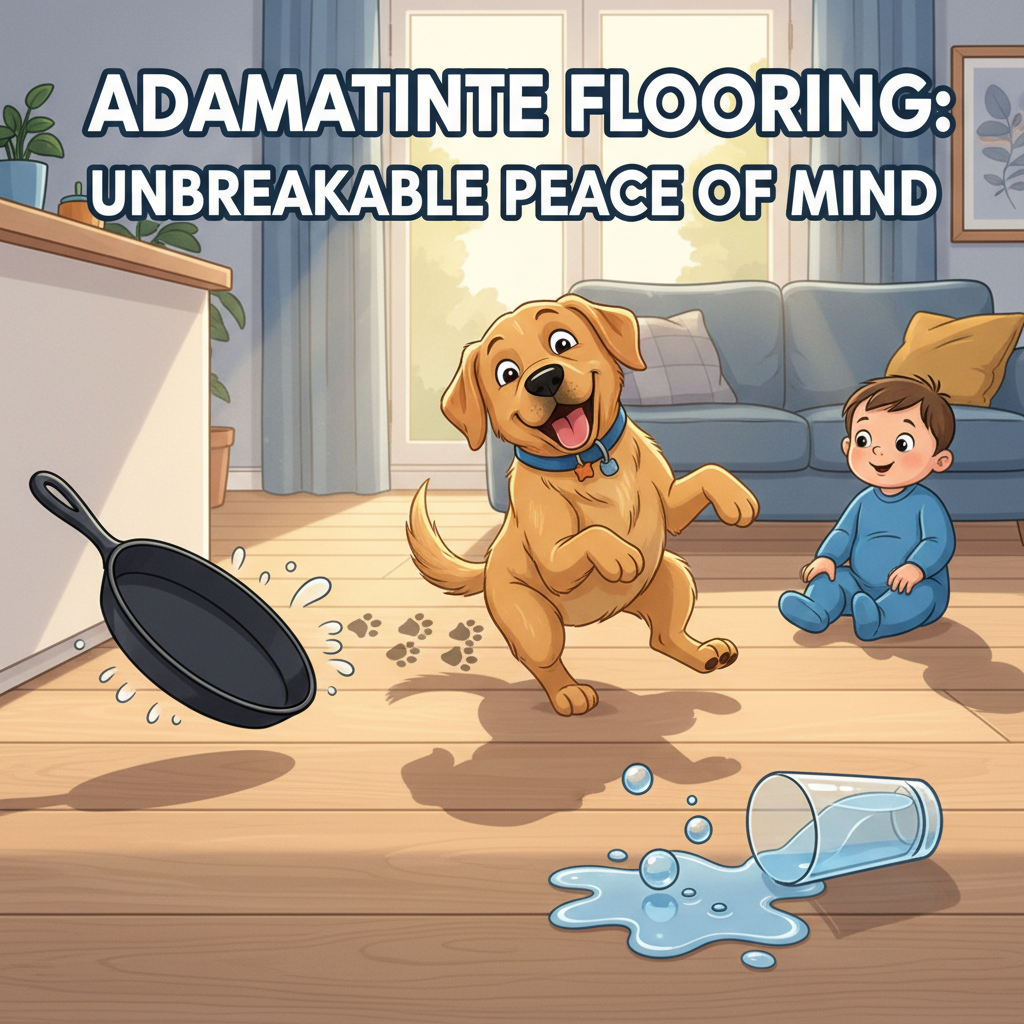
When scoring both floors independently to find the most durable flooring options for homes, we look at three factors:
- Water Resistance: Both score a perfect 10/10. Neither will structurally fail from topical moisture.
- Impact Resistance (Denting): Adamantine wins. Its hyper-dense mineral core resists heavy dropped objects (like cast iron pans) better than standard WPC or standard SPC LVP.
- Scratch Resistance: This is a tie, dependent entirely on the wear layer. Does Adamantine have a thicker wear layer than typical LVP? Usually, yes—it comes standard with commercial-grade finishes. However, a 22-mil premium LVP will resist scratches just as well. The secret lies in the chemical composition of the aluminum oxide wear layers used in premium flooring, which provides a diamond-like shield against abrasions.
Which flooring looks more like real wood? Premium LVP currently holds a slight edge in high-definition photographic realism and embossed-in-register (EIR) textures, though Adamantine is rapidly closing this gap, according to comparative data from The Flooring King [11].
Which Flooring Lasts Longer? The Cost-Per-Year Formula
How many years does Adamantine flooring typically last? You can expect 25 to 30+ years of structural integrity. But to truly answer which flooring lasts longer Adamantine or LVP, you must use the “cost per year of service” formula.
Can either be refinished? No. Therefore, their lifespan is finite compared to solid wood. However, let’s look at the math to avoid the trap of short lifespan floors.
Solid hardwood installed at $8-12 per square foot lasting 70 years costs roughly $0.11-0.17 annually per square foot.
A premium LVP or Adamantine floor installed at $6 per square foot lasting 25 years costs $0.24 annually per square foot.
While hardwood wins the century-long race, Adamantine and premium LVP offer a highly competitive cost-per-year ratio without the ongoing maintenance costs of sanding and sealing [12].
Solving Common Flooring Nightmares: Pets, High Traffic, and Wear
If you are frustrated by easily scratched flooring, the solution isn’t just buying tougher material; it’s understanding how damage occurs. Independent testing organizations like Consumer Reports emphasize that no floor is entirely bulletproof [5]. However, by matching the specific household threat to the right material, you can mitigate almost all damage. For pet owners, data from Go Flooring recommends a minimum of a 20-mil wear layer to withstand the repetitive impact of large dog nails [13].
Preventing Easily Scratched Flooring
What is the most scratch-resistant flooring for dogs? SPC vinyl with a 20+ mil aluminum oxide wear layer, polished concrete, or AC4/AC5 rated laminate are your best bets. Is vinyl plank flooring truly scratch-resistant? It is highly resistant, but not scratch-proof.
A crucial warning: avoid high-gloss finishes. High-gloss acts as a magnifying glass for micro-scratches, making normal wear highly visible. Matte or satin finishes hide these imperfections beautifully.
To maintain scratch resistant flooring options, you must differentiate between surface scuffs (transfer of rubber or dirt, easily cleaned with a tennis ball or eraser) and actual scratches (gouges in the wear layer, requiring specialized putty repair).
Step-by-Step Felt Pad Application:
- Clean the bottom of the furniture leg with rubbing alcohol.
- Lightly sand the leg if it is uneven wood.
- Apply a heavy-duty, peel-and-stick felt pad.
- Inspect and replace pads every 6 months, as embedded dirt turns felt pads into sandpaper.
Normal Wear and Tear vs. Actual Damage (A Guide for Renters & Landlords)
For rental properties, distinguishing between flooring wear and tear and actual damage is a legal necessity. What constitutes normal wear and tear? Fading from sunlight, minor surface scuffs, and gentle dulling of the finish in high-traffic walkways are considered normal.
Are pet scratches considered normal wear and tear? Deep gouges that penetrate the wear layer and expose the core, burn marks, and urine stains that warp the planks are definitively categorized as actual damage. Property management authorities like Maple Leaf Real Estate use these strict definitions during security deposit disputes [14]. When assessing the floor, repair specialists at Clover Valley Home Service note that while minor scuffs can be blended with finish restorers, deep gouges in LVP or Adamantine require full plank replacement [15].
The Financial Reality: Durable Flooring as an Investment
Beyond physical toughness, durable flooring is a financial vehicle. Homeowners looking to increase property value must view their floors as a durable flooring investment. According to the National Association of Realtors (NAR), upgrading worn-out floors is one of the highest ROI interior projects a homeowner can undertake [16].
ROI Breakdown: LVP vs. Hardwood vs. Adamantine
Which flooring adds the most value to a home? Solid hardwood remains the undisputed champion, delivering a return of up to 80 percent of its cost upon resale.
Is luxury vinyl plank a good investment for resale? Absolutely. LVP ROI sits around 65 to 75 percent, making it the best budget-to-value investment on the market [17]. Adamantine flooring yields a similar ROI to premium LVP, appealing heavily to buyers looking for low-maintenance, indestructible homes. It is also worth noting the difference in ROI between DIY installation and professional installation; poorly installed DIY floors with gapping seams will drastically reduce your home’s appraisal value, negating the material’s ROI.
Avoiding the ‘Over-Improvement’ Trap
The secret to maximizing your durable flooring investment is avoiding the “over-improvement” trap. You should always let your neighborhood comparables (comps) dictate your flooring choice. If every home in your subdivision features mid-grade LVP, installing $15/sq ft exotic solid hardwood will not yield a proportional increase in your home’s sale price.
Regional preferences also heavily affect flooring ROI. In humid, coastal climates like Florida, high-end waterproof LVP, Adamantine, or porcelain tile are highly prized. In the historic neighborhoods of the Northeast, buyers may specifically demand solid hardwood. Match your durable flooring choice to your specific neighborhood market to ensure maximum financial return.
Conclusion
The true secret to durable home flooring does not lie in flashy brand names, but in the hidden technical specifications: wear layer mil thickness, core composition, and meticulous subfloor preparation. While Adamantine flooring offers a premium, hyper-dense structural integrity that excels in extreme environments, high-mil Luxury Vinyl Plank remains a fiercely competitive and cost-effective standard for the average home. By calculating the cost-per-year of service and understanding the difference between structural and aesthetic lifespans, you can make an investment that lasts a generation. We highly encourage you to order physical samples of both Adamantine and a 20+ mil LVP to perform your own scratch tests at home, and always consult a certified local flooring installer to assess your subfloor before making a final purchase.
Disclaimer: Pricing, ROI estimates, and lifespan data are industry averages and may vary by region and household conditions. Always consult a certified flooring installer for specific subfloor assessments.
References & Authoritative Sources
- Flooring America. (N.D.). Material Data and Technical Specifications for Flooring Longevity. Retrieved from flooringamerica.com
- Jenkins, S. (N.D.). Balancing Aesthetic Appeal with Commercial-Grade Durability. Quoted as a certified interior designer.
- Word of Mouth Floors. (N.D.). Subfloor Preparation and Its Impact on Flooring Systems. Retrieved from wordofmouthfloors.com
- FloorScore. (N.D.). Indoor Air Quality and VOC Emission Certifications.
- Consumer Reports. (N.D.). Independent Testing on LVP Durability and Wear Resistance. Retrieved from consumerreports.org
- Popular Flooring Company. (N.D.). LVP Wear Layers, Locking Systems, and Premature Failure Causes. Retrieved from popularflooring.com
- Lifetime Flooring. (N.D.). Specific Lifespan Data by Material Type. Retrieved from lifetimeflooringjax.com
- Torres, M. (N.D.). Mechanical Differences in Locking Systems. Quoted as a certified flooring installer.
- Flooring Inc. (N.D.). Industry Authority on Flooring Material Compositions and Standards.
- Simple Floors Portland. (N.D.). Hands-On Product Knowledge and Brand Specific Data for Adamantine. Retrieved from simplefloorspdx.com
- The Flooring King. (N.D.). Comparative Data on Vinyl Products Side-by-Side. Retrieved from flooringking.com
- SoCal Flooring. (N.D.). Detailed Lifespan and Cost-Per-Year Financial Metrics. Retrieved from socalflooringandcarpet.com
- Go Flooring. (N.D.). Comparison Tables and Mil Thickness Recommendations for Pet Owners. Retrieved from goflooring.com
- Maple Leaf Real Estate. (N.D.). Property Management Authority on Wear and Tear Definitions. Retrieved from mapleleafmgt.com
- Clover Valley Home Service. (N.D.). Repairable vs Non-Repairable Damage in Flooring. Retrieved from clovervalleyhomeservice.com
- National Association of Realtors (NAR). (N.D.). Statistics on Home Value Increases from Flooring Upgrades.
- The Wholesale Flooring. (N.D.). Specific ROI Percentages for Various Flooring Types. Retrieved from 312flooring.com
